


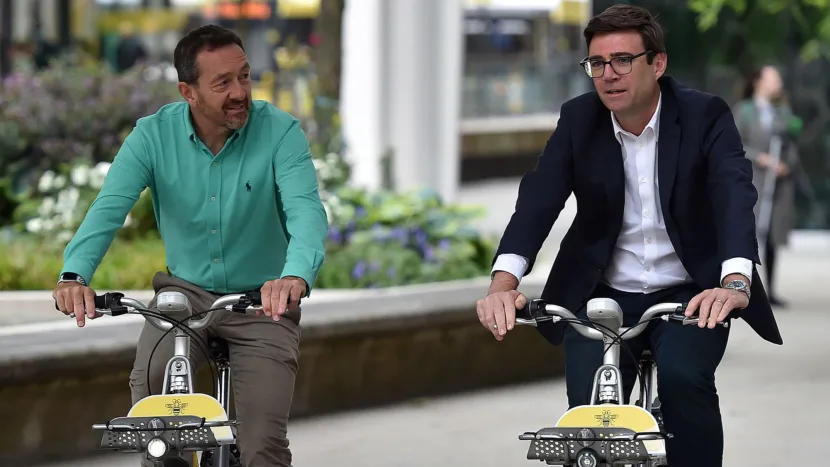

Chris Boardman accused of “letting cyclists off the hook” and “bleating” bout two-tonne vehicles, as columnist urges government to give active travel role to a “pedestrian next time, rather than an Olympic cyclist”
It’s been quite the week for Chris Boardman, hasn’t it?
Yesterday morning, England’s active travel commissioner was forced to stand in front of a camera freezing in the Cairngorms while listening to Richard Madeley spouting his usual Partridge-inspired nonsense about Dutch bike licence plates.
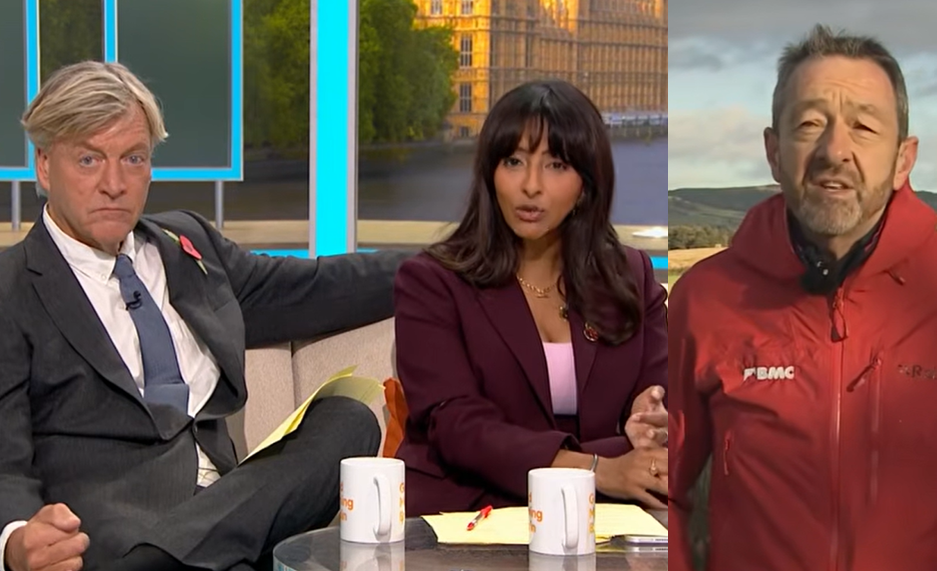
And if that wasn’t enough (believe me, it’s enough), while grabbing a mid-morning coffee and flicking through the papers, Boardman would then have been greeted by the sight of Spectator columnist Ross Clark accusing him of trying to “let cyclists off the hook”.
Clark also described the former Tour de France yellow jersey wearer’s desire to focus on motoring offences as “bleating”, while urging the government to give the active travel commissioner role to a pedestrian next time, “rather than an Olympic cyclist”.
The columnist’s tirade came after Boardman penned an open letter to the Times, following an FOI request from the newspaper which revealed that the number of fines issued by police forces in the UK fell to 3,660 in 2025 (the same number of forces issued 6,083 cycling fines in 2021, according to the report).
“People riding bikes should stop at red lights – it’s the law, and there is no excuse for ignoring it,” Boardman wrote in his letter. “Not doing so can frighten people and cause collisions and serious harm.
“But we need to distinguish between behaviour that irritates us and behaviour that puts lives at greatest risk. Someone on a bike and someone driving a two-tonne vehicle do not pose the same potential danger.
“That does not excuse either breaking the law, but it should inform where we put our limited enforcement resources.
“By all means we should tackle cyclists jumping red lights. But we should apply at least as much determination to speeding, dangerous driving and distraction. Surely the measure of successful road policing should be how many deaths and serious injuries we prevent, not how many people we catch breaking the rules.”
That distinction between irritant and genuine danger appears to have riled up Ross Clark no end – enough for him to write a few hundred words in the Spectator about pavement cyclists, anyway.
“A modest request to HM Government: if we have to have an ‘active travel commissioner’ can we please make it a pedestrian next time, rather than an Olympic cyclist?” Clark began his latest column, ignoring Boardman’s decades-long crusade for safer roads straight from the start.
He then claimed that the drop in cycling fines – and the revelation that some police forces don’t issue any FPNs to cyclists – “is still too much for Chris Boardman, the current holder of the above post and a former gold medallist on his bike”.
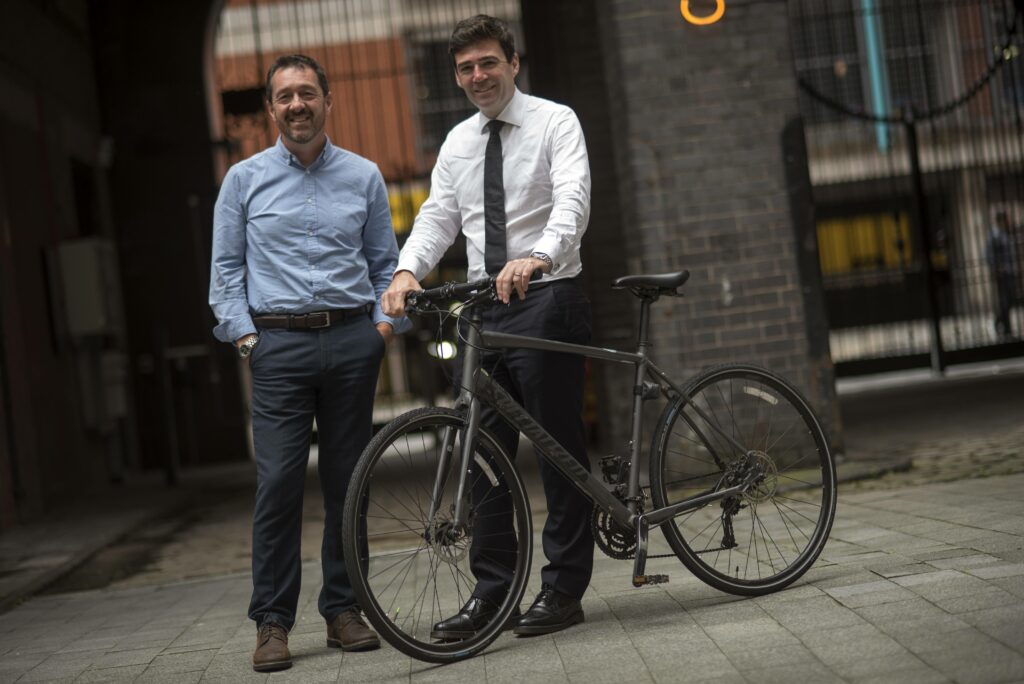
Addressing Boardman’s claim that a person on a bike doesn’t pose the same threat as someone in a lorry, Clark continued: “Sorry, but that sounds just a bit too much like a call to let cyclists off the hook. True, a two-tonne vehicle driven at 30 mph has a lot more momentum, and so a lot more potential to cause destruction, than a cyclist riding at 15 mph.
“But then two tonne vehicles don’t tend to be driven along the pavement; a space which cyclists increasing seem to think they are entitled to make their own.”
Can you guess Clark’s next topic? Of course you can.
“Moreover, more and more are riding what are not really pedal cycles at all: they are, in effect, motorbikes,” he said, claiming Cambridge has become “increasingly unpleasant to walk” around thanks to the recent proliferation of illegal bikes.
“Their riders appear to think that they can ride wherever they like so long as they use an electric motor rather a petrol engine, and many police forces are completely unbothered by this.”
He’s so close to getting it, isn’t he? So close.
“A cyclist cutting up pedestrians on a footpath is more than an irritant,” Clark added, turning to “mile for mile” travel analysis to claim that, in fact, “cyclists are killing about half as many pedestrians as car-drivers” and “around twice the number of their fellow cyclists as car-drivers do.
“Cyclists moan bitterly about how they are treated by motorists, and not without good reason,” he continued. “But they then go out and treat pedestrians in the same was as car-drivers treat them, trying to bully them out of the way. By the way, contrary to Boardman’s bleating, police forces already are focusing their ‘enforcement resources’ heavily on motorists.

“In 2024, 2.54 million fines were issued to motorists (which doesn’t include all the bus lane fines and so on). Mile for mile, motorists are receiving over nine times as many fines as are cyclists. If we could increase the number of cyclists being fined in order to bring that closer to parity with motorists it would be a lot more pleasant to walk around our towns and cities.”
I hope you’ve scheduled a few free hours today, Chris.
“When bad cycling gets all the column inches, it fools people into thinking cycling is one of the biggest dangers to us all. It isn’t”
Yesterday, as I’m sure you all know by now, Good Morning Britain set up shop at Birmingham’s Belgrave Middleway junction, where drivers run red lights every three and a half minutes (and where the red light camera was switched off years ago due to a lack of revenue funding), to tell the nation that police forces aren’t fining enough cyclists.
That segment and its subsequent studio discussion were so misguided, so riddled with factual errors, and lacking in any kind of nuance that Adam Tranter – the former active travel commissioner for the West Midlands – got in touch about writing a column on GMB, the media’s approach to cycling, and what yesterday’s outside broadcast inadvertently says about the state of bike-themed discourse in the UK.
Here’s what he had to say:
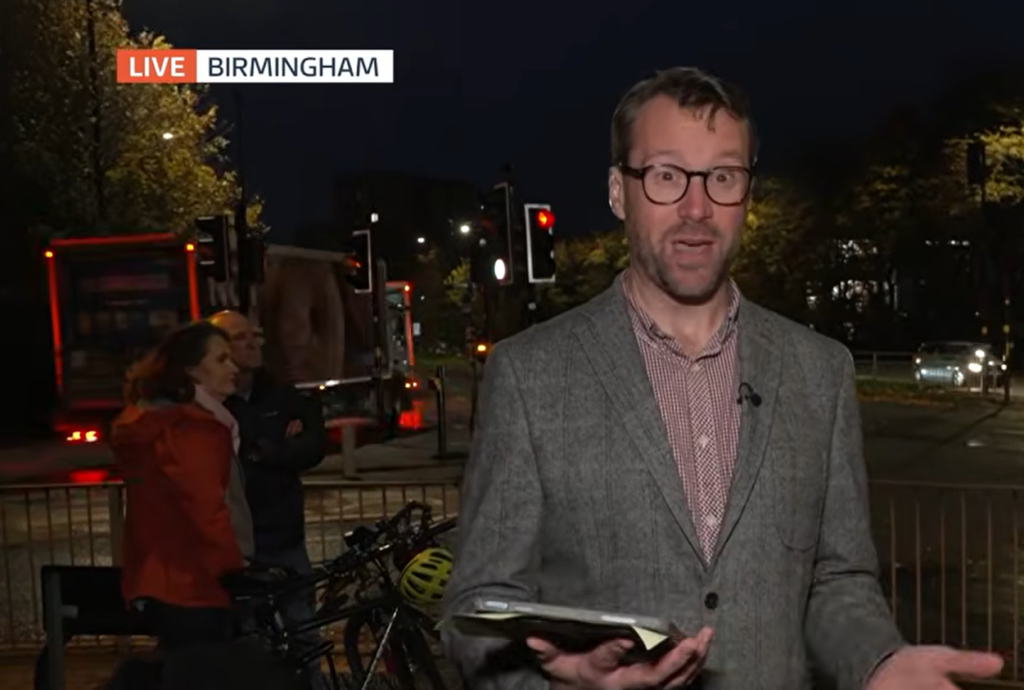
> This broken red light camera in Birmingham tells you everything about Britain’s road safety debate









1 thought on “Chris Boardman accused of “letting cyclists off the hook” as columnist urges government to give active travel role to a “pedestrian next time, rather than an Olympic cyclist” + more on the live blog”
Re the active travel commissioner role.
I suggest going a step further and offering it to somebody who drives everywhere in either a huge SUV or customised Subaru, takes part in no physical activity, walks less than 200 steps per day and has at least one conviction for causing injury or worse to a cyclist as a result of dangerous driving.
This will give a balanced and fair view on active travel issues.