


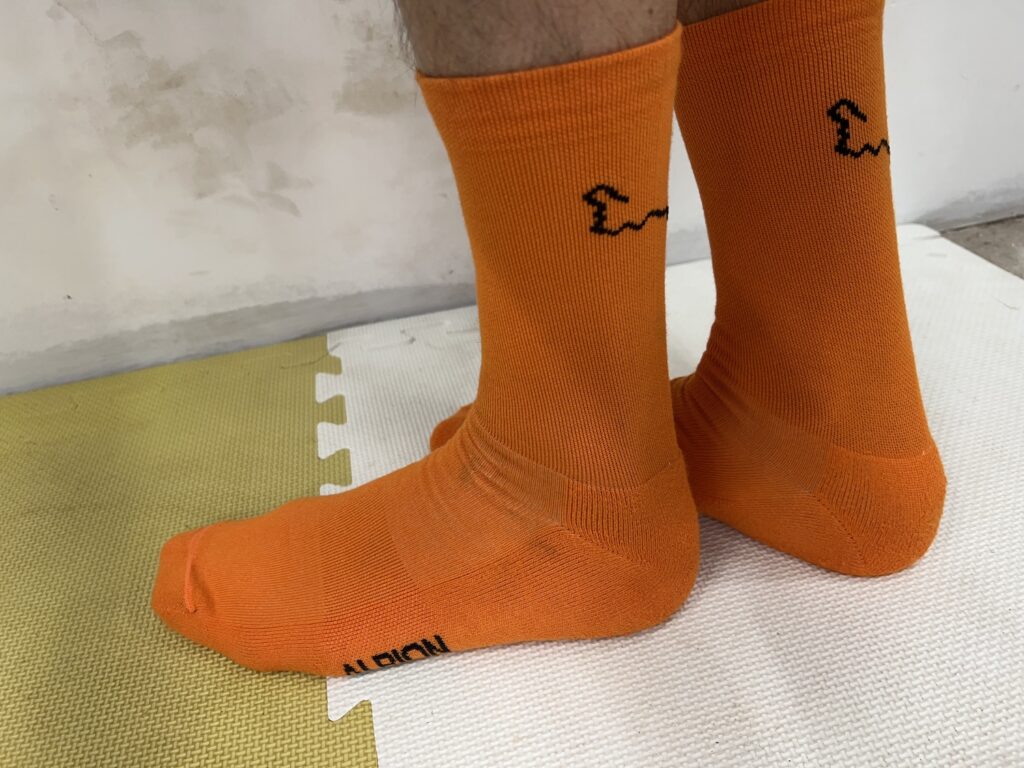

The Albion Winter Socks are great. They work across a wide range of temperatures, making them ideal from autumn to spring; the synthetic material is soft and stretchy, offering a sublime fit; the cushioned footbed cossets your soles; and the generous height is great for keeping ankles happy on longer legs.
If you’re looking for a pair of socks to keep your feet toasty this winter – or, despite the name, much of the year – these Albions should be at the top of your list, especially if, like me, you don’t like the feel of merino, as these are totally synthetic: 45% polyester, 35% nylon, 20% elastane.
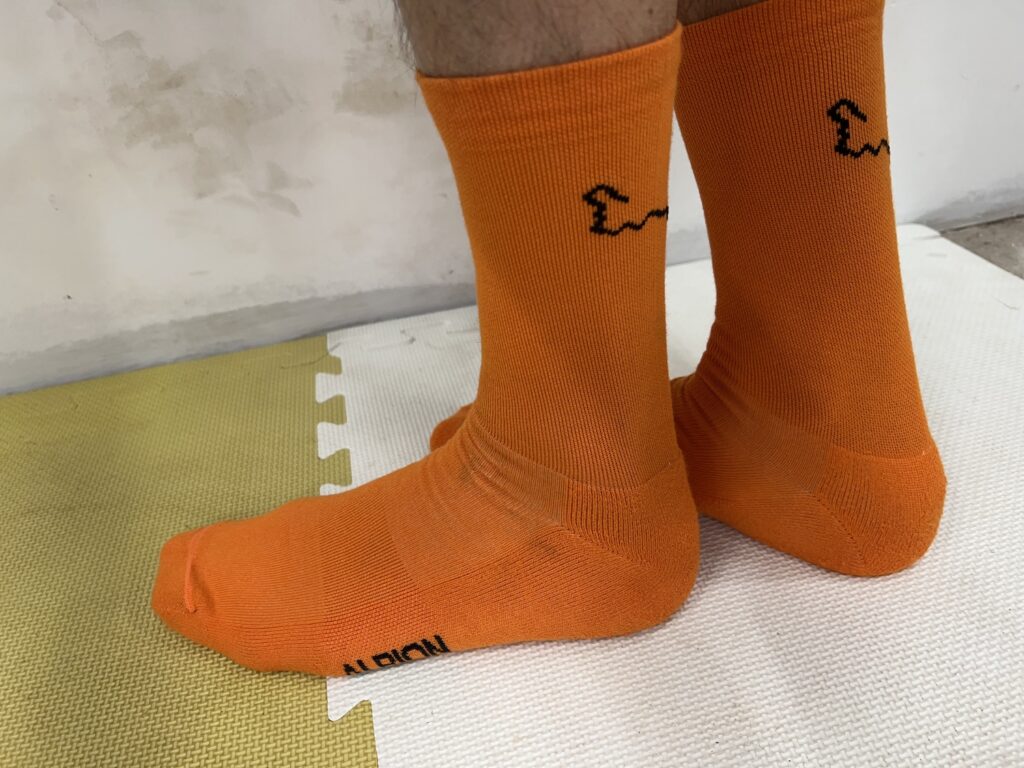
In a size XXL (EU 44-47/UK 10-13), they fit perfectly on my relatively narrow size 11 feet. They’re snug but not tight, the generous amount of elastane offering plenty of stretch. The socks are also available in S/M and L/XL, overall covering sizes from 3 up to 13, which is pretty wide.
The material feels soft, and in the majority doesn’t feel bulky, with an almost summer weight to them. Conversely, the padded toe and footbed is very thick and luxurious, and feels like having pillows under your feet. Truly, these are the best winter socks I’ve ever tried for feel (and I’ve tested a lot).
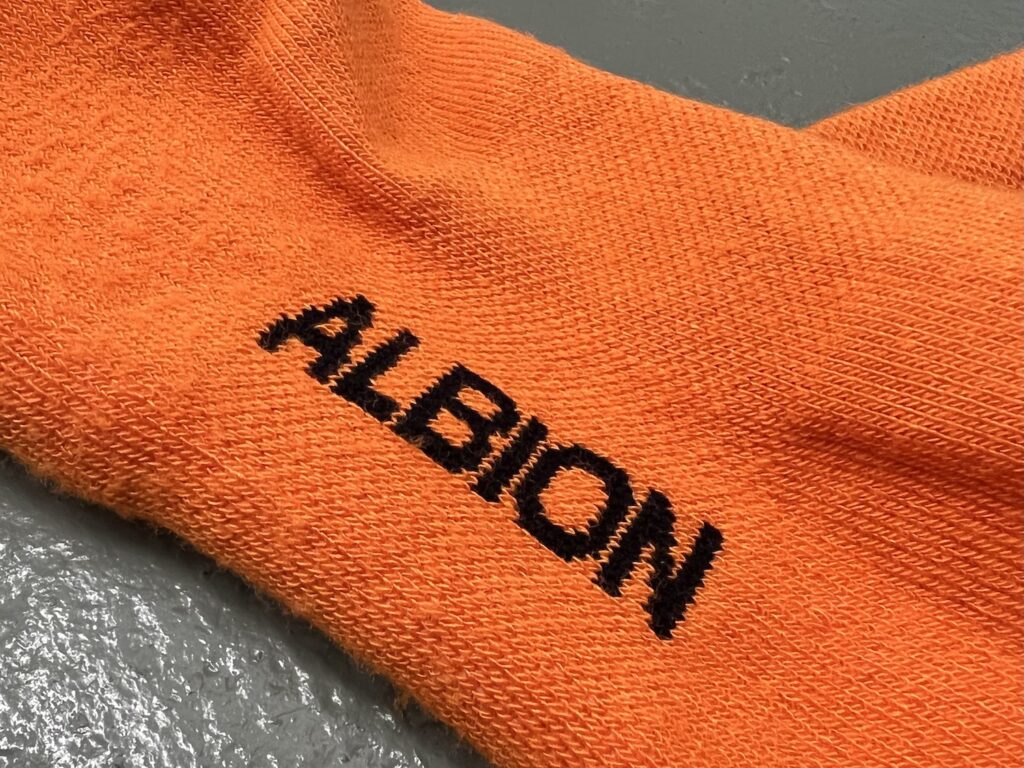
There’s plenty of height to the Albion socks too, measuring about 15cm from the point at which the cushioned footbed ends on the heel, or about 20cm from the centre point of the heel (Albion doesn’t actually state a length). Suffice to say, they are plenty long – some of the longest I’ve ever tested. If you like more coverage on your ankles/calves, or you’ve got very long legs, these will suit you very well. They might be a touch too long for shorter legs, mind.
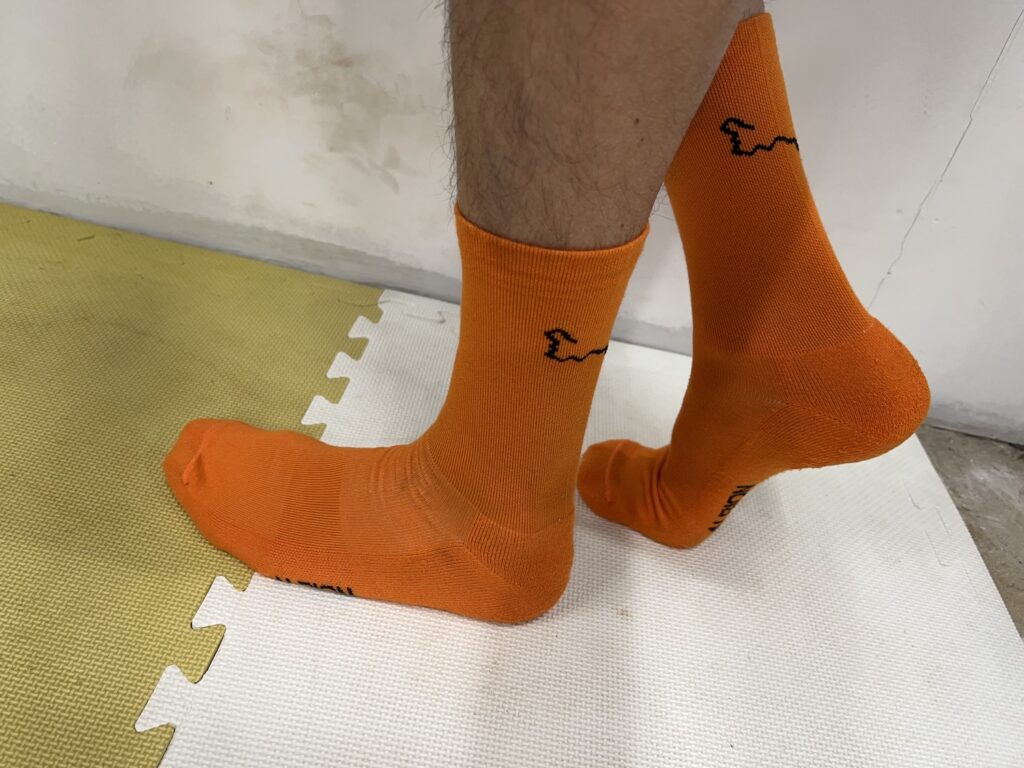
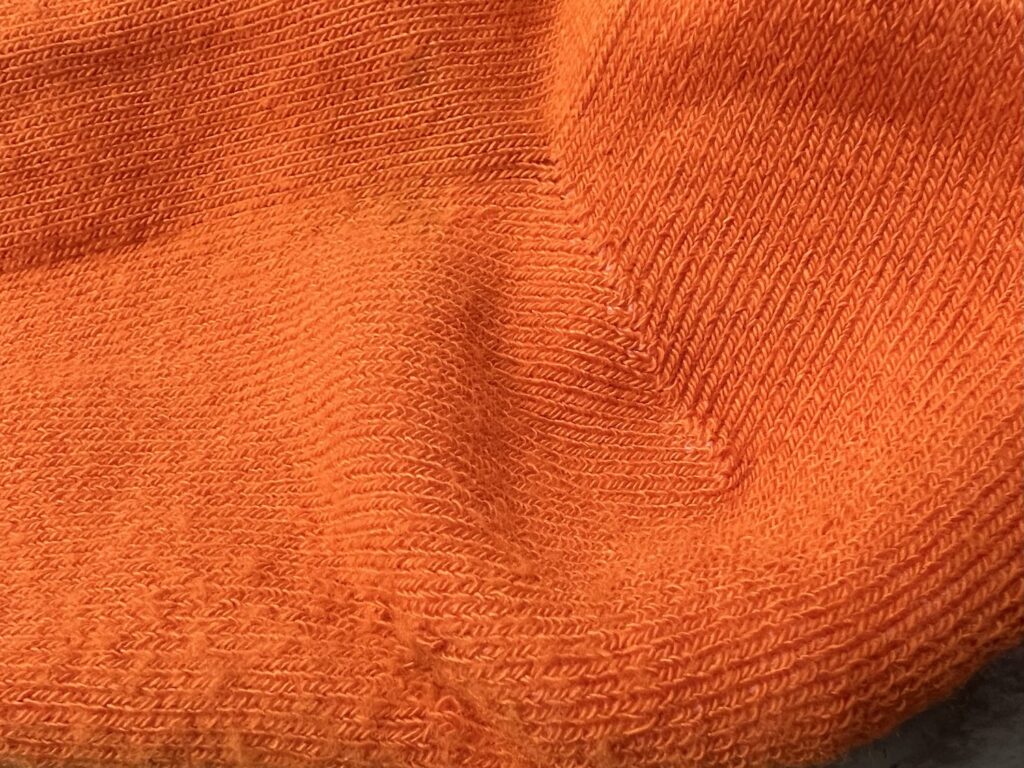
Tested across a range of temperatures, from hovering above the freezing mark, all the way up to the unusually mild weather in the mid teens we’ve been experiencing in the UK this winter, the socks performed admirably. At the low end, I only needed a pair of thick neoprene overshoes to keep my feet toasty. At the warmer end, my feet were warm but always stayed cool thanks to the excellent breathability of the material. They weren’t stinking in the slightest after a long and very wet and muddy ride around the back lanes south of Bristol, either. Top result.
Though people rave about the qualities of merino socks for retaining warmth while allowing your feet to breathe, Albion’s animal-free material performs just as well, if not better. And there’s very little bulk, too.
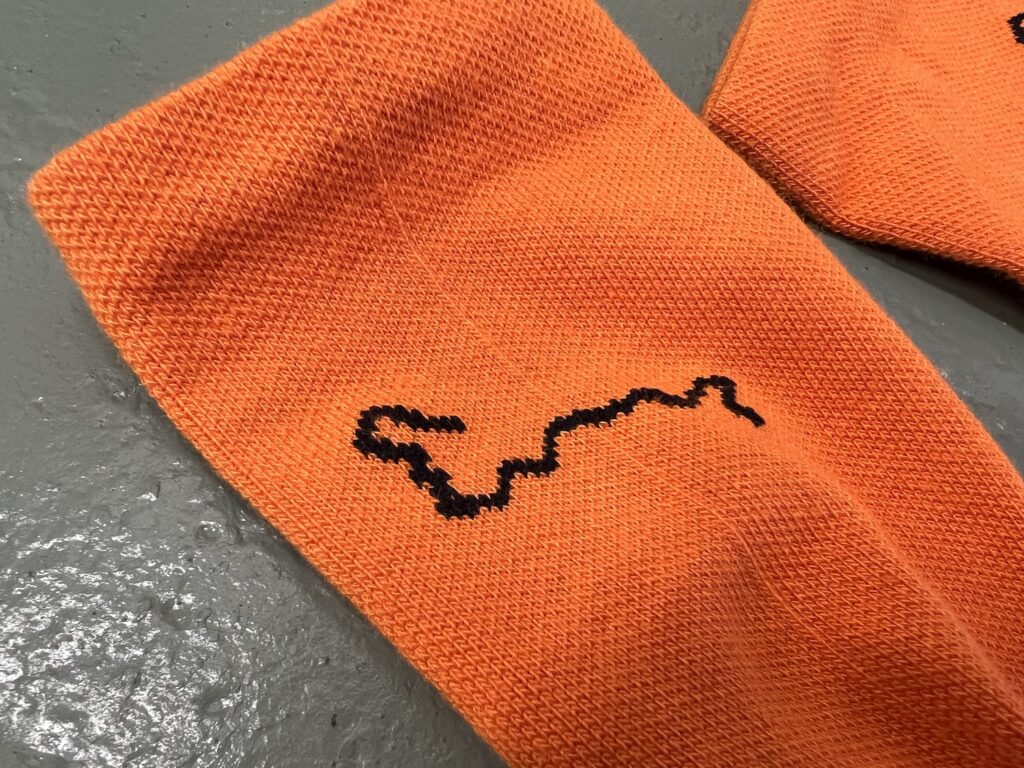
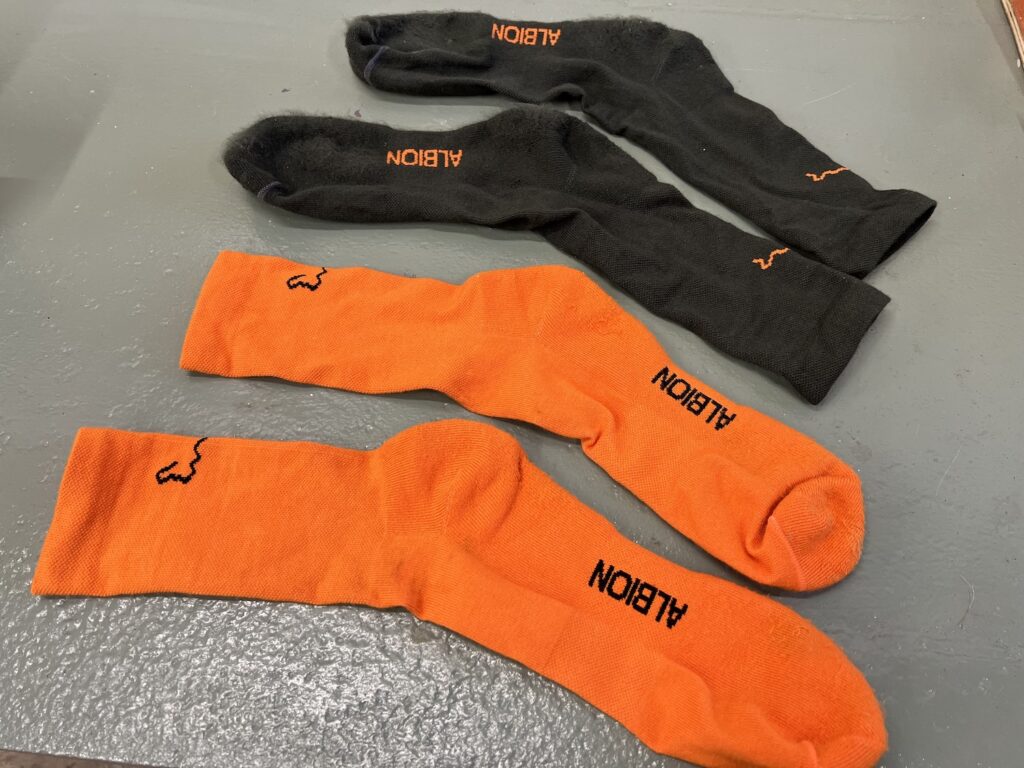
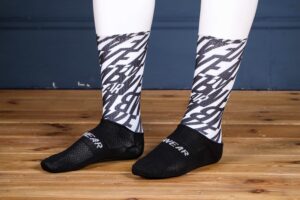
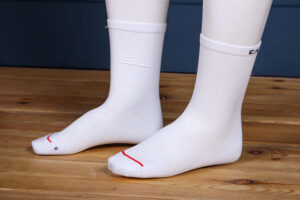
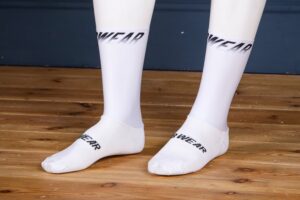
Aesthetically, Albion has gone subtle but stylish, with a dual Albion logo on the footbed, and the signature logo line on the upper section. Colours are pretty limited, with black, olive/orange and this bright orange option; a couple of extra colours would be appreciated.
Value
Given the excellent performance these socks offer, the £20 price tag isn’t bad, especially when you consider their ability to work across a wide range of temperatures. They would also work well for all kinds of riding, including road, gravel and mountain biking, despite not being advertised as such.
> Suffering cold feet? Find out how to keep your feet warm cycling through the winter
The MAAP Alt_Road Merino Socks perform similarly to the Albion Winter Socks yet cost £5 more (and contain merino wool, which some won’t like). Similarly, the Monton Pro Suutu Merino Socks are a decent option at the same price, but they’re a bit bulkier.
Conclusion
Overall, the Albions are a great option if you dislike the feel that merino socks offer and you prefer to steer clear of products that use anything animal in them. Even without merino, their performance is brilliant – warm, comfortable, and a great fit.
Verdict
Brilliant socks for keeping your feet warm and comfortable throughout winter, and in cooler months
All the deals displayed on our review pages are pulled from a constantly updating database feed of the best affiliate deals available. The criteria for deciding on what are the best deals is who is offering the lowest, delivered price. In most cases we will be showing the very best deal available online, but sometimes you may be able to find an item cheaper. If you can please feel free to post a link in the comments box below. To find out more about affiliate links on road.cc click here.
road.cc test report
Make and model: Albion Winter Socks
Size tested: XXL
Tell us what the product is for
Albion says, “Winter cycling sock constructed using a technical nylon yarn for effective warmth and moisture wicking on your longest winter rides.”
Tell us some more about the technical aspects of the product?
Albion lists:
Padded toe and footbed for additional warmth
Albion logo line
Fabric: 45% polyester, 35% nylon, 20% elastane
Made in Italy
Material feels thick and well put together.
Warm, comfortable and good coverage.
So far, so good – only washed a couple of times. One of those was after a very muddy winter ride, where the socks were caked in mud, and they came up looking like new. Slight bobbling on the footbed, but I’ve seen similar on other socks I’ve tested, which I believe is simply down to my feet moving around inside the shoes.
Perfect fit. Snug on both the foot and calf, but not too tight. Plenty of height for longer legs, or for just more coverage.
Perfect for a size 11, in XXL.
Pretty light for warm winter socks.
Thick and luxurious footbed is almost spongey, making it feel very comfortable underfoot.
How easy is the product to care for? How did it respond to being washed?
After a couple of washes at 30 degrees, the socks still look great. The orange colour hasn’t lost any of its zing.
Tell us how the product performed overall when used for its designed purpose
Great fit, very comfortable under the foot and a good length to keep ankles cosy. Surprisingly warm considering they’re not the thickest option, and they work well whether the temperatures are near freezing or in the mid teens. Breathability is also very good, and they don’t smell after long rides, either.
Tell us what you particularly liked about the product
The cushioning on the sole.
Tell us what you particularly disliked about the product
Nothing.
How does the price compare to that of similar products in the market, including ones recently tested on road.cc?
They’re cheaper than the recently reviewed MAAP Alt_Road Merino Sock, being £5 less, and on a par with the Monton Pro Suutu Merino Socks.
Did you enjoy using the product? Yes
Would you consider buying the product? Yes
Would you recommend the product to a friend? Yes
Use this box to explain your overall score
If you dislike the feel that merino socks offer, or you prefer to steer clear of products that use anything animal in them, these are a great option. Even without merino, their performance is brilliant – warm, comfortable, and a great fit. Aesthetically, they’re pretty subtle, though the orange definitely gets you noticed.
About the tester
Age: 39 Height: 6’4 Weight: 175lbs
I usually ride: Condor Italia RC custom build My best bike is:
I’ve been riding for: 10-20 years I ride: A few times a week I would class myself as: Experienced
I regularly do the following types of riding: commuting, touring, club rides, sportives, mtb,

78 thoughts on “Albion Winter Socks”
Wish I’d seen this before
Wish I’d seen this before placing an order for some other Albion stuff in the week!
I hate to break it to you but
I hate to break it to you but there are a few more Albion reviews coming this week and next week!
I already know I’m not cool
I already know I’m not cool or hip, but the Albion ‘signature logo’ looking like a stray pulled thread would drive me bonkers!
Who doesn’t like the feel of
Who doesn’t like the feel of merino? Strong opinion!
Plastic socks can only be so warm, it’s nothing on real wool socks, not to mention the environmental cost of using plastic material.
I wonder what the
I wonder what the environmental cost of Merino wool is.
Wool is 100% natural, 100%
Seriously? Compared to digging up fossil fuels and going through massive environmentally damaging manufacturing processes to make single use plastic thread?
Wool is 100% natural, 100% biodegradable and 100% sustainable, 100% in the UK, as well as being outstanding for keeping your toes warm.
Do you work for the oil/petrochemical industry per chance?
Actually some research has
Actually some research has claimed that wool production is in fact more environmentally damaging than many artificially produced fibres. This is due to a number of considerations, including the contribution to global warming created by livestock, both from directly emitted methane and manure degradation (farting and shitting, if you prefer), the deforestation of significant areas in order to provide grazing, the chemical treatments necessary in production both in situ (sheep dip et cetera) and in wool treatment (mothproofing et cetera). It’s a complex picture and certainly not as clearcut as natural good synthetic bad.
Prosper0 wrote:
Is it? Isn’t wool a by-product of the meat industry? in which case it isn’t all of those things.
Let’s just break some stuff down
100% natural – this is pretty much meaningless when it comes to any consumer product. In this case the sheep providing the wool have been farmed over millennia involving intensive selective breeding (AKA GM old skool), and wide-scale clearing of forest and subsequent supression of the same.
100% biodegradable – that’s a plus. Or rather not a minus at least.
100% sustainable. for this you’d have to define what you mean by both 100%, and sustainable. As mentioned before it is a by-product of the meat industry – ie shearing lambs before they go to slaughter, and ewes throughout their useful (to humans) life before they go for dog food. As wool is so cheap in this country it is barely worth selling, and some producers are throwing it away
100% UK – AS UK wool output is in the low single digits percentage of the world market I’d say that is likely to depend entirely on what you buy.
Outstanding performance – Another plus, but of subjective value and of no consequence to the environment
I don’t know what the answer is here, but wool is certainly not a panacea
I don’t think Merino comes
I don’t think Merino comes from sheep used in the meat industry as they’re a bit smaller and apparently not as tasty. As far as I know, industrial meat production uses lambs rather than older mutton so I guess that Merino sheep are happy to get shorn every so often rather than getting eaten.
hawkinspeter wrote:
This would tend to increase the environmental footprint of the wool then, as pasture (with associated environmental problems of deforestation, increased water runoff so lowland flooding etc) has to be found for the specific production of wool, rather than it being a spinoff (ha!) product.
Rendel Harris wrote:
Depends on whether they let the sheep roam on rocky hillsides that aren’t suitable for farming on – sheep can use land that otherwise isn’t used.
hawkinspeter wrote:
The ideology that land that isn’t being used for human economic activity has no actual value is one of teh key drivers of environmental degradation.
The ecosystems that are exploited to support sheep farming are still massively damaged, even if we can’t see it on an afternoon stroll. The rocky hillsides are often rocky simply because the plants and trees that might otherwise cling to a niche there are destroyed by sheep whilst foraging.
Captain Badger wrote:
I agree with you that land shouldn’t just be valued based on farming, but I’m not convinced that rocky hillsides are that way because of wool production. I’d guess that farming sheep for food is a lot more intensive than wool production and of course people don’t buy wool as often as they buy lamb. There’s a similar problem with deer roaming the countryside and over-grazing areas as their numbers are growing without any big predators to keep them in check.
hawkinspeter wrote:
Is all rocky hillside rocky cos sheep farming? No clearly not.
Is all land used for sheep farming (rocky or not) catastrophically changed and degraded as a result? Yes, most definitely
You are absolutely correct on deer. See change to the landscape after wolves were reintroduced in yellowstone
https://www.yellowstonepark.com/things-to-do/wildlife/wolf-reintroduction-changes-ecosystem/
The problem isn’t deer roaming the countryside per se. It’s human activity that results in a viciously degraded environment with no apex predators. The deer are a byproduct of our activities rather than a problem in themselves.
I seem to recall that Merino
I seem to recall that Merino sheep don’t like cold n wet (ironically) so much like cashmere it is all imported into the UK. Now alpacas love UK conditions and their wool makes pretty good sock…
SimoninSpalding wrote:
https://www.tellenbymerino.com/
https://www.bamford.com/uk/collections/home-grown-merino
They may not like, but they’re damn well gonna put up with it!
hawkinspeter wrote:
Not sure that they are able to make that choice, or that option has ever been presented to them in the first place. Not quite “cake or death” is it?
Yes the vast majority of meat from sheep is lamb. The ewes are kept to breed until they are worn out, and then sent to the same place as the vast majority of their offspring, and as you point out is generally not consumed by humans (scant comfort as that may be). Apart from paying lipsevice to the publicity gods welfare isn’t even a consideration, let alone a driver to farming policy.
Actually as an interesting titbit that I just picked up, there is only one Merino farmer in the UK, according to the Make it British website. And quite a mess of contradictions that “source” is
I was about to say the same –
I was about to say the same – though its worth noting that the majority of Merino socks are not pure wool as Merino’s not great in high wear areas. Unless they are mulesed the sheep are generally treated pretty well as HP notes. They are generally bred & farmed in highland areas so the land clearance issues are less too.
Obviously nothing involving global scale human consumption is zero impact to the planet but I think the intent of the Proaper0’s post whilst it could have been phrased better doesnt warrant the giant dogpiling that seems to have followed. Are we twitter now?
Secret_squirrel wrote:
Is that sheepdogpiling?
(No subject)
Mulesing is illegal in the UK
Mulesing is illegal in the UK and New Zealand though it’s still used in Australia.
hawkinspeter wrote:
and I don’t think this was covered in the recent trade deal with – hang on! Are you trying to create a hybrid Brexit/Animal rights thread of implosion?!
HoarseMann wrote:
That’s the road.cc episode.
That’s the road.cc episode. Squirrels and portable angle grinders !
Secret_squirrel wrote:
I don’t think there is a great deal of dogpiling here. I haven’t seen any abuse, or even direct criticism of Prosper0 themselves, but there is clearly disagreement. Neither is Prosper0 alone in their view – Rich also seems to be happy to provide a spirited support
I would have thought any article is up for discussion, and therefore any comment up for disagreement
Captain Badger wrote:
So it seems that if people are buying UK wool they are essentially buying what whould otherwise be waste, and the product is biodegradable. Surely this is preferable to plastic fibres?
If/when meat consumption drops to the point where there is not enough meat to match demand then it would be a different situation. I think it’s unfair to lay the environmental degradation of emat farming at use of wool (form sheep which would exist in the food supply chain anyway)
Generally anything that is grown is more sustainble than anything which is dug out of the ground. (there is a limited amount of material underground to be extracted, while what is grown can be grown again the following year) Provided growing the resource is not so energy intensive it results in fuel being dug out of the ground. Or does not degrade the land used over time to the point wher it can no longer be used for agriculture.
Merino sheep do not do so well in the UK as I undertand it, so merino wool is less likely to be a uk product and the resultant fabric miles are likely not to be sustainable.
In order to meet climate emissions targets I’d like to see a reduction in globalised supply chains to only obtaining what cannot be sourced locally, rather than what can be bought for less with large amounts of transport.
wycombewheeler wrote:
From a quick search, there is Merino wool production in the UK (and exported to the EU). I believe they use Australian sheep (bred for extremely fine wool) and harden them up a bit to deal with our conditions (presumably by selective breeding – I don’t think they import each individual sheep).
I recently read that almost 40% of global shipping is to transport fossil fuels around to be burnt: https://billmckibben.substack.com/p/the-happiest-number-ive-heard-in.
wycombewheeler wrote:
I made no comment on that, however it’s only waste if it’s discarded. if it’s sold it is supporting the meat industry. Sadly you can’t separate teh two.
You don’t farm meat, you farm sheep. Sheep farming is damaging, no matter how you use the product. Those that produce wool are also selling teh sheep for meat and vice versa (that is if they don’t just discard the wool)
That generalisation doesn’t really add up. The majority of teh British country side has been deforrested for agriculture of one kind or another.
Abroad is no better, degradation of rain forest for livestock, palm oil, bananas etc. Mining is bad ≠ farming is good
Agreed this should certainly be part of an integrated environmental policy
Really? Do you know where the
Really? Do you know where the majority of merino wool comes from? It’s not local, that’s for sure.
And that’s not getting into the ethical side of things. Unlike synthetics, there’s a direct cost that comes in the form of animal exploitation.
You think sheep have a wonderful life making your socks?? Think again.
There’s no direct cost to the
There’s no direct cost to the oil industry?
That’s before you get into micro plastics and the current dearth of recycling options for mixed synthetic fabrics.
It’s possible to buy high welfare merino, it’s not possible to avoid all of the above issues with any oil based material.
Alternatively don’t use
Alternatively don’t use either plastic based or animal based products. Simple really.
https://plantbasednews.org/lifestyle/8-eco-friendly-vegan-fabrics-replace-wool-without-plastic/
And if you still think wool is some magical material that is good for the planet, think again: https://plantbasednews.org/news/environment/report-eco-friendly-wool/
If you were reviewing a
If you were reviewing a product made of hemp or linen then that link may have been relevant.
As it was you reviewed a product made out of oil and noted that feature as a positive.
I don’t think there’s a single metric by which oil production can be considered superior to wool production so if you’re going to praise non recyclable, non degradable products made from fossil fuels you’re going to need to provide some better evidence to back up that position.
Point of order: it wasn’t
Point of order: it wasn’t noted as a positive – it was just noted.
It doesn’t make any value judgement as to whether that should be a consideration for you.
(Although I do have one quibble with that – that ‘and’ should be an ‘or’…)
I thought the inference was
I thought the inference was pretty clear and given the later comments by the author it appears I inferred correctly.
But, in fairness, it wasn’t explicitly stated as being a positive feature so point taken.
Rich_cb wrote:
Not so much in the form of animal exploitation, which I believe is the context of HollisJ’s comment
That is one factor of pollution, however wool is not non-polluting by any stretch of the imagination.
No it’s not. The welfare of the animal is (aside from where it can have a monetisable effect on the quality or volume of the end product) is not even a consideration. In that environment “high welfare” is meaningless from the perspective of the animal. It is about making us feel good, not the animal.
It’s not possible to avoid these issues with anything we as humans do. All we can do is look at the least worst option – which is in most cases plant-based fabrics.
Captain Badger wrote:
Nope – grey squirrel fur has to be the best material. As far as plant-based fabrics go, isn’t cotton fairly bad with its high water requirement?
There’s also the genocidal
There’s also the genocidal slave labour aspect of Chinese cotton (20% of world supply).
Whilst we’re debating welfare standards for sheep it may be worth acknowledging how our fellow humans are being treated.
Rich_cb wrote:
If you really need it acknowledging consider it acknowledged.
Cracking piece of whataboutery though.
Whataboutery?
Whataboutery?
If we’re discussing the ethical pros and cons of various materials I would have thought the fact that a huge amount of the global cotton supply is produced by genocidal slave labour would have been pertinent information?
Rich_cb wrote:
You had your acknowledgement.
If genocidal slave labour was inextricable from cotton production you would rightly have a point. I would have thought though we didn’t need to tag “genocidal slave labour of any product is bad, kids” to our comments.
It currently is inextricable
It currently is inextricable for the vast majority of cotton and likely will be for some time.
The global supply chains for cotton are so complex that it is incredibly difficult to guarantee that a garment does not contain Chinese cotton.
With recycled cotton it is impossible.
If you’re looking for the most ethical material available cotton has to be pretty far down the list right now.
https://www.bbc.co.uk/news/world-asia-china-56535822
Rich_cb wrote:
But not to cotton production intrinsically – you tacitly acknowledge that cotton is producible without slave labour. Wool however is not producible without animal exploitation (although as china has a growing Merino industry, and with a nod to your valid point about global supply chains, neither is this likely to be untainted by slave labour….).
As that cotton is already in the environment, you raise a valid question – should we just discard it (burn it, landfill it etc) or is it ethically acceptable to recycle it.
I would say yes to the latter, with the proviso that we aggressively pursue a (political) mechanism to prevent unethical sources tainting the supply chain of new materials. This would require a complex solution the details of which I believe to be out of the scope of this discussion. However what is clear is that it would take vision, will, commitment, resource, and close collaboration with our international partners – at least one of which would be highly reluctant to cooperate.
Which leaves us with the knotty question of what pair of socks to buy. It seems clear that whatever choice we elect, in terms of quantity the best option would be “as few as absolutely possible”
IT’s been quite a while since we last conversed Rich, but I must confess it has been fun, and hopefully as thought-provoking for you as for me. Have a great day.
hawkinspeter wrote:
Yes. The least damaging textile is probably recycled cotton.
The case doesn’t look good for consumerism. It will (likely) be the death of us, one way or another.
It seems any material and any
It seems any material and any motorised form of getting around will bring about the downfall of civilisation / further abasement of the shoddy living conditions of most people on earth. If only we could just get by without, somehow?
chrisonatrike wrote:
Maybe not right now. But come May will be sure to see you on teh beach!
If you’re worried about
If you’re worried about animal welfare it’s absolutely possible to get wool from sustainable, happy, uk based, organic sheep.
The same cannot be said for single use plastics made from oil dug out of the ground in Saudi Arabia, transported to the UK and manufactured. Is this a hill to die on?
Cool. So tell me – is your
Cool. So tell me – is your life free of single use plastic and oil based products? Or do you only wave that flag when it comes to cycle clothing?
No animal is ever ‘happy’ having their freedom taken away and exploited. Do you think human slaves living in good conditions were ever happy?
HollisJ wrote:
Not cool.
This is a harsh and, I’d say, counter-productive. We mostly try to make the right choices based on the information we have and our understanding of impacts. But it’s pointless to reject ideas from others due to insufficient purity.
Did Desmond Tutu ever have a violent thought in the anti apartheid struggle? If he had, would that diminish his moral authority? Has Jonathan Porritt or David Attenborough ever used a cotton bud? Does that mean that they have nothing to say? Have you, Hollis, ever used an animal product, such as a beer that used a fish-based fining agent? Have you ever swatted a fly or crushed an ant? Does anything in your personal food chain impact on animal welfare? How about animal protein in vaccines?
Environmental issues are difficult to get simple answers on. Which is better, polyester, merino, other wool, or plant based fabrics like cotton or bamboo? How can you balance sheep burps against bamboo transport or forest destruction?
This has been a pile on and it’s unworthy of the site, especially from one of the reviewers. We should be able to stick to respect for opinions and polite counter-argument.
TheBillder wrote:
Respectfully TB I can’t see a pileon here, just some different opinions being discussed and argued perfectly civilly.Have I missed something?
Rendel Harris wrote:
Respectfully TB I can’t see a pileon here, just some different opinions being discussed and argued perfectly civilly.Have I missed something?— TheBillder
“HollisJ wrote:
Cool. So tell me – is your life free of single use plastic and oil based products? Or do you only wave that flag when it comes to cycle clothing?”
That, I think, isn’t good. The waving a flag selectively suggestion, along with the implied “you can’t make your point unless you can show your own purity from birth”.
Some people think you can have happy farm animals (e.g. Prosper0, who I’ve not read much of), and hence ethical animal products, and some don’t (e.g. Capt Badger, whom I hold in high regard). But I think the debate should stay dispassionate.
Life is full of compromise, and none of us has perfect information. We all decide what weight we attach to given factors – animal welfare vs shipping emissions vs use of oil vs use of water (cotton in the dock there) vs unknowns – many of these on my current favourite material (bamboo). And I can discuss that with you without you asking if I’ve ever worn shoes made of Australian leather or me insinuating that your concerns are irrelevant because you once drank fizzy water from a plastic bottle and binned it in general waste.
Have I become over-sensitive?
TheBillder wrote:
Wee bit maybe, I entirely take your points but that doesn’t seem a particularly egregious example – a bit silly rather than out and out aggressiveness?
TheBillder wrote:
You might want to read up on viscose rayon, which is the fabric green-washed as bamboo.
Here’s Patagonia on why they don’t use it:
https://eu.patagonia.com/gb/en/stories/why-dont-you-use/story-19681.html
The TL;DR is that the viscose process is the major source of carbon disulphide, a neurotoxin, in the environment.
MiserableBastard wrote:
Nudity is the only way forward until I am composted (with full methane recovery and recycling of my fillings) after death.
More seriously, how are we the punters to choose anything when everything is bad for the environment? Some sort of scoring system like fridge power consumption labels that manufacturers will then try to game?
You might want to read up on viscose rayon, which is the fabric green-washed as bamboo.
Here’s Patagonia on why they don’t use it:
https://eu.patagonia.com/gb/en/stories/why-dont-you-use/story-19681.html
Very interesting
Prosper0 wrote:
I presume (from that statement) that that is of no concern to you at all
it’s absolutely possible to get wool from sustainable, happy, uk based, organic sheep.
….— Prosper0
It really isn’t on the first 2 points. The 3rd and 4th possibly.
Captain Badger]
duplicate – Road.cc, please can the delete function be made permanent
HollisJ wrote:
Oops! I just wanted to make
Oops! I just wanted to make sure that merino wool did not get a free pass on environmental impact just because it isn’t “big oil”. Of course it is “big farma” instead, and that has an impact.
Lots of things have been mentioned above. Not forgetting that grazing sheep means that nothing much grows except grass, which reduces the biodiversity supported. So the ecosystem is hugely impoverished. The CO2 that would be absorbed by scrubland and ultimately forestation is denied. Plus, sheepdip, that’s not nice stuff either, organophosphates blah blah.
That’s quite a toll, and I just wondered how it weighed against the toll exacted by artificial fibres. Maybe someone has done the maths?
PS: single use threads? I wash mine and use them again.
I’m just worried what’s going
I’m just worried what’s going to happen when they look at the website stats and decide that sock reviews generate the greatest ad revenue!
Dedicated sock review micro-site maybe?!
HoarseMann wrote:
Would road.cc then become a sock puppet?
Personally I think in terms
Personally I think in terms of carbon addition.
Any fossil fuel use adds to the sum of carbon in circulation. This inevitably leads to an increase in atmospheric CO2 with all the problems that entails. The extra CO2 persists for centuries.
Sustainable farming does not lead to a net increase in carbon.
Methane is an issue but it only persists in the atmosphere for 10-15 years before being broken down and will be partially offset by the CO2 absorbed by the soil and the animal feed.
We also have to consider that were an area not farmed at all then it would be likely inhabited by wild animals who would be cheerfully producing their own methane which further reduces the net methane production.
Rich_cb wrote:
But at present it is being constantly replenished and with livestock at historically high levels it will go on being so at a greater rate than it is broken down, we’re pouring a quart into a pint pot in that respect at present which is why global atmospheric methane levels have gone up from around 1640ppb in 1984 to almost 1940ppb today and are still rising.
The huge amount of methane
The huge amount of methane emitted during oil drilling and coal mining may have something to do with that as well.
Cattle population appears to be fairly static for the last decade.
Rich_cb wrote:
Tricky to do sustainable farming when even the depth of ploughing has an impact. Also, given that farming is so much about subsidy, it seems difficult to build a farm economy that does what we need without damage.
Isn’t that only significant for ruminants?
I think you asked a very good
I think you asked a very good question – not least because we don’t really know the answer. Like issues around plastic bags, it’s not always as obvious as it fist appears.
The point around biodiversity is a good one. Many of our favourite ‘natural’ landscapes (e.g. the Lakes District) have been hugely bio-impoverished by sheep farming, not to mention the terrible flooding the bare slopes have contributed to.
In addition to the initial environmental cost per item, I also wonder about the effect of durability. How many wears would you get from a pair of wool or merino socks versus a synthetic pair? Even if the latter had (say) twice the initial cost per pair, if they lasted three times as long… As with the other factors, I don’t know the answer but it seems a valid question.
Sizing up to XXL (UK 10-13)
Sizing up to XXL (UK 10-13) is pretty impressive. Finding decent size socks (and footwear in general) for my ‘generous’ feet is the bane of my life.
And yes I know, if that’s the bane of my life, I have it pretty lucky
Interesting discussion in the
Interesting discussion in the comments to this review, obviously we’re seeing more brands making environmental and/or sustainability claims these days, which has got us thinking that a feature looking at those issues in more depth would be very timely, so keep your eyes open for that.
I look forward to that –
Surprising the discussion a pair of socks can generate!
I look forward to the article – although I’m not sure you need go into much more in-depth than concluding that those who want to sell stuff (which is lots of us) will use whatever spiel works best for that purpose.
Possibly the biggest
Possibly the biggest environmental benefit of this product is that £20 is such a ridiculous price to pay for socks (which aren’t even for walking in…) that you can’t afford too many pairs. Buying Less Stuff is often the most environmentally-beneficial option.
Correct. And it’s a bit
Correct. And it’s a bit hypocritical of some people here to give a fleeting display of environmentalism while pushing sources of pollution such as e-bikes over traditional cycling, which produce multiples of pollution over their lifetimes and have problems with their battery composition such as lead and lithium.
It reminds me of “ethical” chocolate, which is just a lame front to excuse the EU of refusing to stamp out cocoa produced by modern slavery.
The story here is simply another one for middle classes to laud it over their less privileged peers by saying how they care more for the planet than everyone else, and for producers to make more profit on the back of those decisions. Of course, in reality, people with more money produce more pollution, which ties in with your comment: if you spend £20, you don’t have £20 to spend on something else.
If government wanted more sustainable clothing they could legislate for it tomorrow. But it isn’t a vote winner and would disproportionately hit the poorest the hardest.
I rather you didn’t use my
I rather you didn’t use my post(s) as an opportunity to go trolling, thank you.
Amen brother.
Amen brother.
I’d rather you didn’t use my
I’d rather you didn’t use my post to personally attack me, thank you. If you have issue with something I’ve written, feel free to say what that would be, but please keep things respectful.
Duncann wrote:
Well said sir.
I think that is the perfect
I think that is the perfect response. Firm, but respectful. I liked the ‘thank you’.
Duncann wrote:
I think what you meant to say was…
…”Put a sock in it!”
Although the Vimes Boot
Although the Vimes Boot Theory also works (although probably not in this case if they don’t last that long) where you buy the expensive good pair and they last alot longer and alot cheaper in the long run then the 10 pairs of cheap ones you have to purchase over the same period.
Certainly true for some
Certainly true for some things, although price and durability aren’t necessarily correlated (and durability isn’t always the most important thing).
Being synthetic, these socks might actually last quite well, certainly compared to wool. Which would burnish their environmental and VfM credentials. I still wouldn’t pay £20 though!
Comments are closed.