


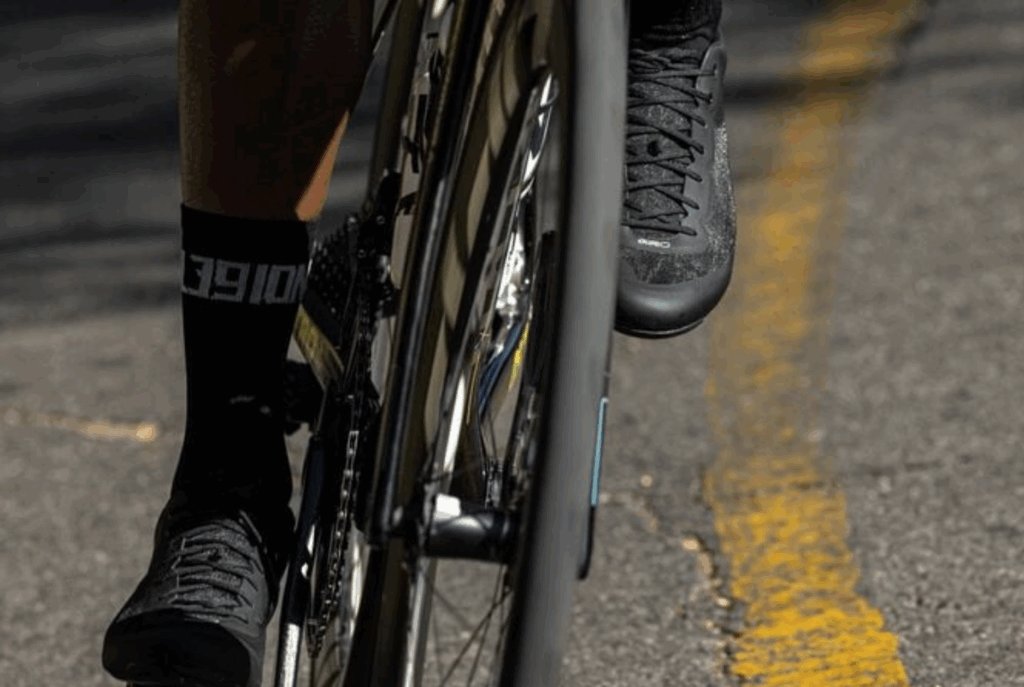

My spangly new size 47 torture devices suddenly transported me straight back to a spring evening ride of 1981, when a young me traded his teenage kicks for a red village phone box while in near-tearful, excruciating pain.
It’s strange, as I struggle to remember things from a couple of hours ago nowadays, but every teeth-grinding moment of that foot-crippling ride suddenly came flooding back in vivid technicolour.
As I shook my jaded brainbox back to the present moment, I twisted my new shoe Boa dials and turned tail for home. On looking down at their faux black leather and perforated uppers, in a John Candy-like flashback, these long and painfully narrow fresh clogs from hell suddenly looked uncannily like a reincarnation of the painful Duegi shoes I’d been wearing all those years ago.
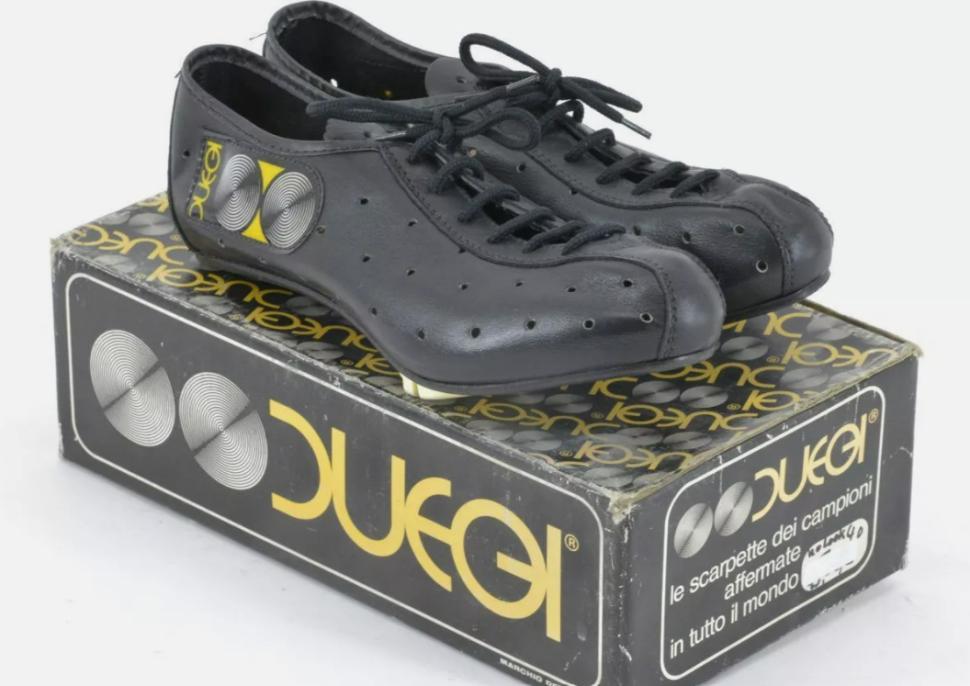
This was far from the first time over the years that I’ve had to completely ditch new cycling shoes for being ridiculously tight and narrow, at least for a big and fairly wide- footed guy like me that is. Turning the Boa dials of time back to 1981 again, and Duegi shoes had just become available locally, and were supposed to be ‘the dogs’ in fancy Italian cycling shoe terms. Even back then, Italian shoes (especially Sidi) were known for being narrow, and so I always assumed that all Italians must also have narrow feet back then – it somehow made sense.
The old nail-on cleat Rivat shoes and other French footwear I’d strutted in before that were reasonable enough on the fit. Though, hey, it was Duegi or nowt now. Those old French foot fillets were no longer cool, to the extent that I bought Duegis two sizes too big (it’s all they had). My Woolworths bargain record bucket cash all went on these handsome – yet monstrous – wooden-soled beasts, which had some of the first bolt-on cleats at the time.
I’d already been pushing my paces in pain with these shoes, which had zero flex in them. Trying to break through the pain barrier, I assumed it was down to the solid soles and teenage growing pains – which it likely wasn’t (they were really narrow).
In a bizarre and EP hazy dub-mix of Adam & The Ants, battered in a scoop of The Jam and rounded up by the Police, this particular King of The Wild Frontier eventually swallowed the Bitterest Pill – and gave in to the King of Pain… apologies for the musical sidetrack there, but that was about where my pain distraction mechanism was at right then. This was the moment that forced me step into that dreaded red box, to drop the coin in the slot and call home for help. The shame of that moment was almost as painful as my feet.
Fast forward through a lifetime of cycling and more shoe purchases than Imelda Marcos, and more pain than a sadist’s fantasy dream, here I was again – cursing cycling shoemakers for making the damn things so tight and narrow. I guess it’s mostly in a quest for perceived performance gains, though surely comfort is speed – which equals performance enhancing, or at least it is for me. And for many others too, I imagine.
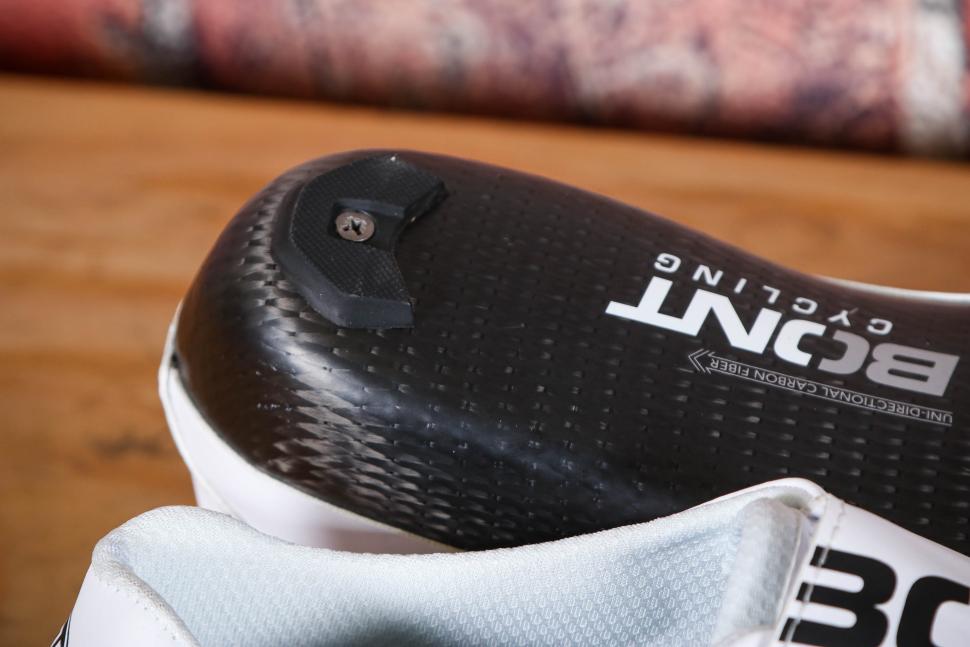
Through many years of cycling and countless shoe brands, I’ve mostly chosen to ride lower end options with non-carbon soles. For a long time, I figured it was the extra bit of flex in the soles that made them more comfortable (and to an extent it was for me), though I guess the higher end models are also likely slightly narrower. At least they feel and react that way, maybe because of that rigidity.
Now, before I start to come across all anti-carbon fibre, some of the most comfortable shoes I’ve had in recent years have indeed been carbon-soled – including a pair of custom Bonts (which are known for being wider fitting, even off the shelf), and some top drawer kicks from Gaerne in the wide fit option. Sadly, those models have been discontinued.
For some time now, I’ve been based in a part of the world where big shoes of any ilk are impossible to find, meaning it’s pot luck, mail order only. I’ve gone through a fair few not-so-footloose years, often painfully crammed into narrow shoes as that’s all I’ve had available. I’ve learned a lot about the biomechanical system of late – the hard way, and that includes a whole lot of chats with cycling specialist physios, bike fitters and manufacturers of sports shoe inserts. It seems I’m not alone here, far from it.
As I slowly transition through my latest batch of big shoes, I’ve got down to a suitably wide selection, all while continually glueing together the cheap old pair I bought online on a whim and a prayer of wideness, as I ‘break in’ their successors. Through all of this, I can’t help but think that brands are missing out on that slightly wider option and its potential sales returns (yes, some do now also offer ‘wider’ options), although it would be an expensive implementation for them to increase their fit selection on all models of shoe. Surely it would be worth it, though?
For now, all we need is for some aero technician to do some wind tunnel and power transition tests and add wide shoes to wide tyres on their secret speed not-so- marginal gains list, and the carbon-soled footprints of the cycling world would suddenly be a lot bigger. Free the feet!
Oh, and don’t start me on tight-fitting kit. At least not until I’ve had a chance to breathe in…










20 thoughts on “Dear cycling shoe makers: please spare a thought for us wide boys and girls”
Lake wide fit. discovered
Lake wide fit. discovered about 6 years ago and now own road, race and mtb. the more expensive Lake are leather and unsuitable for UK conditions. Cheaper , double BOA are the best shoes
Absolutely – I have wide feet
Absolutely – I have wide feet and lake are the best fit for me… highly recommend them – over bonts that it took two pairs for me to realise weren’t wide enough!
Muddyfox tour 100’s I’ve wide
Muddyfox tour 100’s I’ve wide & flat feet plus there’s the optional choice of using cleats with them…
And if you’re size ’48’ which
And if you’re size ’48’ which like ballet shoes if more like a 46 in most higher end bike shoes, they are easy to find. Next to the box of rocking horse droppings in your LBS.
Bont double wide wearer here.
Bont double wide wearer here. Even Lake, for me, are too narrow in the toebox and midfoot, but Lake work for a lot of people.
A couple of new and very different and exiting shoes to lookup are Leviathan from Strong Feet Athletics, and Helu Two from Hezo cycling.
Other than making cycIing more fun through added comfort, once you have stiff shoes, be it plastic, carbon or a composite, the performance difference would be increased more by comfort than stiffness. Comfort is likely to reduce the nueromuscular restrictors, leading to better performance…… perhaps a personal opinion.
eeney wrote:
Another vote for Bont, here. I bought a new pair of wide-fitting Bont Riot G MTB shoes this year and they’re perfect.
A third Bont recommendation
A third Bont recommendation here (Riots). They are so comfy I’ve not need to use the custom heat fit sole. The virtual sigh of relief my toes make as I switch over from my winter/wet Northwave MTB boots to the dry/summer Bonts is genuinely something I look forward to.
Good to know. I need to go a
Good to know. I need to go a size up in Lakes or Shimano wides.
Mrs H suffers when wearing
Mrs H suffers when wearing narrow shoes, just bought her a pair of Giro Berms which she loves and apparently are very comfortable (purchased thanks to this website which in its review said “wide toebox may not suit everybody”). Otherwise we’ve had quite a lot of success with using wooden shoe stretchers and shoe stretching spray to widen the toebox of various shoes ranging from Adidas to Shimano.
Neil Gander wrote:
This is part of my bugbear (that I mentioned recently on another clothing item) about assumptions of fit – although that review is more nuanced and context-based than many – that form the basis of the article on this page.
However, I’m please to see the Berms available, and I might need to look into those.
I’ve got Shimano winter boots on the go, and they are comfortable enough for me that I can overcome the imperfect-for-me fit. Obviously, I need summer-wear, and a pair of sale-bought shoes are waiting for cleats to be added imminently.
What saddens me is the wealth of links for other shoes that people go, “oh these are magic”. Then I see the price tag and I think that at that price not only should I not be able to go wrong, but the very act of putting them on should make me superhuman and irresistable to attractive people. Or they’re out of stock. Or both.
I’m also saddened that we don’t have a decent network of shops where I can go and try on different pairs and find the one that fits. It’s all online with vague comments about how great the fit is for somebody’s random feet.
Yes! Why can’t cycling shoe
Yes! Why can’t cycling shoe companies make shoes that fit feet! It’s bonkers!
I don’t even have wide feet and I really struggle. Standard size Lake and Wide Bonts don’t fit. At the moment I have to size up which has other issues.
I would like to try wide Lakes or double width Bonts but each of these shoes are like, £200 each!
webbierwrex wrote:
You need to try a different shop – my Bonts were sold as a pair
You joke, but it is actually
You joke, but it is actually possible to spend >£200 per shoe…
(e.g. Lake CX403 – £450 per pair; Bont Vaypor S Plus – £445.95 per pair).
It’s not just cycling shoes,
It’s not just cycling shoes, walking boots have the same problem. A long time ago I was told I had Germanic feet and those of us descended from Northern/Germanic/Viking decent usually have wider feed than those originating from Mediterranean descent. How true this is I don’t know but since I’ve always bought British or German mountaineering boots and generally speaking they’ve been a good wide fit.
Now, think about where so many of the companies that make our our cycling shoes are based.
My mum always told me I’d
My mum always told me I’d inherited her ‘hobbit feet’, though as far as I’m aware we don’t have any family in New Zealand.
mdavidford wrote:
mdavidfrodo?
Ummm, hobbits are English
Ummm, hobbits are English 😉
I’ve been beating the “please
I’ve been beating the “please provide actual wide shoes” drum for over a decade, but it doesn’t appear as though road cycling shoe manufacturers are interested. Like the author of this post, I started riding in the 1980s and crammed my wide feet into narrow, usually real leather shoes that eventually conformed to the shape of my feet… but still squashed my toes together.
The only truly wide, non-custom road shoe on the market today is the Lake CX201 (which I own). It’s built on their “Comfort Plus” last which is visibly wider in the toe area. I had hoped that Lake would expand their Comfort Plus last product line beyond the 201, but so far that hasn’t happened.
Off the bike, companies like Xero, Vivobarefoot, Ultra and Lems offer complete line-ups of shoes shaped like human feet. Unfortunately, this tread has not (yet) carried over to bicycle shoe manufacturers that seem to be stuck on the idea that road shoes need to be shaped like Italian dress shoes.
Have you owned Bont shoes? In
Have you owned Bont shoes? In my experience even the widest Lake shoes have had a bizarre form of narrowing way too much in the toe area. But the XC201’s do seem wide there as well. I am looking for an alternative to my Vaypor’s so I am really interested in hearing your opinion.
Lakes!
Lakes!
But if you have very weird fit then Luck from Spain will. make you very weird size shoes, though they break the £200 rule they have multiple sizes and features – like you can order feet in differnt sizes and there are
FIVEEIGHT widths offered.https://www.luck-bike.es/gb/home/2469-galaxy-a-medida-o-personalizado.html