



The Labour government’s reported plans to reintroduce a spending cap on purchases made as part of the Cycle to Work scheme have been criticised by a coalition of the scheme’s biggest providers, who have argued the move could undo years of progress when it comes to encouraging cycling and decreasing car use, while potentially discriminating against older people and those with disabilities.
On Thursday morning, the Financial Times reported that Chancellor of the Exchequer Rachel Reeves is expected to limit how much users of the Cycle to Work scheme can spend on bikes and other cycling equipment when she unveils her Budget at the end of the month.
Sources familiar with the government’s Budget preparations told the FT that ministers believe that the Conservative decision to lift the scheme’s previous £1,000 cap in 2019 was not the best use of public funds, with one source concluding that “taxpayers shouldn’t be footing the bill for luxury leisure”.
Introduced in 1999 by Tony Blair’s Labour administration, the UK government’s Cycle to Work employee benefit scheme offers a tax-friendly initiative which enables people to buy a bike and cycling accessories through salary sacrifice.
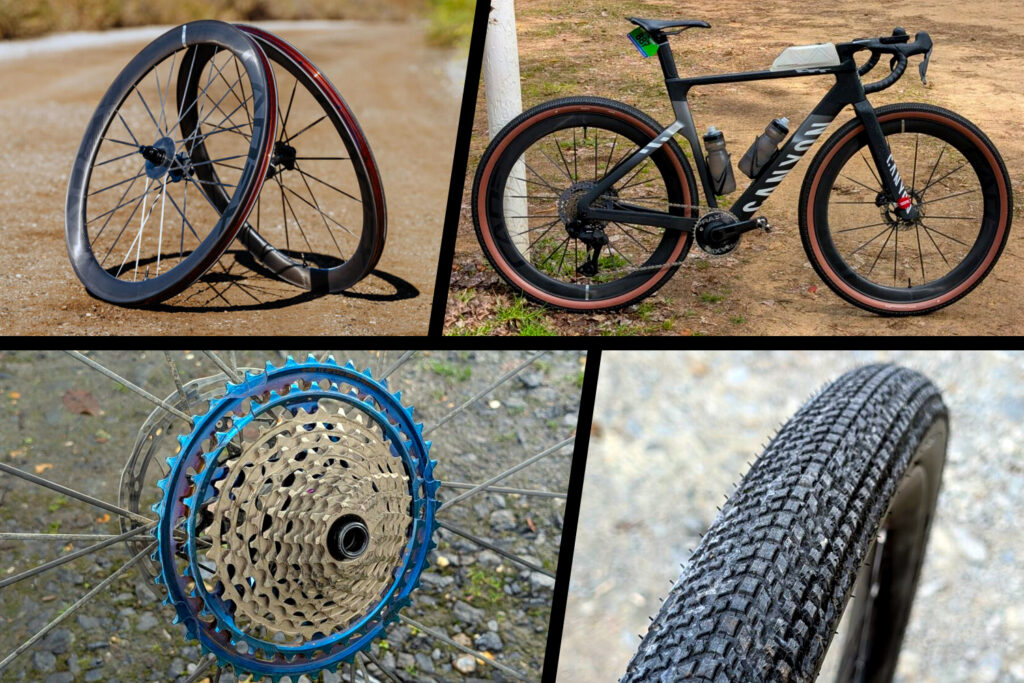
In 2019, the Conservative government announced a revamp of the Cycle to Work scheme, making it easier for bikes worth over £1,000 to be purchased using the initiative.
This formed part of a drive to increase the use of e-bikes and cargo bikes, typically more expensive than their standard counterparts, to “help tackle congestion, speed up commutes, and cut travel costs”, and to encourage families to commute by bike.
However, the rising costs of the scheme, and the perception that it is now abused by some to purchase more expensive road bikes not designed for commuting, has seemingly prompted the Labour government to reform the initiative by reintroducing an as-yet undetermined spending cap.
“Cycle to Work should be about helping ordinary commuters switch to greener travel, not giving tax breaks to high earners buying £4,000 e-bikes for weekend rides in the Surrey Hills,” one government source reportedly said. “Taxpayers shouldn’t be footing the bill for luxury leisure.”

Following the FT’s report on Thursday morning, the apparent plans have been criticised by cyclists and commentators, who have noted Labour’s latest money-saving measure is at odds with its stance on tax breaks for electric vehicles.
In a statement issued to road.cc, the Cycle to Work Alliance, a coalition of the scheme’s five largest providers, said they are “concerned” about the potential effects on cycling in the UK if the government reduces the scheme’s tax benefits.
“This would impact a vital and popular employee benefit which has enabled more than two million people to access cycle commuting since it was launched by a Labour government 25 years ago,” Steve Edgell, the Alliance’s chair, said.
“In 2019 a spending cap of £1,000 was abolished, as it was preventing people from being able to access the equipment they needed for everyday commutes. By effectively excluding e-bikes and adapted cycles from the scheme, the cap discriminated against older people and those with disabilities.
“We are keen to work with government to ensure that changes would not unintentionally damage the scheme and the significant benefits it delivers for public health, the environment, and the UK’s cycling retail sector.
“Any new cap must not undermine recent efforts to ensure that everyone who wants to participate in the Cycle to Work scheme can do so easily.
“Cycle to Work has been central to government efforts to promote cycling and active travel, saving those who participate more than £1,200 annually on average.
“Making reforms to the scheme risks undoing the progress that has been made to increase uptake of cycling and decrease traffic and carbon emissions. As an Alliance, we will continue advocating for an initiative that has enabled workers across the country to cycle rather than drive to work.”

Reeves’ Budget plans were also criticised by active travel charity Cycling UK, who argued that the “sensible” money-saving tactic could cost the government in the long run.
“The Cycle to Work scheme plays a really important role in encouraging people to travel in a healthy and more affordable way – but we need a more progressive plan to support more people on lower incomes, or in unstable work, to cycle,” Sarah McMonagle, Director of External Affairs at Cycling UK, said in a statement.
“While capping the scheme may sound like a sensible way for Ministers to save money, in reality, it will cost the government a lot more. For every £1 spent on the Cycle to Work scheme, we see over £4 in returns: boosting productivity, reducing sick days, and saving households money.
“With the popularity of e-bikes and cargo bikes soaring, supporting these trends is not just good for individuals, but for the economy as a whole.
“Any proposal to cap the scheme must consider people who require higher-cost cycles, such as cargo bikes or assisted cycles for disabled people. If the government is serious about providing equal access to active travel, it needs to tailor the scheme to take into account women, families, those with disabilities and people in lower paid or unstable work.”












51 thoughts on “Labour’s Cycle to Work limit “risks undoing progress to encourage cycling, decrease traffic, and reduce carbon emissions”, say scheme providers”
Yes, it’s a bad look cutting
Yes, it’s a bad look cutting C2W. But it’s been flawed for years. A system that rewards high earners the most, lower earners marginally and the poor and self-employed not at all ain’t a great system.
Govt could do with overhauling it completely at the same time as cutting budget to it.
When your boss gets 40% off
When your boss gets 40% off his bike but you only get 20% because he earns £20k more it doesn’t really seem like good value for the treasury.
£1000 isn’t really enough to buy a good enough bike for a serious commute, certainly not if you need to buy helmet and lights etc as well. But £2500 would do the job.
£1000 is plenty if you know
£1000 is plenty if you know what youre looking for, its a bike to ride to work its not for riding laps of Richmond park or impressing folk at a coffee stop
just like you’d be alright buying a fiesta to drive to work instead of top of the range Jag.
£1000 wouldn’t touch the
£1000 wouldn’t touch the sides of a proper family capable bike that would let me cycle the young kids to school and then head the 8 miles into work, as many others do in a car.. I’d wanted a bullit e cargo bike for that.
This means that they are chasing this as ‘unsuitable’ but don’t mind me claiming what is it, £3000 claim back on a new electric car?
Stupid regressive idea.
Just because you want a
Just because you want a bullit e cargo bike doesn’t mean the tax payer should fund it for you.
I think that’s the mistake people make with C2W, its not designed to support your whole lifestyle needs, choices or wants, its just about getting a bike to cycle to work.
Ive owned 3 commute bikes in past 25 years, their combined cost in total only just breaks £1000 and they were & still are with my latest, all capable of doing 30mile rides if needed.
I wouldn’t object to someone
I wouldn’t object to someone getting a cargo bike on the scheme, assumine it is used to cycle to work more than once for show, and the threshold should be higher for those bikes. But if people really want a high end version of whatever style of bike they are going to use for commuting, they can top up the difference outwith the scheme.
If the government wants to support cargo bikes, and they probably should, there are better, and fairer ways to do so than via the C2W scheme.
FionaJJ wrote:
this is certainly how the current scheme is supposed to work – but query whether that policy imperative should be reframed to be inclusive of the benefits of active travel, not limited to active commuting
OTOH, I think many current schemes forbid this – though it is often honoured in the breach by retailers.
quiff wrote:
If the government want a scheme to promote active travel for all, then it needs to be a whole new and/or additional scheme that isn’t linked to salaries.
OTOH, I think many current schemes forbid this – though it is often honoured in the breach by retailers.
[/quote]
I think so too, but if we are talking about changes to the scheme, that could be an option. You could argue it’s still unfair for lower paid workers who get the tax benefits from a £500 bike (with accesories) to actually go to work, while someone much wealthier gets bigger tax breaks to purchase a luxury bike, that isn’t suitable, or is well above the spec needed for commuting to work, or going to the shops.
There are clearly a number of issues bundled together in the pros and cons of the scheme. People have been defending the ‘mis-use’ of the scheme on the grounds of it encouraging people to have healthy hobbies, but it only encourages some people to have healthy hobbies. It would be much better if the government ploughed money into other aspects of cycling, including reducing VAT, tax breaks for physical bike and bike repair shops, subsidising bike maintenance classes and basic servicing.
That wouldn’t need to replace a C2W scheme, but it would allow such a scheme to be more focused on what it was designed to do.
stonojnr wrote:
More specifically, it’s about trying to encourage people to shift from driving to cycling. If you can’t get a bike that you feel adequately suits your needs, then there’s a good chance you simply shrug and carry on driving, and the scheme has failed in its aims as far as you’re concerned. Saying that you could have made do with something cheaper is then really neither here nor there. The question is not “what’s the minimum that people can make do with?”; it’s “what’s the tipping point in value, between the sacrificed tax revenue and the benefits of converting people to cycling?”
stonojnr wrote:
Yes, that’s how the current scheme is billed. But personally I think an evolution of the scheme should move away from the “to work” bit. There are many societal benefits to active travel, whether that’s commuting or not. Also, as others have highlighted, there are other government incentives now for EVs which do not require that they be used to get “to work”, so keeping this requirement for C2W seems out of step.
I agree, the claims that
I agree, the claims that £1000 won’t buy a bike suitable for commuting is an absolute joke. My current Boardman Hybrid cost me £650 quid and has around 4000 miles under it’s belt. And I’m terrible for neglecting on maintenance.
My previous commuting bike, also a Boardman Hybrid, was a tad under £300. That had around 11,000 miles of regular use. I only stopped using that bike because some local scroat decided that they would like to keep it…
So a quality lock to keep
So a quality lock to keep hold of the bike would be part of it, maybe some insurance (lowering VAT on that could be something…), some lights, perhaps a hat and reflectives…
stonojnr wrote:
What if your work involves heavy tools or other gear that you have to bring from home so you need a cargo bike? What if you can’t cycle to work unless you can use the bike to drop the kids first, e.g. you live three miles from school and work’s five miles further on? What if you have health conditions that mean you can only cycle to work with the help of an ebike?
stonojnr wrote:
Other government schemes that subsidise cars, e.g. the NHS car lease scheme, don’t limit the user’s choice of vehicle, so why target bicycle buyers for choices that will mean a few hundred pounds not going to the Treasury rather than several thousands as with even the cheapest car scheme? Plenty of people commute 20 or 30 miles each way, why should they have to settle for a cheaper machine that might be less suited to their purpose and less comfortable and indeed enjoyable to ride? Additionally, lots of people only have space to store one bike so why shouldn’t they have one suitable both for commuting and to ride laps of Richmond Park at the weekend if that’s what they want? Finally, has the effect on bike shops been considered if everyone using the C2W scheme is limited to budget machinery? The whole debate seems to me exactly the same as the debate over giving cyclists segregated road provision, we are expected to go down on our knees and beg, and show gratitude for, the tiniest scraps whilst motor-vehicle owners are given just about anything they want as a matter of routine.
Rendel Harris wrote:
Sure, they exist, but even among readers of this site I would expect that’s a pretty limited group.
(I agree with the gist of your post, just quibbling this)
Really you should be asking
Really you should be asking why is the car scheme not limited to just basic models of car. Not using it to justify spending more money on bicycles.
stonojnr wrote:
That’s somewhat selective, I did give four other reasons why allowing a spend of over £1000 was justified alongside that one (which I wasn’t advancing so much as a justification as an illustration of carbrained hypocrisy).
bensynnock wrote:
It’s supporting economic growth: helping to avoid more of Britain’s bike businesses – an industry on the brink – from going to the wall.
bensynnock wrote:
The £1000 limit when the scheme was first introduced is approx. £2300 adjusted for inflation, so the £2500 is about right, although you would need more for an ebike.
Plenty of competent ebikes
Plenty of competent ebikes for less than £2000, though, if you are looking for a cargo bike or child carrying dutch bike, a little more maybe needed.
bensynnock wrote:
The limit is set by the employer, not the govt. But your point about tax rates is valid.
SecretSam wrote:
But the government is considering setting a limit. That’s why this page exists.
The ignorance on display is
The ignorance on display is so grim! Google AI reports that the annual cost of the scheme to the treasury is £130 million. Even if every single applicant was heading straight to Box Hill (imagine the queues!) they are still saving the NHS money and generating spending in the economy.
If necessary tweak the scheme to better assist the less mobile and target communities with below average participation, but don’t just scrap it.
Technically there’s no cost
Technically there’s no cost to it, its tax revenue the Treasury just doesn’t collect. whereas for the tax year up to April 2025 the goverment paid out £1.7billion in giftaid tax relief to charities. And estimate gave around £6.7billion in tax relief to donors & charities combined.
https://www.gov.uk/government/statistics/uk-charity-tax-relief-statistics/uk-charity-tax-relief-statistics-commentary
Can I argue the same for tax
Can I argue the same for tax evasion, its just more money that the treasury doesn’t collect?
Not really as tax evasion is
Not really as tax evasion is illegal, gift aid or salary sacrifice schemes are basically tax avoidance at heart.
My point really is the Treasury can’t claim its costing them 130million to support c2w and that 130million “saved” will magically drip into fill whatever blackholes they’ve found this week.
Its money that they can only theorise could have been tax revenue if c2w didnt exist and people’s spending habits were the same, when we know fullwell people’s spending habits are directly influenced by the cost, or discount they are getting.
stonojnr wrote:
Since it would be income tax if the person did not buy a bike then uness they decided to work less hours I think the treasury can count it as lost money hence my point about tax evasion.
Backladder wrote:
It’s tax planning, not avoidance or evasion.
[/quote]perception that it is
“the perception that it is now abused by some to purchase more expensive road bikes not designed for commuting”
Would help if we were dealing with facts, rather than “perceptions”.
They (the facts) are out there…
Dnnnnnn wrote:
Why bother hunting? I know several folks who can produce them with great fluency…
I tend to ignore quotes from
I tend to ignore quotes from unnamed sources and I don’t have an issue with removing the uncapped element as long as a sensible limit is applied and takes into account different types of users and categories of bikes. Consultation with a few cycling organisations / bodies could soon establish those limits. Until we know the details there’s nothing to see here.
ride2smile wrote:
Hard agree. People on here have often complained about the problematic nature of the scheme, and how it can be abused, with a lot of bike shops saying similar. But the slightest whiff of taking action that would make it fairer and comments from the retailers that make a living from selling expensive high end bikes are turned into headlines.
The benefits of leisure cycling are there, and the government should be making it easier for people to take up the hobby, but not via a cycle to work scheme that is only available to some, and is most valuable to those on higher incomes. If they stick with the scheme, then it should only be about utility cycling.
I agree particularly with having a different threshold according to the type of bike. £1000 in 2019 is equivalent to £1300 now, and while I wouldn’t have a problem with that being rounded up to say £1500, if you can’t get a decent regular commuter bike and kit for that much, you are going to the wrong shops.
A much higher threshold could be allowed for cargo bikes, and ebikes. You could even separate out accessories. It might be hard to distinguish between an expensive e-bike used for weekend touring and one that’s suitable for going to work and/or the shops, because people would want to do both with the same bike. But I have no qualms about measures that will make it less likely the scheme will be exploited by those on well above average salaries who do see it as a convenient tax loophole to subsidise what remains an expensive hobby.
It might not save the Treasury much, and there are other things I’d prioritise (end the fuel duty freeze, aviation fuel, and the annual threshold for tax free ISA savings is far more generous than required to encourage responsible saving), but however much they might save, I’d rather see spent on a long list of projects, including ones that encourage active travel.
I dont agree the government
I dont agree the government should spend tax money on discounting people’s leisure activities.
And why should cycling be singled out, as running is arguably even more beneficial for people’s health and wellbeing so do you think the goverment should give a discount on trainers so people are not financially barred from running activities ? The fact some people wear trainers as fashion accessories of course won’t matter.
stonojnr wrote:
It’s a good thing that nobody ever drives for leisure purposes. Indeed it appears that most drivers are martyrs in this respect. Even ignoring all the “I *had to* drive” of commuting, shopping and attending medical appointments the other driving is just as a chauffeur to their family and friends…
stonojnr wrote:
If I were in charge, I’d completely rethink what counts as a ‘luxury item’, with consideration of what helped to promote healthy lifestyles too.
Trying to separate out footwear that is suitable for running or walking versus those designed for show might be trickier, but you could set minimum quality standards and set a cap on the price.
But I’d do that with VAT, not some tax rebate linked to salary that excludes those on lowest incomes, and gives most benefit to higher earners.
FionaJJ wrote:
If I were in charge, I’d completely rethink what counts as a ‘luxury item’, with consideration of what helped to promote healthy lifestyles too.
Trying to separate out footwear that is suitable for running or walking versus those designed for show might be trickier, but you could set minimum quality standards and set a cap on the price.
But I’d do that with VAT, not some tax rebate linked to salary that excludes those on lowest incomes, and gives most benefit to higher earners.— stonojnr
I don’t tend to pay VAT on my day to day footwear, I wear safety boots/trainers – I can even get money from my employer towards pair that I buy. Although I make up for it by paying VAT on my children’s shoes – they outgrew “child” sizes a long time ago.
I still don’t get how it’s considered a luxury to not walk around naked and barefoot.
Dear Rachel,
Dear Rachel,
I understand the angry anti-cycling mob might be riled by someone buying an expensive sports bike using salary sacrifice to avoid paying tax as a discount.
But where I work we have a salary sacrifice scheme for leasing elecric cars, not just little urban runarounds but also Maserati convertibles, Porsche Taycans etc. The lease cost for these (without tax obviously), can be over £2500 per month so anyone signing up for this is not in a lower tax bracket.
The switch to lower pollution transport may be better but here these still use far more electricity than an ebike, are extremely fast (and therefore potentially dangerous) on public roads and don’t offer the occupants any activeness in the transport to help reduce NHS costs. Surely funding sports cars is a more ‘wasteful’ use of taxpayers money than a bike to work scheme.
Best regards,
Rez
I suspect Government is
I suspect Government is subject to intense lobbying from Jaguar Landrover not to dig too deeply into the luxury car lease business, with much reason given its importance to the UK economy, if upmarket bicycles and their components were made at large scale in the UK then I imagine similar considerations might exist. There is also the issue that many people taking advantage of the upper regions of tax subsidies for bicycles are possibly also enjoying similar largess in their car leasing arrangements.
Robert Hardy wrote:
So, because some people game the system, everyone should be punished? That seems fair
To be clear, as far as I know
To be clear, as far as I know, the EV Salary Sacrifice scheme has no limits and no requirement that you use the vehicle primarily for commuting/work purposes. It’s not “gaming the system” to get a luxury EV on salary sacrifice and only use it to drive to the golf club and back – the “system” says that’s fine.
So, because some people game
Duplicate – ignore
Can’t help feeling this is
Can’t help feeling this is being done to get a cheap headline and the amount of money it will save the government is approximately half of fuck all.
Very few people are using the scheme to buy £4000 bikes.
Ref – Evaluation of the Cycle to Work Scheme: quantitative and qualitative research
Presumably they’re in that 1%
Presumably they’re in that 1% at the bottom – “My butler arranged it for me – I don’t dirty my hands with money”
Isn’t it the royals – I think
Isn’t it the royals – I think they don’t carry and cash?
Except around Maundy Thursday presumably? I understand that though, it’s not classy wandering round with a bunch of pictures of yourself. Although smart phones are perhaps changing that?
Would it be possible for the
Would it be possible for the benefit to higher rate tax payers to only get the rate at which lower rate payers get? Little more egalitarian?
And to make it revenue neutral to figure out something to help those on minimum wage see some advantage?
For me, a commuting cyclist for nearly four decades, ctw has never offered me anything, short term contracts and wanting to keep a second hand Marin pine mountain going, upgraded by ebay to how I wanted it to be when I read early 90s MTB mags, and replacing bits using online retailers doesn’t really suit the scheme. Though I did once toy with with getting a Cannondale hooligan when I was “permanent” in the mid 00s. It just looked so much fun.
I would appreciate a little help with keeping them going, maybe, parts, and tools. Though of course less overall benefit to the general economy but perhaps more to the planet. I wouldn’t gain but what about something for a yearly service at the LBS? Not at the higher rate, naturally, maybe some vat thing, so less complicated for the shop?
Higher rate earners in the
Higher rate earners in the scheme could be required to do a tax return. Then a calculation could be made to reduce the benefit they got to the 20% level. Then they get a tax bill or a tax code adjustment.
Lots of these schemes are in
Lots of these schemes are in the public sector, where many people’s wages have been, to say the least, inadequate for some time. especially since the cost of living crisis started. Lots of us ride, not just for fitness or environmental reasons but to save money. A return rail fare costs me £3.40 a day just for a 4 minute ride. Our bike racks are full most days, even at this time of the year.
60somethingcyclist wrote:
In crisis opportunity? I believe one of the forces that switched the Dutch away from the standard motor development pathway * was the oil crisis and some government austerity…
* They are still fairly motor-dependent, but are much more functional addicts than say the UK, and many urban areas are in a withdrawal program…
Unfortunately the cost of
Unfortunately the cost of living doesn’t seem to have curbed the number of cars on the road. Just as many school run cars clogging up my street twice a day as always. The only encouraging sign is the large number of kids from the comp doewn the road cycling in. I had hoped that all the bother in the Middle East and Ukraine might have affected the oil supply and fuel prices to the extent of forcing drivers to cut their journeys. Sadly this hasn’t happended. Hopefully the Chancellor will do us all a favour and hike fuel and vehicle excise duty, although I doubt if she’ll have the guts to do that given Labour’s poll ratings.
I suspect there simply isn’t
I suspect there simply isn’t the belief that it’s possible to do differently. Both politically and in people’s individual lives. (Despite the “gold standard” NL showing that it’s possible for people there to still drive and that be actually pleasant, for deliveries to take place, ambulances get through etc…)
When NL made their change of direction they still had mass cycling (albeit it had declined), a network of cycle infra – and the memory of the time when “everyone cycled”. Plus I think they hadn’t seriously degraded public transport (I’m less clear on that part though). Finally it was both a bottom up and top down effort – popular movements eg. Stop De Kindermood, environmentallists, people not in favour of all the demolition of buildings to make way for motorways… plus they got top- level support reasonably early (transport minister).
Oh – and they were enabled to campaign on behalf of children, one of the few things which most people are prepared to make changes / small sacrifices for.
No need for a scheme, just
No need for a scheme, just use your gran’s old bike !
https://www.hamhigh.co.uk/news/25588084.sabine-kikuchi-house-changed-public-transport-bike/