



Today's stage of the Giro d'Italia
Described as “wavy and demanding” in early parts before “a few mild climbs and descents in the closing part lead to punchier bits in the stage finale.”

Race situation: Joao Almeida (Deceuninck – Quick Step) leads Pello Bilbao (Bahrain-McLaren) by 43 seconds with Wilco Kelderman (Sunweb) a further five seconds back. There are currently 14 riders within two minutes.
Peter Sagan (Bora-Hansgrohe) leads the points classification, ahead of Arnaud Demare (Groupama-FDJ) and Filippo Ganna (Ineos Grenadiers).
Latest from the Dr Richard Freeman medical tribunal
Here’s the latest from the medical tribunal of Former British Cycling and Team Sky doctor, Richard Freeman.
Freeman says he destroyed Testogel patches that he ordered to be delivered to the National Cycling Centre in 2011 the same day they were delivered – but hasn’t managed to explain why he did so.
He also admitted not being fully familiar with World Anti-doping Code.
Luca Wackerman suffered a broken back and nose thanks to the Giro helicopter
Luca Wackermann sustained injuries including a broken back when he crashed at the end of Stage 4 after barriers were blown across the road, apparently due to the downdraft from a helicopter taking aerial shots of the sprint.
Car tech preventing speeding to be mandatory in the EU from 2022
Mandatory safety features will be introduced in cars to combat speeding in the EU from 2022. The only question is what form they will take.
The BBC reports that the EU is proposing kit that will render the accelerator pedal temporarily unresponsive when the speed limit is reached.
Car makers want a bleeping light on the dashboard.
Oliver Carsten from Leeds University trialled the “Intelligent Speed Assistant” accelerator pedal and said: “It gave us a massive improvement in speed compliance with UK drivers, especially on urban roads.
“We fear that replacing it with a beeping system will just annoy drivers, so they will mute it as soon as they step into the vehicle.”
The issue is being debated today. Whether the system they go for will apply in the UK depends on trade deals and whatnot.
More on that BBC segment on Low Traffic Neighbourhoods
Chris Boardman called this report “irresponsible” yesterday.
Jon Burke – the Hackney councillor who has received death threats over his support for Low Traffic Neighbourhoods – expands on that.
* Cars have increased by 10 million in the last decade.
* Rat-running in London has doubled in a decade.
* Fuel duty has been cut for a decade.
* 50% of London car journeys are <3km; 35% are <2km.The cause of congestion is that big queue of 4x4s at the start of this clip. https://t.co/S9sjqVDjal
— Cllr Jon Burke (@jonburkeUK) October 7, 2020
The AA do use bikes sometimes apparently
Yep that is great.
We do use bikes at events to get through crowds ie Wimbledon or Glastonbury etc #thinkbikes pic.twitter.com/030VQd9VpJ— Edmund King OBE (@AAPresident) October 7, 2020
Freeman tribunal conjecture
back at Freeman tribunal where his counsel has just indicated she intends to call 3 further witnesses, and potentially issue a witness summons for a 4th “who has not cooperated”
— Tom Cary (@tomcary_tel) October 8, 2020
Shane Sutton?
Remember his spectacular appearance last November?
This guy did 100 miles at 42.6mph (while drafting)
On Monday, Jon Ornée set what he believes is a world record for fastest 100 miles by bicycle (while drafting).
He rode behind a minivan on a NASCAR racetrack for 100 miles in 2:20:46 at an average speed of 42.6mph.
In 2019, Marcin Bialoblocki rode a 100-mile time trial in 3:13:37. Drafting behind a vehicle is obviously a huge advantage and Ornée is applying for it to be a new category.
Ornée was hit by an SUV while cycling in May last year, a near-death experience he says has changed his life.
“I thought, ‘wouldn’t it be cool if a car and bike teamed up for a change and did something spectacular?’”
Ornée’s dad drove the van and he wore a bluetooth earpiece so that he could chat to him.
“Going around a track while staring at the back of a vehicle is a ton of fun for the first couple laps,” he explained. “Doing it for over two hours is somewhat hypnotic. It was good to be able to chat a bit to keep my mind engaged.”
Ornée said the plan was originally to do 42mph on the straights and 40mph on the turns, “but after a few laps I asked him to hold it steady at 42, which felt comfortable.”
Hydration was one of his main concerns, to the extent that he “definitely over-hydrated the 24 hours before the ride.”
He said reaching down for a water bottle at 43mph felt a little sketchy, so he drank from a bottle mounted between his aerobars using a straw.
Video: Drafting at 125mph
Lime hire bike distribution to be carried out by e-cargo bike
Pedal Me are to replace the vans that Lime Bike has been using to redistribute its bikes on the streets.
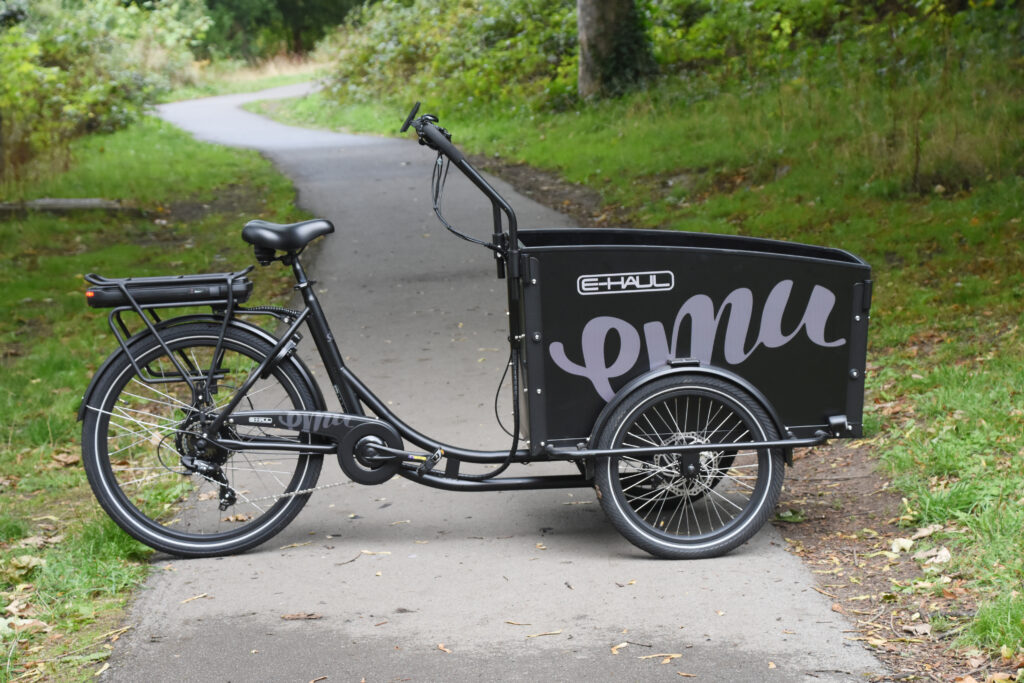
E-cargo bikes will now be used to pick up/drop off multiple e-bikes at a time.
They’ll be swapping batteries in and out as well.
The partnership will negate over 60,0000 motor vehicle miles per year and means Lime’s e-bike service will be fully car-free across London
London. It’s time to ditch the car (and van) for good.
We’re very excited to announce a new partnership with @limebike here in London.
Together we’ll be working to reduce 60,000 miles currently done by electric vans.. pic.twitter.com/du5igjBKtQ
— Pedal Me (@pedalmeapp) October 8, 2020
It's Clear Air Day - time to show your support for bike lanes
Cycling UK is asking you to mark Clean Air Day by expressing your support for cycle lanes.
Do you want cleaner air? Bike lanes will help. 🌿🌎
We’re asking everyone to support dedicated, well-designed space for cycling this #CleanAirDay. It makes choosing to ride easier and feel safer, adding to its appeal as an alternative to driving.
👉 https://t.co/HzI4yIIUJq pic.twitter.com/xxnNb5GZb1
— Cycling UK (@WeAreCyclingUK) October 8, 2020
“Too many journalists looking for a cheap story have taken the complaints of a few and blown them out of proportion,” says Cycling UK director, Matt Mallinder.
“It’s time to fight back. We can all play a role. It’s not too late. We can turn the tide by simply speaking up and letting our councils know.
“And we can use social media, write to the local paper to tell them we applaud the schemes or leave positive comments on negative online news stories. You can also provide us with evidence of where the schemes are working well and give us the knowledge so we can continue fighting the battle.
“That’s the only way we’re going to get our voices heard above the cacophony of complaints and ensure cyclists and pedestrians get the infrastructure they deserve. And the more people who take the time to contact their councils, the bigger impact it’s going to have.”
You can get in touch with Cycling UK here.
And here’s a page that’ll give you a bit of a steer if you want to tell your local paper why cycle lanes make sense.
Almost time for The Muddy Classics
Paris-Roubaix is on Sunday October 25.
Boardman's BBC beef
Chris Boardman has been a bit more specific about his dissatisfaction with that BBC segment on low traffic neighbourhoods. (See yesterday’s live blog and also Jon Burke’s comments earlier.)
I’ll do this just once:
LTNs are not ‘blocked to cars’ Only through traffic,
In FACT all roads are accessible by car, you just can’t use them to cut through.
So it’s both inaccurate and provocatively framing LTN’s as people having something taken away. That’s irresponsible https://t.co/g1whrrwcE1
— Chris Boardman (@Chris_Boardman) October 8, 2020
Thomas's season is over
Confirmation, if it were needed, that Geraint Thomas’s season is over following the broken pelvis he sustained in a crash in the neutral zone on Stage 3 of the Giro d’Italia.
Three weeks off the bike.
But at least he’s doing off season properly.
Arnaud Demare wins Stage 6 of Giro d'Italia
Arnaud Demare of Groupama-FDJ has won Stage 6 of the Giro d’Italia in Matera, his second victory in this year’s race, and 12th of this strangest of seasons.
The French national champion made it look easy today, unlike his hair’s-breadth win in Villafranca Tirreno on Tuesday, distancing his rivals before the line in a tough finale.
Bora-Hansgrohe’s Peter Sagan was favourite for the win today but finished eighth and loses the points jersey to Demare. The three-time world champion, riding the Giro for the first time, is also still waiting to become the 99th rider to have won a stage of each of cycling’s three Grand Tours.
This is what it takes to finish second in a stage at the Giro
A long, hard sprint for the finish after a tough climb on Stage 6 saw this immense effort from Michael Matthews for 2nd place:
⏱️Duration: 27”
🔄Av speed: 52.7km/h
🔝Max speed: 58.5km/h
⚡️Av power: 860w
💪Max power: 1210w
_____
🇮🇹 #Giro pic.twitter.com/Qxj3iZEUWf— Velon CC (@VelonCC) October 8, 2020
Demare dodges the photographers
Demare like all of us when we arrive at a party too early, but with cameras in his face. I’m just hanging around, trying to look cool while I catch someone’s ey….ooooh there’s a friend. Hi!! 👋
— Orla Chennaoui (@SportsOrla) October 8, 2020
Not exactly a photo finish for Demare this time around
Demare edged out Peter Sagan by a matter of millimetres on Stage 4.
Today’s win was by a healthier margin.
Jaw-droppingly healthy really.
Demare untouchable rn. #Giro pic.twitter.com/NpG3R0GbLV
— daniel mcmahon (@cyclingreporter) October 8, 2020
England's footballers should be good and warm for the Wales match tonight
To be the best, you’ve got to train on the best 💪
📸 @England pic.twitter.com/mm7Fi0i2e0
— wattbike (@wattbike) October 8, 2020
Crap driver tells Jeremy Vine to eff off
BBC Radio and Channel 5 broadcaster Jeremy Vine often posts videos from his commute to Twitter, and here’s one from this evening in which a driver who seems to be stuck in her own world tells him to “Fuck off” when he points out that not only did she overtake him at speed, but also ignored pedestrians waiting to go across a zebra crossing.
Overtaking me at speed, presumably out of frustration, led this driver nearly to miss the fact that someone was already on the zebra crossing in front of her. And then the cycle box. pic.twitter.com/vD8GdcElcq
— Jeremy Vine (@theJeremyVine) October 8, 2020
Your favourite website may be based in Bath … but we do have a presence in London (well, me) and living not far from Jeremy, I often ride the same roads into the West End and back.
Am I surprised by this kind of entitled driving on George Street in Marylebone, a route I often take in and out of town? Not at all.
You can imagine some of the muppets in the mentions though …
8 October 2020, 08:18
Near Miss of Yesterday
Near Miss of the Day 478: Cheddar Gorge punishment pass
Our regular series featuring close passes from around the country - today it's Somerset
8 October 2020, 08:18





94 thoughts on “Crap driver tells Jeremy Vine to “Fuck off”; Geraint Thomas’s season over; Demare wins again at Giro; 100 miles at 42.6mph (while drafting); Car tech preventing speeding mandatory in EU from 2022; Muddy Classics; + more”
Remember everyone: don’t feed
Remember everyone: don’t feed the gulls on the beach, the pigeons in the park (unless following in the footsteps of Tom Lehrer) or the animals in the zoo (they are not all the gnicest work of gnature, according to Flanders & Swann).
We need a circuit-breaker.
I know if the creatures are
I know if the creatures are around because my computer slows down – it’s like a black hole sucking in bandwidth and all rationality
I’ve built a handy detection
I’ve built a handy detection device
So glad you’ve used dB as
So glad you’ve used dB as that’s definitely the right unit. All these rock stars talking about going up to 11, when + 6 dB is so much louder.
Years ago a pal of mine bought a hifi amp with the volume going from minus infinity dB to zero. He carefully turned the volume to zero before switching on for the first time… Never made that mistake again.
TheBillder wrote:
A logarithmic scale was the only way to deal with the stupidity we’ve been seeing around here lately.
No contest over the speed
No contest over the speed restrictor, pedal all the way.
The pedal actually prevents you going over the speed limit, the beeping only warns once you’ve exceeded it.
Quote:
So the best way of improving compliance with speed limits is to physically stop the drivers being able to break the speed limit? Who would have thought it!
Not sure how I feel about
Not sure how I feel about that speeding tech. For one, if it’s basing speed limits off sign recognition, it’s going to be massively innacurate. It’d probably be easier to soft limit cars to 78mph or the likes.
There will be positives, for sure, but it’ll also lead to a lot of misjudged overtakes, when the car refuses to accelerate.
I’m undecided too. I
I’m undecided too. I certainly think that cars have no need to be capable of going over 70. In addition torque and output could also be limited.
Variable limiters though encourage pedal to the metal, and give an excuse that “the car made me do it” where it is not engaged
Toffee wrote:
The car I’ve got at the moment does sign recognition and has a pedal based speed restrictor – but the two are not linked up!
I actually really like driving with the speed restrictor, there’s a bit of a flat spot in the accelerator travel as you hit the speed limit, but if you continue to push the pedal down it then overrides it. So no problem with overtakes – if you’re flooring it, then the limiter is completely disabled.
For the speed limit recognition, it’s generally really good, using a combination of GPS database and image recognition of roadside signs. There are just a couple of junctions, where the speed sign is at an odd angle to the road where it’s picked up the wrong limit. But it reverts to the GPS database limit value if you keep the speed (or if linked, the pedal pushed) past the override point for a few seconds.
I too have one of these
I too have one of these systems on my car. As you stated you can push through it but the pedal offers resistance so it like pushing a still button, you can’t do it subconsciously, and if you do go over it will start beeping at you.
It isn’t a full blown automated system, you have to set it, but there is functionality to set it your the recognised speed limit with a double press of a button and a volumn style toggle button that can move the limit up and down. Overall both me and my wife really like it and use it whenever we are driving, it removes the stress of constantly checking the speedo once set and allows you to stay focused on the road. The car is an EV which I’d say these systems are a must, the lack of engine noise does give a distrubed sense of speed, and the response of the vehicle means it doesn’t take much to be speeding unintentionally in a 30.
The one limitation I do see with the system is that it can get a bit confused with the road you are on if you have adjacent roads, so being able to manually set it useful for me personally, so there is some developement required until this is ready as a standard system.
Totally agree with you. The
Totally agree with you. The only reason to look at the speedo is to make sure you’re not over the limit. Having a restrictor means it’s one less thing to look at and you can concentrate more on the road ahead.
It won’t stop a determined speeder, only those who drift over the limit unintentionally.
It will also help with 20mph limit habit breaking. It’s tough to keep at 20mph if you are used to driving down that road when it was a 30. There’s a road near me that used to be 60mph, but now has a 40mph limit. It feels so slow, so I find the limiter (or cruise control) helpful in keeping within the limit.
Soft limiting cars will not
Soft limiting cars at the maximum speed permissible on a motorway without prosecution will not prevent people from speeding in residential areas, which is the major problem. Localized speed restriction will also force people to obey 20mph limits, as well as removing the need to trash suspensions with speed humps everywhere.
Breaking the speed limit to overtake is still breaking the law. Speed restrictors are the only way forward, optimally based on GPS data with various fallback measures, as driverless cars will inevitably be. Then in the cases where people speed, analytics can be performed on the car, and if there was interference, a specific charge can be introduced of tampering with the safety features of a motor vehicle, which helps to remove the “But for the Grace of God Go I” mindset from driver-juries, as most people won’t tamper with the car.
It’s disappointing to see the car lobby trying to push for a useless measure (light + beep) to “warn” people that they’re speeding. The kind of people who speed don’t give a single damn that they’re speeding, and it will be [disabled/ignored/bypassed] as soon as they have the opportunity.
Presumably the car lobby are absolutely terrified that people will no longer buy cars with performance far in excess of what is legal or useful on any UK road if speed restrictors are introduced. I’m sure they’ll bring their might to bear and we’ll get useless beeping garbage, though!
Back in the 80s Japanese
Back in the 80s Japanese sports cars had beeping speed warning chimes above 100kph, they’re seriously annoying and one would hope with modern ECUs much harder to disable than they were back then. I had a Japanese import for a while and the first thing I did was pop the instrument cluster out and desolder the chime. On some cars it got progressively faster as speed increased which was surprisingly effective. Personally, I’d like cars to have those “whoop whoop whoop pull up” loops you hear on cockpit voice recorders.
I don’t think that the driver
I don’t think that the driver should be warned of themselves breaking the speed limit, I think that everyone around them should be warned of the illegal and often dangerous driving.
It could be fun if they do
It could be fun if they do intorduce ‘intelligent’ speed restrictors that read the signs. Computer based vision can be quite easily tricked, so locals could have fun with nearby signs.
https://arstechnica.com/cars/2017/09/hacking-street-signs-with-stickers-could-confuse-self-driving-cars/
Except it does not limit the
Except it does not limit the speed, merely at best, puts a blip in the pedal response. So actually the worst option of all, since it won’t deter overtakes, but make them more lethal.
Been looking forward to this for years, but this is 1st time I’ve heard it won’t actually be a hard limit. What a total, auto car makers arse licking disaster 🙁
The best system would be one that drained the drivers bank account % of income per mph over limit every second. That’d sort it out!
Surely it will be going off gps and a resource that has mapped all the roads speed limits, one that may not be complete but quickly will be (dose of optimism here).
As it is the EU rule, I
As it is the EU rule, I suspect it won’t be applied in the UK nowadays.
I really don’t see why the
I really don’t see why the speed restrictor should allow the driver to override it – why would we deliberately allow people to break the law?
The only reason the car lobby is pushing back on this is that they profit from selling fast, powerful cars in the full knowledge that people will use them to exceed the speed limit. Take away the ability to go faster than other people and people don’t have an incentive to buy those cars.
OnYerBike wrote:
The technology is not there to enforce the law, it’s more of a ‘driver aid’. It’s not perfect, so on the occasion it gets it wrong, it needs to be easily overridden.
There may be occasions where exceeding the speed limit can be justified. Such as driving someone to hospital in an emergency or to avoid a collision.
I wasn’t aware that the law
I wasn’t aware that the law granted provision for those who are not driving EMS vehicles to break the speed limit. As for “avoiding a collision”, it seems to me that the effect of governors on reducing the potential for collisions by preventing dangerous driving likely to result in a loss of control would far exceed that of these spurious cases that are cited every time about needing to accelerate to avoid a collision.
I believe there is a
I believe there is a provision for exceptional circumstances you can claim to allow you to break a speed limit,though obviously the clue is the name “exceptional” its not carte blanche to just drive over the speed limit.
But Im not a fan of the idea of limiting vehicles speeding like this as I dont feel the technology in the GPS accuracy and handling is mature enough or safe enough to have that kind of control in a vehicle, hands up who would trust their bike computer to govern the speed of their car ? anyone who has used one has experienced the random crashes, the loss of signal, the inability of it to work out which road you are even on sometimes, those are annoyances riding a bike, they could be lethal in a vehicle.
and it drives a set of behaviours, the like of which we are already seeing as a flaw in the self driving cars,and with lorry drivers currently, drivers pay less attention, concentrate less because they have less to focus on to drive, they just put the foot to the floor let the speed limiter sort things out for them, their mind wanders, maybe they start playing with their mobile phone more, tailgate more because they are all doing the same speed, try those overtakes at 0.1mph faster, all of which when something unexpected they need to react to means their reaction times will be greater. plus there are considerations that its perfectly safe to drive near the speed limit in perfect conditions, but same road with ice, fog, heavy rain ?
ultimately this really isnt a problem needing a tech solution,thats just the polticians/bureaucrats solution to everything more tech, often after theyve been lobbied by tech companies selling such solutions. But we already have the solution, its give more funding to the police to carry out more traffic related crime prevention.
people habitually speed in vehicles not because they arent all driving some modern equivalent of a Knight Industries Two Thousand , its because they know the chance of the being caught doing it, is tiny, and everyday they speed and dont get caught it reinforces that message to them.
Awavey wrote:
The technology is there and it’s robust. For autonomous vehicles it’s not quite there as the lack of human interface cannot replicate unexpected occurences. What is being discussed is limiting the speed, which, while it may be a step towards autonomous driving we are not talking about taking car control from a driver, attention would still need to be paid to the road, but in theory you wouldn’t need to add in the extra thought process about what speed they were doing, if anything I think that would make people more attentive, rather than less attentive.
You need not ‘rely’ on GPS to track speed limits, my car ‘reads the road signs’ and uses GPS alongside it, the speed limit for that road is displayed upon my dashboard, it’s quite clever and I often find myself testing it, I reckon it’s easily 95% accurate. http://www.kceed.com/speed_limit_information_function_slif_-544.html
Luca Patrono wrote:
The police have discretion on whether to apply the law or not. They may choose not to enforce a speeding offence if there’s a justifiable reason.
The technology isn’t quite reliable enough yet for it to be used as an enforcement tool. But that doesn’t mean there’s no benefit in having it as a driver aid.
HoarseMann wrote:
Why not use it to enforce the law? If we can prevent people from breaking the law, surely doing so is the right thing to do?
If it can be overridden, then I believe in the vast majority of cases that feature will be used to override the device when it is working properly, rather than due to the device being wrong. If the device is wrong and restricts you to slower than the speed limit, you don’t “need” to override it; it’s just an inconvenience.
If someone needs to get to hospital in an emergency, phone 999. You should never “need” to break the speed limit to avoid a collision – if you find yourself in that position it’s almost certainly because of a preceeding lack of judgement and impatience. Finally, such situations where speeding is “justified” are likely to be exceesingly rare in comparison to the very regular deaths and injuries that are caused by breaking the speed limit.
Umm, the initial press report
Umm, the initial press report was about a decision whether a beep/flashing light or a pedal feedback was the most appropriate driver warning.
I just wanted to share my personal experience from using both methods. Not have a debate about zero tolerance speeding enforcement!
(I did once phone 999 in an emergency and they had no ambulances available, the dispatcher advised driving the casualty to A&E!)
I know what the initial press
I know what the initial press report was about, my comment was that if you’re going to introduce tech with this sort of capability why not use it to its full advantage?
There’s a big difference between zero tolerance policing and using tech to prevent law breaking in the first place. I’m all for not prosecuting every Tom, Dick and Harry for the slightest misdemeanor, but I question the logic and morals of deliberately undermining technology that could prevent criminality, especially when excess speed is a contributing factor to a huge number of collisions.
It is unfortunate that ambulances aren’t always available. Of course there’s a legal argument that driving to A&E still doesn’t give you an excuse for speeding but I think the stronger argument is still that such incidents – and any benefit from getting to A&E a few minutes sooner – are easily outweighed by the harms from speeding.
OnYerBike wrote:
My opinion from having experience of driving a new car with traffic sign identification, is the technology is not reliable enough for the driver to relinquish total control of the vehicle’s speed (I accept you have a different view, but you did ask the question and I replied).
I would welcome a future where all cars are self-driving, there are zero-road death/injuries and a racetrack is the only place a human can get behind the wheel. I’m sure it will happen, but the steps to get us there will be small and incremental.
I did read about some chap in
I did read about some chap in a Merc who passed a golf club entrance and his car then went 10 mph as it picked up the golf club speed sign !
Since people complain that they speed by accident, the pedal thing seems a good idea. Not sure about a GPS tech solution having taking my car back for a product recall for a software update for the accelerator/EMS. I’d need a very high level of confidence that any solution would not cause other equally serious issues.
That Cllr Jon Burke is a bit
That Cllr Jon Burke is a bit of a legend I reckon. He’s fully committed to a greener agenda and actually appears to have done something about it!
Well done sir, chapeau!
I’d love to see speed limits
I’d love to see speed limits being hard enforced. I also have mixed feelings ref not being able to accelerate when safety would suggest otherwise.. or being in control of my own speed on the road…. but isn’t that more down to our perceptions of how things have been, rather than how things could or should be?
If we ‘couldn’t’ speed then we might all change our behaviours to account for that. No speeding to work, no overtaking someone doing the speed limit, once we’ve adjusted, it should cause less overall anxiety to car journeys and more awareness to surroundings. It could change the whole road infrastructure in time, imagine no solid white lines being required, or take it a step further and if cars are looking at or for signs it’d be a short jump for those vehicles to react to stopping at junctions or slowing in time for roundabouts. It’s possibly a step towards truly autonomous vehicles without taking away human judgement aspect or overhauling our whole road infrastructure.
I suggest combo of hard speed limiting and sign reading / gps tech (which seems to be very good on my car BTW, seems to work instantly 95% of the time) would be enough. Black boxes in new driver cars seem to manage to gather the same info for insurance purposes, I can’t see it being much of a jump to connect it to the engine.
I don’t doubt that it’ll be ruled out of this EU meeting pretty quickly.. but it’s good sign that they are talking about it.
Of course motorists will
Of course motorists will always want to “accelerate out of trouble”. They just need to understand that, in the lexicon of dynamics, the definition of “acceleration” includes standing on the brake.
Quite . In a dangerous
Quite . In a dangerous situation brought about by excess speed and kinetic energy, the clear solution is…. er…. increase the speed and kinetic energy!
I would think that it would
I would think that it would be very much like setting the speed limiter on most current cars. If you need power then you can access it by pressing hard on the accelerator. The only difference will be that the speed limiter will activate by default, the driver would have to actively disengage it and the telemetry data will be recorded for analysis should that prove necessary for some lawful investigation.
Speaking as a habitual non speeder I cannot legitimately see any downsides to the use of this technology, but on the flip side I am of a generation to whom the motor car represents freedom, control and an extension of personal space. Whilst I see this as a huge step towards improving road safety and the eventual delegation of driving to autonomous vehicles I’ll definitely be hanging on to at least one of my old fashioned vehicles besides probably signing up to a driverless hire scheme at some point. I’ll be properly sad when the same tech gets applied to motorcycles, but I guess that like the days of horse and cart some things will be become part of history and Grandad’s rambling stories.
Mungecrundle wrote:
That is very much how it will be.
My mother came to visit a few
My mother came to visit a few weeks back and part of her journey was on a bit of motorway with enforced average speed limits. She told me that it was a lovely way to drive, everyone doing exactly the same speed, nobody racing up behind her, most important – no aggression.
She’s very lucky then (& not
She’s very lucky then (& not just that she’s your mum). My experience of average speed cameras in roadworks is that keeping any sort of distance goes right out of the window, particularly HGVs. If your speedo over reads (as most do) then someone with an accurate one (e.g. in a sat nav) will be right up your arse in case you delay them for a second or two in a 3 hour journey.
They do help reduce accidents according to stats (e.g. A77, A9) but I wish there was some way to enforce safe distances).
If someone is “right up your
If someone is “right up your arse” just slow down. They will eventually back off or overtake and you can resume your journey. This is the recommended course of action on a speed awareness course.
Or they’ll just try and drive
Or they’ll just try and drive over you because they have a Right To Drive (allegedly…).
BBC segment, where? I’m gonna
BBC segment, where? I’m gonna KOM that corporate ass.
I’m always a little puzzled
I’m always a little puzzled when some folk argue against built-in speed limiters because they claim they might need to accelerate to avoid a collision. Even with almost 30 years of varied and extensive driving experience I struggle to concieve any circumstance where ‘adding speed’ would be the correct course of action. Accelerating away from a stationary position to avoid an oncoming vehicle is something I would agree with, but then when would you need to accelerate over even the lowest (20mph) speed limit in the space of a couple of seconds? At the other extreme, everyone rolling along at 70mph on the motorway, how could going faster ever be the best tactic to avoid a collision?
In reality of course this would presumably only apply to new vehicles, and unless it was enforced as a retrofit to older vehicles then it would take years for it to really start to take effect.
I dunno, I can frustrate the
I dunno, I can frustrate the whole neighbourhood pootling about at 20mph everywhere
Dicklexic wrote:
Passing a HGV on a dual carriageway at 70, with traffic behind you, when it starts to move into your lane.
That is what I was going to
That is what I was going to post.
A friend was on a 2 lane dual and a lorry did that and he floored his large engined merc and avoided it.
I don’t know what the other options were in terms of braking and adjacent vehicles.
Also seems a pretty rare event to cater for.
Lorries will have to learn to
Lorries will have to learn to slow down then or wait.
The excuses I would use for needing to speed should be so David Beckham can escape the press, Alex Ferguson can get home and crap and any other reason Loophole Larry used to get famous people off. I mean if those reasons are legal reason for speeding then they are valid reasons for being able to override a limiter.
In those circs I think I’d
In those circs I think I’d prefer to brake and risk a rear end shunt than risk a side-swipe by an artic.
quiff wrote:
Fair doos, but I’d want the ability to choose.
Agreed. None but the very top
Agreed. None but the very top end vehicles are capable of the acceleration for this to be a credible option, and certainly none but the very top end drivers. Even then I’d argue that the proportion of circumstances that this would be appropriate is so small as to be labelled as “freak”.
Captain Badger wrote:
So some sort of exception will be required for high performance vehicles driven by advanced drivers.
HoarseMann wrote:
You mean like thee and me? I’ll get that supercharger fitted to the i10!
I’m totally against manditory
I’m totally against manditory speed limiters fitted to cars, not because I’m against safety, or because I want to speed, but it’s the whole principle. It’s the same reason I point blank refuse to use a GPS tracking device to lower my car insurance, I simply have no interest in someone knowing where I am or what I’m doing at all times, or trusting them to keep my data and thus privacy secure. It’s not like I have anything to hide, but it just screams totalitarian state control.
I’m also not a fan of taking away driver awareness as frankly I think, unless we go to fully autonamous transport, thats only going to increase collisions. Look at it this way, if you no longer have to be aware of what speed your doing, looking out for cars going slower or faster, no more changing lanes as everything will be doing the same speed, adaptive crusise control, how long before people switch off completely and stop paying attention to whats around them.
I’d much rather speed limits were more rigerously enforced by the police, where fines and prosecution are used to disuade drivers. In Scotland for example, where speeding fines are much more Draconian, even for relatively minor offences, I’ve found I’m much less likely to speed than in England. If it has to be automatically enforced, I’d rather see it in built up areas only.
We are, after all, adults who are responsible for our own actions and their consequences. Taking that away and shifting the responsibility onto technology is just another way of shifting blame. “oh sorry officer, I didn’t mean to plough through the crossing full of children, my car didn’t spot and alert me to their presence”. It’s happening already. Someone reversed into the side of my friends car recently, and the offending driver came out with “oh sorry, the beeps didn’t go off’, failing to register that they do in fact have two eyes!
Also, I’m also cautious because what comes next? Bicycles limited to 15kph like E-bikes because of risks to pedestrians. Mandatory alcohol blood level monitoring – ‘oh sorry sir, you can’t visit the doctor this year as our records show you got pissed on october 7th and thus forefitted any right to medical treatment’
So on the first paragraph,
So on the first paragraph, you never have a mobile phone, sat nav in your car or on your bike, or any other GPS enabled trackable device?
AlsoSomniloquism wrote:
I do, but on the mobile phone front, I get to choose who has access to the GPS data, and as far as I’m aware, if you want to track mobile phone locations via phone masts, that has to be done with a court order/warrent with resonable ground to suspect a crime has been committed. I can also choose not to carry a mobile phone if I wish, or turn it off. On the bike front, I actively use GPS tracking as a safety feature when riding alone so my other half or chosen person knows where I am in case of emergency.
WRT numberplate recognition, again, thats used by law enforcement agencies. Insurance companies aren’t law enforcement, but are publically traded corporations, and your data is a valuble tradable commodity. I also question the motives as another way in which they can find a reason to decline paying a claim.
Maybe it’s irrational, but if I recall we still had a choice as to whether we want people tracking us or not, albeit privacy is an increasingly difficult concept in the modern age. Maybe I just have an entrenched distrust or dislike of insurance companies, who knows, those were just my opinions on the matter, right or wrong.
So I would guess you will be
So I would guess you will be against I.D cards, DNA database etc? Me, i dont give a rats arse. If you don’t do anything wrong, you dont have anything to fear.
“They” already know where
“They” already know where your car has been – https://en.wikipedia.org/wiki/Automatic_number_plate_recognition_in_the_United_Kingdom
Very true. ANPR cameras are
Very true. ANPR cameras are everywhere. If the police are after a particular vehicle, all they need to do is punch in the registration number and the ANPR cameras will tell them exactly which roads the vehicle has used. I think it’s a great tool for catching the bad folk.
MoutonDeMontagne wrote:
Whilst that is true, it is also true that it is not the motorist that has to live with consequences of their actions.
So yeah, I’m all for this.
TheLonelyOne wrote:
I appreciate this and I agree. My point was if the laws are enforced and applied as they should be, the motorist would have to live with the consequences – i.e. the realisation that their actions took a life and as a result they spend a life sentance at HMP, without the freedoms they took for granted.
I’d sooner see no one having
I’d sooner see no one having to learn that lesson, expensive as it is to the victim and wider society
[quote=MoutonDeMontagne
[quote=MoutonDeMontagne
I appreciate this and I agree. My point was if the laws are enforced and applied as they should be, the motorist would have to live with the consequences – i.e. the realisation that their actions took a life and as a result they spend a life sentance at HMP, without the freedoms they took for granted.
[/quote]
I think it’s much better if the life doesn’t get taken and society doesn’t have to spend a small fortune keeping someone incarcerated. Win, win for speed limiting.
I agree with you in principle
I agree with you in principle, but it may turn out to be the most effective way of preventing speeding.
In general, I don’t like using technology to prevent bad behaviour as the tech can always be thwarted if it goes against what people want to do – the way to prevent bad behaviour is to provide a disincentive (fines etc) and make it likely that people will be caught.
hawkinspeter wrote:
That’s very much my feeling and more eloquently put than my rambling. Although I’d go a little further in saying I don’t like using technology, nor sweeping government interference to curb peoples actions beyond enforcing the laws as written as there’s always a ‘but’ or a case that falls into a grey area. Speeding is a case in point. Why are we desperate to prevent speeding, when speeding in total isolation (read as 75mph on a totally empty motorway as an example) isn’t really an issue? It’s the consequence that speeding can contribute to that we’re trying to prevent, such as road deaths, collisions etc.
Cracking down on excessive speed may help counter one of the contributing factors to RTC’s but will not stop them all. Arguably, bad driving is the root cause of most collisions, and bad driving is just as prevalent within the speed limit as it is above it, and thus automatic speed limiting wouldn’t prevent this. An automatic life sentence for anyone found causing death/life changing injury by dangerous driving would IMHO be much more of a discentive, as would an automatic 6 month ban for using a mobile phone while driving, or being fined a % of your salary along with points (as is the Scotland rule) for speeding. People generally don’t go around murdering people, partly because it’s seen as a henious crime and the consequences are severe. Why should killing someone with your actions be seen differently?
To me it’s the same logic as why I get frustrated by alot of the corporate H&S culture thats creeping in everywhere. People should be required to use their own common sense and awareness to perform a risk assessment as to what is a suitable action and be held accountable if they get it wrong. I find that people are often now blindly following the instructions in an android like fashion without any thought as to why something may be a risk. Then, when something happens, the go to response is ‘but there wasn’t a rule to cover this eventuality’ or ‘nobody told me this was a risk’ even when it’s fairly obvious with a little common sense applied. Again, the blame and responsibility is shifted in true slopey shouldered style.
Any life lost on the roads is a life too many, I just think the responsibility to prevent it should be on the individual, not the machine. Guns don’t kill people, wrappers do and all that.
It’s also not the job of car manufactures to police the laws, same as bike manufactures or phone manufacturers, but the job of the police. One of those requires government funding however, one is completely free to the state and makes it the private sectors problem!
MoutonDeMontagne wrote:
We’ve had a hundred years of speed limits enforced by the police already…. how is that working out for us? I’m pretty sure there’s some shocking driving in taking place in Scotland as well as England (Wales on the other hand never fails to amaze me, no F’s given in Wales, man or boy).
Oh you mean more rigorously enforced.. okay who’s paying for that then? 1) how do you propose to catch the speeders? (extra speed cameras*) 2) Who do you propose does the predicted extra administration of said fines? 3) What about all the additional prosecuting admin for those who miss paying their fines.. 4) Ultimately where’s the money coming from to do all this? We have a lot of roads.
Drivers cannot be trusted not to speed, so why not turn it on it’s head and just stop the vehicles from speeding. (Don’t worry, it’ll only apply to new cars, you’ll still be able to drive an old Capri round like DCI Gene Hunt.)
*Speed cameras – The average fixed cost per site for a speed camera was £12,500 and average recurrent costs were just over £8,500 per annum for each site. – 68% of the fixed costs for speed cameras were met by local authorities and 20% were met by the police service. The police service also met 64% of the recurrent costs associated with speed cameras. (Magistrates’ courts accounted for over 30% of these recurrent costs.) – Each site generated an average of 316 speed related prosecutions per annum, although there was considerable variation between sites. The average cost per prosecution was £27. (86% of these offences were dealt with by way of fixed penalty.) – Referenced from an old Home Office Police Research Group, and I’m pretty sure the costs wouldn’t have gone down.
If the political will was
If the political will was there, the money would be found.
Personally, I don’t see why you can’t fund a lot of the trivial things like speeding cameras with the fines from people caught speeding. If it were privatised, it’d be a doddle for a company to set up some digital cameras, do a bit of average speed calculations, a dash of ANPR technology and there you go – free money.
peted76 wrote:
It was working quite well in the 2000s when police and local authorities were encouraged and empowered to do it. Then the Tories got back into power and replaced the war on the motorist with a return to the previous licence to kill regime and it all went to shit.
https://www.citymetric.com/transport/why-it-acceptable-kill-someone-mysterious-history-britain-s-road-death-toll-4852
Nice graph, though the y-axis
Nice graph, though the y-axis starting at 1,500 is exaggerating the decline.
True, poor representation of
True, poor representation of the data there, CityMetric should know better.
If the decline had continued at even hald of the 2006-2010 rate they’d have had no choice but to extend the y-axis down to zero.
My point was not that
My point was not that speeding is getting higher. But that a hundred years of the car being limited mainly by sign posts and fines has not made speeding socially unacceptable for most people. Not sure why your graph is depics 1782 deaths on the road a year as a good thing, was your point purely political?
peted76 wrote:
My point is that when the police and local authorities were enabled and encouraged to enforce speed limits, the road toll plummeted. That decline stopped when the political stance of the government changed.
So yes, of course there’s a political ppoint here: the Tories don’t care who they kill as long as they can drive their Mercs around as fast as they like.
I have no idea where you get the idea CityMetric’s graph depicts 1782 deaths as a good thing. The good thing is the huge decline that got the road toll down to that number; it’s apalling that the progress was halted and the ministers responsible should be treated as war criminals.
MiserableBastard wrote:
LOL ?
Those evil Tories also
Those evil Tories also managed to stop road deaths falling in many other European countries.
Is there no end to their dastardly wickedness?
From your own link
Good point – the article is
Good point – the article is assuming that it’s down to the tories, but the other countries are strangely flattening off at the same time. I’d still blame the tories, though, but that’s just me.
Austerity is a worldwide norm
Austerity is a worldwide norm.
Bmblbzzz wrote:
It’s a worldwide something…
Oh no, there are a
Oh no, there are a significant number of people who have no experience of it at all……
I blame Thatcher. But that’s
I blame Thatcher. But that’s just me…
Look, let’s just all agree to
Look, let’s just all agree to leave cider out of this.
While I do feel any road
While I do feel any road death is too many, I wonder if the flattening off is almost getting down to the “As Low as Reasonably Possible” levels given the current infrastructure, number of journeys and current technology. i.e. very few new measures are in place, thus we’ve reached the natural slow down in reductions.
I doubt it. There’s very few
I doubt it. There’s very few road fatalities that couldn’t have been prevented by either paying better attention or driving to the conditions.
That might be the case if as
That might be the case if as much as possible is being done. This clearly is not the case
Both Helsinki and Oslo have
Both Helsinki and Oslo have both managed very well.
It just take effort.
That link is really
That link is really interesting. Thanks for sharing it
Appreciate your point Pete,
Appreciate your point Pete, and it’s totally valid. Scotland is a case in point, where the harsher speeding fines were a consequence of frankly dreadful and dangerous driving. Although speaking personally in my previous post about the harsher punishments being a disincentive to speed, the standards of driving I witness on a weekly basis are shocking.
With regards who’s paying for it, thats a different conversation, and arguably one that drifts into politics, austerity and slashing of police budgets. In the 20 years I’ve been driving, the number of police patrol cars, unmarked cars, PC Smith sat on motorway bridges or PC Davis stood behind a hedge by the post office has decreased dramatically, to the extent that it is a rarity that I see any form of law enforcement on the road, nor do I see a bobby on the beat on the high street. As such, driving standards, along with an increased battle for road space are going in the wrong direction.
My argument was more in relation to this statement of yours:
“Drivers cannot be trusted not to speed, so why not turn it on it’s head and just stop the vehicles from speeding.”
While thats a valid argument, where do we stop? Registration for bikes so they can be punished for road traffic offences? Manditory Hi-Vis? Stopping phones from working if they detect movement? If we take away all responsibility for keeping people from harm from the individuals, I fear we’re setting a dangerous precedent where many of us may find that we can no longer do many of the things we enjoy, such as exploring the mountains (People can’t be trusted to be sensible and equipped to lets ban that). If people can’t be trusted not to hurt themselves or others, lets take away any freedoms and opportunities for them to do so. I appreciate some of the examples I’ve used are extreme verging on ludicrous, but they’re there to illustrate the point.
And who’s going to pay for it. In the case of the cars, its the car manufactures, and as such the consumer. If its the government, then it’s us the tax payer. So in many case (Yes I know not everyone drives a car but going with the average person) it’s effectively the same.
I just sometimes feel, that as speeding and road safety is a passionate topic here on road.cc (rightly so), people may jump to support something, but then rail against something that they don’t like (see the comments about mandatory helmet use or bike registration or E-bike speed limiters) which comes as the next step. Just to clarify again, I’m not condoning nor championing speeding, but the role of the individual to take responsibility.
MoutonDeMontagne wrote:
I agree with you the danger is that we could happily skip towards a rabbit hole of media led, nanny-state and evil corp control as seen in the heady 1987 film Robocop.
In my eyes, to wit, the world is already heading towards the embrace of evil corp.
Intelligent speed assistance
Intelligent speed assistance does not actually prevent speeding. It does make it harder; in effect, you have to do it deliberately and you’ll know you’ve crossed the limit (literally).
MoutonDeMontagne wrote:
Well, that’s fine then because there’s no need for that in order to implement automatic speed control. If the system knows where it is via GPS, looks up the speed limit in its map data and acts accordingly, there is no interaction with any external system that gets your location. Despite the way it’s often treated by cop shows, GPS is recieve-only; your device knows where you are, but the satellites don’t.
Alternatively, a camera-based system could read read limit signs and control the car’s speed accordingly.
Or short-range roadside transmitters could broadcast the local speed limit.
Yep – I realise my dislike of
Yep – I realise my dislike of the principle of gps tracking for insurance is different from the implimentation of speed limiting and thus was a flawed example.
MoutonDeMontagne wrote:
Congratulations on a mercifully brief post. Do try to keep it up.
MoutonDeMontagne wrote:
Eh? E-bikes aren’t limited to 15kph. They’re not limited to anything. The assist can’t apply over 15 mph (not kph) unless you’re prepared to jump through the hoops of registration, licensing, etc., but you can ride them as fast as you like (or are able to).
You use public roads, there
You use public roads, there is no right to privacy. That said, ISA is not tracking you. It’s just using a GPS receiver to trilaterate your vehicle’s position and referencing that to mapping data of speed zones. It does not transmit your location because it doesn’t need to. Some may add in speed sign recognition and live traffic for roadworks zones etc but again that is receiving, not broadcasting your location to anyone.
All this really does is use an existing technology, adaptive cruise control, and expands on it. It’s not something we should object to, it’s just a better use for the tech already fitted to motor vehicles.
Are these speed limiting
Are these speed limiting proposals intended for new cars, or are they asking for them to be retrofitted?
(Asking for a friend…) 😉
My car doesn’t even have a tape player, radio, or cigarette lighter…
I’ve got a ’63 Triumph Herald
I’ve got a ’63 Triumph Herald Coupe and a ’67 VW Beetle that likewise lacks those mod cons 😉
They’re both speed limited though 😉
I am clearly coming to this
I am clearly coming to this debate later, but whenever the band does a gig out of town, we borrow a minibus to cart ourselves and all our gear. Said minibus has a speed limiter restricting it to no more than 62mph (in reality it maxes out at around 61). At no point while driving that have I felt in danger because I couldn’t speed up on the motorway, or felt frustrated that I couldn’t overtake something (given that once at 62 I know I can’t travel any faster anyway, so why would the inability to overtake be any kind of issue.
If cars had speed limiters like this, it really wouldn’t take long for drivers to get used to it. The issue for me is just that this only applies to the overall maximum speed (I can still pound through a 20mph limit at 62 if I was so minded … which I am not), and would need to be allied with something more complex to limit based on different limits for different parts of the journey.
But definitely doable. Might even make driving a more civilised experience.
The technology exists to
The technology exists to automatically restrict your vehicle’s speed to the road’s speed limit. This was available, definitely in 2007 when Transport for London mapped all the roads (I think in the whole UK) for this purpose. Boris Johnson scrapped the project when he became Mayor in 2008.