



BBC under fire for reporting woman and three children 'hit by car' in South Lanarkshire
Hit by a car @BBC news – surely someone was driving it ?
Woman and three children hit by car in South Lanarkshire. https://t.co/Bg4fh22I3X
— RoadPeace (@RoadPeace) October 27, 2021
People are questioning the BBC’s reporting of an incident in South Lanarkshire this morning after the news outlet shared a story headlined: ‘Woman and three children hit by car in South Lanarkshire’. A mother in her 20s and three children were struck by a driver in Carluke, shortly after 3pm yesterday. The Scottish Ambulance Service dispatched 10 crews to the scene and all four were taken to hospital in Glasgow, no details about their condition have been released.
The BBC has been criticised for referring to a ‘car’ and not a driver. The recently compiled road collision reporting guidelines, aimed at informing UK media on how to report on road traffic collisions, suggests always referring to a driver, not their vehicle.
At the time the guidelines were published, Professor Rachel Aldred explained its importance: “The research tells us that language matters, as it helps shape how we see and treat others. So for instance referring to drivers rather than only their vehicles helps remind us that behind every vehicle – be it a car, an HGV, a cycle or a motorcycle – is a person making decisions that affect the safety of others.”
Steve Maloret responded to the story, making the point: “Imagine saying someone was ‘shot by a gun’ or ‘stabbed by a knife’.”
Simon Warren added: “Never anyone behind the wheel.”
It wasn’t just the BBC either. Sky News, The Independent, The Sun and Evening Standard all referred to the woman and children being hit or struck by a car, not a driver.
Great Britain track star Philip Hindes retires
.jpg)
Two-time Olympic gold medallist Philip Hindes has announced his retirement after 11 years racing on the track. Hindes won gold at London 2012 and Rio 2016 as part of the GB team sprint line-up, alongside riders such as Sir Chris Hoy, Jason Kenny and Callum Skinner.
Having represented Germany at youth level, Hindes switched allegiance in 2010 and went on to win one world championship, two Commonwealth Games medals and nine world cup medals, all in the team sprint.
In a statement released by British Cycling, Hindes reflected on his career, “Being a member of the Great Britain Cycling Team for so long has been incredible, and I have really lived and loved my career. My career highlights have to be my Olympic gold medals from London 2012 and Rio 2016, but also I’ve met some of my best friends on the team, and in cycling in general, so this has been the best bit of my cycling career.
“I will now be putting my dedication and drive into a new chapter of my life, starting a new career, and seeing where it takes me.
“I’d like to thank British Cycling for their support over the years and all the people that helped me on my journey, I owe a lot to them, and I can’t thank them enough. I’m proud of what I’ve achieved. I think there’s plenty more to come from the men’s sprint team, and I’ll be cheering them on all the way to Paris 2024.”
This is a moment that comes in every Athletes career and this is the end of mine! I will be retiring from Competitive Cycling and pursue a new Chapter and career in my life! Having been a cyclist for so long has been incredible, and I have really lived and loved my career. pic.twitter.com/jOh8H0wWdg
— Philip Hindes (@Philip_hindes) October 27, 2021
Want to train as a bike mechanic? New government-backed bike mechanic apprenticeship scheme launches in the UK
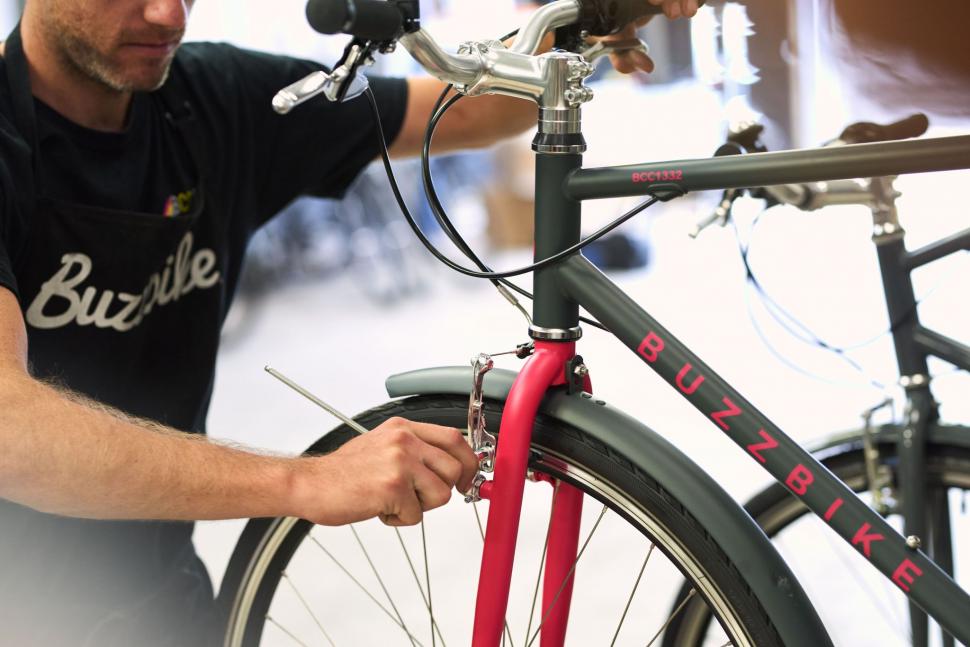
Buzzbike’s Bike Lab Academy is hoping to fill the demand for bike mechanics during the bike boom by training up talented school leavers who might otherwise find it difficult to find employment. The academy is backed by the government’s apprenticeship scheme and trains up new mechanics on all the skills required to service and maintain bikes.
Places for 2021 are full, but applications for next year’s January intake are open now. After 18 months of training, apprentices leave with an externally-assessed and internationally-recognised level 3 Cytech accreditation as well as real-world workshop experience. The Bike Lab apprentices are also paid an hourly wage, enabling them to earn as they learn.
Should they wish, Bike Lab Academy graduates will also be able to remain within the company after graduation.

Ede Harrison, Head Bike Professor said: “Our aim with this programme is to not only provide our Bike Lab apprentices with the practical skills for a successful career as a mechanic but also helps to build confidence in themselves and their abilities — a foundation that will serve them far beyond the world of work.”
Bid for a slice of signed G memorabilia

SportInspired has a charity auction where one deep-pocketed cycling fan will walk away with Geraint Thomas’ signed name card from his Tokyo Olympics time trial. The card was displayed on the support car while G battled his way to 12th place, carrying the knocks and bruises from a fall in the road race four days earlier.
I said you’ll need deep pockets for a reason, the current bid is £1,000…but it’s all for a great cause (and would look great on your wall). All proceeds raised will go towards funding SportInspired’s free sports programmes for children living in poverty. If you’re interested you can get more details here…
Yesterday, we reported the news that Thomas is close to signing a new contract with Ineos Grenadiers despite “tough” negotiations. The Welshman is also doing his bit, giving back to the next generation by setting up the Geraint Thomas Cycling Trust, a charity that will financially support children wanting to start cycling.
New stuff from Chrome Industries... just in time for those dark winter nights

With the clocks switching back on Sunday and the days shortening, it’s certainly time to start thinking about what you’re going to wear once the sun drops down.
Chrome Industries has just launched its new Night Series collection with a fully reflective jacket, merino socks and some cap choices.
The Wind Cobra 2.0 Reflective Jacket (£137) is Chrome’s lightweight windproof and water-resistant layer with 360 degree Hi-Viz reflectivity for visibility in low light conditions. “This shell was made to transcend through all four seasons, day or night, making it ideal for whatever the city streets bring your way,” says the apparel brand.
Chrome’s new merino crew-length socks feature a wide reflective stripe on the rear upper. The brand also has its new Cycling cap (£26) and 5 Panel Hat (£26) that are built from 360 degree reflective material; the former has a elastic band back, while the latter has an adjustable fit with a buckle closure.

Ned Boulting joins Dutch news from the cycle path's fan club
Every single day, Anna provides this service. This is what cycling can be: No helmets, no stress, no aggression. Just normal people going about their normal lives. Love it. https://t.co/LSKeko2uDk
— Ned Boulting (@nedboulting) October 27, 2021
Mark Cavendish to make track cycling return at Six Days of Ghent next month

Mark Cavendish could be forgiven for taking it easy this winter, putting his feet up after a triumphant return to the top of the sport. Instead, he’s off to Belgium next month to return to the track scene at the Gent Six Day. He’ll be teaming up with Deceuninck-Quick-Step teammate Iljo Keisse during the competition from November 16-21.
He’ll be up against his super teammate and reigning Olympic and world madison champion Michael Mørkøv, who pairs up with Lasse Norman Hansen. It’ll be Cav’s first time at the race since winning it alongside Sir Bradley Wiggins in 2016.
Your regular dose of pleasant Paris pedalling pictures
Enjoy the silence pic.twitter.com/xIL30BacjH
— Commute de Paris (@CommuteDeParis) October 28, 2021
Paris’ cycling transformation is another live blog favourite.
According to a new plan, the city is to become a 100 per cent ‘cycling city’ within the next four years. The Plan Velo: Act 2 says the French capital will increase the number of protected cycleways and bike parking spaces in the city as the next stage of the existing $174 million cycling plan.
> Paris pop-up bike lanes will be made permanent
New research earlier this year found that new cyclists account for almost six in ten users of pop-up cycle lanes in Paris. The lanes were first installed in response to public transport strikes, but were kept and expanded during the pandemic. Mayor Anne Hidalgo centred much of her successful re-election campaign on reducing car dependency and fighting climate change.
BBC's headline goes global...
This headline though 👎 ⛔ https://t.co/AZcArUcnkX
— Road Safe Zimbabwe (@RoadSafeZim) October 28, 2021
Brit watch: Matthew Holmes extends WorldTour stay with Lotto-Soudal
✍️+1 year @MatthewHolmes51
✍️+1 year @SteffCrasRead what the 25-year-old Belgian and 27-year-old Brit had to say after extending their contract 📝https://t.co/wpcECftQJY
— Lotto Soudal (@Lotto_Soudal) October 28, 2021
Yesterday we brought you the news that James Shaw had earned another shot at the WorldTour and has signed for EF Education-Nippo. Well today we’ve got more good news for fans of British racing. Matthew Holmes is staying with Lotto-Soudal for another year, having signed a contract extension until the end of 2022.
Holmes got his breakthrough win at the Tour Down Under last year, when coronavirus was just a headline from a far away land. Since then he’s finished third on a stage of the Giro, and sixth at a stage of the Vuelta this year. Holmes says a Grand Tour stage win is his big ambition for next season.
“It feels really nice to go into my third year with Lotto Soudal. I can’t wait for next year. After two seasons of getting to know everyone and making friends, Lotto Soudal really feels like ‘my’ team,” he said.
“Maybe this year has not fully gone to plan, but I still won a WorldTour race during my first pro contract. It’s an achievement which I’m still really proud of. On a couple of occasions, I’ve also been close to a Grand Tour stage win, which really gave me confidence to go and try to win one next year. In my head, I know it’s doable.”
Urban space is complex...but the maths is relatively simple...
Urban space is complex.
But the math is relatively simple! pic.twitter.com/UmG59D9KvL— Cycling Professor (@fietsprofessor) October 28, 2021
Having spent all yesterday thinking I had no issue with e-scooters using bike racks I found one at my (now full) favourite bike parking spot, forcing me the extreme inconvenience of walking 20 metres to the next one. Unacceptable…
Barnsley to get 'Dutch-style' roundabout
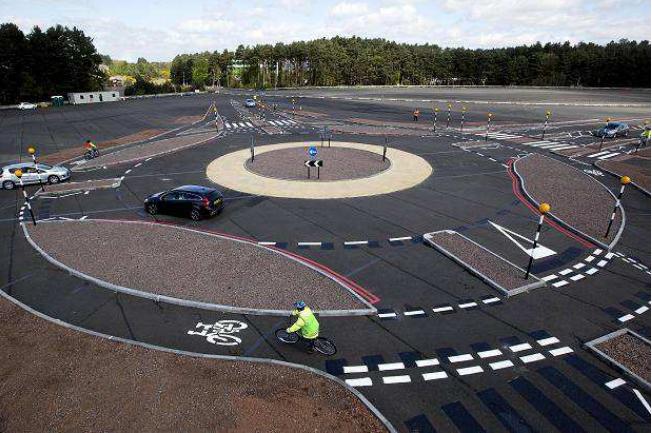
Dan Jarvis, the Labour MP for Barnsley Central, who is also South Yorkshire’s mayor, confirmed that his town would be getting an “innovative Dutch-style roundabout”. Speaking after yesterday’s budget, Jarvis said: “Barnsley and South Yorkshire needs and deserves a world-class transport network. That’s why I’ve fought hard to secure the transformative investment we need.
“Passengers in Barnsley and South Yorkshire will benefit from faster bus services, upgraded shelters and stops, better rail stations and a massive expansion in high-quality walking and cycle routes – including the creation of an innovative Dutch-style roundabout for Barnsley town centre.”
Councillor Chris Lamb, a cabinet spokesperson environment and transport thanked cycle forum members for their support and collaboration and promised to seek the views of Barnsley cyclists on design and location.
This lane fights climate change
this is great, @copenhagenizers #COP26 pic.twitter.com/QKB5UWHRo1
— wohnBAUMoffensive (@holz_bau) October 26, 2021
28 October 2021, 07:51
28 October 2021, 07:51
28 October 2021, 07:51















62 thoughts on “BBC under fire for reporting three children ‘hit by car’; Cav back on the track; Want to train as a bike mechanic?; Bid for a slice of signed G memorabilia; Ned Boulting joins cycle path news fan club; Philip Hindes retires + more on the live blog”
Spotted this the other day –
Spotted this the other day – yeah, I thought BBC had sorted the reporting language thing? Maybe the likes of Cycling UK could copy Stonewall and offer their services as “(cycling) diversity consultants”?
But they were struck by a car
But they were struck by a car. Struck by a driver would mean that they were thumped.
Alternatively, they could
Alternatively, they could phrase it as “car driven into woman and three children in South Lanarkshire” – that would solve the problem of identifying the vehicle and that someone was driving.
Or phrased as “struck by car
Or phrased as “struck by car driver”. Not perfect perhaps, but on the other hand the “struck by car” version is also ambiguous (I.e. was it being driven or had it rolled on its own); nature of the English language.
CyclingInGawler wrote:
I think the phrase “driven into” is a perfectly cromulent way of replacing “struck by car driver”.
hawkinspeter wrote:
Have a like. Not that I’m taking a position on your proposed phrasing – just for use of the word ‘cromulent’.
Whilst that may well be the
Whilst that may well be the case, it apportions blame before due investigation, could prejudice any legal proceedings and possibly leave the reporting organisation open to a charge of defamation should it emerge that the driver was in fact (insert unlikely but conceivably possible scenario here) completely innocent.
We’re really into the
We’re really into the semantics now – maybe it’s the whole “active / passive” “driving” thing? I don’t think hawkinspeter’s suggestion apportions culpability or blame in that way (e.g. to an identifiable individual). Was “driving” occurring (“driving down the road”)? Yes. Was there a driver? Yes. Was it being driven?
Unless like some of our judiciary you’re flirting with the idea of redefining “driving” as a state that can come and go like consciousness I think this is perfectly acceptible. (“He was in the car all the time, he was driving in the moments leading up to the incident and afterwards he drove himself home… but he did not drive into the child as in that instant we shall show he wasn’t driving”).
It’s of course on the BBC (or others) to distinguish between a car with no-one at the controls / unpowered *. But are they that careful in the case of e.g. assault, robbery (“a woman was sexually assulted [but we can’t say ‘by a man’ and even ‘by a person’ is risking it…]”)
* Which indeed they do – you read above “an unoccupied vehicle”, “with no-one at the controls” and “it rolled down the hill into…”.
Just common sense really.
Mungecrundle wrote:
I’m not seeing how that’s prejudicial. The act of moving a car is known as “driving” and the car most definitely was driven into the same space as a woman and three children. If maybe the driver had already jumped out of the car and was not in it at the time of the collision, then you could say “empty car rolled into woman and three children”, but I don’t believe that’s true in this case.
But were you not just struck
But were you not just struck by an idea? Do you have a bruise to show for that?
It’s good to choose language
It’s good to choose language that blames the person responsible (a driver). But can this language squeeze sufficient information into headline? After all, the object driven could be a tractor, lorry, car, train, bus, horse – even a golf ball (if I’m not mistaken…)
If you got hit by said golf
If you got hit by said golf ball, would you say:
Because following these ridiculous “guidelines” would imply you should use the second.
…and if you got hit with a
…and if you got hit with a driver (a special type of golf-club), swung by a cyclist – just imagine that confusion!
It’s just the interplay
It’s just the interplay between the language and our cultural norms – and those change all the time subject to deliberate choice (e.g. by an editor, a politician) or the whims of fashion. As you know very well. To run with your theme you don’t tend to see:
…but rather “Man shot by police” or “Woman punched by entitled driver”. There’s no given grammatical reason we shouldn’t change the focus in the sentences about cars and drivers. You of course disagree with the particular examples for ideological reasons but this merely shows that the language is indeed important.
Your examples sound odd
Your examples sound odd because they are poorly constituted phrases.
You don’t see “Man hit by bullet” so much, although it’s perfectly acceptable English, due to the fact we have better verbs in the English language to describe being shot.
“Woman punched by fist” is particularly foolish because the verb “punch” already means “hit with a fist”, so you’re unnecessarily stating the same thing again.
Nigel Garage wrote:
I see a hole in your argument.
?
?
Now far be it from me to
Now far be it from me to defend the BBC, an organisation that I thankfully no longer pay for, but the truth should always come first.
“Three children struck by car” is the factually correct statement. “Three children struck by driver” is ambiguous at best, and false at worst.
Nigel Garage wrote:
It may or may not be factually correct but it is quite misleading, suggesting the car has free will, which is obviously false.
“Three children struck by car driver” wouldn’t have been difficult, would it?
Ask yourself why we don’t see headlines such as:
“Teenager killed by knife.”
“Pensioner hospitalised by baseball bat.”
“Dangerous driver injured by chainring.”
The object has no agency and misreporting like this seeks to remove the blame from the driver.
ChrisB200SX wrote:
It doesn’t suggest the car has free will. Take the sentence “Skier struck by falling rock”: does a rock have free will? will anyone think the sentence is misleading? No.
“Three children struck by car driver” is incorrect on two levels. First of all it’s factually incorrect; the children weren’t struck by a car driver, they were struck by a car. Second, it can also mean that a car driver got out their car and punched the children, which is also incorrect in this instance.
As for your other sentences, they are all ambiguous in their meaning and could be tightened up, e.g.:
Nigel Garage wrote:
A rock doesn’t have a driver who is responsible for controlling it. If the car rolled down a hill then yes it makes sense to say “hit by a car” – though you would normally say “hit by a runaway car”.
You would “Pensioner hospitalised after being hit by a baseball bat.” You would say “”Pensioner hospitalised after being hit with a baseball bat.”
Makes sense for this report to say “Three children ‘struck with a car’ in Lanarkshire” – however it is a quote, so not really the BBC’s fault, if they quoted accurately.
*edit – it is a quote on the twitter link shown, the actual article itself is different – the BBC should have done better.
VizionZero gives that BBC
VizionZero gives that BBC report a rating of ‘D’: https://visionzeroreporting.com/report?url=https%3A%2F%2Fwww.bbc.co.uk%2Fnews%2Fuk-scotland-59067379
Well even though not ideal,
Well even though not ideal, it is concisely descriptive, necessarily avoids placing blame prior to proper investigation and is far better than the “pedestrian in collision with vehicle” type of headlines we have seen in the past.
I think part of the problem is the lack of a suitable verb for being struck by a vehicle. You can be shot or stabbed which are recognised actions of guns and knives and imply that someone instigated those actions. but is there really an equivalent for being cared (carred, card, car’d???)
It isn’t a problem at all.
It isn’t a problem at all.
No new English language required.
Struck by a driver is better.
Struck by a driver is better.
You don’t often hear the term struck by a bullet.
It’s not so common these days
It’s not so common these days but once upon a time if you parked on a hill you turned the wheel into the curb and left it in gear. In fact so ingrained I still always leave my car in gear and I think the turning the wheel thing is still in HC. So I’m pretty sure that it is possible to be struck by a car without a driver.
Nigel Garage wrote:
What if if it were a cyclist unable to brake in time before a pedestrian steps into the road and they ‘collide’? Would you be just as comfortable with the heading ‘pedestrian struck by bicycle’? ‘A man was treated for injuries after he was hit by a bicycle’? It would always, and quite rightly, be ‘pedestrian hit by cyclist’, just as it should be ‘pedestrian hit by motorist’.
Kendalred wrote:
Can’t recall but I think someone here argued against exactly this (reasonable) point before. “A pair of Doc Martins was in collision with a Ford Cortina…”
Mungecrundle wrote:
Removal of the mention of the driver suggests there was no occupant in control of the car.
In addition, if “car strikes school children” can be used without implying intention or blame so can “motorist strikes school children whilst driving” or “with car”
It is factual, does not imply blame or intention, and more importantly does not veil any human involvement
The weird thing is that the
The weird thing is that the BBC tweet has the phrase in inverted commas – kind of implying that they know it’s wrong, but have chosen to use it anyway, and at the same time are attempting to disavow that choice.
mdavidford wrote:
Perhaps they’re trying to use the HIGNFY “allegedly” trick. They’re probably wisely trying to avoid getting sued by the car, or marginalizing the 2t lump of iron community
The BBC were probably quoting
The BBC were probably quoting a police or ambulance press release, perhaps that’s where the problem lies.
In my brief stint in an ambulance control room many years ago traffic collisions were often referred to in short hand as ‘car v ped’, ‘4 veh rtc’ or ‘lorry v bike’. No mention of drivers or riders.
Ride On wrote:
It’s in ‘scare quotes’, though, rather than double-quotes, which they’d normally use when quoting someone. And if they’re quoting anyone, it appears to be… their own report, where the phrase appears unquoted.
Maybe not quoting a press
Maybe not quoting a press release then.
Ride On wrote:
that’s useful to learn, because of course first aiders are not concerned with[i] who [/i]did what, only with the nature of the injuries. So ‘car v ped’ is all they likely need to know, let the police deal with the uninjured driver.
Whereas the same reasoning is why it is not appropriate for a news report, where it is unhelpful to perpetuate the myth that these things are nobody’s doing.
It needs some thought on how
It needs some thought on how to phrase it. “Hit by a driver” might suggest the victim was in the passenger seat, etc. Perhaps we can offer constructive suggestions which describe the situation accurately without giving agency to the car? I’ll start with “the victims were runover by a motorists”.
Using the context as outlined
Using the context as outlined in the article, it should be ‘shot WITH a gun’ or ‘stabbed WITH a knife’, therefore ‘run over by a motorist with their car’ might be appropriate.
Sriracha wrote:
We seem to have no problem stating that someone “was shot by a gunman”, or “attacked by an assailant armed with a knife”.
“A driver has hit 3 children whilst driving a car/lorry/weapon-of-your-choice. “
The only reason that we find it sounds odd, is that we rarely hear of human involvement – that’s probably what jars, and is also the reason to change the culture – I believe this has been trialled successfully in other countries
Mind you, the UK isn’t Holland, as I’m frequently informed……
Captain Badger wrote:
Let me help you out, as Mungecuddles below has already given you a clue. The reason the phrase “shot by a gunman” works is because of the verb “shoot”. Imagine if there was no verb “shoot” in the English language, and you had to reconstitute the phrase using the verb “hit”. Would you say:
That’s the issue here.
Sounds like you’re serving up
Sounds like you’re serving up some poorly reconstituted English there. Let’s have a proper meaty raw slice of “shot by a terrorist”, “driven into by a motorist” or “Crushed with a truck by Tescos employee”!
Nigel Garage wrote:
The issue however is that no news report ever would simply report 3 children were hit by bullets whilst walking to school. There would be a discussion about who was carrying and firing the gun. There are however many, many reports of people being hit hy a car with no discussion about the agency of the driver.
Likewise as has been mentioned, pedestrians are always hit by cyclists not bicycles which are even less likely to be freely travelling at speed unassisted than cars- for example of the double standards see the BBC https://www.bbc.co.uk/news/uk-england-london-56320121
I don’t think it needs to
I don’t think it needs to change that much. “the victims were hit by a motorist”.
I do actually think Nigel has
I do actually think Nigel has a point about the verb. Stab implies a knife or sharp instrument, shot implies a gun, whereas hit is more vague about the implement.
In a recent NMOTD the victim was hit by motorist, but not the car. The motorist got out of his car and and hit the cyclist, using his foot.
Which is why I suggested runover, since that implies a vehicle, whilst allowing for the agency to be placed with the driver. “Driven into” would also work, as per christonabike.
Sriracha wrote:
A quiet lie down until you feel normal should sort that
Sriracha wrote:
Thanks for the upgrade! I know the reasons for reluctance to change the language are both “legal concern” (often spurious but I’m no expert) and also “but that’s the way we say it”. However that’s my point about ideology. Different publications / writers constantly phrase in particular ways, with more or less conscious intent. Words have ways with us and while simply changing the verbiage doesn’t magically change the culture it is never “neutral”. (You can use a “neutral tone” but you’ve done that for some reason.)
There’s seldom just a single meaning for a word or phrase – just look in a dictionary.
Finally in stories we are always interested in agency e.g. whodunnit. Whether “they are legally responsible” or not. So not “people were hit by fast-moving fragments of metal” but “a bomb exploded and injured…” and we then invariably go on with whether this was dropped by a state actor, private enterprise (“suspected terrorist”) or was just an old one someone had found down a hole. (Thanks to Nigel for his reductio ad absurdam on that).
I did wonder about this. I
I did wonder about this. I think someone argued that at the time of the attack he was in fact a pedestrian, from a legal point of view. (Although I do identify myself as a cyclist all the time ?) the media will not identify somebody by their activity when they are not doing said activity.
To use Nige’s analogy you won’t see the headline ‘man attacked by golfer whilst shopping in Tesco’s’. He may well be a golfer, he may in fact be coming back from the golf course but it’s extremely unlikely that has any bearing on the story.
‘Driven into’ perhaps?
‘Driven into’ perhaps?
BarryC666 wrote:
That’s the clearest and easiest way to get the information across.
Road.cc reaches new heights!
Road.cc reaches new heights! Thirty plus comments on the meaning of ‘struck by’ and how the phrase can be improved.
Tomorrow – discussions re. how many angels can fit on to the head of a pin, or perhaps on the bolt of a stem?
Looking forward to it!
Flintshire Boy wrote:
It’s got a way to go yet – nobody liked my Latin joke the other day…
mdavidford wrote:
I might have liked it if I could spot it. Only 40 years since I was hilariously upgrading a textbook to “The Shorter Eating Primer” but I cannot see any Latin, joke or otherwise, there. Can you explain, using only first declension nouns and avoiding subjunctives?
But a joke’s not funny once
But a joke’s not funny once you explain it.
Latin is celebrated for its
Latin is celebrated for its precision. I’m sure the ancient Roman media never confused chariot and charioteer when reporting crashes on the notorious Colosseum contraflow.
18 months to get a level 3
18 months to get a level 3 Cytech?? They really are grinding out your time with them to maximise government money and low wages that apprentices get, currently £4.30. You can walk out of school into a job at Tesco for at least £10 an hour. If you want to be a bike mechanic, there are much better ways.
Here is a breakdown of everything to get Cytech 3, plus some extras.
Theory One – online – £150
Tech One – 2 days – £375
Tech Two – 10 days – £1250
Wheel Building – 2 days- £375
Tech Three – 6 days – £1250
E-Bike – 3 days – £850
Hydraulics – 2 days – £450
Suspension – 2 days – £450
27 days – £5,150
Spread it over your own time and not be tied into an 18-month apprenticeship on low wages.
So 6 months at Tesco makes
So 6 months at Tesco makes 5000 extra to pay for 5 week course and sabes almost a year. Though surely the times you mention (days) would be for people already with some basic skills. Whatever, 18 months is astonishing
Let me ask a question:
Let me ask a question:
Clearly, most of us would like less CARS on the roads – and we’d all agree that CARS are dangerous. Yet, we do not seem to like the headline “car hits cyclist” – as it might blame the CAR rather than the HUMAN driving it. (I was even told off for writing about “car driving” yesterday on road.cc).
Is this not the wrong way round? CARS encourage humans to act in aggressive and dangerous ways (and cause all sorts of problems) – but we seem to try to almost absolve the CARS here? Is this not a little similar to the NRA’s (US) claim that “guns don’t kill – people kill”…?
So, should we not welcome the BBCs wording rather than condemn it?
(Nigel, you must enjoy this discussion: watching the mess created unfold from a position where you’re neither affected nor responsible for doing anything about it… 😉
Just to remind ourselves why
Just to remind ourselves why we’re here again: “those injured are a mother in her 20s and three children, the eldest of whom is seven.”
Now I don’t know for sure that they didn’t all run out in front of the car from behind a bush. Nothing says that she didn’t grab the children and dive under the car with them. Or that there was a driver in the car at all, or that the driver was conscious, or hadn’t suddenly been stricken blind, or was not in the throes of a terrible personal crisis.
But I do know that every time this happens it seems to be reported as either:
“Car hits people. Can you believe it? So sad…”
Or on the rarer occasion:
“Monster kills our little angels!”
We won’t reduce the occurrence of these incidents – which is what interests me – by absolving people (“unblemished record”…) of their responsibility. Nor highlighting a few villains (“drugs…3 times over the limit”) and thereby putting the rest of us fallible drivers in the “good, just unlucky” camp.
Going beyond the reporting issue – we need both engineering to reduce the danger and better oversight of driving. There should be both a decent chance of detection and meaningful sanctions. Ideally on a “stop you for minor things before we have a major incident” basis. Regular “refreshers” for your licence wouldn’t hurt either!
Maybe the government could consider looking at a different model when they get round to their review…
anke wrote:
I’m not overly fussed either way – if anything, more cars = more congestion, which makes tends to make cycling safer.
Cars are not inherently dangerous, it is possible drive a car in an almost perfectly safe manner. This is part of the problem – we teach our child ‘be careful of the cars’ – and then act surprised when they grow up, start driving, and aren’t careful of the children.
Cars don’t encourage anyone to act in an aggressive or dangerous way. It is an attitude that unsafe driving is acceptable, an attitude that is perpetuated (or at least, not challenged), partly by language in articles such as this one on the BBC, which leads to unsafe driving continuing unabated.
I can’t decide if your whole post is meant to tongue in cheek – so appologies if I have mis-understood.
On a more positive note for
On a more positive note for cycling, the BBC have released a video on a plumber who rides a cargo bike.
Entitled “The plumber challenging ‘white van man’ stereotypes“, the video discusses the help given to buy a cargo bike, its advantages, and when it’s possible and practical to use one.
In the case of the plumber featured, he uses a cargo bike or van depending on the job at hand – for the simple jobs, he can fit his tools in the cargo bike storage, and for the larger jobs where bikes are simply impractical he still has the four wheels to fall back on.
I heard this story on the
I heard this story on the radio and was pleasantly surprised by the positive coverage as well. He does say he still uses the van for boilers and radiators but is obviously making a very positive change.
I’m struggling to understand
I’m struggling to understand the problem.
Yesterday’s story was about a cyclist being kicked by a car driver. The driver got out of his car and kicked the cyclist.
Today’s story is about people objecting to a report of a woman being hit by a car. We don’t have ubiquitous autonomous vehicles yet so any rational person would assume that the car was being driven by somebody. Some people think it should have been reported as the woman being hit by a car driver but if you look at yesterday’s story you’ll see that that would imply the driver getting out of the car and hitting her,
“Woman Hit By Car” is a valid headline. We know the car was driven by somebody, any other way of reporting it risks confusing the reader. Or is that the point?
FrankH wrote:
I think this is best described in terms of in- and out- group thinking. Most journalists and the general public will think fo themselves as “drivers” but not “cyclists”. Cyclists are the out group, and therefore to be looked down upon, insulted, despised etc.
We therefore see headlines for the general public like “pedestrian hit by cyclist” because the out group of cyclists are to be hated but “pedestrian hit by car” because people see themselves as drivers and do not want to imagine themselves as capable of making the same error.
Note that pedestrian hit by cyclist contains all of the same semantic errors as hit by driver but it is commonly used with no apparent cognitive dissonance because of the out group effect.
Personally I would prefer “pedestrian hit by car/bicycle driven/ridden by unknown driver/cyclist (or appropriate details such as man/woman etc)” to avoid confusion, attribute agency appropriately and ensure consistency as technology progresses. This is so that ultimately we can accurately report “pedestrian hit by car driving autonomously with no human on board ” in 10 years time…