


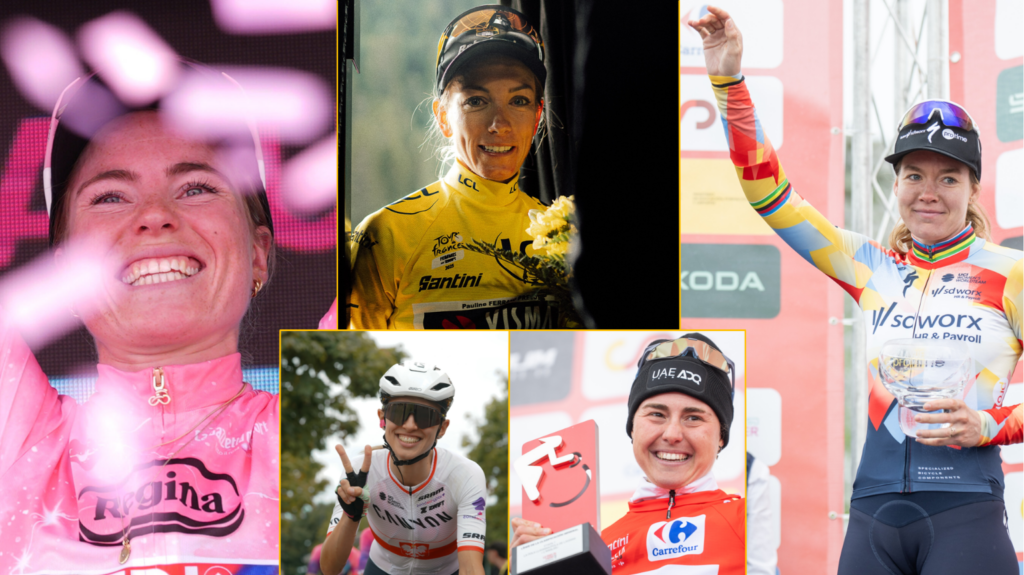

Could the 2026 Tour de France Femmes avec Zwift finally be the year to get a winner for the second time? A week after Tadej Pogačar claimed his fifth men’s title, the fifth edition of the women’s race has yet to see a rider back up their victory at the biggest race of all.
The race so far
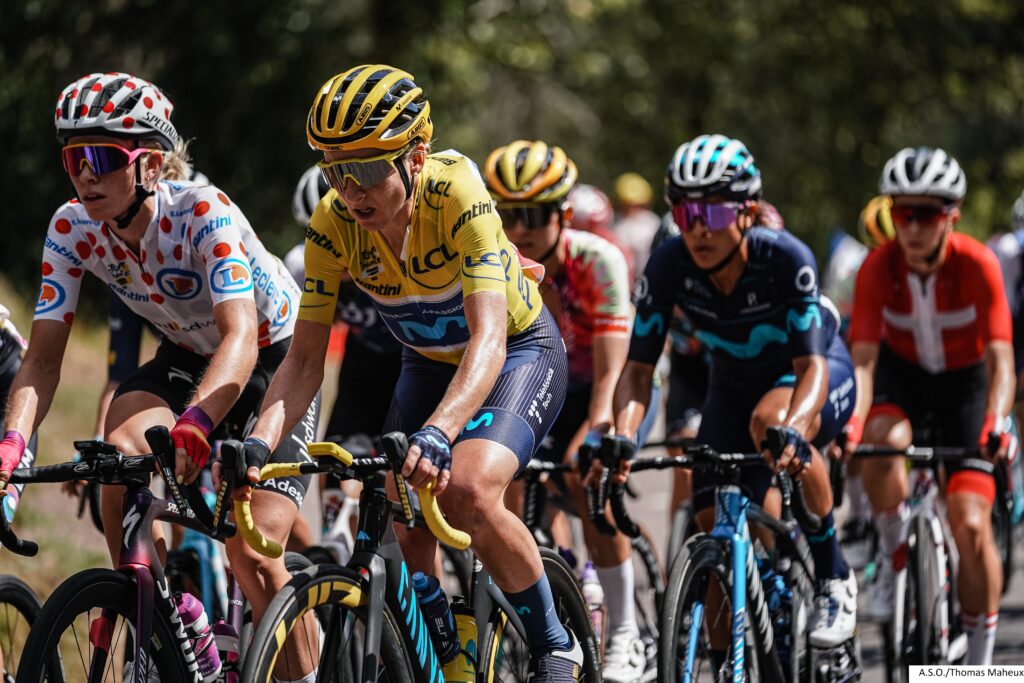
Annemiek van Vleuten, the great champion of the 2010s, was one of countless riders punished by the lack of racing opportunities and infrastructure in women’s cycling. Her Tour de France victory in 2022, age 39, was a statement of defiance in the autumn of her career. Her fourth place the following year, after four consecutive Grand Tour victories plus a World Championship title, proved she bowed out as close to the top as physically possible, second maybe only to her former rival – more on her shortly.
> Raising the bar: Annemiek van Vleuten, one of cycling’s great revolutionaries, retires
Instead, 2023 was the year Demi Vollering proved her worth as the next dominant rider of her generation, a woman capable of winning on all kinds of uphill, who quickly gathered the public profile and endorsements of blue-chip sponsors. Yet results did not pan out as such, the following year tensions within SD-Worx between Vollering, Lotte Kopecky, sprint ambitions and their directeur sportif – more on her shortly – led to lost time that the high mountains could not claw back. Instead Kasia Niewiadoma took an unexpected victory, only her second win in five years.
Then last year France awoke. The previous year’s dramatic Alpe d’Huez finale was diminished in spectacle by poor crowds, but last year’s back-to-back mountain stage wins by Pauline Ferrand-Prevot proved French grumblers did not need to sink into a morose reminiscence over Bernard Hinault once more, for the biker from the mountains had swept up all love and affection the nation had to give. Organisers will be hoping for similarly enthusiastic scenes when the race – in its current iteration – debuts on Mont Ventoux next Friday.

2026 Contenders and Star Names
Predicting this year’s race is therefore a conundrum. Niewiadoma returns but Vollering again starts as a favourite, boosted by a red hot spring of classics victories and a maiden title at the Giro d’Italia. She has a team entirely devoted to her ambition, all bar two of her teammates have won classics or top-10’d grand tours in their own right. Besides Ferrand-Prevot, the strongest French climbers will likely be working to deny a second title for their compatriot.
Ferrand-Prevot arrives short of race days but high on altitude preparation, fingers crossed her results (regardless of her) do not spark a discussion on race weight as seen last year. The 34-year-old has also hinted she has worked significantly on her time trial, which returns after a year out to the race, and will be key to limiting losses to her rivals.
Elisa Longo Borghini and Marlen Reusser will each try to improve on their records at this race where neither have podiumed before. Reusser enters in excellent form from her home race, the Tour de Suisse, whilst attention is deflected off Longo Borghini and onto her teammate Paula Blasi.
After only switching full-time to the sport in 2024 after a youth running middle-distances and competing in triathlon, the 23-year-old claimed a stunning victory in the Vuelta Femenina in May after distancing her rivals on the Angliru of all mountains. She enters her first Tour with the benefits of hope, excitement and without the heavy weight of expectation.
Elsewhere, Lotte Kopecky and Lorena Wiebes return to put the fear of all that’s holy into any team trying to win a stage that ends with a large-ish group coming towards a flat finish. But their SD-Worx team cannot escape the presence of Anna van der Breggen.
Having battled compatriot Van Vleuten for much of the 2010s, the Dutchwoman retired in 2021 having won all she could win, only to return last year after finding the SD Worx team car provided too much of an inner pang, a fear of missing out. The announcement of her return blindsided Vollering, who promptly removed her then boss from viewing her training data before switching team at the end of the year.
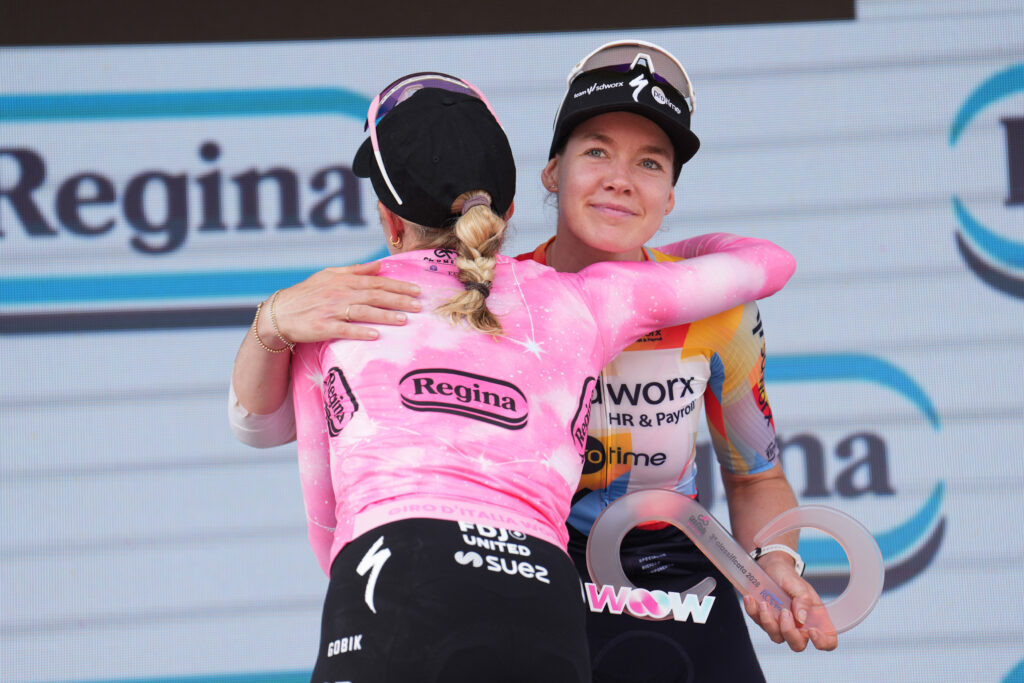
After an inconsistent 2025, Van der Breggen this year led both the Vuelta and Giro into the final stage, only to be undermined by mountain attacks from rivals who sat on her wheel whilst she rode a hard pace that she could not break free from. The days when she was the strongest rider in the race are over, and the 36-year-old will require racing nous to contend at the biggest race of all.
Between both SD Worx ends of the race sits the breakaway, who have proved to be excellent stage hunters at the Tour in years gone by. Last year was Maëva Squiban’s time to shine, whilst Puck Pieterse, Yara Kastelijn and Cedrine Kerbaol are all former stage winners who may seek similar opportunities. Kerbaol’s EF team is packed with aggressive riders including Noemi Rüegg, world champion Magdeleine Vallieres and Britain’s Alice Towers.
Home interests
Towers is one of six British riders in the race, up from four in 2025. Millie Couzens and Pfeiffer Georgi return from last year whilst Robyn Clay and Zoe Bäckstedt make their Tour de France debut, with the latter undoubtedly targeting the stage 4 time trial. Josie Nelson completes the sextet with her third Tour start. Mia Griffin and Fiona Mangan also return to the Tour de France Femmes, representing Ireland, but there’s no space on UAE for sprinter and national champion Lara Gillespie.
The route in short
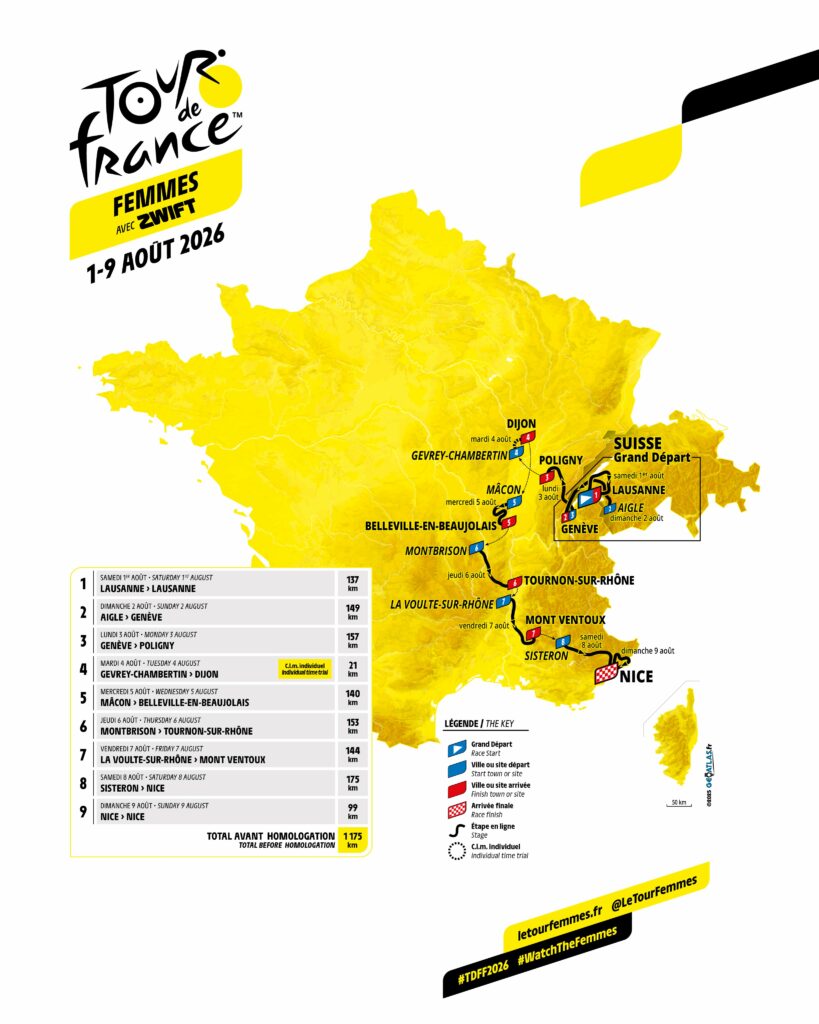
The race itself is the longest since restarting in 2022, nine stages long and a third of them starting in Switzerland. The first, looping out and back from Lausanne, should be a reduced uphill finish without serious time gaps.
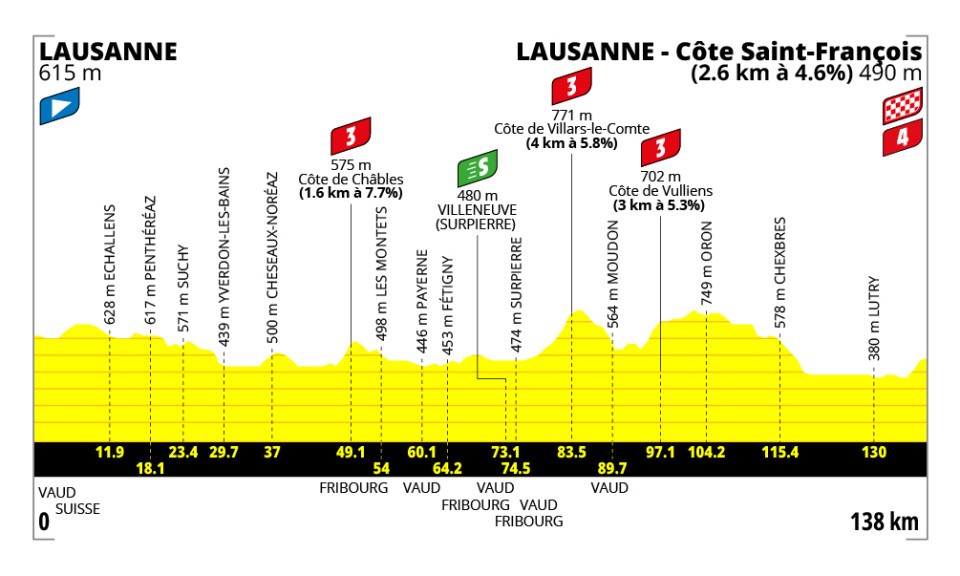
If Lorena Wiebes et al can survive 500m at 8 percent gradient on the last climb, the sprinters will be grateful the final 600m are flat.
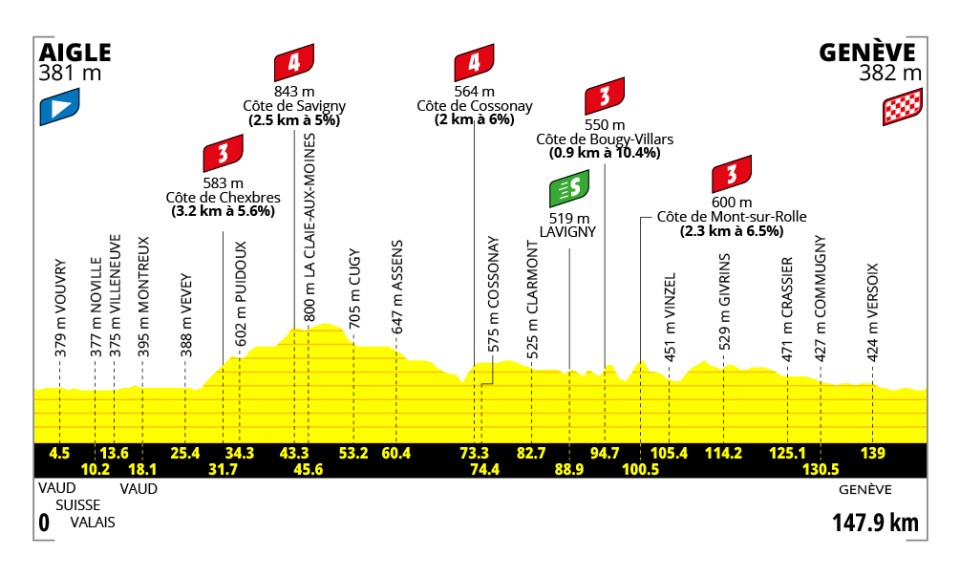
If the fast women can’t hack that, then the second stage – departing from the UCI’s headquarters in Aigle – looks a much safer bet for a bunch sprint with the final 30km downhill into Geneva.
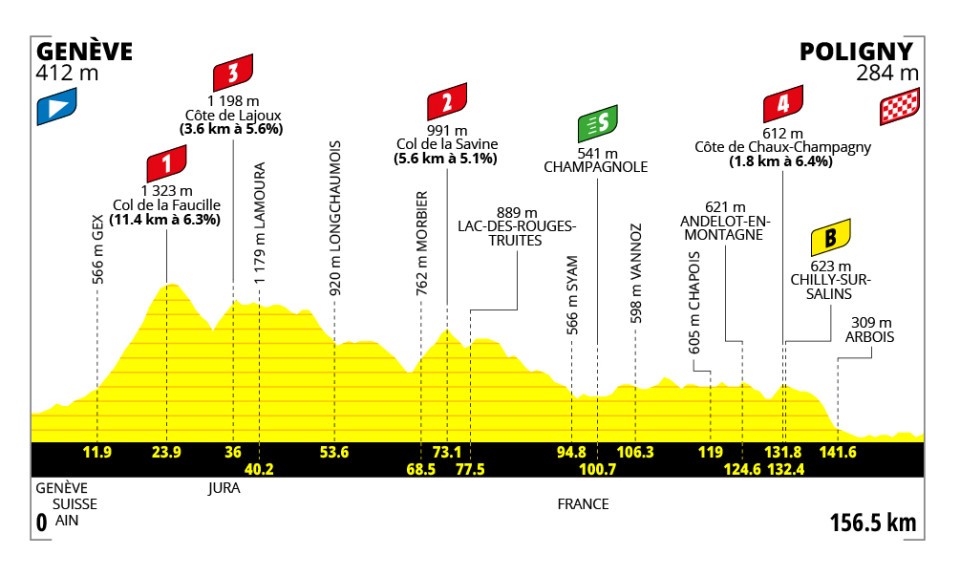
If there’s to be a breakaway ambush on this year’s general classification, Stage 3 is a prime candidate. A category-1 climb straight out of Geneva, before significant descending in the second half of the stage will make any chase difficult.
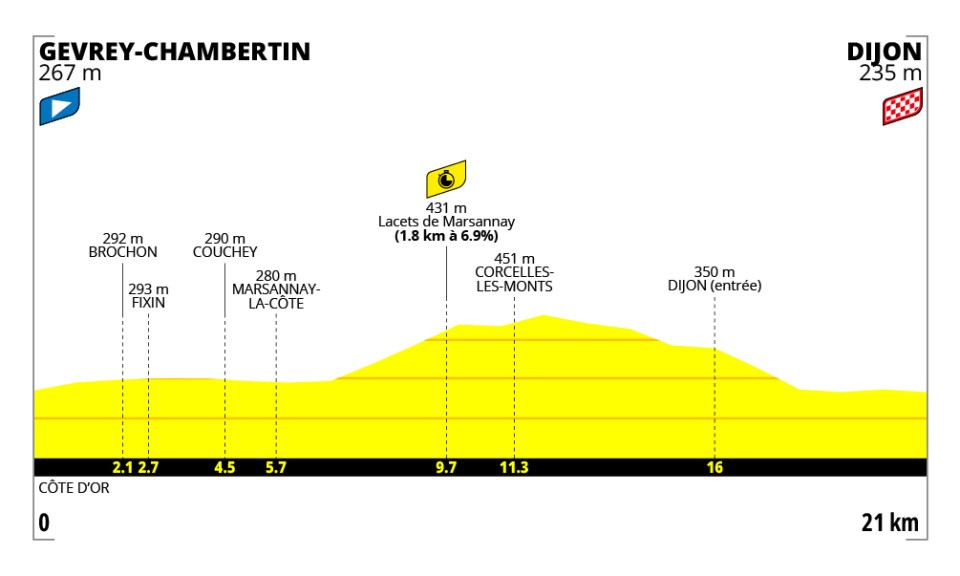
Stage 4’s 21km TT to Dijon contains a notable climb and should kick the yellow jersey battle into life. Having won the last Time Trial in the Tour de France Femmes, expect Demi Vollering to take time on several rivals here…
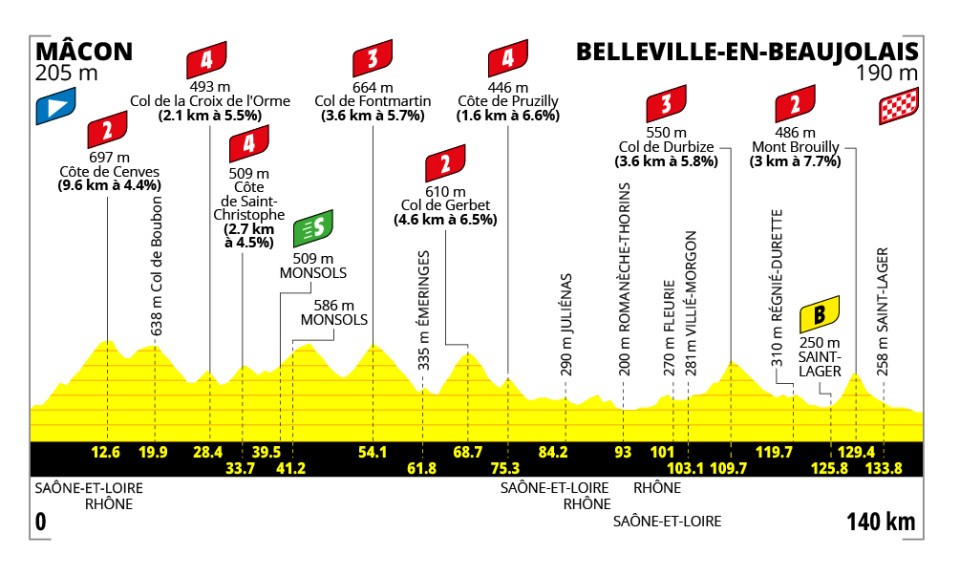
Both Stage 5 and 6 should see a feisty breakaway battle for mountains points though whether the peloton will be motivated to bring the break back depends if any favourite fancies a speculative attack on the final steep climbs. The introduction of bonus seconds into the final run in also adds some jeopardy and might tilt the balance back in favour of the peloton. Stage 5’s climbing peaks 11km from the finish line.
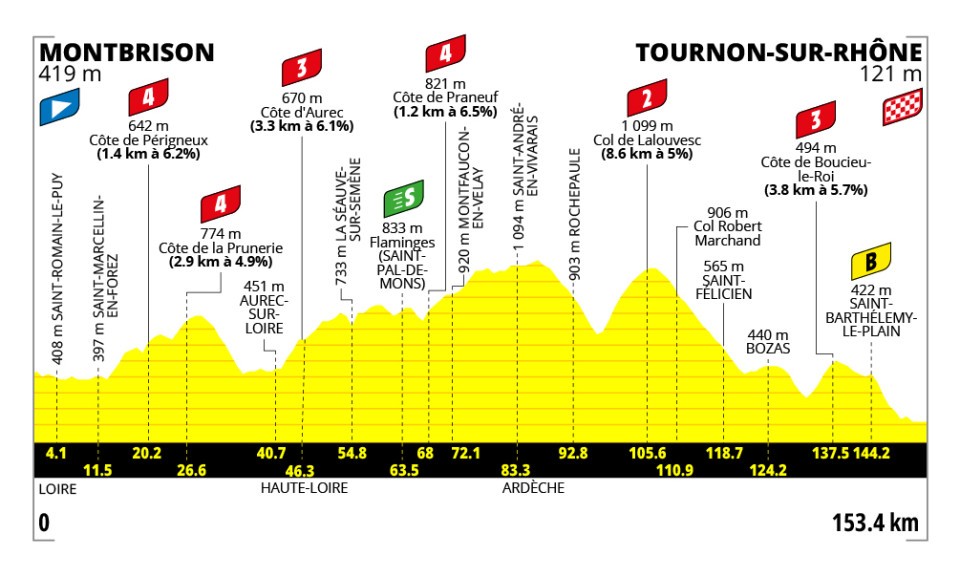
Whilst stage 6’s climbing finishes 16km from the finish.
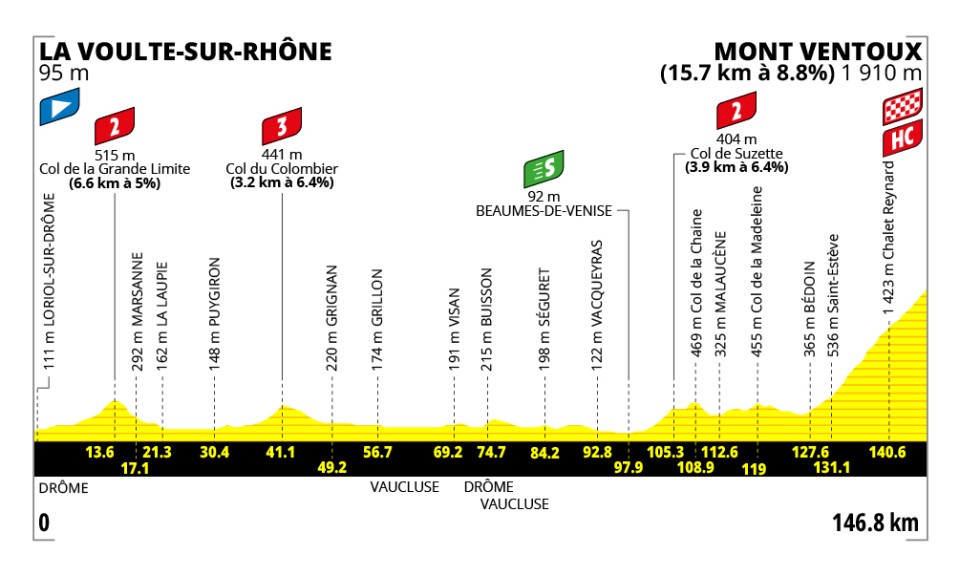
Friday brings Mont Ventoux, and with it ideally the most stunning images of the entire race. There’s a reasonable chance the breakaway stays away if a team is unwilling to ride the opening 125km and use up their domestiques before the crucial final climb. However the day might not warrant the title of queen stage, bearing in mind what awaits on Sunday.
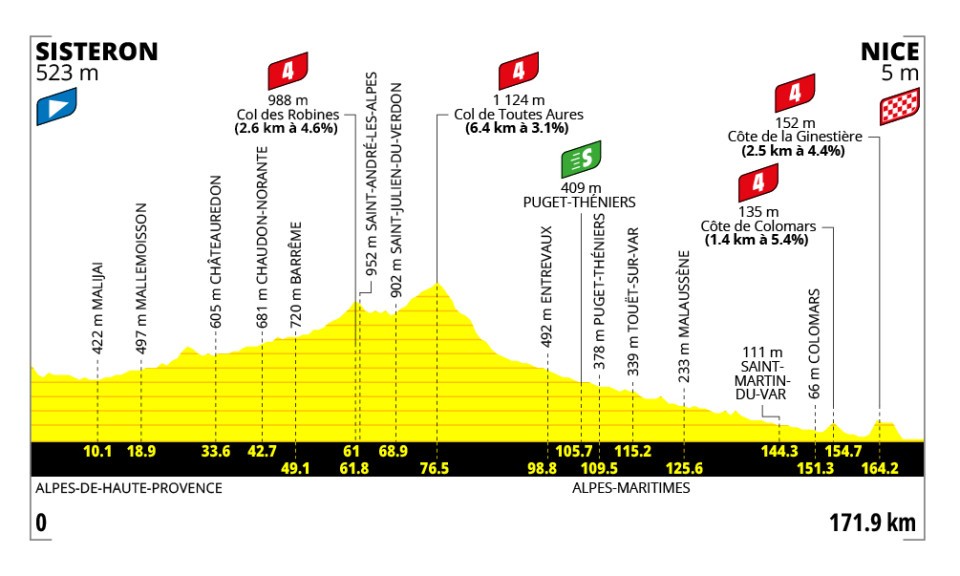
Before that though, there’s a final chance for the sprinters on Saturday, providing no one is tempted to launch a flyer on either of the small climbs into Nice.
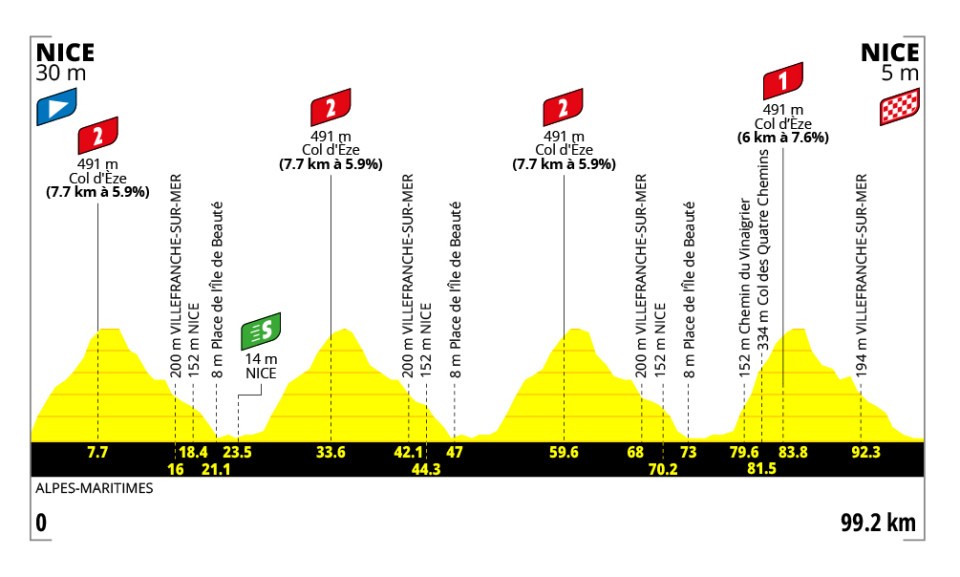
Then comes the final day. 99km, 4 ascents of the Col d’Eze, a climb most of the peloton will know like the back of their hand before the race and will have burnt into their brain by the end. Taking inspiration from the final stage of the men’s Paris-Nice, organisers will be hoping for carnage, speculative attacks from riders unhappy with their GC position – and there should be a few – and teams unable to control the race on steep gradients. The final descent down to the Promenade des Anglais could put the finale of Milan-Sanremo to shame.
How to watch
Unfortunately, when Channel 5 announced their coverage deal with TNT Sports, scant attention was paid to women’s cycling. Unlike the men’s version, the channel will not be showing nightly highlights until next year, when the race gets underway in Leeds. It means to watch any of the race on television you will either need a subscription to TNT or a VPN.
> How to Watch Cycling on TV in 2026: Your Complete Guide
In context…
> The Tour de France Femmes’ Long and Winding Road: A brief history of the women’s Tour de France
In contrast to the hommes, which this year quickly settled into arguments over history books and the merits of ‘witnessing greatness’, the women’s race is best served by focusing on the here and now of a race that begins with meaningful jeopardy, and no rider with supremacy over the peloton. That is not to diminish the historic persistent campaigning of the prior generation of professionals who lobbied for years for equal races to the men, for the organisational might of A.S.O. to do better than one-day tokenistic criteriums, even if La Course could be on the Champs-Élysées.

But where the Tour de France Hommes’ long history bore down on this year’s race as doping scrutiny re-mounted, the women’s race would benefit from its organisational independence from a long history, lest we sink into Jeannie Longo discourse once again. The racing before us warrants our attention, and there’s nothing tokenistic about being drawn in by the spectacle that should unfold.





3 thoughts on “2026 Tour de France Femmes preview: Will cycling’s most unpredictable race finally give us a repeat winner?”
I watched the last 40 km of today’s stage and was puzzled by the tactics of the yellow jersey group. They allowed Haugset to build a significant lead and didn’t seem to make much effort to chase her down. She went on to take the yellow jersey by over 2 minutes. Hats off to Haugset for a strong brave breakaway. Kopecky was unable to catch her in the later part of the stage.
But did I miss something?
Perhaps there weren’t enough strong riders in the yellow jersey group to attempt the chase?
@Mr Blackbird And by the way, is Haugset a Scandinavian version of Hegseth or vica versa?
Let’s hope not for the brave breakaway rider’s sake.
The first time I heard it I thought it was “headset”. I think he could do with his bearings changed.
(OTOH from his perspective he’s probably living his best life; albeit he has to look serious when delivering whatever nonsense the commander in chief has thought up overnight).