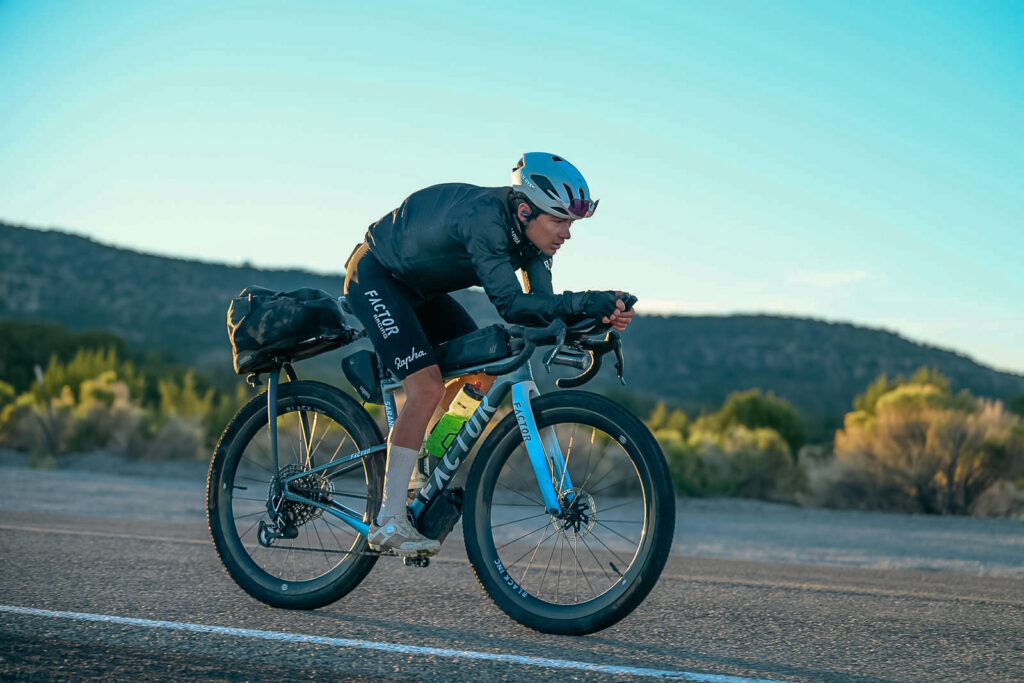

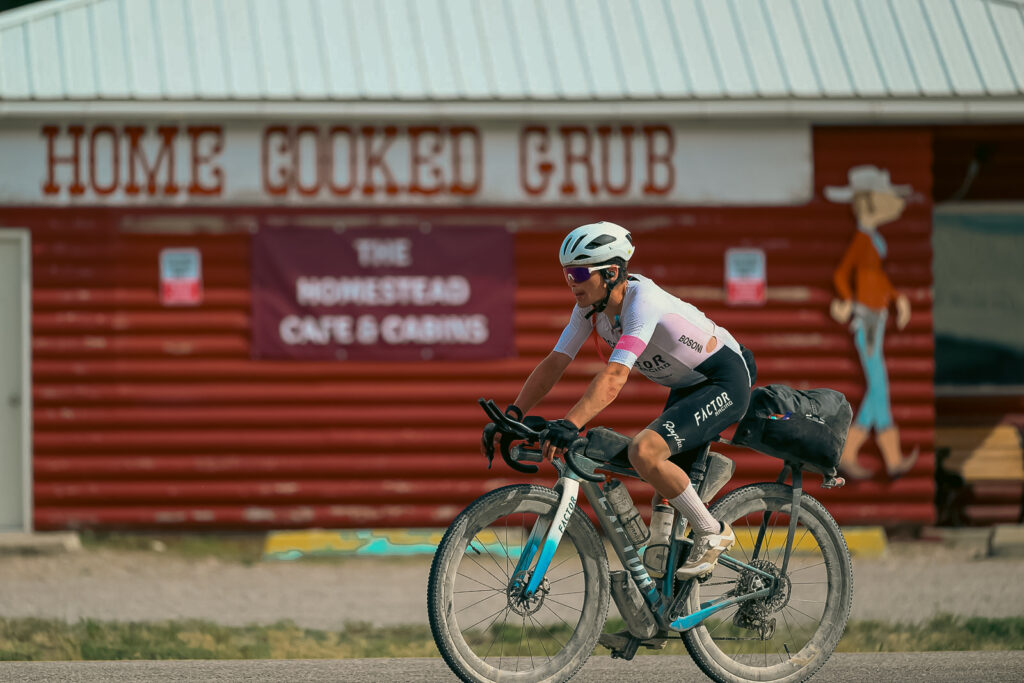
At just 24 years of age and in only his third season of ultra racing, Dijon’s biking mustard, Victor Bosoni, has already won many of the biggest long-haul races out there. In late June, the Factor-Rapha rider took on his first Tour Divide, a gruelling 2,745-mile bike-packing off-road race from Banff in Canada to the USA/Mexican border in Antelope Wells.
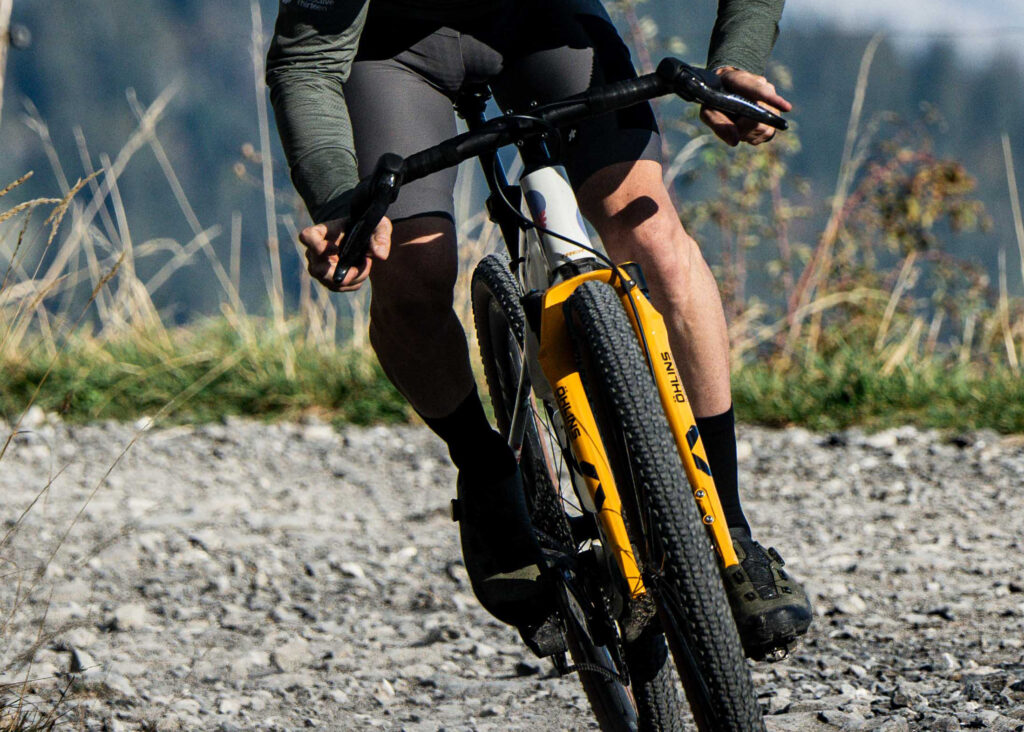
Choosing a gravel bike for the race, he travelled fast and light, and took in a ‘ride fast, get more recovery’ orientated approach compared to most others. His winning time for the race was 11 days, eight hours and 27 minutes – a new course FKT (Fastest Known Time).
This is how he won the race…
off.road.cc: You took an unusual sleep-pacing strategy at Tour Divide. How did you come up with it, and was it all planned?
Victor Bosoni: I’ve used this strategy ever since I started ultra cycling. At the North Cape (2023), my first very long race, I used it because I just wanted to finish and to be very safe about sleeping, because I didn’t know how my body would react to sleep deprivation. So, in the beginning, it was for safety, and from that I could see it was working.
I really love this way of riding, because I like to ride fast. I was an elite road cyclist before, and I liked the sensation (of speed). I tried to ride with sleep deprivation last year in the Desertus Bikus, and it was very bad for me. I got some injuries and then had pains. After that, I analysed it and saw that if I’d slept a little bit more at the start of the night, maybe one and a half hours (more, because we finished at 2pm), I think it would be faster, because during those nights I had very short naps of about one and a half hours there. I think it’s better to anticipate and have a longer sleep.
It’s all about trying to know your body and how it reacts to sleep deprivation, and then with the experience you can learn what the best strategy is. You need to try all of the strategies to define what’s best for you.
Body talk
ORCC: When planning and riding, do you go on feel, or are you very technical with stats and analytics?
VB: During a race, I think it’s important to listen to your body and to be able to adapt. For example, in the Tour Divide I really wanted to sleep for four to four and a half hours in a bed, but it was impossible to sleep, so I had to adapt on the spot – after one and a half hours of trying to sleep, I decided to go and not waste time just trying to sleep.
I really try to adapt to the circumstances; if I’m sleeping outside in my bivy, I know that I won’t have the best quality of sleep, so I prefer to sleep less then, and then have better and longer sleep the night after, so I really have to adapt to the circumstances during the race and on the go.
ORCC: During the Tour Divide, how many hours did you sleep at night overall, and how did it work out?
VB: It was about five hours sleep at the time, but I also take a lot of time to look after myself, putting creams on sensitive areas, washing kit, and also to clean the transmission on my bike regularly. I think that can save a lot of problems and potential issues during the latter part of the race.
Food for thought
ORCC: What is your nutritional approach and strategy during a race? Do you try and eat healthily, or do you just eat anything you can get hold of?
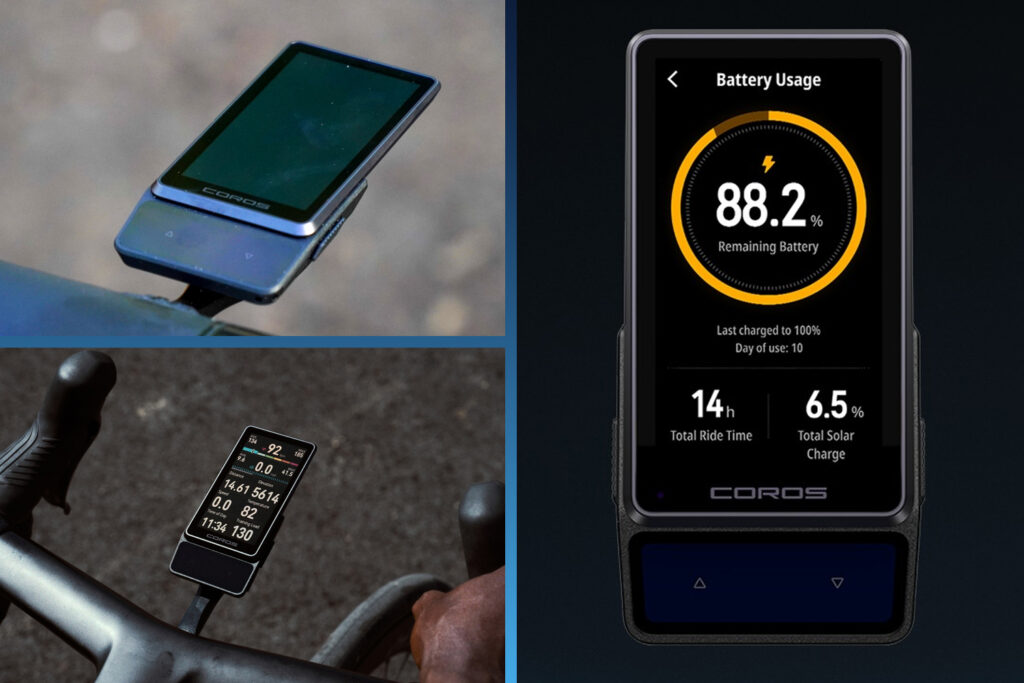
VB: I take care to make sure I have all of the right compounds, like carbohydrate and protein. On the first day it’s easy to carry stuff with you, so I have a big one-litre flask with all of my drinks for the day in. I drink a little bit every hour, and I also have a reminder set on my bike computer for every 30 minutes to remind me to eat and drink.
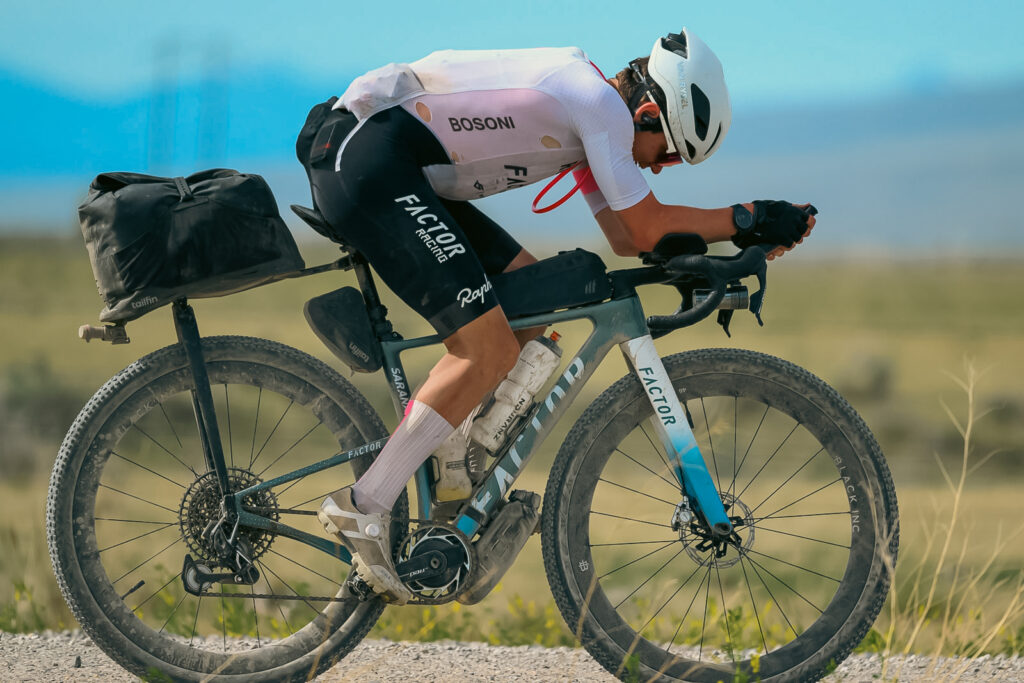
After the first day, it’s different; for example, for this last adventure I ate a lot of Skittles for carbohydrates. It was easy because every hour I was eating a small pack, and later I drank a lot of protein mix milk; about 150 grams of protein a day. In the evening, I had to eat a bigger meal, like sandwiches or maybe some muesli with milk.
It was very good, and I think it’s a strategy I’ll take in the future. It was easy to eat, and I had all of the nutritional compounds, the protein, and carbohydrates.
The great Divide vs the rest
ORCC: You’ve ridden and won some of the biggest races out there; how does the Tour Divide compare to the other major races that you’ve done?
VB: I’d prefer to compare it to the Transcontinental, because they’re almost the same duration. In the TCR you have to plan your own route, but in the Tour Divide the track is already laid out, so it’s easier like that. It was also easier with the preparation, because there’s a lot of information and details through the community, like where to sleep and where to eat, so it was easier to plan the race strategy.
But it’s also harder, because with off-road races it’s very difficult to estimate your pace and speed. The terrain can change, and so you’re not always riding at a fast speed, and that can make it a little bit harder. I saw the race that Robin (Gemperle) did last year, so with the tracker I can look and estimate where I can stop. I really converted Robin’s race to my race.
In the beginning, it was very useful to know that I could stop every day in hotels; for me, it’s very important to have the best quality of sleep and recovery, so the race preparation is a bit easier, although it’s a bit harder to estimate your pace.
As a race, I think the Tour Divide was harder than TCR, because of the terrain. There are no easy parts to recover on and to be more chilled, so it’s always hard, and you always need to push. At the end of every day, you’re always very tired.
I think my strategy was better here than in the TCR, because every day was hard, and you have a lot of elevation gain each day. On the TCR you have a lot of fast rolling parts (to recover), in Tour Divide you also have to push the bike at times.
The strategy of having a lot of sleep every day was important, and towards the end of the race it made a lot of difference compared to other riders.
Going off track at the Traka
ORCC: Earlier this year you won the Traka 560, and there was a lot of talk after the race about cutting corners or sections. Can you tell me in your own words exactly what the situation was and what the aftermath was?
VB: After Traka, it was difficult for me. I had a lot of bad messages from the community, and I know that I made some mistakes on the route. It was not intentional; I wouldn’t do that; it was a bit harder to find the route on my computer at night, which was when I made most of my mistakes. I know that it was a common mistake in ultra to make a wrong turn of this kind.
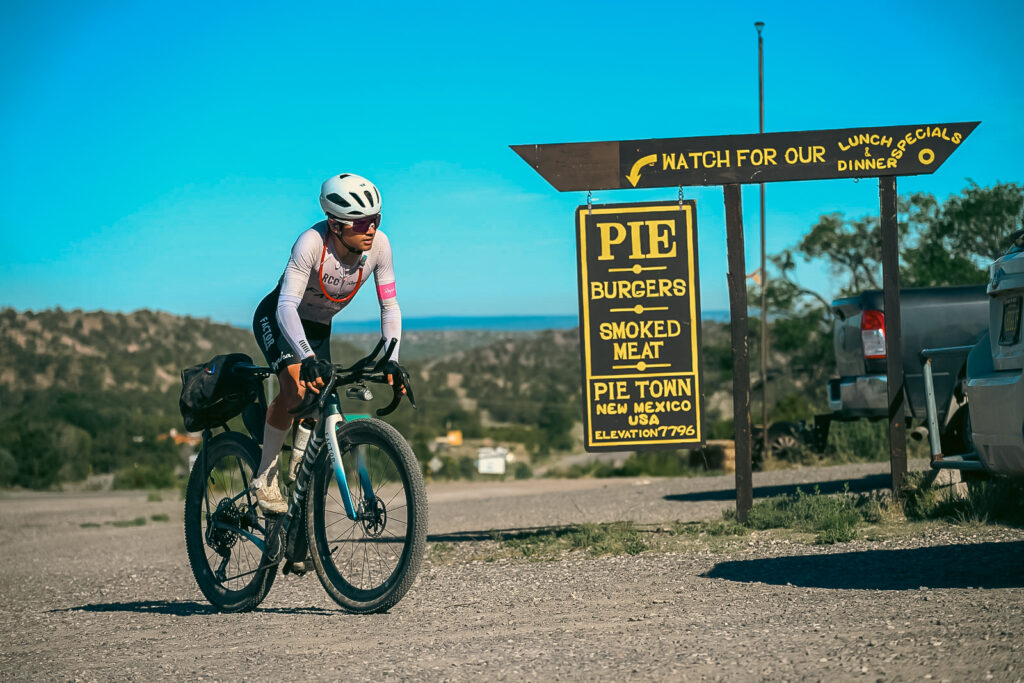
I was pretty sad to see the messages from some of the other racers, because I know that they’ve also made these kinds of mistakes on their ultras. But I prefer to take that as a positive for the future; I’ll post everything on Strava so that I’m irreproachable in the future. I know that I’m winning races, and to be in that position I believe you’ve got to be as clean and transparent as you possibly can.
Sometimes you make mistakes, but when you’re transparent, it’s better. Also, some riders didn’t publish their routes, and they also commented about my mistakes, but I know that I have to be irreproachable in the future, and I will take care of this.
When the world is your oyster
ORCC: You’ve won a lot of the big races already, what comes next with your career, and where do you want to take it?
VB: I don’t want to do the same races year after year; I want to discover everything that ultra cycling can offer. For example, I took a turn off-road so that I could discover the best ultra races. Next year I have some ideas, but I really need to talk with my partners to define the program.
I want to discover more about the mountain races; my dream is just to do the Silk Road Mountain Race. I’ve seen a lot of photos and videos of the race, and I think it’s the pinnacle of off-road ultra racing in terms of difficulty.
After that, my dream, my biggest goal in ultra, is to do the round-the-world record.