



Many pro teams have made the switch to tubeless tyres, so is the age of the tubular finally over? We’ve done the research to check what equipment the teams are choosing to run and see just how many teams are clinging to the past. Let’s take a look at the reasons why most have made the transition to tubeless and just how wide they are choosing to run their tyres these days.
In recent years, we’ve seen a greater mix of tyre types in the pro peloton than ever before, but this year the majority of WorldTour teams are using tubeless systems.
Gone is the era of rim brakes; are tubular tyres going to follow? All of the wheel sponsors of the teams competing in this year’s Tour de France supply tubeless wheels. Eight of these teams use Shimano or Roval wheels, and most recently Corima’s new MCC Evo and WS Evo wheels offer tubeless hookless compatibility, giving all of the teams the option to run tubeless, depending on their tyre sponsor.
Ideally, sponsors like to see riders using equipment that the public is likely to buy, and that means wheels that take clinchers/tubeless tyres since tubular wheel/tyre systems are impractical for most of us.
Alpecin–Deceuninck, Arkéa–Samsic, Groupama-FDJ, Ineos Grenadiers and Team DSM all have access to Shimano’s top-of-the-range Dura-Ace wheels: the C50 tubeless for flat stages, and the C36 tubeless for the mountains.
Bora-Hansgrohe, Soudal Quick-Step and TotalEnergies are all using Roval’s wheels: the Rapide CLX for flat stages and the Alpinist CLX for the mountains. Nearly all the Rapide CLX wheelsets we’ve seen these teams using are the lighter first-generation version rather than the second-generation design. The first-generation wheels aren’t compatible with tubeless tyres while the second-generation are. The teams don’t need the beefed-up rim bed that the CLX IIs have because they were running clinchers on them.
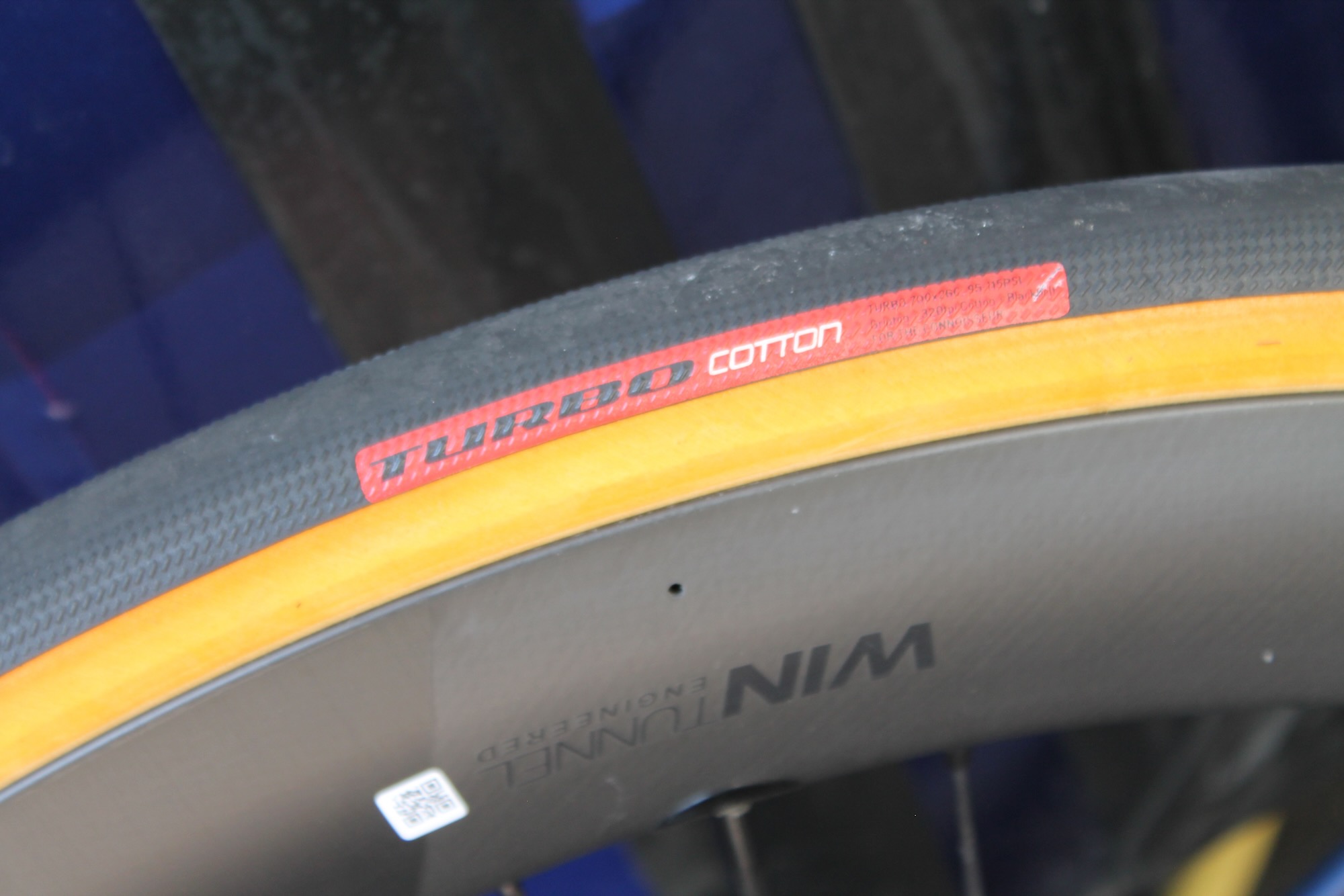
Team mechanics at the recent Critérium du Dauphiné told us that Specialized-sponsored teams opt for tubeless tyres in the wet – the S-Works Turbo RapidAir – and normal clinchers in the dry – the Specialized Turbo Cotton tyre (below) used with latex inner tubes. That’s Julian Alaphilippe’s bike pictured here.
> Check out the best road bike tyres 2023
Tubeless tyres were by far the most popular option in both the men’s and women’s Paris Roubaix this year, but Jumbo-Visma’s Wout van Aert stuck with tubular tyres despite the issues he had in the 2022 edition.
The challenging terrains that come with the spring Classics have provided a fertile testing ground for teams, where there has been a major shift to the majority of riders using tubeless tyres.
Jumbo-Visma were previous advocates of tubular tyres, but we spotted them opting for a tubeless setup for the first time in the 2022 Tour de France. They did, however, revert to tubular wheels and tyres for other stages.
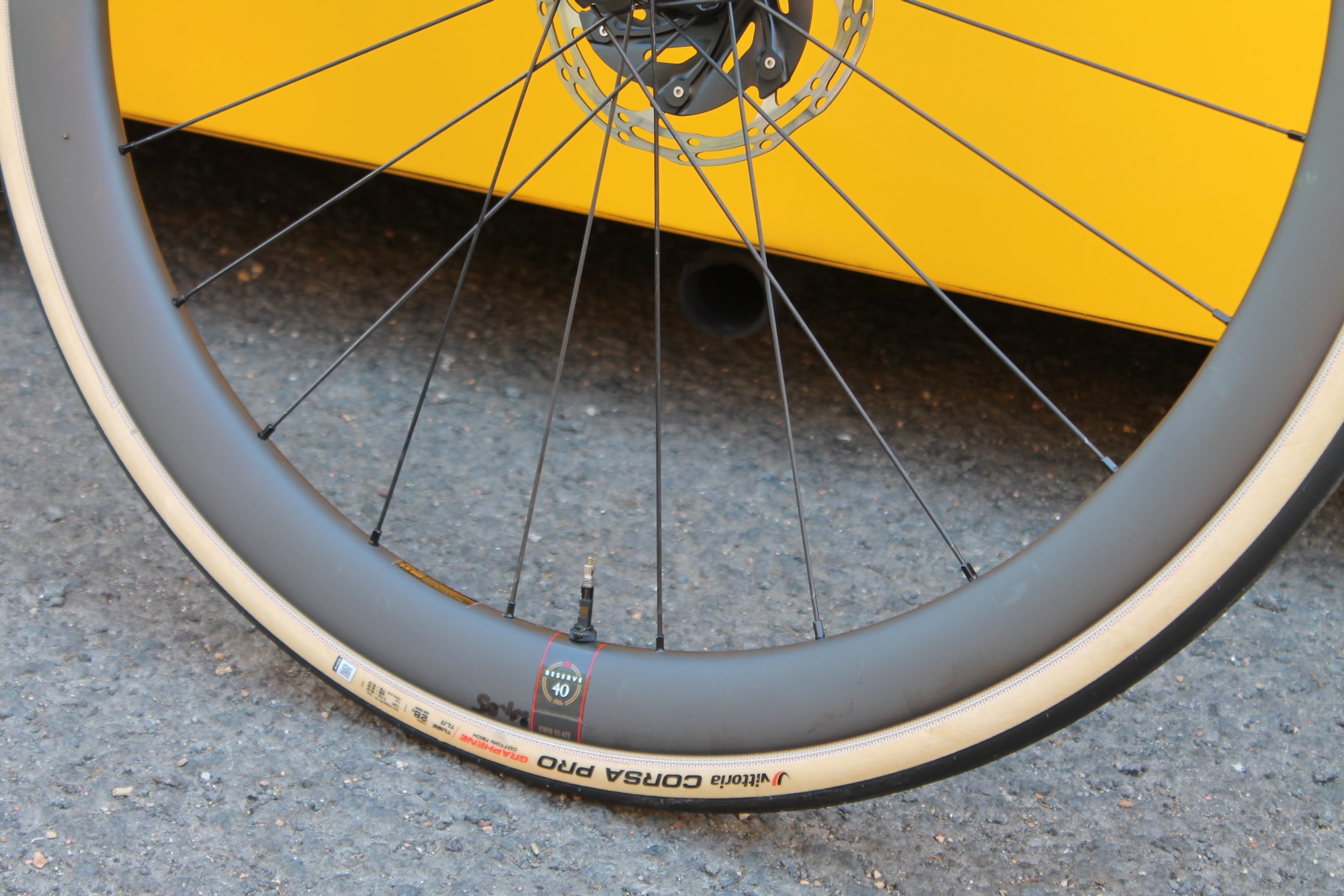
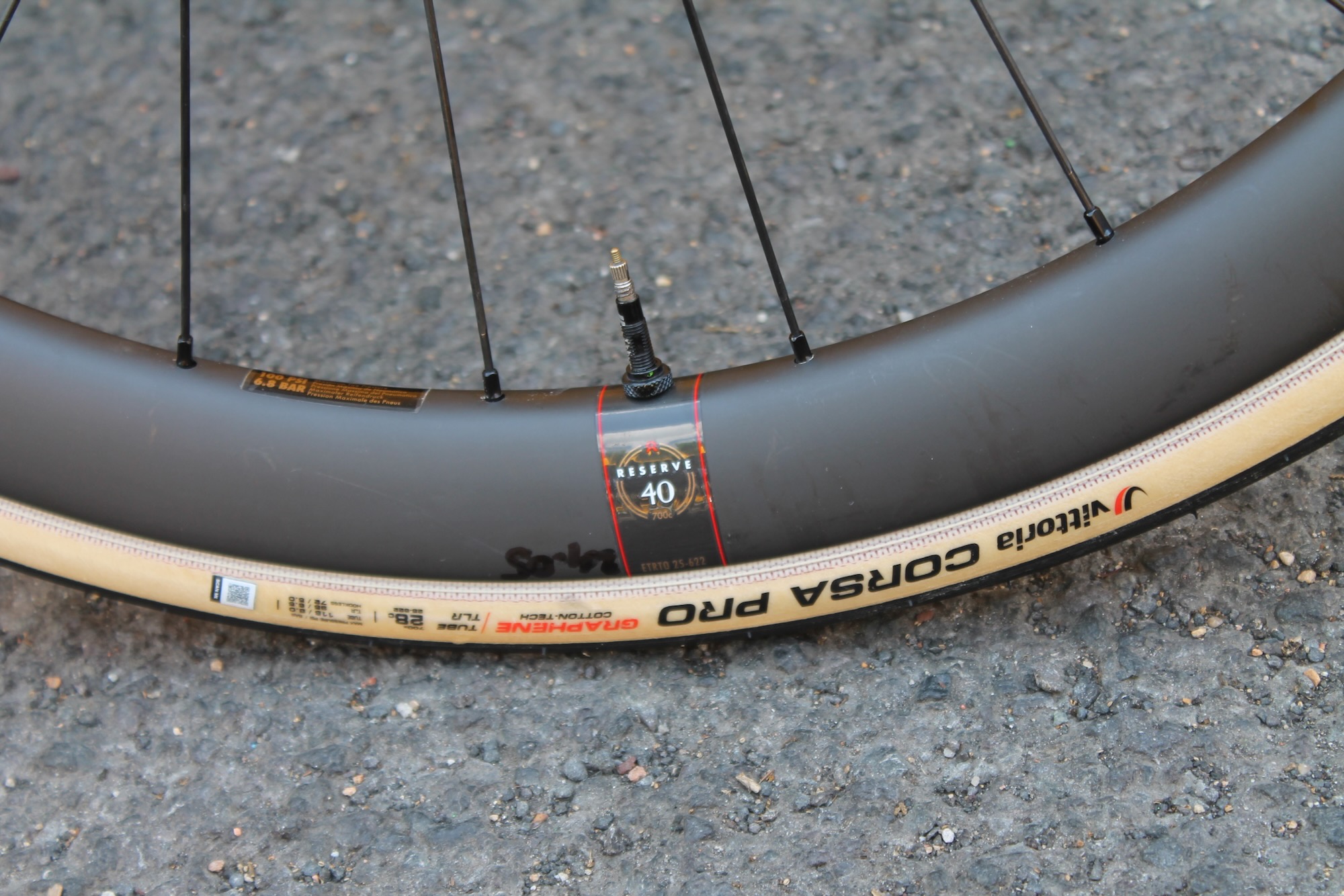
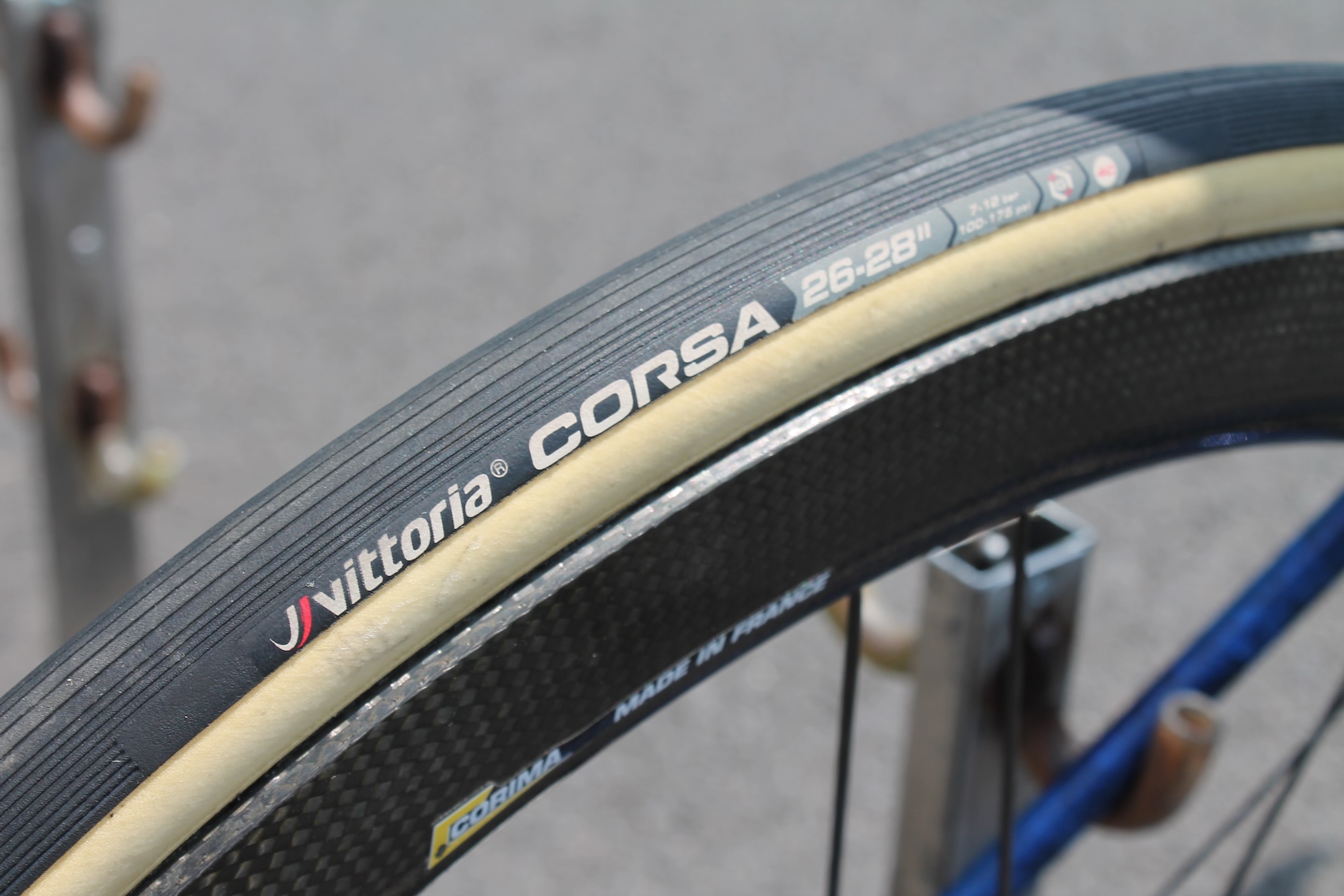
At this year’s Critérium du Dauphiné, Jonas Vingegaard was using Vittoria Corsa Pro tubeless tyres (above) in a 28mm width. These tyres have been super-popular in the pro peloton since they were launched earlier in the year.
> Vittoria claims new Corsa Pro is “the most advanced cotton road tyre ever made”
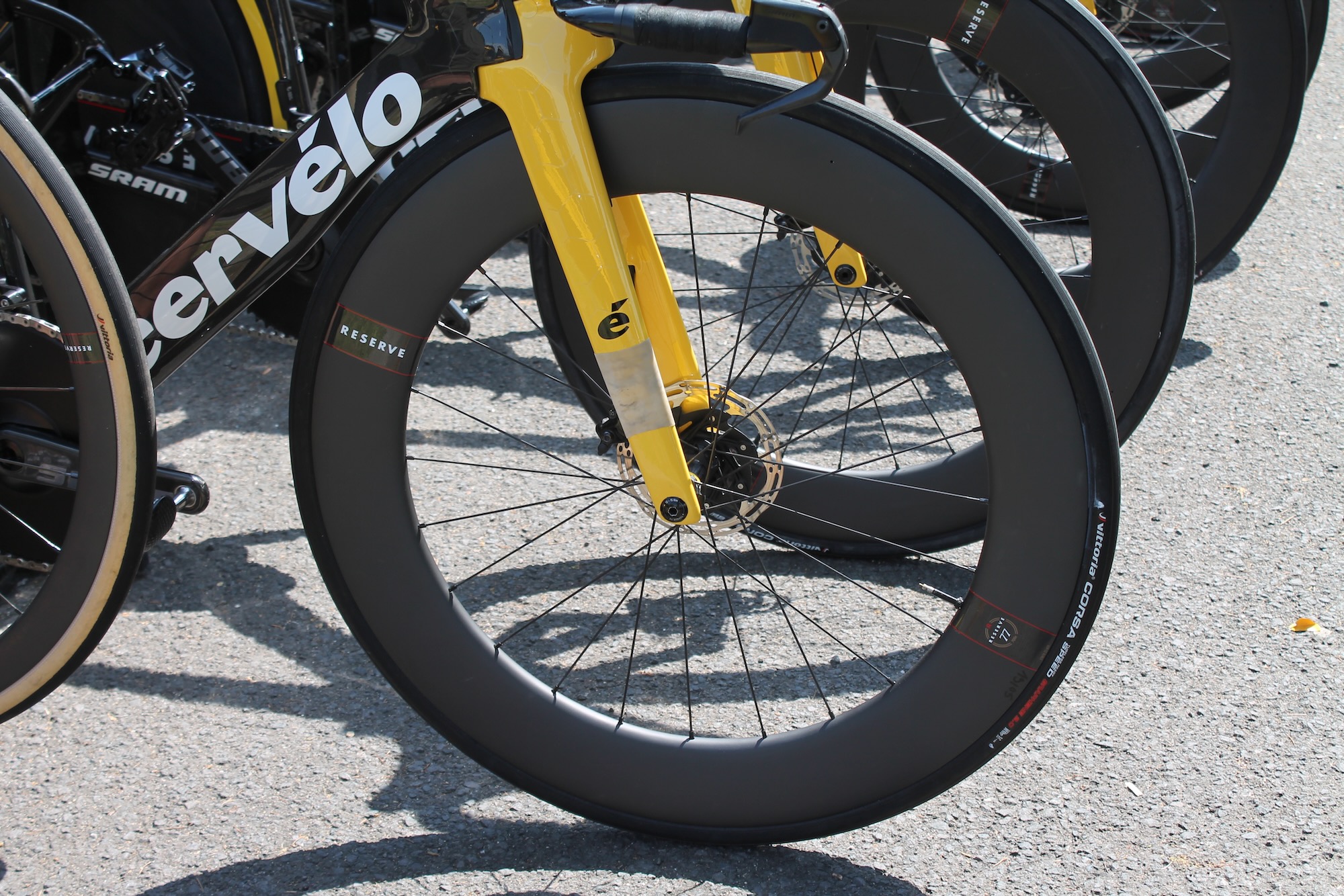
Jumbo-Visma was using the tubeless-ready Vittoria Corsa Speed tyre on its time trial bikes.
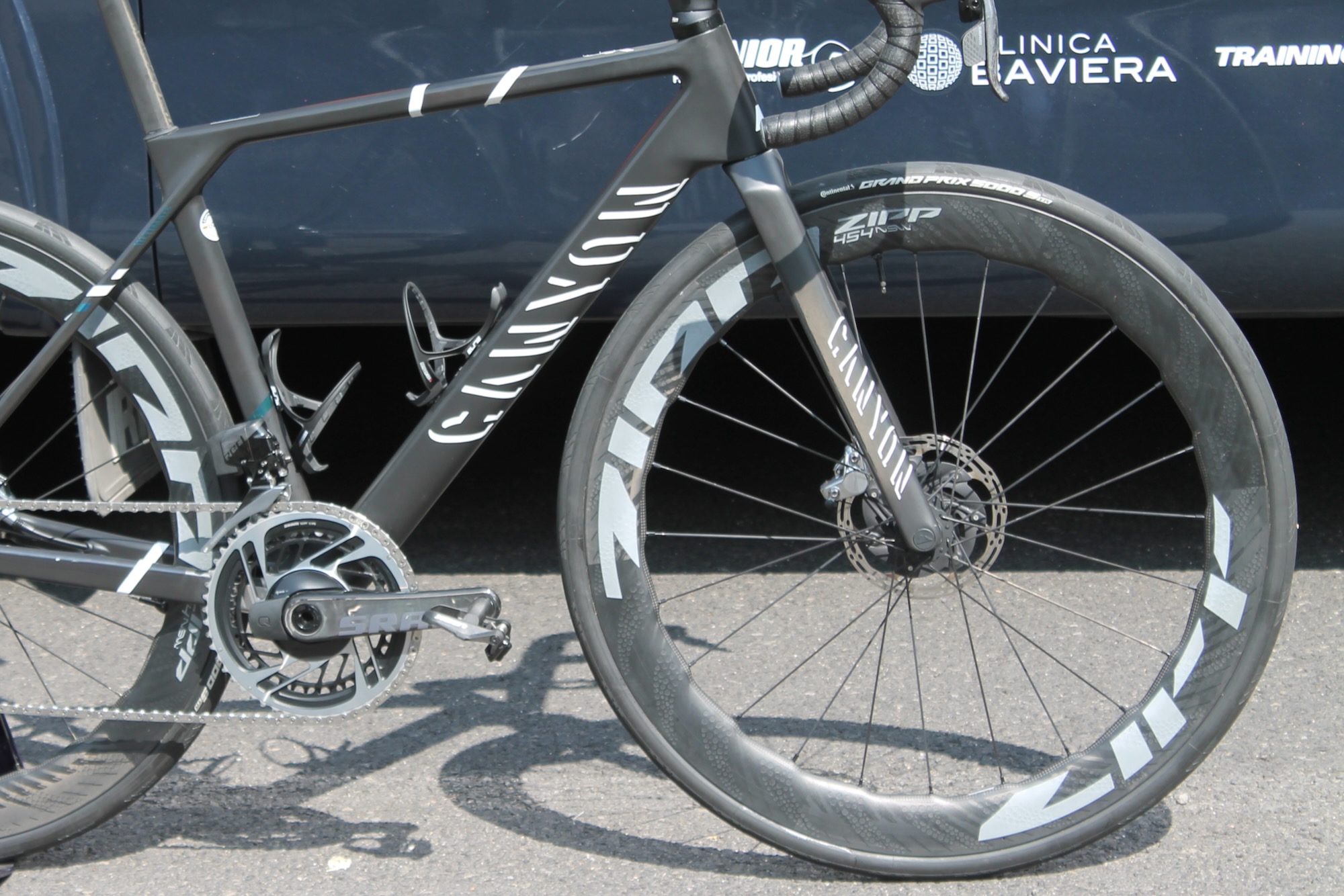
Movistar use hookless tubeless rims from Zipp for further weight savings. This (above) is Enric Mas’ bike fitted with Zipp 454 NSW wheels and Continental Grand Prix 5000 S TR tyres, for example (Mas had to pull out of the Tour de France after a crash on Stage 1).
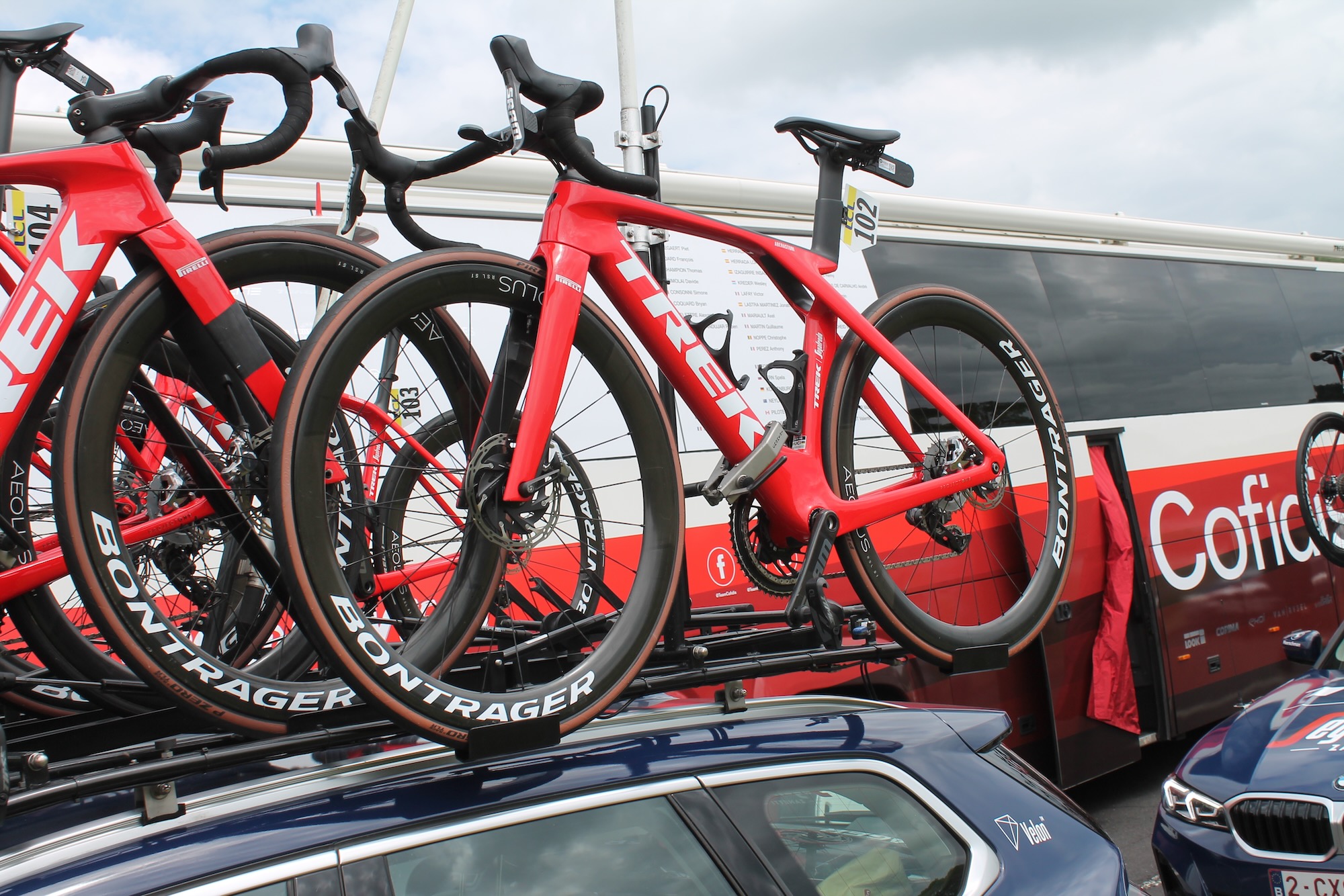
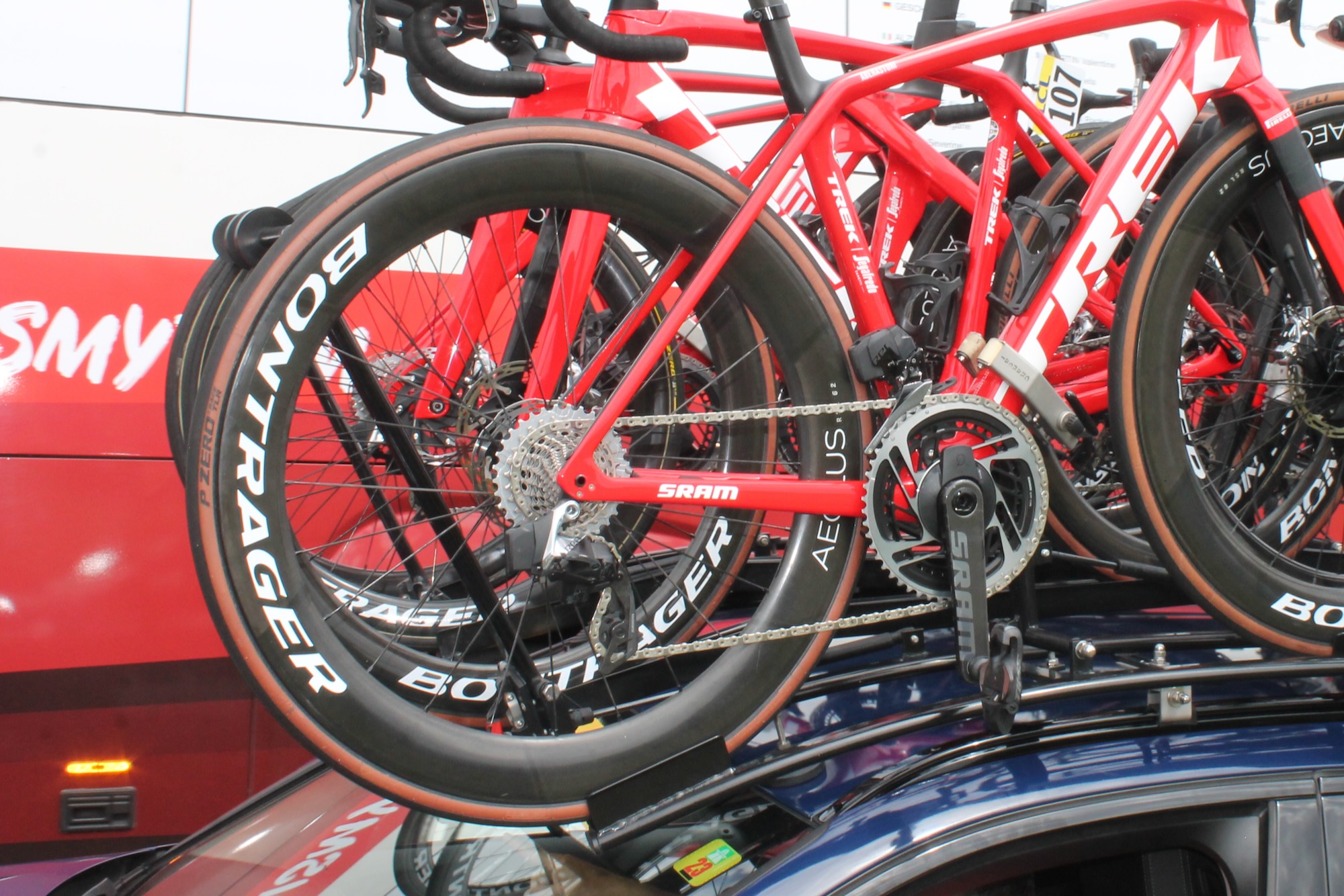
Lidl-Trek, known as Trek-Segafredo until recently, uses tubeless tyres from Pirelli. These bikes (above) are fitted with Pirelli P Zero Race TLR tubeless tyres, for instance.
Pirelli says that Mads Pedersen switches between P Zero TLR tubeless tyres and the tube-only version of the P Zero Race tyres with the brand’s superlight TPU (thermoplastic polyurethane) P Zero SmarTubes inside.
> Read our review of the Pirelli P Zero SmarTube
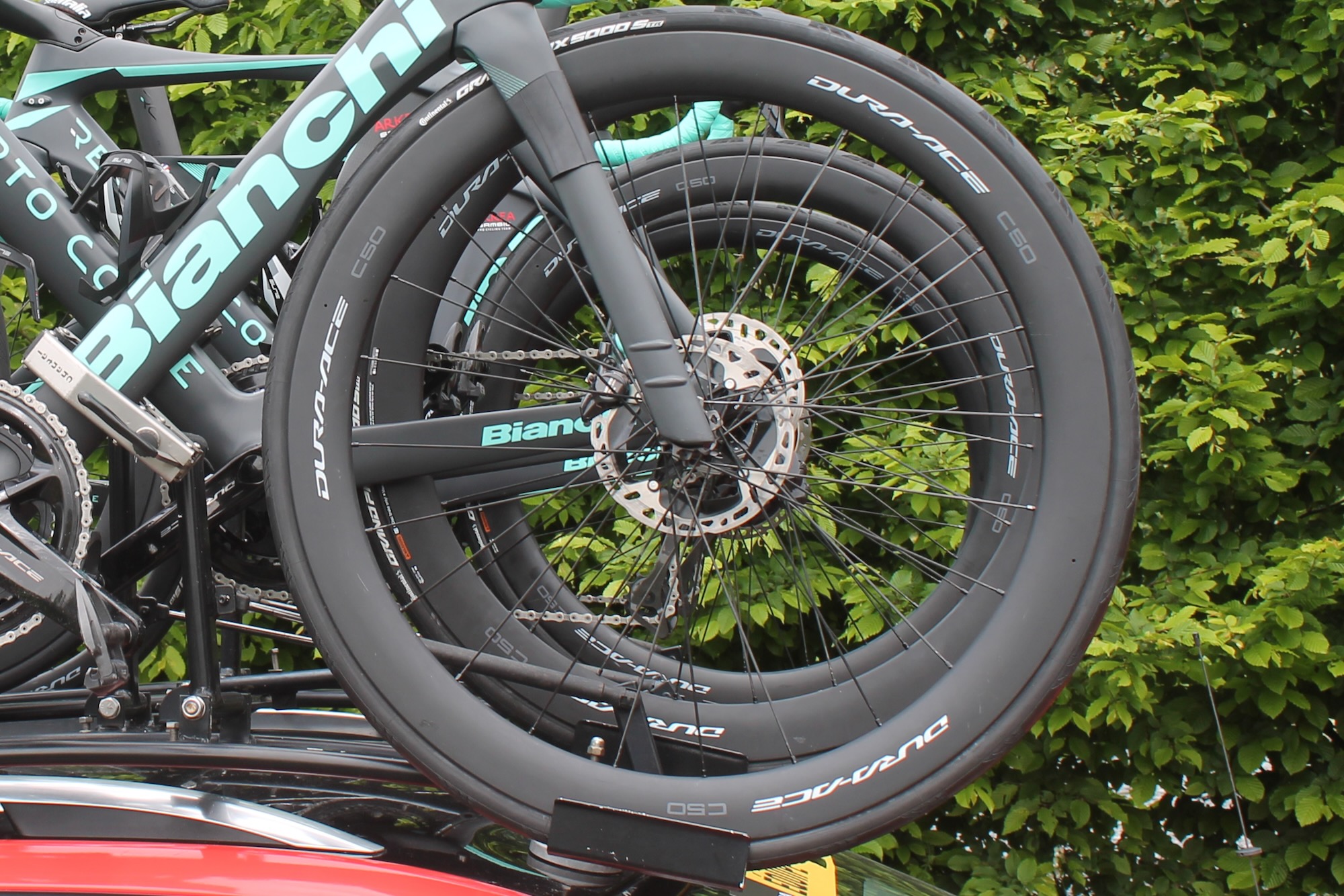
As mentioned, Arkéa–Samsic uses tubeless tyres. You can see this Shimano Dura-Ace C50 wheel (above) set up with a Continental Grand Prix 5000 S TR tyre at the Critérium du Dauphiné, for example.
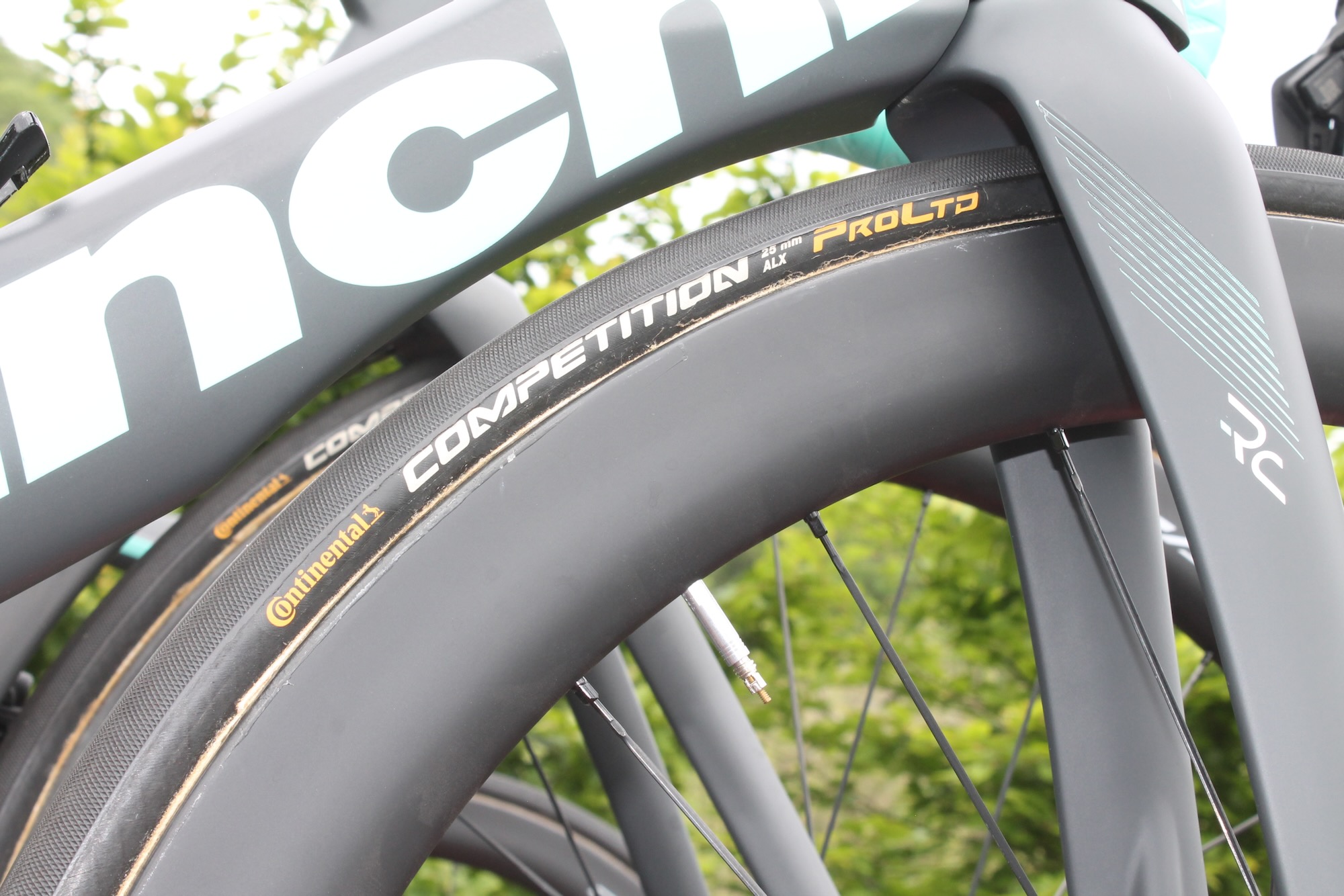
However, they also use tubulars. This Bianchi Oltre RC (above) is again fitted with Shimano Dura-Ace C50 wheels but this time the tubular version with a Continental Competition ProLtd glued to the rim.
So why are we still seeing this non-committal approach from some teams? Simply, there are pros and cons to both setups:
Pros of tubeless
- Run with sealant inside, small punctures will mend as you ride
- Faster – lower rolling resistance
- No risk of pinch punctures
- Comfier – can be run at lower pressures
Cons of tubeless
- Installing tubeless tyres can be difficult
- Can be heavier than tubular setups
- Harder to ride when deflated than a tubular tyre
- Can be expensive
- Sealant is less effective at high pressures
> Should you get tubeless tyres? Are they your best option?
The advantages of tubeless tyres have been known for some time and the main benefits for pro riders are that they are faster – which is why they are used quite so much in time trial stages – and the risk of puncturing is substantially reduced, so riders are less likely to be forced to the side of the road.
It also gives riders the chance to change their tyre choice last minute. Unlike tubular tyres that have to be prepared and glued in advance, tubeless tyres can be swapped over quickly.
As well as this, most of the drawbacks that would impact whether you or I converted to tubeless are dealt with when you have a team of mechanics preparing your bike for you. Also, gluing tubular tyres on isn’t the quickest and easiest job in the world.
The number of tubeless tyres we see varies a little from stage to stage depending on the profile and weather. For example, some riders prefer a super-light tubular setup in the high mountains, if they have the choice.
> Buyer’s guide to tubeless tyres
It used to be common for a team’s domestiques to use tubeless tyres so that they’re less likely to puncture and if they do, can continue riding while waiting for a spare wheel.
On the other hand, team leaders were more likely to use tubular tyres because of the small weight advantage and the fact they rarely have to wait long for a spare wheel or bike as the team car is closer and they have the domestiques around them.
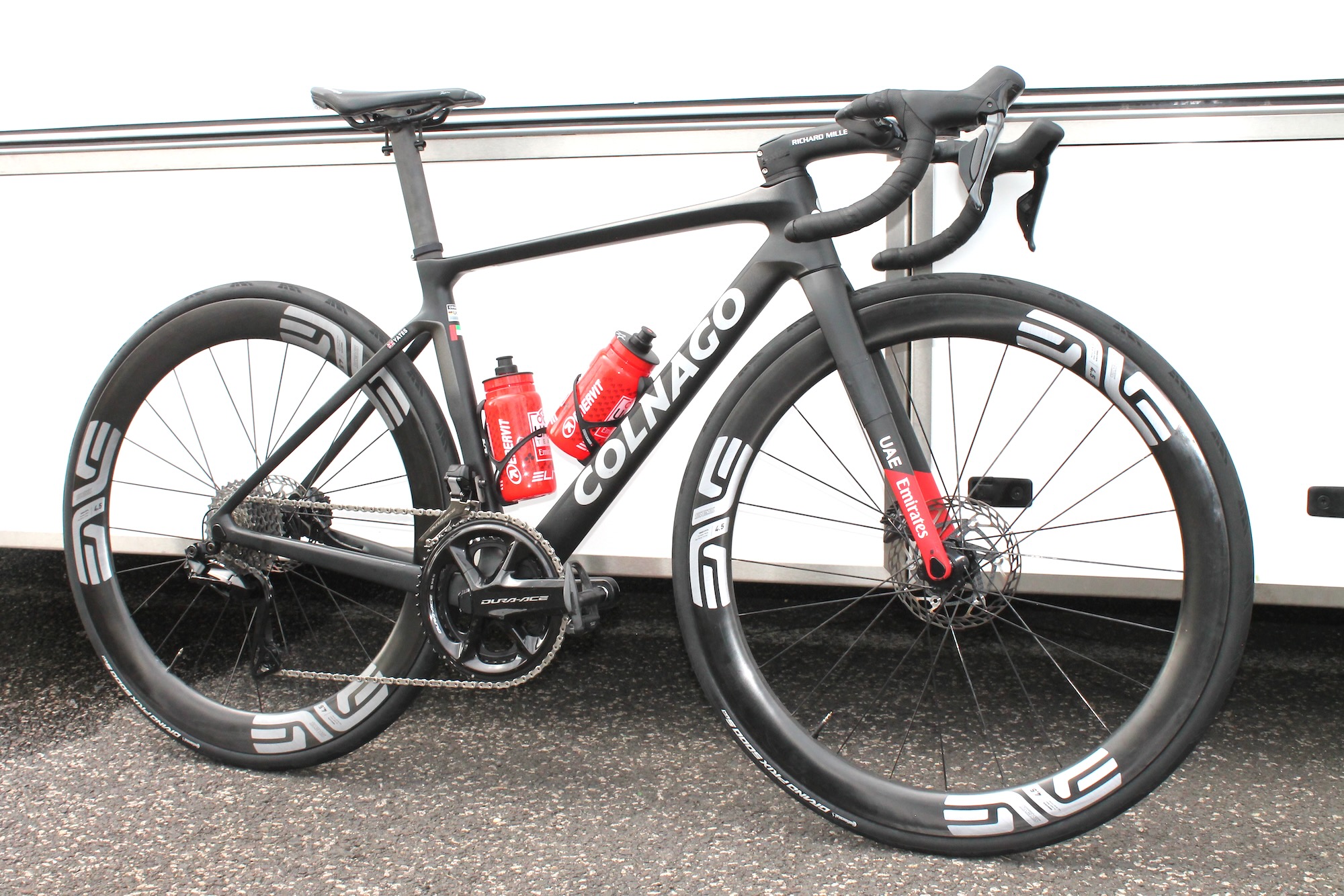
As we’ve seen, though, Tour de France leader Jonas Vingegaard uses tubeless Vittoria Corsa Pros while second-placed rider Tadej Pogacar and his UAE Team Emirates teammate Adam Yates (bike pictured below) use Continental Grand Prix 5000 S TR tubeless tyres on their Enve SES 4.5 wheels.
> Check out the best winter road bike tyres 2023
In the 2022 Tour de France we still saw quite a lot of tubular tyres, but there are far fewer in the pro peloton this year.
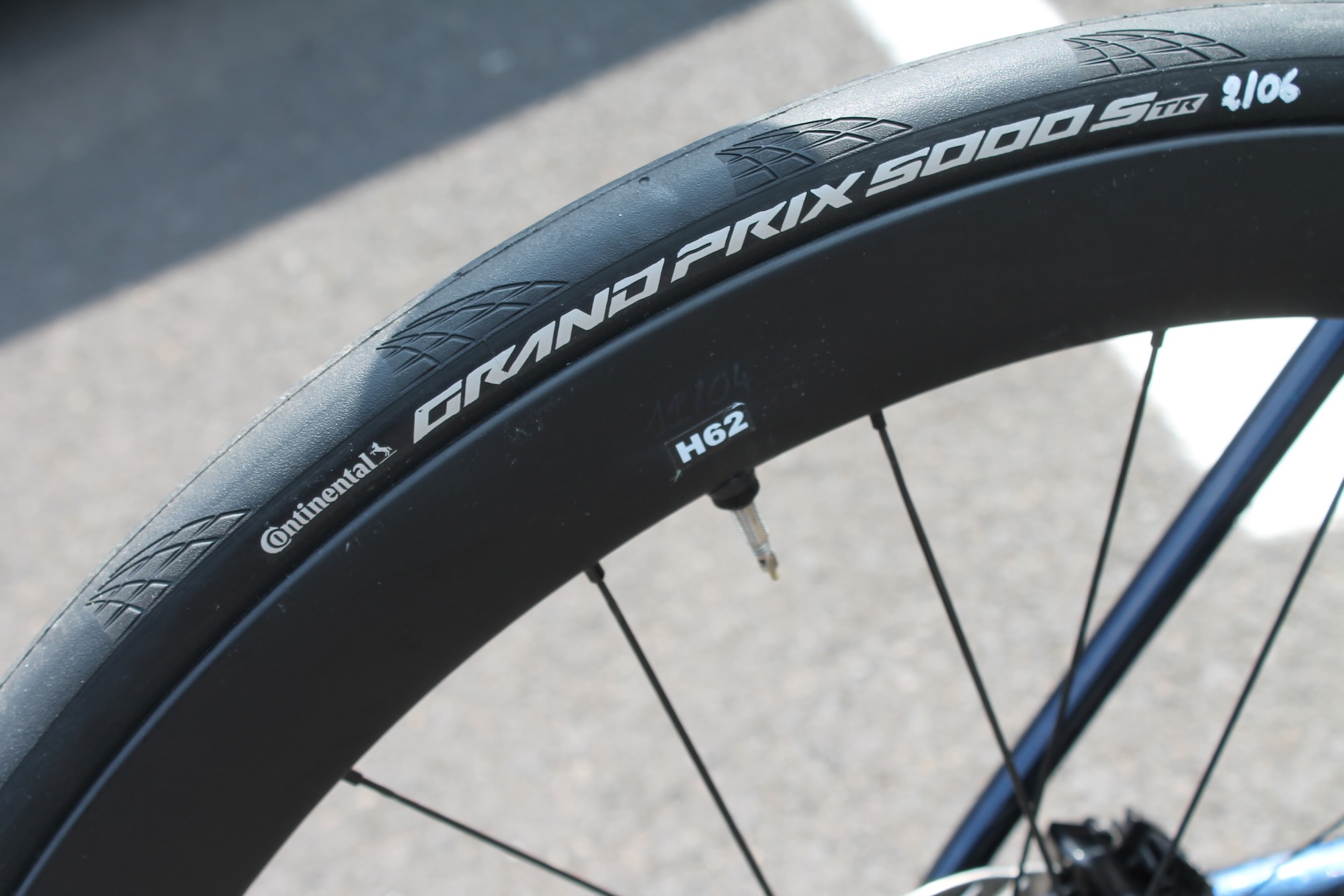
Groupama-FDJ was using tubulars last year but doesn’t anymore, for instance. Here’s one of the team’s wheels set up with a Continental Grand Prix 5000 S TR (above) at the Critérium du Dauphiné, for example.
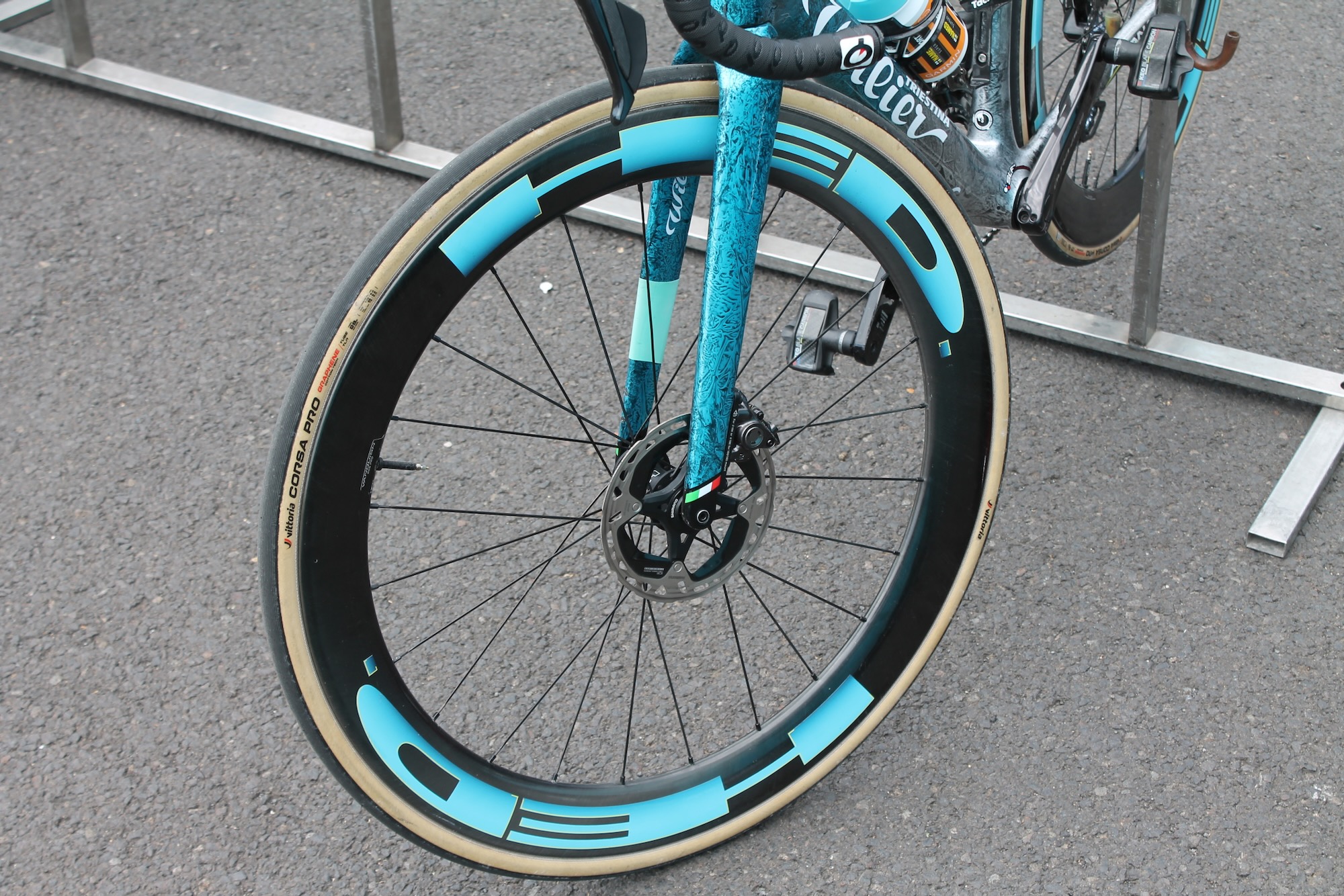
Astana Qazaqstan was holding out too, possibly because wheel supplier Corima was slow to embrace tubeless. The team started to use HED wheels with tubeless tyres (above), the relationship with Corima being non-exclusive.
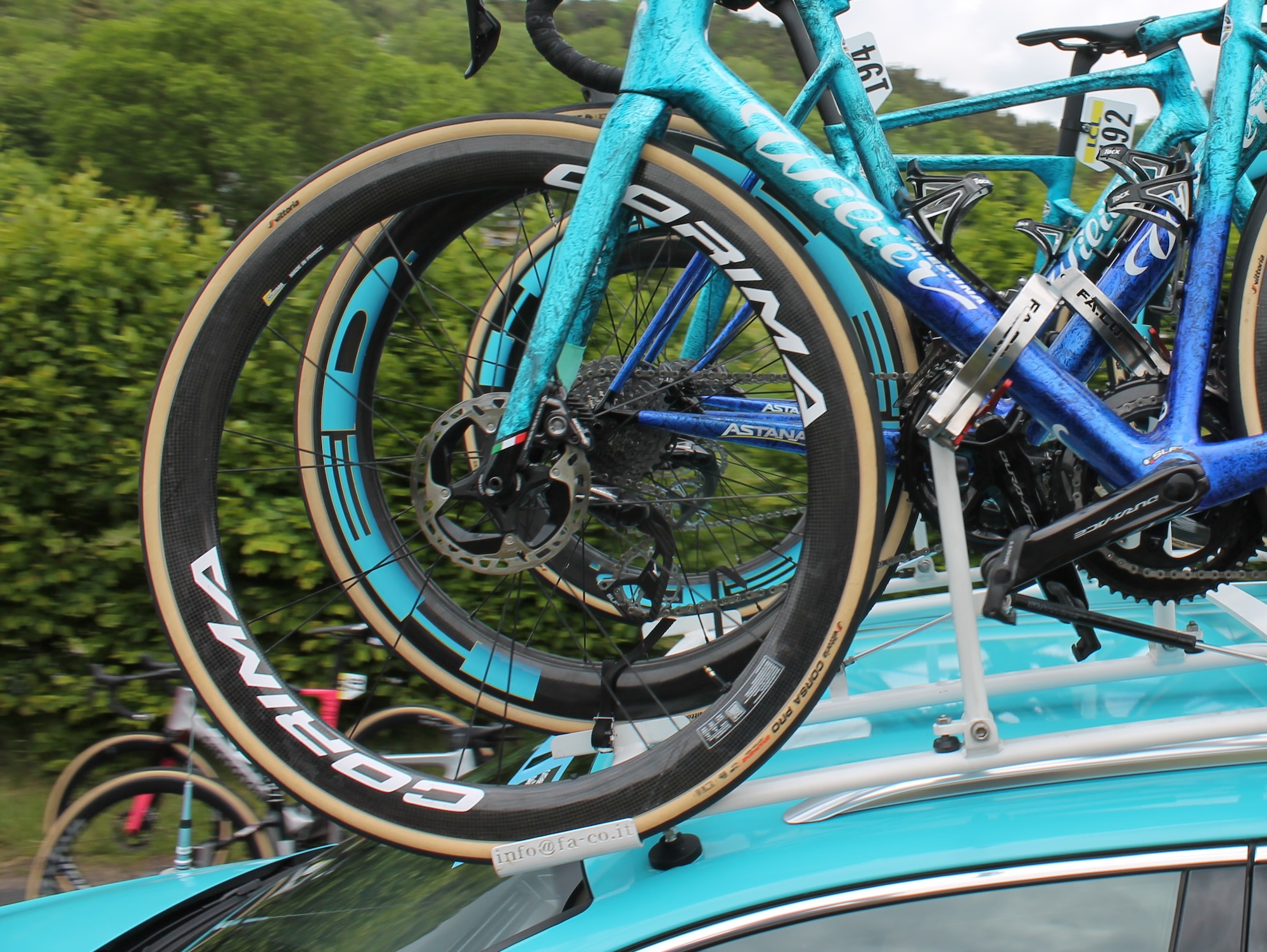
Plus, Corima has now released the MCC EVO and WS EVO wheelsets, venturing into the tubeless market.
Why has it taken so long?
Tubeless is by no means a new invention, mountain bikes having by and large moved over to this technology in the last decade. It has been available to road bikes for some time, though it has been slow to catch on, particularly in the world of pro cycling.
Pro cyclists are notoriously resistant to change as they trust what they know and, well, we can’t blame them. Back when 25mm tyres were becoming a thing, one French team asked its tyre sponsor to label all the new 25mm tyres as 23mm as they knew the riders wouldn’t like the change but knew the wider tyres were faster.
Talking about tyre widths, these are something that we’ve seen get wider and wider, with the Vittoria Corsa Pro tyre that has been ridden to numerous pro wins since the start of the season coming in 26mm, 28mm, 30mm, 32mm, and even 34mm widths.
Gone are the days of the pros only wanting to ride 23mm tyres. At the recent Critérium du Dauphiné that we keep gibbering on about, we saw a lot of 26mm tyres but these were edged out slightly in terms of popularity by 28s. We even saw the occasional 30mm tyre fitted.
> Why you need to switch to wider tyres on your road bike
One further reason why some pros still like tubular tyres is because of the safety they offer in the event of a puncture. We’ve seen a few crashes where tubeless tyres have failed and fully dismounted from the rim.
This is very unlikely to happen with tubulars as the tyre is glued to the rim, meaning it should stay there when deflated, allowing the rider to continue riding at the back of the peloton while they wait for their team car.
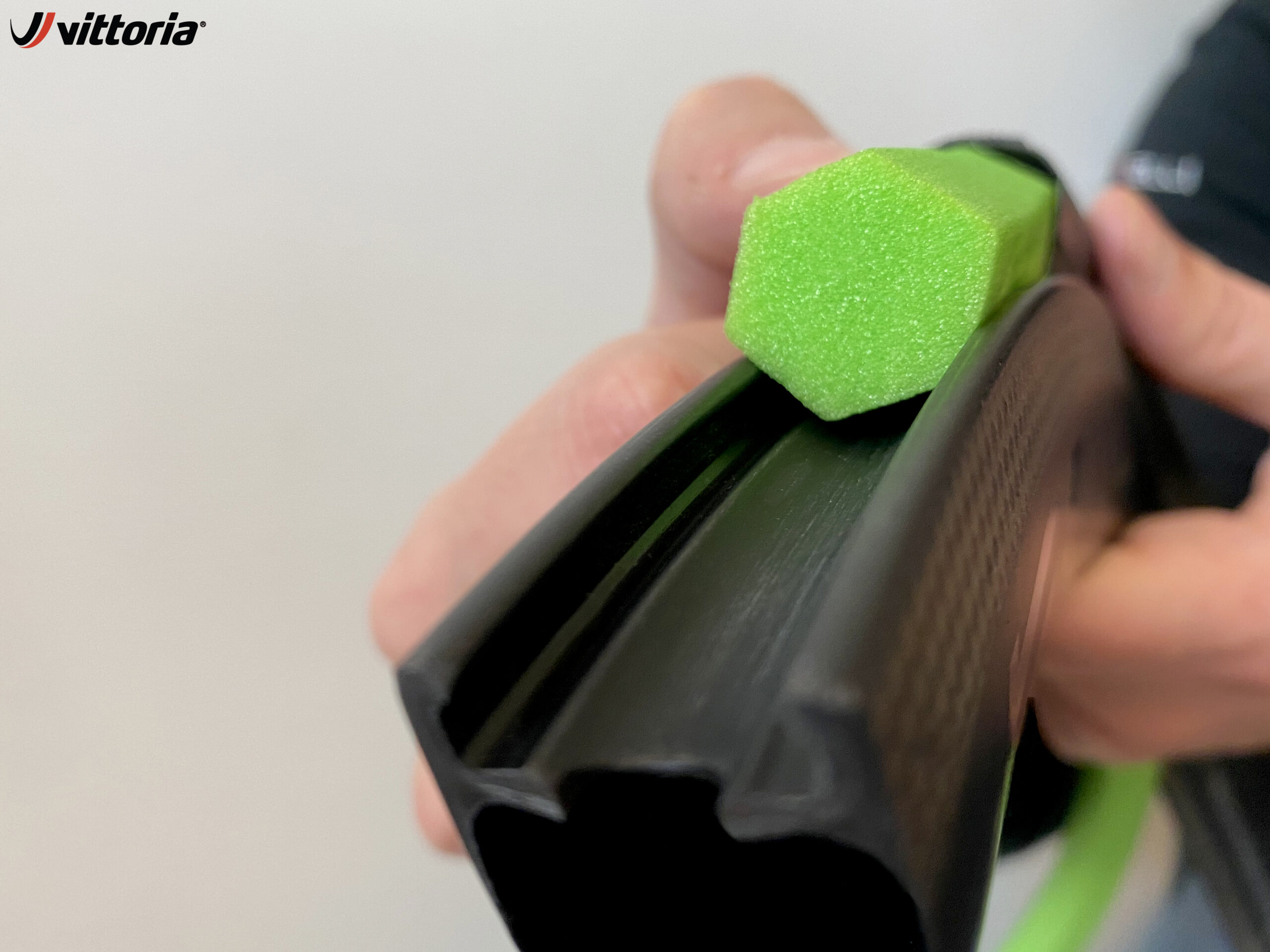
Tyre inserts were created, such as the Vittoria Air Liner, which provides tubeless tyres with a similar benefit, allowing you to ride on if you lose pressure in your tyres. This does mitigate the weight-saving gain of tubeless systems compared with standard clinchers.
Is the game up for tubulars?
Tubeless has been getting its foothold in the pro peloton over the last few seasons and there’s no better time to see the latest and greatest kit in action than in the opening stages of the Tour de France.
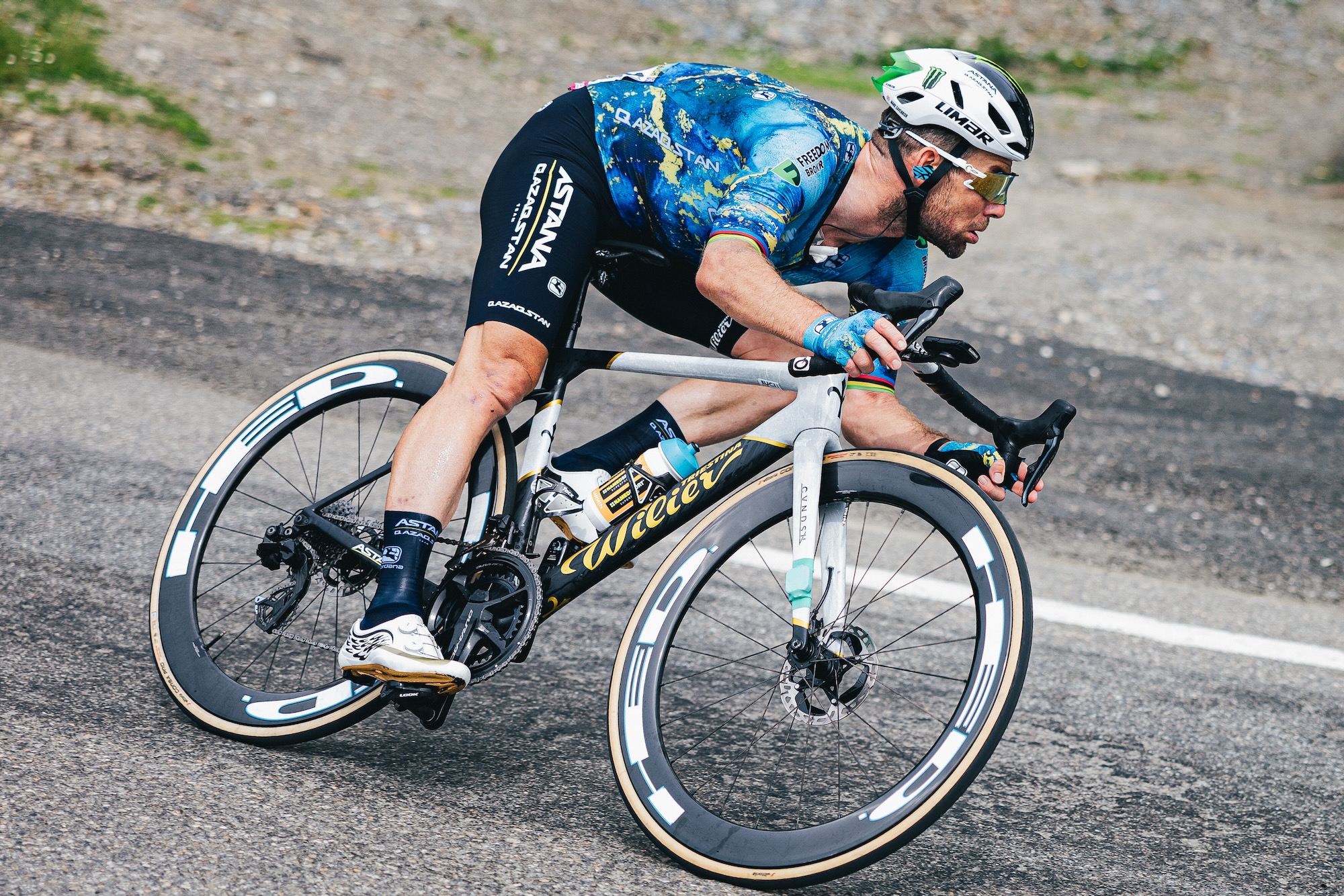
Pic: Mark Cavendish Stage 6 2023 Tour de France © SWpix.com (t:a Photography Hub Ltd)
It wasn’t so long ago that the pro peloton rolled exclusively on tubulars. Look around this year’s Tour de France and they’re not exactly a rarity, but they’re certainly far less common than ever before.
Are we likely to see tubulars disappear entirely from the Tour de France over the coming years? The tubular market is small and wheel and tyre brands are keen to showcase the technology that they sell to the public, and that means getting their tubeless and clincher systems raced as much as possible.
On top of that, riders are having plenty of success with newer tech so there’s less of a reason to stick with tubulars. The peloton is getting gradually less wary.
Tubeless tyres and sealants have got much better in recent years. High pressure-specific sealants are much more effective at plugging punctures in road tyres than was once the case, and the introduction of ETRTO (European Tyre and Rim Technical Organisation) standards has helped tubeless technology become more widely trusted. Plus, tubeless road tyres are now only slightly heavier than tube-type clinchers and no longer have the insanely stiff sidewalls they once had.
All of this means that tubeless technology is marching forwards. That said, change is usually pretty slow in pro cycling so we expect tubulars to be around for a while yet.
Do you use tubeless tyres on the road? Let us know what you think of the technology in the comments section below…










20 thoughts on “Have we witnessed the death of tubular tyres? Why tubeless now rules the Tour de France peloton”
Tubular tyres have never been
Tubular tyres have never been a good choice except for professional and top class amateurs who will get a swift wheel change in a race.
I recall the times, 291 years ago, when the racing fellows I trained and chain-ganged with sometimes chose tubular tyres “because the professionals use them” but found themselves having to call the taxi of shame when puncturing as there was no practical way to replace a tubular tyre out on the road except to carry a spare around your neck & shoulders and to spend half an hour or more getting the punctured tubular off and (maybe) the replacement on. They only tried that once!
Replacements done out on the road were, anyway, always in danger of rolling off again as they tended to rely on the glue left on the rim after getting the punctured tubular off.
*******
Tubeless tyres have the virtue of greater resilience against punctures, as well as being technically good for all sorts of other benefits, from improved rolling resistance to comfort and grip. Now that things are settling down, standards-wise – and serious puncture fixing is better understood (along with mounting the things when new) – we’ll surely see the gradual fading away of tubed clinchers …… ?
One issue: what features of older clincher rims will support their use with tubeless tyres? Conversely, which features of such older rims are a risk to mounting tubeless tape, valves and tyres? I have 4 clincher wheelsets of high quality that I’d like to mount with tubeless tyres when the tubed tyres they have on them now wear out or degrade with age.
Cugel wrote:
When I raced as a low class amateur in the 1970s-1990s tubulars were the only choice for race tyres because all other options had much higher rolling resistance, it is only recent design innovations on clinchers and tubeless that may have changed that, I still “feel” that tubs are better but test results seem to say differently.
Must have been a bit of a wimp as we could change tubs quicker than clinchers and two folded tubs take less space strapped under the saddle than most current saddle packs.
Spare tubs were always pre glued and then folded once dry, that way they would stick after about 5 minutes and by the end of the ride would be as hard to remove as the punctured one.
From experience in our club rides tubeless are no more resilient to punctures than modern clinchers with the added fun of occasionally spraying everyone with sealant and having to remove a valve stem that is effectively glued to the rim in order to fit a tube to get home.
Can’t be done safely due to manufacturing tolerances, suck it up and buy new rims if you really like tubeless.
Backladder wrote:
No one talked of rolling resistance in the 70s did they? It’s certainly true, though, that tubular tyres were faster than the clinchers of the time but, certainly by the 80s, few but the best (or most well-off) of amateurs used tubular tyres because of the expense and the faff involved.
Tubulars were expensive to buy; needed sending off to an expert to be puncture mended (and any tears to the often delicate things were not really mendable); and required a lot of skill, time and expertise to glue properly on the rims.
I wtnessed maybe half a dozen (in total) attempts to change a tubuar tyre out on the road. Every one took ages, with most failing and the taxi of shame having to be called. You must have ridden only with expert racing mechanics, perhaps? 🙂
Have you all been buying only substandard tubeless tyres, then? I have seen a couple of major tubelss punctures involving the sprayed sealant but the ratio of these to the tubed-tyre punctures I’ve seen in exactly the same period, over five or six years of club cycling, has been at least 10:1 in favour of the tubeless.
Once you’ve grasped the mechanics of mounting and dismounting tubeless tyres, it’s just as easy as are tubed tyres. Tight tubeless valve removal needs only the right teeny gripping tool to loosen the often tight lockring, for instance.
Are you sure? Which manufacturing tolerances of what aspects of the wheel rims? I can’t spot any obvious differences between wheels meant for tubed clinchers and those meant for tubeless, other than the rim tape and a label.
Cugel wrote:
Isn’t the difference with the precise shape of the rim ‘hooks’ so that the tyre beads stay in place? The rim bed is probably slightly different, but that can be resolved by adding more tubeless rim tape.
hawkinspeter wrote:
I know some rims have a hump in the rim bed to help tyre retention but I don’t believe it is compulsory, I think the main difference is consistency on the rim wall diameter as on clinchers some rims are easy to fit tyres and others hard, with tubeless they all seem hard
Cugel wrote:
Nobody talked about rolling resistance but everyone knew which tyres felt fast, that was as scientific as it got in those days 😉
Not sure where you are but in NW England we were using tubs up to the early 90’s when I stopped riding temporarily.
Once you start racing on tubs you end up using them for training and then club runs as you swap them off your racing wheels before they are worn out and then put them on training wheels to get the rest of the life out of them, that minimises your punctures in races and gives you practice changing tyres on club runs. I mended a few myself back in the day but getting the tension right when re-stitching to get the tyre to hold a consistant size was tricky.
….. we could change tubs quicker than clinchers and two folded tubs take less space strapped under the saddle than most current saddle packs.
Spare tubs were always pre glued and then folded once dry, that way they would stick after about 5 minutes and by the end of the ride would be as hard to remove as the punctured one.— Cugel
I wtnessed maybe half a dozen (in total) attempts to change a tubuar tyre out on the road. Every one took ages, with most failing and the taxi of shame having to be called. You must have ridden only with expert racing mechanics, perhaps? 🙂
— Backladder
No racing mechanics but experienced amateur racers, plus the incentive that we could’nt afford a taxi and if we took too long the rest of the club might ride off and leave us.
From experience in our club rides tubeless are no more resilient to punctures than modern clinchers with the added fun of occasionally spraying everyone with sealant and having to remove a valve stem that is effectively glued to the rim in order to fit a tube to get home. — Cugel
Have you all been buying only substandard tubeless tyres, then? I have seen a couple of major tubelss punctures involving the sprayed sealant but the ratio of these to the tubed-tyre punctures I’ve seen in exactly the same period, over five or six years of club cycling, has been at least 10:1 in favour of the tubeless.
Once you’ve grasped the mechanics of mounting and dismounting tubeless tyres, it’s just as easy as are tubed tyres. Tight tubeless valve removal needs only the right teeny gripping tool to loosen the often tight lockring, for instance.
— Backladder
I don’t use tubeless on the road myself, only on mtb so I don’t have any say in what tyres are used on the club runs or how well they are fitted but over the last two years we’ve fitted as many tubes to tubeless tyres as we have changed tubes in clinchers and most of our riders are still using clinchers. I don’t doubt it will get better but I don’t think tubeless is better than clinchers yet.
It is not the locking ring for the valve but the tapered seal being wedged in the hole and assisted by sealant, twice I have had to find a flat stone to hit a valve to get it to release.
You mention grasping the mechanics of mounting tubeless but most of the modern riders can’t even adjust rim brakes or indexed gears, many of them think the brake quick release lever is the brake adjuster!
[Using rims not designated for tubeless] Can’t be done safely due to manufacturing tolerances, suck it up and buy new rims if you really like tubeless.— Cugel
Are you sure? Which manufacturing tolerances of what aspects of the wheel rims? I can’t spot any obvious differences between wheels meant for tubed clinchers and those meant for tubeless, other than the rim tape and a label.— Backladder
see response to Hawkinspeter above.
Couldn’t care less what the
Couldn’t care less what the pro’s and their sponsors desire, I’ll keep on using clinchers until such time that there is no viable option than to use tubeless.
Presently all of my wheels are set up for clinchers, why on earth should I spend ever more money trying to keep up with the whims of the marketeers. Am I missing a trick? Possibly. Do I give a shit? Not in the slightest.
So in answer to the article heading, no, not everyone is following the herd, certainly not for now.
Owd Big ‘Ead wrote:
The article heading is “Have we witnessed the death of tubular tyres?” A tubular tyre is a completely sealed tube glued to the rim, previously much favoured by racers prior to the invention of tubeless clinchers. They have nothing to do with tubed tyres, i.e. clinchers with an inner tube, which remain the norm for most people outside racing and will doubtless continue to be so.
Pfft…..
Pfft…..
I stand corrected 😉
It’s all the same to me. Tubular, clinchers, tubeless. It’s just more stuff to buy in the alleged march of technological advancement.
TPU inner-tubes are an
TPU inner-tubes are an interesting development. Around ¼ of the weight of butyl inners, helps with weight, rolling resistance, etc. They were expensive to start with but ones from RideNow are well made and cost effecive. They take up very little space as spares too.
Did the tubeless set ups
Did the tubeless set ups manage to mitigate the effect of the dreaded tack attack?
Maybe it was a guerrilla
Maybe it was a guerrilla marketing ploy?
ktache wrote:
I’d be interested to know that too. Was it Lilian Calmejane who was angrily displaying a number of tacks stuck in his tyre? I didn’t see any leaking sealant.
Yesterday I remounted an old and much-used GP5K TL on a wheel. While prepping the various parts, I nearly cut my finger on a sharp thorn protruding about a centimetre into the interior of the tyre, coated in dry sealant. God knows how long it had been there.
I don’t think its the Pro
I don’t think its the Pro teams choice. Any new wheel that is released these day appears to exclusively have tubeless and disc rims. A quick glance on the Zipp site, there only two wheelsets that are tubeless. Pro team mechanics must surely prefer mounting tubeless in five minutes over the endless gluing required for tubular. While I love riding tubular, the gluing was such a PIA.
Plus there is the ecomomics, puncture a €80 tubular and its gone. Tubeless, top up with sealant and you are good to go.
If I’m reading this article
If I’m reading this article correctly, the teams running the first-generation, not-tubeless-compatible Roval wheelsets are in fact running these wheels set up tubeless.
Being the owner of a Specialized Aethos with these wheels, I’d really like to know if these wheels can be run tubeless. Specialized says no. If the pros are descending at 60 mph on them and doing 1000 watt sprints, tubeless is good enough for me.
Mbailey1244 wrote:
One suspects the marketing men have told the manufacturers that they can make loads-more dosh by insisting that our older rims are not approved for tubeless, as this means we all have to “suck it up and buy new wheels”, to use the vernacular.
One also suspects that the excuse for this stance will be that “older rims haven’t been tested for tubeless use”. This is like saying you can’t use your hand to pick up a manglewurzel ‘cos you’ve only ever “trained” it to grasp turnips.
************
Perhaps some testing could be tried? If the tyre is a tightish fit on an unapproved rim, the rim has hooks and a deep enough well, surely tubeless tape and a tubeless valve will be sufficient to get a tubeless tyre inflated and well-seated? After all tubeless (especially on modern wider tyres) means less air pressure so less internal stress on the rim ….. ?
The only bugbear I can imagine is a rim that has woggerly edges or some other wabble that allows teeny gaps to open between the tyre’s sidewall and the rim edge too big for the sealant to prevent air-loss.
Anyone out there with experience of using non-approved rims with tubeles tyres?
Cugel wrote:
I was chatting with a cycle shop owner/mechanic a while back and they were a proponent of ‘ghetto’ tubeless. He had setup tubeless on a variety of wheels and had the opinion that as long as either the rim or the tyre was ‘tubeless’, that it would work fine.
Yep. I ran a pair of Shimano
Yep. I ran a pair of Shimano RS-170 wheels with conti GP5000 TL’s for about 9 months and I’m still here to tell the tale. Used Effetto Mariposa tape and sealant (as was already using these on my MTB’s)…can’t remember which valves. Didn’t even need a compressor or my Airshot to seat the tyres (unlike when I fitted the same GP5000’s on to a set of “tubeless ready” rims.
All three Spec’ teams run
All three Spec’ teams run Rapide CLX II and as far as I’m aware all of them apart from Sagan (for some reason) are running them as tubeless. The CLX II still only says ‘CLX’ so I suspect a wee bit of lazy journalism has created this confusion.
First gen CLX can be run tubeless – but Spec’ got the fear after Sagan (him again) popped a protoype, so the company decided to redesign the wheels for a second generation version. Their official line is now “CLX II tubeless or clincher, CLX clincher only”.
Having used the excellent
Having used the excellent Bontrager tubeless system (i.e. wheels, rimstrips and tyres from the same manufacturer) on my MTB for several years, it only seemed natural (to me, at least) to spec the road equivalent, when building my road bike.
They have been excellent and have served me well for nearly 7 years – including several moderate off-road excursions, which the 26mm tyres coped with, admirably.
I’m interested to see that the Trek team are using Bontrager rims, but Pirelli tyres – must look into the difference between the Pirelli/Bontrager tyres, which I suspect is weight/price.