


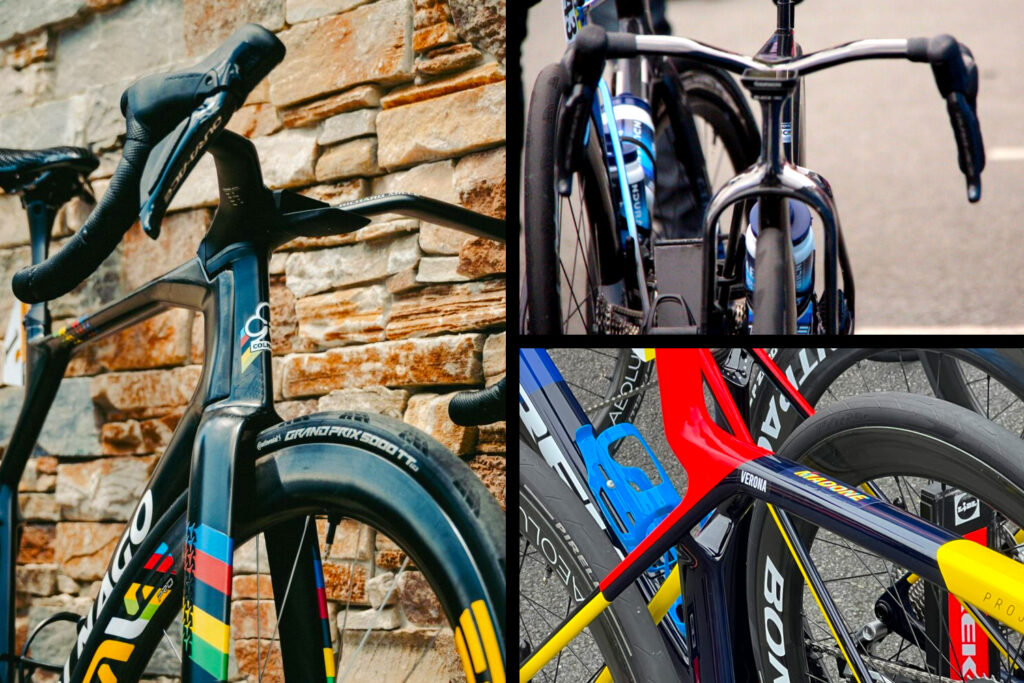

Check out the Tour de France peloton and you’ll see a handful of unusual-looking road bikes like the Colnago Y1Rs raced by Tadej Pogacar and his UAE Team Emirates XRG teammates and the Trek Madone SLR ridden by Lidl-Trek, but the majority of bikes are pretty similar to one another in design and the latest launches suggest this isn’t going to change anytime soon, so where have all the exciting bikes gone?
We tell you about new race bikes all the time, and one of the points readers most frequently make in comments underneath the story is how much the new model looks like various other bikes already out there. Why is this the case? Is it down to the engineering, is it down to the rules, or is it both?
Have we reached the point where the application of science to the current rules has produced a settled template for designing a top-end race bike, with future changes likely to be refinements of that template rather than wholesale reinventions?
For example, Specialized released the S-Works Tarmac SL9 just before the start of the Tour de France, and all sorts of people had a lot to say about it, but one of the main things commented was essentially: doesn’t it look a lot like the SL8?
> Specialized unveils the S-Works Tarmac SL9
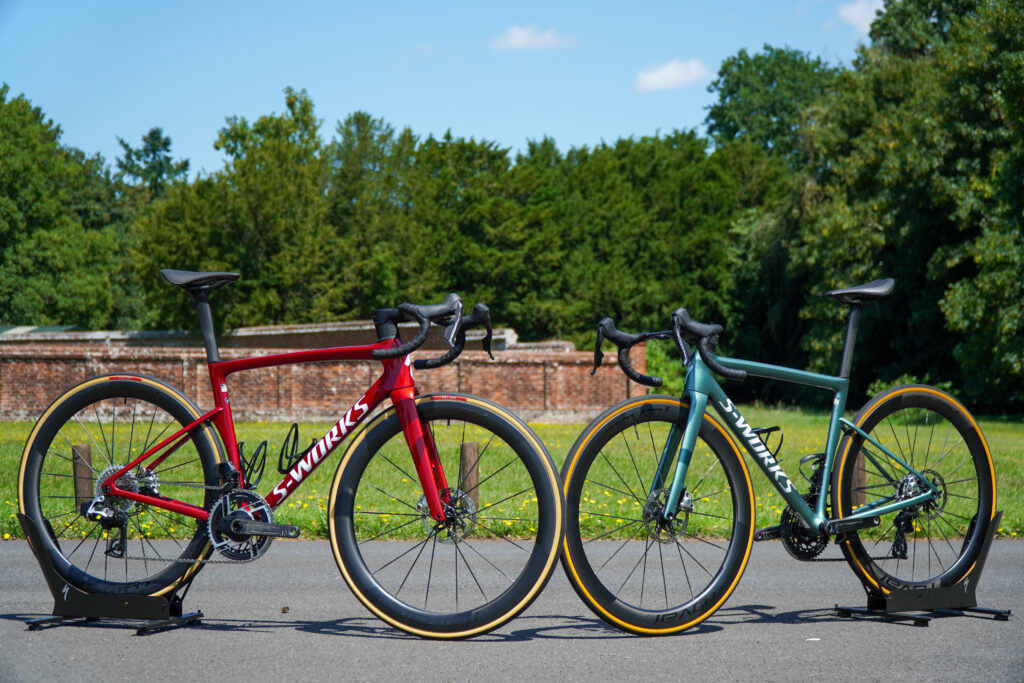
Specialized says that the S-Works Tarmac SL9 is “the fastest road bike ever made”, and of course, it has produced the figures to prove it – that’s always the case – but the SL9 does look very similar to the SL8. They’re not identical, of course – there are clear differences if you look closely – but you’d have to say that they’re visually alike.
Also, Specialized’s claims are pretty modest – and we all know how, given half a chance, brands love to launch bikes with the biggest hype they can produce.
Based on its own testing, Specialized says the S-Works Tarmac SL9 is 4 watts faster than its Tarmac SL8 at 45km/h (28mph) – meaning that the new bike can hold 45km/h with a slightly lower power input. Few of us are routinely spinning along at 45km/h and gains will be less at lower speeds.
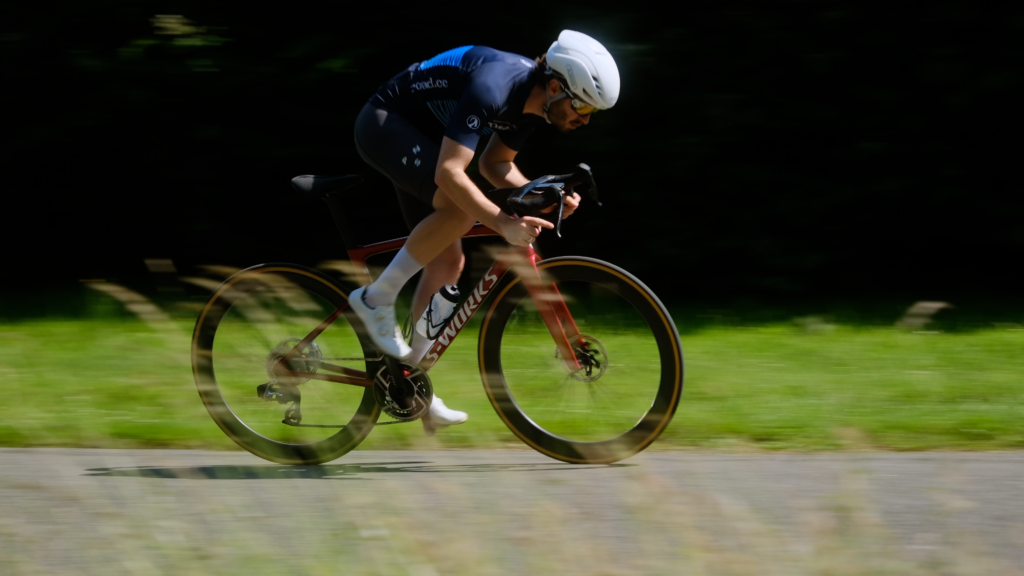
Specialized also says that the SL9 would be 14 seconds faster than the SL8 over the last 80km (49.7 miles) of the final stage of the 2024 Tour de France Femmes – assuming the same course, conditions, and rider input, of course. That’s not a huge advantage in the section of a stage that took professional riders well over two hours (it involved climbing Alpe d’Huez), although Specialized’s point is that it could have been enough to move Demi Vollering from runner-up spot to winner of the race, and that’s certainly a big deal.
The point we’re making, though, is that we’re talking about incremental gains here. For comparison, when Specialized launched the Tarmac SL7 it said that the bike was 45 seconds faster than the SL6 over 40km (24.9 miles) thanks to aero tube shaping and aero components like the Aerofly II handlebar and Rovale Rapide wheels.
We’ve had a few other big bike launches in the lead-up to the Tour de France, including the Look 795 Blade RS 3 and the Orbea Orca Aero. We’ve also seen Paul Seixas on an unreleased Van Rysel, and a new Cube aero bike that has yet to be officially unveiled. None of them looks particularly radical.
Granted, tube shaping varies and seatstays are dropped to a greater or lesser degree, but there’s not a lot to make you do a double-take here. Why is that?
Radical innovation: Factor One
The last race bike that made everyone sit up and take notice was arguably the radically updated Factor One, which was launched at the end of last year after being raced from the Dauphiné (in June) onwards. You won’t see it in the men’s Tour de France this year because Factor doesn’t sponsor any of the teams competing. The super-wide fork is a big part of the story.
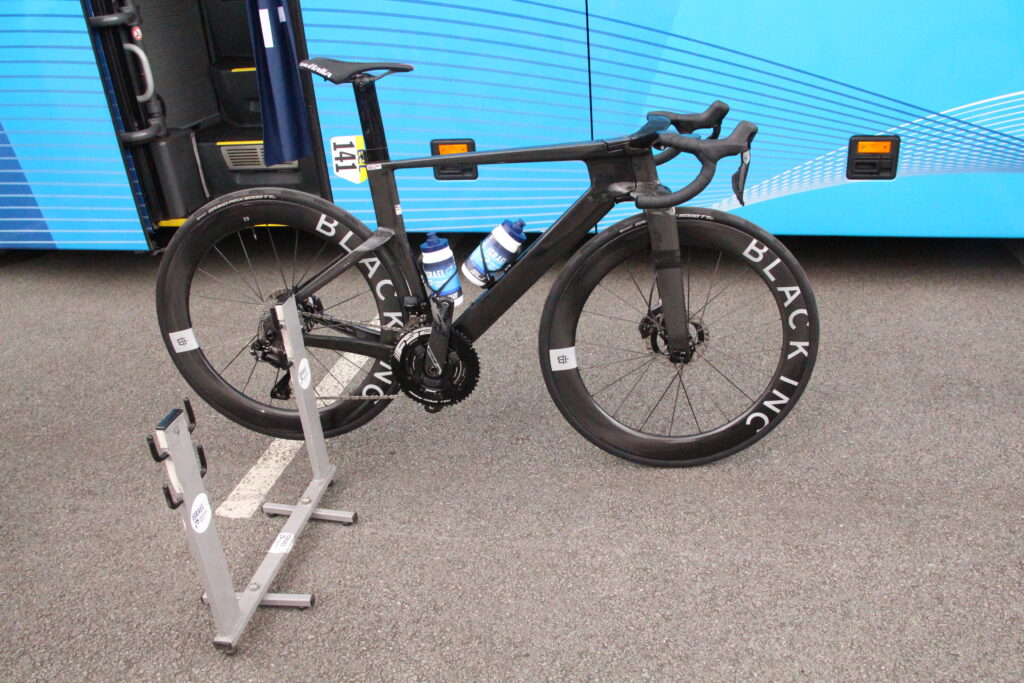
“The defining feature of the One is its bayonet fork and ‘chin’ fairing system, a structure made possible by recent UCI rule changes and shaped through hundreds of CFD [computational fluid dynamics software] iterations,” said Factor.
Chin? It’s that forward-projected structure at the front of the fork, logically enough.
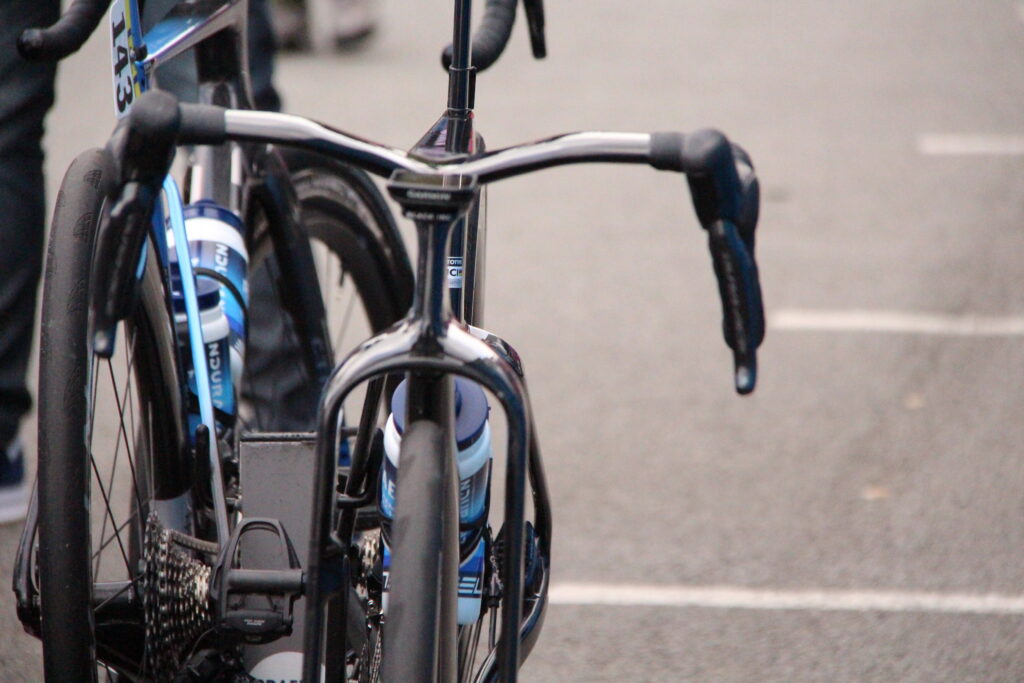
“It controls airflow at the very start of the bike, minimising spillover drag andsustaining advantage deep into yaw where other platforms lose efficiency,” said Factor.
Factor made some big claims for that bike, saying that it was “22% faster than the Specialized Tarmac SL8”.
On the other hand, all that aero advantage adds a little weight: it is a claimed 900g for a frame (size 54) and 540g for the fork. For comparison, Specialized claimed figures of 685g (frame) and 345g (fork with uncut steerer) for the Tarmac SL8 released in 2023.
The Factor One is unapologetically an aero road bike. It is designed for maximum straight-line speed on flatter roads, and its heavier frameset makes it less suited to steep climbing.
Enabled by UCI rule changes: Colnago Y1Rs
Four-time Tour de France winner Tadej Pogacar spends most of his time aboard a Colnago Y1Rs, a bike that was officially unveiled at the end of 2024. You’d probably agree that this is a bike that looks distinctive.
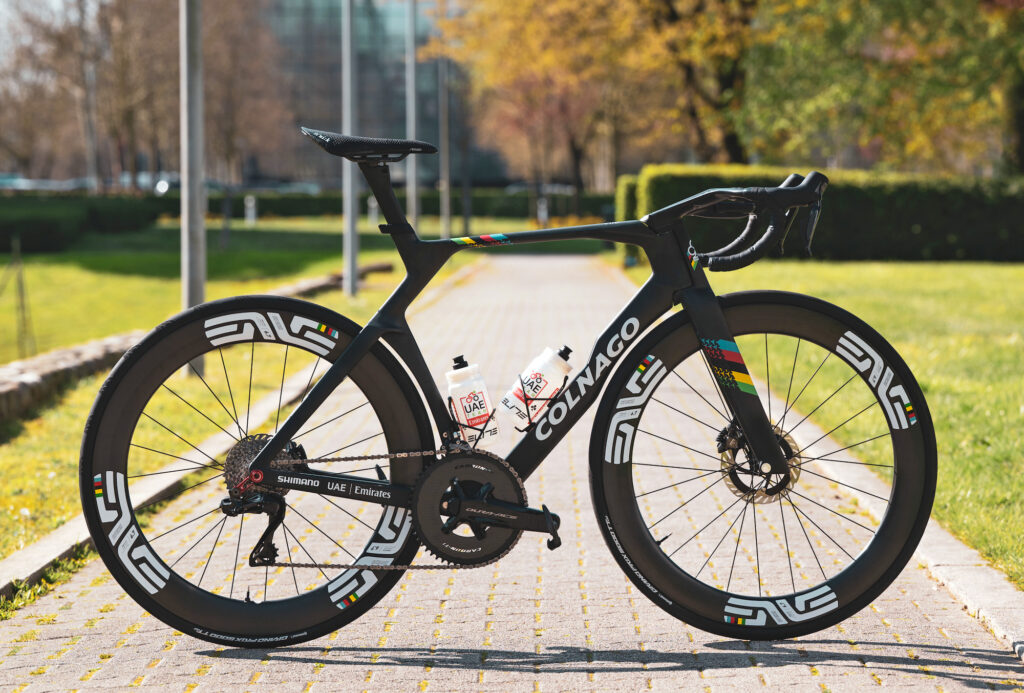
For a start, the bayonet-style fork up front is fairly unusual (although similar designs have been around for years, including on the Cervelo S5, for instance), but it’s the back end that’s really unexpected, with a seat tube that starts on one bearing, following the leading edge of the rear wheel, before joining the seatstays and heading off in a totally different direction to join the top tube.
Why the unorthodox layout?
When it officially unveiled the Y1Rs, Colnago claimed that it was “faster than the current fastest competitor”, saving 20 watts on its V4Rs model at 50km/h (31.1mph).
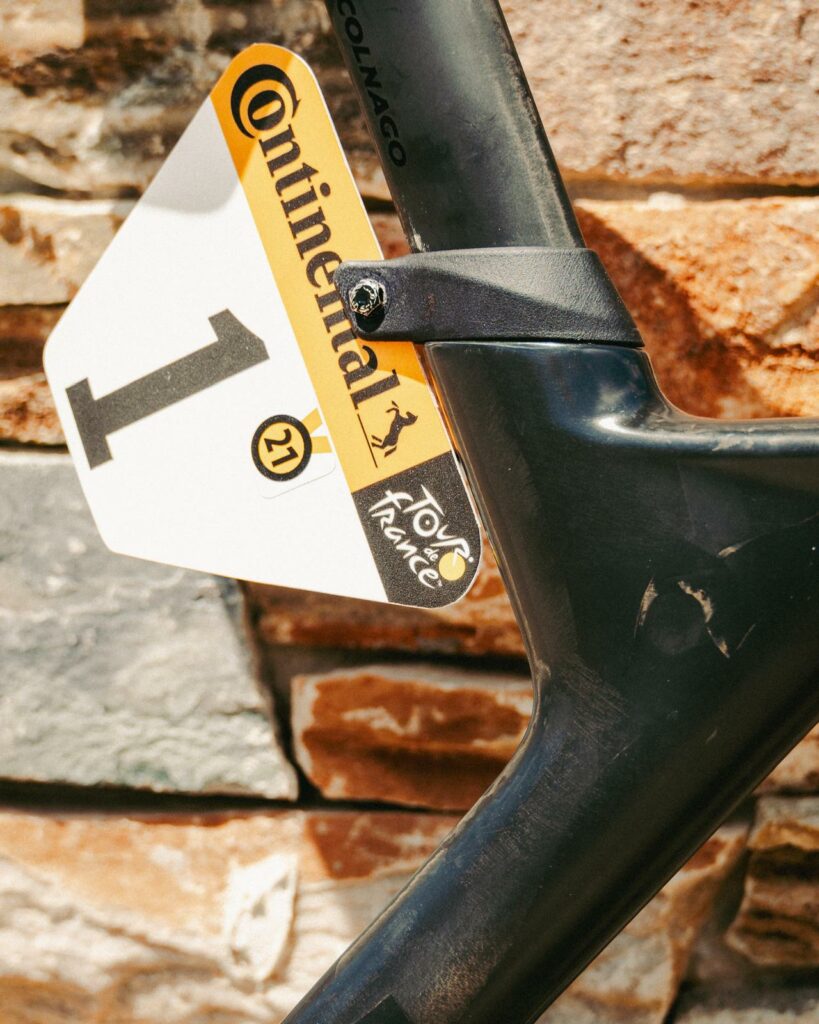
Colnago suggests that what it calls the Defy dual Y-shaped joint, enabled by changes to UCI regulations, means the seat tube can “follow the shape of the rear wheel and thus be aerodynamically more effective in an area where the cyclist’s turbulent pedalling flows arrive”.
It also says that the design results in more vertical compliance and comfort. On the downside, the seatpost has to be cut to length, and once inserted there is space for further adjustment of just 1.5cm.
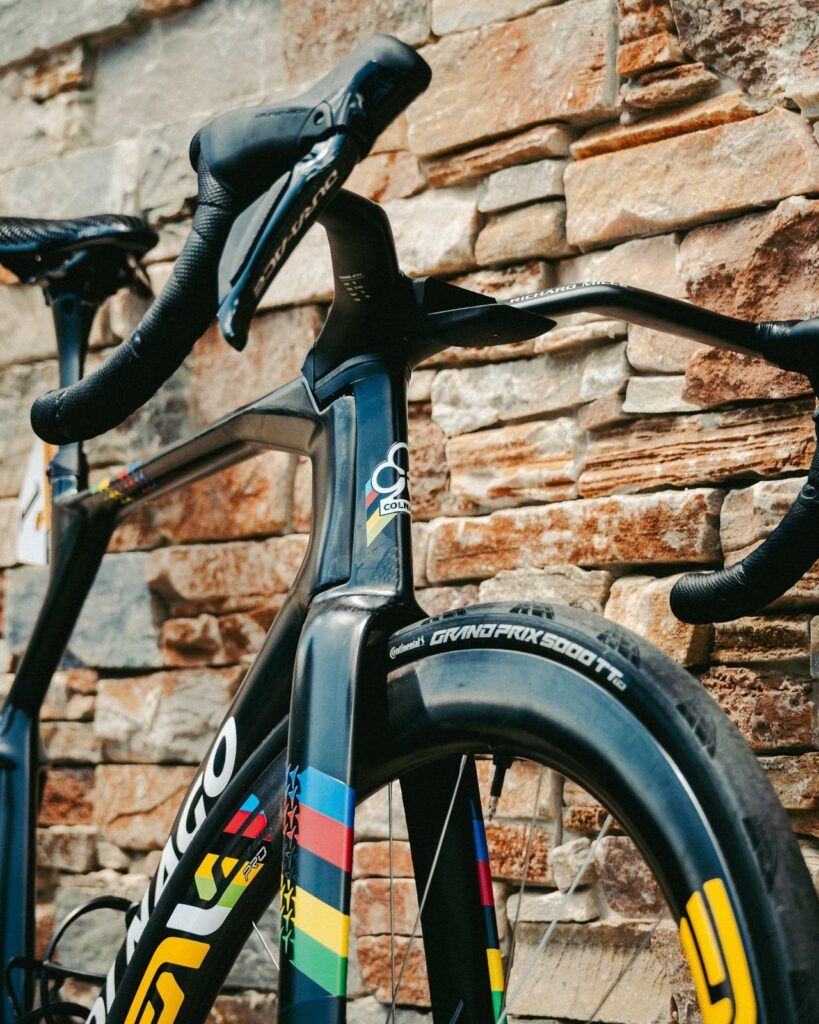
The CC.Y1 gull -wing shape integrated handlebar is all about aerodynamics too. The Y-shaped front end reduces the frontal area significantly.
Going against the flow: Trek Madone SLR
Trek introduced its IsoFlow frame feature on its seventh-Generation Madone SLR in 2022. It puts a hole where the seat tube and top tube meet.
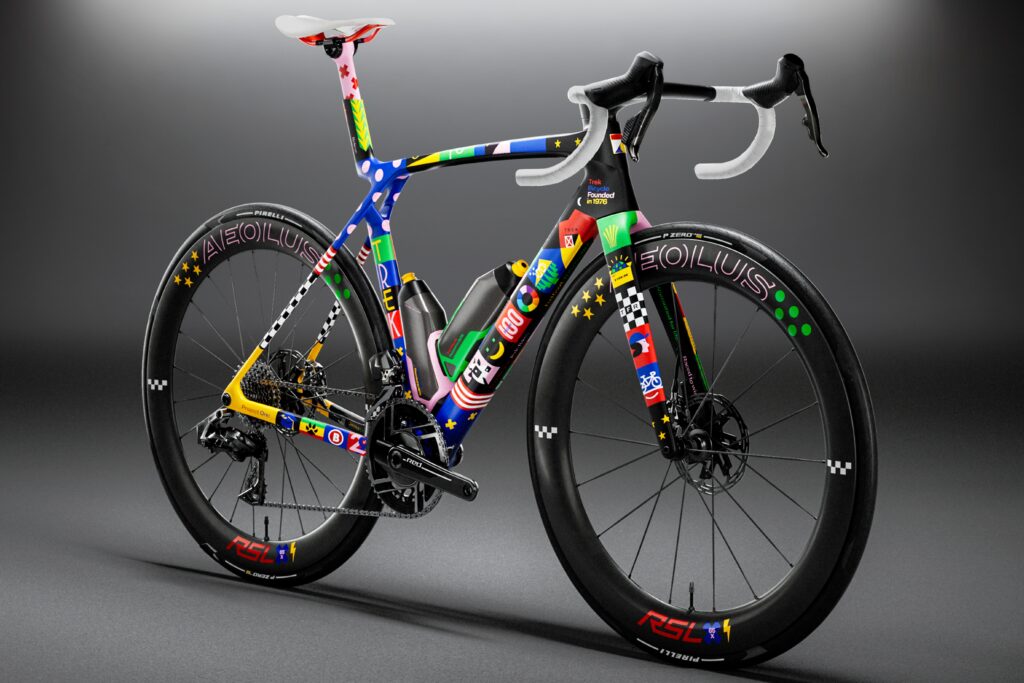
Why? Trek claims that it makes the bike faster while letting the seatpost flex to absorb bumps – so like the Colnago Y1Rs in its aims.
“Each frame is sculpted with IsoFlow technology, which splits the seat tube, creating a funnel beneath the seat mast that smooths and accelerates air through the frame while also creating flex near the saddle to smooth out those bumps in the road, so you can ride even farther,” Trek said at launch.
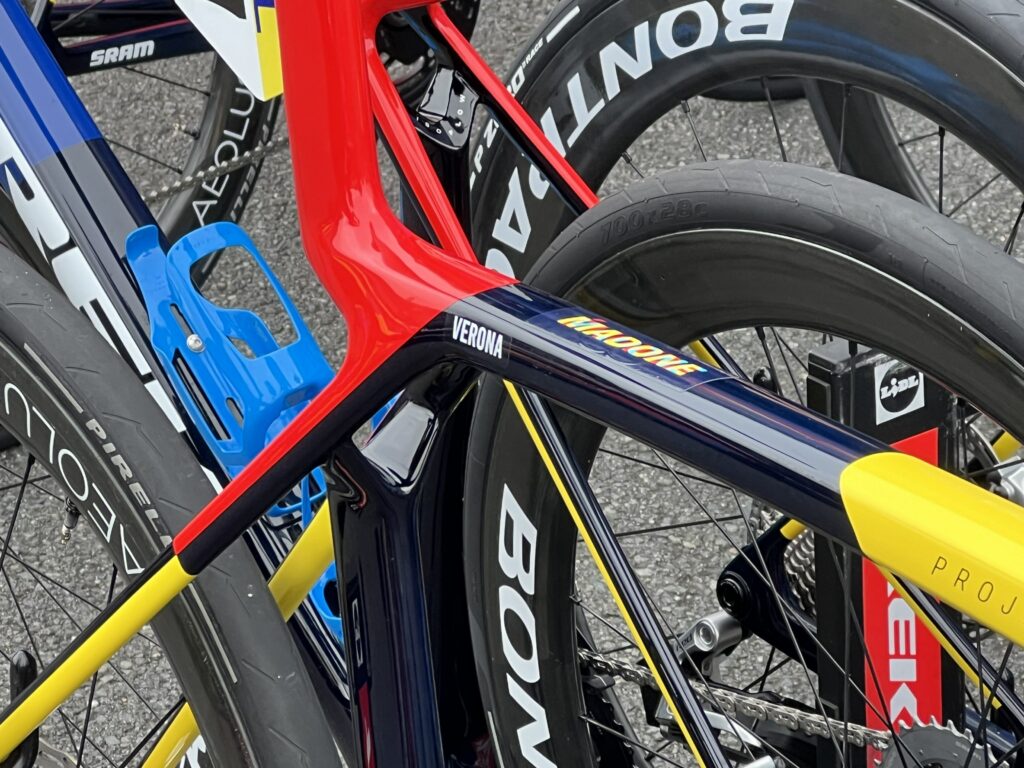
Trek stuck with IsoFlow when it launched Madone Gen 8 in 2024, dropping the overall weight by 320g while making the cantilevered seat mast a claimed 80% more vertically compliant than before – and we all know how the bike industry likes to shout about vertical compliance.
The same but different
This year, though, we’ve yet to see the launch of a bike that’s as radical as the Factor One, Colnago Y1Rs or Trek Madone. Specialized might argue that the S-Works Tarmac SL9 is super-exciting in that it is “the fastest road bike ever made”. Fair point. Race bike designers aren’t necessarily trying to make radical bikes – that’s not an end in itself – they’re trying to deliver the fastest models possible within the rules, and if that means producing a bike that’s pretty similar to the last one, so be it. But is it healthy that most bikes launched in 2026 have fallen into the “same but different” category?
The UCI (Union Cycliste Internationale, cycle sport’s world governing body) has a whole bunch of technical regulations covering bikes and other equipment that can be raced in events it sanctions.

The best-known of these is the minimum bike weight limit of 6.8kg, which was introduced back in 2000. It’s simple enough: bikes must weigh at least 6.8kg including pedals and fixed accessories like bottle cages and computer mounts, but not including removable accessories like bottles and a computer.
Lorena Wiebes seemingly won the first stage of this year’s Giro d’Italia Women but was then disqualified when officials weighed her bike at 6.78kg. Ouch!
The UCI’s rationale for setting the 6.8kg limit is to stop manufacturers building super-light bikes that are dangerously weak. The rule also aims to create a level playing field. One of the UCI’s core aims is “to assert the primacy of man over machine” in racing; it should be more about the rider’s fitness and skill than the technology of the bike they’re riding.
Beyond that, though, the UCI has loads more equipment rules. The ones governing frame shape are a little complicated, but at the heart of things the UCI says, “For road, track, and for cyclo-cross competitions, the frame of the bicycle shall be of a traditional pattern, ie built around a main triangle.”
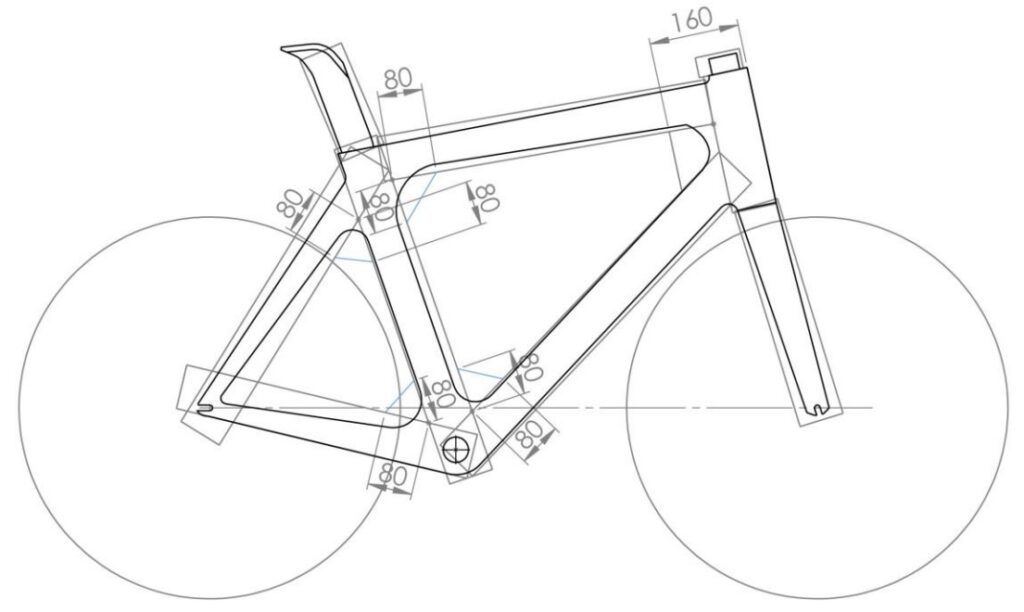
The UCI defines the triangular shape using 80mm-wide boxes for each tube. We don’t need to get into the details here, but the bottom line is that radical frame shapes – like that of the Zipp 2001 TT time trial bike (below), for example – are not permitted (time trial bikes are subject to their own UCI equipment rules which are in many cases different from those covering road bikes, of course).

The UCI occasionally updates its rules. For example, the UCI had a 3:1 rule governing bike design for a long time. The rule limited the ratio of a bike tube’s height to its width at a maximum of 3:1, although that was scrapped a few years ago, leading to a number of design updates from various manufacturers.
A bike must have two wheels of equal size (except in mountain biking), the bottom bracket spindle must be 54-65cm behind the front wheel axle and 35-50cm ahead of the rear wheel axle, the position of the saddle is defined, we have minimum handlebar widths, and so on and so forth. The point is that there are constraints all over the place, and since 2011 brands have had to get their bikes approved before they can be raced in UCI-sanctioned events.
For years we’ve been asking industry figures whether the UCI technical rules should be updated, as we did for this article way back in 2013, for instance.
> Which UCI technical rules should be updated? We asked the experts
So should they? We don’t want to get into UCI bashing – every sport needs rules, and most sports’ governing bodies take a lot of flak – but is it about time we had a good look at some of the equipment rules to allow more expression in bike design and generally mix things up a bit?
We remember a conversation we had with track and time-trial specialist Graeme Obree way back in the 1990s – maybe 1997. Obree is often seen as one of the all-time mavericks of cycling, but he certainly didn’t have an issue with the idea of the UCI setting and enforcing regulations; it was just that it was his job to push right up to the limits of what was permissible. And, of course, the UCI banned riding positions that Obree’s designs required, and one ban was communicated to him just an hour before his event in the World Championships.
In 2013, Obree said, “Every sport needs to be regulated. If there was no regulation, tennis players would be playing with rackets that are three feet wide and so on.”
> Graeme Obree agrees with UCI: “Every sport needs regulating,” says Scots iconoclast
At the same time he said, “Almost every [road racing] bike is exactly the same now.”
Are we getting to that situation again?
What about the UCI’s “primacy of man over machine” principle? Certainly, but if we don’t have progress in design, a whole aspect of the sport (and the cycle industry) starts to get boring. Are we starting to get to the peak of what’s possible within the current regulations?
Let us know what you think in the comments below.





2 thoughts on “Where have all the exciting bikes gone?”
Surprise surprise. Generic Homogeneity vs Diversity. Gee I wonder which is more popular? Hint: not diversity. Which is more interesting? Hint: not generic.
Have you ever seen the peloton from the 1980s? Bikes looked the same back then – in many cases, they were made by the same firm, regardless of the name on them.