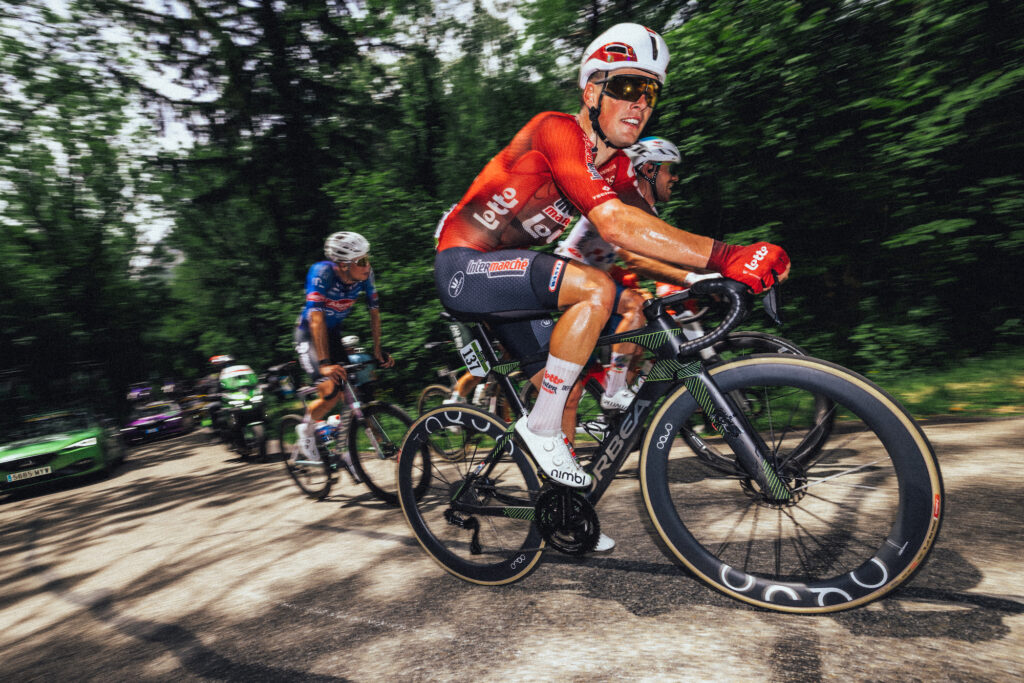

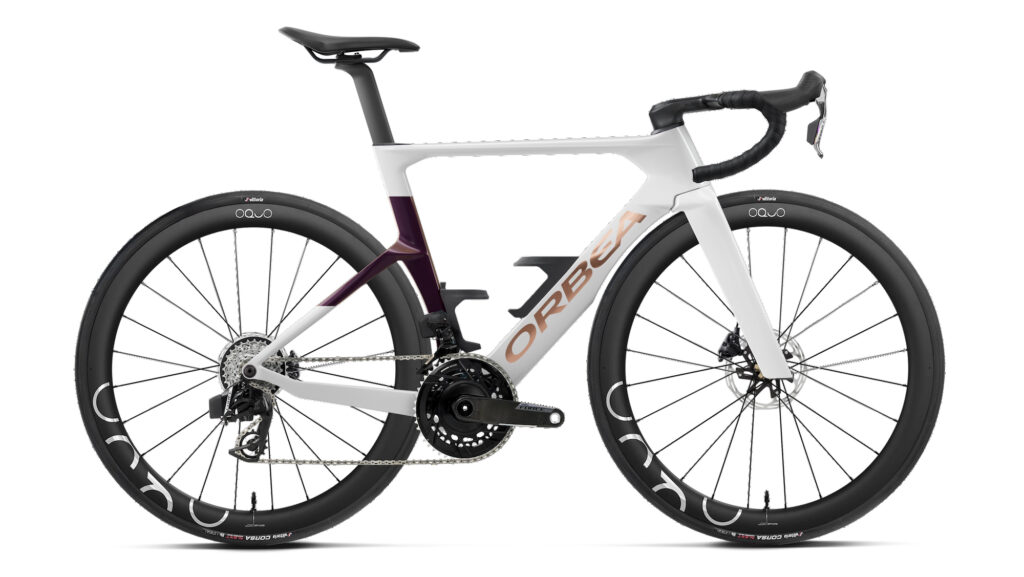
Orbea has launched an updated Orca Aero road bike with claims that the new model “interacts with the rider in motion” to deliver a 21-watt advantage over the current Orca Aero. The aero claim relates to speeds of 50km/h (31.1mph) – sprint speeds, then – and although Orbea hasn’t supplied figures comparing its latest bike with models from other brands, it does describe it as “the fastest and most efficient bike-rider system”.
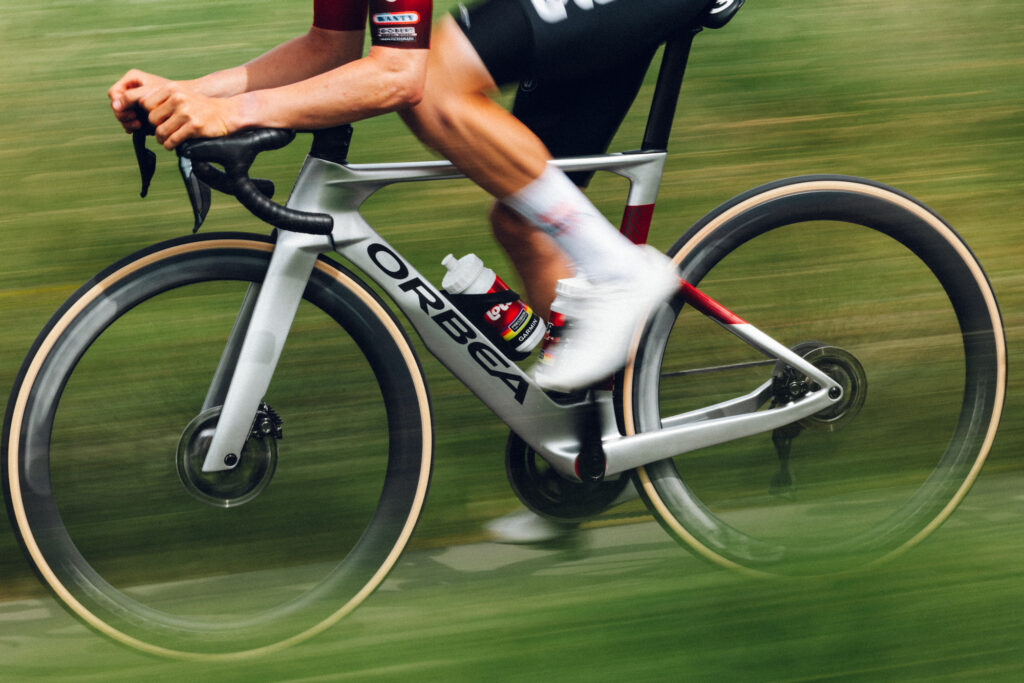
What’s that you say? Another one? Of course, we’re all very used to bike brands describing their new bike as the fastest out there. Just a couple of days ago, Specialized launched its S-Works Tarmac SL9 as “the fastest road bike ever made”. So how does Orbea back up its claim?
Central to things is what Orbea calls its Total System Approach, which is based on the idea that “designing a fast frame in isolation is no longer enough; success depends on how the bicycle interacts with the rider in motion”.
> Check out our review of the previous Orbea Orca Aero M10iLTD
Orbea says that it initially focused on frontal aerodynamic drag, identifying the areas generating the greatest resistance. Nothing too unusual there.
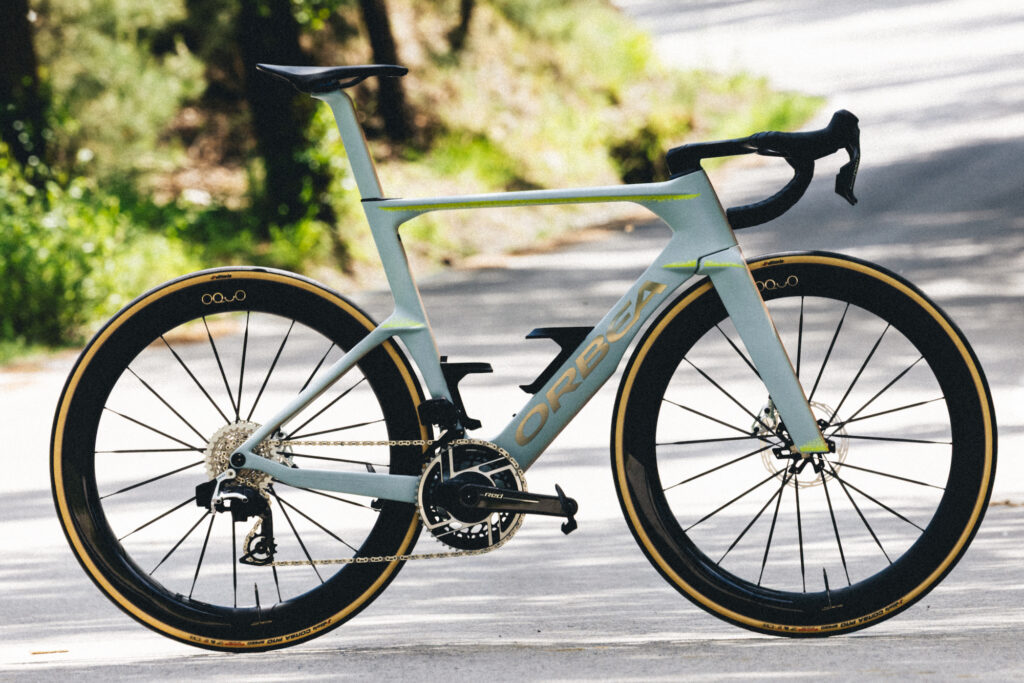
With that in mind, it has designed the head tube to be “as narrow and sharp as possible” while accommodating a standard fork steerer tube.
The down tube is a little wider than you might expect.
“Calculations indicate that a wider down tube manages airflow more efficiently and consequently improves aerodynamic performance,” says Orbea. “This new profile works in conjunction with new aero bottle cages that further enhance efficiency in this area of the frame.”
The seat tube is slimmer than previously, and so are the seatstays. They also have a lower junction than on the previous incarnation.
What Orbea calls a “keel structure” has been added to the bottom bracket area to manage airflow and reduce drag.
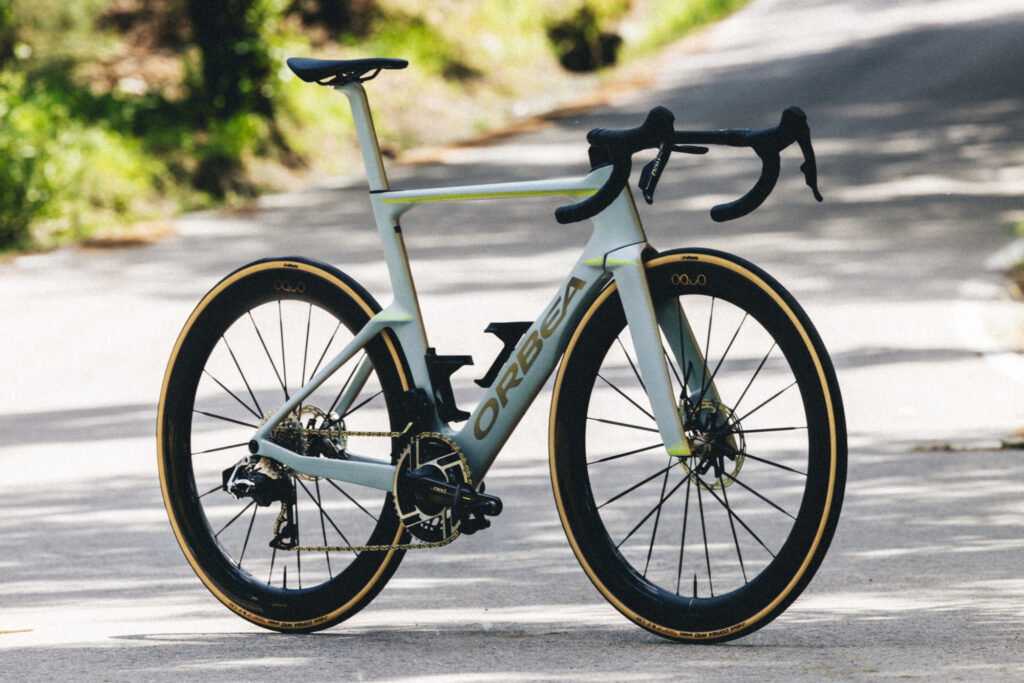
Up front, the fork is designed “to integrate seamlessly with the down tube regardless of tyre width or wind yaw angle”.
Orbea says that various components have been designed to maximise the aero performance too.
For example, the bottle cages sit flush with the frame, which is something we’ve seen on various other aero bikes from the likes of Trek, Giant, and Wilier.
Orbea says, “Based on extensive wind tunnel and velodrome testing, [our] engineers concluded that a specifically designed bottle cage and bottle positioned as low as possible improve the aerodynamics of the entire system. The new bottle cages merge with the updated down tube profile to deliver greater efficiency.”
You also get a Service Box that acts as an aerodynamic fairing while providing storage.
The OC RA10 handlebar comes with fully internal cable routing while the new OC RA11 Aero Seatpost “minimises the gap between rider and frame, reducing drag”.
As mentioned above, Orbea is making a big deal of its Total System Approach, which is intended to reduce the combined drag of the bike and rider.
It says, “[We have] adopted a 78mm bottom bracket drop, the lowest on the market. Positioning the rider lower improves stability by reducing body movement and increasing control at high speeds. At the same time, the lower position directly reduces the frontal area exposed to the wind.
“The extensive cockpit fit options include 13 different handlebar sizes and up to 40mm of spacers beneath the stem, allowing riders to find their ideal position. In addition, two seatpost offset options (0–15 mm and 15–25 mm) and a reversible seatpost clamp provide further fit customisation.
“What does this mean on the road? A more stable and aerodynamic rider generates less drag. Orbea quantifies this benefit at approximately 14 watts saved while riding at 50km/h on flat terrain.”
The new Orbea Orca Aero comes with space to fit tyres up to 37mm wide “while maintaining full aerodynamic performance with tyre widths from 29mm to 35mm”.
It claims that this clearance can save 6-7 watts at 40km/h (24.9mph) on cobbles or rough asphalt by reducing vibration losses.
“The frame delivers 93 Nm/° stiffness at a highly competitive frame weight of around 900g,” says Orbea. “This allows it to save approximately 2 watts at 17km/h [10.6mph] on an 8% climb compared with the previous generation.”
The Orbea Orca Aero is designed for electronic drivetrains only and features a UDH (Universal Derailleur Hanger).
> What is UDH and is it the future of all bikes? SRAM’s Universal Derailleur Hanger explained
The Orbea Orca Aero range
There are six models in the range, all built around the same Orbea Orca Aero Carbon OMX monocoque frame and OMX ICR full carbon fork.
Orca Aero M10i LTD £9,999
Groupset Shimano Dura-Ace R9200 (with power meter)
Wheels Oquo Road Aero RA57LTD
Orca Aero M11e LTD £9,999
Groupset SRAM Red AXS
Wheels Oquo Road Aero RA57LTD
Orca Aero M21e LTD £6,599
Groupset SRAM Force AXS
Wheels Oquo Road Performance RP50LTD
Orca Aero M20i LTD £5,899
Groupset Shimano Ultegra R8100
Wheels Oquo Road Performance RP50LTD
Orca Aero M22 LTD £5,899
Groupset Campagnolo Record
Wheels Oquo Road Performance RP50TEAM
Orca Aero M30i LTD £4,999
Groupset Shimano 105 R7100
Wheels Oquo Road Performance RP50TEAM