


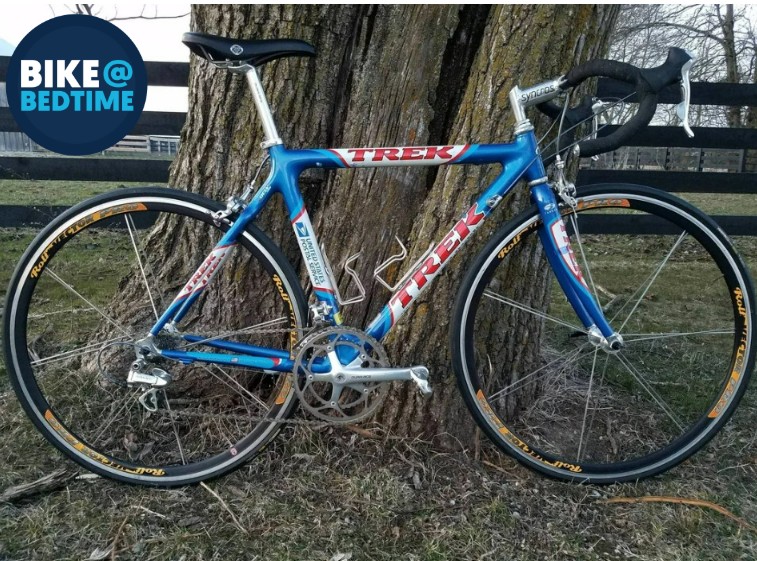

Although 1999 was dubbed the ‘Redemption Tour’ following the Festina doping scandal in 1998, that seems somewhat ironic with hindsight, as it was Lance Armstrong who won that Tour de France, who was of course later stripped of all his titles for doping. Depending whether, and to what extent, you wish to revise history, what is certain is that the era of steel and aluminium bikes winning the Tour de France was over when Armstrong won his first yellow jersey.
From 1999 onwards, only a carbon fibre frame and fork would do. Trying to unpick history might show that Alex Zülle came second in 1999 using an Aluminium Pinarello, or that Jan Ullrich came second in the 2000 edition riding an aluminium and carbon fibre mix Pinarello – however as Alex admitted doping in this era, and Ullrich was later found guilty of doping offences, we can’t revise history in that direction either. So let’s raise a quizzical eyebrow to history, move on and take a closer look at the Trek 5500…
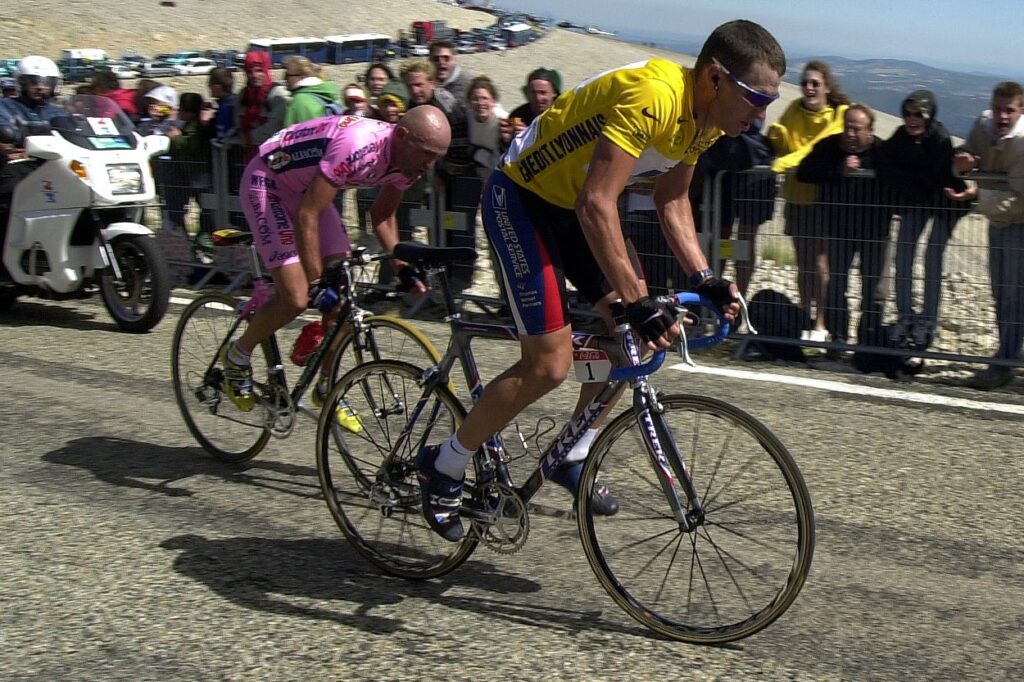
The 5500’s carbon fibre frame uses a monocoque system rather than a bonded tube and lug construction method. A monocoque is the structural system where loads are supported by an object’s outer surface, much like an egg shell does for an egg. As early as 1987 the Trek 2500 had used three carbon fibre main tubes bonded into aluminium lugs using an aerospace bonding method. Then, in 1989, the 5000 had been developed with great secrecy and during this process Trek developed the OCLV (Optimum Compaction Low Void) method. 1992 saw the release of the 5500 OCLV.
Interestingly the 90s models used a bonded carbon and aluminium OCLV fork with a 1-inch steerer tube. This meant that a quill stem was still used. In the 2000’s the 5500 moved to a 1 1/8″ steerer and an ahead stem was then used.
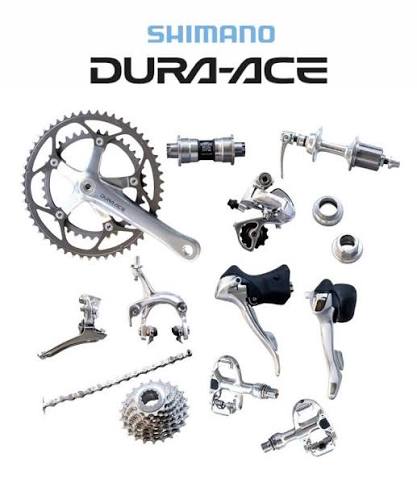
In 1999 the US Postal Service sponsored team used the Shimano Dura Ace groupset. It would be the first time that a rider using Shimano would win the Tour de France, and it broke the long-standing dominance that Campagnolo had over the race. This iteration of Dura Ace was the 7700 version which featured a 9-speed cassette and Shimano Total Integration (STI) gear and brake levers. The bottom bracket used the Octalink spline system to mate the bottom bracket axle to the crank arms. It was also the last time that the top level groupset offered downtube shifters as an option!
The 7700 clipless pedals, although looking similar to modern SPD-SL pedals used an SPD-R cleat which is not interchangeable, and is now obsolete. The next version (7800) introduced the still used SPD-SL cleats to the groupset.
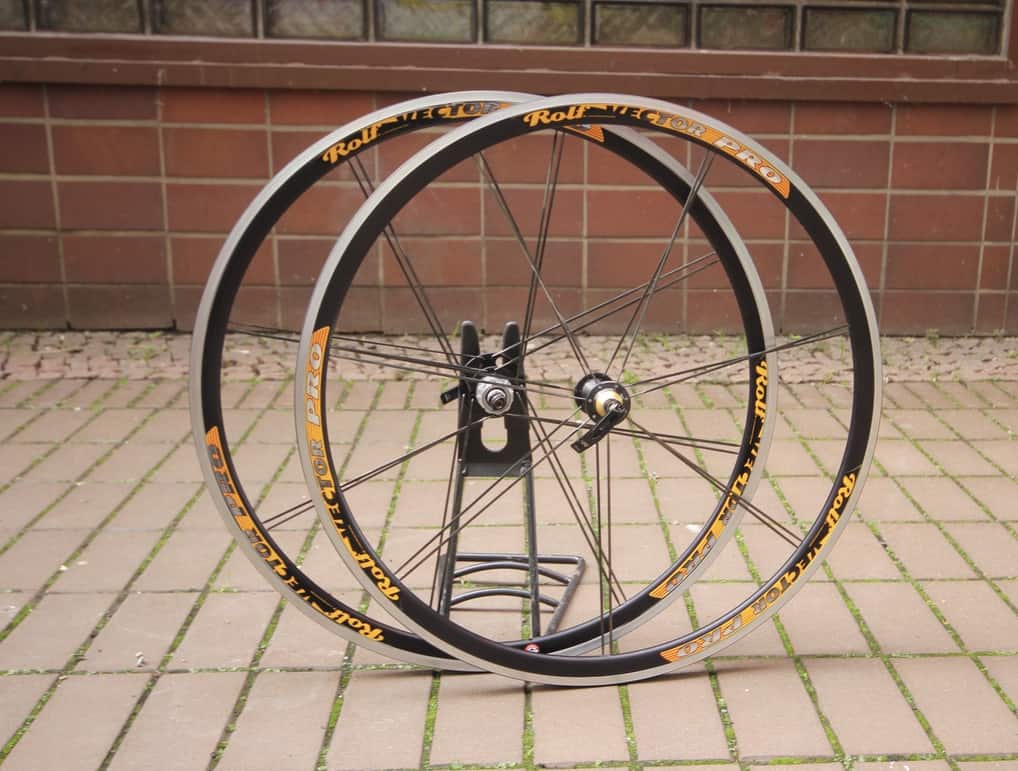
The Rolf Vector Pro wheels used a patented system of paired spokes to reduce the left/right pull introduced by a conventional spoking arrangement. They were able to use 14 spokes in the front and 16 at the rear with this system. Supposedly the wheels had very smooth running hubs, rapid acceleration and excellent stiffness to aid climbing. The rims were made for tubular tyres, with a 20 or 21mm tyre width, expanding to 23mm for mountainous stages, where the extra width helped make for better handling on the descents.
It was said that the Hutchinson Pro Tour tubular tyres were kept in a wine cellar to artificially age them, and make them more supple. Maybe this was a myth to put the competition off the scent?
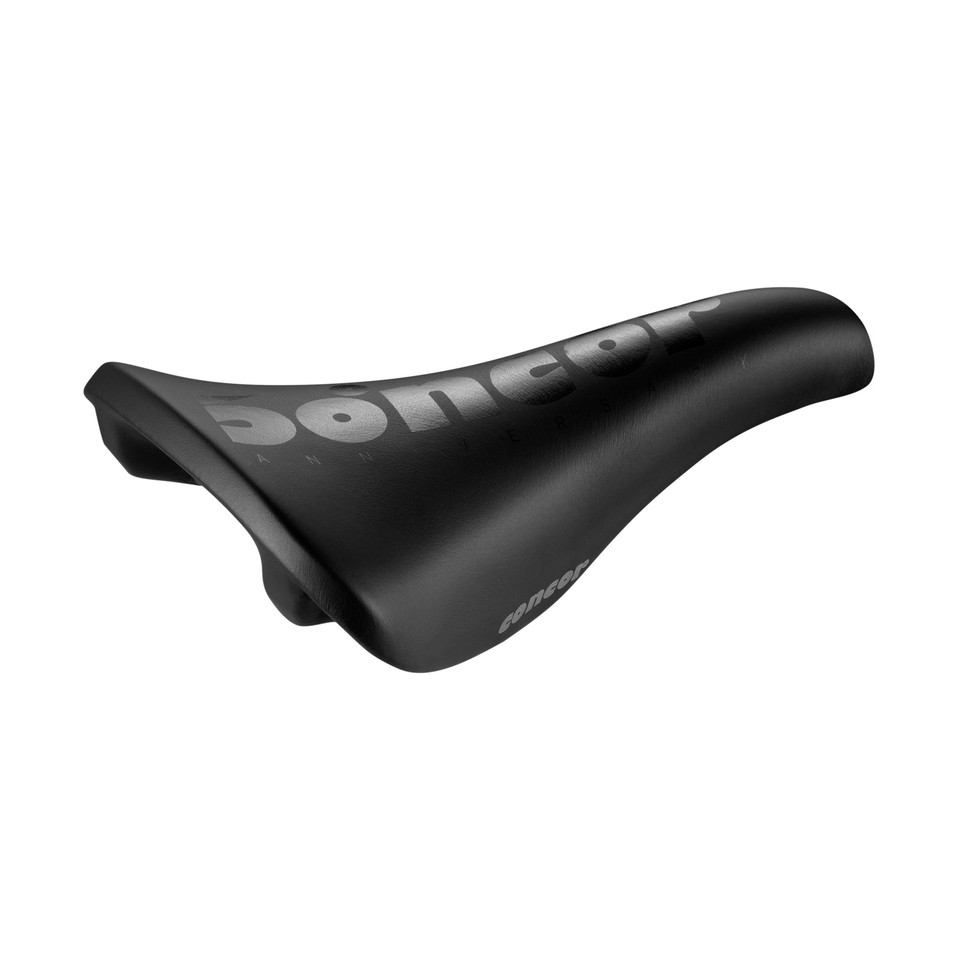
The saddle is a Selle San Marco Concor Light. This iconic seat was a staple of the professional peloton at the time, and featured titanium rails. Armstrong notably preferred the classic, curved shape of the Concor Light, and chose it over the standard team issue saddle. Selle San Marco still make the saddle, with a Concor 50th Eroica version for those wishing to make their own restoration ‘just so’.
The era of metal bikes was now well and truly over. To be competitive you needed to be riding a carbon fibre bike, even if they still had classic drop handlebars, a 1-inch quill stem and rim brakes. Over time those details would cease to appear, and the evolution towards the bikes of today took a huge leap forward.






10 thoughts on “Remembering Lance Armstrong’s Trek 5500 from 1999, the first fully carbon fibre bike to win* the Tour de France”
Groundbreaking bike
Still got the white one.
Please drop the sanctimonious tone, the hard asterisks and the raised eyebrows. Lance Armstrong and Trek were two of the main reasons why so many people ride bikes and read your website today. The period 1999-2005 were arguably the most exciting, dynamic and innovative years in the growth of the sport and very much led to the extraordinary celebration of cycling that we all get great pleasure from seeing on the roads of France every summer.
Now, bring on the hate…
Absolutely agree – Lance doesn’t get nearly enough credit for inventing the Tour de France *checks notes* 68 years before he was born.
@mdavidford sorry but: Lance was stripped of his titles in 2012, so he actually didn’t win the ‘tour de france’…
@aldupon Um – I don’t think I said that he did.
I have three of them!! Great bikes. I don’t think the frame is a monocoque, but has carbon lugs that are filled to look monocoque (an evolution of the aluminium lugged bikes of that time, such as the Giant Cadex). Please correct me if anyone knows better. I believe the Kestrel bikes of that era may have been monocoques.
I remember picking one of those frames up in a London bike shop and balancing on one finger. It didn’t feel heavier than a slim paperback book. Always love the look of those Posties bikes and kit.
Thank you for featuring this bike. Pretty rad. The wheelset is fascinating. Any idea of the weight? It’s all about the bike! Loud collective groans heard from afar. Cheers!
Ah, sweet nostalgia, how well I remember those days of being a cycling fan. Innocent times when record breaking achievements were attributed to better bikes, new training methodologies and a professional focus on diet and nutrition.
It turned out that the magic ingredient was actually EPO and blood transfusions.
Hey ho, thankfully those day are over and today’s heroes are smashing records thanks to their new equipment, better diets and new training methods.