


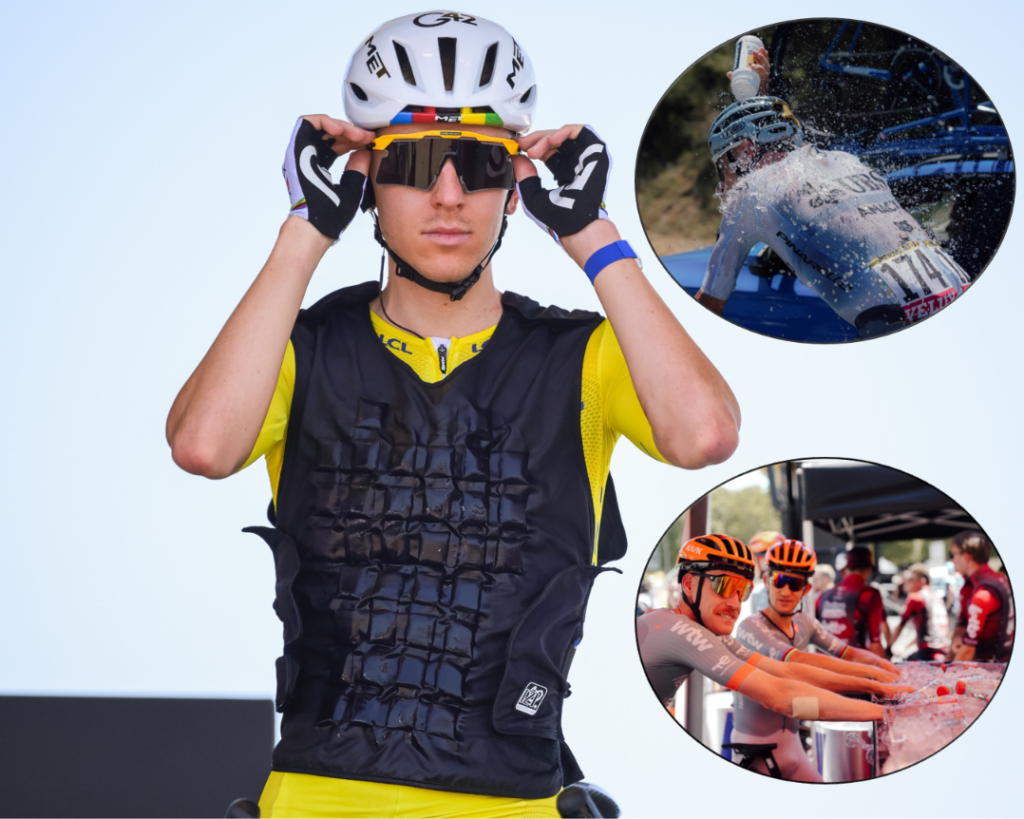

Tadej Pogačar has called for cycling’s calendar to be radically redesigned to tackle extreme temperatures and the ongoing effects of climate change.
It comes after the first week of this year’s Tour de France has been characterised by heatwaves, nearby wildfires and warnings for spectators to avoid travelling to parts of the race route.
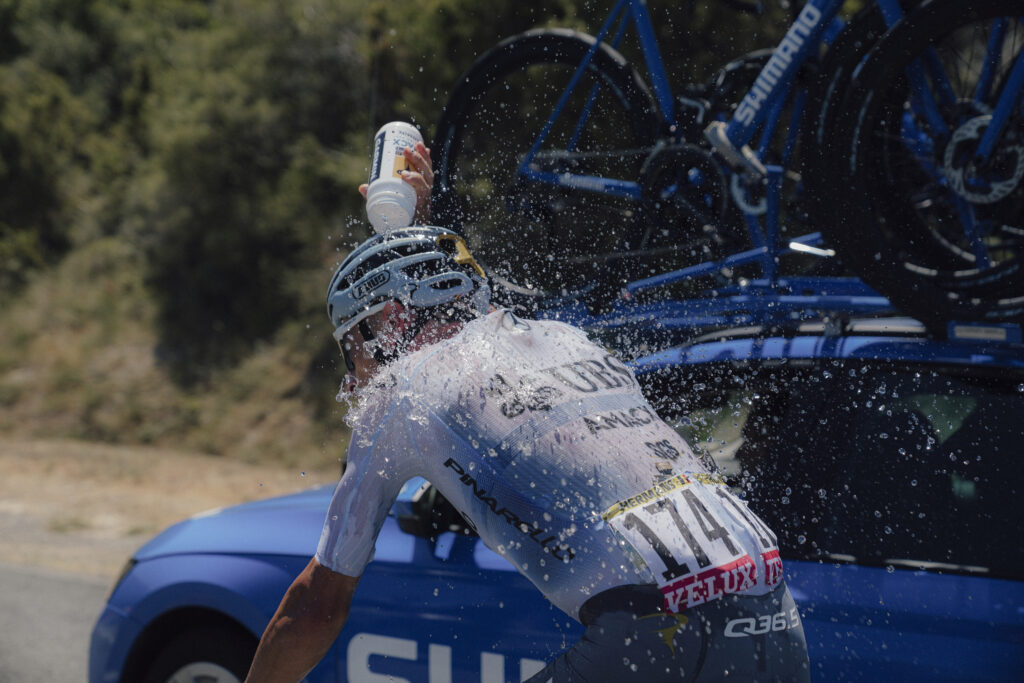
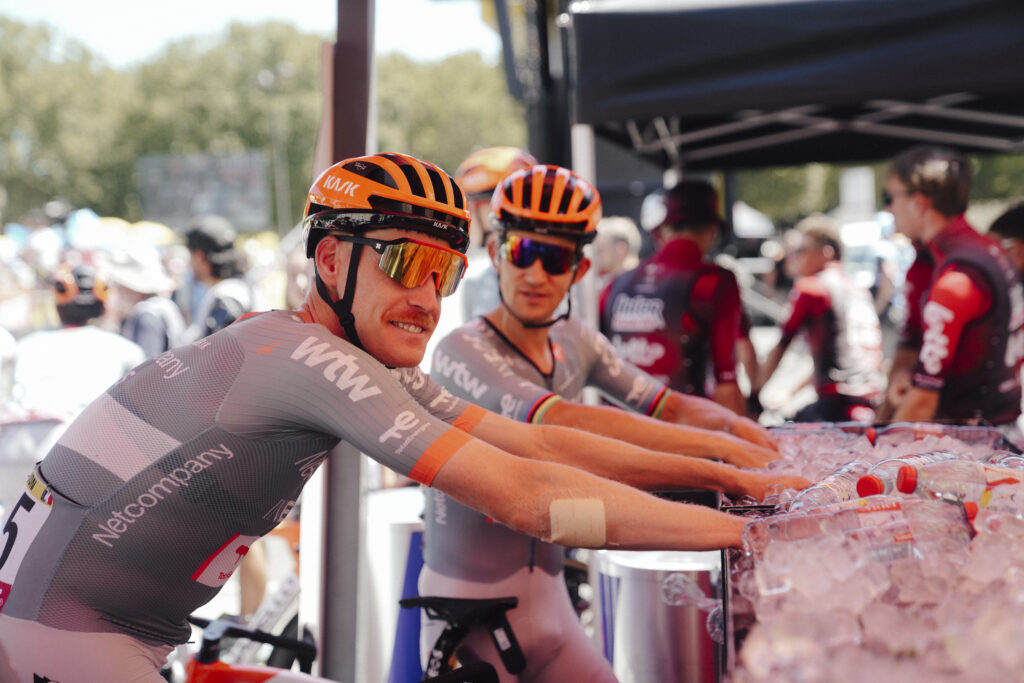
After the third stage, Tom Pidcock likened the heat to a “war zone”, though Movistar team director Matt White threw cold water on the suggestion that stages where the weather exceeds 40 degrees Celsius could be cancelled, telling road.cc, “you can’t complain about that sh*t, that’s cycling. That’s cycling, we race in all terrains. So you’ve got to be adaptable. If you don’t, change your programme.”
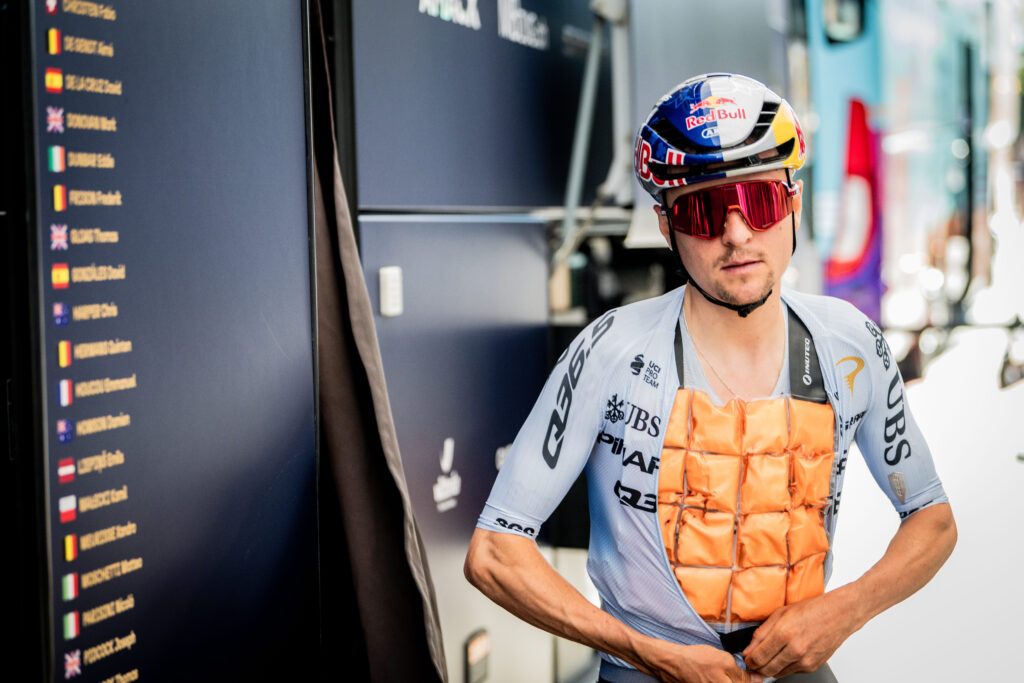
In response to the soaring temperatures, the UCI has loosened its rules on feeding and refueling, whilst the CPA – the riders’ union – has negotiated more favourable time cuts for riders on certain stages.
Speaking in his post-stage press conference after yesterday’s stage, which was shortened by 30km due to the extreme heat, Pogačar admitted, “it’s a big topic to discuss.”
“If I could have the power to change it all, I would change all the calendar. I would not race in July and August in the hot places and do a completely different calendar, but that’s something that you need to think through very well.”
The men’s WorldTour calendar currently starts with the Tour Down Under in South Australia, a race which this year saw its route changed at the last minute in response to the risk of bushfires. The UAE Tour, which is the home race of Pogačar’s team, UAE Team Emirates-XRG, caps a block of racing in the Middle East that also includes the AlUla Tour in Saudi Arabia and the Tour of Oman.
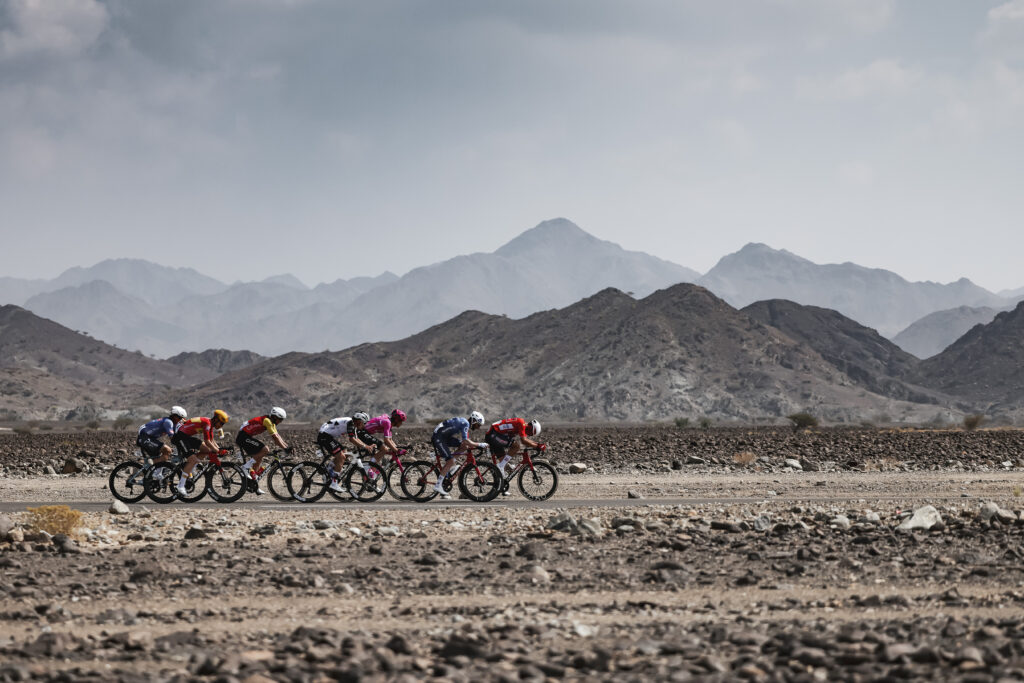
The spring classics and early season stage races are renowned for their variable race conditions, from summer-esque sunshine to snow or relentless icy rain. The Giro d’Italia contains a multitude of conditions as the race travels from the country’s south to north. However, high mountain stages have been repeatedly modified at short notice due to persistent snow or flood risk. Conversely, the women’s Giro d’Italia this year saw a key mountain stage shortened due to the risk of a melting ice sheet causing an avalanche.
> Giro d’Italia Women stage shortened due to “unstable sheet of ice” while riders tackle final climb
Taking place in August and September since 1995, the Vuelta a España has seen fewer last-minute changes to its route. However, Vuelta stages have historically been shorter in distance than other Grand Tours and stages typically begin in the afternoon. The season then finishes in October with autumnal Italian classics and humid stage races in East Asia, such as the Tour of Guangxi in China and the Tour of Langkawi in Malaysia.
Road racing has not historically taken place in Europe during winter, with other disciplines such as track cycling and cyclocross taking precedence. Logistically, racing is also made difficult by the lack of daylight hours, and the preference of many race organisers to ensure their races finish in the late afternoon, coinciding with families coming home from work or school.
Calls to overhaul the calendar are not new. In fact the Vuelta’s move from early spring to late summer was made following a request from the UCI that either the Giro or Vuelta change their spot in the calendar to better spread out the Grand Tours.
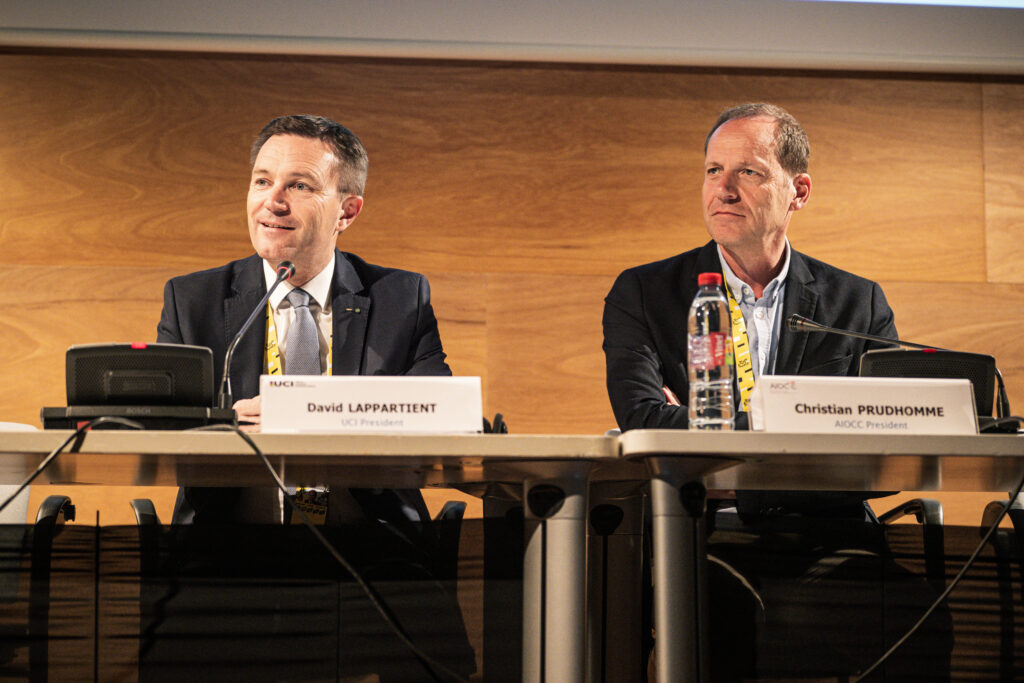
However, the complex commercial demands and logistical challenges of organising races make any overarching structural change unlikely without the consent and cooperation of several race organisers. A.S.O, the owner of the Tour de France, Vuelta a España and Paris-Roubaix, has long opposed any such reforms, as has the UCI under its current President, David Lappartient.
There is also criticism from some quarters that professional cycling is a tool in the ‘sportswashing’ of several fossil fuel related businesses who support the sport. The Tour de France is sponsored by TotalEnergies, as is a team in the race. Other teams directly backed by fossil fuel companies include Netcompany-Ineos and Uno-X Mobility. Meanwhile some teams, such as Pogačar’s UAE and Bahrain-Victorious are backed by nation states economically dependent on oil exports. Closer to home, British Cycling has been criticised for its sponsorship agreement with Shell.
Tadej Pogačar seemed aware of the scale of the challenge of implementing his suggestions, adding yesterday, “It’s not something I can do, and maybe the next step will be to start earlier the stages.” But the two-time world champion is sceptical of the benefits of such a move.
“Yesterday there was one proposal that we could start at 10, but for me, starting at 10 doesn’t change anything because then you finish with the big heat.
“For example today when we arrived at the finish, it was way cooler than at the start. So then you need to start the stage at eight or nine or even earlier. That’s also a little bit sh*t, but I think the body can adapt to do that as well, that you wake up at five o’clock in the morning and do the stage at eight. But I think I’ve said enough.”
For women’s cycling, races on the same day as the men’s equivalent already result in either very early starts or late finishes. And, despite criticism from some riders and fans over a lack of live television coverage offered of these races, broadcasters point to the increased viewership this reduced coverage provides as evidence the women’s calendar should be brought more in line with the men’s.
Pogačar’s comments, coupled with the extreme conditions during the opening week, have shone a light on the increasing logistical difficulty of organising bike races whilst maintaining the health and well-being of both spectators and athletes. However his blue-sky thinking is unlikely to travel far through the smoke-filled boardrooms that often prioritise the commercial interests of the sport.










10 thoughts on “Tadej Pogačar calls to move Tour de France as part of complete calendar overhaul in response to extreme temperatures and shortened stages”
That headline is misleading – it’s not what he said, as the quotes in the story confirm.
@Surreyrider It it’s pretty much what he said, although he did not explicitly say move the Tour de France he said “I would not race in July and August in the hot places”, the south of France and Spain being two of the hottest places at the moment it clearly implies that he would move the races that occur in July and August, those being primarily the Tour and the Vuelta.
@Rendel Harris He said if he was put in charge (he hasn’t been) and he also said that there would be a lot to discuss about whether it would be possible. So yes, the headline is inaccurate,
Why not just abandon the Tour de France in its entirety, its overrated climbs, food and obnoxious fans, and instead race in Scandinavia?
Plenty of development potential, new routes, iconic scenery, and decent people to boot.
Implications are not direct calls to do something. The headline is cheap click-bait. Methinks Callum has been freelancing for the Daily Fail.
I do think the Cycling Calendar needs changing, like they done Paris Roubaix in October once and it worled. Something needs sorting with the order of races, exercise at ultra high levels affects the body to its optimal state of performance, add in the stress factor of heat and you’re on a different pitch of play, a higher level of performance.
Matt White comment? Is he the one driving around in the team car with air con?
Dipstick.
@Simon14 I don’t agree with him but to be fair he was an Australian professional so he probably does know a bit about riding in extreme heat (albeit doped up).
Good to see ‘Climate Emergency’ as a Roadcc article category.
But pro cycling as “…a sport struggling to grapple with the effects of climate change”? …Really?
What is the TDF doing any differently to mitigate climate change?? A handful of team EV’s?
The UCI and TDF have their heads in the sand, when their blatant excesses are causing climate change, in so many ways!
Changing the date will do nothing except make it someone elses problem.
Have they considered having hydration breaks? /s