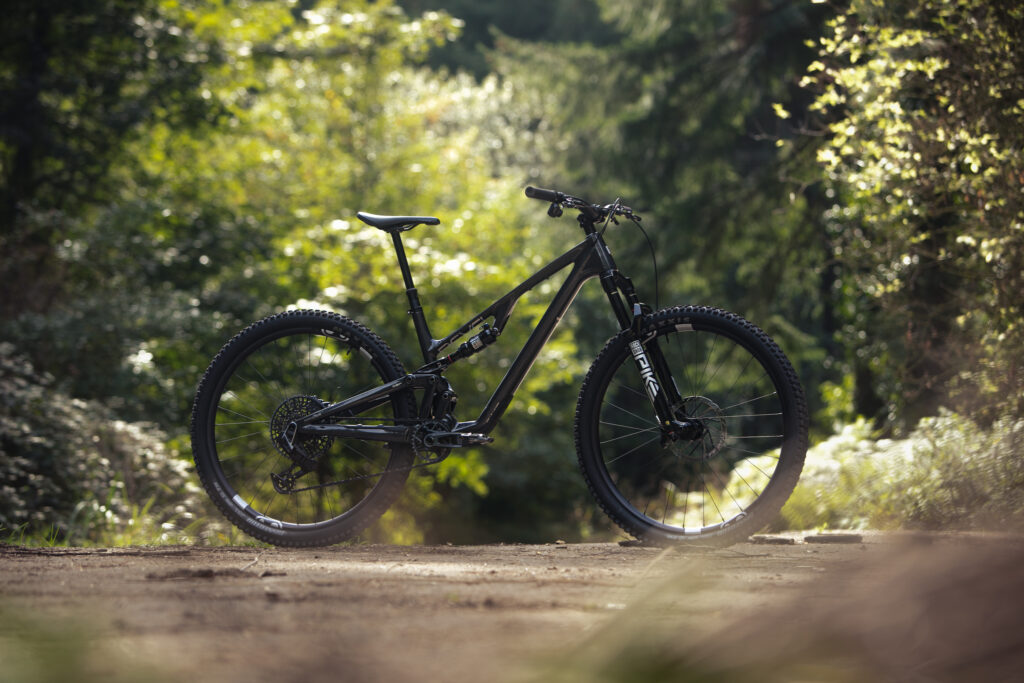
Earlier this year, RockShox brought an almighty update to its downhill fork, the Boxxer. With it came the new LinearXL air spring, Butterwagon stanchions, and the Charger 3.2 damper. Now, all of that tech and more has come to the ZEB and Lyrik forks, along with refreshed Super Deluxe and Vivid Air shocks. I’ve been riding the Lyrik and Super Deluxe for a few weeks now, so read on for my first thoughts.
Alright, there’s a lot to unpack here, so let’s kick things off with the forks, and they get everything that was first found on downhill-going Boxxer. Starting off with that air spring, the new ZEB and Lyrik benefit from the LinearXL air spring, which is said to reduce speed-sensitivity in a bid to boost predictability.
That’s done by providing a ‘position-sensitive’ linear curve. That means that the force needed to compress the fork doesn’t change or increase as it compresses. As such, the brand reckons that the forks are more predictable, while being supple off the top and supportive in the mid stroke. But towards the end of the stroke, RockShox has thrown in a curveball – an adjustable bottom-out system.
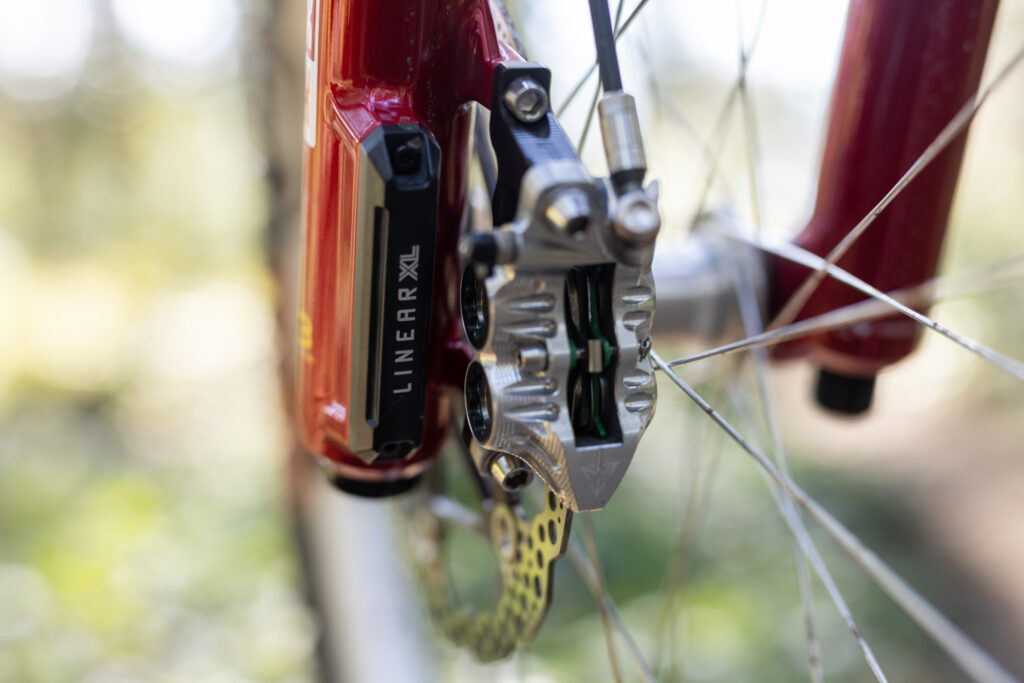
ABO (Adjustable Bottom Out) allows riders to tune how much bottom-out support the fork offers without affecting the fork’s performance throughout the rest of the stroke. This is done at the underside of the non-driveside leg, and accessible via a 5mm allen key.
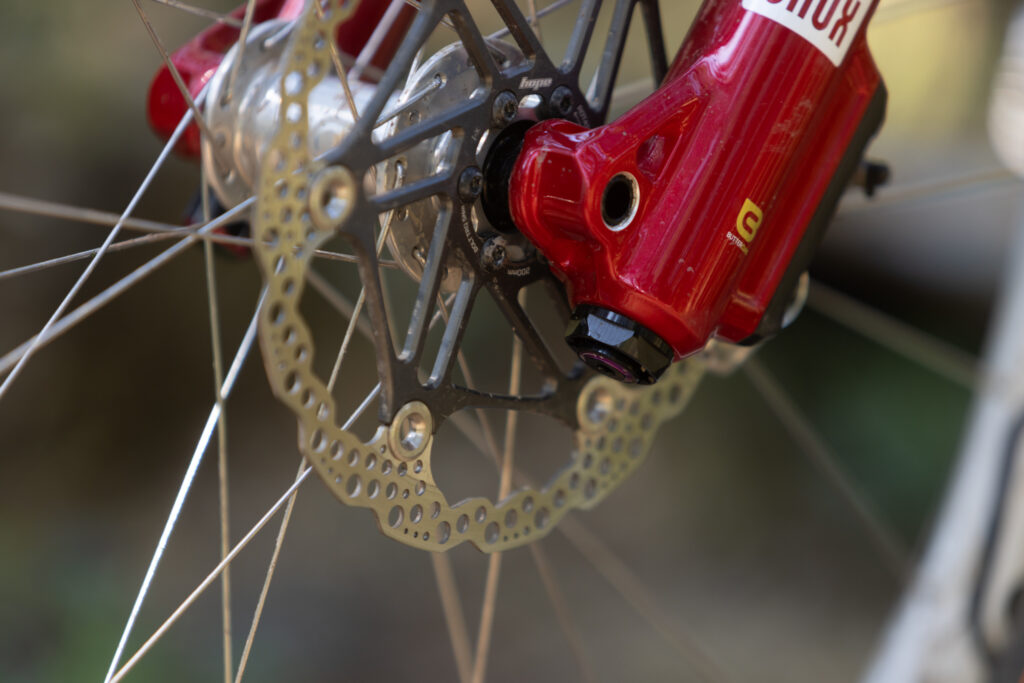
Adding to that whole system is then the AirAnnex. The lump found by the caliper mount increases the lower leg air volume, which makes for a more linear airspring, and reduces speed-sensivity.
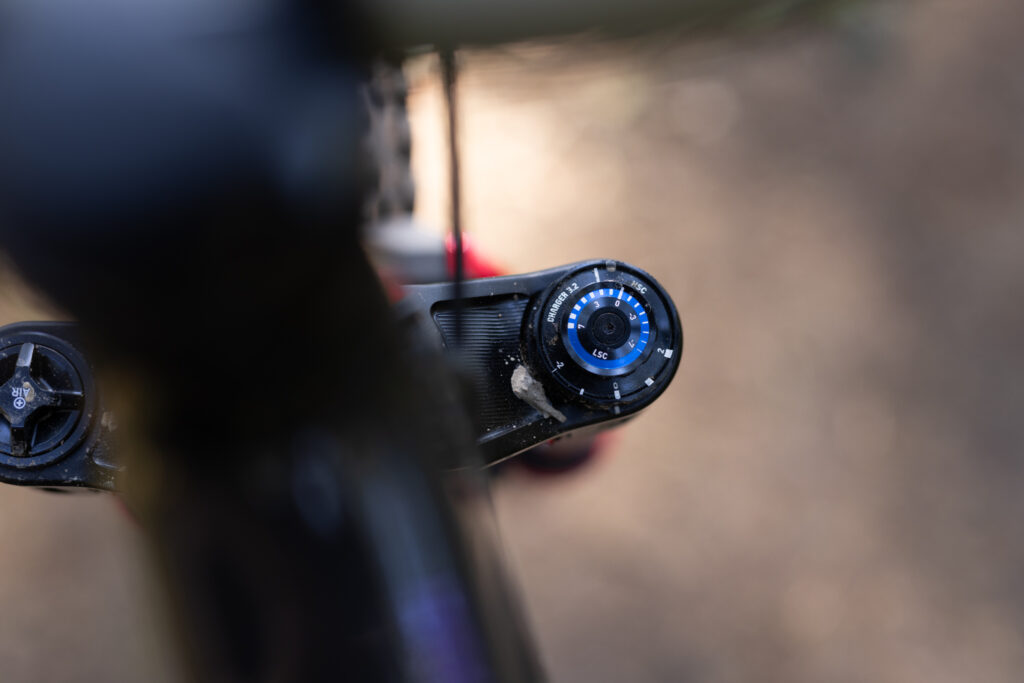
Along with a new air spring comes a new damper – the Charger 3.2. It’s been rejigged in order to play ball with the LinearXL air spring and offers independent high and low speed compression damping, as well as rebound damping adjustment.
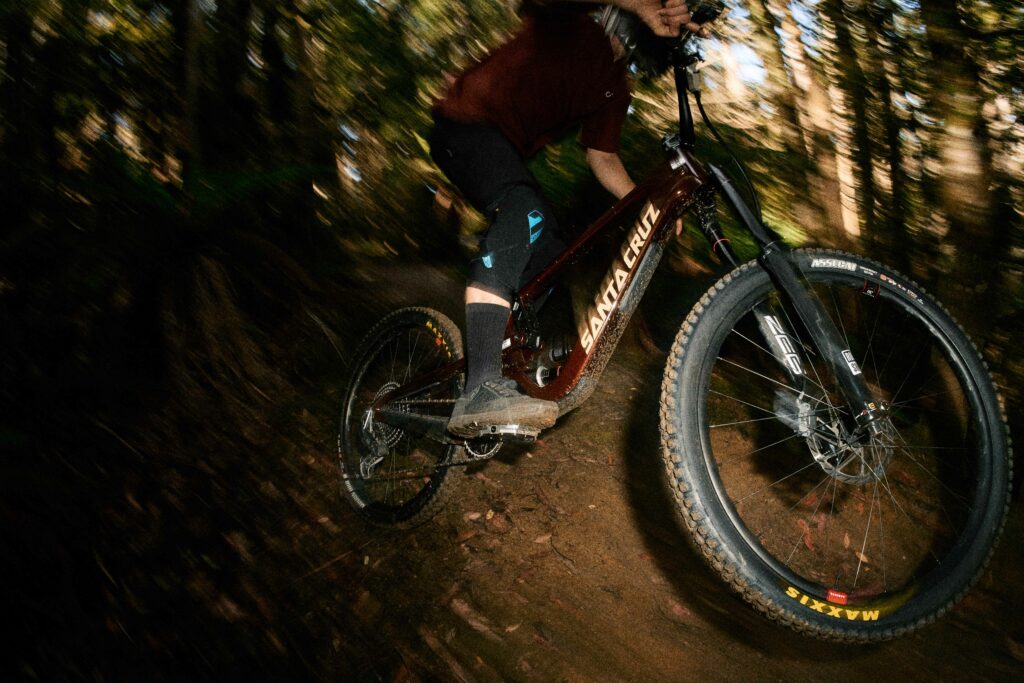
Moving onto the forks’ chassis, they’ve been completely reworked. Now, they use a buttressed lower leg design that promises to boost stiffness but without adding too much weight. The chassis then benefits from the TorqueCap dropouts, which up stiffness, making it on-par with a 20mm thru-axle, says RockShox, and there are wider crowns to increase stiffness further, apparently resulting in improved steering and climbing efficiency. The crowns get a post-forging treatment, too.
Much like what was seen on Fox’s most recent fork range, the ZEB and Lyrik get a arch-makeover. Again, this has been done to increase stiffness, maintain tyre clearance, and there is a revised fender mount.
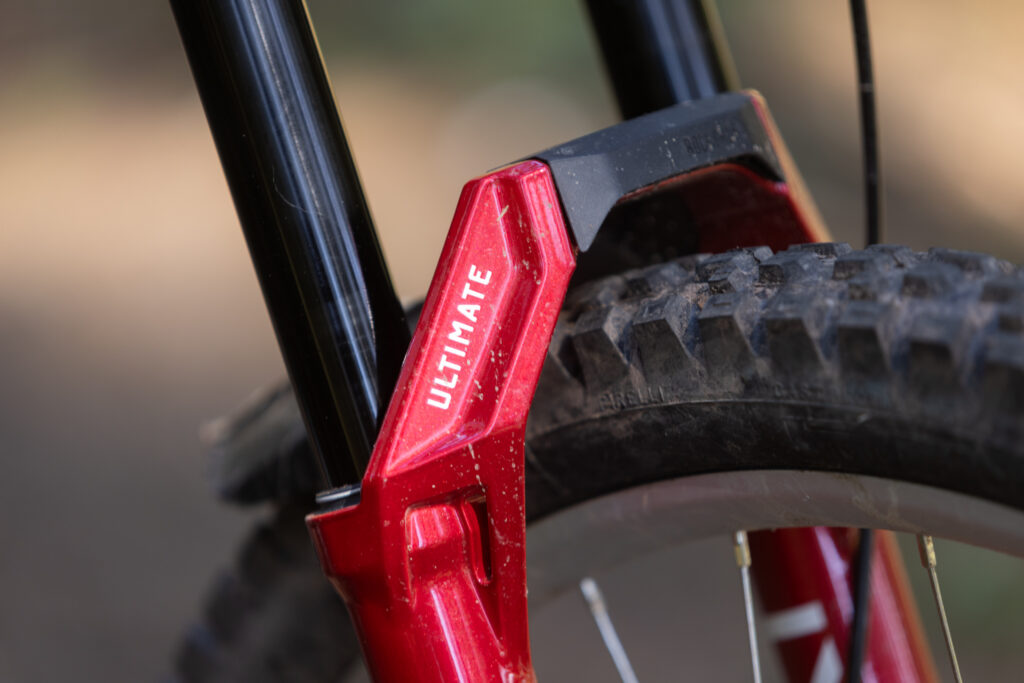
Yep, loads have changed, and the updates go much further as the forks get the ButterWagonTech – loads of divots on the internal faces of the stanchions. These have been cut in order to aid the flow of bath oil towards the bushings. There are also specific SKF bushings, crafted to perform better when combined with the lower leg pressures of the LinearXL system.
The Lyrik and ZEB are available with Flight Attendant, RockShox’s wireless on-the-fly adjustment system, in an Ultimate build, along with Select+, Select, and Base models. The Select and Base drop the ABO system while the Base rocks the classic DebonAir+ air spring and revised Delta RC damper.
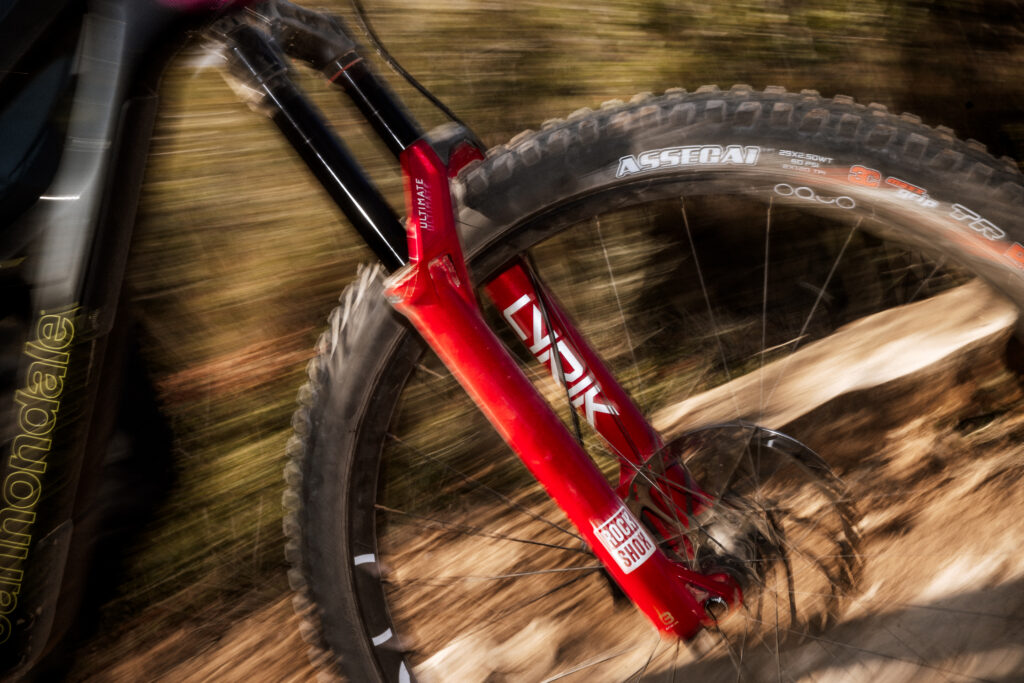
The Lyrik is available in travel lengths from 140mm up to 170, while the ZEB caters to enduro riders with 150 up to 180mm options. Both can fit 650b or 29in wheels, and offer 37 and 44mm offsets.
Prices for the ZEB start at £965 and go up to £1,750, while the Lyrik starts at £905 and goes up to £1,655.
LinearXL isn’t just for forks
No, as the technology also graces the Super Deluxe and Vivid Air shocks. For the shocks, it’s designed to play ball with modern frame kinematics, says RockShox, and it also comes with an ABO, or Adjustable Bottom Out system, similar to the Hydraulic Bottom Out system that came to models prior, which kicks in during the last 20% of the shock’s travel.
The Super Deluxe then ups the ante, as it’s able to house Progression Tokens, or volume spacers, allowing riders to tune the shock’s progression like normal.
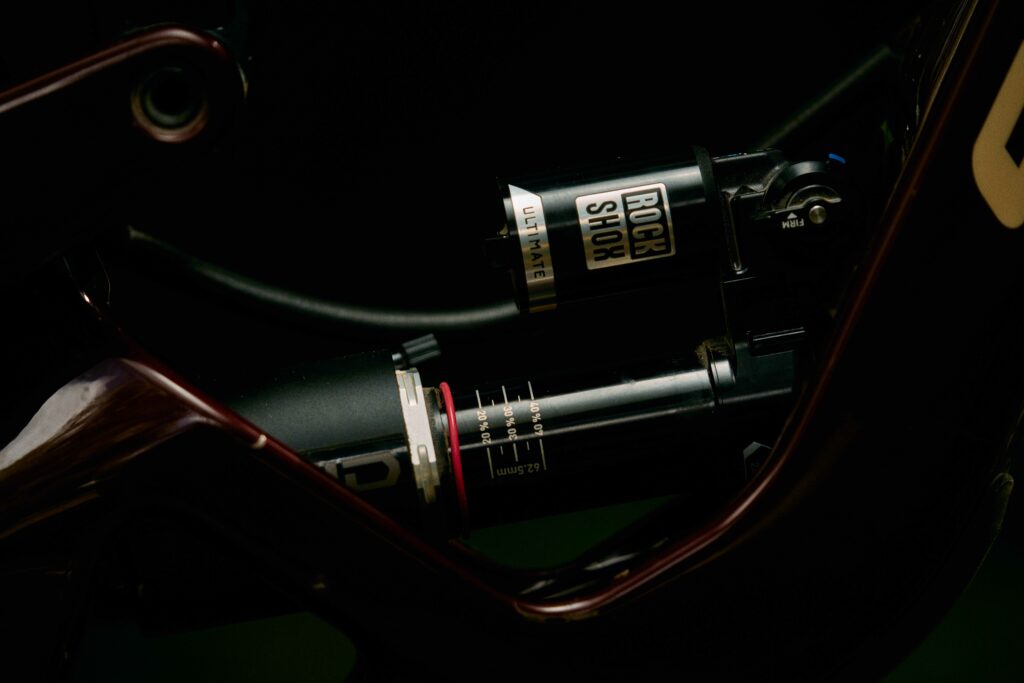
Both shocks use a new RC2T damper that’s designed to complement the new units on the new forks by delivering a similar level of mid-stroke support, apparently. The damper benefits from a redesigned base valve that’s said to reduce IFP (Internal Floating Piston) forces by 40%, making for what RockShox claims are the most supple shocks on the market.
The Super Deluxe can be purchased with Flight Attendant while both are available in Ultimate, Select+, Select, and Base models, whereas the Vivid gets a DH-specific model thrown in for good measure.
Prices for the Vivid Air start at £760 and go up to £780, while the Super Deluxe can be picked up for £650, going up to £1,020.
RockShox Lyrik Ultimate and Super Deluxe Ultimate: early impressions
I’ve been riding the Lyrik and Super Deluxe for a few weeks now, both for bike park sessions and through natural trails. With so much going on both internally and externally, RockShox has delivered suspension components that really do up the game, by quite some margin.
Firstly, the array of markings, dashes, and dots that sit around the adjusters is incredibly useful. They’ve been part of RockShox’s kit for a while now, but with further refinements, it’s incredibly hard to lose where those adjustments are set, because they’re almost literally written on the dials. Better still, the rebound dial on the shock has been shifted. Where it was a rotatable dial that sat around the upper of the older Super Deluxe models, it’s now a little dial that’s much easier to reach, and its clicks are clearly marked. Additionally, it’s more accessible on a wider range of frames.
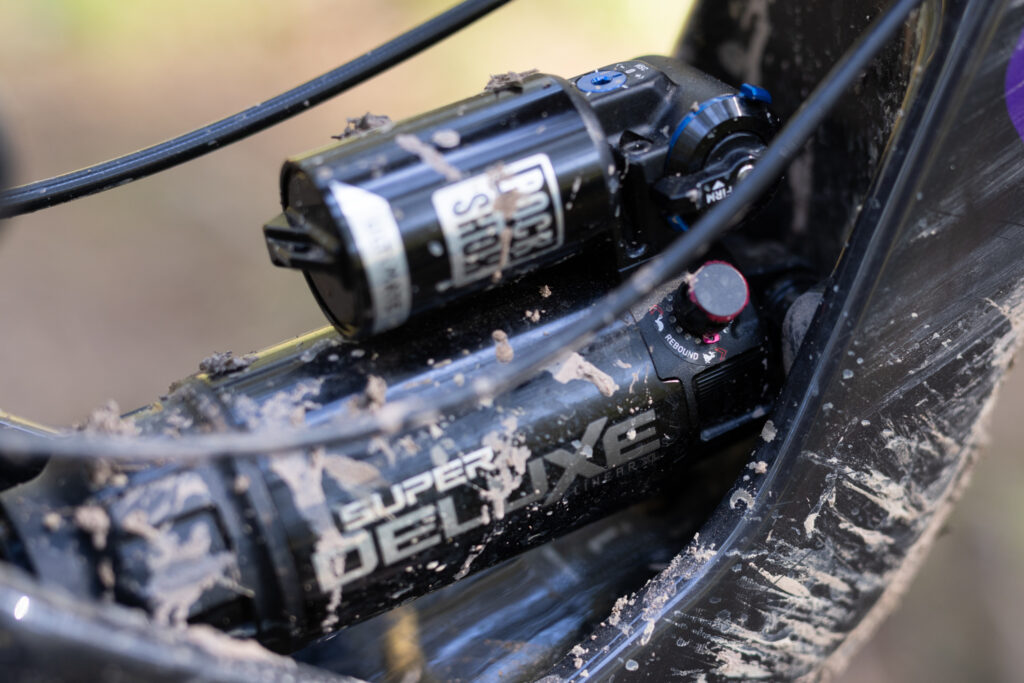
Kitting both components with a larger negative air spring, or the LinearXL tech, makes a marked improvement to how the suspension performs. There’s almost no breakaway force required to get the suspension working, and there’s impressively little friction throughout the travel.
That means that both the Lyrik and the Super Deluxe are beautifully supple. Harsh impacts with trail obstacles result in less of a sting through the bar and pedals, bringing an increased air of control over the bike when hauling through rattly terrain.
What’s really surprised me is that the level of smoothness translates very well, even when deep into the bike’s travel. For example, landing off a drop and into a web of roots feels remarkably seamless, as the suspension works hard to mute harsh vibrations post-initial impact.
That magic carpet feeling doesn’t affect the rest of the suspension’s stroke, either. There’s still a good deal of support in the mid stroke, and the adjustable bottom out, on the fork, especially brings a very useful adjustment, that works for more than just reducing harsh bottom outs.
I’ve found that, on the fork especially, ABO plays a noticeable role in the general progression of the fork. Run it wide open, and you’ve got a very linear fork that’s free to soak up bumps. Wind on all of the clicks, and the fork stays propped up by quite a degree. Though when it’s maxed out, the improved small bump sensitivity is still very present, the fork is just a lot more supportive. For now, I’ve settled on running it halfway, which brings the boost in support that I prefer, while resisting bottoming out and allowing the fork to freely use its travel. While it may not be its real intention, I’ve found that it works similarly to adding bottomless tokens, but without the hitting-a-wall feeling that they can suffer from.
RockShox has also put a lot of work into the fork’s stiffness, and when coming off of the recent Fox 36, with its fancy arch design, the Lyrik’s stiffness is, at the very least, on par. And that’s a great thing, as that heft of stiffness is the one thing that kept me going back to the 36 after riding the outgoing Lyrik.
The only niggle I’ve found with the suspension in general is that the new fender mount on the Lyrik is a little misaligned. When bolting on the mudguard, the bolts didn’t quite line up with the fender. I managed to bolt down the mounts on the lower legs, but I could never get the bolts that go through the arch to line up properly. That said, I’ve been riding a very late pre-production fork, and the mudguard has been perfectly stable without those two bolts in place.
RockShox Lyrik Ultimate and Super Deluxe Ultimate: early verdict
With the new suspension components, RockShox has thrown in a lot of fairly wild claims in its press release, but after my few weeks of testing, the brand has put its money where its mouth is. Both the Lyrik and Super Deluxe are super supple, which, combined with the fresh stiffness of the fork, results in a greater degree of control over the bike. With them, I’ve felt like I could push harder but without suffering from the extra feedback that comes when hitting technical terrain at higher speeds. But keep your eyes peeled, as I’ll be back with full reviews of these very soon.
For even more info before my full review lands, you can check out the RockShox website.