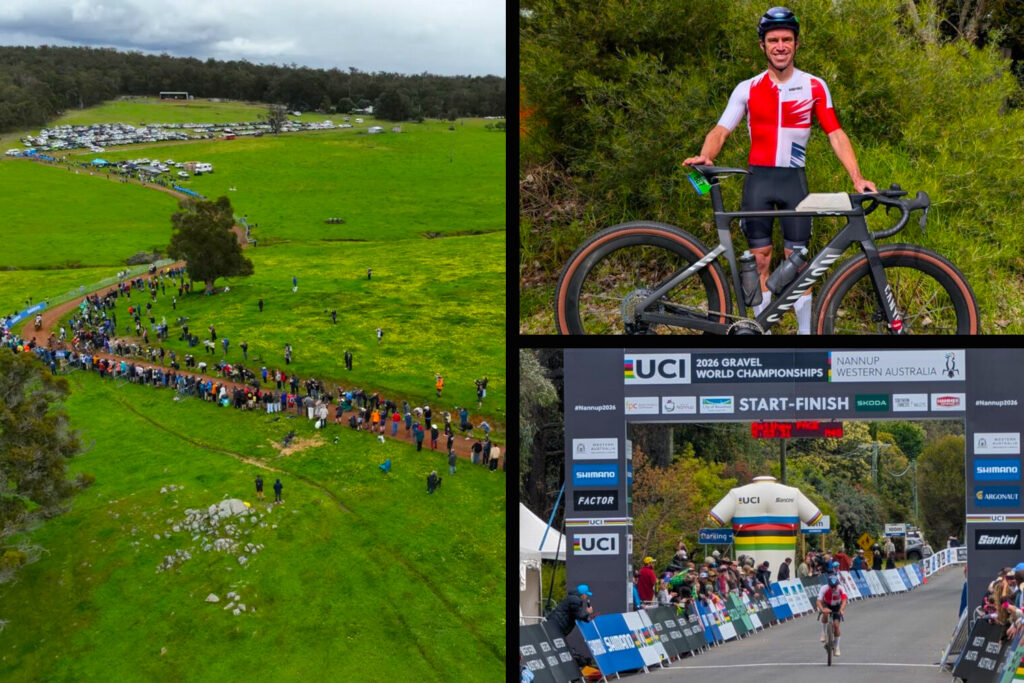

My journey to Western Australia was almost as turbulent as the course profile itself. After crashing during practice at a UCI qualifier in Sardinia back in April and being taken to hospital by ambulance, I decided to give qualification another shot at The Gralloch, eventually securing the final qualifying spot despite a major mechanical.
I rolled the dice once more and made the trip to Western Australia, driven by something deep inside telling me I should give it a go. With a demanding 142km course, more than 3,000 metres of climbing and a host of current and former professionals in the mix, I knew I was facing a serious challenge.
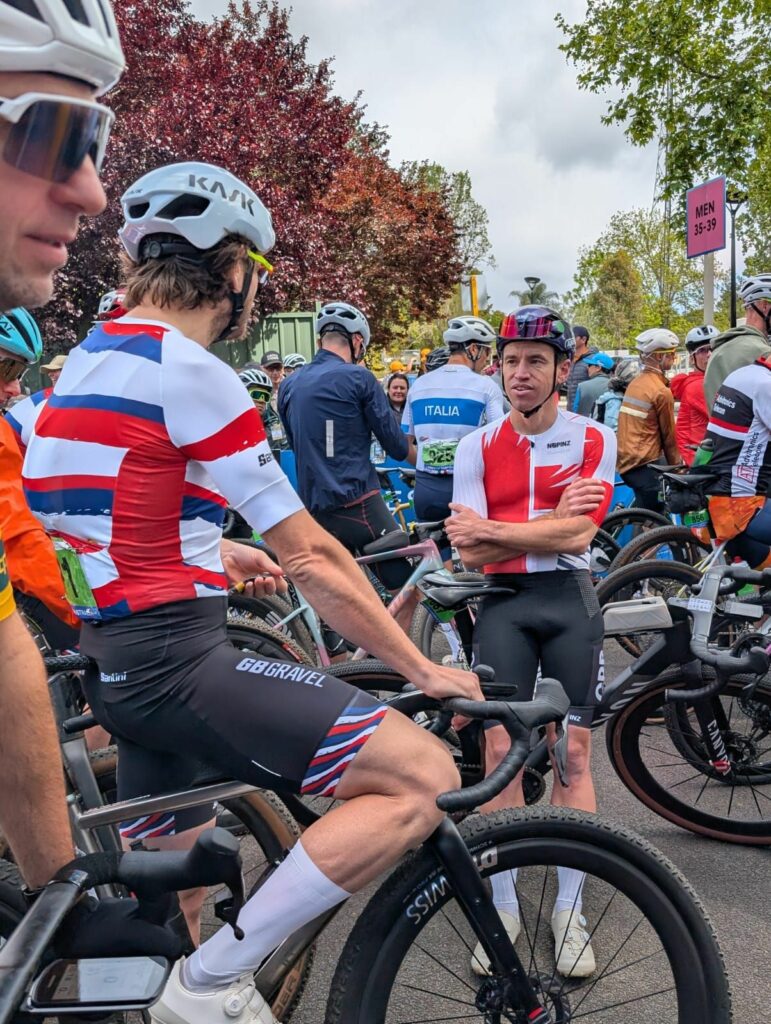
My ambitions for the worlds were realistic. With a field of just under 100 riders in my age group, the primary goal was to finish. A place in the top half would have been a welcome bonus, but simply making it to the start line felt like an achievement in itself.
Even so, I had big doubts in the build-up. The night before the race, I even told my wife that I wasn’t feeling particularly positive about how I might perform. I’m usually optimistic, but I felt nervous, dreading the possibility of something going badly wrong and turning the whole trip into a wasted effort…
From The Gralloch to the UCI Gravel World Championships
Adding to my doubts, my power meter had stopped working after the flight to Australia, leaving me without the numbers I usually rely on to judge my effort and give me an idea of how things were lying.
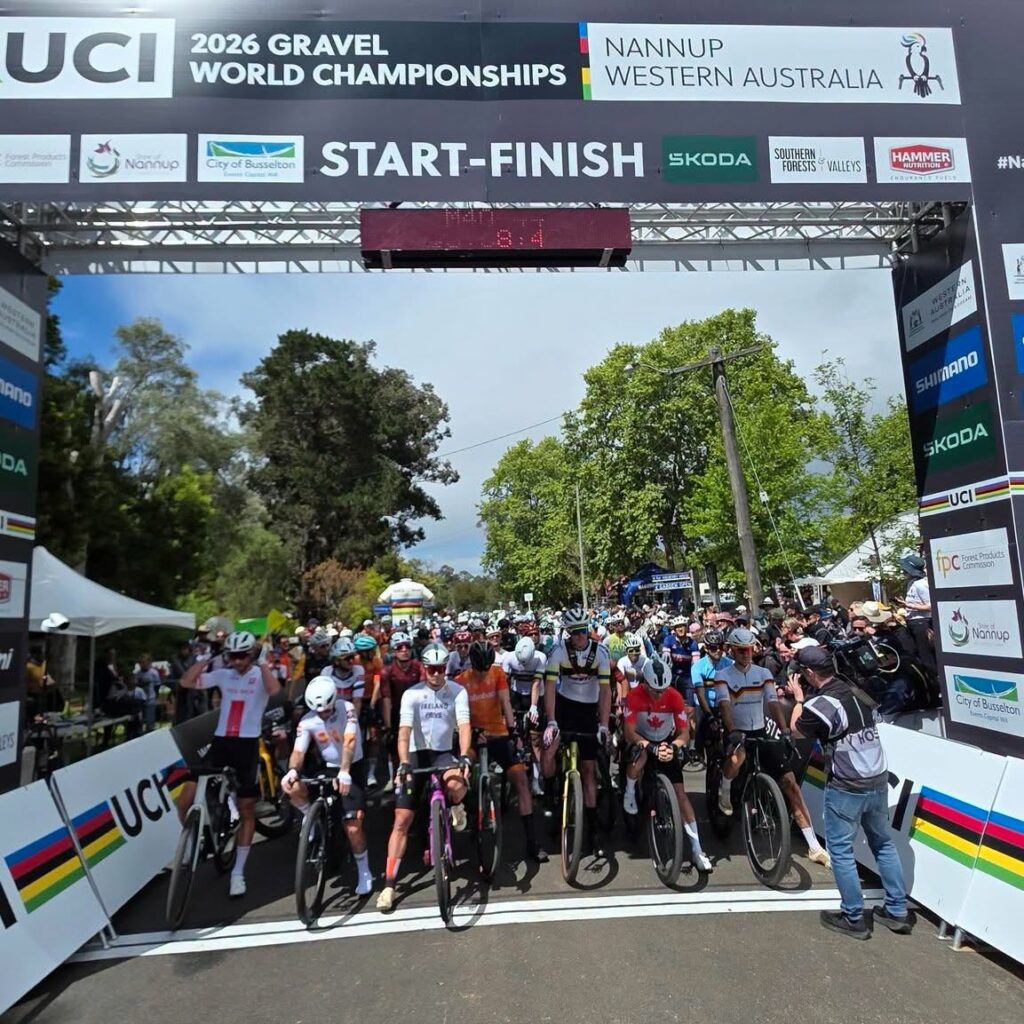
I lined up behind former professional rider Nico Roche, the reigning 2025 world champion and current European champion, and wondered how long it would take before I watched him disappear into the distance.
On paper, the opening 10km looked flat – in reality, it was anything but. Thankfully the pace was manageable, and the experience of the riders around me was immediately apparent. There was no wheel rubbing, shouting or jostling for position, just a controlled start as everyone settled into the race.
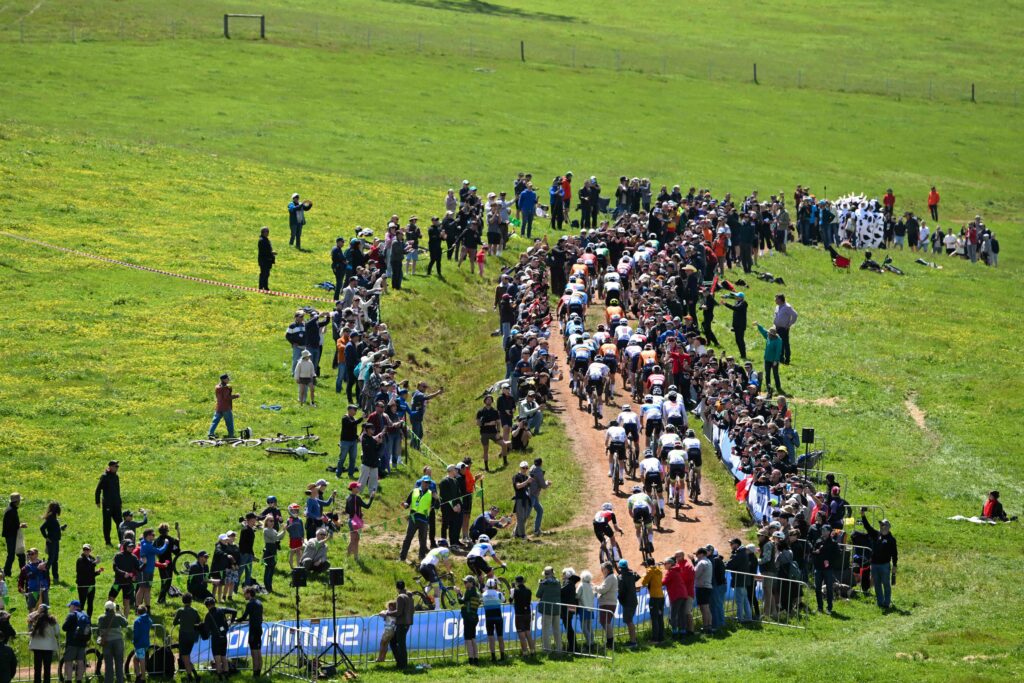
Things began to change once we left the tarmac. Around 15km in, the first major climb split the group, and a small selection began to pull away. I was climbing well and crested the summit only a few hundred metres behind, in the second group. The descent that followed was one of the roughest and most technical of the entire course. Descending is one of my strengths, but I still surprised myself in closing the gap and rejoining the front group of around eight riders.
Johnny Hoogerland, who would eventually win my age category, looked back as if to say: “Who the hell is this guy?”
He had a point! I wasn’t about to do anything stupid trying to hold the wheel of a rider of his calibre, and when the pace lifted on the second major climb, I sensibly let the group go.
Finding a rhythm in the forests
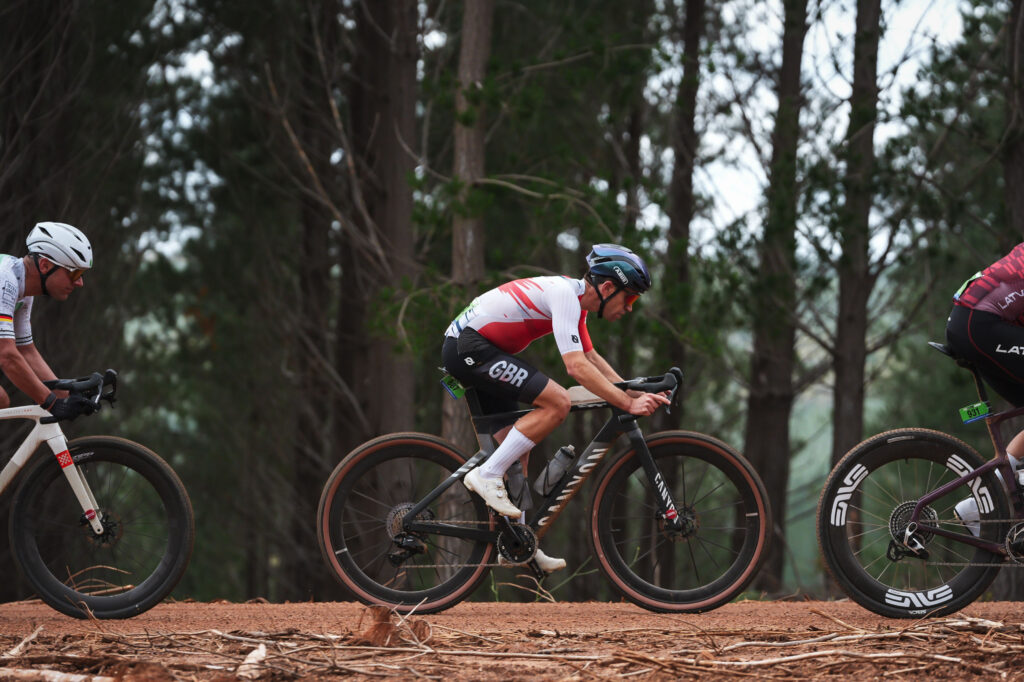
For the next 30km or so, I rode alongside an Italian and a Latvian rider. We didn’t have much to say to each other, but both were strong riders on the climbs and descents. The Italian rider, Giovanni, seemed the strongest, or at least the most willing to take a turn on the front and keep the pace high.
The terrain continued to rise and fall, although many of the descents were less technical than the opening section. Here, the challenge was more about choosing a good line and carrying speed, with several stretches requiring you to keep pedalling all the way down. Then came the first fan zone…
View this post on Instagram
Riding through as a trio, with spectators lining both sides of the course, was an incredible experience. The noise and enthusiasm made it feel every bit like a WorldTour race, despite being deep in the forests of Western Australia. There was even a group of spectators dressed in inflatable cow suits, which was a reminder that a great race is about more than the course itself. The people who turn out to support it can make an enormous difference, and the crowds here were already making the event feel special.
At around 60km, the course pitched upwards for what felt like the longest climb of the day. Akihiro Takaoka, the leading rider in the 45–49 category who had started five minutes behind us, came sailing past. He seemed to float up the climb while the rest of us were working considerably harder.
The two riders I had been with were coping better than I was, and I could feel the first signs of cramp in my legs. With less than half the distance covered, it was a worrying sign.
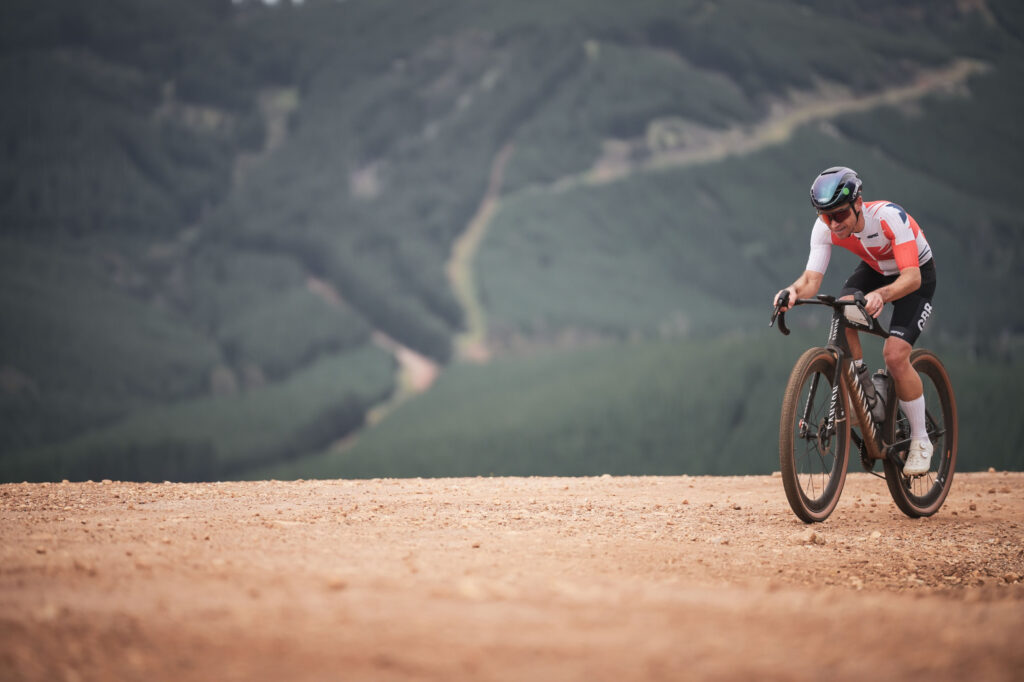
The loose pea gravel was a particular problem on the climbs. Traction was limited, making it difficult to get out of the saddle without spinning the rear wheel. Standing to climb is my natural preference, but here it often wasn’t an option, although I had at least done my homework and tried to improve my seated climbing a bit over the summer.
I also had little idea of my position. Riders from earlier starts were scattered ahead, while competitors in older age groups were coming through from behind. With everyone mixed, trying to calculate where I stood in my own category was largely pointless.
Racing alone, and the challenge of feeding
For much of the next 20km, I was riding alone across a gently undulating upland section, doing my best to maintain my nutrition and hydration strategy of around 90g of carbohydrates per hour.
One aspect of the race that proved challenging was the location of the feed stations. Out of the total 142km course distance, I was effectively self-supported for 119km of it. Although other feed stations were available, they were positioned in places that required a considerable drive to reach, meaning supporters needed to plan carefully and, in practice, some riders required two separate support crews. I could have stopped to refuel, but I knew the risk of dropping a group was significant, so I planned to avoid that potentially happening. For a world championship event, that was a significant logistical challenge, particularly for those without a large support team behind them.
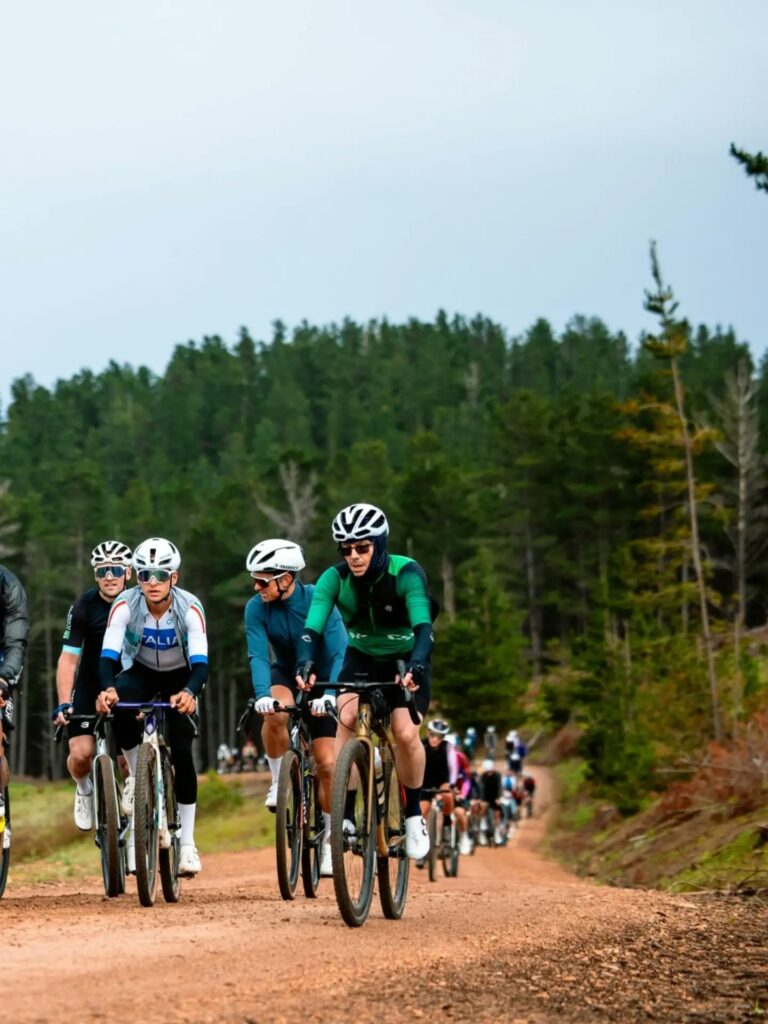
Just after the 100km mark, shortly before the course turned back towards Nannup and the final major climb, a group of riders from my category caught me. I was relieved not to have to tackle the 10km road section into a slight headwind alone, so I settled into the group. The pace was steady, and everyone seemed to understand what lay ahead. There was little need to discuss tactics; we all knew the final climb was coming, and I suspect everyone was considering when to make their move.
Then we reached the feed station…
It was chaotic, with riders and supporters jostling for position and people shouting in every direction. I had run out of fluid and knew I needed to grab a bottle. I spotted my wife ahead, but she hadn’t seen me. I shouted repeatedly, but it was only when I was about a metre away that she finally spotted me.
Thankfully, I grabbed the bottle I desperately needed. A few metres further on, my daughter handed me some energy chews, providing a much-needed boost before the final section.
Nannup turns out in force
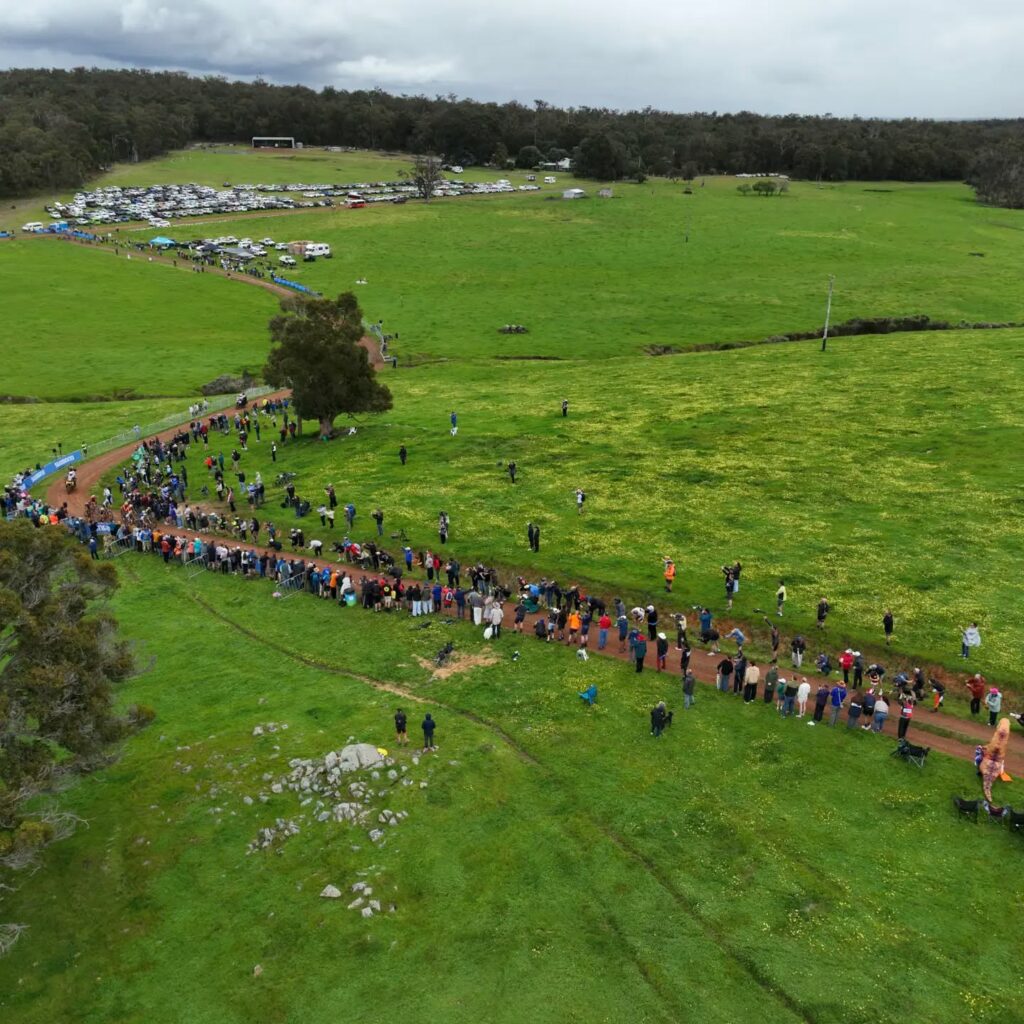
The combination of the feed station and the fan zone on the outskirts of Nannup was simply incredible. For around a kilometre up the Folly Climb, spectators lined both sides of the course, cheering every rider through. By this stage, it was the age-group competitors rather than the elite fields passing through, but the enthusiasm hadn’t diminished.
Considering how remote Nannup is, the number of people who had travelled to this small Western Australian town to watch the racing was remarkable. The crowds made every rider feel important, regardless of whether they were competing for a world title or simply trying to reach the finish. It was one of the most memorable parts of the entire race, and a huge thank you is due to everyone who came out to support us.
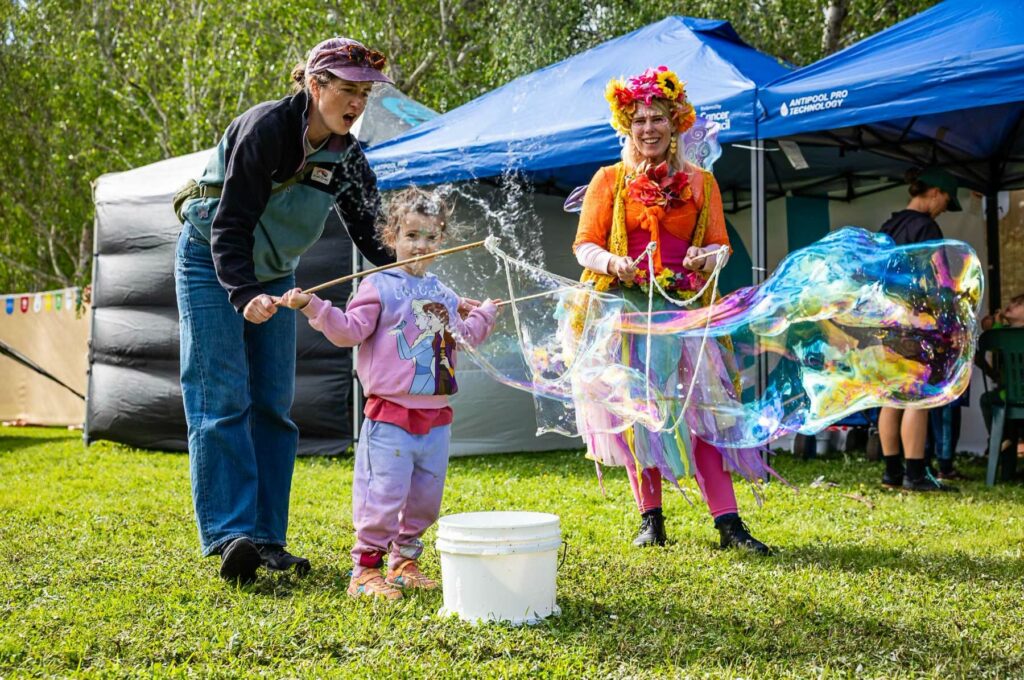
It was also an event that catered brilliantly for families, with a dedicated kids’ zone and a well-attended expo area providing plenty to see and do away from the racing. That made a real difference, turning the world championships into more than just a race weekend, and giving supporters of all ages a reason to get involved. For an event in a relatively remote location, creating that welcoming atmosphere and making it enjoyable for the whole family was another example of how well Nannup got the details right.
With around 25km remaining, there was still one substantial climb to negotiate, along with a series of smaller undulations. The final climb started steeply, and although I wanted to push on, reality soon intervened. My legs were screaming. Every time I tried to push beyond my limits, a cramp crept in. At this point, the race had become less about gaining places and more about minimising losses.
A Canadian rider caught me around 10km from the line. I decided to give it one last effort on a short climb of around 500 metres, just to see what I had left… and both legs cramped almost immediately!
Better to have tried and failed than never to have tried at all, I guess. The Canadian didn’t appear to be having the easiest time either, as he failed to open a significant gap straight away, but he gradually pulled away on the final climb.
A sketchy descent, and a result beyond my expectations
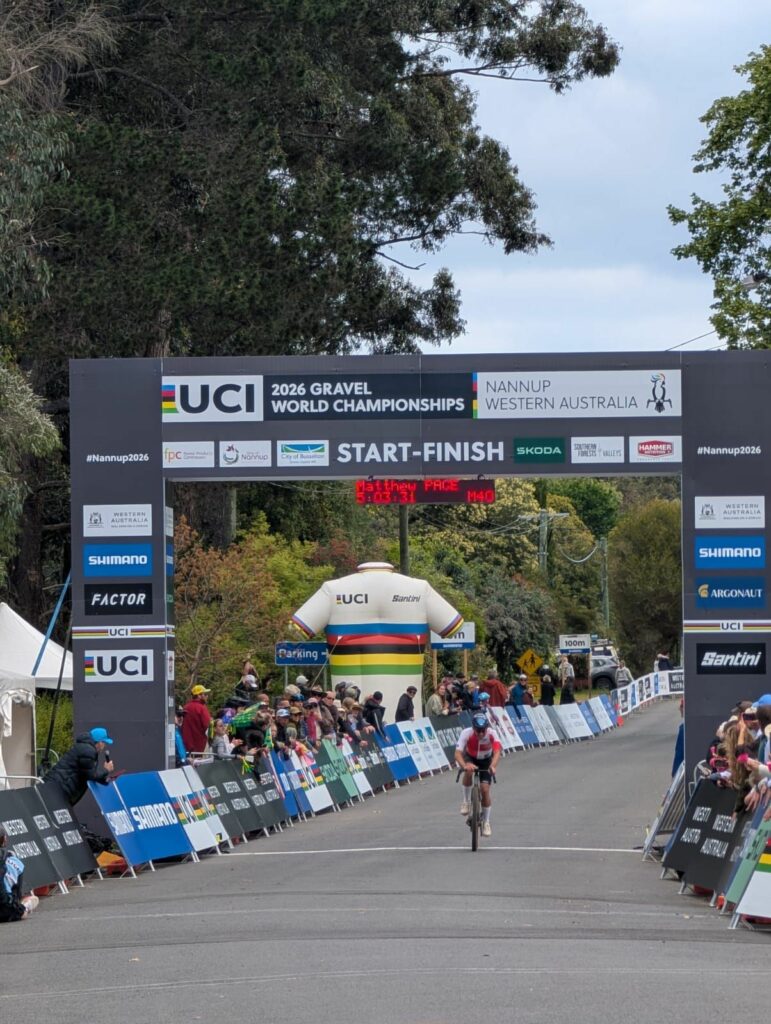
As the final descent approached, including the corner where Rosa Klöser had crashed in the women’s race, it was easy to see how it had happened. The fast approach led into a steep, long, off-camber right-hander, where grip was almost non-existent. I ran wide through the corner but managed to stay upright, and soon I was onto the final 2km of tarmac back into Nannup town centre.
Looking behind, there was nobody in sight. I had made it.
I crossed the line in 5:03:33, finishing 18th in the 40–44 category and as the second British rider. GCN’s Simon Richardson produced an impressive performance, finishing sixth.
My result was considerably better than I had expected. Even after losing places following my early spell near the front, I had given everything I had, and I couldn’t have asked for much more.
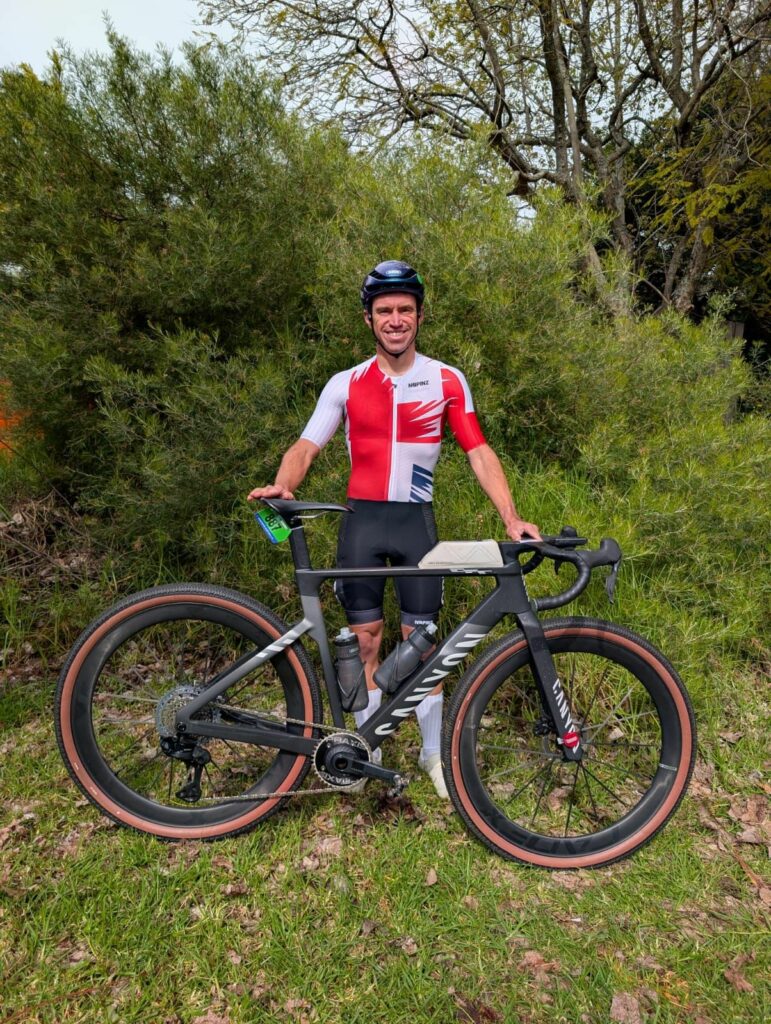
The result was a bonus. The bigger achievement was completing a world championship course that tested every aspect of gravel racing, from climbing and descending to pacing, fuelling, and managing the inevitable low points.