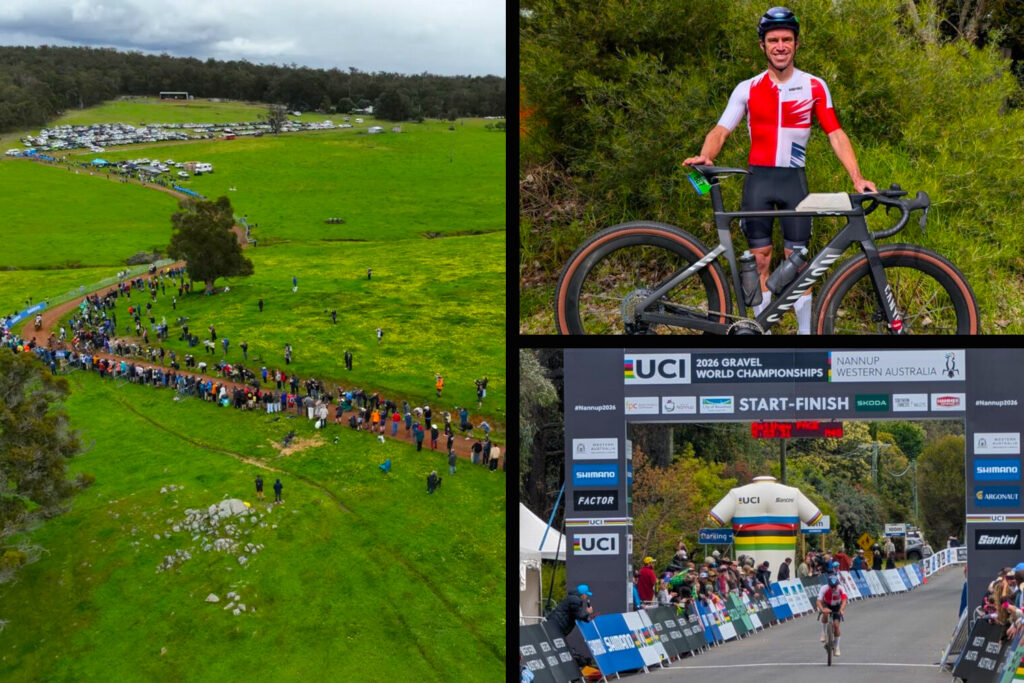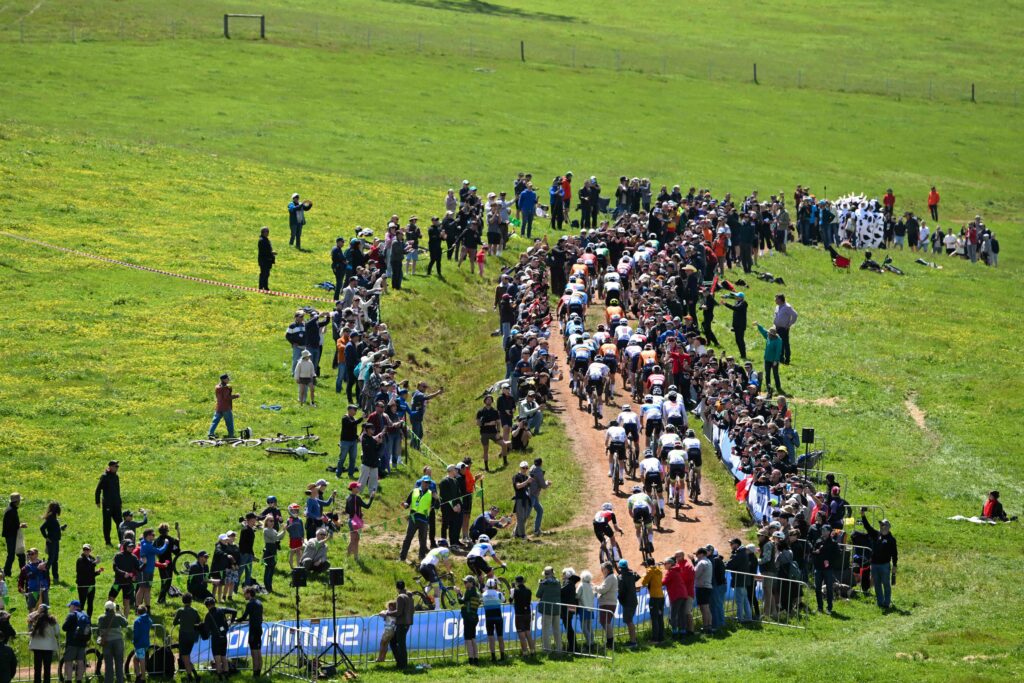

When the opportunity came to compete in the UCI Gravel World Championships, I started researching the course and surrounding area to work out which bike, equipment, and nutrition would be best suited to the event. Having completed the race and finished 18th in my age category, I can now look back at what worked, what I changed, and why I made those decisions….
The bike
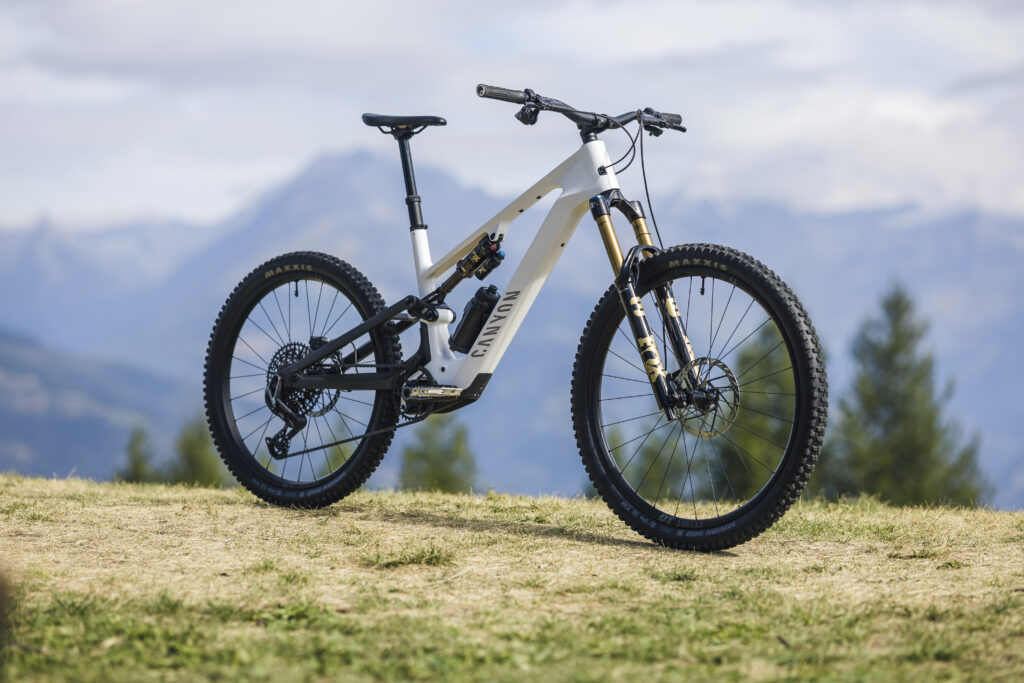
Choosing the Canyon Grail CFR Di2 was something of a last-minute decision, but having recently reviewed the latest model, I felt it would make a good platform for the course as it’s designed with racing and aerodynamics in mind. On only my second ride on the Grail, I used it for the British Cycling Gravel Championships. Although the result wasn’t what I had hoped for, the bike had demonstrated its potential.
> Review: Canyon Grail CFR Di2
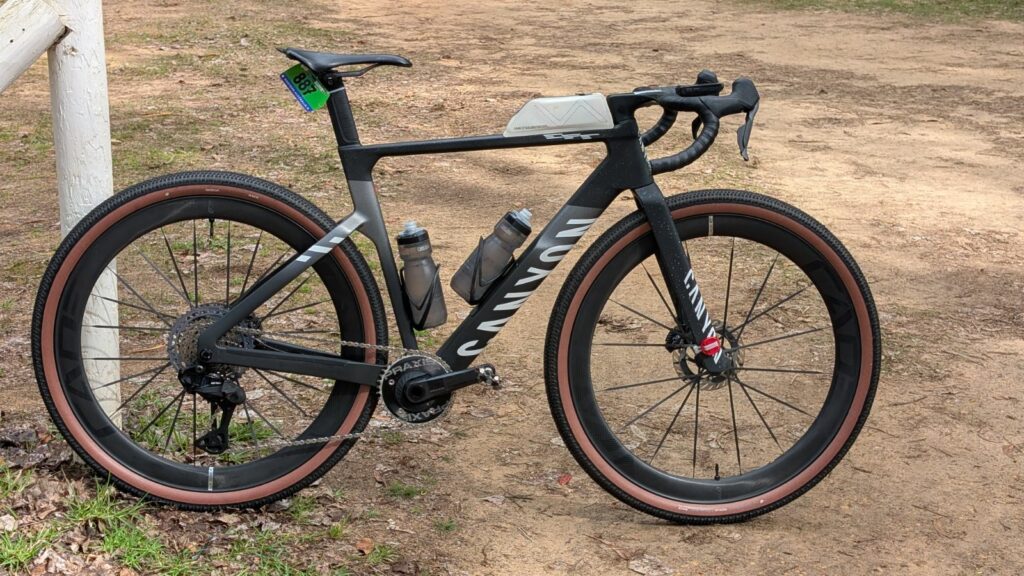
Having spent several weeks riding and testing it since that event, I decided to make several changes before travelling to Western Australia. Some were down to personal preference, while others were intended to improve performance.
The aspects of the Grail CFR I liked most were its stability and confidence on descents, along with the ability to run tyres up to 57mm (2.25in) wide. The standard 45mm Schwalbe G-One RS is a superb race tyre, but specifying that width seemed at odds with one of the biggest selling points of the new frame.
One-piece integrated cockpits look neat and may offer marginal aerodynamic benefits, but changing the fit can be difficult on some bikes, with manufacturers often providing limited options for different stem and handlebar dimensions. Canyon has addressed this with its PACE system, allowing me to run a relatively narrow 390mm handlebar.
If I could request a different frame size, I would probably drop down to a small and fit a longer stem than what comes as standard. This would give me a lower handlebar position while retaining the reach I prefer. However, I managed to find a comfortable position on the medium that worked well throughout the race. Canyon recommends an XS for my height, although I suspect a small would suit me better in terms of overall fit and riding position.
Component changes and upgrades
The Hutchinson Touareg Race impressed me during recent testing. Available in 45mm and 50mm widths, I took both options to Australia before settling on the 50mm version.
Although the Nannup course wasn’t as rough as some British gravel events, such as The Gralloch, there were still some challenging sections, including short stretches of corrugated gravel, and punctures were also an issue for some riders.
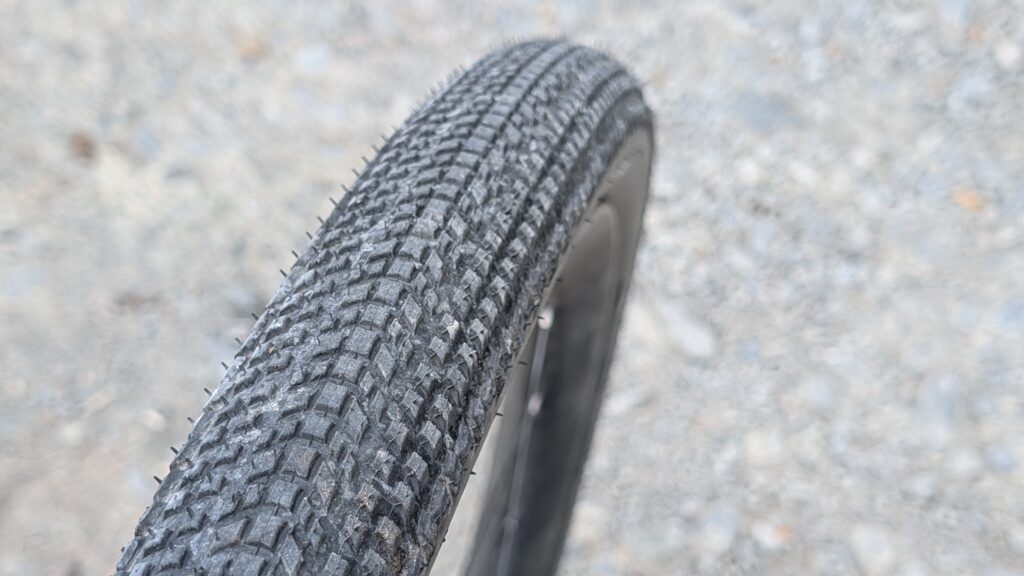
Tyre pressure is always a personal choice, but I opted for 25psi (1.72 bar) at the rear and 23psi (1.58 bar) at the front. These pressures were slightly higher than I would typically run, with the aim of reducing the risk of impacts between the rims and tyres, and with rain the day before, it had made the pea gravel far less difficult. I was happy with the choice and, even with hindsight, wouldn’t change anything.
One change made purely for personal preference was the saddle. I swapped the Fizik Vento Argo X1 for my favourite, the Selle Repente Artax GLM. The Fizik is relatively heavy, and I also find its ride rather harsh. The Artax GLM improves on both counts, thanks to its highly flexible carbon shell and lower weight of just 164g.
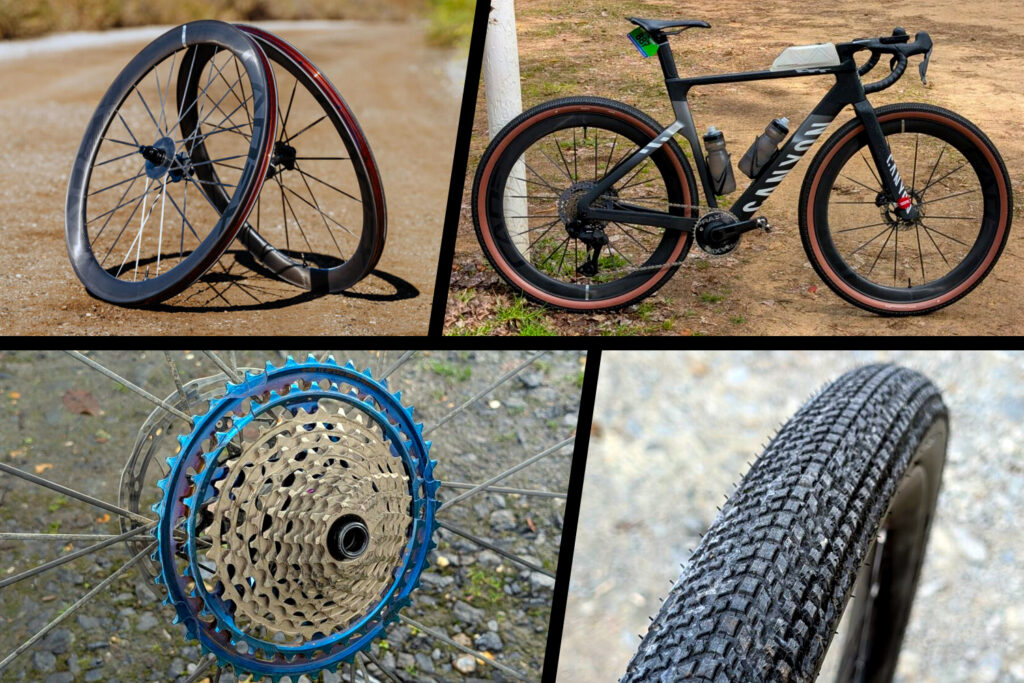
Another change was to replace the standard Shimano GRX chainset. Canyon and Shimano are among the manufacturers offering shorter crank options, but I prefer a 155mm length, which isn’t available with Shimano’s GRX chainsets. Changing the crankset also gave me the opportunity to adjust the gearing to better suit the demands of the race.
I used a Praxis Zayante 155mm crankset paired with an XCadey spider-based power meter featuring a five-arm 110BCD spider and a Praxis Aero 42-tooth chainring. Unfortunately, the XCadey power meter stopped working after I put it into transport mode for the flight to Australia, meaning I couldn’t record power data during the race. Fortunately, I still had a heart rate monitor.
My heart rate data for the event was as follows:
- Maximum heart rate: 182bpm, compared with my personal maximum of 185bpm
- Average heart rate: 157bpm, around 85% of my personal maximum
- Ride time: 5 hours, 3 minutes, 33 seconds
I don’t generally train using heart rate zones, so I don’t have established zones to put these figures into context. However, the average heart rate gives an indication of the sustained effort required throughout the race.
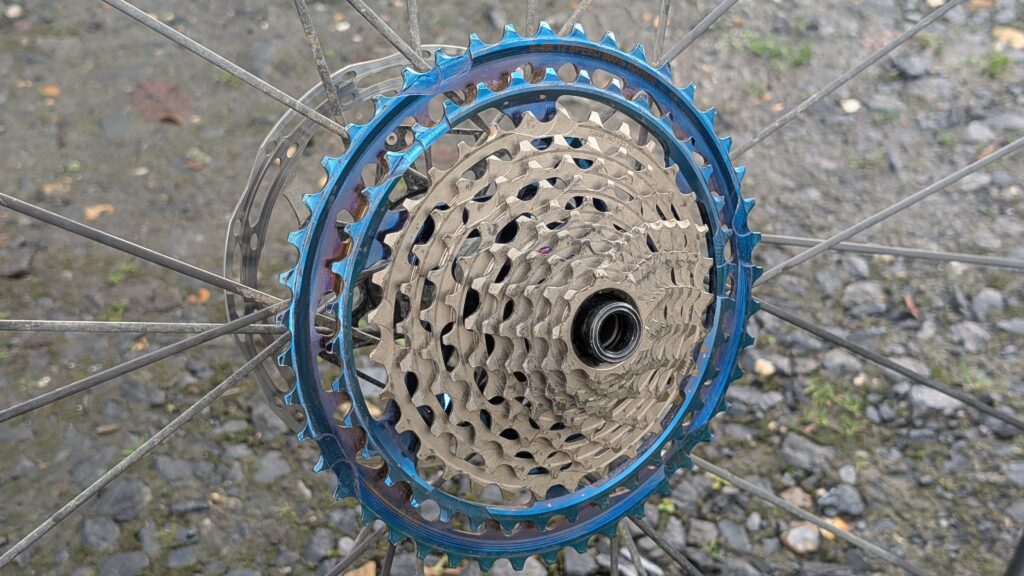
For the cassette, I fitted an e*thirteen Helix Race 9-45-tooth. This offered the same overall range as Shimano’s 9-45-tooth XT cassette, although the individual gear ratios differ slightly. The e*thirteen cassette provides closer spacing between some gears while retaining a similar overall range
With no previous experience of the course, I had little more than the elevation profile to guide my gearing choice. In the end, it proved almost ideal. I used both the smallest and largest sprockets, although I spent more time in the 9-tooth cog than expected. A 44-tooth chainring might have worked, but there were some steep climbs where the lower gearing was welcome. Overall, this was another change I was glad to have made.
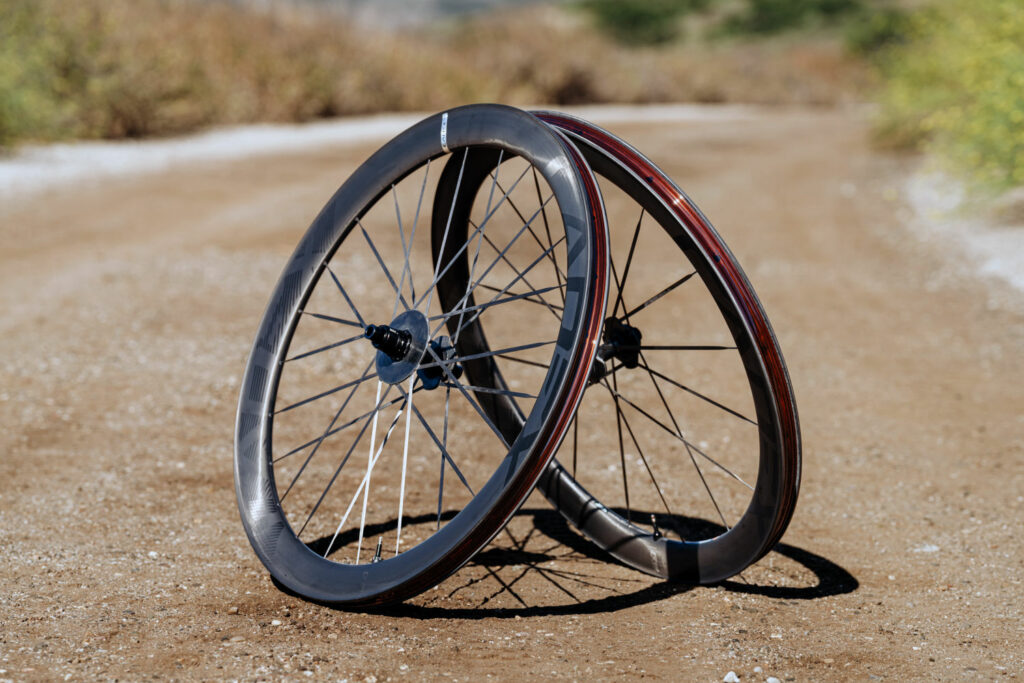
The wheels were the other major part of the standard Grail CFR specification I wanted to change. While the DT Swiss GRC 1100 wheelset offers reasonable performance, the 1,600g weight is relatively high for a race-focused build, and a course with well over 3000 metres of elevation. I’m currently testing the Cadex MAX GXR Wheelsystem, which combines a 50mm rim depth and 25mm internal width with a claimed weight of 1,335g for the pair. A full review will follow, but so far the wheels have been impressive, delivering a remarkably responsive ride.
The Grail CFR also features internal frame storage. The storage door incorporates a multi-tool, CO₂ inflator, and 16g cartridge, but I wanted to carry enough equipment to deal with a puncture without relying on outside assistance.
I managed to fit two Schwalbe Aerothan TPU inner tubes suitable for the 50mm tyres, a Prestacycl Prestaflator Alloy CO₂ pump, a second 25g CO₂ cartridge, TPU patches, and a Prestaflator tyre boot. The combination pump and inflator gave me the option of manually inflating a tyre if something went wrong with the CO₂ system. Punctures remain one of the most common mechanical problems in gravel racing, so having the ability to repair and reinflate two tyres was a priority.
Clothing
The bike tends to attract most of the attention, but clothing can make a significant difference when performance matters.
For an age-group World Championship, riders must wear their national cycling colours. Unlike elite riders, who must wear the exact kit supplied by British Cycling, age-group competitors have more flexibility and can choose a custom design, provided it uses their national colours.
Having recently tested the NoPinz Sonic Gravel race suit, I was impressed by its fit and storage capacity. NoPinz has a custom garment department, so I opted to purchase its Sonic Gravel suit in Great Britain colours.
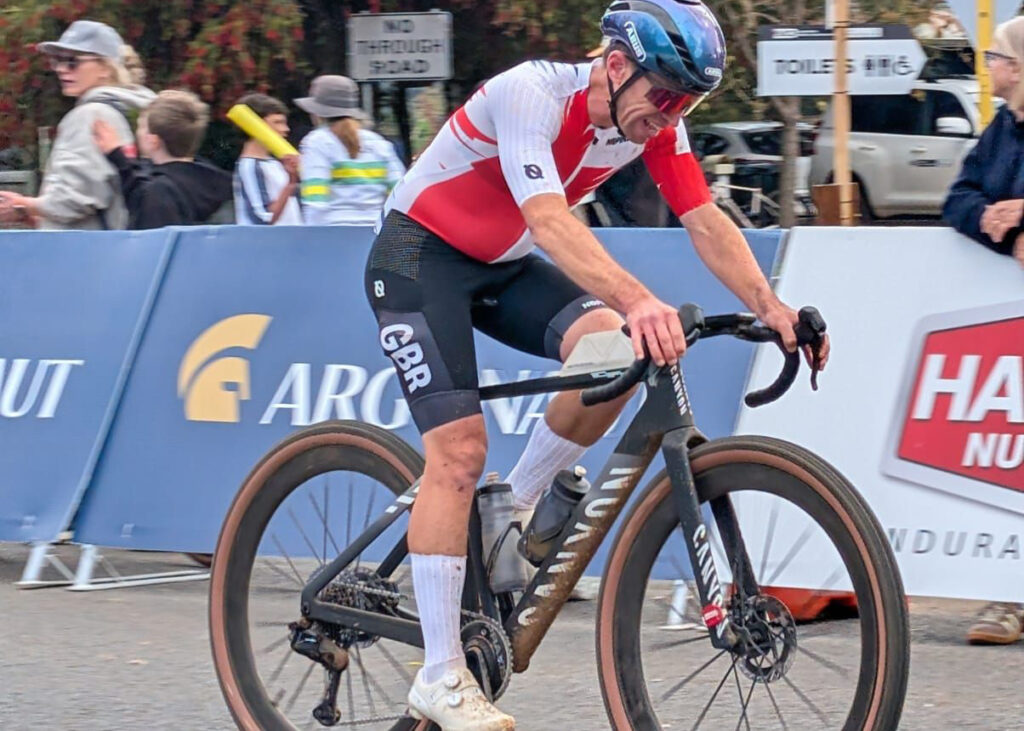
It proved an excellent choice, offering the close fit of a skinsuit alongside three generously sized rear pockets and two additional pockets on the legs. That extra storage came in particularly useful for carrying nutrition and, importantly, rubbish. The amount of litter dropped by riders on the course was astonishing, despite it being against the race rules. Littering is one of my pet hates in racing, so I made a point of carrying all my rubbish and only disposing of it at the designated litter drop point. The Sonic Gravel suit’s multiple pockets made it easy to keep one specifically for empty gel wrappers.
My helmet was an Abus Gamechanger, an aerodynamic design that I find extremely comfortable and sufficiently well-ventilated for warmer conditions. On race day, the temperature wasn’t really an issue, but it remains a good all-round option.
I wore ASSOS Bolide aero socks, complete with the small fabric strips that hang from them. As I noted in my review, these are held in place using Tensospray adhesive spray.
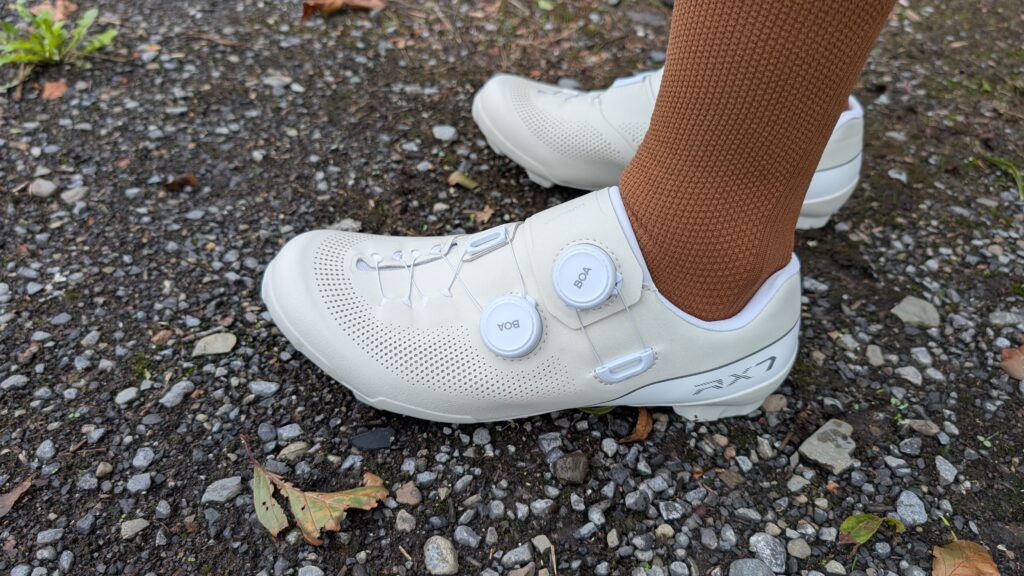
My shoes were the Shimano RX710, which are currently on test. They use Shimano’s updated Dynalast 2.0 fit system, which differs from previous Shimano designs by providing considerably more volume in the toe box and three width options. They aren’t the stiffest or most adjustable shoes available, but they are lightweight, and I’ve become a fan of the pontoon-style cleats they use.
Conditions were just warm enough for me to ride without gloves, which is my preference when possible. The final item was a pair of Uvex Flow glasses. Having recently tested them, I knew their fit worked particularly well for me, providing clear vision without the frame obstructing my view.
The lenses also performed well in the variable conditions, which included sunshine, cloud, and plenty of shade beneath the trees. I didn’t need to remove the glasses at any point, and they didn’t steam up during the race.
Fuel and nutrition
Fuelling is one of the most important considerations in a long, high-intensity race. Maintaining a consistent intake of carbohydrates helps preserve energy levels and delay fatigue, particularly when the effort lasts several hours.
During training, I’d experimented with very high carbohydrate intakes, using specialist products designed to deliver more than 120g of carbohydrate per hour through a higher fructose percentage than most typical energy drinks. Unfortunately, I couldn’t get this approach to work reliably in the time available before the event, so I returned to a strategy that had worked well for me in the past.
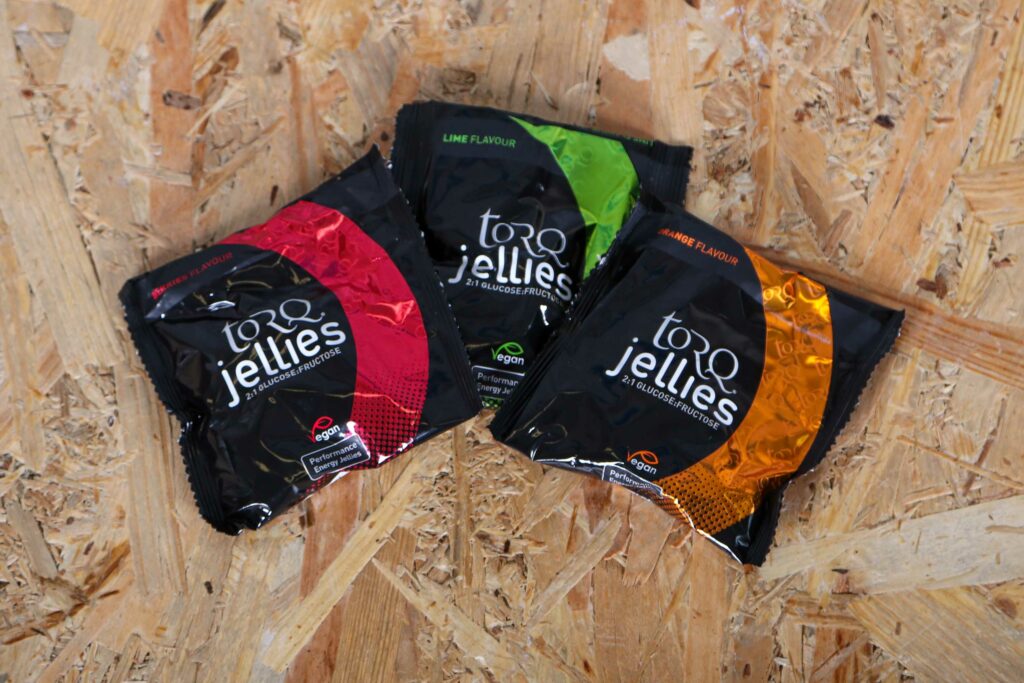
My main source of carbohydrates was Torq energy gels, and a few packs of the brand’s energy jellies. Both provide 30g of carbohydrate per serving, so consuming three servings per hour would deliver 90g.
I also carried two bottles containing a combined 1.5 litres of fluid and 120g of carbohydrate. Given the cool conditions, I expected to need at least one water refill and planned to collect a second bottle at the final feed station. I intended to take on an additional bottle there, containing electrolytes and caffeine but no extra carbohydrate.
In the end, I was pushing the limits of my hydration plan and had run out of fluid by the 119km feed station. However, I didn’t need to refill, finishing the five-hour race having consumed 2.2 litres in total. I stuck rigidly to my nutrition plan, which gave an average of 114g of carbohydrate per hour.
With a second pit crew available, I would have taken on more fluid, but the location of the feed stations limited my opportunities to do so. I managed to get by OK for this event, but it is the one thing I wish I had been able to do.
Final thoughts
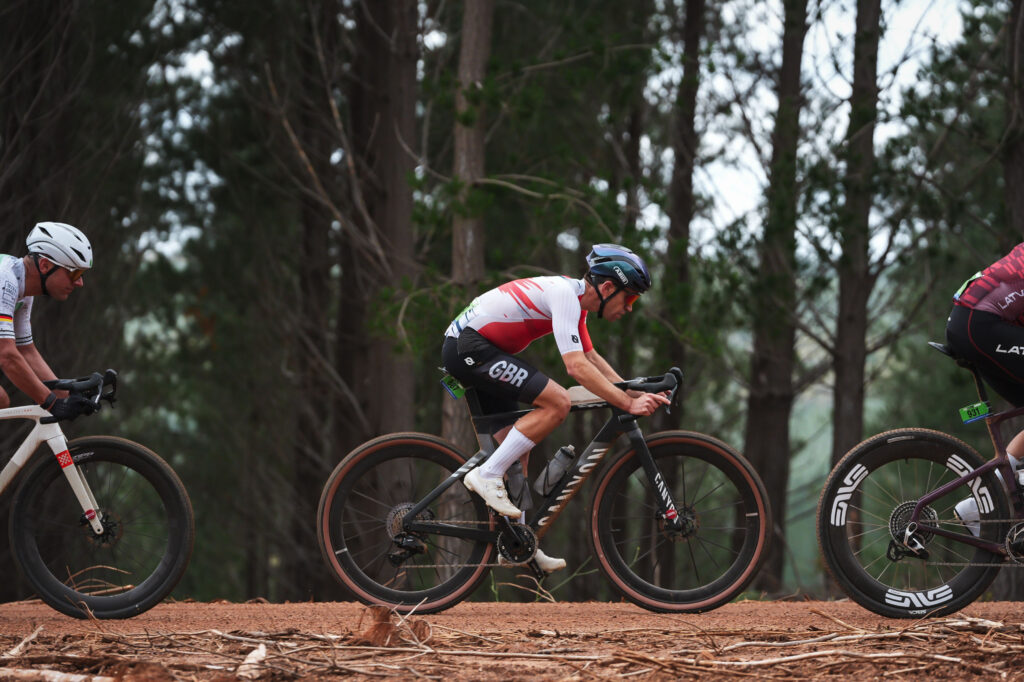
Overall, I think my equipment choices worked exceptionally well for the course and conditions. The Canyon Grail CFR proved its worth, although it required several changes to get it to a specification that suited me. I’ve covered many of those components in the individual reviews, and some of the decisions will inevitably come down to personal preference.
What works for me won’t necessarily work for everyone, but the combination of research, testing and careful planning paid off. Having finished 18th in my age category at the world championships, I’m pleased to say that, looking back, there is very little I would have changed.

-300x199.jpg "“He wants bikes in traffic lanes. Give him what he wants”: Cyclists urged to “slow every street down to bicycle speed” and ride in middle of lane amid premier’s war on cycle paths + more on the live blog")