


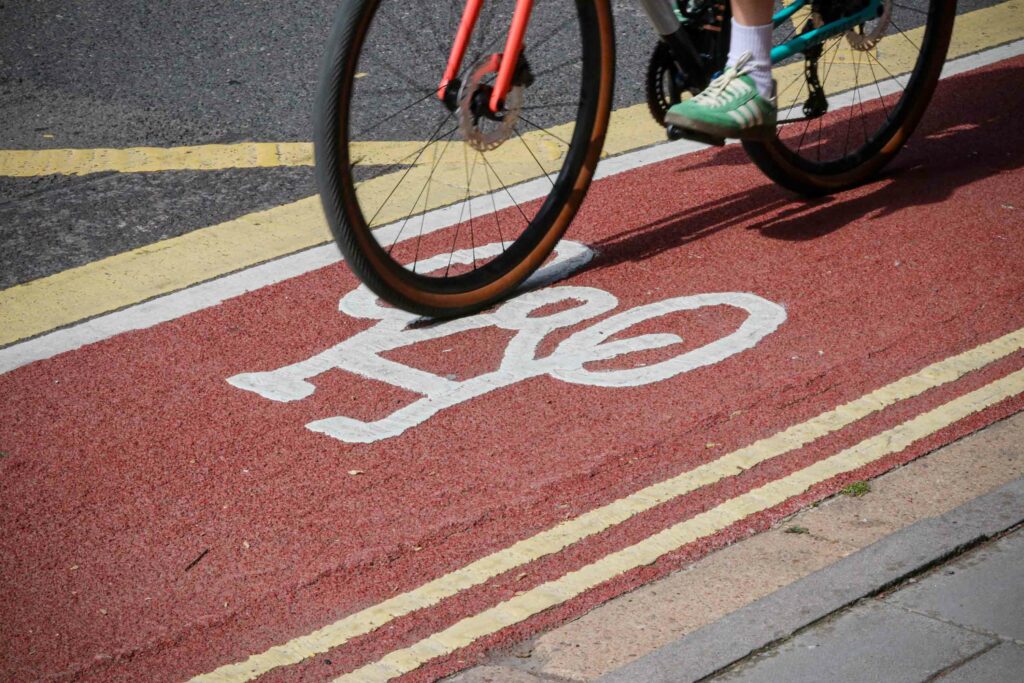

If you have ever spent any time reading on social media about a new cycle lane coming to a road near you, then you will probably be aware of just how vitriolic the backlash to active travel infrastructure can be online. But does it represent how people actually feel about cycling? Researchers from Cardiff University may have the answer and have just published a new study looking into online cycling discourse via analysis of 36,000 posts on social media. So, why do cycle lanes get so much stick online?
Well, starting with that question, while criticism of cycling infrastructure and wider active travel schemes is often particularly noisy, the new study published in Travel Behaviour and Society suggests that from analysis of 36,696 UK tweets about cycle lanes and LTNs over a four-year period between March 2018 and June 2022, the majority are actually positive.
That’s not to say there were not spikes in negativity, the Cardiff University academics noting more negative sentiment around cycle lanes online in the summer of 2020, for example, when the government announced the emergency active travel fund to rapidly install pop-up bike lanes and other measures to improve cycling and walking in response to the Covid pandemic. However, the point remains, over the observed period, there were more positive tweets than negative ones, even if outspoken criticism can give the impression of more widespread opposition.
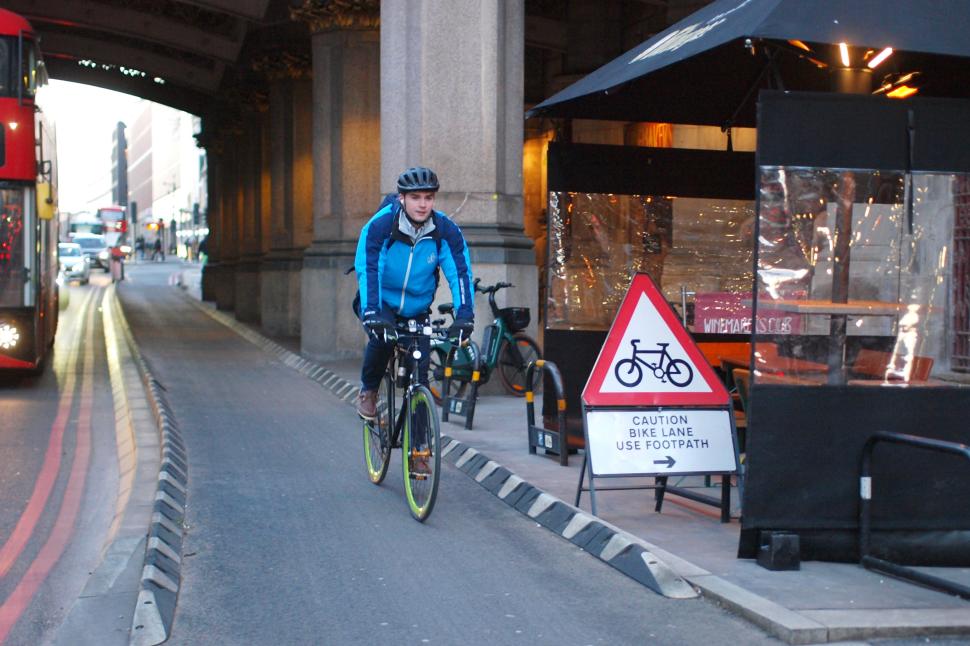
While that is notable, perhaps the most interesting part of the study was when looking at the analysis of why people criticise cycle lanes on Twitter.
Sharing their study in a follow-up piece, authors Wouter Poortinga, Dimitrios Xenias and Dimitris Potoglou wrote: “So what are the key lessons of this research? First, visible opposition is not the whole story. Protests and headlines may give the impression that cycle lanes are deeply unpopular, but most people – including both drivers and cyclists – support new infrastructure and even traffic restrictions, as long as they are well designed and involve only modest changes. Parking is a sensitive point, but overall support for change is broader than the noise suggests.
“Second, the strongest opposition comes from those who see new cycle lanes and restrictions as an attack on their freedom to drive. This group is relatively small but may be among the most vocal. Their concerns need to be acknowledged, but also reframed in light of the reality that limited road space must serve everyone: drivers, cyclists, and pedestrians alike.
“Finally, it is not just about what gets built, but also how it is introduced. Much of the online debate considered in our social media study focused not on the principle of cycle lanes or low-traffic neighbourhoods, but on whether local people felt they had been consulted properly. Listening to communities can make the difference between a scheme being welcomed as a local improvement or rejected as a top-down imposition. This should involve everyone and not just the loudest.”
The researchers suggested that the majority of cyclists and drivers actually agree on the principle of cycling infrastructure, but splits, criticism and opposition tended to centre around how projects are implemented, and by who. The study cited ‘politicisation’ of active travel, whereby critics may link infrastructure to the council or politicians supporting projects, likewise perceived lack of public consultation and comments about cycle lane design were also common in negative tweets.
Another observed pattern was negativity often moving from the subject of cycle lanes onto the behaviour of drivers, cyclists and pedestrians, for example, drivers parking on cycle routes, pedestrians stepping in, or cyclists jumping red lights or not wearing hi-vis clothing.
The researchers even suggested follow-up research could investigate “how rule-breaking behaviours influence perceptions of other road users and of the infrastructure itself, particularly in relation to safety”.
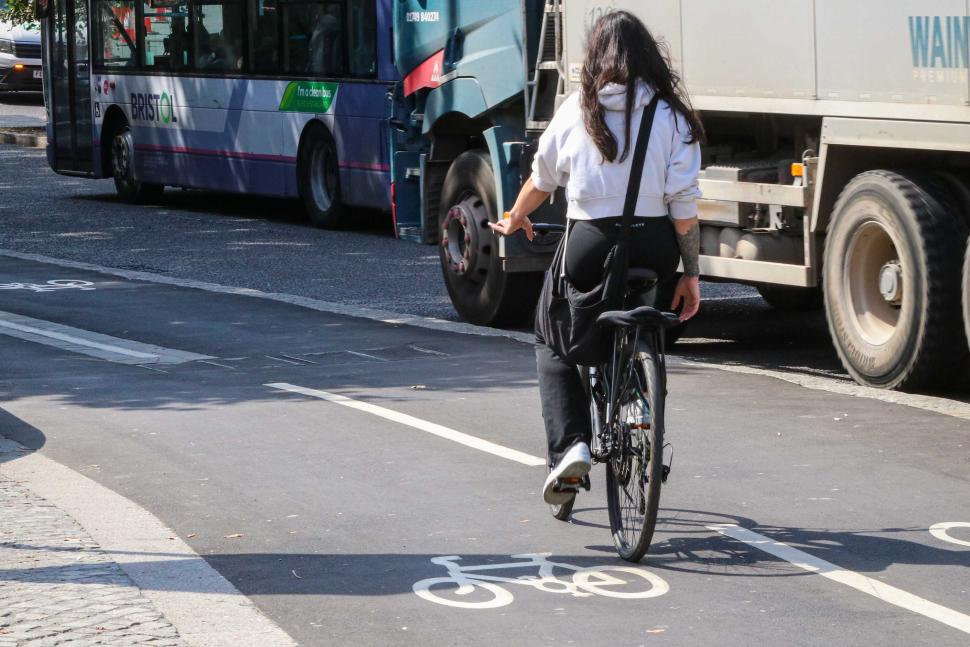
One area of surprise, the study stated, was that discussion rarely addressed broader benefits of active travel, such as climate change mitigation or public health improvement. The analysis suggested this infrequency points to Twitter discussions tending “not to consider the broader ‘big picture’ rationale for such infrastructure” and instead being primarily focused on “individual experiences and localised impact”.
> Cycling a couple of miles to work enough to boost heart health by as much as 30%, new study finds
In their conclusion, the researchers suggested the “limited connection” between cycling infrastructure and broader issues remains “an opportunity for improving communication strategies”.
By aligning messaging with larger societal benefits, the researchers suggested policy makers and local authorities may be able “to foster greater public support for street space interventions such as cycle lanes and LTNs”.

“Why do some people oppose cycle lanes and traffic restrictions so strongly?” they asked. “Part of the answer lies in identity. Our study found that those who strongly identified as ‘drivers’ were more hesitant about giving up road space to cyclists, while self-identified ‘cyclists’ were more supportive.
“But the biggest divide was not between cyclists and drivers. Both groups often preferred the same measures. The strongest opposition came instead from a small group who see new cycling infrastructure as an infringement on their ‘freedom’ to travel the way they want. This group consistently preferred the status quo over all options that would reallocate space to cyclists or restrict vehicle access.”
Research around cycle lanes has featured across the site numerous times in recent years, most recently when a report published by University College London found (quite unsurprisingly) that riders are more likely to experience dangerous incidents when using routes without bike lanes or cycle paths.
Another study from last year found that protected cycle lanes encourage significantly more people to cycle than painted routes, the six-year research by academics at the University of New Mexico and University of Colorado Denver suggesting that areas with protected cycling infrastructure experienced bicycle commuter increases 1.8 times larger than areas with ‘standard bicycle lanes’, 1.6 times larger than areas with ‘shared-lane marking’ and 4.3 times larger than areas that did not install bicycle facilities at all.

-300x199.jpg "“He wants bikes in traffic lanes. Give him what he wants”: Cyclists urged to “slow every street down to bicycle speed” and ride in middle of lane amid premier’s war on cycle paths + more on the live blog")








50 thoughts on “Why do cycle lanes get so much stick online?”
They’re usually poorly
They’re usually poorly implemented, full of parked cars, and at best only reinforce victim shaming. The real solution is for the “great British Driver” to learn to drive properly and share the roads, realising the roads aren’t just for cars but for everyone. People who will queue politely for hours out of a car, turn into psychopaths in one – that is the issue that needs to be addressed, not shuffling everyone else off the road. Drivers will still moan about tbeing held up by lorries, and behave in a psychopathic manner so it’s not solving anything, and it creates worse problems where there is no cycle infrastructure / separation.
The old “drivers just need to
The old “drivers just need to be better educated”/”share the road” approach has been tried for 70 years and has led us to the exact low cycling modal share we have now.
It will never work and is a total waste of time and resources given we know what works – good quality segregated cycle infrastructure.
People don’t want to do something that feels dangerous, and it only takes one interaction/close pass with an agressive motorist who takes affront to the idea that they should share the road with “pesky cyclists” – despite how much education they have recieved – or a driver who is not fully paying attention to put many people off cycling completely. It also makes vehicular cycling mandatory in many cases, which is intimidating to most people at best, and impossible for some (e.g. kids cycling to school taking primary position through a 2-lane rouandabout? As if!).
It’s like advocating for pavements to not be built because they “shuffle pedestrians off the roads that they have legal right to use” and instead advocating for more eduacation campaigns about how to drive around people walking in the road. We all know that is a stupid idea and would result in only hard-core, fearless people facing down motor traffic (which, incidentally, is exactly how most rural roads are set up).
I do agree though that some “active travel” measures do seem to be designed with the aim of getting pedestrains and cyclists out of drivers’ way, despite the inconvenience/detours it may cause them. These schemes are bad.
Good stuff (and a far cry
Good stuff (and a far cry from *checks* Baron Pickles).
Just a couple of points of additional info. It seems that even with the “hostile climate” for vulnerable road users there will be a small percentage who continue *. And of course they tend to be the loudest voices for change / “we represent cyclists – we *are* the cyclists!” They (we) tend to be more concerned about merely fixing it for their (our) existing use. After all – we can so others can! So they often call for things like eg. “police it better” – which is “diminishing returns” and won’t get more people cycling.
Then – separated cycle infra is apparently necessary but is not sufficient. Even if good enough it has to come in a dense *network* with secure parking at home and destinations.
In addition we need to change our transport philosophy – something like NL’s “sustainable safety”. We also have to provide a range of attractive alternatives to driving (public transport) AND ultimately reduce the attractiveness of driving some journeys (relative to public transport / active travel) and the resources (space and money) we devote to that.
* Partly out of bloody-mindedness, partly because it isn’t actually terribly dangerous, mostly because it can still be convenient and sometimes even enjoyable (once used to it).
mr_pickles2 wrote:
While educating drivers hasn’t worked what hasn’t been tried yet is enforcement of the highway code by the police. It is not clear to me whether the problem is the disjoint between the law and the highway code (eg a close pass is not an offence) or an unwillingness of the part of the police to press charges when a driver puts a vulnerable road user in danger (eg NMOTD 944).
Pleading with people to do things is a lot different to making rules and then punishing those who choose not to abide by them. Speeding and drink driving have had the latter approach for some time now and, while we are not there yet, much progress has been made.
Cycle infrastructure would be ideal but it would have to cover all available routes and be built with more capacity than it is at present which would be very expensive.
PS I agree with everything you say about potential cyclists being put off by inconsiderate driving.
The way to educate drivers
The way to educate drivers better is to give them more experience of riding bikes. We could do that by building better cycling infrastructure to encourage more of them to leave their cars at home at least some of the time.
With respect, The old
With respect, The old “drivers just need to be better educated”/”share the road” approach has not been tried for 70 years.
What has happened is victim blaming where kids had the Green Cross Code dinned into them, making the population believe that somehow it’s the kids’ fault for not looking where they are going, rather than the motorist.
The new Heirarchy of Road Use laws in 2022, sought to remind operators of more powerful vehicles of their responsibilities toward other users, but was met with a predictable gale of vilification from the motoring lobby.
Had the ‘Woonerf’ concept of urban street design, already a sucess in many Dutch towns and cities been adopted throughout the UK when motoring was still in it’s infancy, rather than treating all other road users as an obstacle and inconvenience for the ’embattled motorist’, then the old “drivers just need to be better educated”/”share the road” approach may well have worked.
I completely agree. There is
I completely agree. There is fundamentally little issue with cars and bikes sharing the same roads. You will never please all cyclists with the infrastructure you can implement without massive change almost everywhere so the solution is to fix driver behaviour. The simplest way to do that is to make drivers fucking petrified of losing their license when they driver dangerously around vulnerable road users.
Unfortunately as most people who submit clips to the police find, they are very keen not to persue people for dangerous driving.
Yep – “just get the drivers
Yep – “just get the drivers to stop killing everyone”. A great idea, focusing directly on the danger…
… and yet despite tons of money on police and drivers having every incentive not to kill or injured themselves or damage their own vehicles, they still do in considerable numbers every day!
So … while policing is required I think we get to the point of diminishing returns without really shifting the relative numbers of people cycling versus driving. That is to do with the convenience and attractiveness of cycling – and indeed relative to driving. And not having to cycle amongst motor traffic which most people simply won’t do.
Without changing that, how do you think this change is going to come about and sustain itself?
chrisonabike wrote:
Are you serious?
We are at a point of diminishing returns but in the opposite direction, further reductions in traffic policing could hardly make things worse. I can’t remember the last time I saw traffic police proactively looking for dangerous driving, all they ever have time to do is turn up to incidents and sort out the mess. We need a return to the proportion of police to vehicles that we had 50 years ago before your version of diminishing returns will happen and it might not encourage new cyclists but it would really help the existing ones.
Backladder wrote:
I’m not against reversing some decline in police proportions (eg. while some cry about “we’ve never had more police” the proportion per person has gone down in recent years). But someone has to pay – and (*checks news*) we’ve more outgoings and more debt than ever. Given the number of vehicles has continued to climb over the 50 years you mention I think the cost of simply returning to the point you mention could be significant!
While it *might* save some money eventually I think we’re dreaming if we hope that Joe public will pay that “because cyclists”. Or probably even “because bad drivers”.
Those proposing change need to find another hook to bait for the voters (or even politicians) to bite. And a better model for a self-reinforcing system. (There are some of those with police at the heart of them but I think we’re all keen to avoid *those*…)
My own idea – which i hope isn’t equally unlikely – is somehow “fewer journeys driven” to give the police fewer motorists to keep an eye on. Ideally they would mostly on more suitable motor infra eg. separated highways or roads, not streets. Plus less “interaction” between vulnerable road users and motorists (“unravelling of modes” / designing separate networks).
To get there – something like Chris Boardman’s style of boiling the motoring frog. Which by necessity probably has pedestrians and children / old people as its focus, not cycling. And – perhaps in my dreams – a “sustainable safety” type approach.
I know that’s viable, because it exists, in several European countries, NL most obviously. Whether we can get there from here is an open question – though the examples of Paris and Seville give cause for hope. Happy to be corrected but I don’t believe they got there or remain there via “police it better”.
What we really is smarter use
What we really is smarter use of technology if we want to make the roads safer for everyone. Speeding is a major component of virtually every KSI incident and yet it is regarded by most as a minor and understandable misdemeanour. Part of the reason for this attitude is that drivers know that they are very rarely going to be sanctioned for it. A simple GPS chip in every car would be able to inform the authorities every time someone broke the speed limit; after a couple of months of outrage from the flag-shagging roundabout painters speeding would virtually disappear from the country. If that’s too Big Brother (it isn’t, in my opinion, but obviously politicians would be scared of that accusation) then we need a lot more average speed cameras, if you are registered as making a journey between two points in a time that would be impossible without breaking the speed limit your ticket and points go straight in the post.
I think this has merit
I think this has merit because some drivers will voluntarily accept black box monitors for cheaper insurance. (And I imagine now cars are “devices” *someone* probably knows when you are sleeping or awake… only at least one isn’t bearded)
But given the wild outpourings over “15 minute cities / 20 minute neighbourhoods” and ULEZ I would not underestimate the triggering potential of the further step of “… and now your car can snitch on you”.
(Again that’s *despite* the fact many people are more than happy to fit their own trackers – in the form of their phones – and indeed document their own crimes and confess online…)
Being a bit of a luddite I
Being a bit of a luddite I still think it’s hard to beat passive physical safety measures – one which work *with* human nature.
The difficulties with tech is that a) it requires power (though not such a problem in a car) and can be fragile b) it’s opaque. Is it working? Has someone circumvented it? External observers won’t know. If you dig up a bollard it’s clear…
… and ultimately it’s normally under the control n of a 3rd party (councillors and likely the police don’t know how it works…) – which goes back to the “opaque” again.
And because “opaque” it’s easy to forget. That has implications – positive and also negative.
More of this please: https://therantyhighwayman.blogspot.com/2025/10/what-makes-side-road-junctions.html
Unfortunately speed cameras
Unfortunately speed cameras are a perfect example of how the use of technology has made the roads more dangerous, they have been used to justify the reduction in police numbers and they do nothing to prevent close passing, tailgating, mobile phone use or even unsafe speed within the speed limit as was mentioned in another case recently. The GPS chip has all the same issues and politicians would want to offset the cost with a further reduction in traffic police. Just like self driving cars are a difficult problem so is roa policing and nothing like the same effort is being put into it by tech firms so I don’t believe there is any substitute for traffic police.
It seems I am in the minority
It seems I am in the minority again as I would gladly pay to have the roads made safer, every day I see drivers flauting the law in dangerous ways with no repercussions. Properly enforcing the law (including parking) could start to reduce journeys both by the number of banned drivers and the encouragement of other methods of transport because driving and parking becomes much harder. It won’t do the whole job but there has to be a stick to go with any carrots that might be offered.
Backladder wrote:
We definitely want to stamp down on that.
I think playing the flute
I think playing the flute whilst driving could be almost as bad as using a mobile phone!
Backladder wrote:
Oh yes, we need a stick. And for those of us who don’t drive / do so extremely rarely (assuming we do enough so our skills haven’t evaporated, making us more dangerous…) we are kind of paying for the roads to be safer …
I think the most productive path is to make it easier to obey the law and less tempting or just much harder to break it. And if you can do this with *design* that’s the gold standard. It’s harder and more obvious to circumvent a bollard than a chip, and unlike the police the bollards are always on duty and don’t look the other way for their pals (well, most of them don’t…)
Examples (apart from bollards)? Roundabouts with adverse camber – you get immediate physical feedback if going too fast, and eventually you’ll just roll the vehicle. LTNs where there is less incentive to speed because there is no through route for traffic – so people driving there should only be locals or visitors and more strongly motivated to eg. not run over their kids or neighbours. Grade separated crossings where the motorists go up over the footway and cycle path (not inconvenient overpasses or having to descend into a murky dank pit) – motorists would have to do a Thelma and Louise to hit vulnerable road users, and those would have to take an inconvenient route if they wanted the pleasure of crossing with added danger. …
Of course this also a principle that can be used to help motornormativity eg. “Let’s remove speed limits then nobody can break them! There would be no “must keep to speed” distractions for drivers or perverse incentives. And surely we must trust drivers at some point – crashing isn’t in their interest!”…
chrisonabike wrote:
Considering the number of grade separated crossings that would be required it would probably be cheaper to employ the extra police 😉
… but the crossings would
… but the crossings would start working as soon as built and keep working, stopping the problem before it occurs. Whereas the police (and the law in general) is a less direct guarantee. The law generally only acts *after* the fact. Yes, the police can certainly pick up the worst drivers (but perhaps not keep them from driving at all times). But the police aren’t going to protect you from a driver that suddenly loses their temper *, or fails to look for a pedestrian or cyclist, or who nods off, has a “medical episode”…
* But better policing – along with more training and testing (and ultimately changed public opinion) – can of course add to the push for better driving and perhaps weed out those who are less tremperamentally suited to control heavy machinery in minimally controlled public spaces.
Police are definitely
Police are definitely usefully employed doing this kind of thing (at least one of these appears to be driving in the process of committing other crimes or trying to evade arrest).
https://www.bbc.co.uk/news/videos/c150728x5v9o
https://www.bbc.co.uk/news/videos/cev81w28pyzo
From reading my local
From reading my local newspaper here in Southampton, the Daily Echo, it’s clear that any change that affects the road in any way is viewed as being ‘anti-car’ and anybody who supports any kind of active travel infrastructure, or even better infrastructure for public transport is labelled as hating cars.
Also, even when a full consultation has taken place and a scheme has been found to have the broad support of respondents, both in aim and design, it’s vilified as being a ‘vanity project’ and the consultation lambasted as being biased or falsified.
For some reason the people who express these kinds of views are the same people who express support for those who stand outside hotels shouting abuse at asylum seekers.
I am a cyclist of ma ny years
I am a cyclist of many years. I agree with your analogy of the cycle lanes, but whole heartedly disagree with your quote against asylum protesters. Either you don’t live in an area that is effected by them or you are with the whole hug an asylum seeker fraternity. I don’t want to get into that side of politics on here as this is about bikes and cycling but just thought it had to be said. There is nothing wrong with trying to keep your family safe in their own homes and country and protesting for that very fact.
There’s a hotel less than a
There’s a hotel less than a mile away. I walk past it each morning. No trouble at all from the residents, plenty of trouble from the protesters who also harass local shops and takeaways.
The asylum seeker hotel are just a focus point for the far right to try to galvanise their support. The far greater threat to families is from within them, the greater threat to women is from misogyny, and the threat to the country is from the regimes of Russia and the United States who both seek to undermine our democracy by supporting far-right activists.
Geordiepeddeler wrote:
At least 80% of sex crimes in the UK are committed by native-born white British citizens, if you really want to keep your family safe you should be protesting against them, surely?
Sadly we know that abuse
Sadly we know that abuse largely starts at home – or at least extended family and friends, plus alas those in loco parentis such as teachers / coaches.
OTOH clearly “but we cannot imagine such a thing in our family” and when it’s “those *others* from who knows where” that’s massively salient. And obviously it’s always headline news which keeps it thus (papers rarely give comparative rates / probabilities – probably neither the journalists nor the readership would have a good grasp of them).
Not that 99% of the population care further (this is clearly a “one is to many, why take *any* chance” issue?). But it’s not impossible that there will be a different profile of offending by people from outside of a given culture and we ought to be able to question that without becoming Elon Musk puppets.
Probably whispering nuance into a hurricane though.
Maybe cycles lanes don’t
Maybe cycles lanes don’t actuallly “get so much stick online?” Maybe you just see more of it because you make it part of your business model based on a cycling minded readership to find and report on criticism of cycle lanes. The availability heuristic?
Because small, vocal minority
Because small, vocal minority.
Atlhough let’s be honest, ripping up a pavement is not a good look.
More or better consultation
More or better consultation is not the answer (or only a small part of it). Most schemes in Britain are consulted to death, and the people who oppose them still oppose them.
The real answer is to design infra well and build a network quickly. Then people will see that it works and support what you did.
Amen. I think Chris Boardman
Amen. I think Chris Boardman has it right – someone has to propose quite a radical change (improvements at a cost to motoring). That has to be *owned* by brave local government (in conjuction with as many local people as they dare). Once they’ve said “this is our least crap choice” they have to stick to it, with consultations around the “how” not “yes or no”.
And this isn’t necessarily great for cycling in the short term either. The biggest change – but one sufficient people might actually support – is away from “maximum motoring capacity” to “nicer streets, walkable places, perhaps better public transport”. The current interest for that (with prompting!) dwarfs that for cycling. (Indeed to a first approximation the cyclists of tomorrow don’t even know they are…)
After people grasp the nettle of “a little less convenient for driving but nicer to be in” space and potential demand opens up for “more efficient walking” eg. transport cycling.
Consultations are not a veto. But I wonder if understanding that is becoming harder for people? Our local government processes can be ponderous and opaque. You might get to have an input but it’s very much “we’ll give you 10 questions here, but then you won’t hear anything for months”.
Much of that work is not generally well known, never mind all over the socials. Meanwhile it’s easier than ever to get certain information / viewpoints out there to people through the power of online. And that gets increasingly fast, polarised and salient (videos, AI “conversations”).
Design it well and build it
Design it well and build it quick, you radical you!
While I’m sure that any
While I’m sure that any reader of road.cc would instantly come to those conclusions, it’s nice to have independent verification.
I think that at least part of the problem is that our media relies on controversy, so promote it endlessly to create click bait and sell advertising. A hundred people could say that a cycle scheme is valuable and useful, but they’ll feature the one who calls it a waste of money.
I wouldn’t come to quite the
I wouldn’t come to quite the same ones honestly. As quite a few others on socials have already pointed out, the conclusion about consultations requires a level of credulous naivete on the part of the academics that’s hard to believe is sincere. Antis may *claim* to take issue only with process, but the reality for 99% of them is they’re using supposed – because consultations are not referendums despite the antis always framing them in those terms – failures of procedure to mask the fact that they just really really don’t like cyclists, or that they’re just selfish enough that they don’t care whether road space is used fairly just that its use benefits them personally. It gives them a justification for objecting that seems reasonable, but it doesn’t matter what concessions you make on the process or even on the demands they make during the process, they will continue to oppose those schemes and future schemes because what they actually object to is the basic underlying idea that we should reallocate roadspace away from cars.
Edinburgh is riddled with these types of people, and nothing the council does ever makes them happy. They watered down some schemes even before making them public to try and defuse objections after previous attempts were bogged down for years on end, but that didn’t stop the antis from demanding the “egregiously over the top” pre-nerfed plans be scrapped or radically curtailed. In some cases they’ve gone so far as to commission completely bollocks “scientific” reports claiming a cycle lane along a street will make traffic so bad that the people in the tenement flats lining the road will basically asphyxiate on the fumes, or dragged schemes through years and years of tortured redesigns earning huge concessions from the council on the design only to refer the resulting product to the Scottish Government to try and have it overruled and scrapped anyway.
At the end of the day the issue comes down to simple cowardice. It’s a cushy wee job being a councillor getting 21k a year for what is basically a part-time position, not to mention all the opportunities to be wined and dined if you can get on to a committee, or the potential career path of sidling off into one of the parliaments for a ride on the real gravy train, and plenty of them simply aren’t willing to risk that by telling people the truth: they’re petty, selfish, self-absorbed, short-sighted, and completely lacking any relevant expertise and so do not *deserve* to have an opinion beyond pointing out possible improvements or mistakes.
I certainly recognise that
I certainly recognise that view of some of the antis (fear and bad faith). And that description of the process.
…But that doesn’t explain why we’ve actually now got (a tiny amount of) genuinely “good enough” cycle infra (other than the path network) eg. CCWEL at Wester Coates to Haymarket. The Dutch would still point out issues (little of it, narrowness, part of a very diffuse “network”, Haymarket station bike parking is miniscule and sketchy) – but I think they’d recognise that part.
Overall Edinburgh’s still very motor-sick but the task is to keep that small momentum going / hearten those who have actually started to “get it”.
Shall we put you down for “None of the above / Re-open nominations” in 2027?
CCWEL is actually a perfect
CCWEL is actually a perfect example – it took TEN YEARS to achieve exactly because of the antis, that was one of the projects that was redesigned to try and “account for concerns raised by locals” and yet was still referred to the SG Reporter by those same locals to try and get it scrapped altogether. In fact the project had to be “value engineered” in the end because all the delays had caused the legal and construction costs to balloon – it’s objectively worse than it could have been because the council were so terrified of simply facing the antis down and telling them to STFU. It took a massive effort of campaigners recently to harrangue the TEC into not having another THIRD round of consultations on the Canal-Roseburn link project. The Elm Row redesign was supposed to have been put into force months ago but the one Leith area councillor who seems to give a hoot still can’t seem to persuade the council to send any enforcement officers to deal with the cars continuing to park diagonally with their bonnets half across the cycle lane. There’s every chance that the now delayed-yet-again Meadows-George Street project will be sabotaged into worthlessness because the deranged loon who runs Living Streets Edinburgh branch has successfully whipped the antis up about bus stop bypasses and the council refuse to simply tell him he’s wrong and a moron.
At the current rate “keeping the small momentum going” while still operating in Maximum Appeasement Mode as the council always have towards motorists, the great grand plan for a city wide cycle network should be complete some time around 2095.
Yodhrin wrote:
Indeed. In partial explanation this project was ambitious for the UK (right across the city) and a particular group of antis in Roseburn ran a very successful campaign (who ended up creating the very delays and issues they were prophesying…) For those interested there’s a detailed history on local campaign group Spokes:
Unfortunately although Living Streets nationally were more measured – eg. here https://www.livingstreets.org.uk/press-media/research-into-bus-stop-bypasses-released/
… the view these are a serious hazard has got around widely. (Sometimes by confusing the better design * with the lower quality design that’s more common in Copenhagen – which still doesn’t seem to be causing mass casualties…) The RNIB are now skeptical – and a London hospital of all institutions had some forceful views on this as i recall.
Perhaps another another example of a small and previously obscure group having an outsize impact (see eg. here https://www.bbc.co.uk/news/articles/cm20x7lk83vo )?
Or like “LTN” is it just now a label around which “none of this change” can gather / coopt as their “name of the beast”?
* As shown here:
Or here:
https://www.aviewfromthecyclepath.com/2013/08/ten-bus-stop-bypasses-for-bicycles.html
Ranty Highwayman has a lot of very sensible material on this eg.:
https://therantyhighwayman.blogspot.com/2025/02/floating-bus-stops-redux.html
Robert Weetman also has a long article mostly covering the Copenhagen variant.
“…discussion rarely
“…discussion rarely addressed broader benefits of active travel, such as climate change mitigation or public health improvement.” One don’t cycle to their workplace or supermarket to save the planet. Rather to save time and / or money. If national and European wanted to have a real impact on atmospheric pollution and its negative consequences on nature, they would reduce air and sea traffic, drsign and finance offordable and reliable public transportation networks. In terms of carbon footprint, cycling is statistically irrelevant on the global scale.
MaxiMinimalist wrote:
Surely that’s a reason to promote it?
“overall support for change
“overall support for change is broader than the noise suggests.”
Nail on head. That was certainly my experience on all the schemes I’m familiar with.
Opposition is more often than not, knee-jerk reaction to buzzwords such as LTN or “bike lane” from the usual suspects (LTDA finest mob for instance). And local opposition dwindles even further once changes bed in.
A lot of the noise IMO is
A lot of the noise IMO is generated by folk who couldn’t care less about cycling infrasture or the resultant effects of it, just cycling infrastucture and cycling in general are an easy target for their trolling and they make comments for the clicks. The media are no better when it comes to creating ‘noise’ 🙁
When your in your ‘local
When your in your ‘local patch’, you know how the cycle infrastructure/paths work; in an unfamiliar place, you’re often following signs, and a bit of intuition on how cycle lanes work, but even then you find yourself spat out somewhere, not sure whether you should be on the road or the (shared) pavement. I regularly use hire bikes to travel/explore if I’m foreign (recently Toulouse) and quickly setting up a route in Komoot (mount the phone on the bars using a velcro Quadlock mount) pays dividends as it points you in the right direction and you use the bike paths more effectively.
Because creating cycle lanes
Because creating cycle lanes tends to mean taking away lanes from motorists and further increasing congestion.
Not everyone has the time or ability to ride a bicycle to get to work and then there is also the fact a lot of places don’t offer showers to use after riding to work and last thing you want is working with some stank ass.
“Not everyone” but somehow
“Not everyone” but somehow when it is provided for you see cycle rush hour (showers or not apparently): https://bicycledutch.wordpress.com/2011/07/07/when-a-video-goes-viral/
Who said cycling is only for work?
Who said cycle lanes are only for cyclists?
Now – the UK is very much a “developing nation” (if that) when it comes to cycling, so yes, the conversation tends to be about the (very few) cyclists who cycle *despite* all the discouragement and lack of provision.
Because of the conditions they do tend to be “the fit and the brave” and those people are perhaps more likely of working age and to cycle-commute (and tend not to be mums with young kids going to school). And they may cycle rather long distances and at speed (partly to reduce the speed disparity with motorists).
Given most people have no idea what could be, and are prepared to come up with all kinds of reasons why it’s impossible *here* even if they’re shown it, this is understandable.
Justin81 wrote:
Roads were first built for horses and they were first tarmacked for cyclists, so it’s actually giving back rather than taking away. That rather esoteric point aside, there are plenty of places where cycle lanes have been introduced and congestion has fallen and the roads have become more efficient, for example on the main north-south and east-west cycle superhighways in London there is now a greater throughput of people per hour, in all types of vehicle, than there was before they were built.
As for your rather childish “last thing you want is working with some stank ass”, I’d far rather be working with a fit person who has enjoyed a gentle cycle into work in the fresh air than a slob who has been sitting suppurating in a sweaty angry mess in their car or jammed in with thousands of others like sardines on a train or tube in hot weather.
Drivers for the most part don
Drivers for the most part don’t actually mind sharing the road with cyclists, but most cyclists don’t think they need to share the space.
I think if a driver needs to be qualified by passing a test, have insurance, for their vehicle & self.
Then why shouldn’t cyclists before their allowed on the road?
Cycle lanes are fine, but plastic bollards, don’t actually make the lane any safer.
Drivers don’t tend to drive in the lane when there are cyclists, (no need to narrow roads).
Maybe instead of a culture where government is pitting Cyclists against Drivers, they should be promoting shared use, and build in a more user friendly infrastructure for everyone.
Because so far the only people who contribute the up keep of roads, is the Driver, now pictured as the villain.
As for vehicles parking in a cycle lane, use double yellow lines, and business lane type cameras if need be.
Also a quick point cyclists go off their heads, when a vehicle is parked in a cycle lane, how do they manage on a general road when there isn’t one? (Maybe just do the same thing, ride past and get on with your day).
How many falsehoods can you
How many falsehoods can you pack into one post ?
Cyclists don’t need insurance because they don’t crash into buildings and damage them. Nor do they write off vehicles and infrastructure when crashing into them.
Please link to the HMRC form where I can get a full refund on income tax, ni, vat, ad valorem taxes plus the council tax refund form. All I have to do is tick the box for cyclist, right ?
Where to start with this one.
Where to start with this one…
Most cyclists don’t think that driving a car over the top of a bike and rider is sharing the road
Simply because even with all that regulation motorists still kill 5 people a day and cyclists don’t.
But when they try to do that the motoring lobby complains.
No they aren’t, learn how roads are funded. Also who causes more damage to the roads, motorists or cyclists?
There is a difference between changing lanes and changing your position in a lane.
There is no subject which
There is no subject which some idiot can’t shoehorn an anti-cycling rant into:
Bravo?
Bravo? Which seat in the vehicle was he sitting in whilst typing that, I wonder? ?
It’s an opinion of course,
It’s an opinion of course, but Glasgow’s cycle lanes (in centre) would almost certainly be better used if the city’s planners hadn’t had those enthusiasms for things US like a city grid (and as an aside indeed urban freeways…).
Without work (like excluding motor vehicles) that means that everyone has to come to a stop after going a very short distance, because traffic lights, because motor vehicles. This is much more of a PITA for cyclists than motorists as this robs then of momentum as well as making travel tedious.