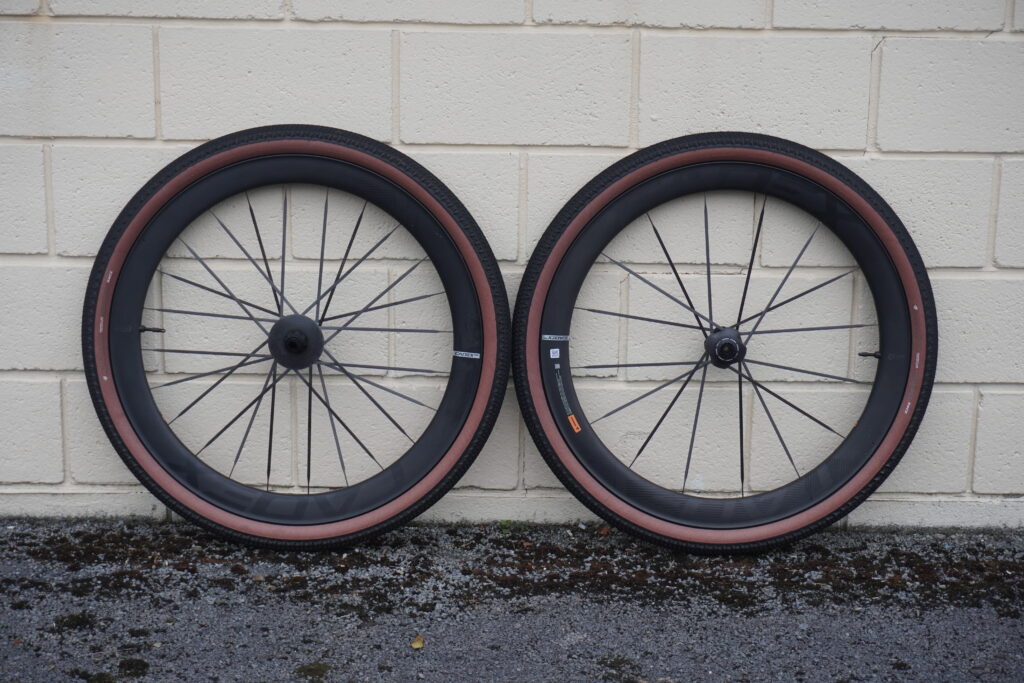


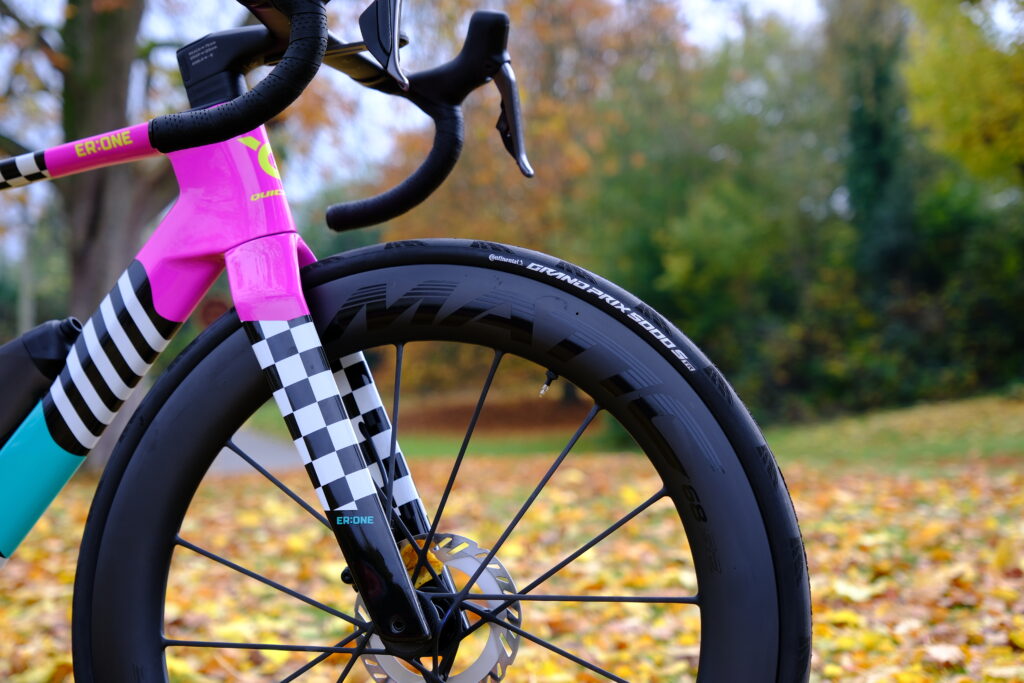


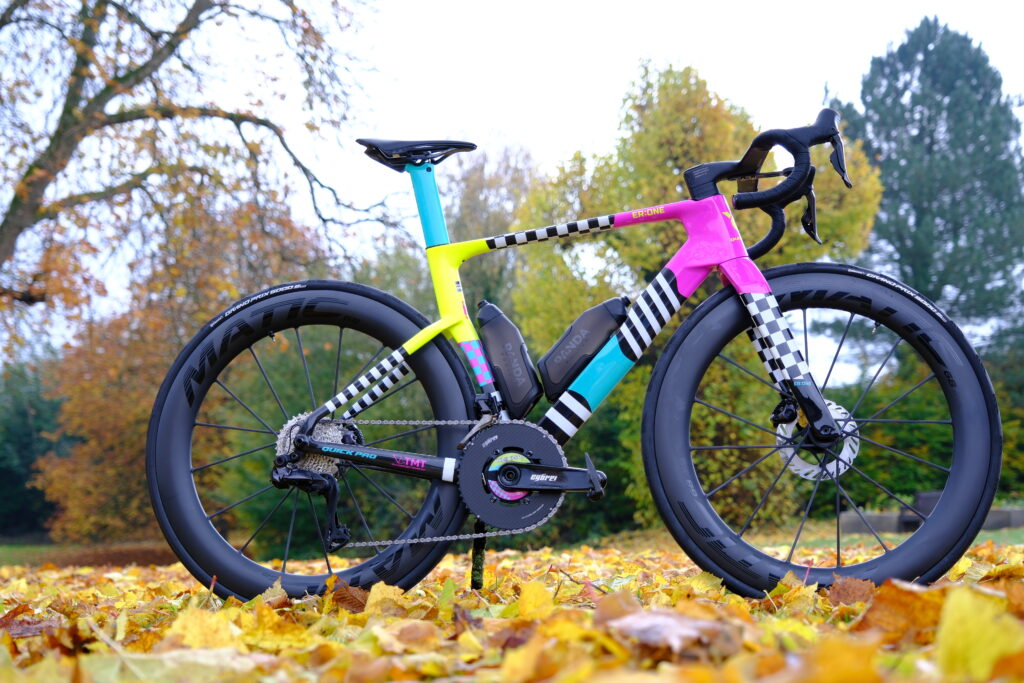
Matic, Superteam’s premium sub-brand, recently launched the first of its S-Series wheelsets. The S68 is a wild all carbon affair with the deep rims and fat spokes bonded to all-new hubs. We took a look at this interesting design, which combines 68mm deep rims with a 1,320g claimed weight.
Chinese cycling brands have been changing the game over the last few years. You can now get bikes and wheels with seriously impressive specifications without necessarily spending the sort of money you might expect from the big, established brands.
But what happens when one of these brands decides to go properly premium?
These are the brand-new MATIC S-Series S68 wheels which have a 68mm-deep rim, a claimed wheelset weight of just 1,348g, and a price tag of $2,999~£2,287 (at the time of writing Matic’s S-Series S68 wheels are on a Black Friday sale, dropping the price from £2,287 to £1,982).
The specs, and particularly the price, puts Matic’s first wheelset up against the big Western brands, which Superteam and other Chinese brands would usually undercut.
Aerodynamics
Let’s start with aerodynamics, because that’s the obvious place to begin when you’re looking at a wheelset with rims this deep.
These are 68mm-deep rims optimised for 28mm tyres, which puts them firmly in the deep-section category and, well, there’s no getting around the fact that these are designed to look fast. Matic says that the 68mm rim depth effectively optimises airflow during high-speed riding, making it particularly well-suited for flat terrain, sustained high-speed riding, and racing – though without independent wind-tunnel data, we can’t put a number on how aerodynamic these wheels actually are compared with the competition (yet).
Of course, rim depth isn’t the whole story. The shape of the rim, how it interacts with the tyre, and the airflow around the wheel all play a part in determining aerodynamic performance.

There’s a lot to be said for the look of a deep-section wheel. If you’re building a fast road bike, these certainly have the sort of profile that makes the whole thing look like a proper race machine – but the interesting thing about the S68 is that Matic hasn’t simply gone for deep rims. It’s also managed to keep the claimed weight impressively low.
Weight
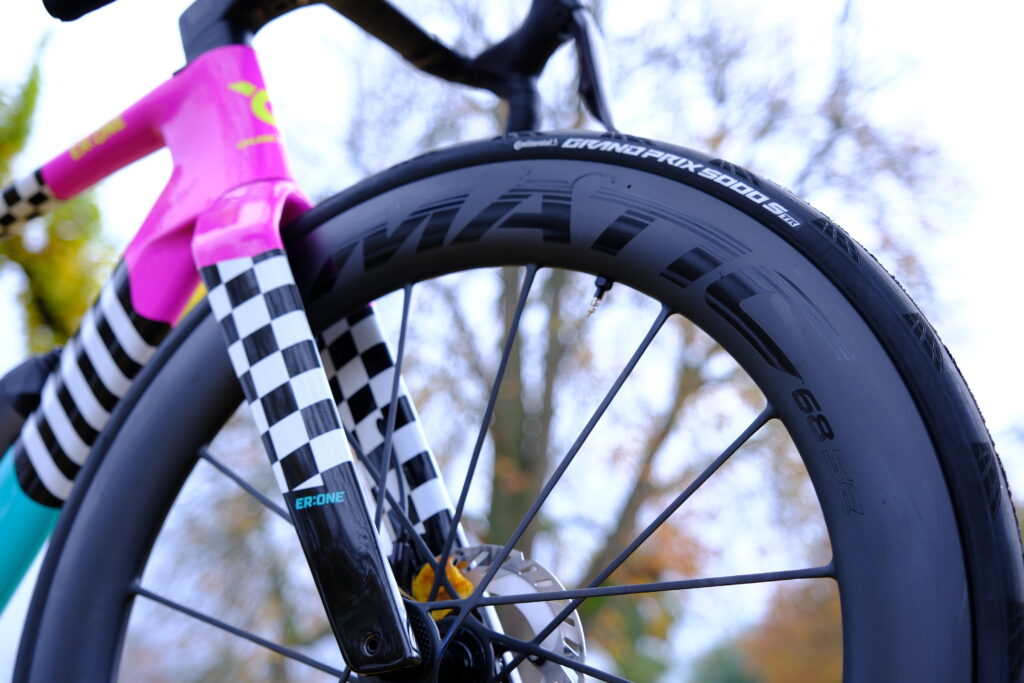
The claimed 1,348g weight of the complete wheelset is, for a pair of 68mm-deep wheels, a pretty interesting figure.
Deep-section wheels have traditionally involved something of a compromise. You get the potential aerodynamic advantages of a deeper rim, but adding carbon to create that extra depth can also add weight – and weight is particularly relevant when you’re accelerating, changing direction or heading uphill. If you have too much weight on your bike, it is going to feel a bit dull.
In recent years, and particularly as carbon spokes have become more widely adopted, deeper wheels have been getting lighter. But for an almost 70mm deep wheelset to weigh so little shows just how far wheel tech has come.
It’s worth remembering, though, that weight is only one part of the equation. A lighter wheelset isn’t automatically faster in every situation. Plenty of you will know that the aero characteristics of a wheel are way more important when you’re riding on the flat at higher speeds.
Stiffness
Stiffness gets talked about endlessly when it comes to carbon wheels. Having plenty of stiffness is excellent for steep hills and sprints, but it is something that’s quite difficult to judge just by looking at a specification sheet. That said, you can take one look at the bonded spokes and sort of guess they’re going to be stiff.
The S68 uses a one-piece carbon structure. That’s a key part of the wheelset’s design which unifies the rim, spokes, and hub system into a single, cohesive design. Matic says that by eliminating the complex connection points found in traditional wheelsets, this approach enables more direct power transfer and superior overall structural rigidity.
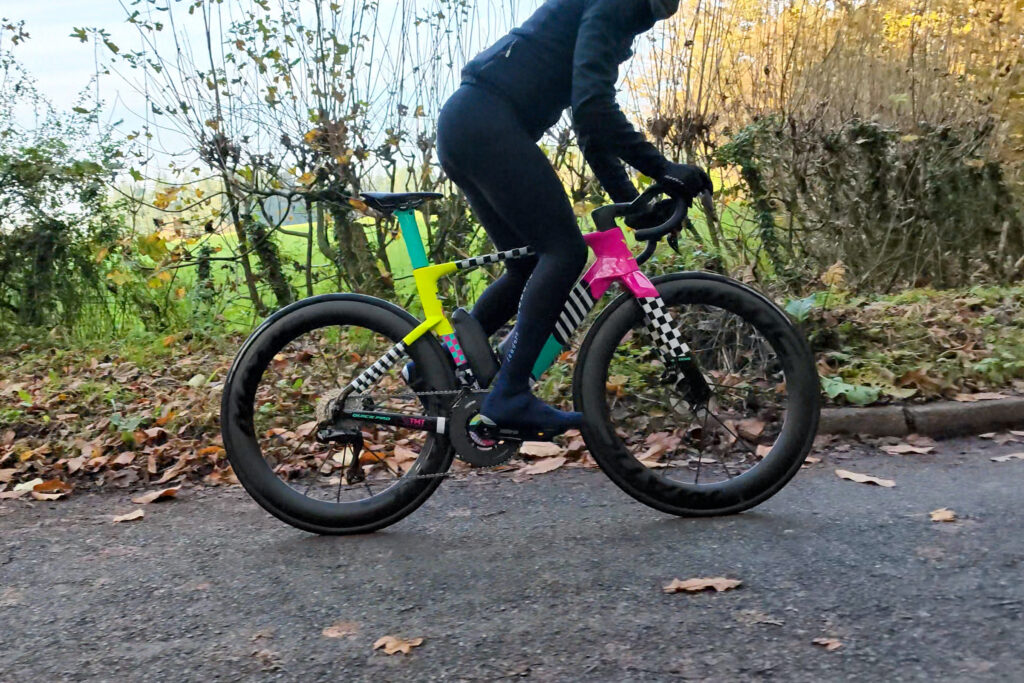
But… there’s a balance to be made here. A wheel can be stiff without necessarily being the most comfortable, and more stiffness isn’t automatically better for every rider.
With the wheelset aimed at racers, comfort isn’t likely to be high on the priority list, but a little consideration to damping road buzz does help to keep riders fresher on long rides.
Premium pricing
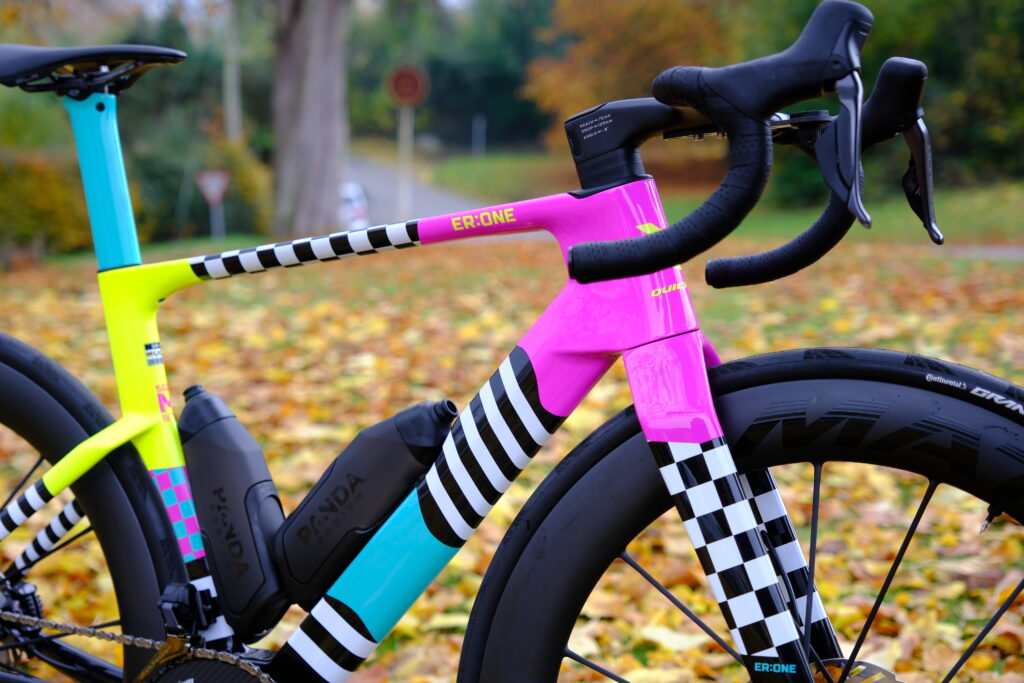
And then we get to the price. North of two grand is a serious amount of money for a set of road bike wheels, regardless of where they’re made.
One of the reasons Chinese cycling brands have attracted so much attention is that they’ve often offered impressive specifications at prices that undercut more established premium brands – but the S68 is clearly positioned differently, and Matic isn’t trying to make a budget wheelset here to undercut established brands. It’s pitching a premium product, and the price reflects that ambition.
While it has an impressive spec sheet, the wheelset will need to perform well comparatively against other premium brands to pull riders away from the brands they see in the pro peloton.
What do you think? Would you spend nearly three thousand dollars on a set of Chinese carbon wheels, or would you rather stick with a more established brand? Let us know in the comments as always.