


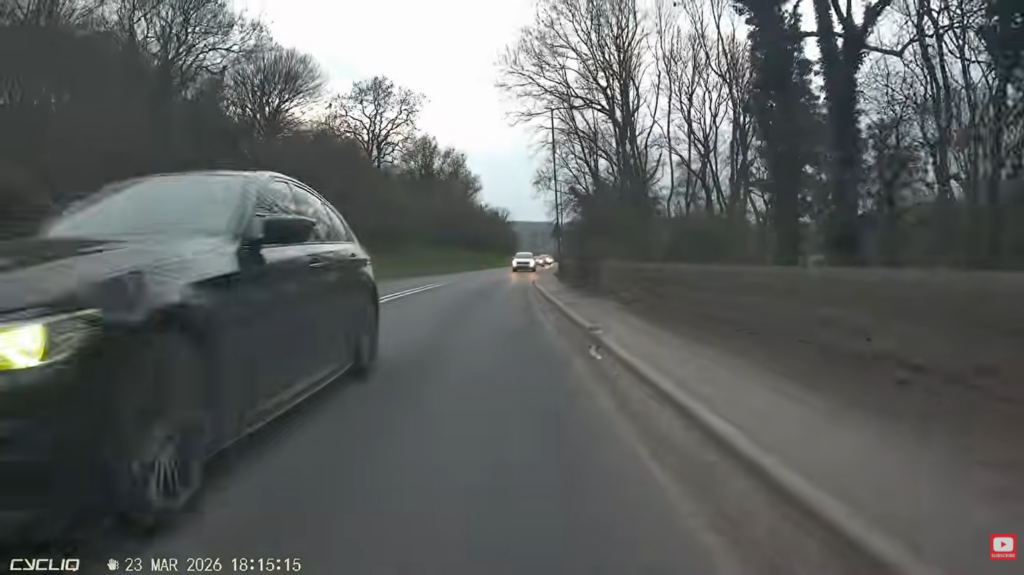

A police force has confirmed that a recent policy change means it will only investigate close passes in exceptional circumstances.
Derbyshire Constabulary also confirmed it would only respond to evidence submitted to its Derbyshire Capture portal (part of Operation Snap) in the event of a positive outcome, following criticism that national guidance is preventing forces from acting on dangerous overtakes.
In July 2025, GoSafe, the country’s road casualty reduction partnership, announced it was not taking action on submitted close passes due to guidance issued by the National Police Chiefs’ Council (NPCC).
GoSafe interpreted the guidance as suggesting that distance measurements in Operation SNAP videos must be investigated by trained forensic specialists, in line with standards set by the Forensic Science Regulator.
However, the regulator told road.cc it “has not issued any national guidance on the topic, and certainly nothing that would suggest forces suspend taking action on evidence submitted to Operation Snap for the purposes you outline.”
Since then, several forces have reinterpreted the close pass guidance issued. Following a Freedom of Information (FOI) request submitted by YouTuber Daniel Ward, also known as TriathlonDan, Derbyshire Constabulary confirmed it had updated its wording on its website on 28th May to say “As we follow national guidance regarding the analysis of video evidence for the measurement of speed and distance, we only act in these circumstances in exceptional cases.”
An additional disclaimer on the FAQ section of the website details that, “to continue to remain efficient, effective and ensure we can respond to the most serious incidents, all close pass reports will be reviewed, but only in exceptional circumstances will positive action be taken.”
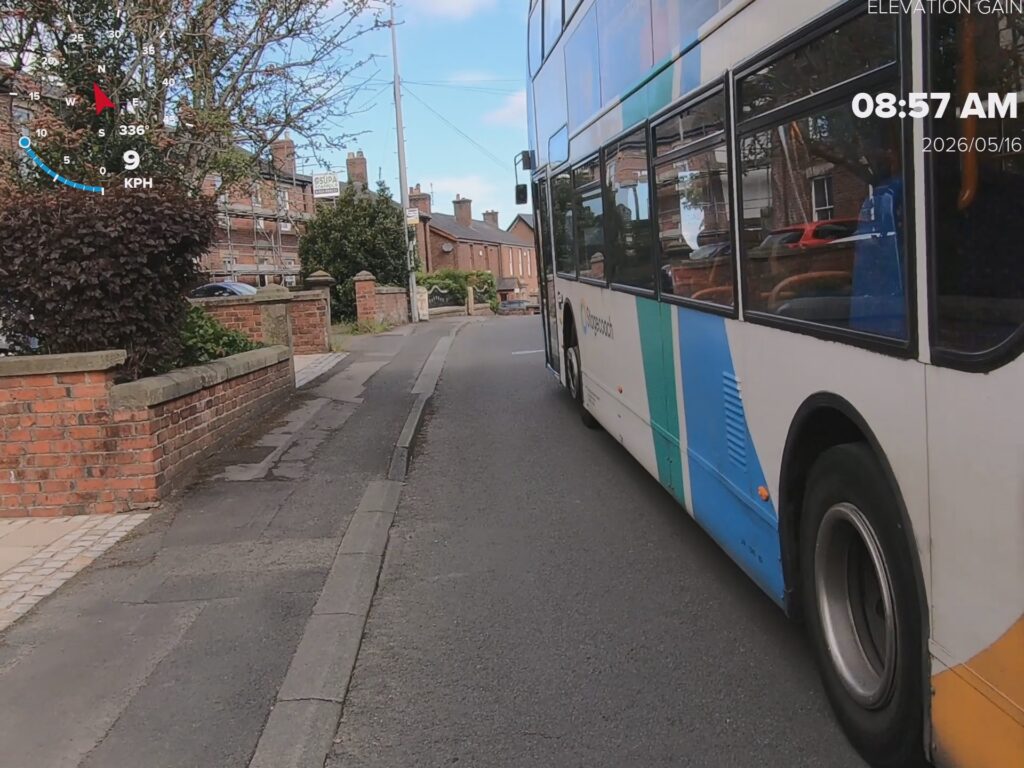
The meeting confirming the policy change was confirmed to have taken place days before the new wording was introduced, though Ward says he has been unable to obtain any documents from that meeting and is considering a complaint to the Information Commissioner’s Office.
Derbyshire Constabulary are not the only force to have updated their policy on investigating close passes. In July, we reported that two police forces in Wales had stopped taking action on close pass footage unless additional information on speeds and distance were provided.
One force, South Wales Police, responded that Operation SNAP, the streamlined process for several forces to receive and process close pass footage, has become “so successful that the team is no longer able to manage the demand submitted by the public.”
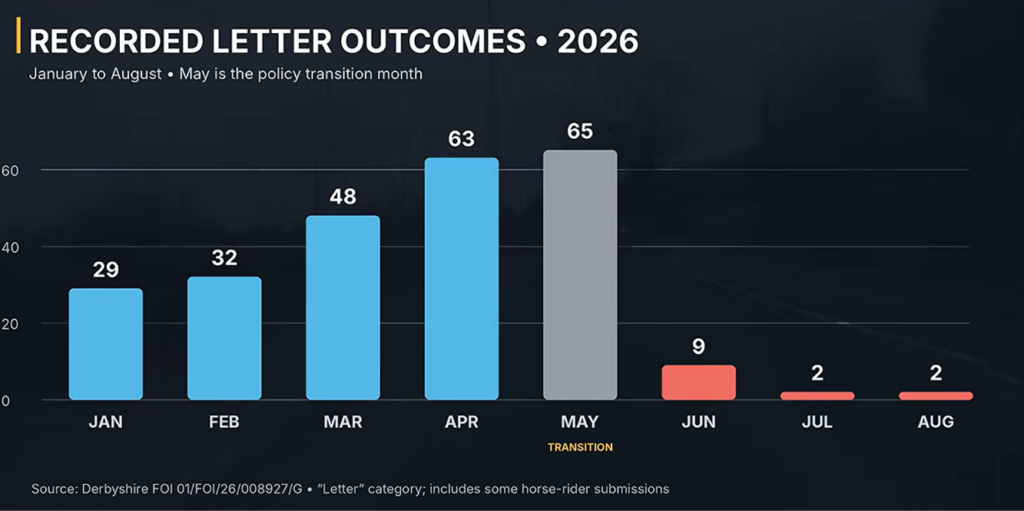
However, data retrieved by an FOI to Derbyshire Police details the steep drop in actioned submissions on close passes on both cyclists and horses. In April this year, the last full month before the policy change, 63 warning letters were issued, with 18 passes deemed to require no further action. In August, only two letters were issued, with neither submission leading to further investigation.
Ward has also obtained documents detailing the difference in approaches from different police forces. Notes from a July meeting with the Force Lead for Active Travel at South Yorkshire Police detail how the force says officers investigating submitted video “must not undertake forensic analysis of footage, but should carry out a triage function using investigative, non-analytical viewing of the footage alongside the evidence supplied by the person reporting the incident.”
The Chief Inspector, in Ward’s opinion, also takes the view that the forensic guidance “has been over-interpreted or misinterpreted by some forces, and makes clear that South Yorkshire has not stopped taking action on close-pass reports.”
Ward shared these details with the Police and Crime Commissioner for Derbyshire, Nicolle Ndiweni-Roberts, but the commissioner told him the force’s policy interpretation was “based on its experience of Operation Capture submissions and was approved by the Chief Officer Team through the Constabulary’s established policy approval process.”
Meanwhile a Met Police inspector associated with the NPCC’s forensic guidance told Ward, “We are nationally very much aware of the discrepancies in service received by members of the public from different forces across the UK. Causes for this include different resource levels and thresholds for action.
“Ideally we would like to get to a point where a national approach is implemented, but we are still a long way from that becoming reality, so we are trying to provide some consistency through national guidance.” He added he believed Derbyshire Constabulary’s policy appeared in line with the guidance.
In a statement to road.cc, Derbyshire Constabulary said it followed the NPCC’s guidance “which instructs that staff who are journeycam practitioners must not carry out any forensic analysis of footage. Forensic analysis of footage includes measurement of speed and distance. This policy was put in place following the publication of the guidance and to ensure compliance with it.
“Every submission to Derbyshire Capture is analysed consistently, by a member of staff with considerable roads policing experience, in line with guidance from the NPCC. Positive action, including sending a warning letter, is only possible if it meets the evidential threshold.
“However, Derbyshire Constabulary continues to take positive action when circumstances are considered exceptional and we will continue to work to ensure that vulnerable road users are safe on the county’s roads.”
In the meeting with South Yorkshire Police, to increase the likelihood of action being taken, the Chief Inspector recommended that road users use a rear-facing camera and evidence their own speed at the time of the overtake. However, the inspector also acknowledged that that apps and on-board computers are not 100 per cent accurate.
In Ward’s words to the police commissioner, his concern is less on the issues of forensic measurement standards, and more on “whether a legitimate restriction on forensic measurement has effectively become a much wider restriction on police intervention, when the national guidance itself appears to allow for the overall circumstances of an incident to continue to be
assessed.”












2 thoughts on “Close passes on cyclists “require exceptional circumstances” for drivers to be punished, police force admits”
My guess is that many police forces have used this as a get out of jail free card to ignore subjective evidence when in the past they would have actioned the report.
I also believe that police forces are becoming overwhelmed with reports due to the proliferation of cameras, both by cyclists and now on new cars so they are only actioning the most serious cases.
This is just one example of mine that no such forensic specialist was required for the driver to be issued an NIP.
He felt his driving was ok, so the police took it to court.
He was shown the video evidence and still stated he did not see it as dangerous/too close.
Result: 5 points and £944 fines.
When it could have been just 3 points and £100, I assume.
It’s only a broken leg sir, not really that “exceptional” is it now? Tell you what, wait and see if it gets gangrene and needs to be amputated then we might be able to take some action.