


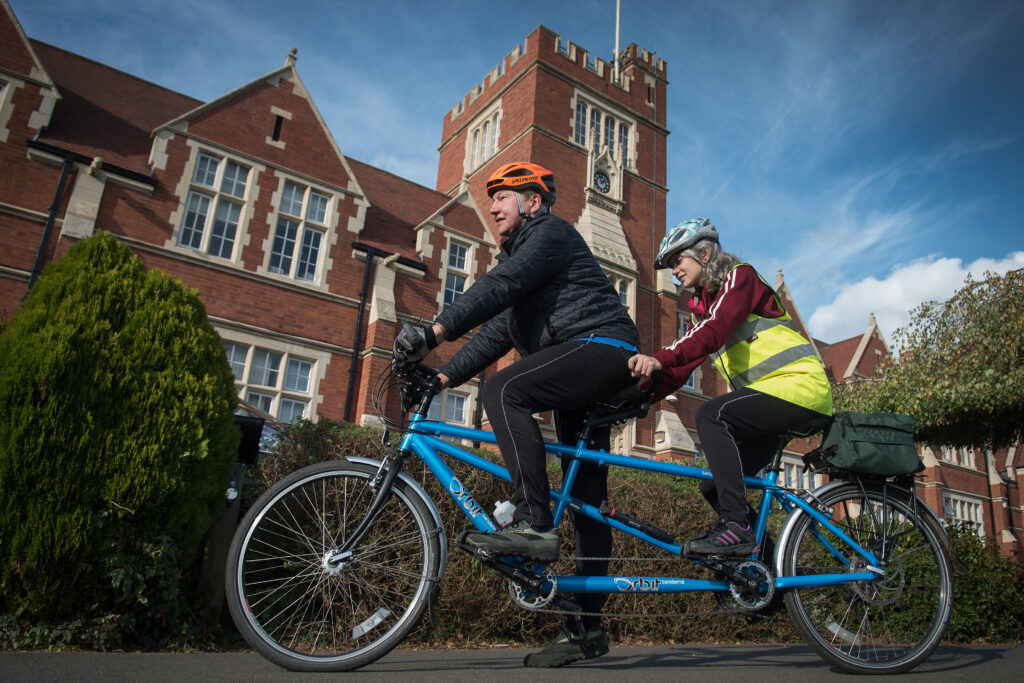

Tandem bicycles should be classified as adaptive bikes and exempt from VAT when purchased by visually impaired people, a Paralympic champion has told the government.
In an open letter to the Chancellor of the Exchequer, Lizzi Jordan, a six-time world champion on the track who won gold at the 2024 Paris Paralympics, argued that the current legislation discriminates against blind and partially sighted cyclists, creating unnecessary financial barriers which prevent them from “getting all the benefits of cycling that others just take for granted”.
According to the UK’s tax rules, some cycles can be purchased VAT-free through self-declaration, as long as the cycle is deemed to have been designed or adapted to meet a disability-related need. That means tricycles, hand bikes, and cycles with supported seating or enhanced stability, as well as adapted tandems, qualify as VAT-exempt.
However, standard issue, non-adapted tandem bicycles do not fall under this category as they are not exclusively used by disabled people despite, as Jordan points out, being essential for visually impaired cyclists to safely enjoy the benefits of riding a bike.
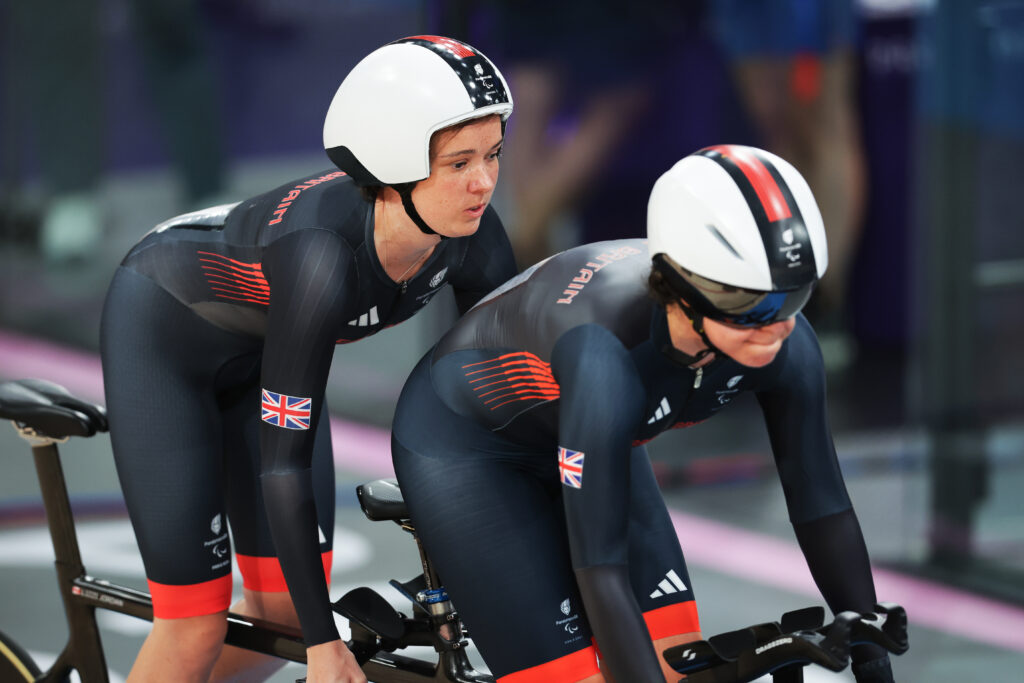
In her open letter and accompanying campaign video, released on Wednesday morning, the 28-year-old called for tandems to be exempt from tax, noting that the current situation represents a barrier to cycling for blind people, due to tandems often being significantly more expensive than standard bikes, despite serving an accessibility purpose.
“I am campaigning to ensure that every blind ad partially sighted person in our country has the right to access something as simple as a bike,” Jordan said in the video.
“Current legislation discriminates against visually impaired people as tandems are not recognised as an adaptive bike. Improving access to tandems would help to promote physical exercise, travel, and social inclusion.”
> Best tandem bikes 2026 — should you buy a bike made for two?
Jordan said she was inspired to launch her campaign based on her own experiences, saying sport and cycling “saved” her after she suddenly lost her eyesight at the age of 19 following complications from a rare e-coli infection, which left her in a coma for two months.
After relearning how to walk and running the London Marathon 18 months after her hospitalisation, Jordan was invited to a British Cycling ‘Talent ID’ day in 2020, eventually joining the para-cycling Foundation Team.
Within two years, she was a world championship medallist on the track, winning gold the following year in Glasgow in the mixed team sprint. With pilot Danni Khan, she won Paralympic gold in the 1km time trial in Paris, along with a further five world titles and a Commonwealth Games medal.

“It was extremely scary and I literally turned to sport to save me,” she says of her battle with illness and her discovery of cycling. “It gave me such a sense of freedom, because I couldn’t get out and about on my own, but when I was on a bike, I felt like I was on my own because I could just have a pilot on the front.
“Now that I’m so lucky to have the platform that I do, I began thinking, how could I help others to ensure that they can get into cycling? I was surprised to discover that tandems, despite being the only bike blind people can cycle on, are not VAT exempt as they are not recognised as an adaptive bike.
“It’s simple. Tandems aren’t a luxury benefit. They are basic accessibility tools and access to physical exercise for visually impaired people.”
According to data gathered by Sport England, 43 per cent of disabled people are inactive, compared to 23 per cent of non-disabled people, while a recent study by the Royal National Institute of Blind People found that blind and partially sighted working-age adults are about half as likely to be in paid employment as their non-disabled counterparts.
“Current laws create unnecessary financial barriers,” Jordan added. “This stops visually impaired people from getting all the benefits of cycling that others just take for granted.”
In her open letter to Chancellor John Healey ahead of the autumn budget, Jordan argued that the financial contribution required by the government to recognise standard tandems as adaptive bicycles would be just £26,000 a year, despite having a potentially “transformative” societal impact.
“While I have chosen to pursue elite sport, cycling offers so many benefits and this ask is simply about equality in everyday life,” she wrote.
“I feel it is my moral duty to use my platform now to ensure that every blind or visually impaired person in this country has equal access to something as basic as more affordable bicycles.
“This campaign presents the government with a practical, affordable, and highly visible opportunity to improve disability inclusion in the United Kingdom. The financial impact of this recognition would be minimal (around £26,000 per year), but the social impact would be transformative.
“This is a fairness issue. It is an accessibility issue. And it is an opportunity for the government to make a meaningful change.
“I urge the government to please formally recognise standard tandem bicycles purchased by visually impaired individuals as adaptive bicycles with regards to the VAT exemption. I would welcome a meeting with you and your team to discuss this important issue, and opportunity, in more detail.”














20 thoughts on “Ditch tandem tax to end discrimination against blind cyclists, Paralympic champion urges government”
“Next to a leisurely walk, I enjoy a spin on my tandem bicycle. It is splendid to feel the wind blowing in my face and the springy motion of my iron steed. The rapid rush through the air gives me a delicious sense of strength and buoyancy, and the exercise makes my pulse dance and my heart sing.” – Helen Keller
This seems like an obvious yes from the chancellor. I can’t imagine it would cost the treasury much, but will mean a lot to those who will benefit from it.
“I urge the government to please formally recognise standard tandem bicycles purchased by visually impaired individuals as adaptive bicycles”.
What sort of double-speak is this? Standard tandems aren’t adaptive at all. How about paying tax like I have to Lizzi?
I do enjoy our resident trolls double speak.
The last sentence suggests he has paid tax to Lizzi. I definitely approve of the concept of trolls paying extra tax.
I am off to see a production of 1984 at the theatre tomorrow night. I think our Nigel on this forum is probably a room 101 possibility.
@Sniffer He’s best ignored. Every time someone responds to his daft comments he soils his underwear. It’s not fair on his mum.
@perce not mum…Petri dish
@Nigel Garage I saw on the rolling ticker that you had commented on this story and I thought surely even he can’t be such an utter petty spiteful little dick as to object to disabled people being given assistance to purchase mobility aids. Sorry to say that I was wrong.
An adaptive bike, for these narrow tax purposes, is anything that the government chooses to put on the approved list. In any case, many/most tandems purchased for use by visually impaired people will have some form of adaptation, making them literally adaptive bikes as well as for the purpose of the list.
You really need to take a good look at your life. Not only because you have been banned from this site dozens of times and yet you still insist on coming back and trolling it, which is desperately sad in itself, but because you are so mean minded, selfish and greedy that you object to disabled people being given a small exemption when buying mobility equipment (equipment, incidentally, which will help them to keep fit and quite probably reduce the burden on the NHS, and therefore the taxpayer, by far more than the value of the exemption), apparently on the grounds that you wouldn’t get the same exemption. You’re not a good person.
@Rendel Harris au contraire, disabled people want to stand on their own two feet (well, the ones without prosthetic legs at least) and contribute to society, just like everyone else does.
You, on the other hand, have some kind of saviour complex where disabled people need you to dole out extra benefits to them, much like one might give a dog a bone or a child a bag of sweets.
This isn’t how people want to be treated. Rise above your prejudices and understand that disabled people are more than capable of making a full contribution to society and don’t need silly tax breaks to be successful.
As I understand it, if a tandem bike is adapted, it will (or should) already be tax-exempt according to current law. If it isn’t adapted, well then it should be subject to normal tax rules, rather than an expensive and easily abused scheme (i.e. non-disabled people escaping tax) taking its place.
@jackcycles so…disabled people don’t want any help….?
if you dig any deeper, you’ll hit the bedrock
@belugabob I think the (conservative!) Baron John Bird @ Big Issue puts it well: a hand up, not a handout.
I think a fairly narrowly focused tax break on specific assistance vehicles should fit that ideal very well!
Of course “but rich people can abuse tax breaks”. But ain’t it the case that the rich are not infrequently rich (or richer) by sharp practice, and that has been true since at least the start of history?
@Nigel Garage Funny that, because I have worked with many disabled people both professionally and as a volunteer, mainly helping them to navigate the complexities of the grant system. Oddly enough, not one of them has ever said to me. “I don’t want to be treated like this, I want to stand on my own two feet“ and not applied for the assistance to which they were entitled. If you end up disabled through accident or illness and need very expensive special equipment to help you live as normal a life as possible, and indeed to make a contribution to society, are you going to refuse the assistance on offer? I suggest when you clearly have no experience and no knowledge in an area it’s best for you just to shut up rather than assume that you can speak on behalf of disabled people.
@Rendel Harris “I suggest when you clearly have no experience and no knowledge in an area it’s best for you just to shut up rather than assume that you can speak on behalf of disabled people.”
I’m not speaking on behalf of disabled people (unlike you), I’m speaking on behalf of decent law abiding citizens who want an inclusive society without favouring one group of people over another.
Funny enough the post below from @licenced has confirmed my view. He stated “should we stop there … I have one leg and wear a prosthetic, while my ‘good’ leg has muscle damage so is weak. To get back to cycling I had to spend double on an ebike than I would have on an otherwise similarly specced non-ebike”
Well fookin hell, let’s give him his half price e-bike too!
In fact, why stop there either? I felt a bit sad yesterday when I read your comment about me not being a “good person” and cried into my cornflakes.
Then I stopped crying and thought “why not give out free stuff to anyone feeling depressed, anxious, ADHD ridden, etc to help their mental health”? And not just scrap VAT, just dole it out for free. It’s only fair, right and “will help the NHS”. Probably be cost neutral or a net benefit to society in the long run, right?
Wrong. There is the small fact that this country is going bankrupt, suffers from endemic corruption, and is financially on its knees. We can’t afford to keep giving stuff away like this.
@Nigel Garage Of course you were purporting to be speaking (admittedly totally stupidly and without any justification) for disabled people, claiming that they want to “stand on their own two feet” and that they don’t want to be given assistance.
It’s extremely telling that you claim to be speaking for “decent law-abiding citizens”, so anyone who wants the disabled to get the help they need is neither decent nor law-abiding? And these people apparently “want an inclusive society without favouring one group of people over another”. You can’t have an inclusive society unless you make provision for those who need more assistance than others.
There was a group in Europe, just under a century ago, who were very keen to emphasise that the disabled were a financial burden on the state, indeed their first steps towards “cleansing” society were to attempt to eradicate this burden. Ever heard of them? Didn’t end well.
@Rendel Harris tut tut, you obviously haven’t taken your DEI course yet.
You can’t say “the disabled” in this day and age because it objectifies them. You’re turning an adjective into a noun, very poor form by someone who self-certifies as an expert in the English language. “Disabled people” is the non-discriminatory way to describe those with disabilities.
Putting aside your ridiculous and cliched comparison of my vision of an equal society with National Socialism, the last thing I’m going to say on the topic is that society has infinite number of wants on a finite number of resources.
Clearly you think doling out free cycling gear to people is more important than spending those same precious resources on treating people in the NHS, educating our children, or defending our country. Well, more power to you, but I’m certain the overwhelming majority of people think otherwise.
@Nigel Garage Oh yes, the defence of the country and adequate provision for the disabled are very much an either/or, we can’t possibly have both. Hang on, what if we set about closing all the tax loopholes and avoidance schemes advised by greedy Essex accountants, then there might be enough to go round.
@Rendel Harris wealthy people are already leaving the country in droves due to spiteful class-warrior politics of envy.
No entrepreneur wants to have their hard-earned money taken off them, wasted and redistributed to others on these kinds of schemes.
These “tax avoiders” in fact pay the vast majority of taxation in the UK. Just today it’s been revealed that Sadiq Khan has forced another millionaire to leave London and the UK, Sir Peter Lampl, due to his outrageous anti-growth LTNs.
As he stated, London now has the slowest moving traffic of any capital of the world – something no doubt certain commentators here would celebrate – but the net effect is that (along with crime) no sane person wants to live there any more.
@jackcycles I see that your empathy is still in the post
🙄
I’d be all for this. A tandem itself would not be specially adapted, but would be necessary given the desire to ride a bike and the disability. It seems to be the same principle if someone wants to buy a ramp – if you can self declare as disabled it’s VAT exempt, if not it’s not.
However, should we stop there … I have one leg and wear a prosthetic, while my ‘good’ leg has muscle damage so is weak. To get back to cycling I had to spend double on an ebike than I would have on an otherwise similarly specced non-ebike … Not adapted (apart from the clipless pedals to make sure my fake foot stays connected to the bike) but necessary for me personally.
It would be interesting if the government were to consider other cases if they listen to Lizzi’s.
@licenced I would be all in favour of grants for ebikes for people like yourself, at a minimum making up the shortfall between the cost of an equivalent unpowered bike and the powered one. As I said above in response to Trolly, the financial benefits of helping people with disabilities to get out and ride, in terms of alleviating the burden on the NHS of treatment for mental and physical illness caused by lack of exercise and independence, would mean the investment would quickly pay for itself.