


Nine years on from the UK Sport-commissioned review which urged British Cycling to address its “culture of fear”, a new rider and staff survey has revealed that a “toxic” environment persists within Great Britain’s cycling team.
According to the Times, a recent confidential independent culture survey, funded by UK Sport and conducted by the Happiness Index, uncovered a dramatic fall in morale within the team in recent years, amid concerns about unacceptable behaviour and “cold”, “distant” relationships with senior leadership.
As part of the survey, riders and staff were asked for three words to summarise the culture within British Cycling’s World Class Programme, with “toxic” the second-most commonly used term provided by athletes after “driven”.
Following the report’s publication, British Cycling has implemented an action plan to address the concerns raised, including around “psychological safety” and constructive criticism, while recognising certain failings by those in charge.
In 2017, UK Sport, the funding body behind Britain’s Olympic sports, commissioned an independent review into the climate and culture of the World Class Programme, following a series of allegations of discriminatory conduct, bullying, and a widespread “culture of fear” within its cycling squads.
This recommended that funding be made conditional on various changes being implemented, including professional staff training “not only in relation to core disciplines but also in terms of equalities and discrimination”.
British Cycling accepted that many of its structures and procedures were lacking and agreed a 39-point action plan with the funding body.
While there has been a general belief that things have improved culture-wise over the past nine years, the concerning survey findings uncovered by the Times this week instead reveal that morale has been plummeting within Great Britain’s cycling team.
The Happiness Index’s survey utilises a scoring system commonly employed by UK-based businesses, with riders and staff responses used to calculate an employee Net Promoter Score (eNPS), measuring overall workplace satisfaction.
The score is measured on a scale from -100 to +100, with anything between 10 and 30 considered good or average, and any score below zero regarded as a “critical warning zone” and representing a culture that demands immediate improvement.
When the survey was last conducted in 2023, the year before the Paris Olympics (where British riders won 11 medal and two golds), female riders returned an overall score of 20, while the male riders’ score was five and male and female staff submitted scores of zero and 13 respectively.
While the 2023 results were far from a glowing reference for British Cycling’s leadership team, they dropped dramatically in the 2025 survey. The Times reports that the most recent survey for 2025 saw a satisfaction score of -42 for male riders and -31 for female riders. The male and female staff scores were -4 and -5 respectively.
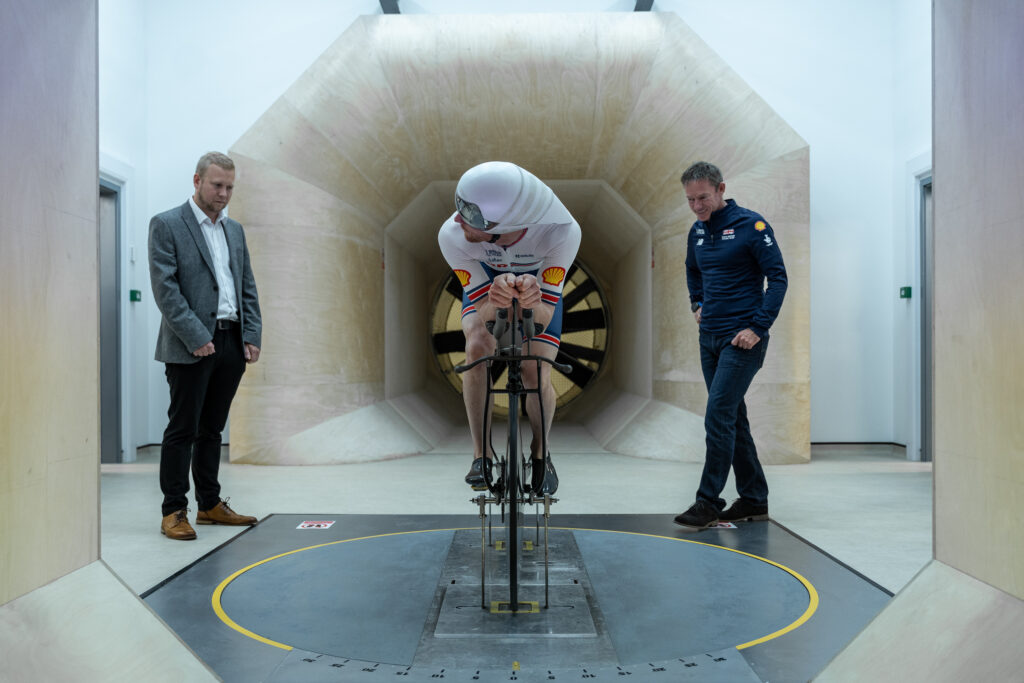
When asked if they had “witnessed or experienced thoughtless, inappropriate, or unacceptable behaviour in the last year”, 13 of the 41 athletes who responded to that question indicated that they had. One of the lowest-scoring questions in the survey also focused on the senior leadership team.
Asked for three words to describe the culture of the World Class Programme, “driven” was the most commonly used word among the riders. However, the second-most prominent term was “toxic”, alongside “supportive”. Other terms submitted to the survey by the riders included “cold”, “unconcerned”, “distant”, “unclear”, “restrictive”, and “misaligned goals”.
Staff submitted words such as “positive” and “passionate”, as well as “draining”, “undervalued”, “blinkered”, and “disjointed”.
In response to the survey’s findings, British Cycling has drawn up a new action plan, seen by the Times, focusing on “values, principles, and leadership behaviours” and “psychological safety, empowerment, and colleague experience”.
However, in a statement, British Cycling insisted that “the majority of staff love their jobs”. The governing body also stressed that the results revealed that “overall favourability had increased”, though this conclusion appears to be based on a corresponding survey focused on all British Cycling staff.
Even this ‘People And Purpose Group Culture Survey’, also conducted by the Happiness Index, revealed an overall happiness score of 7.1 and a willingness to recommend working at British Cycling of 6.9, far below the nine to ten range which represents someone who would recommend their employer to others.
“The wellbeing of our staff and riders is fundamental to everything we do at British Cycling,” a spokesperson for the governing body told road.cc.
“The Culture Feedback Survey, which has been the subject of recent reports, is independently run to provide a valuable tool to help us learn and improve. The majority of team members say they love their jobs and overall favourability has increased, ranking ‘very good’ in the latest study.
“However, it is important to recognise others want to see improvements, and we are committed to listening and acting on this.
“As a result, the Great Britain Cycling Team has developed an action plan that is being implemented alongside wider work across British Cycling, focused on leadership, development, feedback and wellbeing. UK Sport is aware and supportive of the action we are taking.”
A spokesperson for UK Sport also said: “It is critical to us that the sports we invest in have a safe, healthy and high-performing culture where athlete voice is included in decision-making.
“That is why the sports we work with undertake periodic, independent surveys of their athletes and staff within performance programmes to form one part of the assessment of the culture within those environments.
“We have engaged with British Cycling on the findings of their most recent culture survey and are aware of the action plan that they are already implementing to address some of the themes it raised.
“We will continue to work with British Cycling as they embed this plan and ensure their performance culture is of the highest possible standard.”
The concerns raised by the survey compound a turbulent week for the governing body, following Matthew Richardson’s withdrawal from the track world championships in China in the wake of allegations about his behaviour, including from fellow riders.
Last week, Maidstone-born Richardson – who defected from Australia following the 2024 Paris Olympics – was named as part of Great Britain’s 20-rider line-up for Shanghai, and was scheduled to compete in the sprint, keirin, and team sprint.
However, on Monday the Times published a story claiming that it had uncovered evidence that Richardson had apparently made “discriminatory remarks about people from minority backgrounds”, including racial slurs, prompting an investigation by British Cycling and his removal from the team.
The governing body has declined to provide any detail regarding the investigation, instead simply confirming that Richardson had been withdrawn from the squad without supplying any particular reason. British Cycling has also told road.cc that it cannot share any more information at this point.
On Tuesday afternoon, Richardson released a statement on social media saying he will co-operate fully with the investigation, and that he will do so with “contrition for the feelings of anyone who might be affected”.













1 thought on “British Cycling still suffering from “toxic” culture, new rider and staff survey reveals”
This was an interesting read.
From my experiences in the workplace, lower levels of happiness could be caused by a fairly simple change,such as the appointment of a new operations director, or an initiative to cut budgets. The question then is does the company recognise this and is it willing to act on it?
There are many times when I’ve thought work was stressful and unpleasant, but that was sometimes to be expected and it was what I got paid for, but at least I could leave in the evening and go and do something else such as athletics or cycling. Presumably this is a lot more difficult for professional sportspeople; particularly cyclists who have to spend much of their leisure time sitting or lying down.
Cyclists’ happiness is also going to be influenced by current performance levels and selection and more roller coaster in nature. Certainly more up and down than many other forms of employment. The happiness scores of female staff and cyclists was higher than males in both the 2023 and 2025 surveys. Could anything useful be learned from this?
I think having the regular happiness surveys in place is obviously a major step forward. Clearly there are issues to address. Staff and cyclists witnessing “unacceptable” or “thoughtless” etc behaviour is concerning and needs to be acted upon. But maybe claiming that the culture “Remains toxic” is not a totally accurate description. The satisfaction levels were higher in 2023, before they fell again. Perhaps more frequent surveys at all parts of the Olympic and World Champs cycles are required to gain a more accurate picture?