


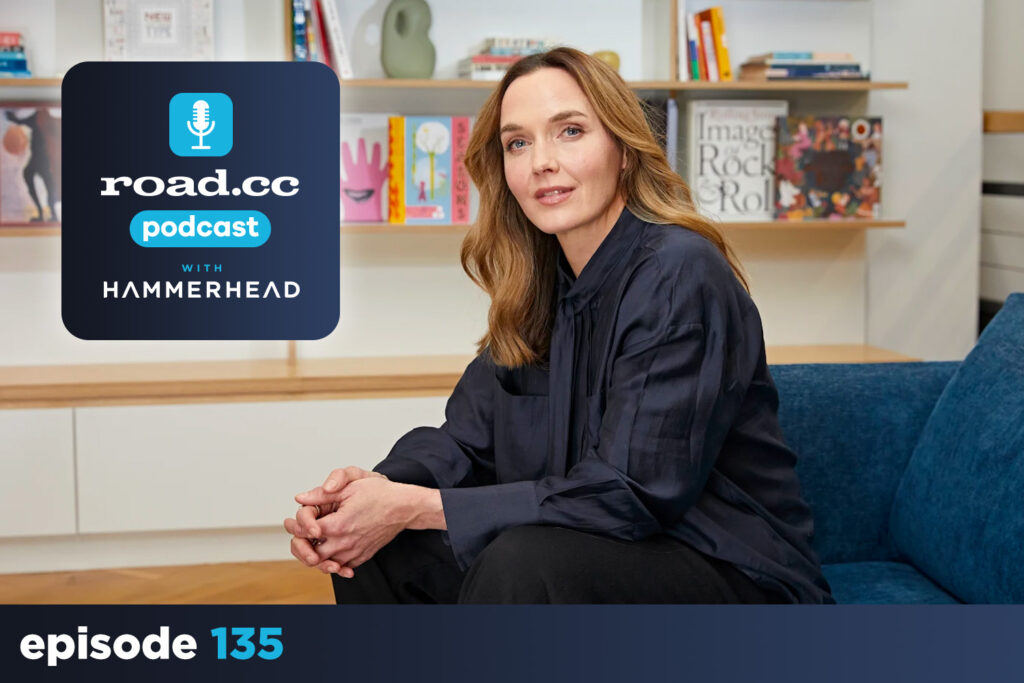

Victoria Pendleton may well be cycling’s greatest ever ambivalent champion.
Because, despite the two Olympic golds, nine world titles, and that ‘golden girl’ image, Pendleton’s relationship with the sport – the profession with which the general public still most readily identifies her, regardless of her post-retirement forays elsewhere – has long been a complicated one.
Listen to the road.cc Podcast on Apple Podcasts
Listen to the road.cc Podcast on Spotify
Listen to the road.cc Podcast on Amazon Music
Years of pressure and stress, a strained, tumultuous, and ultimately fractious relationship with her Team GB bosses, and a bittersweet ending on home boards at London 2012 mean Pendleton has previously been on the record stating that she does not, in fact, like cycling all that much.
When that remark is quoted back at her during this week’s episode of the road.cc Podcast, the 45-year-old, to that point a fizzing ball of energy, suddenly pauses.
“It’s weird,” she says. “I always liked team sports growing up, I liked the banter. Cycling was never my choice of sport, but I was good at it, good enough at it to make a career out of it.
“And actually, I just really love training. Being part of something bigger and training every day to be better definitely was the thing I enjoyed.
“Even just in the gym, knowing that you’ve lifted two-and-a-half kilos more than you’ve ever lifted before and thinking, ‘I’m better than I was, I’m stronger than I was’. The sense of improvement at that level made you feel like a superhuman, which is so good.
“But cycling wasn’t my choice of sport,” Pendleton reiterates. “I did it because my dad did it. And when you start a sport early enough, you do excel at it. That’s what happens.
“And when it gets that serious and goes from being a hobby that you’re quite good at to a real job with quite a lot of expectation and pressure – it does kind of take the joy out of it a little bit. And I wonder whether I’ll ever go back to a place where I can enjoy it again for what it is.”
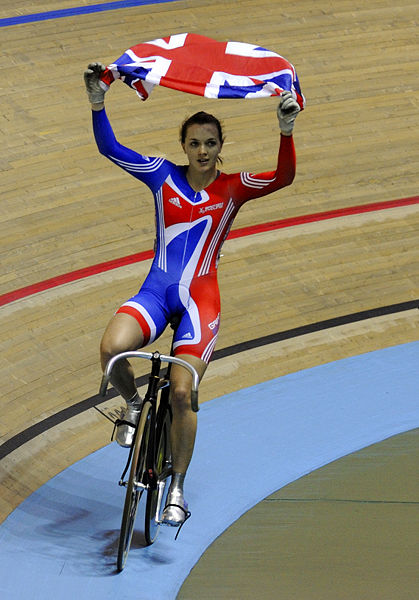
14 years on from her retirement from cycling, Pendleton admits that these days any two-wheeled endeavours are limited to occasional fair-weather mountain biking, where she’s focused on “just having a nice time.”
“And I love sport. I’m not saying I don’t like cycling,” she continues. “I love lots of different sports. Cycling isn’t just way ahead of all of the rest. Using your body to the best of its ability is a wonderful thing and something that’s good for us in every aspect, physically, mentally, emotionally. It’s a vital part of our human existence, really.
“I don’t… it’s a weird one. I love sport and I love the fact that I’ve had an opportunity to perform in sport at the highest level because that is honestly a gift from the gods. But separating training and cycling is like…” She puffs out her cheeks and trails off.
That ambivalence towards her cycling career – one that saw her become the greatest female track sprinter in the world and the poster girl for a golden generation of British racing talent – also stems from the hardships she endured during it.
The years of training, pain, and sacrifice may have resulted in three Olympic medals and national stardom, but they were also marred by a British Cycling set-up still mired in the old-school, macho approach to elite bike racing and a difficult, combustible relationship with her GB coaches and teammates. Mental health struggles, self-doubt, and self-harm followed.
But, 14 years on, Pendleton is quick – typically – to insist that she hasn’t completely dismissed her racing career.
“I don’t resent it or regret it,” she says. “Obviously, being offered a national jersey to put on is a huge honour and one which you’d never turn down given the chance. It’s beautiful.”
“Stepping away from the sport and having time to think about it made me a lot more forgiving about the whole experience,” she says, reflecting on her cycling career.
“But I also always felt like it was a stepping stone to the next thing. And I think allowing it to be a stepping stone almost gave me the freedom when I retired to move into new things more easily, because it wasn’t the only one singular dream that I’d always hoped for.
“I mean, I wanted to be a professional ice skater, apparently, age 11, and also ride in the Grand National, and have two cats and two rabbits and a horse called Lightning. So that was my ambition, age 11. And I wanted to be quite good at cycling like my dad. That was the general gist of what I wanted to do and be.
“So I think in some ways it’s aided me post-cycling, by being able to have that degree of separation in some ways.”
“I’ve always thought, who knows? I’ll give it my best shot”
Her latest post-cycling endeavour has involved writing a brand-new book (her second, following her 2012 memoir Between the Lines), called ‘The Fear Opportunity’, published on 21 May.
It’s not your typical cycling ‘chamoir’. Instead, ‘The Fear Opportunity’ is a heavily science-based personal development book that sees Pendleton discuss the concept of fear, naturally, with experts from a range of fields, exploring how it builds strength and confidence. She also delves into her own life and career to conclude that we shouldn’t treat fear as a negative, but embrace and reframe it as an opportunity.
.jpg)
“I obviously have slightly different boundaries to some people or perhaps just a different perspective on how I look at new things,” she says, reflecting on the inspiration behind her left-field foray into self-help literature.
“I’ll always remember, during a press conference when I was training to become a jump jockey, one of the reporters asked me: ‘So Victoria, you’ve been the very best in the world at what you do in elite sport and now you’re going to start something and become an absolute novice. How does that make you feel?’
“And when he said it, I stopped for a moment because I’d never really thought about that. Of course I’m going to start from the beginning. That’s the only place you can start. But it seems strange to me that somebody thought that I would be fearful or maybe resistant to putting myself in a position of being a novice, when I had this level of experience and expertise in something. And that stuck with me a little bit.
“For all the wonderful opportunities that have come my way, I’ve never thought, ‘oh, you know what, that is quite a long way away from cycling, so I probably shouldn’t’. I’ve always thought, who knows? I’ll give it my best shot. Whatever will be, will be. And that’s just how I approach everything post-cycling. That’s how I approach life full stop.
“I always joke that I retired and thought, wow, what skills do I have to offer? Well, I can ride around in circles really fast. And that’s kind of a bit frightening. But actually, a lot of it fundamentally came down to the fact that I believe in my core values as a human being.
“I am a hardworking, determined, and tenacious individual, maybe a bit stubborn too. And if someone throws down a gauntlet, I’m in, I’m on it.”
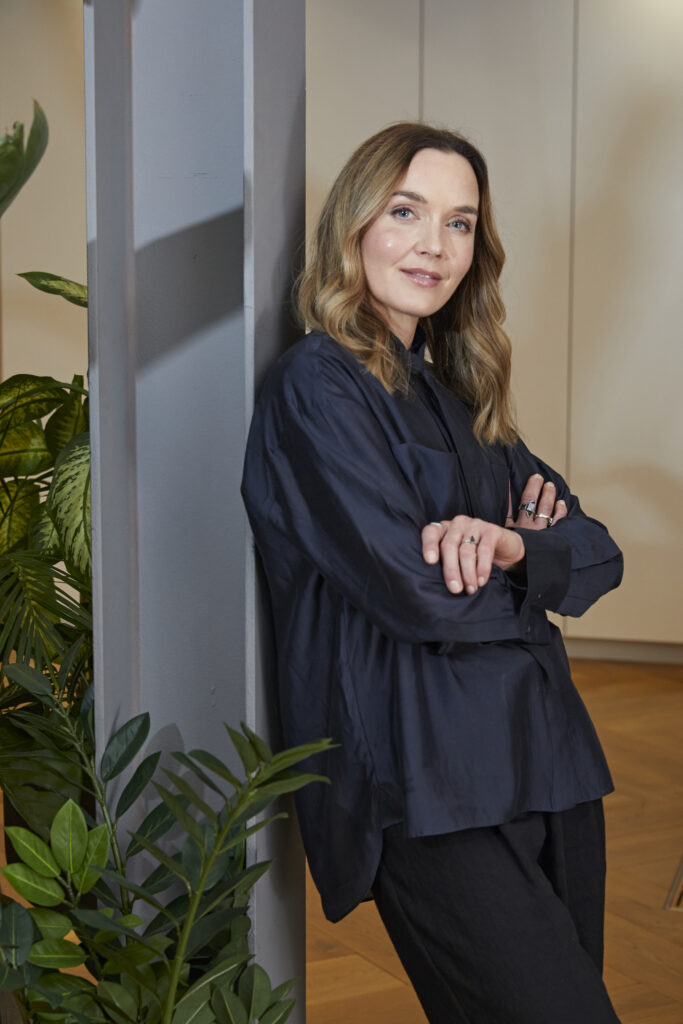
The book’s underlying message, to celebrate life, regardless of what it throws at you, was inspired by Pendleton’s relationship with her twin brother Alex, who passed away to brain cancer three years ago.
“For a period of time there, I really didn’t want to focus on anything,” she says. “But a big part of my fearlessness comes from having a twin brother. And I thought, what a great thing to do, to make something positive out of it. So, it was just a really great opportunity to start moving forward again after quite a static period.”
I ask whether analysing fear in such detail for the book has given her a new perspective on her cycling career. Yes, Pendleton says, especially when it comes to the shadow that hangs over many elite sportspeople, especially those expected to win – the fear of failure.
“I wrongly attributed my fear of failure to the fear of, not the actual fear of the failing, but the consequences or the judgment of other people of my failure, bringing me fear,” she says.
“So I understand that a little bit better. Because it wasn’t exactly my performance, it wasn’t the race, it was how people would perceive my performance. It was very much external, a fear from external sources, rather than my own personal fear. When I got to a point where I could understand that, it allowed me to separate that feeling out a bit more and also just let it go in some ways.
“We’re never going to please everybody – I am a people pleaser, still working on that – and I think the sooner we can unpick that and let it go, the better. And I think lot of people fear failure, but it’s not the failure they fear, it’s something else, like criticism. You can only control the controllables, number one rule,” she laughs.
“But also, let’s not put barriers in the way. Life is short and it is precious. So, I just want people to make the most of every single moment they have, whatever that may be, whatever direction that takes them.”
“I always hoped that I would have exactly the same as the boys got. I just want that, I don’t want anything more”
One of the barriers prevalent during Pendleton’s cycling career that has since been torn down – thanks in no small part to her own efforts – concerns the status of Britain’s female track sprinters.
A fallow post-Pendleton period in the late 2010s has given way to a new golden era for women’s sprinting, spearheaded by the record-breaking Emma Finucane. At the 2016 and 2021 Olympics, GB failed to even quality for the women’s team sprint. In Paris in 2024, they won gold – the only British track riders to do so at the last Games. And the medals have kept piling up since.
“Women’s sprinting, when I was the only one for a while, we were right at the bottom of the level of importance and no one was really interested. No one really had done it before. We didn’t even have any female sprinters.
“I was walking into the unknown going, can we even do this? Are we good at this? I don’t know. And now to see the women’s team and Emma [Finucane] doing so well, especially, that’s brilliant to see. I’m all for that, getting your fair slice of that pie.”
That new wave of sprint success has coincided with a seismic shift in the internal culture within British Cycling, following the post-Rio review that revealed the toxic environment Pendleton and others were forced to navigate during their gold medal-winning days.
Looking from the outside at the sprint team’s current success, and the conditions they now work under, does Pendleton wish she could be part of the British Cycling set-up of 2026?
“First of all, I wouldn’t have made it on the team in this era,” she laughs. “My legs would have gone, ‘absolutely no way’. I mean, the size of the gear they’re riding right now, I probably couldn’t even turn it. I had leg speed, I didn’t have peak power.
“So I probably wouldn’t make it on the team – but in terms of the view of women in the team and the opportunities, oh my gosh, hell yes. Totally different.
“I went to meet with the track team before Paris, to visit some of the sessions they were having in Newport. I was just like, wow, this is amazing, how much it’s progressed. There was so much going on that I was just like, this is brilliant and this is brilliant, oh my gosh, this is amazing.
“It really inspired me and I felt thrilled that it had been transformed in such a way, because I hadn’t really been paying that much attention. So many good things, so much great support, girls getting the opportunity to work on their education at the same time as their career and supported to do that, to give them options and for the future and a bit more life experience, and all these wonderful things.
“And I felt like, wow, I wish I could be part of this now. I feel very envious of this system right here. But someone had to go out there and do it first. So, I’ll take the hit,” she laughs, raising her hands.
“Somebody had to be the first one through, and I did my best and gave it a good shot and hopefully there was some positive, resulting change as a result.
“I’m hoping that I was helpful in the change of the women’s system and also just opening up people’s eyes towards female track performance, because there wasn’t really anybody before me at that level. I was going into the unknown a little bit.
“But I would gladly do it again for the sake of all the women that have come through the system since and how well they are doing at the moment. I would happily take the hit. I’ll be that person. Because it’s fantastic now, it’s completely different. It’s the way it should have been.”
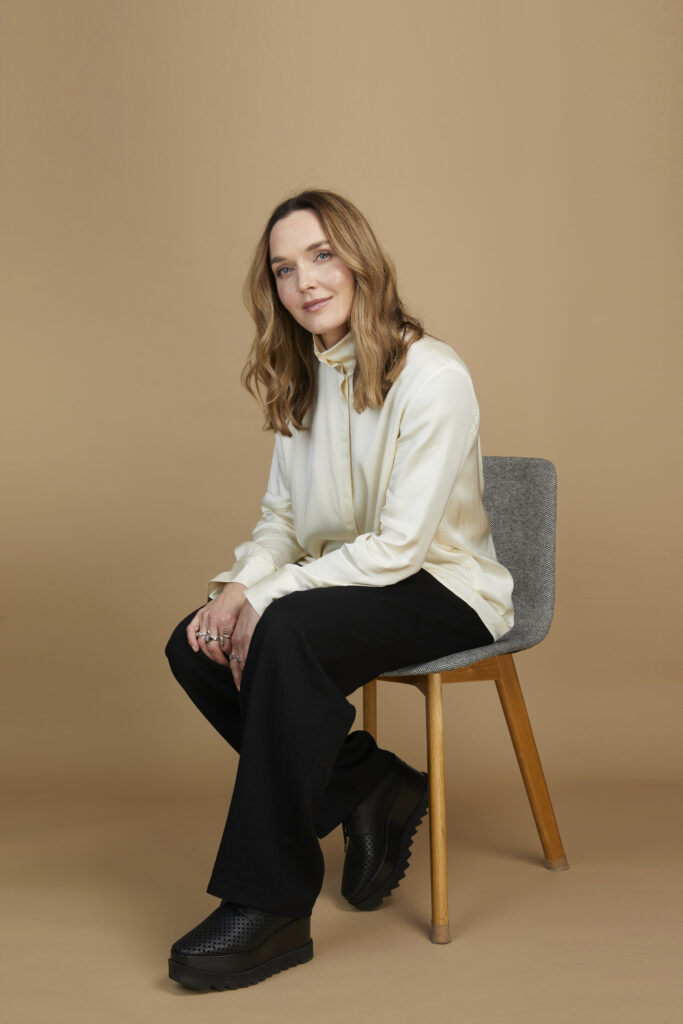
Is there a part of Pendleton that wishes she didn’t have to take the hit, that change could have been implemented sooner?
“I always hoped that I would have exactly the same as the boys got. I just want that, I don’t want anything more,” she points out.
“But there was nothing I could necessarily do about it. I was grateful to be there. I was really grateful to be there. It wasn’t for any other reason, except we just didn’t have the experience or the understanding to put anything in place to bring the system forward.
“We were on a very steep learning curve, suddenly becoming really good at a sport that no one ever knew we could be that good at. We couldn’t even find coaches at the time because there wasn’t anyone more experienced or more successful than we were in the UK. So where are we going to get the expertise from?
“It was a crazy time. And everybody was trying to work out how we’re supposed to do it. How are we supposed to create the team? What does performance look like and what do we need and what don’t we need? It was a learning experience really.
“It was bringing track cycling into a professional era in some ways, when it had been a true amateur sport.”
“Let’s not forget names like Nicole Cooke – her name is so often forgotten on the list of pioneering women in cycling, and also Caroline Alexander, they were iconic in that era. And because no one had prepared for anyone like Nicole to come along, I think she really was underappreciated and undervalued, considering the talent that she brought to the table.
“I always feel her name is missed off when people talk about women’s cycling in general. I’m like, hang on, whoa, whoa, whoa, we have Nicole Cook here, guys. Let’s not forget her. Because there are so many names in the women’s side of the sport that kind of were forgotten.
“They moved on and everyone just forgot to mention them or remember them. And I just think that’s crazy. I mean, there were a lot of excellent women who didn’t necessarily get the proportion of support that they deserved. That’s all I’m going to say…”
Victoria’s new book, The Fear Opportunity, published by Bluebird, is currently available in paperback, e-book, and audio book format.
The road.cc Podcast is available on Apple Podcasts, Spotify, and Amazon Music, and if you have an Alexa you can tell it to play the road.cc Podcast. It’s also embedded above, so you can just press play.







1 thought on “Victoria Pendleton: “I wish I could be part of Team GB now. But someone had to go out there and do it first. I’ll take the hit””
It was good to hear a shout out for Nicole Cooke, she was absolutely outstanding. Her biography ‘the breakaway’ is a worthy addition to the bookshelves of anyone with a passing interest in cycling.