


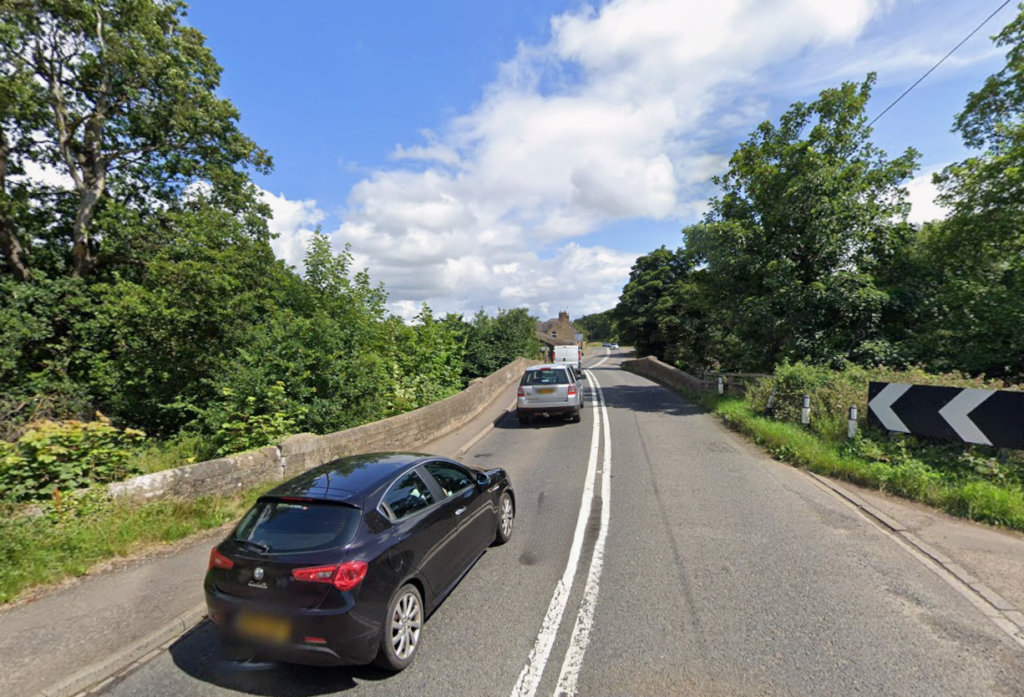

Plans to build a new cycle lane on a Grade II listed bridge, currently home to two lanes for motor traffic, have been criticised by local campaigners who claim the proposals will increase congestion and pollution, “urbanise” the hamlet, and “historically destroy” its Roman character.
Northumberland County Council is currently working on plans to remove one driving lane from Dilston Bridge in the village of Corbridge, located 16 miles west of Newcastle. The lane will be replaced by a new protected bike path, while traffic lights will be installed on either side of the bridge, which was built in 1788, to enable drivers to pass safely.
The proposals form part of the local authority’s Hexham to Corbridge active travel corridor, which aims to improve walking and cycling infrastructure by delivering a protected route connecting residents to employment, education, and leisure facilities, while providing a link to Hexham railway and bus station.
Work on phase one of the project at the Hexham began earlier this year, with the entire scheme scheduled to open in the middle of 2027. According to Northumberland County Council, the initiative, approved in 2023 and supported by the previous Conservative government’s Levelling Up Fund, will enable locals to opt for “healthier, more sustainable travel choices”.
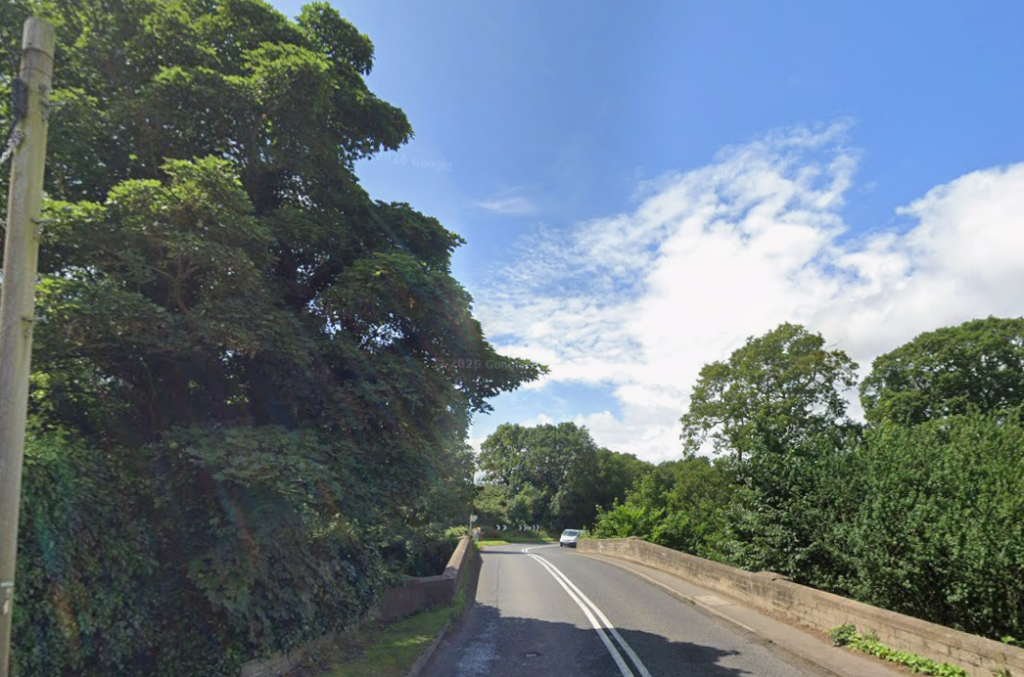
However, the scheme has been questioned by a number of local campaigners, who are urging the council to carry out a heritage consultation concerning the plans due to its supposed impact on the village’s historic character.
However, the local authority has said that such a consultation is unnecessary as the bridge itself is not being altered or demolished.
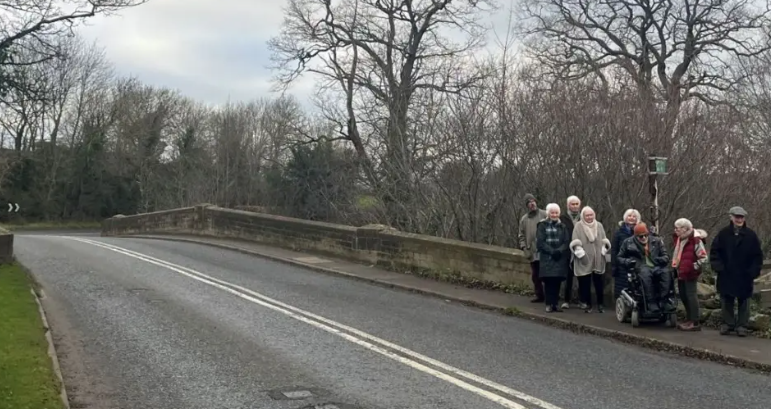
Speaking to the BBC this week, David Burdus, who has lived in Corbridge for 25 years, noted that the residents opposed to the plans were not against active travel in principle, with powered wheelchair user Burdus welcoming improvements to accessibility in the village.
However, he added: “We’re not supportive of particular points along the route being historically destroyed. We’re going to turn a free flow of movement into a stop, start, stop, start.
“It’s going to cause havoc, pollution, and disturbance. This area is a visitor attraction and it relies on tourism and you’re going to turn this beautiful hamlet into a road traffic bottleneck. There’s no need.”
Burdus also claimed that the number of listed buildings in the hamlet meant that a heritage consultation should have been carried out, arguing that the council needed listed building consent.
However, a spokesperson for the local authority told the BBC that listed building status did not extend to the “character or setting” of a structure, noting that the Hexham to Corbridge active travel scheme falls under Permitted Development rules laid out by the government.
The spokesperson added that the council is required by government to prioritise active travel to “improve public health and reduce pollution”.
Perhaps unsurprisingly, Burdus and his fellow campaigners’ claim that removing a motor traffic lane and replacing it with a cycle path will “historically destroy” Corbridge has been met with some bemusement from cyclists on social media.
“Surely it was historically destroyed the moment it was paved over with tarmac and made useable by multiple tonne motor vehicles?” Connor wrote on Facebook.
“They do know that the Romans didn’t have cars, don’t they?” asked a baffled Dave, while Steve added: “Don’t remember Romans having HGVs, vans, or motor cars! Can’t see any problem with a simple cycle lane!”
“If they want to save the bridge then build a new one for SUVs and trucks and the cyclists can use the old one,” argued Paul. “Because correct me if I’m wrong but the average cyclist is a tad lighter than a 45-tonne truck.”
The furore surrounding Dilston Bridge isn’t the first time in recent months that locals have criticised the Hexham to Corbridge active travel corridor.
In June, we reported that another already-completed portion of the scheme, along the A695 in Hexham, was panned by some disgruntled residents, who claimed the government active travel funding should have been spent elsewhere on “more important” projects.
The construction of the two-way cycleway along the A695, which also includes a segregated footpath accounting for 50 per cent of the active travel space, means that the road has been made narrower, with plans in place to lower the speed limit for motorists using it from 60mph to 40mph.
Under a video posted online of the new infrastructure, several locals – including some self-described “keen” cyclists – pointed out that they “never had any problems” on the road or that they will continues to use a quiet alternative road on the north side of the river instead of the soon-to-be-completed cycleway.
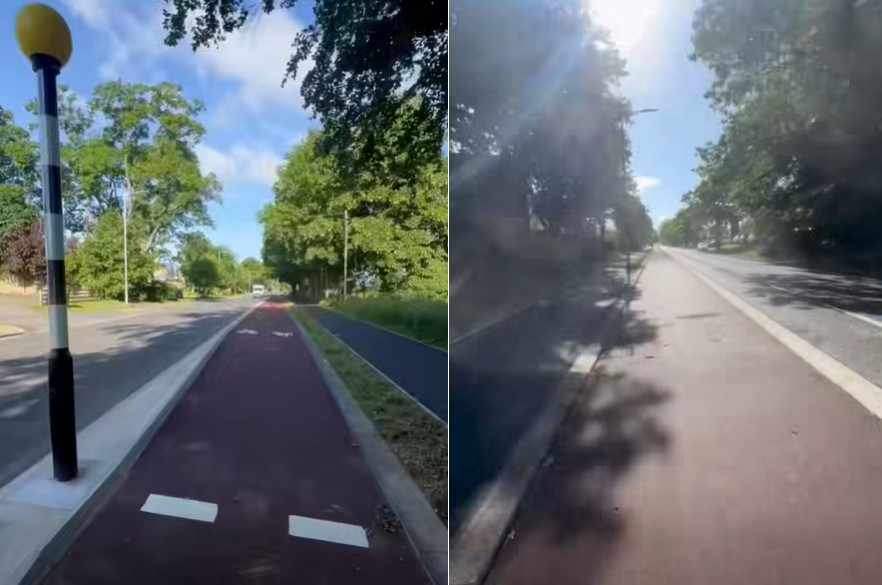
Others, meanwhile, were more even more critical, describing the new cycle lane has “overpriced” while claiming it had made the road too narrow and that the previous layout was never “a real danger to cyclists”.
“I know it’s government funded, but I think they could have spent it on something more important,” Hexham resident Raymond Bewick said.
“I live near it and I see a lot of the traffic that goes along to Corbridge. it’s very rare that you see bikes going along there – that could improve.
“I don’t think they have kept us informed enough. A lot of it has been out of the blue, without any information. think if they had kept us better informed people might be more positive.”
In response to these concerns, the local authority noted that safety assessments had been carried out and that the changes adhered to national highways and cycleways standards.
Councillor Nick Oliver pointed out: “There have been consultation events held in Corbridge and Hexham that were pretty-well publicised, both on social media and in the newspaper.
“There has also been a lot of engagement with residents. I understand some people will have missed that, but it is impossible to consult with everybody.
“The council has made a genuine effort, we also consulted with Hexham Town Council and Corbridge Parish Council. I think there has been every effort made.”



















1 thought on “Replacing driving lane with bike path will “historically destroy” Roman hamlet and turn it into “road traffic bottleneck”, locals claim – but cyclists point out “the Romans didn’t have cars””
Those campaigners look like very much like Daily Express and Daily Telegraph readers.