


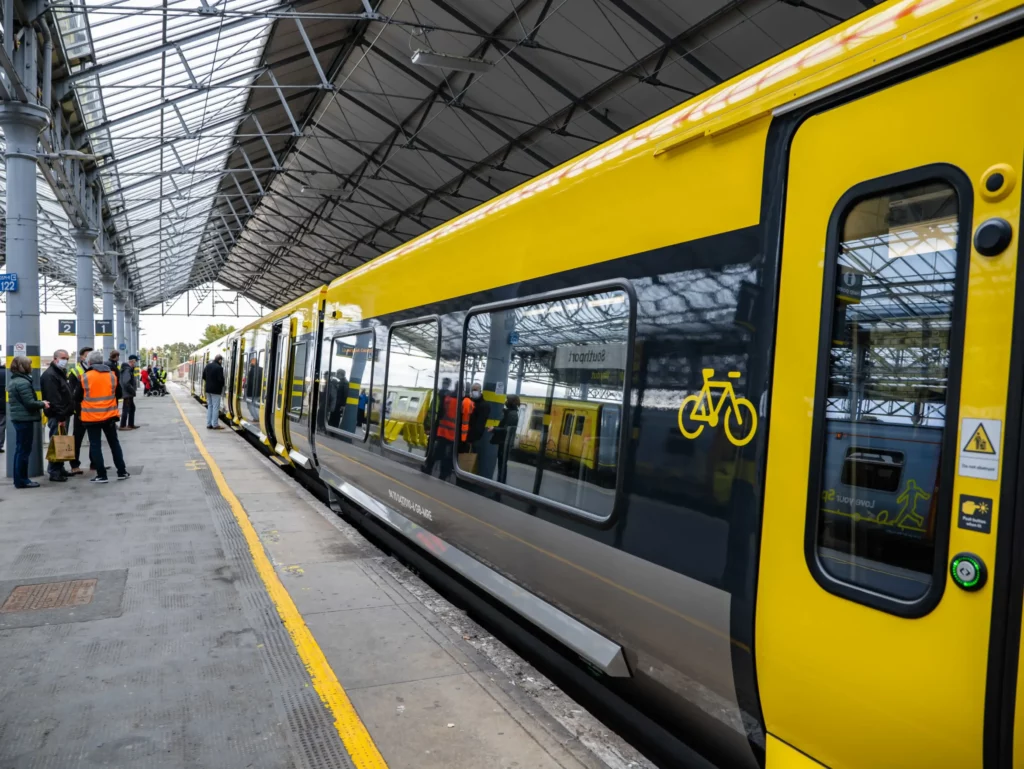

Merseyrail has come under fire from Cycling UK after banning all non-folding e-bikes from its train services and stations. The UK cycling charity has highlighted issues the ban causes for people with difficulties walking and issued a formal complaint to the Liverpool-based rail operator.
On 14 July, Merseyrail announced its plans to ban non-folding e-bikes from January 1, 2027, citing a safety review. The ban will cover all non-folding e-bikes, including ones that have been adapted or modified, conversion kits, and loose lithium-ion batteries. It won’t just apply to Merseyrail carriages: the ban will cover stations, car parks, and cycle storage.
Cycling UK wrote to Merseyrail on 6 August to highlight its concerns about the decision, which it stated would particularly affect people using e-bikes as mobility aids.
The letter also asked for a meeting with Merseyrail, and requested to see the safety review the operator used to justify the ban. However, Merseyrail declined the invitation to meet and confirmed that no consultation had taken place before the decision.
“This is a huge backward step for accessible, sustainable transport in the region and one that will have a major impact on people’s wellbeing”, said Duncan Dollimore, Associate Director at Cycling UK. “Merseyrail’s response was deeply disappointing and showed they have failed to either adequately consider or understand the issue.
“People using e-bikes as their mobility aid are by definition not using other mobility aids, so offering reassurances about mobility scooters and powered wheelchairs is a fundamental misunderstanding of the problem. There is still time for Merseyrail to reverse its decision, and we urge them to reconsider in light of the devastating impact it will have on people’s lives.”
Cycling UK has found a number of individuals who will be adversely affected by the ban, including Janet Farrell, from Formby, who said: “I would be unable to go to medical appointments and I would be trapped in Formby. I’m sick on buses and I no longer have a car because of health and cost.”
The cycling organisation has also worked with Wheels for Wellbeing, a charity aiming to promote and defend the rights of disabled and less-abled cyclists across the country, to remonstrate against Merseyrail’s decision.
Dr Kay Inckle, Campaigns and Policy Manager at Wheels for Wellbeing, said: “This ban flies in the face of the ambition to make Merseyside the most accessible city region and undoes the good work Merseyrail have undertaken with level boarding and improving station accessibility.
“A blanket ban does not address the safety issues caused by illegal and unsafe devices, but it does deter cycling, which is essential for sustainability and public health across the region, especially for Disabled people.”
Now Cycling UK is using money from its Cyclists’ Defence Fund to escalate its initial letter to a formal complaint. Rather than a complete ban, the charity believes that the safety issues surrounding e-bikes are better tackled at the source.
“Legal e-bikes bought from reputable brands and sellers are extremely safe to use and provide a healthy, convenient and sustainable transport option”, Cycling UK said. “To tackle fire safety risk posed by illegal and modified e-bikes, action is needed from the government to crack down on the sale online of the source of the risk.”
Merseyrail isn’t the first rail operator to ban all non-folding e-bikes: TfL introduced a ban across most of its services last year. Merseyrail’s only response so far has been to state to Cycling UK that “safety considerations led us to introduce the ban”.
















65 thoughts on “Blanket e-bike ban from trains and stations will have “devastating impact”, say cycling campaigners – as rail operator refuses to meet with cyclists and share evidence behind “huge backward step””
Honestly, I don’t see the point here.
E-bike batteries are a danger, that is simply a fact – and it doesn’t apply just to illegally converted bikes. Even a perfectly legal bike could get it’s battery damaged, resulting in a hard-to-cointain, potentially lethal fire whose consequences could go into millions of pounds. And what’s just as important, we can’t expect railway workers to know the technicalities required to confidently decide whether a given bike is OK or not.
Just because you like your e-bike and it helps you get to work does not make it any less dangerous.
Just like there is a blanket ban on petrol canisters (even certtified ones, which are genrally safe to use), a blanket ban on e-bikes is just common sense and a justified precaution.
If this is the case, I wonder why I can even buy an ebike battery, bring it into my home, take it to public places, take it in my hand luggage when I fly,..
Looking forward to reading a proper risk assessment, informed by science.
Fact.
@Ramz
“take it in my hand luggage when I fly”
Unless your e-bike battery is less than 160Wh you’re actually forbidden from bringing it onto a plane. And between 100Wh to 160Wh requires approval in advance from the airline.
Why are the Merseyside trains more precious than Le Shuttle, the channel ferries, or the many ferries that serve our islands? And why did BA let me bring two 500W batteries on my flight last year?
Is it because you dress sharply and have a winning smile?
@Ramz Your home is your responsibility. And generally you can’t take any bike into most closed indoor spaces anyway.
And a train is even more different, as it is a closed space that could end up a good few kilometers from the nearest fire station.
@tomlew “And generally you can’t take any bike into most closed indoor spaces anyway.”
Um. That’s news to me. I’m looking at my bike indoors right now.
Police tipped off.
@ravenbait Wait until a fire breaks out in your house. Many insurance policies make a clear exception for ebikes.
@tomlew You said “any bike”. My bike doesn’t have a battery. Not sure how it’s going to catch fire unless you’re planning on coming round with a blowtorch, at which point it’s not the bike I’ll be worried about.
@ravenbait No, I did not say “any bike can catch fire”.
I said “you can’t take any bike into most closed indoor spaces”. I did not say a word about the reasons for this.
@tomlew You really need to work on your communication. You said, “And generally you can’t take any bike into most closed indoor spaces anyway.”
Any bike. Not “E-bikes that might catch fire.” Then you told me, “Wait until a fire breaks out in your house.”
So the implication is that any bike might catch fire. If that’s not what you meant, then perhaps consider whether what you write (all any reader has to go on) is what you mean, because if what you mean isn’t what you write, then you might as well not bother.
@ravenbait Wait – you’re suggesting people should read their own comments when writing them? Next you’ll be insisting they read other people’s comments before replying to them! Madness!!
Nonsense based on misinformation. Petrol and diesel cars are significantly more likely to catch fire than an EAPC from a reputable brand. Are you proposing on banning them from station car parks too?
The van fire that closed the a31 and burnt a square km of the new forest must have been an ice, if it was an electric van we wouldn’t have heard the end of it. And the Luton multi storey car park fire.
All li ion batteries have a risk of combusting, damage makes it more likely, and charging even more. Especially with iffy chargers. Charging points for phones, laptops and tablets on most trains these days, and buses?
TfL banned ebikes a while back, it was only going to spread. GWR were meant to have banned dodgy ebikes, though I haven’t seen that being enforced. Have seen people being removed for escooters though, and got round the ban by folding and placing in a bin liner.
@AidanR But you can’t take petrol or diesel onto a train, just like you can’t take explosives. So that’s a non-argument.
But still, you can’t expect a railway worker to know how professional your conversion is. That is just nonsense.
Please read the article properly. The ban covers the train stations and their car parks too.
Ideally any ban would be on shonky conversions only on train carriages. From what I’ve seen in London, a good start would be “is the battery attached with parcel tape?” (!)
But you could ban all conversions and leave dedicated EPACs out. It’s pretty obvious which ones they are with even a modicum of training.
@AidanR How exactly would you like to get on a train without going through a station?
Discerning good and bad conversions is nowhere near as obvious as you think. A dedicated EPAC can be repaired at home and dangerous, while a self-made conversion could be suprisingly solid if you do the job properly.
And no matter what you do, a large Li-ion battery is always potentially explosive – even if the battery itself is fine, the circumstances can still make it explode. It’s exactly the same why petrol cans are forbidden on trains, even if they are perfectly safe in themselves under the right conditions.
Um, think you’ve rather lost track of the argument there – haven’t followed the train of thought. In your eagerness to rail on what seems to be a bit of a bogie subject for you, you’ve become uncoupled from the logic of the discussion.
We need to ban petrol, diesel, and electric cars from the shuttle train, and ferries, and car parks, and parking lots, and garages, and… oh wait.
Same for laptops, powerbanks, even phones.
But yeah, this is where we get to when the government fails to do its job of establishing market regulation, effective enforcement, policing, etc – just the normal stuff of running a country. We end up with anything and everything on sale and in public with impunity.
@tomlew With that logic we should ban all laptops and mobile phones from trains.
Laptop computers and mobile phones have lithium batteries, so they will have to ban them as well.
The bike ones are bigger – although not necessarily wildly so. Just checked what you can get with the Tern GSD and there are 3-500Wh.
Comparing strawberries and apples I was looking at airlines restrictions. Things vary but BA says lithium-ion batteries of 100 – 160Wh are allowed but you have to declare them, greater than that, no. (Unless it’s in your wheelchair and stays in it).
Perhaps they could take a “Post Office” approach and just ban ones that look “suspect” eg. covered in tape with wires sticking out?
@chrisonabike But why put the accountability on the ticket officer to discern good e-bikes from bad ones?
How is the average railway worker supposed to know whether a wire is for power or just a control/whatever cable wrapped in external padding or into a bundle (which is, ironically, done for safety, but could make the wire look “suspect” to the untrained eye).
Apparently to several untrained eyes my non-powered Cube Travel Exc is an eBike, with “motors” (actually a hub gear and hub dynamo at the front) and wires…
Also it’s currently on staff what they do and don’t carry anyway. But they’re already carrying batteries with similar capacity to ebikes (in wheelchairs) and a fair fraction of that (laptops, power banks etc).
And as others note they propose keeping bikes from entering the station at all (again given mine’s been misidentified a few times that would be unwelcome)
I can see the point ( I’d be happy if they don’t let on DIY Surons) but I’m not sure this is the way.
@kingleo A laptop battery is typically much smaller and as such, less dangerous. And a laptop is typically not tossed around and does not fall on pavement or crash into things every now and then.
@tomlew You are both very optimistic about how people treat their laptops, and very pessimistic about how people treat their bikes.
@ravenbait It’s not about optimism. It is about the fact that a laptop display is much more sensitive than a battery.
Getting the screen broken renders the laptop useless, so it’s hard to imagine a situation in which a laptop is damaged enough to be usable overall with a badly damaged battery.
@chrisonabike
Does the “Post Office” approach also have a carte-blanche pass on any Fujitsu products no matter if they are demonstrably defective and having life-altering impacts on hundreds of people?
@ROOTminus1 apparently they never ever do and if they did it is by definition your fault, for which the post office may pursue prosecutions. At least, those are the rumours I heard.
Another kneejerk anti-cycling brain fade.
Unless they ban all lithium battery powered devices on trains, it’s blatant discrimination.
Homemade e-bikes should be illegal everywhere anyway. As should dodgy cheap lithium powered anything bought from junk websites.
It shouldn’t be a train security issue. It’s a worldwide policing and cheap crap market regulation issue.
@GravelIsNothingNew In the same vein I could demand the right to take my car onto a train.
Or a petrol can, for that matter. Cause why can you take a can of Coke, but not a can of petrol?
And do you even realize how impracticible your idea of “banning junk websites” is? I really wonder how exactly you would enforce it. And BTW the battery itself is rarely the problem, usually it’s the connection and assembly that cause problems.
You mean like, say, the Channel Tunnel?
@mdavidford More like on a dedicated platform separated from people on board.
But if one catches fire on the same train as me i will likely know about it, and if one goes pop in the car carriage several might…
But yes, they should be in their own separate carriage, unlike say a phone or laptop. But both of those are “very safe”, although when they do go it’s very much enough to make you take notice and they may be getting on for 1/3 the capacity of an eBike…
@tomlew Even a small ebike battery has about 3x more capacity than a large laptop battery. So the difference is substantial.
Also a laptop typically does not hit things or fall in the same way a bike does. It is just much less prone to physical damage – and if it does, it’s usually the screen that breaks and it breaks beyond usability way before the battery is damaged enough to be unsafe to use.
Are some of those cars e-cars? IIRC from the “car crashes into building” thread some of those are quite likely to fall over and/or get crushed. Even in station car parks!
@chrisonabike I haven’t heard of many cases of people tinkering with eCars that caused a fire.
And neither have I heard of a fender-bender kind of accident inside a car park that would’ve caused one.
And one last thing. Sorry, but this time this argument is perfectly valid: eCars have insurance, eBikes don’t. Considering that you could leave the bike and it would catch fire a few hours or days later, this is a very different situation to the average car-vs-bike accident.
The ban won’t last very long because sodium batteries will be used on bikes; sodium batteries don’t catch on fire.
@kingleo Exactly. And that could be a step forward. Especially for city bikes.
@tomlew I think you’re missing the point that many people will cycle to the station to get a train, and would therefore like to park their bike there. Safe(r) cycle parking is generally found within the station or the car park. And for those with mobility issues, getting as close to the train as possible on their bike is obviously important.
I’m not suggesting that different qualities of conversions can be easily told apart, although there are plenty of terrible ones which are painfully obvious. Yes, it is feasible that a dedicated EPAC could have a damaged battery from a crash, although it’s likely that the rest of the bike would be in a pretty bad state. Instead we can look to the stats, which suggest that the risk of fire from a dedicated EPAC is minimal, and this will of course include bikes that have sustained such damage.
I’m not saying that you (or the train company) don’t have legitimate concerns, but a blanket ban with no consultation is a lazy and discriminatory way of dealing with such concerns.
@AidanR I do get your point about parking. However, I still believe that a train station is not the right place to store items which could be dangerous to people around.
Petrol cans, large knives or guns are perfectly safe in the right hands, but they are forbidden anyway – and rightly so. Here we are dealing with an object which could cause a fire even through no direct fault of the owner (who would be hard to trace anyway in case of a fire, which is another problem) and even while they are away.
I believe an exception could be made for separated e-bike zones meeting additional safety standards. But as long as those don’t exist, I totally understand the ban.
All the talk about ebike batteries being dangerous is irrelevant as according to this article you can still take a folding ebike on no problem…!
@Sbloke All my bikes fold around the hinge in the head tube, I don’t think I’ve ever seen a working bike that doesn’t do this.
Thank you CUK for taking on this silly, knee-jerk decision, apparently based on nothing more than rumours and guesswork. Still, given the way our railways have been run since privatisation, that’s about par for the course, or even above average.
The fact that Merseyrail are unable to justify their decision speaks volumes.
If you remove the battery from your E-Bike and carry the battery in the rest of your luggage, the E-Bike is presumably just like any other manually-powered bike and would therefore be allowed on the train. There would need to be a regulation that bans hand carrying large batteries on the train or in the station to block this workaround.
I must put in a word for Merseyrail, which is brilliant and allows you to travel with your bike from Southport to Chester for only twice the price of just one stage under the Mersey. The staff, and even the other passengers, are unfailingly helpful. I admit that my comment is tainted by ‘I’m alright Jack’-ism, because I’m only travelling with a food-powered bike. I assume that the exclusion for folding e-bikes is due to the greater difficulty in detecting the electric ‘works’, but I haven’t yet seen a folding bike of any type in the bikebays on any of my numerous journeys
Couldn’t that just be because people are keeping them with them as ‘regular luggage’?
Good review. I have had no problems with Scotrail and bikes. I suspect this is more to do with benign neglect of limits to the “first-come first served” unreserved numbers.
Still I’ve only been told not to board once, and that was for a train that was rammed with people so fair enough.
Haven’t made much use of the reservation system – those tend to be clunky and chancy everywhere.
Same in my (very limited) GWR experience.
OTOH on some popular recreational routes (Highland line) could use more capacity.
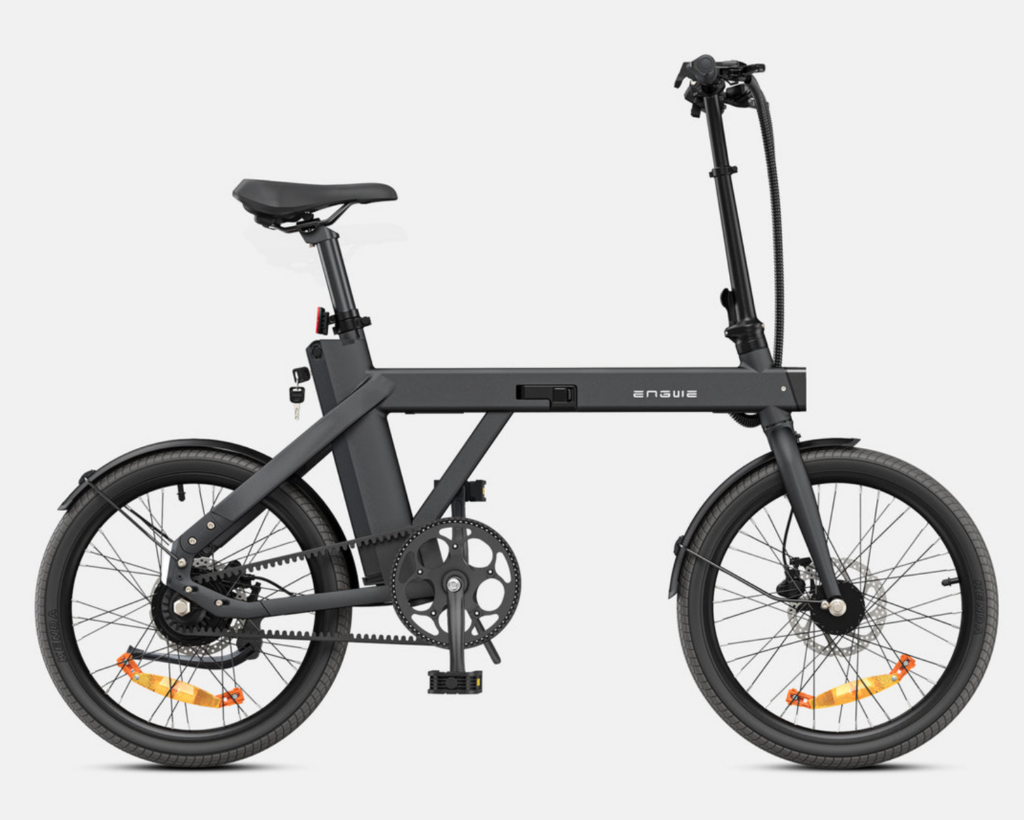
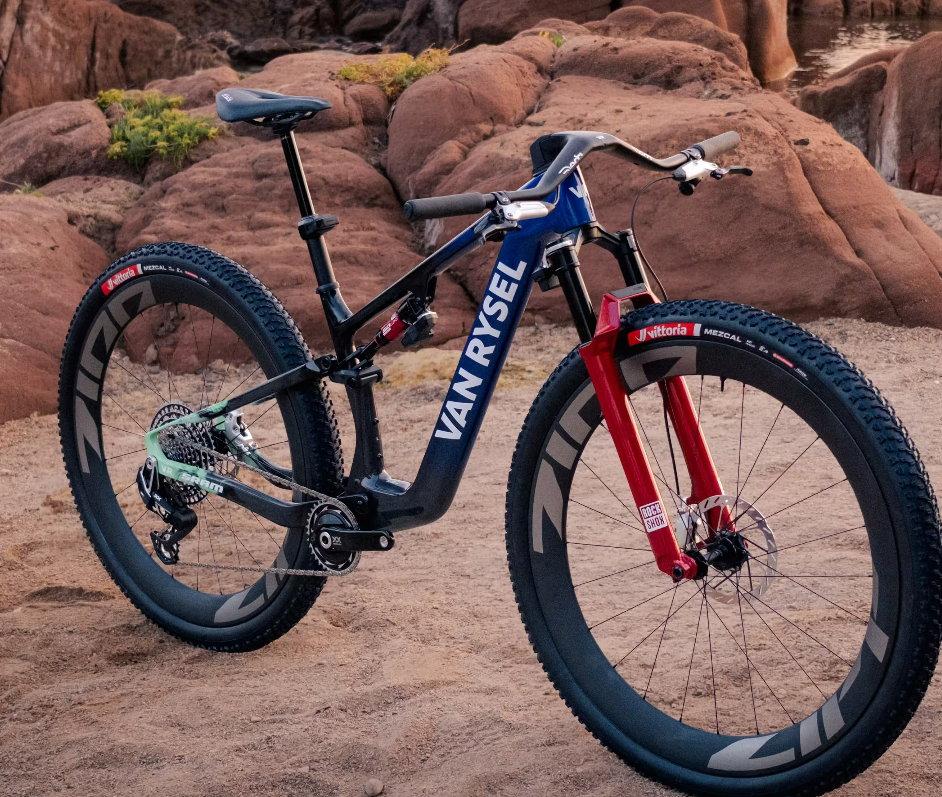
So to illustrate the nonsense that this is, it’s perfectly acceptable in their eyes to take the thing on the left onto the train, but you can’t even bring the Giant on the right into the car park?
But hey, what do I know. Maybe the Randride YX20M is the greatest bike ever to take to the road
Well the one on the right is twice as biggerer, obviously has to be substantially more dangerous!
This is a silly decision by Mersey Rail, allowing some batteries on folders then banning the identical batteries on pedelecs. Then allowing far larger Lithium batteries on mobility scooters and wheelchairs.
It is not about fire risk. It is because:
1 – The policy was written by a bonehead, and they do not want to put the work in to build a sensible policy.
2 – They just want to reduce the number of bicycles no their trains, any way they can.
3 – They have been spooked by the Daily Mail etc, or their insurer, spouting nonsense.
We already have ISO standards for what makes a safe battery including the fire prevention features, and certification. I have been involved with a case where a mobility aid certified as OK for going on aeroplanes was banned from a student’s flat by the University – their storage access mechanism required a 20-30 minute process to get it out each time and their demands that it be placed in a shed damaged the £500 battery, as well as wrecking the student’s social life.
What we need here is a precedent setting legal action to rule:
1 – Pedelecs are legally mobility aids when used by a disabled person as such.
2 – Pedelecs made in accordance with the correct standards must be treated as a pedal cycle, which is what they are, for all purposes.
@mattw additionally I would like to see some more restrictions on what’s put on sale and to whom; but that appears to be hopeless now (unless / until someone runs over a “significant” politician using a Suron I guess).
I hope I’m not doing them a disservice but without actually trying to buy one I couldn’t see any clear indicators in e.g. the local Currys PC World that there might be any restrictions on using a non-EAPC powered wheeled thing. But perhaps the staff were all trained in informing customers, or perhaps it was very clearly spelled out on page 38 of the manual?
@chrisonabike My view is that motorbikes should be regulated as motorbikes, which is safety gear, training, license, registration etc. And I would apply the SORN regime, too.
That can be done technically as eg there are road legal Surrons.
I can see a case for a class of S-Pedelecs, licensed for roads only, and we would need to learn from the continent.
This Govt would do that; the next Con Govt would not because they are still in the culture-war swamp, and Kemi still doing her “performing seal on a podium in a panto on the end of Clacton pier cosplaying Farage” thing. Until they grow up, I don’t think the blues are going anywhere.
But I hope that one of AB’s serious proposals will be electoral reform to be investigated now cross-party, and joint proposals to be put forward by LD / G / Labour parties at the next election. Given UK politics, a future politics of coalitions will go some way to lock in civilisation.
I can see value in EAPCs having a cut off at 20mph, theoretically to ease traffic in 20mph zones, but that may need to be a 10%+2 mph enforcement threshold not these portable dynamometer things.
(There’s been a national kick-up-the-arse from somewhere for the police, as suddenly enforcement is not in the “too difficult” bucket. I’m not sure where it came from.)
@mattw I think some of that *could* be sorted.
By far the best way would be a general redrawing of the rules / reconsideration of what types of transport we want for which journeys (and the wider consequences of each). (Ideally including adopting a new philosophy e.g. “sustainable safety” / “safe system” approach). We don’t have to guess or “reinvent”. There are now many examples of how things can be done from all over Europe; places hilly and flat, hot and cold, urban and rural. But principally The Netherlands as they’ve taken this farthest (with the greatest gains).
Unfortunately that kind of reform seems incredibly unlikely to happen in the UK. Indeed very few issues seem to be treated to that level of “in the round” attention. Probably because much of politics at the level which it would need is effectively (political) crisis management. So there would have to be (in the political opinion) almost a “meltdown of transport” before we get that…
I’m concerned about “unexpected consequences” in the UK where at best we tend to tackle one item at a time in silos (sale and licencing regulations here, “cycling” there, disability legislation separately etc.)
@chrisonabike I think we already have a “safety system” on our roads – that interventions are evidence based. That’s why 20mph zones have been ticking up to 30%+ of residential roads over 3 decades.
What we also have is politicians who are timid or cynical sometimes – and do not listen to the professionals.
And the scope of the safety system is sometimes too limited, with vulnerable road users not getting enough of a look in.
And we have – just like in defence – endemic short-termism from the treasury, and a mindset that is still stuck in 1976 or earlier at strategic level.
I’m still not sure why our roads are relatively safer than other places in Europe in that context !
@mattw I am not keen on “just 5mph more…” for EAPCs. People say “but safety – it will reduce irritation and overtaking because keeping up with the cars”. But we all know that “MGIF” applies regardless of speed limits.
In reality most people simply aren’t cycling (full stop) but specifically they’re consistently not keen to cycle in traffic (who is?). So we would be just upping the average speeds on the few shared use / cycle paths we have. Pedestrians will love that…
The “how fast *should* cyclists be going” debate is not resolvable*, but places with the highest density of cyclists seem to have landed on “no assistance beyond 20kph”. Yes – “cyclists” can keep up 18 – 20mph+ (and regular folks could on level ground with a velomobile…), but AFAICS the folks that are the target for EAPCs mostly aren’t that kind of “cyclist”.
I have sympathy for injured / older roadies who want to have the option of being able to keep up on club runs. But that’s arguing for a limited sports interest to be facilitated by rules for the general public. Nor do I think that just because they have this in the US we should. Bringing in road transport policies from the US has a … spotty history.
So I just see this as reducing everyone’s reaction time and adding energy to any collision situations.
* Except for the unhelpful “It’s zero – they shouldn’t be cycling except in velodromes…”
@chrisonabike I’m certainly in 2 minds, and that would cause a political firestorm amongst the culture warriors – Lord Hogan-Howe’s mob in the Lords for example.
And the Telegraph and the Spectator would wet their pants.
I certainly think there are more important battels to win first.
The one I really want (as an activist for disabled accessibility) is crowd sourced (ie Op SNAP) enforcement of pavement parking everywhere. In the meantime we can do it on certain types of parking eg Zig Zags.
@mattw “The one I really want (as an activist for disabled accessibility) is crowd sourced (ie Op SNAP) enforcement of pavement parking everywhere. In the meantime we can do it on certain types of parking eg Zig Zags.”
I think that would be really helpful, but I think even that may be a major battle. I’m in Edinburgh where there’s all the legal backing needed, there seems to be real support (at least, in the centre of town…) for sorting this. But (anecdata alert – and I’m several miles from the middle) I’m not seeing much of a reduction in the amount of “just stop and get out”, or even use of the footway as overspill for drivers who can’t be bothered to drive accurately / wait for others to move out of their way.
Ultimately it does need the driving force of “social disapproval” – which I suspect is not there (unless someone’s parked in “your space”…). Here’s to more “entitled pedestrians”!
I can see the police not getting through Op Snap stuff (I believe several forces have effectively stopped – if they started…) And someone then making the call that this should all be abandoned as more likely to be a negative to “public order” overall. (A few drivers with anger management issues start to punch “camera vigilantes” in the nose etc).
@mattw I can see value in EAPCs having a cut off at 20mph, theoretically to ease traffic in 20mph zones
I can’t. Fortunately, it’s not going to happen because of the current ‘anti-ebike’ climate. So, the right outcome for the wrong reasons.
@mattw “I think we already have a “safety system” on our roads – that interventions are evidence based.”
Partially. We can – for example motorway design/rules are a fairly good example of a broader “safety first” approach. (Possible exceptions being the removal of some the hard shoulders to add capacity – more on “capacity” later).
BUT contrast what happens on other roads. Particularly our “multi-function” urban roads which act as both “places” (parking, lots of pedestrians about) and “routes” (motorists wanting to pass through). Under e.g. the Dutch system that would be a fundamental conflict of interests which would need to be resolved (streets / roads should serve a single function).
There is a fundamentally different starting point: the Dutch system starts from “*everyone* can travel *safely*”. But baked into the UK system is the notion of “flow of *motor* traffic” being at least as important as safety.
Thus it ends up making it OK to provide for vulnerable road users effectively as an afterthought – and particularly at the expense of their convenience, because that motor traffic capacity is one of the most important things. (In the machinery of local government we have all kinds of metrics related to this which ensure that happens e.g. “journey time reduction” etc. which is what Chris Boardman et al. were looking at).
This also helps explain why “our roads are relatively safer than other places in Europe in that context” We have achieved safety by literally driving the vulnerable road users off the streets! As many streets have effectively become roads it then becomes logical to all that they are “for” motor traffic, and people should just get in the car. That has become self-reinforcing.
And for anyone left who can’t / won’t it’s “well … take your chances; or use the narrow footway, wait several minutes to cross the road at the lights or descend into the occasional unpleasant and socially unsafe pit of an underpass…”
Note that NL road safety is still very good *despite* having a sizeable fraction of the population cycling, including the rather young and old. (Cycling is (in isolation) probably inherently a little more risky that walking – I don’t have numbers though). And IIRC it’s safer specifically for *pedestrians* there (despite all those dangerous cyclists…)
Dupe.
Not a problem in France, I have never even heard anyone suggest it might be a problem on public transport. The level of acceptable risk appears to be totally arbitary and in the UK the default action is to always ban and control.