


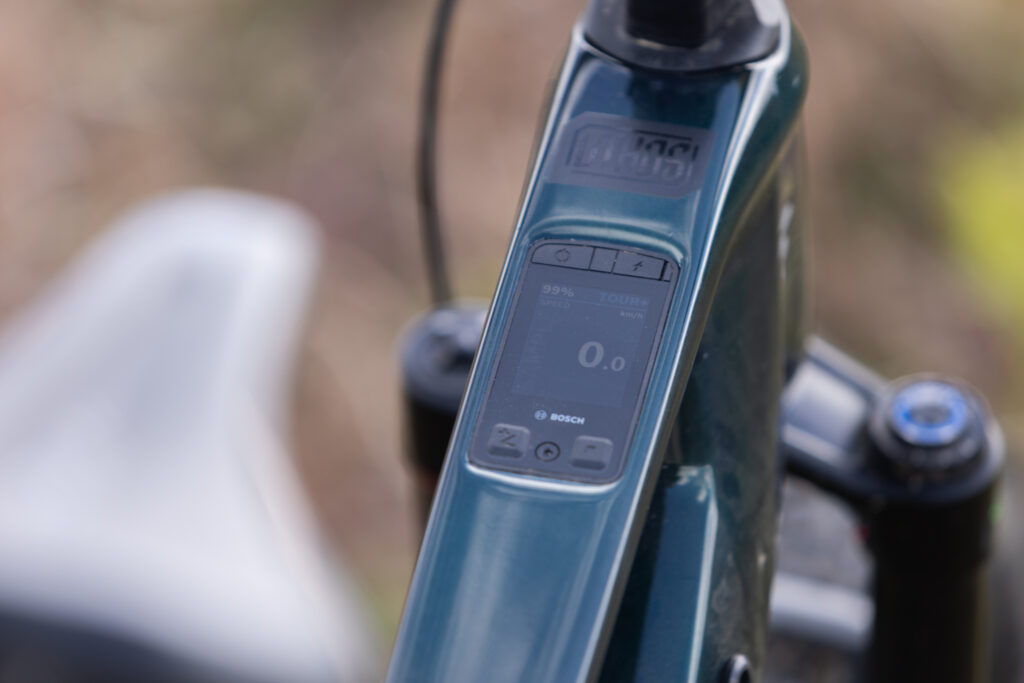

We’ve weighed in on the electric/mechanical debate quite a bit over the years, but as I’ve had as many positive experiences as I have negative with both, I’ve landed on a real preference for mechanical everything, whether that’s shifting, computers (not that there are mechanical cycling computers), or full bikes. Over the years, bikes kitted with mechanical gubbins have come with an air of liberation, rather than being tied to the burden of batteries.
I’m not going to go slagging off wireless and electronic tech, far from it. In fact, I am a fan because it does many things very well. If we focus on drivetrains for a bit, it makes something that can be a bit of a diva, requiring semi-regular adjustment, almost completely maintenance-free, or at least free of regular maintenance. In the case of drivetrains, there are no cables to stretch, so shifting remains consistently slick unless the hardware itself begins to wear – as will any drivetrain.

It’s also incredibly refreshing, albeit a small benefit, that a comparatively tiny press of a button leads to a gear change, or a dropper post’s actuation. Electronic actuation doesn’t need a fistful of a lever throw, so presses of buttons causing changes to gears and other things are a small but, to me, an appreciated luxury.
E-bikes are fantastic, too. Although I count myself a regular mountain bike purist, a spin on an electric mountain bike is another little luxury, making climbs easier and faster, while getting more of the good stuff in. They’re a tonic for poor fitness (I am talking about myself here), and it’s absolutely no surprise that they’re getting mighty popular.
But having spent the best part of a year on my Santa Cruz Bronson 90 long-termer, after years of playing with electronic and wireless kit, I’ve really come to be enamoured with the sense of freedom that mechanical kit provides.
In the immediate sense, going for a ride is merely a case of throwing the bike in the back of the van and pedalling away from my parking spot. There’s no checking battery levels, no charging, no battery anxiety, just riding a bike.
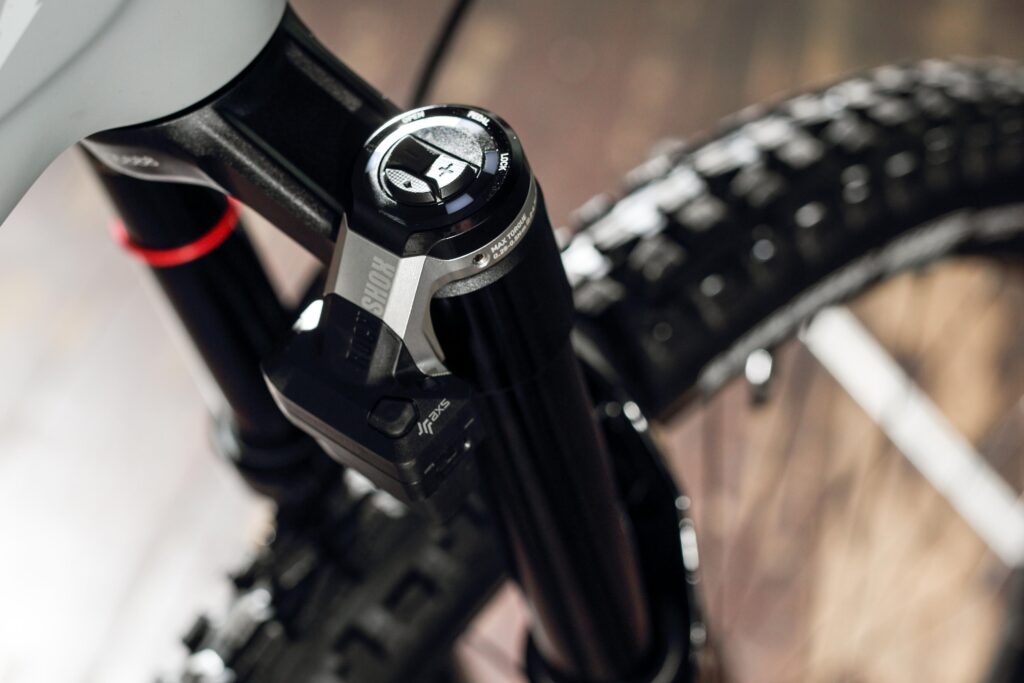
But in the less-so-immediate sense, there’s also the heaps of complication that’s thrown into electronic gear. Although I’m a fan of RockShox’s Flight Attendant and AXS stuff, hooking it all together via its Bluetooth wizardry can be a bit of a task, especially if you’re not familiar with how it all works. There’s also the fact that there are circuit boards, soldering, and wires thrown into the mix.
For example, as found in a video I made gravelifying a mountain bike, one of the pogo pins on my chosen derailleur had kicked the bucket. While this is likely something that’s sorted under warranty, replacing a pogo pin requires complete disassembly of the mech and a touch with a soldering iron. Although SRAM’s T-Type kit offers a heft of user serviceability, it’s a bit of a stretch to say that my problem is ‘user serviceable’. I’m going to give it a go, though, so watch this space.
It’s a similar story for e-mountain bikes, or e-bikes of any kind. They live and die on their motors. Without a working motor, they’re just very heavy mountain bikes, and pedalling around 24 kilos is no fun at all, trust me. I’ve had some motors fail on me mid-ride, leaving me with a heavy bike to haul home, but then, to be repaired, the bike needed to be sent off. Luckily, I’m in a position where I have test bikes ready to be ridden, but if that e-bike were my only bike, it would have been a couple of weeks before I was back riding again.
I’m not saying that mechanical kit is perfect. Far from it. I’ve had my fair share of mechanical hiccups, too. Snapped cables happen; cables stretch, which requires careful turning of a barrel adjuster, and the biggest pain in my side at the moment: dropper posts.
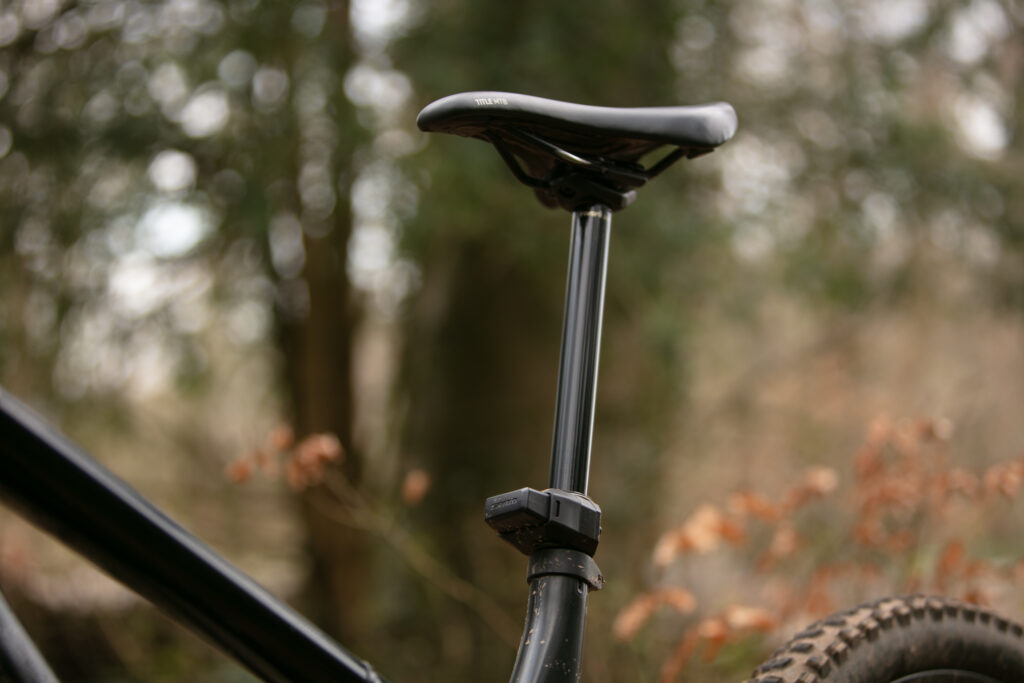
It’s not the same with all dropper posts and all bikes, but not every bike handles the routing of a dropper post’s cable in the best of ways. An excellent example is the Bronson I’ve been riding. Because the seat tube is effectively split, if I clamp the seat post into the frame too low, I unknowingly kink the cable (because of the way the seat tube is shaped), and I then have a proper wrestling match on my hands to get the dropper post actuating properly. I’ll admit, with this specific issue, I have turned to a wireless dropper because, in this case, it causes much less screaming.
As I’ve taken my training (sometimes) and riding a little more seriously, so too have I taken my cycling computers. They’re very useful things, as I like to track my elevation gain, at least, using it as something of a benchmark. If I’ve gained around 1,000m in elevation, I’ve done well… Although that’s pretty rare at the moment. But as simple as they can be, it’s another thing to add to my bike, another thing to charge, and another thing to set up before I set off.
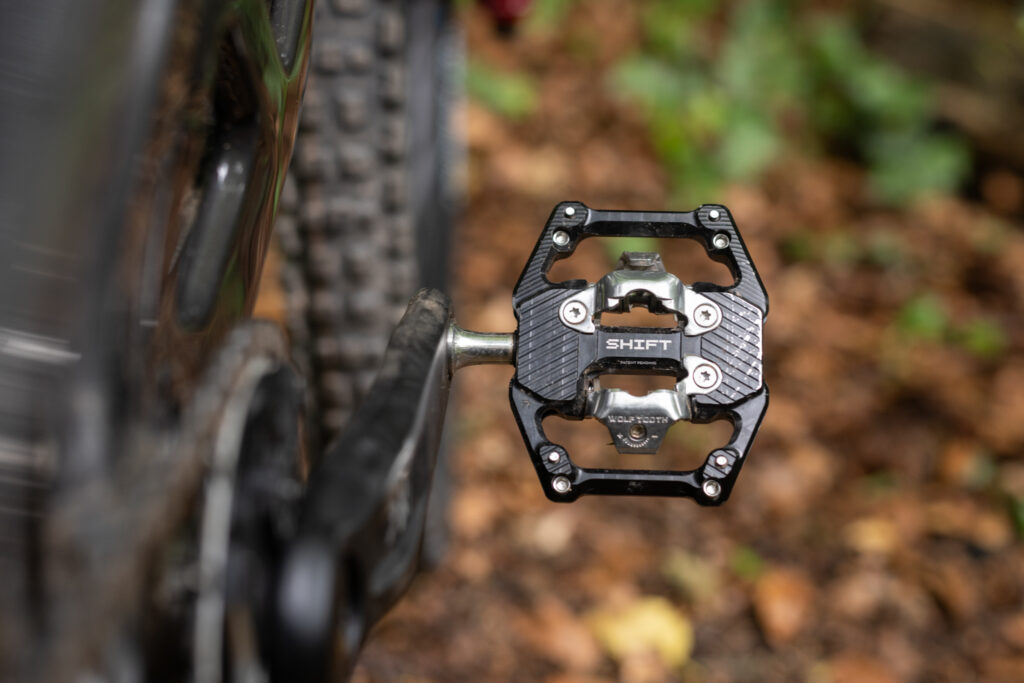
But in a similar vein to clipless pedals, there’s just nothing quite like grabbing a bike and just riding it. Before dropping into a trail, I’m not finding a mechanism to engage with on flat pedals. But clipless pedals bring a level of security that flat ones don’t. Not having batteries to charge, potential game-ending and non-user-serviceable problems, or interesting connectivity quirks just aren’t a thing with good old-fashioned cables and mechanics but the lack of cable management and maintenance remains a very real draw.
Although there is a real place for electric kit, the simplicity, easy serviceability, and general experience of a bog-standard, cable and pedal-operated bike is exactly where it’s at for me. Because after all, riding a bike of any type is my way of unplugging my brain from life and the technology-ridden nature that it’s quickly become.
I remember an old punter from a pub I used to work at. He complained about the fact that there were TV screens, and only now, eight or so years later, I totally understand his frustration.













33 thoughts on “Bike technology is great, but sometimes mechanical simplicity is digital liberation”
When I was commuting between ten and forty miles a day in all weathers I loved the simplicity of electronic shifting. So much so I stuck Ultegra Di2 on a Triban 3. Otherwise I’m with you on the mechanical simplicity of simple drivetrains (Deore 1x for trail, Tiagra 4700 for road). Both are cheap, easy to set up, and spares a readily available when the grit and grime of winter does its thing. For the same reason I fitted dyno lights which were bright enough for pitch black country roads and 100% reliable unlike battery lights which have failed on freezing mornings
I’ve been away from the bike for a while due to illness so the return will be on an eBike for pleasure rather than commute. I won’t be doing big miles but I will stump up for a decent battery (at least 625w) and fully equipped. I’ll probably add an electronic dropper unless it comes with one (manufacturers have finally worked out that the average eBike rider wants to get their feet down at junctions but still have an efficient pedalling position).
It will be great but I’m sure it won’t be long until I hanker after some skinny tubed steel bike with everything mechanical!
Three words: Rigid Single Speed. The ultimate in simplicity :-;
Doesn’t suit all of course
@mdavidford I like that the front fork is 650B and 700C compatible. I want a carved animal head on the prow of my bike too.
Well there was this thing recently:
I used to say that mechanical shifting was so much better because it was serviceable on the roadside and you could buy a spare derailleur or shifter in the remotest shop on the continent.
Oh, how wrong I was proven later, with all the recent standards and pull ratios…
I’m a bit on the fence. Currently riding a gravel bike with a Force AXS XPLR groupset, Favero assioma pro powermeter pedals, Garmin varia rear light, lupine front light, Edge 1040. That’s a lot of batteries to keep track of, to the point that I have a dedicated charger with 3 m USB-C cable in my office, another one at home. Can’t imagine having to deal with another battery such as on the Flight Attendant.
BUT….everything’s dead easy to set up, no cables to route through the frame, no cable stretch, no derailleur adjustment…..
@Xenophon2 “That’s a lot of batteries to keep track of, to the point that I have a dedicated charger with 3 m USB-C cable in my office, another one at home. Can’t imagine having to deal with another battery such as on the Flight Attendant.”
Top tip: In reality most of the SRAM stuff lasts a month or two even with pretty heavy usage. I just charge all the batteries on the last Sunday of every month and have yet to be caught out. The SRAM batteries are so cheap / small / light it’s also worth keeping a spare in a saddle bag or similar.
I’m sure electronic gears, pedals, seat posts etc. are each a modern marvel but they all seem to solve a problem I’ve never encountered. However I have encountered others faffing while searching for batteries, cables and even a firmware update. All of which just gets in the way of cycling’s simple pleasure – being outside
@jaymack Yes…to an extent, and I’m happy at the moment with my twelve-year-old Dura Ace mechanical, but I must admit when I had Ultegra Di2 I did notice not so much the ease of shifting but the perfect trimming of the gears after every shift so that the chainline was always absolutely perfect and that did enhance the simple pleasure of being outside, for me anyway. At least until that day I forgot to charge the battery which died at the turnaround on an eighty-mile ride and had to ride a very lumpy forty miles home stuck in 50×14…
While that day will surely come we both know such travails are what make a day ‘epic’. If I were younger I’d suggest ‘character building’ but suspect my character has been built for quite a while.
@Rendel Harris “perfect trimming of the gears after every shift so that the chainline was always absolutely perfect”
Ah – so you’re using their “cog-shifting” system where the rear and/or front are displaced sideways so the chain always runs without any lateral deviation?
(IIRC I’ve seen a design that does this – for a ?”mid-drive” system on a velomobile. Looked interesting mechanically which is likely why I’ve never seen one again…)
@chrisonabike Cheeky! If the honourable gentleman will allow me, I rephrase my remark to “so that the line of the chain was always absolutely as perfect as possible for the particular gear I was using at that point in time.”
Very generous – I was expecting to be accused of trolling under the cross-chaining bridge…
@jaymack I’ve seen a LOT of issues with old fashioned mechanical gear shifting/cables in my time. Modern electronic stuff is a lot les faff/more reliable.
Personally I went electronic shifting with my new CX/gravel bike after the shifter cable self destructed inside my brifters on my older bike several times, the last two with zero warning. A nightmare to sort out. Astonishingly and thankfully, all three times it happened outside home, rather than the usual middle of nowhere I tend to cycle.
Another nightmare with internal cables on my full sus ended up with me buying a wireless rear shifter out of frustration. Much better ergonomics of the shifter too.
I hate cables in general, they stretch, get sticky, snap, fray, outers kink..etc. One of the best things about [hydraulic] disc brakes is the absence of flakey cables.
My most recent nightmare with cables was swapping to a new dropper. An ostensibly simple 5 min job turned into a nightmare which involved buying a new lever for bars and a lot of challenging cable wrangling inside frame even after BB removal. Speaking as someone who is comfortable and quite competent at fixing bikes, cables can get in the bin. Badly designed internal cable routing can get in the bin, set on fire and dropped in acid.
Mechanical > electronic (battery reliability)
Rim brakes > discs (lighter and easier to maintain)
25mm tyres > 28mm + (fat tyres for fat arses)
Tubes > tubeless tyres. Buy tpu tubes from AliExpress.
Carbon > all other manufacturing materials
50mm wheels > all other depths
Hookless wheels are for dum dums
Look pedals > all other pedals
If you’re going to get electronic shifters, at least get SRAM. Friends don’t let friends get di2.
That’s it. That’s the list.
@jackcycles Your score is 4 out of 9. Better luck next time.
You mean like all those fat bastards in the Tour de France, every single one of whom uses 28+ mm tyres on the road stages? Call me old Mr Cynical, but I’m thinking that the greatest riders in the world along with the most talented bike techs probably know a little bit more about what works best than an Essex-based accountant.
On the other hand… A few short years ago, all those pros were on skinny tyres at high pressure. So were they right then or now? Don’t abuse people just because they’re not experts, their opinions are just as valid.
Um, the only ‘abuse’ I see in there is the ‘fat bastards’ bit, and that’s referring to userrecycles’ words – it’s clearly not meant to be Rendel’s own opinion.
@Dodonline No, their opinions are not just as valid when scientific testing has clearly demonstrated the truth of a particular proposition. If I say the earth is flat is my opinion just as valid as Professor Brian Cox saying it’s round? The only abuse here was Nigel’s standard attempt to slip in a derogatory remark about heavier people; I am simply pointing out that given his occupation it is unlikely that he (or I for that matter) knows better than the best riders and bike techs in the world what is best. The reason it used to be thought that high-pressure skinny tyres were best is because scientific testing was always undertaken in a laboratory on smooth steel drums, on which high-pressure narrow tyres do perform very well, but wider tyres with lower pressures have been found to perform better in real world imperfect road conditions.
@Dodonline I believe the non-expert you’re defending was the one with the “cycle tyre more damaging than large commercial jet tyre” theory, so I suspect their professed opinion is usually to get a rise out of folks.
And normally as helpful as “but a few years ago we were advised to smoke to ‘help us cough’ …”
@jackcycles Opinionated much?
Mechanical isn’t simpler. It’s nostalgia.
If you look objectively at a mechanical derailleur, it’s an amazingly complex device. And all praise to Shimano for inventing it.
It does however have many ways to go wrong, mostly due to mechanical parts stretching or bending, and isn’t nearly as reliable as many make out.
My experience with SRAM AXS had been much better, both for daily commuting in British weather and epic tours. Personally, I wouldn’t go back to mechanical for either.
@Dodonline First of all, the mechanical derailleur is an invention by Tullio Campagnolo, not Shimano.
And secondly, an electronic derailleur has every single part of a mechanical one, plus the electrical componentry and electronic/comms circuitry taking the place of a simple metal cable. We can talk for hours about which is better overall, but I find it funny you actually consider an eletronic derailleur simpler.
@tomlew Correct about the second part but Campagnolo improved rear derailleur design, he didn’t invent it. There are numerous claimants for the title of inventor of the first mechanical derailleur going back long before Campagnolo, and even in terms of the parallelogram derailleur that was invented by Lucien Joy and marketed as Simplex.
@Dodonline The slant-parallelogram derailleur is relatively simple.
The complexity comes when you bring in indexing.
Having just rebuilt a Campag shifter to replace the shift-lever spring I can tell you that this is a complicated machine, but then an electronic system will need an equivalent for every function of the mechanical one in some form or other: some of which will be in electronics, some of which will be in software, some will be switching, some may involve radio transmission/reception, plus it will need an electric actuator to replace the mechanical effort of the human input.
Compare that with a set of bar-end shifters in friction mode.
Most of my riding is solo 30 to 75 mile rides. I do enjoy an occasional group ride, however. I ride an endurance bike with mechanical shift, tubed tires, and disk brakes. While electronic shifting is absolutely wonderful and precise, I have never been stuck in a 50/13 to limp home, nor had a torn tire spew sealant all over. When I have had the rare mechanical failure (broken cable / damaged derailleur), I been able to jury-rig something reasonable. As far as my tires, they are slightly heavier, but much more puncture resistant —- and I have TPU tube. I carry a spare tube and a patch kit (and I have never yet used the patch kit on the road). One negative that no one seems to mention; Electronic shifting will add $300 to $600 for two, otherwise, identical bikes. To retrofit e-shifting to an existing bike is $500 to $800+! For me, reliability is paramount!
@Geoff H, electronic shifting, like disc brakes and tubeless tyres is more reliable and less faff.
A spare battery in with my tools, means I never have to worry about a flat battery. Only time I’ve ever used it was to lend to a mate just in case. The only two times I’ve had a torn tubeless tyres I was able to slowly and safely stop. It would have been a disaster with an instantly flat tube and loss of control when surrounded by cars or speeding downhill off road. In dozen years of using tubeless, I have had as many tubeless flats as I have had with tubes in that time. Except I’ve only used tubes for a few weeks in all that time. Plus and this is the really, really important thing, my ride is way more comfortable. I also have way more grip and more speed due to being able to use the correct tyre pressure – doing so with tubes would be constant pinch flatting. So a win, win, win win situation. Never been covered in sealant either. Which only happens if riding with too high a tyre pressure.
“no cables to stretch”
Cables don’t stretch, the housing ends simply bed in a little. Set up, bed in, readjust then it’s all good until you need new cables.
Digital vs mechanical is about whether you want easy now or easy later. Easy now can be harder later, harder now is generally easier later. Like so many things in life that this applies to.. take your pick.
@james-o Cable brakes and gear shifters have have barrel adjusters to deal with the inevitable cable stretch, that most certainly occurs over time.
@imajez
Brake adjusters mainly deal with pad wear whilst gear adjusters fine tune shifting during set-up and after fitting a new inner cable.
Brake outer housing is spiral-wound and compressible giving compliance at the lever and the false impression that the inner cable somehow stretches whereas the metal strands in gear outer housing are laid axially and as such the outer housing doesn’t easily compress over time keeping shifting precise.
I find that a previously well-adjusted rear derailleur system that needs adjustment likely needs a new inner cable.
@Pub bike I run nokons on the Good Bike, very little compression on the outers, both xtr brake and gears. For the several years I will keep the well lubricated quality nokons inners I will have to adjust to take the little slack out of the rear a few times, just to make the shifts crisp. Ceramic brakes so pad wear is negligible, the rear will need more adjustment over time than the front, presumably as it’s a much longer cable run.
Nokons cables on the rohloff on the Ultimate Commuter, have had to take some slack out, mainly out of the getting lower gear cable, I’m guessing as I often trying to find the non existent lower gear on the hard climb.