


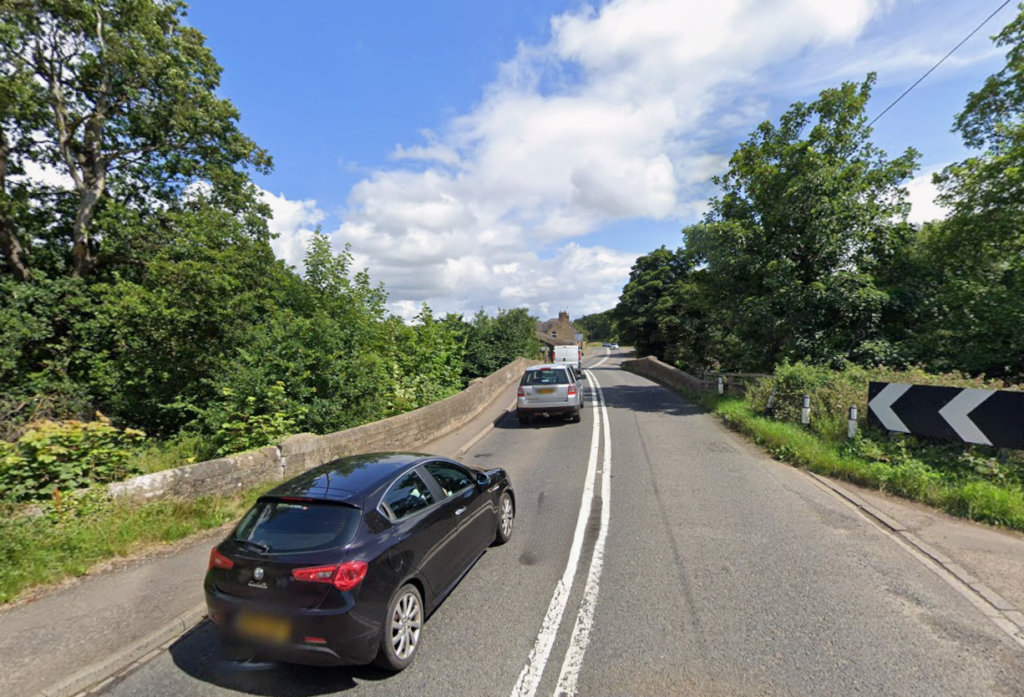

Plans to build a new cycle lane on a Grade II listed bridge, currently home to two lanes for motor traffic, have been criticised by local campaigners who claim the proposals will increase congestion and pollution, “urbanise” the hamlet, and “historically destroy” its Roman character.
Northumberland County Council is currently working on plans to remove one driving lane from Dilston Bridge in the village of Corbridge, located 16 miles west of Newcastle. The lane will be replaced by a new protected bike path, while traffic lights will be installed on either side of the bridge, which was built in 1788, to enable drivers to pass safely.
The proposals form part of the local authority’s Hexham to Corbridge active travel corridor, which aims to improve walking and cycling infrastructure by delivering a protected route connecting residents to employment, education, and leisure facilities, while providing a link to Hexham railway and bus station.
Work on phase one of the project at the Hexham began earlier this year, with the entire scheme scheduled to open in the middle of 2027. According to Northumberland County Council, the initiative, approved in 2023 and supported by the previous Conservative government’s Levelling Up Fund, will enable locals to opt for “healthier, more sustainable travel choices”.
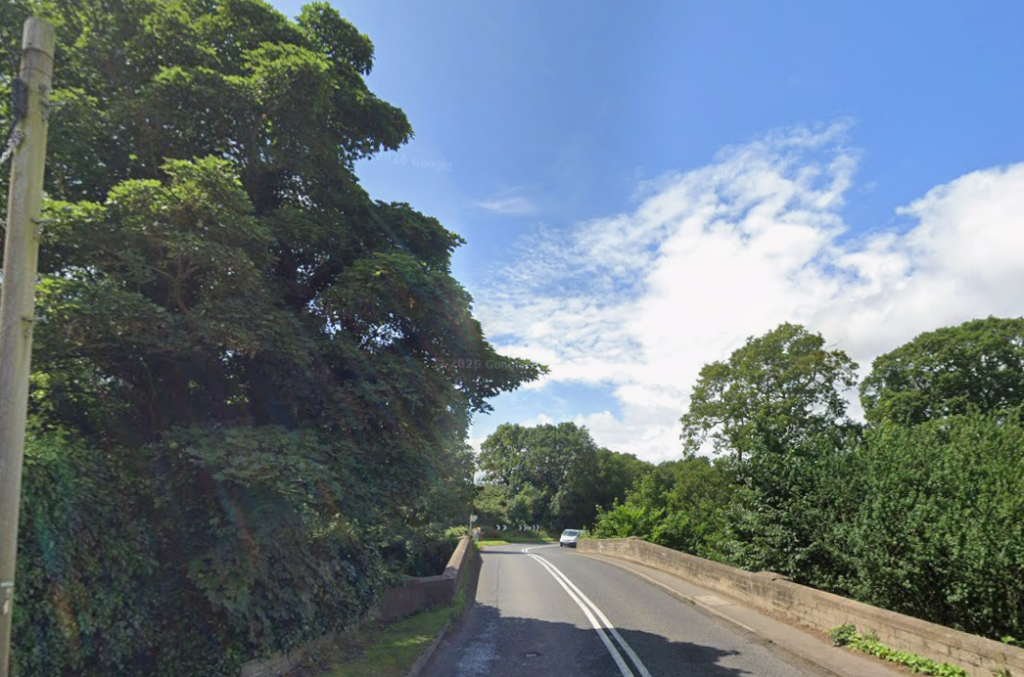
However, the scheme has been questioned by a number of local campaigners, who are urging the council to carry out a heritage consultation concerning the plans due to its supposed impact on the village’s historic character.
However, the local authority has said that such a consultation is unnecessary as the bridge itself is not being altered or demolished.
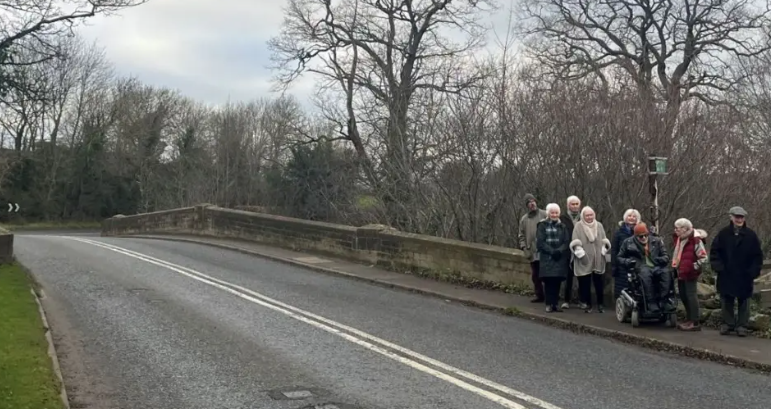
Speaking to the BBC this week, David Burdus, who has lived in Corbridge for 25 years, noted that the residents opposed to the plans were not against active travel in principle, with powered wheelchair user Burdus welcoming improvements to accessibility in the village.
However, he added: “We’re not supportive of particular points along the route being historically destroyed. We’re going to turn a free flow of movement into a stop, start, stop, start.
“It’s going to cause havoc, pollution, and disturbance. This area is a visitor attraction and it relies on tourism and you’re going to turn this beautiful hamlet into a road traffic bottleneck. There’s no need.”
Burdus also claimed that the number of listed buildings in the hamlet meant that a heritage consultation should have been carried out, arguing that the council needed listed building consent.
However, a spokesperson for the local authority told the BBC that listed building status did not extend to the “character or setting” of a structure, noting that the Hexham to Corbridge active travel scheme falls under Permitted Development rules laid out by the government.
The spokesperson added that the council is required by government to prioritise active travel to “improve public health and reduce pollution”.
Perhaps unsurprisingly, Burdus and his fellow campaigners’ claim that removing a motor traffic lane and replacing it with a cycle path will “historically destroy” Corbridge has been met with some bemusement from cyclists on social media.
“Surely it was historically destroyed the moment it was paved over with tarmac and made useable by multiple tonne motor vehicles?” Connor wrote on Facebook.
“They do know that the Romans didn’t have cars, don’t they?” asked a baffled Dave, while Steve added: “Don’t remember Romans having HGVs, vans, or motor cars! Can’t see any problem with a simple cycle lane!”
“If they want to save the bridge then build a new one for SUVs and trucks and the cyclists can use the old one,” argued Paul. “Because correct me if I’m wrong but the average cyclist is a tad lighter than a 45-tonne truck.”
The furore surrounding Dilston Bridge isn’t the first time in recent months that locals have criticised the Hexham to Corbridge active travel corridor.
In June, we reported that another already-completed portion of the scheme, along the A695 in Hexham, was panned by some disgruntled residents, who claimed the government active travel funding should have been spent elsewhere on “more important” projects.
The construction of the two-way cycleway along the A695, which also includes a segregated footpath accounting for 50 per cent of the active travel space, means that the road has been made narrower, with plans in place to lower the speed limit for motorists using it from 60mph to 40mph.
Under a video posted online of the new infrastructure, several locals – including some self-described “keen” cyclists – pointed out that they “never had any problems” on the road or that they will continues to use a quiet alternative road on the north side of the river instead of the soon-to-be-completed cycleway.
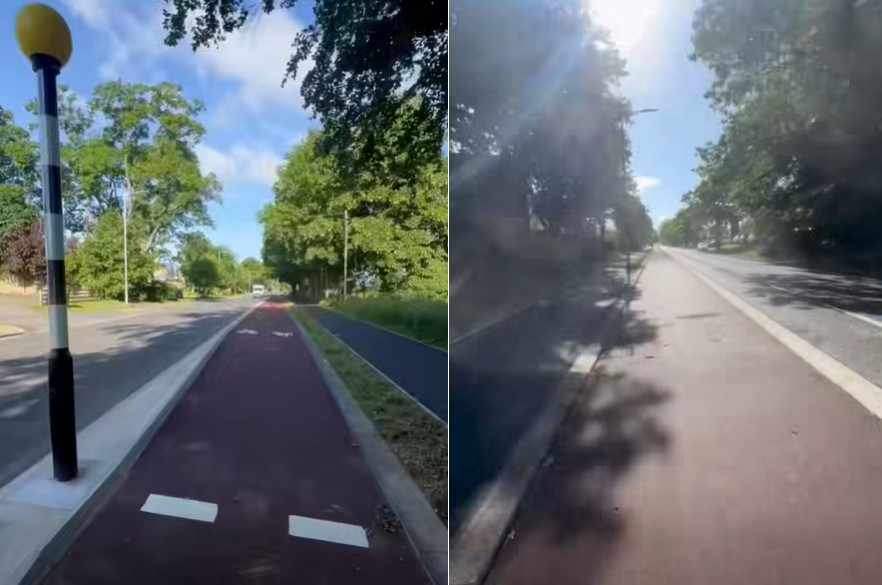
Others, meanwhile, were more even more critical, describing the new cycle lane has “overpriced” while claiming it had made the road too narrow and that the previous layout was never “a real danger to cyclists”.
“I know it’s government funded, but I think they could have spent it on something more important,” Hexham resident Raymond Bewick said.
“I live near it and I see a lot of the traffic that goes along to Corbridge. it’s very rare that you see bikes going along there – that could improve.
“I don’t think they have kept us informed enough. A lot of it has been out of the blue, without any information. think if they had kept us better informed people might be more positive.”
In response to these concerns, the local authority noted that safety assessments had been carried out and that the changes adhered to national highways and cycleways standards.
Councillor Nick Oliver pointed out: “There have been consultation events held in Corbridge and Hexham that were pretty-well publicised, both on social media and in the newspaper.
“There has also been a lot of engagement with residents. I understand some people will have missed that, but it is impossible to consult with everybody.
“The council has made a genuine effort, we also consulted with Hexham Town Council and Corbridge Parish Council. I think there has been every effort made.”













24 thoughts on “Replacing driving lane with bike path will “historically destroy” Roman hamlet and turn it into “road traffic bottleneck”, locals claim – but cyclists point out “the Romans didn’t have cars””
Those campaigners look like very much like Daily Express and Daily Telegraph readers.
The population of Corbridge at the 2021 census was 3560, not exactly getting “will of the people” vibes from the eight people pictured demonstrating…
I’m pretty sure that Romans did have cars, otherwise why build roads?
And wasn’t Julius Caesar murdered in the BMW dealer showroom because he was getting above himself and had just ordered a top of the range SUV with lots of features?
@Mr Blackbird Veni, vidi, VW
It was all going great for the Roman empire until it expanded outside the Italian peninsula. Then all the foreign plebs got carts and discovered all roads lead to Rome!
Nowadays things have got so bad you can’t even drive round the Circus Maximus!
Anyone know what your average Roman chariot width was (excluding any user-fitted swords on the wheels 😉 ? I’ve heard 4’8″ but that could be fabula uxorum…
@lawrence18uk Sadly it is a fabula urbana, sadly because it gave rise to the great story that the design of the space shuttle boosters was down to the design of Roman carts: briefly, supposedly all Roman carts had the same axle width which caused the ruts in the road which meant all carts for the next 1800 years were built to fit these ruts, when Stephenson built the first railway engines he followed this size for convenience sake, ultimately the space shuttle boosters had to be redesigned so that they could fit the width of a goods train to be transported from the factory to the launch site. Unfortunately research at Pompeii and elsewhere has shown that there was no standardised Roman axle size and in any case Roman roads were continually repaired and the ruts filled in countless times over the centuries so even if there had been there was no need to follow it. Stephenson in fact chose his gauge to match that of the tracks used for pushcarts in his local mines for convenience sake, if he had lived in a different part of the country he would’ve chosen a different size.
“Plans to build a new cycle lane on a Grade II listed bridge, currently home to two lanes for motor traffic, have been criticised by local campaigners who claim the proposals will increase congestion and pollution, “urbanise” the hamlet, and “historically destroy” its Roman character.”
Translation: Not In My Back Yard. None of those claims are valid, in fact, they’re rubbish, and have just been raised to distract from the fact that they oppose this because they hate cyclists.
“I don’t think they have kept us informed enough. A lot of it has been out of the blue, without any information. think if they had kept us better informed people might be more positive.”
The council I am part of currently has a ‘situation’ where certain interest groups claim that there wasn’t enough consultation on the matter in hand, despite the fact that every household got a leaflet, and there were widely advertised consultation events throughout the district. You can inform people till you’re blue in the face, but if they don’t read what you’ve given them and didn’t respond, it’s their fault that their views weren’t heard.
This is the ‘historically characterful’ hamlet they’re worried about being destroyed. Which had, as of 2025 counts, 169 motor vehicles an hour blowing through it, on what appears to be an NSL road.
And from a couple of hundred yards further away.
Vandals!
Visigoths, I think.
@mdavidford It was the Hun wot started it, invading Gaul again…
David Burdus’s photograph beautifully illustrates the irony of being so frothingly against provision for cycle infrastructure, while ignoring the extent of the road from which they are effectively barred as pedestrians by the provision for motor vehicles.
Look at them all – huddled together on a narrow strip of road set aside for pedestrians. That’s the only footway. On the other side of the road, the carriageway extends to the bridge wall.
“Down with this sort of thing!”
These objections include all the usual suspects, so much so that it’s not necessary to list them beyond the classic and entertaining ‘keen cyclists opposed to the cycle lane’.
@wtjs and ‘I’m a cyclist myself, but…….’
It’s really good to see active travel provision being provided where no safe system existed.
The argument “no cyclists ever seen along there” – precisely because the infrastructure doesn’t encourage it – build the world and they will inhabit it 🙂
Agreed, and we could do with a bit more of that sort of positivity in the article itself, rather than the usual rage bait tripe served up by road.cc.
I wonder if the bloke who posted this video on Facebook will ever realise the cycle lane is not intended for that cyclist in his video, as that cyclist already seems confident on the road – it’s for the likes of himself, who perhaps don’t cycle on the road because of safety fears.
Actually if it’s done properly, as part of a network of cycle infra, with “disentangling of modes”, motor traffic reduction, proper junction treatments where necessary (eg. with detection loops for cyclists ahead of the junction)…
… then it’s for *everyone* cycling and nobody sane would choose the road over it.
Apart from possibly pros / hardy “never did me any harm, squabbling with drivers, dodging potholes and grates while sprinting between long stops at traffic lights ” types raised in 3rd tier cycling environments (like most of the UK).
Of course – has it reached that quality yet? Almost certainly not. But I’d probably give it a go at least; and if the transitions to / from weren’t bad use it. For one it’s probably going to remain in better condition than the road…
Yep, I’m not knocking the cycling infra, just the bloke on FB’s assertion that it’s for existing cyclists to use. It’s the same mindset that sees the purpose of cycle lanes to get those pesky cyclists off the roads and out of the way.
@HoarseMann Totally agree. In Cheltenham there is a relatively new cycle path from the racecourse to just outside the town center. I now use the road on the way in to town as its down hill and even I can get above 15mph. On the road you don’t have to slow down for side roads in case a driver doesn’t realise who has priority (me), driveways, pedestrians, sometimes with children, or even other slower cyclists. You also don’t have to wait as long at the lights at the end of the cycle path as cars seem to be given priority, you get kicked out onto the road any way at that point.
On the way out it’s uphill and, as I’m going a lot slower, the cycle path gets me out of the way of frustrated drivers so I use it.
@Bungle_52 yep, it’s a balance. Those who already cycle, will. And (in the UK) we are justifiably suspicious about “great new infra” (and even more how drivers will ignore it) / irked by “get off the road” demands.
OTOH given that plenty of streets are 30mph, and “20 means 25” and loaded with shopping on my town hack I’m not doing near 20mph either … I *am* “in the way” (albeit to nobody’s great inconvenience).
And even on speedier machines I’ve almost zero desire nowadays to claim my “right to the road” on many A-roads.
And “not cycling with motor traffic” / “I want to travel with others side-by-side” are extra blockers to most people taking the bike.
So I’ll keep saying “look what we could have – to *everyone’s* benefit”. But until we get there keep using whatever infra works for me!
@HoarseMann if you look further up the road you can see where the cycle path crosses a junction with what looks like two bollards and give way lines. So if you’re riding on it you have to slow down and possibly stop at every side road. Doesn’t seem any safer than the road to me.