


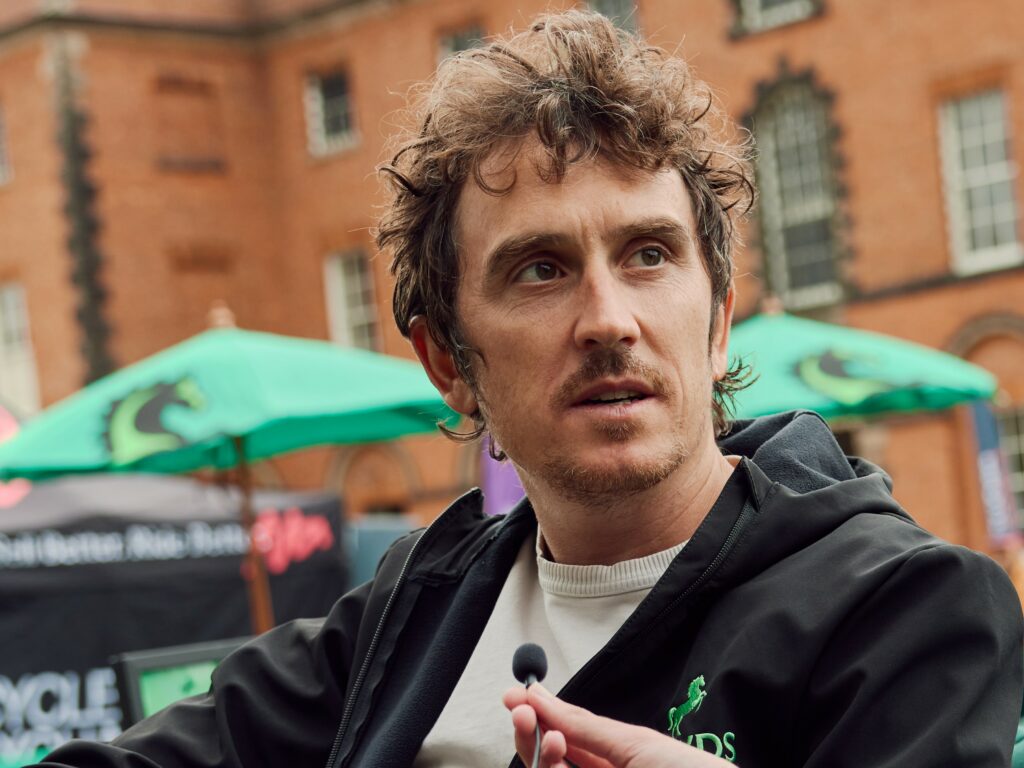

Geraint Thomas says that cycling is a dangerous sport in which “accidents happen” but added he was confident “everyone wants to keep improving safety”.
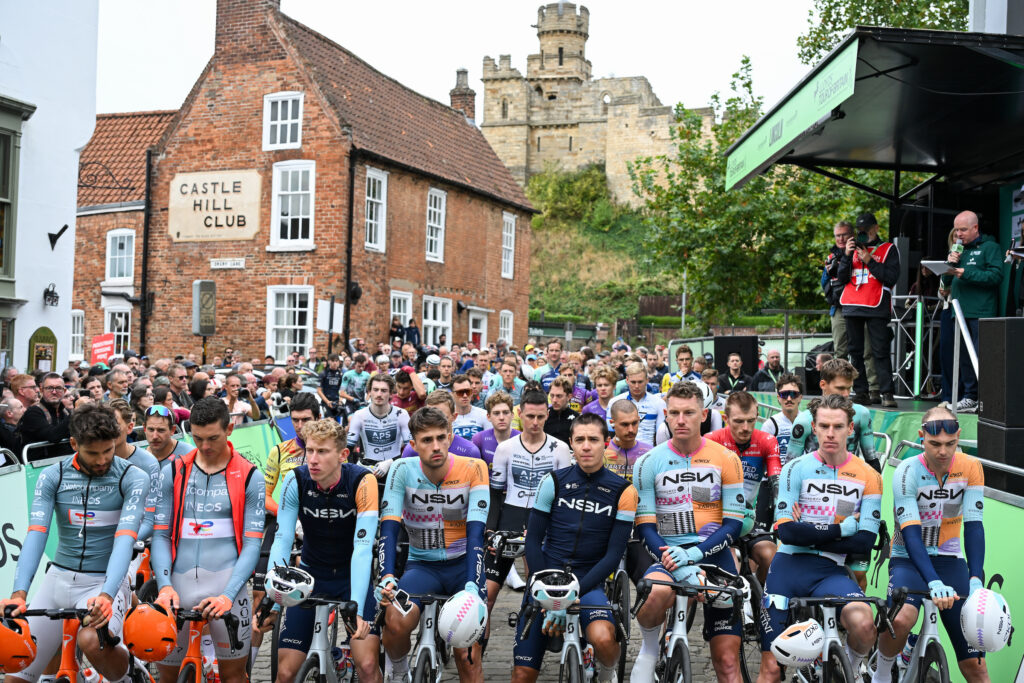
The cycling community in Britain is continuing to process the death of Finlay Tarling, the 19-year old Welsh cyclist who was killed by an oncoming driver during the Volta a Portugal three weeks ago. At the start of both the men’s and women’s Tours of Britain, the peloton paid tribute to Tarling, who competed in the race last year for Israel-Premier Tech.
Speaking to road.cc at the Tour of Britain Men, when asked how the cycling community should approach the dangers inherent in the sport in the wake of Tarling’s tragic death, Thomas chose to speak more broadly on the issue of safety when training and racing.
“I think there are two things: one is the day-to-day, the training on the roads. I think when you’ve done it all your life, I don’t see it as dangerous at all. Obviously accidents do happen, that’s life,” the 2018 Tour de France winner, who now serves as Netcompany Ineos’ director of racing, told road.cc.
“I wouldn’t discourage people from riding just because there’s cars and stuff around. But as I said before it’s all about confidence and knowing what you’re doing and where you’re going.
“When it comes to the racing side. There are a lot of aspects that can be improved on safety. It’s a top [concern] of the CPA for instance, the rider union, they’re pushing for it. The UCI are definitely aware of it, the teams, everyone wants it. I don’t think there’s any doubt that everyone wants to keep improving safety.
“But it’s always been a dangerous sport, you’re going down mountains on a bike. It’s not normal. In a rally they know every corner, in F1 it’s a closed circuit which they know inside out. So [cycling] is unique in that way, and it’ll always have that element of danger, but as long as everyone does the best that they can to improve all the controllables then that’s what we’ve got to keep pushing for.”
The 2018 Tour de France winner was speaking exclusively to road.cc at the Lloyds Tour of Britain Men as part of British Cycling’s promotional campaign for its Sofa to Saddle scheme. The app-based programme is eight weeks long and intended to encourage people to take up cycling who have otherwise been deterred in the past, in a similar manner to Couch to 5k has succeeded with running.
Asked if cycling in Britain needed to appear more accessible, Thomas said the programme was aimed at, “The general public, just to [get them] active on a bike because I think a lot of people see it as dangerous with the roads and the cars but it doesn’t have to be on road. There are plenty of off-road places to go and I think especially for older people and kids, to have them confident on a bike, it’s a life skill really.
“To me, it’s like swimming, I think every kid from a safety aspect should learn to swim and I think riding a bike, and enjoying riding a bike and feeling confident about it just broadens your horizons. That freedom and adventure is what hooked me initially.”
Following Tarling’s death, CPA president Adam Hansen said the sport needed to consider “a major upgrade” to its safety standards for helmets, believing they were ineffective for the speeds of road racing. He also described the circumstances leading to Tarling’s death – when a van driver ignored a sign at a junction warning of a bike race after being told by spectators the race had passed – as “a hole in the system”.
The Volta a Portugal, like many races including the Tours of Britain, operates a system of rolling road closures maintained by both police and third-party security teams on motorbikes.
“If people do not know racing, then they just naturally think the race has passed and go on to the course, where in fact there can be many groups.” Hansen said.
“To close every single road and driveway is difficult and it gets to the point how little risk the organisers want to take and if it’s even possible for them to have people at all those points.”
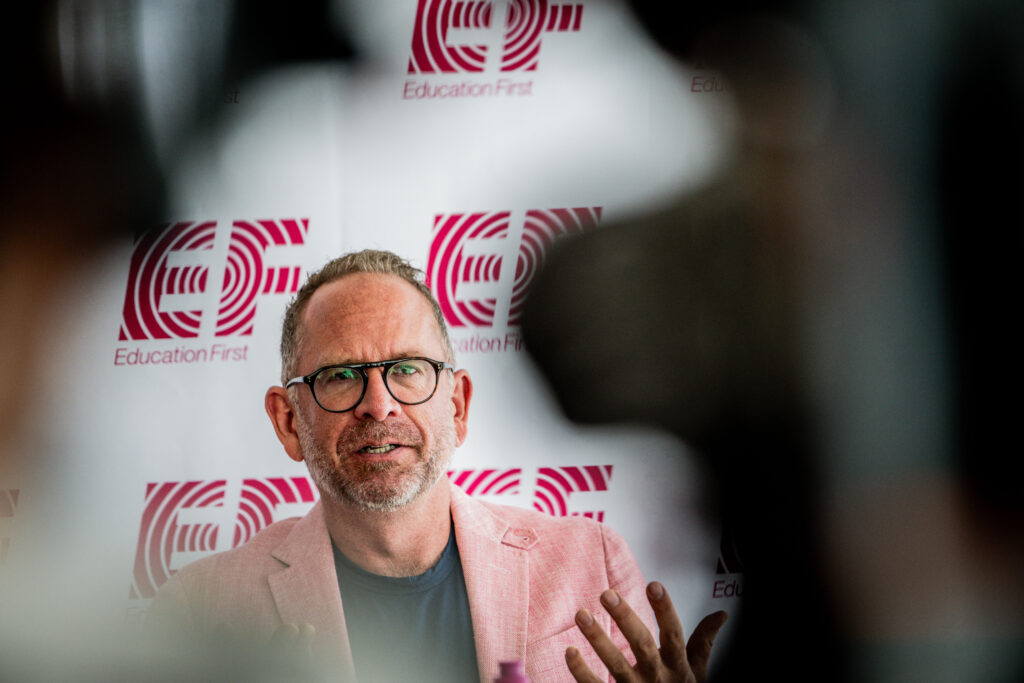
However, Hansen’s comments have also been criticised by Jonathan Vaughters, general manager of WorldTour team EF Education-EasyPost. Commenting on our Instagram post publicising Hansen’s remarks, Vaughters wrote, “A bit of a hole in the system? Really? A car going straight into riders full speed opposite direction and the problem is the helmets? I can’t even begin to comment on this level of insensitivity.”
Vaughters later said, “I’m really not enjoying this sentiment from very powerful people in cycling, that says: ‘What can you do? Sometimes cars just end up on the road, this is just part of doing competitive sport on the open road’. That is not true. This is preventable.
“Fundamentally it’s a very dangerous sport. From the start of my career I can’t tell you how many people we’ve lost. I’m tired of the governance in charge of this sport introducing changes around ridiculous little issues, when they prove themselves to be unable to govern a sport to keep traffic off the road.”
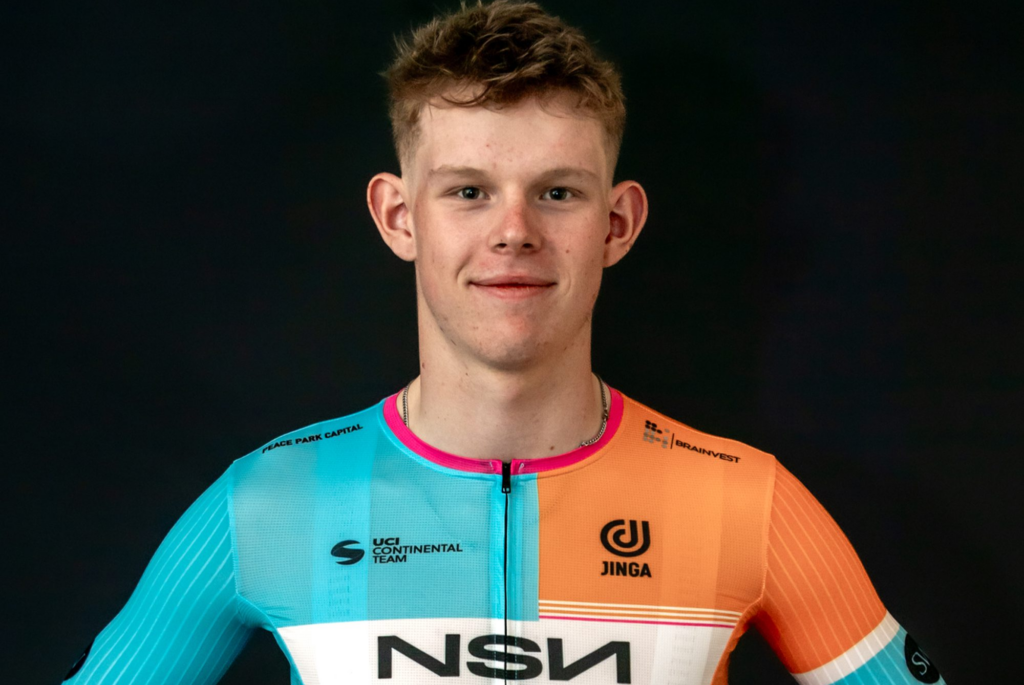
Tarling is the sixth professional rider to have been killed whilst racing their bike in the past three years. The GoFundMe set up with the support of the Tarling family to create a legacy fund for aspiring Welsh cyclists has raised more than £96,000 from more than 2,000 individual donors.
In a statement, the Tarling family said, “One of the things that has helped carry us through is the wave of posts, messages, emails, articles and calls from across our family, friends, team, local and sporting communities. Hearing how lovingly and fondly Fin was thought of has been a huge help to us.”
Tarling’s elder brother Josh, who rides for the Netcompany-Ineos team which Thomas is Director of Racing of, subsequently started the Vuelta a España, riding to honour Finlay before withdrawing from the race with the full support of his team.
You will be able to hear more of road.cc’s interview with Geraint Thomas on the forthcoming episode of the road.cc podcast, released next week.












8 thoughts on ““Accidents do happen, that’s life”: Geraint Thomas says “everyone in cycling wants to improve safety” but warns “it’s always been a dangerous sport””
I am a seventy-eight male I cycle and drive, being knocked off my bike twice.
A motor bike and a heavy vehicle and feel nervous to get back on my bike.
I often see cyclist in dark clothing and no lights on thier bikes in daylight and at night. it’s no wonder drivers get annoyed as I do. there have many a close call where I have to take evasive action not to crash into them.
It’s frightening for the driver but more so for the cyclist.
Why don’t the see how vulnerable they are!!
Hmmmm….
“Dangerous driving, call the police!”
“RTA. Injured casualties, call an ambulance!”
“Police car and ambulance now at the accident locus.”
“Great response!”
@Ojisan My old English teacher told me i had to work on my punctuation, so I started going to school half an hour earlier.
@perce everyone should wear lights, full stop. And punctuate properly – that really gets up my colon! Anyway, must dash…
Were you always missing the first period?
How do you see them then? Do you regularly drive into black cars?
@Rendel Harris indeed, but giving this a sympathetic reading it *is* a bit harder to see cyclists especially in low light conditions. I think this usually means “I was a bit startled when I noticed cyclists where not expecting them / so late that if I had needed to I wouldn’t have had time for evasive action”. That might be when unlit non-reflective cyclists appear from a side road – or where people are salmoning against traffic flow / on and off the footway.
We all have tons of experience looking for motor vehicles and are familiar with where they’ll be and how they will move. Cyclists are significantly smaller, have more complicated shapes and may not be exactly “where we expect the motor vehicles”. They may be moving at unexpected velocities.
Plus even if cars don’t have their lights on they tend to reflect.
I put this one in the “follow the opposite philosophy to ‘shared space’ for better safety” category. That is: safety between road users is enhanced when a) people can clearly see other road users b) and have as much time as possible to deal with them c) and know exactly where to expect them / what to expect from those other road users.
Most humans perform very poorly when faced with the unfamiliar and worse when startled…