



A bike shop owner has claimed that widespread confusion concerning the legality of electric bikes is negatively impacting legitimate sales, while noting that staff often face aggression when refusing service to illegal bike owners due to safety concerns.
Speaking to the BBC, Carmen Orga of Pell and Parker, the wholesaler which owns independent cycle retailer Richardsons Cycles, says the rising number of requests to repair illegal bikes has become a “real issue”.
“If these illegal e-bikes do go wrong, they expect us to repair them. On occasions [they] can become aggressive when we refuse to help,” Orga said.
“They bring them into the shop and think we should be able to repair anything. But we won’t touch them as they are illegal and we can only do legal motors. We can fix a puncture but won’t fix anything electric on them.”
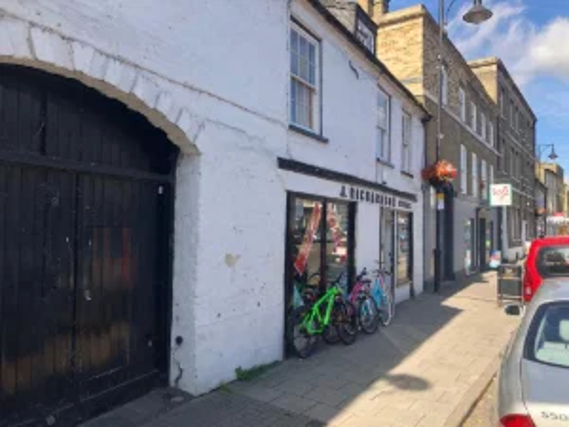
Richardsons Cycles has been running as an independent cycling retailer for over half a century, with six branches across Cambridgeshire, Peterborough, Northamptonshire and Norfolk.
But according to Orga, the ongoing confusion – perpetuated by some corners of the media and even the police – surrounding what is legal and what is not legal in the world of electric bikes has negatively impacted sales of their legitimate, safe e-bikes, causing noticeable harm to the business overall.
In the UK, the term ‘e-bike’ generally refers to an electrically assisted pedal cycle (EAPC), legal electric cycles that can be treated the same as a conventional pedal cycle, provided the user is age 14 or over.
They must have pedals that can propel the bicycle, have an electric motor with a maximum continuous rated power not exceeding 250 watts, and cut off electrical assistance when it reaches 15.5mph. Riders of these compliant e-bikes do not need to register or insure their bicycle, nor are they legally required to wear a helmet while riding it.
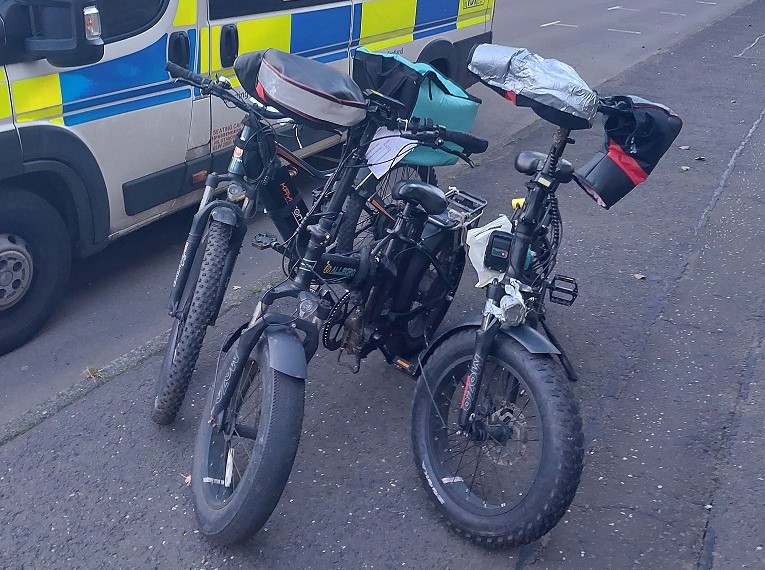
However, the use of modified bikes, which do not cut off assistance at 15.5mph and can reach high speeds without pedalling, has become an increasing issue on the UK’s streets, leading to widespread confusion with their legal counterparts.
These machines are instead classified as motorbikes and mopeds and do require a licence, registration, Vehicle Excise Duty, and the rider to wear an approved motorcycle helmet to be used on a public highway.
Electric bikes and components that propel a bike beyond the EAPC limits are not illegal to buy – and can be used on private land – but cannot be used on the road without being licensed and registered.
Cycling campaigners and stakeholders have long highlighted the danger in incorrectly calling these electric motorbikes by the generic term ‘e-bikes’, with incidents involving high-power vehicles often wrongly attributed to legal EAPCs by the public and press, most memorably in Adrian Chiles’ much-criticised ‘e-bike’ documentary for Panorama in 2025.
Following that programme’s broadcast, Ray Wookey, the owner of Energise E-Bikes in the south London town of Coulsdon, claimed it offered a “negative portrayal” of electric bikes by showing “very few legitimate e-bikes shown on-screen” – instead focusing on illegally modified or unregistered ‘e-motorbikes’.

Branding the Panorama episode as “troubling” and “misleading”, Wookey said it had the potential to “unfairly influence public opinion and undermine the efforts of responsible retailers who prioritise safety, respectful riding, and adherence to the law”, echoing the view emphasised by Richardson Cycles’ Orga this week.
Earlier this month, ebiketips reported that, in a statement publicising a targeted initiative to seize and destroy illegal two-wheeled machines, PSNI Sergeant Adam Patterson described illegal electric motorbikes simply as ‘e-bikes’.
When questioned by us about his imprecise language and the erroneous use of the term, Patterson doubled down, insisting that “some e-bikes should be regarded as motor vehicles and hence require insurance and tax”.
“An e-bike is deemed illegal if it travels at a speed over 15.5mph or has an output over 250 watts in power,” he said, leading us to point out that e-bikes are legally allowed to travel above 15.5mph, but that the electric pedal assist must cut out when it reaches that speed.
Patterson’s comments came after a high-profile case in Birmingham this summer, concerning a delivery cyclist’s legal Tern e-cargo bike – hired under a council-funded scheme – being wrongly seized and later destroyed by West Midlands Police, thanks to what was described by the bike shop which hired out the bike as a “bogus” test.
After we reported on the seizure, West Midlands Police apologised for the incident and pledged to avoid using the test again, promising to develop a new method of determining whether an e-bike is legal.
In July, David Jordan, the Labour MP for Leeds North East, wrote to the BBC’s director of editorial policy and standards to demand that an article concerning the millions of pounds paid out in compensation to people injured by the riders of illegal e-bikes and e-scooters be amended.
According to Jordan, the article had factual inaccuracies and that the use of the generic term ‘e-bike’ was misleading, arguing that it did not make the distinction between legal machines and “illegal electric motorbikes”.
This week, in response to Richardsons Cycles’ concerns about the continued confusion surrounding legal e-bikes and their illegal counterparts, Peterborough’s Labour MP Andrew Pakes called on the government to close the current legal loophole by banning the sales of all illegal bikes and conversion kits.
Describing illegal bikes as a “menace”, Pakes told the BBC: “Enforcement alone can’t fix this. Every illegal e-bike taken off our streets can be replaced by another bought online within minutes.
“That’s why I’m backing calls for the government to close this loophole for good, by banning the sale of illegal e-bikes and the conversion kits used to build them.”









29 thoughts on “E-bike confusion harming shops, as owner claims illegal bike owners “aggressive” when refused service”
The law seems pretty clear already:
https://bikeservicesuk.com/ebikes-and-the-law/?srsltid=AfmBOoqSUKFkKQn3GXXTnyelhu6D87z0ogZda7q01qJ5bvvZ3_A-xjWc
As far as I’m concerned it is an enforcement issue. But that enforcement is best done at source, before sale. That’s not happening. It means the folks at the bottom – scratching a living being delivery riders – are at risk of their livelihood being confiscated and crushed. The government seem quite happy for all this to carry on. THose delivery riders could and should have driving licences, and ride licensed, taxed, insured and MoT’d e-mopeds. And shut down any delivery company that allows use of illegal vehicles to drive up its profits.
@danhopgood The problem is that under the current legislation, there is nothing to enforce at or before the point of sale – it is perfectly legal to buy/sell/own an electric motorbike, and use it on private land (with the landowner’s permission).
It’s only using them on public roads (without registration etc.) that is illegal, and so currently that is the only option for enforcement.
A fool could have foreseen the consequences of allowing illegal machines to be sold, on the pretence that they would be used on private property only (ha!).
You can’t collect a motor vehicle from the dealer until it is taxed, insured and registered. Having two wheels and a battery is no reason to waive these safeguards.
Yup. Nothing more going on that “follow the money” can’t explain. Well, that and “bikes? We’ve got bigger things to worry about…” *
I’d mention something about the food delivery companies too, only they have excellent lawyers who’ve been working for some time. And apparently they have been very generous with their parliamentary communications specialists.
So I’ll just note that legally they have few employees, and apparently even pay some tax.
* Except when it comes to “fairness” with eg. new legal punishments for causing death, serious injury etc. Then we’ve got time!
I don’t think that was necessarily wrong, but it was an odd choice of concern and the rationale from some quarters clearly bogus eg. “we can’t do anything about them as things stand!”
@Sriracha It is indeed ridiculous that one can buy these illegal machines just on a promise that one won’t use it on public roads; almost as ludicrous as being able to buy a motor car that can do 230mph with a promise that one won’t ever do more than 70mph. By all means let’s have a crackdown on illegal electric motorcycles, but there should be simultaneous legislation restricting all cars to 70mph maximum with severe confiscate/crush penalties for any vehicle that has been modified to circumvent the restrictor.
Interesting that Orga says they will fix a puncture on an illegal bike; pretty sure my LBS won’t touch them at all.
@Steve K Yep, at the time I had a back wheel conversion ebike, fully legal kit from a reputable UK supplier, all three of my LBSs refused to do a front brake fluid replacement for me; they were very polite and apologetic but they all had a policy of only working on purpose-built ebikes from well-known manufacturers. One explained that there were plenty of falsely-badged dodgy kits around with 750W motors masquerading as 250W and they didn’t want to risk any potential legal issues if they were found to have facilitated getting an illegal machine back on the road.
I’m completely unsurprised about this. Any of these electric motorbikes should be seized and crushed. They facilitate antisocial behaviour and criminality, and the ultimate ending is something akin to Middleborough.
Just a few weeks ago I was at my local bike shop and a really fat guy jumped off one of these ugly contraptions and was refused custom due to the fact the bike had a throttle. Cue self-entitled behaviour, and when the bike shop owner went to explain the poor guy inadvertently set off the throttle and was dragged down the pavement, narrowly avoiding a serious injury.
In my view all of these motorised bikes, including those that are currently legal, should all be outlawed and crushed. Lawlessness is completely out of control on this country and the police need to get their priorities right before it’s too late. Send in the army if necessary.
@jackcycles I think I preferred the olden days when David Icke was the only nutter in town.
@perce I think it’s so barmy that it can’t be genuine- it’s a Parody Nutter account. No real nutter could be this dim. Last time I actually read his tripe he was making up some highly unconvincing story about cyclists inciting/ making up close passes, and I see he’s making up bollocks again.
@perce – I thought David Icke was an alien rather than a nutter; perhaps I am mistaken.
No – he was a son of God, dedicated to unmasking the alien conspiracy. Unless that was all a clever double-bluff.
David Icke rides a bike.
@jackcycles
I say we take off and nuke the entire site * from orbit. It’s the only way to be sure.
* Obviously not road.cc! No, nukes belong on operationcross-roads.cc, they’re just inflating the post count (and fireball) here.
Army being sent in.
Oh no! That wasn’t what I was expecting!
Perhaps the friendly approach might work?
The cheery face of occupation…
Be careful what you wish for; all that “power and glory” fever makes for a sicker Union Jack
@jackcycles This is nonsensical, Jack. It is as far off as your declarations the other day about “all Li batteries” being serious fire risks yada yada yada.
We have a wild west with these illegal motorcycles – more so than for example countries on the continent, for example – because our previous Government refused to regulate, refused to enforce standards and the law, refused to regulate e-marketplaces for Li batteries, and refused to regulate business models in the delivery trade.
They were requested to do so by all the relevant cycling, disabled etc bodies from about 2016, and sat resolutely on the bottoms whilst a wild west of criminality developed. So much for “party of law and order”. Then they made a culture war to try and save themselves from the consequences of their own policies.
I don’t think any of our political parties are so stupid as to try and ban EAPCs, which give a mobility and autonomy to many people they have never seen before, especially those who cannot use motor vehicles.
We now have all kinds of people invested in illegal motor bikes, including sellers, youtubers, traders, users – who in true British fashion have decided they are free to break any law that is not enforced, and organised crime setups.
But now we have a serious political party in Government, so I think we will get to grips with this sensibly. It is notable that Andy Burnham and Chris Boardman are the two key players nationally, just as they were in Manchester in the late 2010s.
@mattw I hope, but like previous governments “we have more important things” still seems to apply. And if stories in Private Eye are to be believed Burnham’s administration is just as lobby-happy as others of not more so.
I would be for “fewer” e-things while accepting that EAPCs have a place. But of course it’s not only people who can’t walk or only those who have hundreds of miles to cover who drive that journey in a car, so I will be on the losing side there!
@chrisonabike The “fewer e-things” one is genuinely complex.
For disabled, many of the “not EAPC” things are transformative.
For example, e-Assist wheelchair attachments, which basically turn a manual wheelchair into an e-Trike by adding a front wheel with integrated e-assist. These of course have no pedals, unless they are a hand-wheeled version. That can turn the autonomy radius from as far as you can wheel to 5-15 miles.
And is of particular value for those who cannot have a driving license due to their condition.
Equally, sit-down scooters are important. This is an e-scooter with a seat.
Wheels for Wellbeing suggest essentially no restrictions on use by user (stigma of “disabled vehicle” etc), but treat them as cycles for techical regulations (eg 25kph limit, dump all the expensive paraphernalia on a Class C 8mph mobility scooter), and expect the users to behave like pedestrians in pedestrian spaces, and cyclists in cycling spaces.
It’s a persuasive and straightforward concept.
@chrisonabike The “fewer e-things” one is genuinely complex.
For disabled, many of the “not EAPC” things are transformative.
For example, e-Assist wheelchair attachments, which basically turn a manual wheelchair into an e-Trike by adding a front wheel with integrated e-assist. These of course have no pedals, unless they are a hand-wheeled version. That can turn the autonomy radius from as far as you can wheel to 5-15 miles.
And is of particular value for those who cannot have a driving license due to their condition.
Equally, sit-down scooters are important. This is an e-scooter with a seat.
Wheels for Wellbeing suggest essentially no restrictions on use by user (stigma of “disabled vehicle” etc), but treat them as cycles for techical regulations (eg 25kph limit, dump all the expensive paraphernalia on a Class C 8mph mobility scooter), and expect the users to behave like pedestrians in pedestrian spaces, and cyclists in cycling spaces.
It’s a persuasive and straightforward concept.
@mattw indeed. But …
… “levelling the playing field” actions are themselves surprisingly difficult to target to the desired demographic – without everyone else piling in.
The “mainstream” of people just trying to find the easier / cheaper way is large. And humans have some very particular senses of “fair”.
If some of the barriers to use of something are removed (eg. stigma) the choice landscape may change for everyone. At which point those who have more needs may get elbowed out of the queue again by the majority. Or the shared resource may just be overused.
An example from NL are the rules around microcars (eg. Cantas) which can use cycle paths and are free from some other rules for motor vehicles. These are apparently being exploited by others for whom this provision was not intended (as a “free / more available parking” wheeze).
Of course that might still be an improvement on the status quo of them driving motor vehicles! But a big increase in microcars would impact cyclists and indeed wheelchair users of the paths though.
Hence my comment about cars: as soon as any reduction in motoring convenience is mooted we already see “selective concern” for those with visual impairments / disabilities… (“but what about taxis for the blind / but old people will be trapped in their homes…”)
Yes, let’s send in the army to go after the group that kills 1750 people a year and seriously injures 25,000 more, 85% of whom admit to breaking the law when it suits them. Shocking that these thugs have been allowed to get away with their illegal behaviours for so long and at such devastating cost to their victims and their families.
I was heading E along the Bristol ring road bike bike path by UWE late yesterday; by the big junction before heading down towards the M32. The W bound traffic was stopped at the red light; an electric motorbike came to the front of the queue, checked the junction was clear and went across pulling a wheelie (against the red light). No helmet (balaclava on) or registration. Just a menace. Along with illegal ebikes (incl people who chip the legal bikes) and, to an extent, badly ridden hire ebikes, it’s the biggest threat to cycling in general. Free ‘ammunition’ to the anti-cycling brigade. Must see one every day; UK is just admiring the problem (to use that business term).
I totally understand the shop’s problems because I also run a bike repair business. However, I was surprised that they said “We can fix a puncture but won’t fix anything electric on them” – I don’t know why they are touching them for any reason; for legal and moral reasons. Walking away is my first instinct when I see those machines – I don’t care what kind of work is needed.
A LBS chap said that he avoids them because the food delivery ones (the lower end of the speed potential usually) are often ridden in to the ground (by people who may be renting the bike anyway). So if they appear at his door they’re already falling to bits and/or are held together by tape, without even starting on the electrics…
It’s good to see that there are bike shop owners with principles. I was in a bike shop recently when some of the Deliveroo fraternity brought their bikes in. The staff saw that the bikes were illegal and refused to touch them. Fortunately the riders didn’t cause any trouble, although this might have been because there were another 4 guys in the repair shop, with a lot of spanners and wrenches in easy reach!
Illegal bike are a real problem, whether they’re modified e-bikes or electric motorbikes. The Police and councils to occasionally run operations to try and catch them but they won’t chase them. In my area they’re being used for drug dealing.