


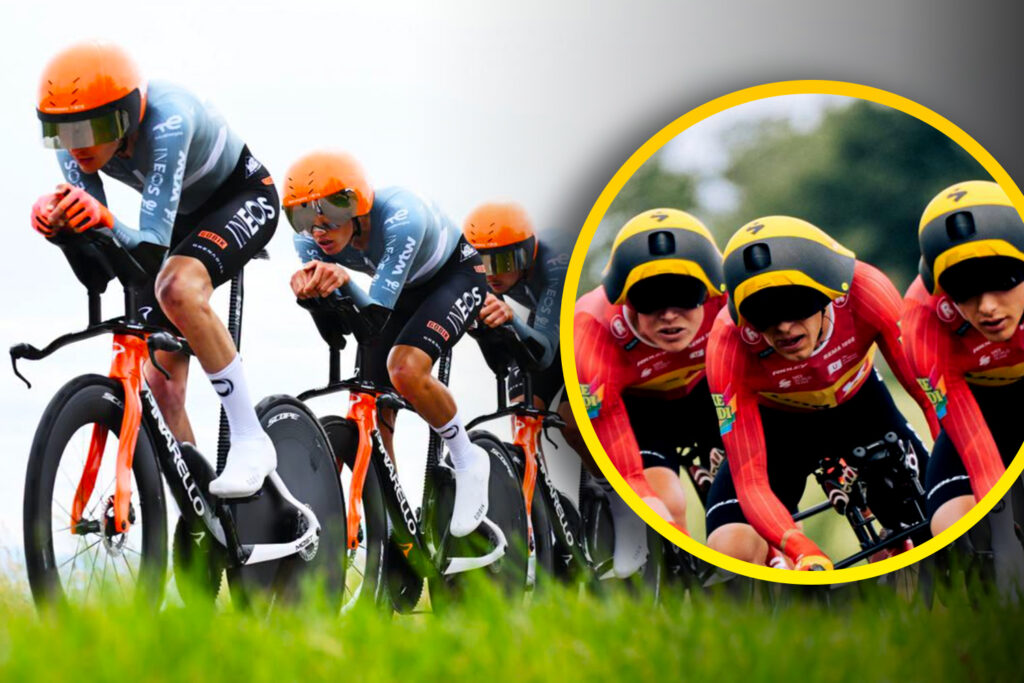

The team time trial (TTT) returns to the Tour de France as the opening stage of the race for the first time since 1971, with the Tour Auvergne-Rhône-Alpes (the Critérium du Dauphiné to you and me) acting as a key dress rehearsal ahead of the Grand Départ in Barcelona. The TTT format is a little different to the last time it featured seven years ago, so here’s everything you need to know about it…
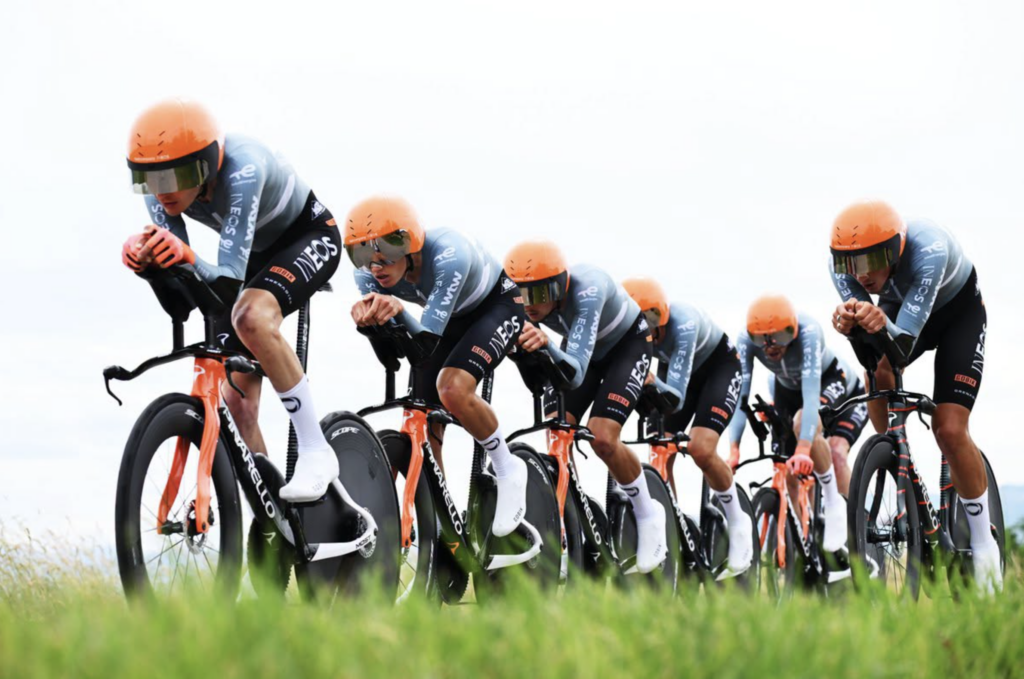
We aren’t always treated to significant time gaps in the opening days of the Tour de France, with the yellow jersey often ending up on the shoulders of a sprinter or breakaway rider during the first week. This year, however, general classification contenders such as Tadej Pogačar and Jonas Vingegaard will need to be at their best from the start.
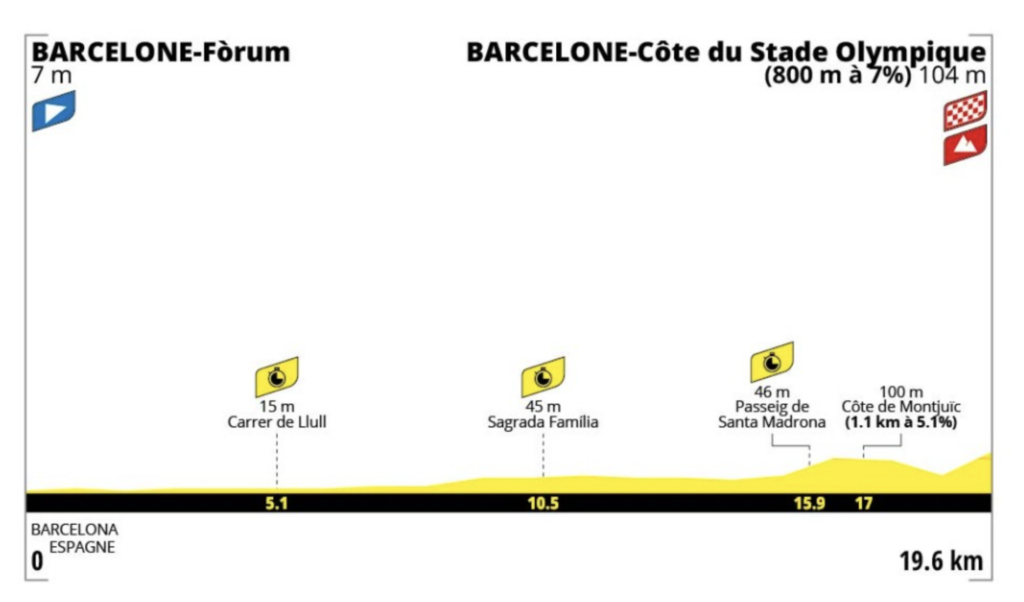
The 2026 Tour de France will begin with a TTT in Barcelona, covering 19.6km with 200m elevation, marking the first time the discipline has opened the race since 1971. While a TTT last featured in the Tour in 2019, this year’s stage uses a different format that ASO have been trialling since 2023.
The format differs from traditional team time trials and standard UCI rules. Previously, a team’s time was taken on the fourth rider to cross the finish line with all riders finishing together granted the same time in the stage. However, as first seen at the 2023 edition Paris-Nice, and most recently at the Tour Auvergne-Rhône-Alpes, each rider will now receive their own individual finishing time for the general classification. As a result, it is no longer necessary for teams to finish together as a group of four, giving riders greater tactical freedom.
ASO explains: “The stage classification for each team is based on the time taken on the first rider to cross the finish line. Real times are applied to the general individual classification as follows: – the time of the first rider of each team shall be awarded to all riders finishing in the same time; and – slower riders shall be credited with their actual times.”
A change that ASO says is to prevent a dominant team from having all of its riders near the top of the overall standings after a strong team time trial and to make the racing more exciting.
> What is road bike time trialling? The rules, bikes and setups explained
The stage classification itself is still team-based: the winning team is determined by the time of its first rider across the line, and teams are ranked accordingly. However, each rider still receives an individual time for GC purposes.
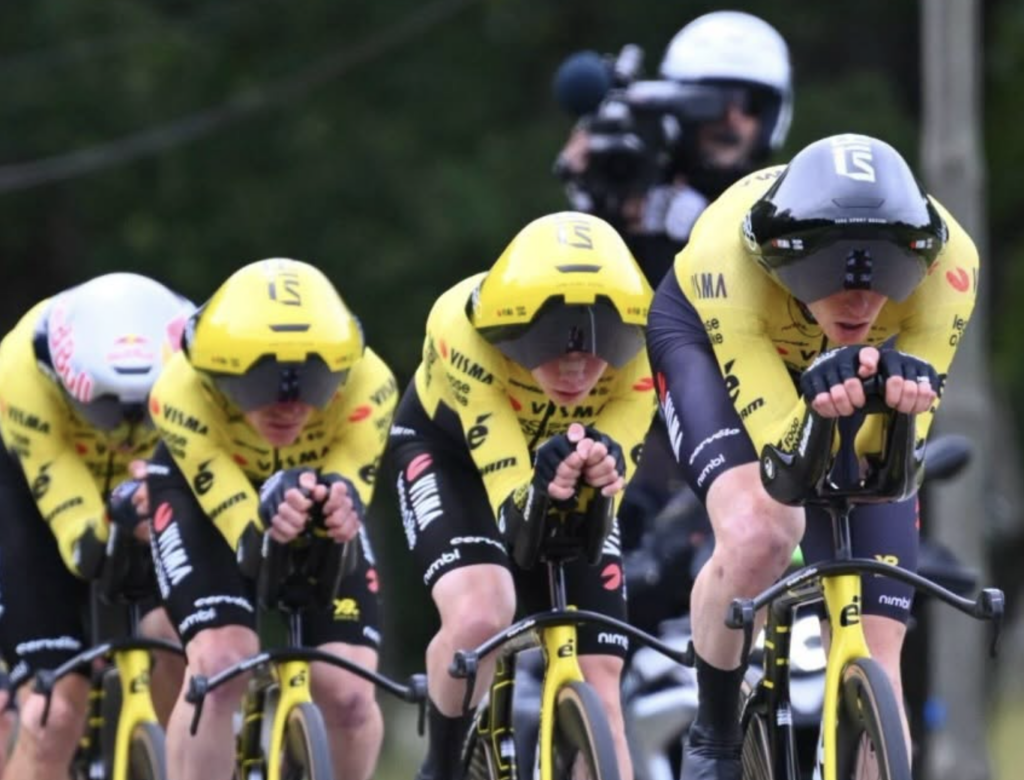
At the Tour Auvergne-Rhône-Alpes TTT, for example, Matteo Jorgenson set the fastest time, meaning Visma-Lease a Bike were classified as stage winners, even though each rider was still assigned their own individual time.
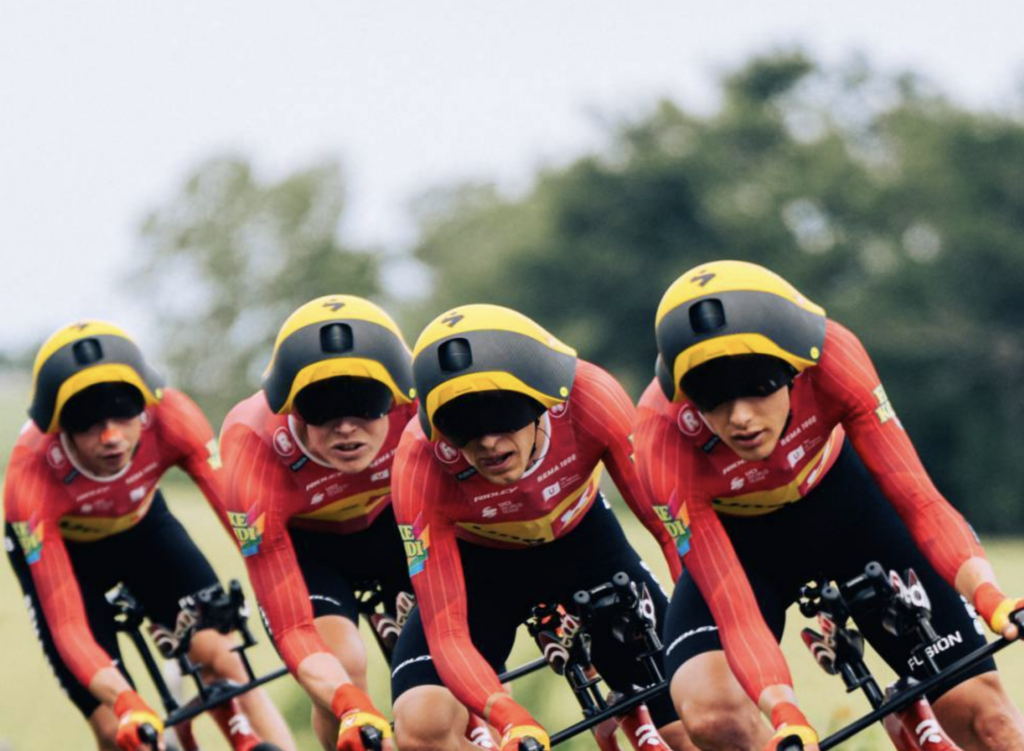
Each team starts the stage with eight riders and typically sets off at four-minute intervals. Since this is the first stage, teams won’t be ordered in terms of where they stand in the general team classification. Instead, start order is usually based on UCI team rankings, with higher-ranked teams starting later in the day.
Although finishing together is still advantageous, especially early in the stage, teams may also adopt more selective pacing strategies depending on their GC ambitions and rider strengths.
There is still a time limit, however, with any riders finishing outside a generous additional 30% of the winner’s time eliminated from the race.
At the Tour Auvergne-Rhône-Alpes TTT, which was longer than the opening Tour stage at 28.4km, riders had a cut-off time of 42 minutes 43 seconds based on the winning time of 32 minutes 52 seconds. The slowest rider still finished within the limit, in 40 minutes 40 seconds.
As for mechanicals or incidents, the race follows UCI regulations under Article 2.6.028, which states that in the event of a duly noted crash, puncture, or mechanical beyond the red triangle in a team time trial stage, the rider or riders involved will be credited with the time of the teammate(s) they were riding with at the moment of the incident.
Who gets the jerseys?
At the Tour de France, four classification jerseys are contested throughout the race. The iconic yellow jersey is awarded to the leader of the general classification (GC), while the green jersey goes to the rider leading the points classification, earned through stage finishes and intermediate sprints.
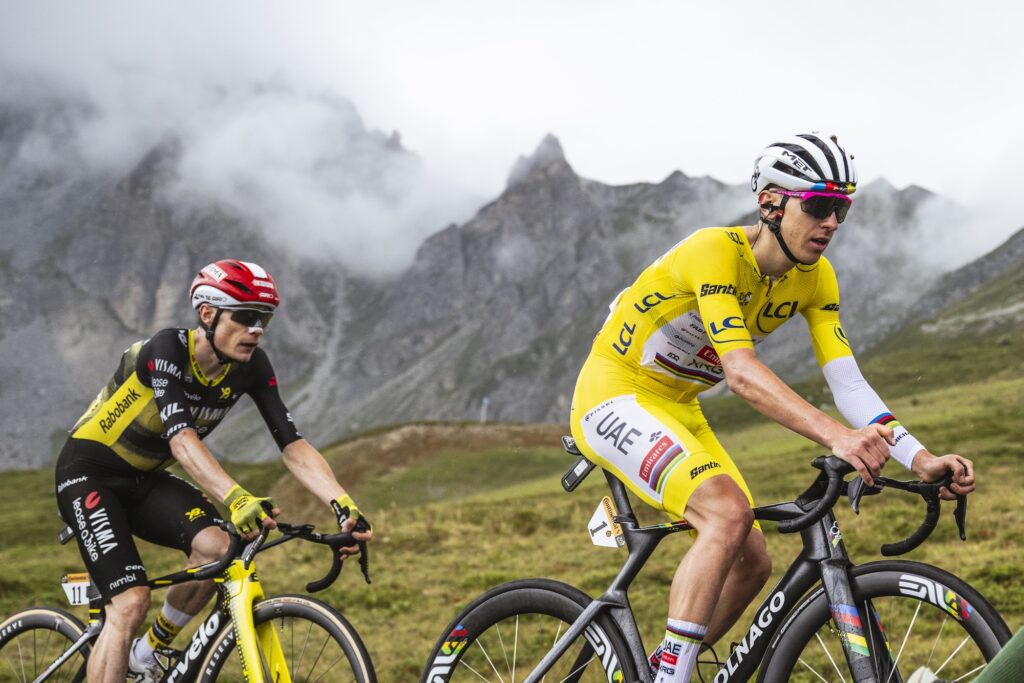
The polka dot jersey is awarded to the leader of the mountains classification – often referred to as the King of the Mountains – while the white jersey is worn by the best young rider. The latter follows the same time-based criteria as the general classification but is restricted to riders aged 25 and under.
With the opening stage being a team time trial, neither the polka dot nor green jersey will be awarded on day one. There are no categorised climbs on the route, and points for the green jersey are only available on mass-start road stages.
The rider who records the fastest individual time on the stage will claim the yellow jersey, while the white jersey will go to the highest-placed eligible young rider.
Visma–Lease a Bike and Netcompany INEOS have been the teams to beat in this year’s TTTs, although Red Bull-BORA-hansgrohe are also expected to be in the mix.
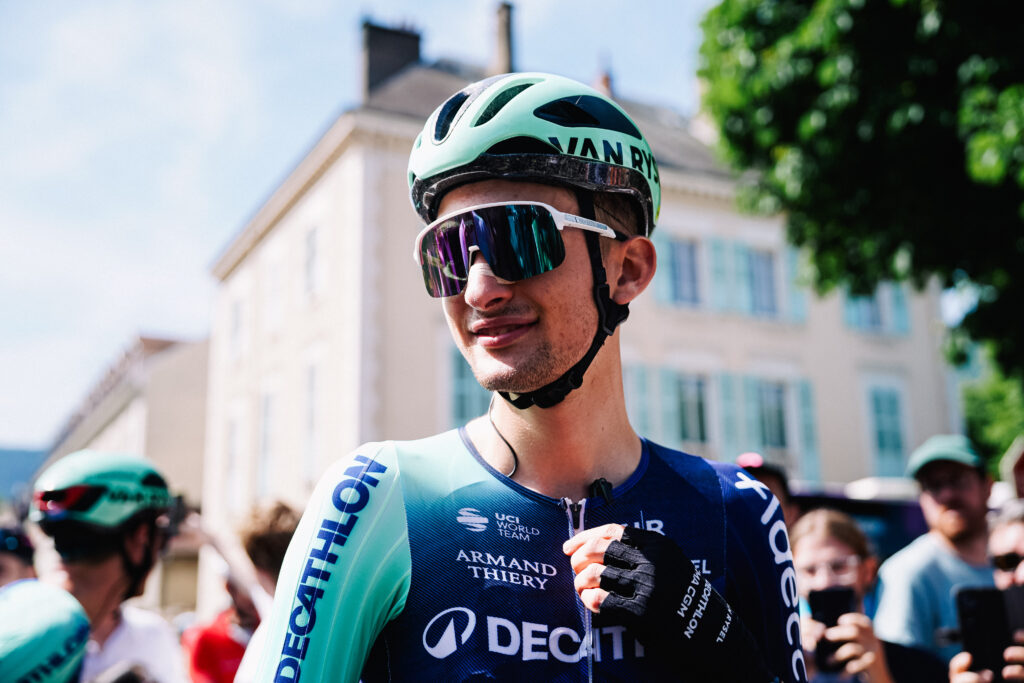
French fans will hope to see Paul Seixas in white by the time the race reaches Paris, but his team, Decathlon AG2R La Mondiale Team, has yet to establish itself as a leading force in team time trials. That could open the door for rivals such as Oscar Onley, riding for Netcompany INEOS, Florian Lipowitz of Red Bull–BORA–hansgrohe, or Isaac del Toro of UAE Team Emirates XRG to pull on the white jersey after the opening stage.
What are your thoughts on this new team time trial format? Let us know in the comments section below.








9 thoughts on “What is the team time trial at the Tour de France, and how has the format changed? Everything you need to know about the TTT ahead of the opening Tour stage in Barcelona”
I get thé feeling that thé over-riding motivation for changing thé format is to mâke it more ‘exciting’ on TV
@darnac I know cycling is a team sport to a considerable degree but I have always thought that taking the time on the fourth rider gives too much advantage to the richest teams, the ones who can afford to have three or more Galácticos backing up their leader. Having individual times for each rider seems to me closer to the spirit of the race, i.e. the man who goes round the whole parcours in the lowest time wins. With the old system you could end up with a somewhat absurd situation where rider A actually rode the Tour a minute quicker than their rivals but rider B takes the title because their fourth man in the TTT finished 1.01 ahead of rider A’s fourth man. Besides, having watched this format in the Dauphiné, it definitely does make it more exciting and at a time when the standard moan is that with one rider, or two at most, dominant the racing has become too boring that’s not really a bad thing.
I watched it in thé Dauphiné but didn’t get that feeling.
It was certainly an exciting watch today.
Surprised that INEOS selected Ganna and Tarling. It felt like win at all costs and they didn’t quite manage it.
Personally I would rather see more riders having to stay together till the finish. It will reduce opportunities for teams to “rest” climbing domestiques and it preserves the spectacle and identity of the TTT discipline.
Great start to the tour. Vingegaard is obviously in outstanding shape, but will he pay for today’s effort later on.
The “same time in the last kilometre” rule feels exploitable if a team was cunning. Given the last section is uphill then full team effort to the 1km red kite before the most powerful rider does the last 1km solo. If the others were to sit up and coast in they would get a slower individual time. If they had a ‘soft’ crash into each other or a mechanical (who verifies this?) then then get the better finish time of the more powerful rider. Not very sporting but…
@nick_stokie Pretty impossible to hide that in the last km of the Tour with maybe 100 cameras on them not to mention everyone’s phones.
@Rendel Harris Let’s turn this around. One can hack their electronic shifting and nobody will believe them!
Paul Seixas’ team is Decathlon CMA CGM
And I don’t know when you wrote this but I think it was published 9 days after Onley was confirmed out of the Tour.