


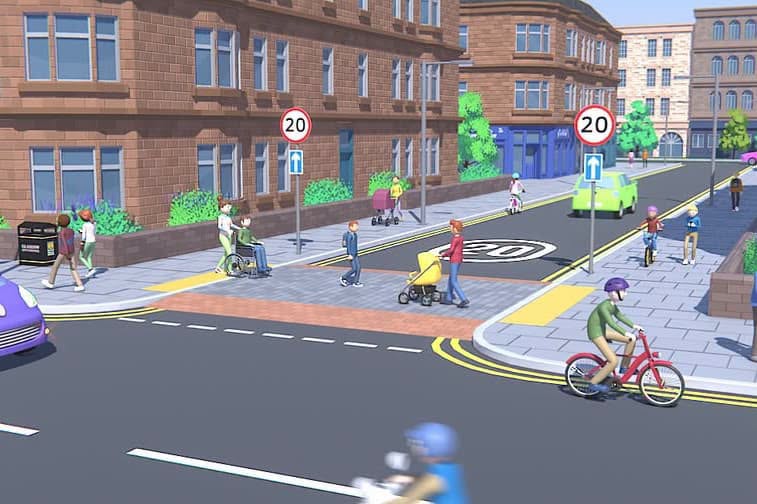

20's not so plenty for the speed-hungry
Yesterday First Minister of Scotland John Swinney unveiled the Programme for Government, effectively the country’s King’s Speech without the big hat and ermine.
Sadly for this blog, cycling-related policies were somewhat lacking, beyond a restated pledge of £226 million for active travel funding to “continue to transform communities”. That said, given these things tend to require significant budgeting, maybe Holyrood wasn’t the place to find active travel news north of the border yesterday.
Instead we can turn to our beloved local authorities, and the newspapers who scrutinise them. Over the weekend, both the City of Dunfermline and Glasgow City Councils unveiled their proposed expansions of 20mph speed limits.
> “This is a nightmare”: Instructor tells learner driver going 15mph behind cyclist in a 20mph zone
It should be said that though the councils may be implementing the scheme, they’re acting with the impetus of the Scottish Government’s own 20mph Transport Strategy, promoting a “slower today for a safer tomorrow”.
-1024x1016.jpg)
The main pledge is to “roll out our national strategy for expanding 20 mph zones, with more roads and areas reducing their speed limits to 20 mph – making our streets feel safer and encouraging active travel”. It’s hardly a ‘blanket’ speed limit, though even the ‘blanket’ speed limits were hardly such.
Still, try saying that to the local social media users!
“Fife Council just hate motorists end off [sic]”
“Concentrating on the speedometer instead of driving safely,” one Facebook user wrote, which I think implies they have a background of a Finnish rally driver with a mastery of high-speed safety like that.
> Reducing speed limits to 20mph protects cyclists and doesn’t delay traffic, new research finds
“Why not just outlaw cars and get us all on a bike, will that make them happy  . No cos then they won’t get any money for fines (Parking, Speeding and LEZ and using bus gates)”
“How wonderful everybody will be so much safer knowing if they get skelped by a car at 20 mph things wont be that bad… will this new clowncil rule apply to our lovely overseas delivery drivers who break every road rule on a daily basis.”
Honestly, whittling down the best this morning was difficult but I think we have our winner, based largely on the unexpected morbidity of the metaphor:
“It’s murder to keep that speed. Need to use cruise control”
Struggling Campagnolo secures investment as group linked with Pinarello buys minority stake

The revered Italian component manufacturer Campagnolo has secured investment from a holding company named SPAC SA, that has “other investments in the cycling industry, including Pinarello” according to a press release sent out today.
The Campagnolo family will stay on as majority shareholders, and says it will continue to operate “entirely independently” from other cycling brands that SPAC SA has invested in.
“With the continued commitment of the Campagnolo family and the support of SPAC as a minority shareholder, Campagnolo is opening a new chapter in its history, with greater resources, a clear direction and renewed ambition to compete at the highest levels of global cycling”, said the brand.
A spokesperson for SPAC SA added: “Campagnolo is one of the great names in cycling, with an engineering heritage and a record of victories that few companies in any industry can match. We were drawn to this investment by the quality of the underlying business and the clarity of the transformation plan the Campagnolo family and management have put in place. We are pleased to support them as a minority partner, and confident this is the beginning of a strong next chapter for the brand.”
Back in December, Campagnolo said it would be laying off up to 40% of its staff after three years in the red – but in February of this year, that statement was contradicted when Campag denied that it was planning to make redundancies, but did admit it was going through a “deep internal reorganisation”.
Boom! Boom! Matthew Brennan soars to Vuelta hat-trick with another dominant sprinting display in Lorca
Was it ever in any doubt?
A perfect day for British bike racing continued this afternoon in the south of Spain, where Matthew Brennan continued the grand tour debut of his dreams with a stunningly simple display of sprinting on the streets of Lorca.
Just when another textbook Visma lead-out looked to have gone awry when Wout van Aert overcooked a questionably placed U-turn in the final kilometre, 21-year-old Brennan kept his cool, calmly and maturely waiting for his Belgian teammate to resume his place at the front of the bunch.
View this post on Instagram
From there, the sprint was a mere formality. Brennan launched, Bryan Coquard – buoyed by his maiden grand tour stage win on Saturday – tried to follow. But that was all the Frenchman could do, Brennan was simply in a league of his own. Again.
It’s the Darlington lad’s first ever grand tour and he’s already nabbed the match ball. That hat-trick is all the more impressive for the fact Brennan’s only really been able to properly sprint three times, nailing it on every occasion he’s been let loose (stage eight to Xeraco, when he never found the space to get going, being the only real blip on his scorecard).
I reckon we don’t have to whisper it anymore. We are almost certainly witnessing both the best grand tour debut and the best sprinting display at a three-week race by a British rider since You Know Who…
Boom! Lewis Askey powers up Michaelgate to stunning home Tour of Britain victory after Lincoln thriller
Well, that was pretty exciting, wasn’t it?
After a thrilling ding-dong battle worthy of the Lincoln Grand Prix itself, Lewis Askey kicked off the Tour of Britain in style, the British rider powering away from an elite lead group to overhaul later attacker Florian Vermeersch on the steep cobbled slopes of Michaelgate and take a very impressive (and popular) home win.
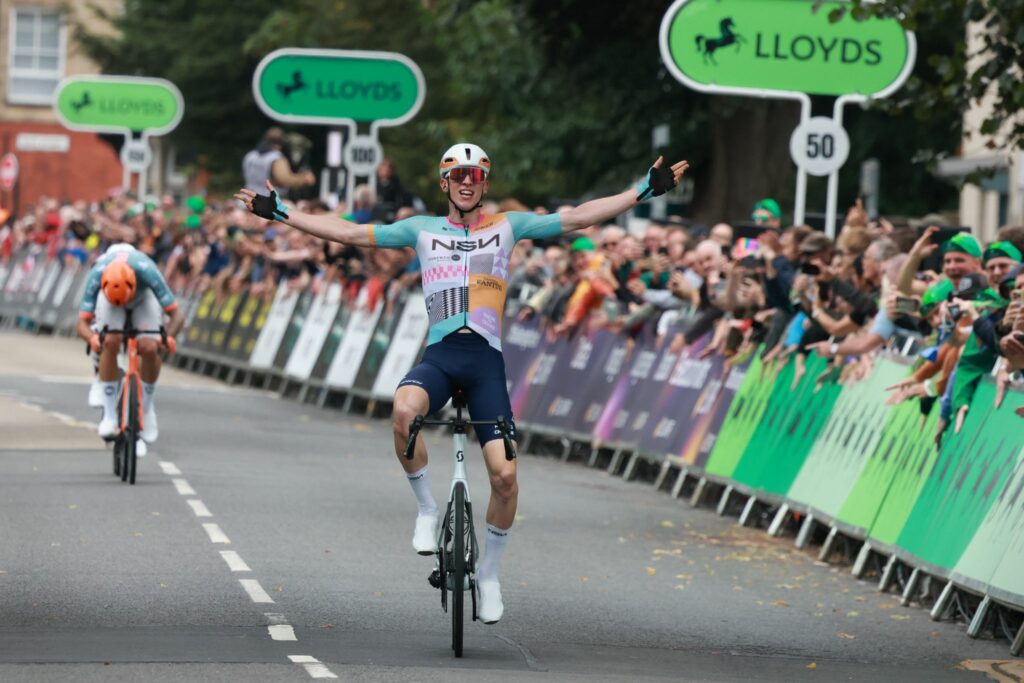
NSN rider Askey was instrumental in forcing the winning star-studded 12-rider move, containing big names such as Filippo Ganna, Tim Wellens, Jasper Stuyven, and Matteo Trentin, clear on those five famous laps around Lincoln in the final 40km.
At the end of a frenetic, tactical last lap – by the finale, it felt like every rider in the lead group had launched at least one attack – UAE rider Vermeersch appeared to have timed his move to perfection, swiftly building up a 15-second lead as the favourites dithered.
View this post on Instagram
But on Michaelgate, there was no answer to Askey’s blistering acceleration, the 25-year-old battering the Lincoln cobbles to storm past the fading Belgian before the summit. A late chase by Ganna, for once, was in vain, as Askey held off the Italian to win by two seconds, sealing the deal with a questionable Gangnam Style-esque celebration.
That was the only thing questionable about Askey’s showing, however, the British classics star laying down on ominous marker for the rest of his home race. And if today’s fireworks are anything to go by, we’re set for a Tour of Britain for the ages. Bring it on.
LeBron James breaks the cycling internet again with a shiny new gravel bike... but what is it?
View this post on Instagram
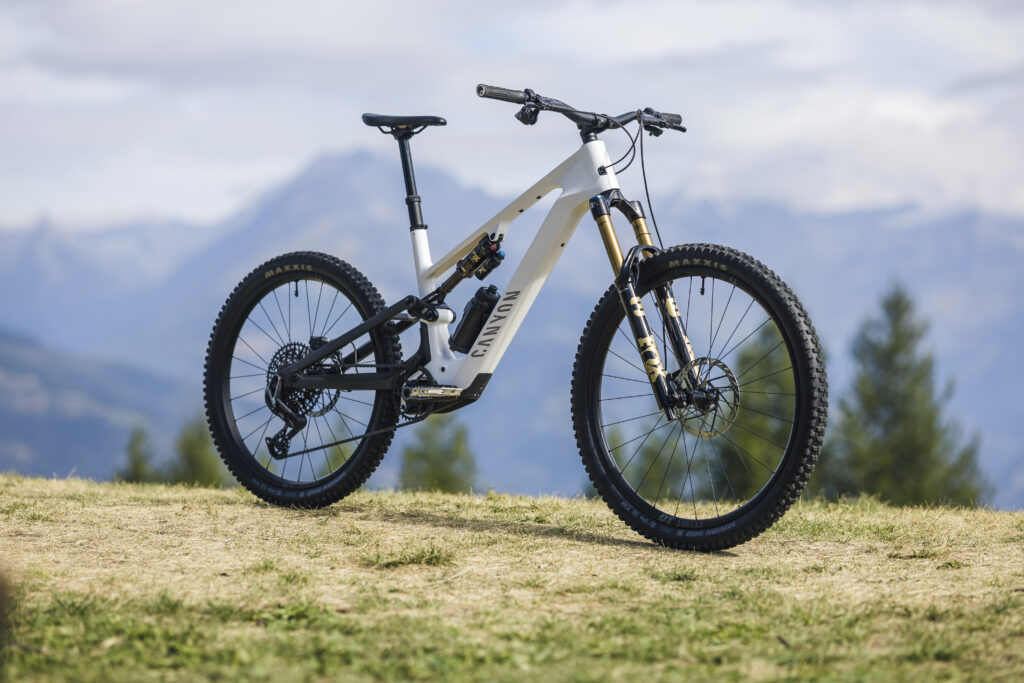
The basketball legend first linked up with Canyon towards the end of last year, teasing what appeared to be an unreleased bike… is this that bike, or something else?
The frame and fork appears to be very similar to Canyon’s Grizl – however that bike has several top tube mounts, while this one only has mounts on the fork.
King James also appears to be rocking a (rather diminutive) SRAM Red XPLR 1x chainset – a high-end option that doesn’t appear on any stock Grizls – plus a front rack mount, that also isn’t available on the Grizl as standard.
Any ideas, road.cc sleuths? We’ve asked Canyon for an ID check on the bike. Your thoughts are also welcome on whether the long tights with short-sleeve compression top and backwards baseball cap under helmet look will ever catch on…
Cycling royalty on a sofa bike (plus Geraint Thomas)
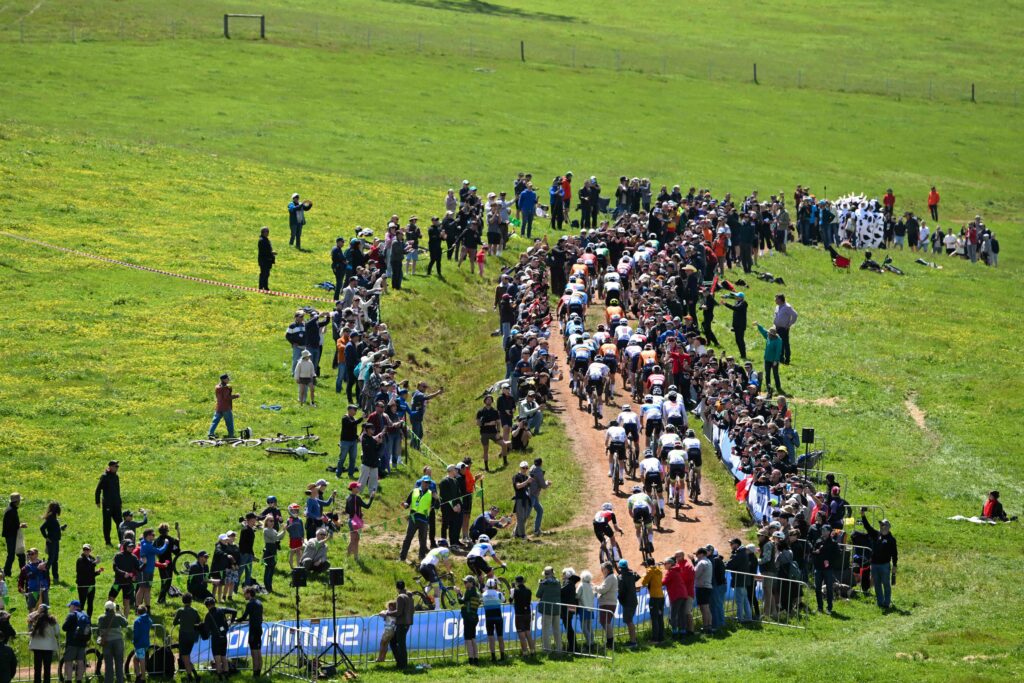
We’re into the final 10km of the opening stage of the Tour of Britain, and it’s been a fast, frenetic affair, with a small elite group set to battle for the win on the cobbly, hilly streets of Lincoln.
But in much more important news, here’s Callum sitting on what’s been described as a ‘sofa bike’ beside some Welsh bloke:
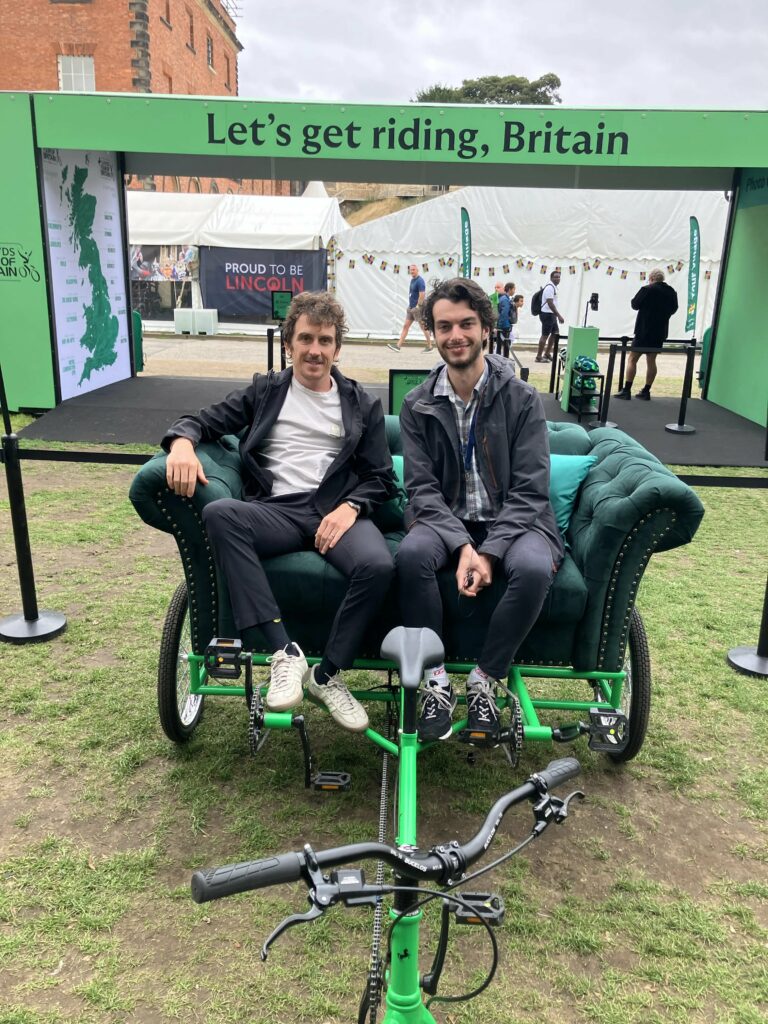
I’ll be honest, we kind of pressured Callum into arranging this rather bizarre photo op (he has also nabbed Thomas for an interview, don’t worry). Oh, the things we do for the live blog…
Blistering attacks and blurry photographs
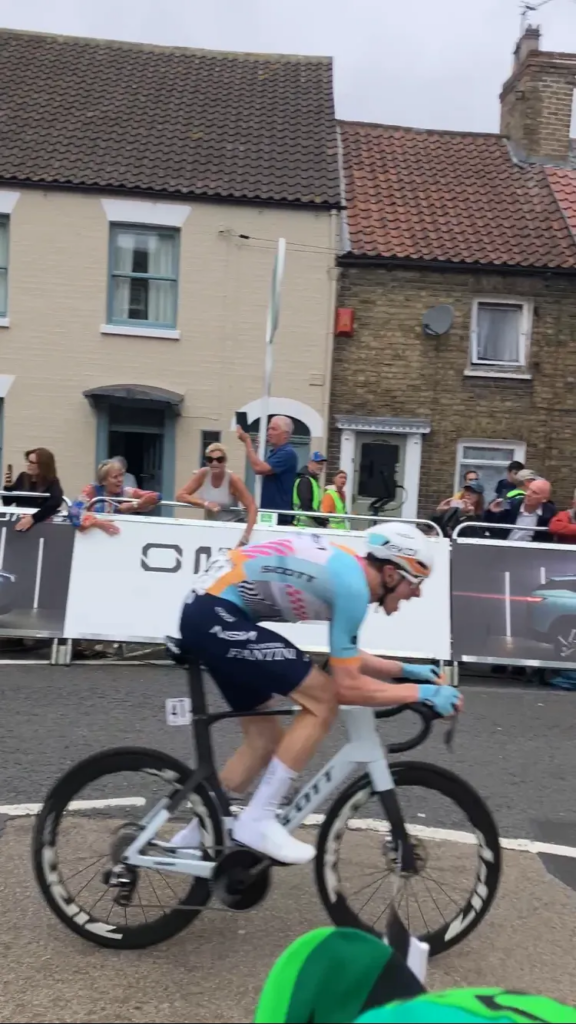
Just how fast was Lewis Askey going? Well, considering this was the best shot Callum could get of the flying NSN rider on the finishing straight, I’d say very fast indeed:
Scottish ultra-distance cyclist’s back-to-back Monuments world record attempt derailed… by support car crash
Last month, you may remember, we reported on the live blog that Scottish ultra-cyclist James MacDonald was aiming for his own piece of classics history.
The 55-year-old – who’s held world records for JOGLEJOG, the indoor 100km, as well as Scotland south to north – was hoping to establish a new World UltraCycling Association (WUCA) record by riding the routes of cycling’s five one-day monuments (Milan-Sanremo, Tour of Flanders, Paris-Roubaix, Liège–Bastogne–Liège, and Il Lombardia) back-to-back.
The record would be based on the total time taken to complete all five routes, with the clock running continuously from the start of the Hell of the North until the finish on the Via Roma in Sanremo, totalling over 1,349km and taking in the races’ famous hills, bergs, and cobbled sectors (that means car-based transfers and all rest and sleep is included in the total time).
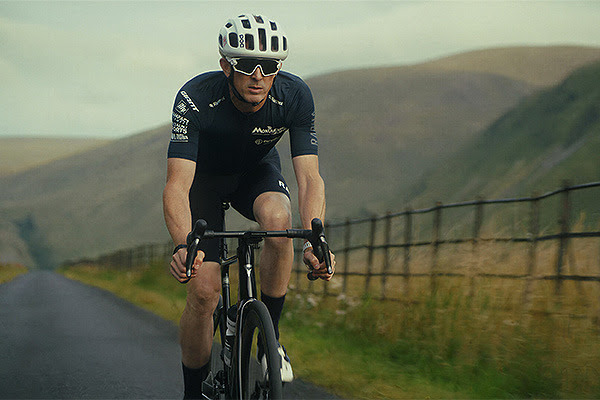
MacDonald kicked off his monumental ride on the Roubaix cobbles on Sunday, but hit a pretty big snag in Belgium the following day. While taking on the Tour of Flanders route, the driver of his lead follow car was involved in a road traffic collision.
No-one was hurt in the incident, but the vehicle was left undriveable, grinding the record attempt to a halt as the team rushed to secure another car or work out whether their second support vehicle could be redeployed.
According to MacDonald’s ‘challenge manager’ Matt Jones, several hours were lost in this search, the delay meaning that completing all five monuments within the original timeframe was no longer possible.
View this post on Instagram
However, undeterred, MacDonald is carrying on to the finish, starting Milan-Sanremo – the fifth and final monument on his itinerary – at 4am this morning, after driving straight from Belgium to Italy, skipping Liège and Lombardy.
He’s currently making his way down to the Ligurian coast, about halfway through the mammoth 298km route, with the aim of reaching the challenge’s original finish destination on the Via Roma at the planned time.
“James and the whole team are devastated. Months of planning went into this attempt, so for the timed challenge to end because of an accident involving one of our support vehicles is incredibly hard to take,” Jones said in a statement.
“But once we had lost several hours, the record attempt was over. We were not prepared to put James or anyone else in the team at greater risk by trying to claw that time back.
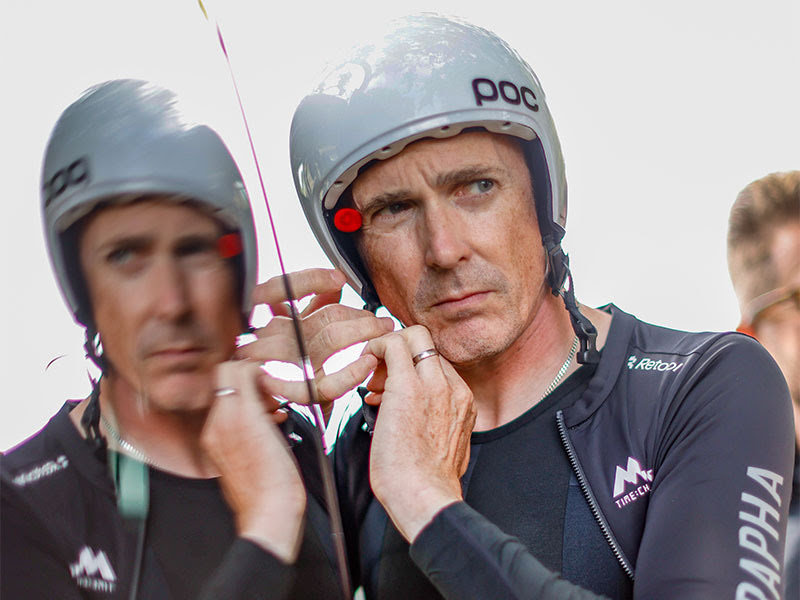
“Nobody was injured, which is the most important thing. We have secured another follow car and are continuing to Italy.
“The world record is no longer possible, but everybody in the team wants to finish what we started. The support for James and the team, both before the challenge and over the past few days, has been extraordinary. We know how much people have invested in this attempt, financially and personally, and we are hugely grateful.
“This is not the ending we wanted. But completing Milan–Sanremo gives us the chance to finish on the bike rather than at the roadside in Belgium. After everything the team has put into this challenge, that will mean a great deal.”
Mads Pedersen out of the Vuelta

The Danish sprinter did not start stage 11 after falling ill.
In a short statement, Pedersen’s team Lidl-Trek said: “Unfortunately, Mads Pedersen will not take the start of today’s stage 11 of La Vuelta.
“After battling illness over the past few days, Mads will now focus on making a full recovery before turning his attention to his remaining targets this season.”
Get well soon, Mads 💙
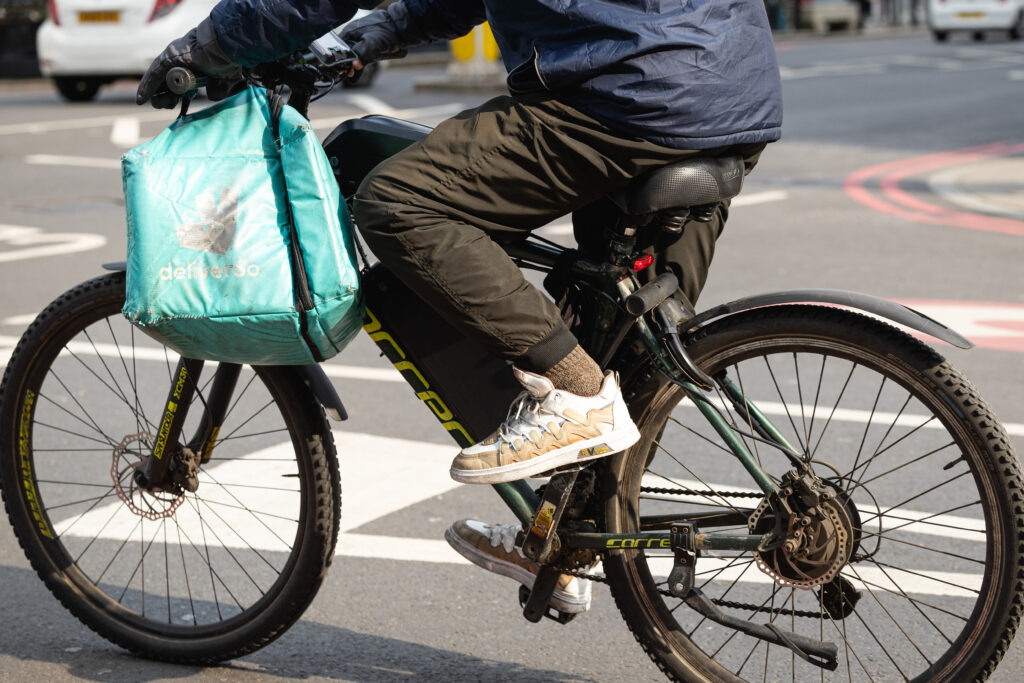
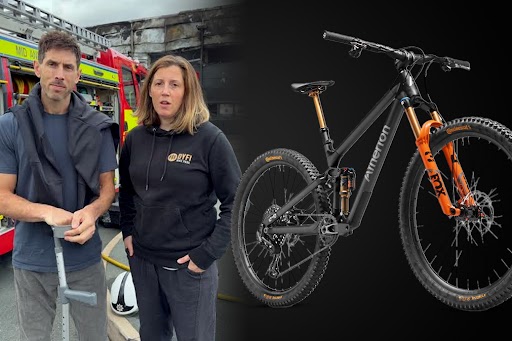
Banned for drug driving, buys an illegally modified Carrera from Amazon, ends up in court again: A year in the life of the local eejit
‘Had a lovely morning in Lincoln at the Tour of Britain, got to pose with my giant tube of sealant on the podium, really enjoyed it’
View this post on Instagram
This is exactly why every professional cycling team should be sponsored by adhesive manufacturers, laminate flooring companies, supermarkets, and coffee machine makers.
You don’t get this kind of thing when your team is backed by a petrostate.
UAE Team Emirates arrive for the Tour of Britain (and forget to ride on the left)
View this post on Instagram
We’d like to think Tim Wellens and co only briefly forgot to ride on the left, as they appeared on the correct side of the road throughout this clip; although they did also say they almost had a crash one minute into their pre-Tour of Britain training ride. Oops…
The gang had some interesting observations about Lincolnshire’s coastline, with Wellens claiming it was “luxury” compared to Monaco (we’ll take that), while his French teammate Benoit Cosnefroy was less impressed.
Things I’ve never, ever wanted to do on a bike, #45
Now, that’s just showing off…
View this post on Instagram
Home road racing returns!
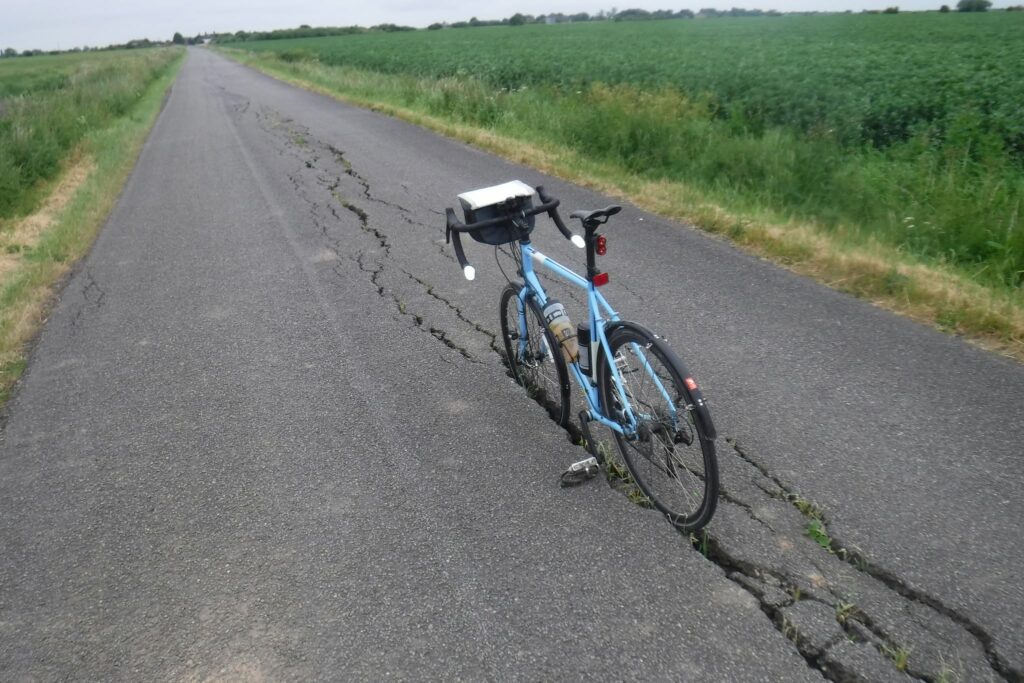
Happy Lloyds Tour of Britain Men day to all who celebrate! I will be celebrate in a few hours by being driven around Greater Lincolnshire, ideally avoiding cracks in the road…
*Frank Lampard voice* No but seriously it’s a great day out and I’m looking forward to sampling all of Lincolnshire’s hospitality.
The race itself is stacked with champions from country, continent and commonwealth. Tim Merlier and Olav Kooij both won stages at this year’s Tour de France and are expected to battle later in the race. Meanwhile UAE line-up and could win the race overall with several riders, though I’d pick Tim Wellens over Benoit Cosnefroy, just because I’d like to see him roll back the years.
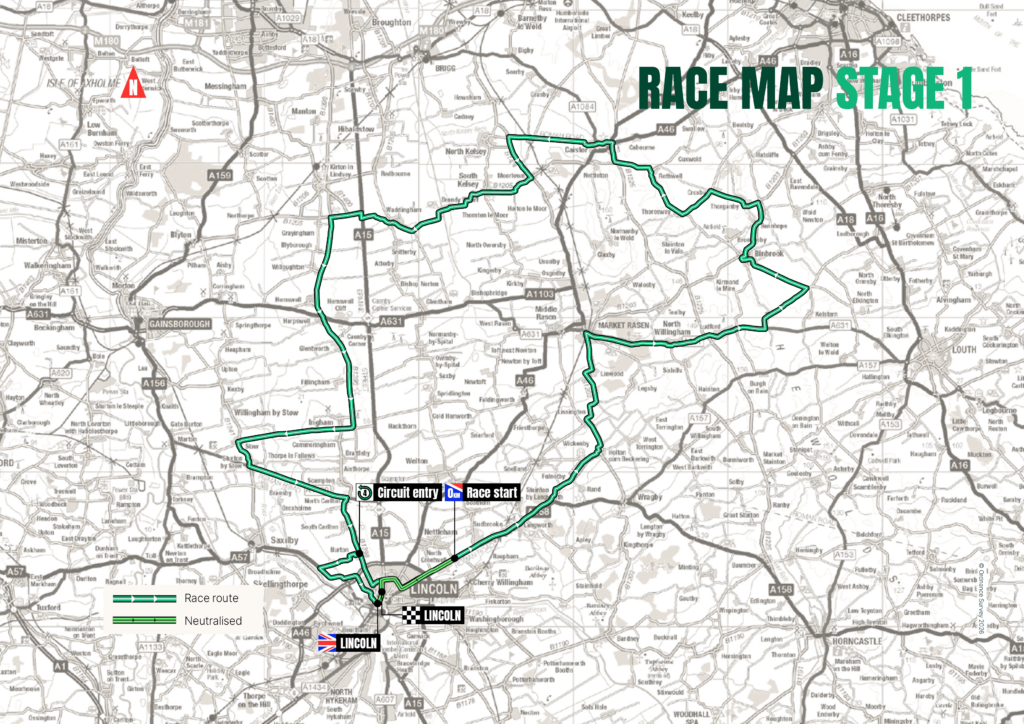
Today’s stage starts and finishes in the cathedral city with a looped circuit within the day’s circuit. If it produces anything like as exciting a race as the Lincoln Grand Prix, with five ascents of the 11.3 percent Michaelgate climb, then we’re in for a treat.
I’m most looking forward to the incongruous sights of foreign riders by deeply British places. Filippo Ganna outside Greggs. Jasper Stuyven beside Boots. Yannis Voisard stroking a pet haggis on stage 5. You get the idea…
Vuelta stage 11 preview: Another opportunity for the sprinters (and more chaos) in Lorca
With Callum currently busy swanning around Lincoln at the Tour of Britain, sipping champagne with Geraint Thomas, Ryan’s nipped back on to the live blog to keep you posted about that other bike race going on at the minute.
And after Bastien Tronchon’s last-ditch, surprise sprint win yesterday, expect more bunch kick chaos at the Vuelta this afternoon, thanks to a largely flat 154km route from Cartagena to Lorca:
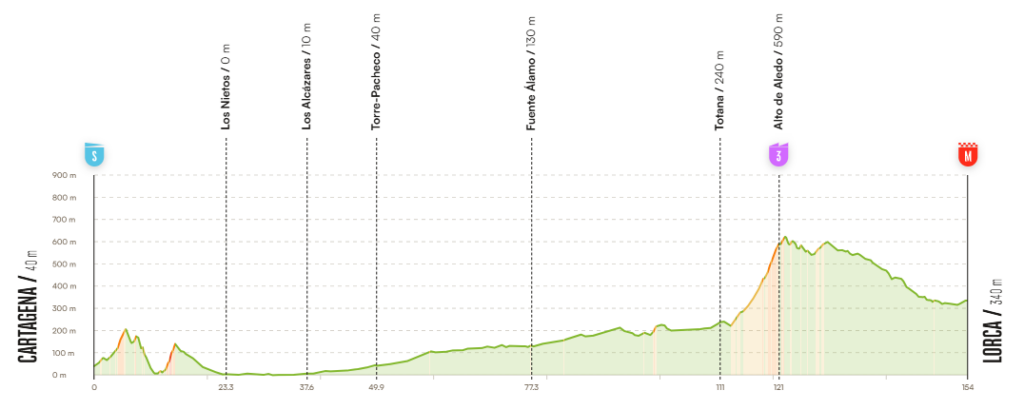
There’s a draggy 10km Cat 3 climb, averaging 4.2 per cent, which tops off with around 33km to go and could be a springboard for some dangerous attacks. But let’s face it, this is as flat as the modern Vuelta gets.
And with the route set to get very mountainous for the rest of the week, the sprint teams won’t want to let this one slip through their fingers.
But then again, it is the Vuelta, so who knows?
For Fin
Emotional scenes in Lincoln this morning, as the Tour of Britain peloton gathered before the start to remember the life of Finlay Tarling:
View this post on Instagram
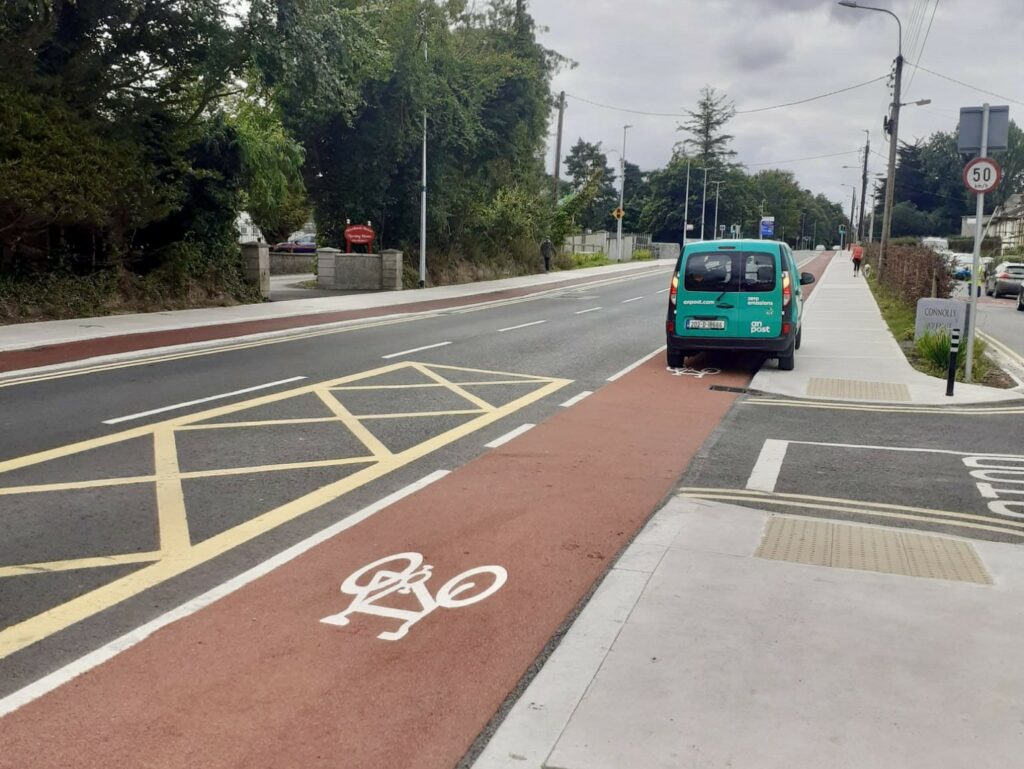
“Massive” cycle lanes “taking over the streets”, claims Irish MP
Sadly not reality but an exaggeration by a fearmonger…










53 thoughts on ““It’s murder to keep that speed”: Drivers unhappy as new 20mph limits introduced; Ultra-cyclist’s Monuments world record derailed… by support car crash; Behind the scenes at Tour of Britain; LeBron James rides new custom Canyon + more on the live blog”
They will be riding past a Greggs five times when they go down the Bail. Hopefully the cameras will capture Pippo riding past
@redimp That adds yet another thing to the very long list of what professional cyclists can achieve but I can’t, riding past a Greggs five times without nipping in for a vegan sausage roll seems next to impossible.
My favourite bit was when they passed The Lion & Snake at the top of the hill.
I had a nice burger with bang bang cauliflower wings and chips there a few years ago. Maybe an alternative refuelling option for the cyclists.
https://www.bbc.co.uk/news/videos/c62e6pxvpkno
Ignoring Cambridgeshire Police’s overreaction to an eMoto rider, BBC are incapable of reporting on the issue properly.
https://www.bbc.co.uk/contact/complaints/make-a-complaint/#/Your%20Complaint
“The article states:
“Cambridgeshire Police seized the device as it was capable of speeds of up to 23mph (37 km/h) with the legal limit being 15.5mph.
The man has been reported for driving without a licence and not having insurance, as well as failing to stop. ”
Yet refers to the vehicle in question as an eBike. The term eBike usually (and should) refer to electric assist pedal cycles (EAPC), which are perfectly legal. Such vehicles do not provide motor assistance above 15.5mph, nor can someone be charged for driving without a licence or not having insurance, as neither is required for an EAPC. Please correct this article and refer to the vehicle as at least an *illegally modified* eBike, or better yet an electric motorbike, as that is what it is.”
For anyone who wants to complain too.
@Boopop The BBC are correct, it is an e-bike. EAPCs are a subset of e-bikes; they are not synonyms.
@AidanR So you’re happy with their reporting? Much more of this and EAPCs will get more regulation despite them not being the issue, much like part of the US (Boston I think). Especially if Reform ever get in.
@AidanR Well, not under UK government regulations: “If your electric bike does not meet the EAPC rules then it’s classed as a moped or motorcycle.” As the BBC article is about a machine being seized by the police for not complying with the UK government regulations then it would seem logical to employ the official terminology of said regulations.
The difference is colloquial usage vs legal definition. Colloquially it’s an electric bike (as used in the regulation you quote) or an e-bike for short; legally it’s a motorbike because it’s been modified to go over 15.5mph and therefore being used illegally because it’s not registered and not being used on private land with the consent of the landowner.
It’s not incorrect to call it an e-bike, so I fail to see what grounds a formal complaint to the BBC would be made on.
Pretty sure you don’t need ‘grounds’ to complain to the BBC. In fact, their complaint form even mentions complaints that are a matter of ‘personal taste, opinion or preference’.
@Rendel Harris Whilst I would prefer ebike/electric bike were used exclusively to refer to EAPCs, I do feel the horse has bolted on that one, and the quote you’ve provided seems to support, rather than undermine, that position.
The quote implies that your electric bike could be classed as an EAPC if it meets the EAPC rules, or else it’s classed as moped or motorbike. In either case, it’s still an “electric bike”; it’s just classified differently and hence different regulations apply.
https://www.theguardian.com/world/2026/sep/02/japan-new-speed-limit-30kmh-narrow-city-streets
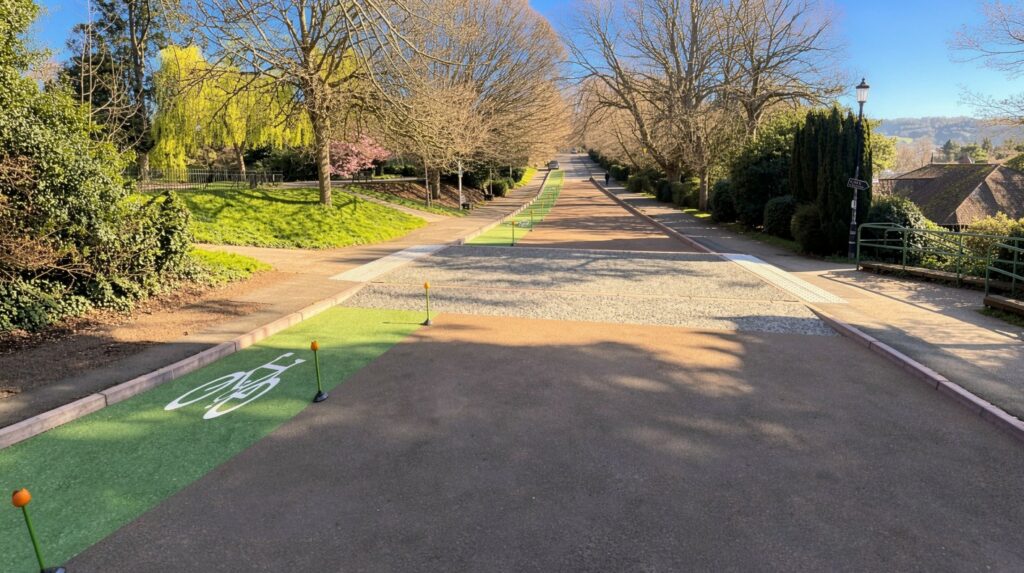
I appreciate they’re showing Trumpton * in that Glasgow visualisation, but there are several things which look a bit childish. Or rather: not suitable for children, or pedestrians, or cyclists…
The side street, the main street, the “continuous footway / entrance construction” are all deficient.
They should go read Robert Weetman’s articles e.g the “quality checklist for continuous footways” and the “Factors in pedestrian-friendliness” for side streets.
For one – the side street is one-way, single-lane – so why does it appear so wide? At the very least the width just beyond the continuous footway should be narrower.
Then if the main street has speed limits > 20mph where are the separated cycle paths? (Not even a cycle lane marked there…)
There are all kinds of issues with the markings, but for the full kerb-nerdery see Robert’s blog.
* How on earth has he managed to get his name on things *retrospectively*? Truly he’s surpassed George Foreman in “putting his name on it” (or in Australia and Hong Kong General Sir George Murray).
@chrisonabike I hear he wants to rename Canada geese, “Donald ducks”.
@GMBasix they’re good overcooked and glazed over with Maga syrup. Fact!
@chrisonabike it is a canard
@GMBasix Canard or conard?
Donald Ducks have very small wings and white plumage, resembling a diaper, around their hindquarters. Unusually, they are nocturnal, tweeting continuously till the small hours and they doze during the day.
It has been suggested that they have been known to migrate to Little St James island in the Carribbean. They have also attempted to migrate to Greenland.
“Fife Council just hate motorists end off [sic]”
There is no full stop at the end of that sentence so, in fact, the end is off and “[sic]” is not required.
@GMBasix It’s not just the end that is off, the whole thing is.
So off it would make you sic.
I feel like there needs to be a “translation” under most of those comments.
“I am a shit driver and struggle to maintain a speed or be able to periodically check my spedo without being dangerous”
“I like breaking the rules when I drive and I think that I should be allowed to do so with impunity (like those bloody cyclists!!!!!). I struggle to make sensible arguments so I usually resort to using massive overreactions to create strawmen that other people with room temperature IQs can mistake for a cohesive argument”
On “Massive” cycle lanes…
There is an issue with the amount of road width left – this is small enough to cause vehicles, especially buses, to tend to travel down identical trajectories, which wears the carriageway in particular places causing rutting in only a short period of time. On wider roads, vehicles spread the wear over greater parts of the road. So a higher strength underlay/surface is required. We have several arterial roads in Cambridge which have been rebuilt with cycle lanes & narrower carriageways, which are great, but the roads have deteriorated badly.
@lawrence18uk Not a civil engineer, but just how much of an issue is this and is the cause as you suggest? First, for a significant degree of wear reduction in the “before” situation I’d imagine you’d have a *very* wide road. That is a problem in itself in terms of encouraging higher speeds (as stopping faster from those will definitely wear the road more). Particularly as motorists do in fact tend to take the same line *.
Indeed – surely this is even more argument for narrowing major urban roads to give space for separate cycle tracks (or better – a Dutch-style network level “disentangling of modes”)? First that means less road to redo when that’s needed. Second the surface of the cycle path should remain safer for cyclists for much longer (it’s not the cyclists causing the potholes) **.
Edinburgh certainly suffers from great waves of tarmac (which then become holes) at many bus stops. Nothing to do with cycling, and it would be safer AND more convenient if there were bus stop bypasses…
It may well be that many roads are in fact under-strength for modern levels of traffic (and the general upward trend of vehicle weights isn’t going to help). And if we do manage to get more public transport via buses since wear is very dependent on axle weight we may have to address that. (And perhaps change the driving mentality – if you’re driving a bus do not drive like the motorists in cars – it’s smooth starts and stops).
It seems another indicator of the overall need to promote motor traffic reduction, speed-smoothing etc.
* See e.g. Robert Weetman’s article about this on his blog – “Redundant carriageway”. Albeit I’m not sure the “winter tyre marks” illustration is quite such a compelling example.
** When some road space is taken for a cycle path that can mean that “services” are now under the cycling part. So we have to ensure that any utilities work is properly restored afterwards. But that would apply anyway…
maybe we shouldn’t be making cars so big and heavy?
Those high pressure slick roadie tyres exert more pressure than a landing jumbo jet…
Sadiq Khan gets prosecuted for untaxed vehicle in his name.
https://www.bbc.co.uk/news/articles/c7708vn2yp7o
Given his argument is that the vehicle was illegally/falsely registered in his name, the DVLA needs to explain how this happened.
And as I’ve said previously, with dangerous drivers using cloned plates etc…
Most current/old vehicles need petrol/diesel to run.
So the government should link the DVLA and police databases for wanted vehicles to petrol station CCTV.
Any that are flagged up can notify the police, get a pic of the payer on their security footage and also flag up the bank card used to pay.
Even for new electric vehicles, “we have the technology” to make catching illegal drivers relatively easy.
We just don’t have the political will to do it.
@mitsky Can’t be caught on the forecourt if the car’s run on washed red.
@mitsky Politicians “overlooking” registering / reporting / paying for things is … not unheard of. But in this case given the incredible efficiency and effectiveness of the DVLA I am inclined to believe him.
@chrisonabike given the incredible efficiency and effectiveness of the DVLA I am inclined to believe him
I agree – the Paragons at DVLA have been insufficiently lauded as the best thing since Border Force, and I’m sure they’ll get around to BF64 TGE when they get the chance. After all, they and I know where he has lived since 2021. And as for HY66 ZZB… although I don’t know where HE lives
“Concentrating on the speedometer instead of driving safely,”
…but it never occurred to them to make the same complaint about keeping to higher speed limits – despite the fact that the onerous multitasking cognitive load involved is far less at slower speeds 🙄
“Tiger Woods gets five-year driving ban after reckless driving plea”
I guess he won’t be facing any exceptional hardship…
https://www.bbc.co.uk/news/articles/c5y7xvpn5kno
LeBron’s rack just looks like a Canyon LOAD front rack to me – £38 on their accessories page
It’s worth noting that Fife (where Dunfermline is) started implementing 20’s in 2005. By 2015 all residential zones and town centres had them. The additional new ones in Dunfermline reported above are just for a small number of remaining streets to meet the guidance from the SG. Fife Council used traffic calming and compliance is very good as a result. The vast majority of people support them.
Oxfordshire very quietly made all it’s villages 20mph a couple of years back.
@ktache Isn’t it “LTNs BAD, cul-de-sacs and a quiet village green good*”?
* As long as we can drive into town, of course…
They did the towns pretty quietly too. It’s only [certain elements in] that there Oxford that’s really kicked up a fuss about this stuff.
Mind you, most of the time, you’d be doing well to get over 20 going through town anyway.
RE LeBron’s Canyon: Canyon posted a brief video of the bike on their Instagram. Important points are that is does have “Grizl” painted on it, and it’s got 32″ tyres. The latter probably explains why the proportions look pretty normal when ridden by LeBron, and also the small chainring (bigger wheels = greater development for the same gear ratio).
Canyon did respond to one of the comments saying it’s a “one-of-one” custom bike – although the exact meaning could range from it was built for him and the exact spec or paint scheme won’t be quite the same as stock builds (but effectively identical bikes are on the way soon), through to it’s a prototype/experiment, that may never be released to the public. I suspect the former is closer to the truth – no disrespect to LeBron, but given the roster of professional cyclists at Canyon’s disposal, I can’t imagine them using him for detailed feedback on early stage prototyping.
I think the issue about speed limits isn’t actually a debate about what the speed limit should be.
Moreover, It’s people talking past each other because they working from different frameworks of what the speed limit is.
There’s one group of people who say the speed limit is a legal tool there to single out reckless drivers, and there’s the other group who assume they’re traffic calming by fiat, because, they don’t understand how speed limits work.
There is evidence to suggest lower limits work on the sort of narrow residential streets that already lend themselves to such speeds, when it comes to much wider main road where you see non-compliance rates of well over 90%, those people who limits were previously able to single out and target are the sort of drivers most likely to hurt of kill a cyclist. Meanwhile you help to make speeding normalised and socially acceptable instigated by people who claim to want the opposite.
@ajuk.uk@gmail.com Coming next from ajuk, there’s no point in having a drink drive limit of 0.80 BAC, let’s increase it to 2.0 and then we’ll catch the really drunk people without bothering those who have just had a few drinks. Honestly, what a lot of nonsense, “lots of people are ignoring the law” is an argument for stricter enforcement and harsher sanctions, not “oh, people don’t like it so let’s not bother”. Speeding is not “normalised and socially acceptable” because of 20 mph limits – the majority of motorists admit to ignoring 30 mph limits as well – it’s because successive governments, councils and police forces are reluctant to enforce perfectly reasonable laws for fear of being labelled “anti-motorist”. Meanwhile every year 1750 people are killed by drivers (with 56% of fatalities having excessive speed as a factor) and 25,000 more seriously injured.
@Rendel Harris I think that’s called a straw man, I’ve seen levels of non-compliance in Bristol measured at 97.5% and even over 99% in Monmouthshire, who is that meant to single out and target?
It’s not that most people wilfully break laws, it’s because if the road is designed for higher speed people will naturally do it. This video from a traffic engineer explains it better than I can why this is materially different to things like drink driving. https://youtu.be/NDYQaa3K_BA
@Rendel Harris I really do think that this comment pretended I said something else, then responded to that. If you want the target excessive speed you should be in favour of speed limits set by the 85th percentile rule.
@ajuk.uk@gmail.com “There’s one group of people who say the speed limit is a legal tool there to single out reckless drivers”
Not trying to be snarky – but who is this group?
That sounds like the kind of thing that people with a certain kind of grievance trot out – “of course, the speed cameras are just a council cash cow…” Or “if it weren’t for incompetent drivers (unlike me) we really wouldn’t need speed limits, we should and ultimately must trust reasonable people…”
@chrisonabike I think they’re called the DfT.
@chrisonabike Yes, on most residential side streets lined with parked cars average speeds were already well below 30. The 30 was a legal ceiling for a lit restricted road, not a suggestion to use that speed. If you drive 30 down a street like that and hit a child, “I wasn’t speeding” was never a defence. Most people already do not want to crash or run someone over. The idea that they only drive too fast for the conditions because a sign failed to tell them not to is the bit I do not accept. Atkins found signed-only 20s cut speeds by about 0.8mph. That also tells you very little about the fastest 1–5%.
A 25mph limit is the same proportionate step as 60 to 50. 32mph is just reductio.
@ajuk.uk@gmail.com As we’ve discussed previously managing driver behaviour *is* complex (because humans).
But even where e.g. lower “blanket limits” are being decried (is that the objection to “traffic calming by fiat”?) a) the statistics show that average speed does come down and b) deaths and injuries are reduced *.
Sounds *measurably* good, no?
Recall: the focus is on speed in urban / populous settings. Or at least where there is likely to be significant interaction of vulnerable road users (pedestrians to a first approximation) and motorists. **
What are the down-sides? (Leaving aside much wider arguments about individual autonomy and “state control”). Well, delays to *motor traffic* are usually very strongly discouraged – both for “common sense” reasons (“vital emergency services” through “time is money” and then the usually less evidenced “pollution increases”). That’s also built in to many of our government metrics (e.g. “must have a minimal negative impact on journey times” for road changes, building new developments etc.)
However reducing the speed limits does not always greatly increase journey times. Of course that varies with locality and specifics since the reasons again are complicated (traffic flow smoothing, re-routing of traffic, “traffic evaporation”).
* The statistics as always should be scrutinised – but at worst it seems like what would have been deaths become serious injuries and probably some of what would have been serious injuries become less serious and “not reported” – so if deaths come down but serious injuries go up I’d say that’s expected and a win. Why does this happen even if all that changes is a number on a sign (which is a poor way to change behaviour, agreed) – possibly because psychology (anchoring effect) and also that some people slowing down will often physically impede and hence slow down others?
** Of course this isn’t the only way of addressing issues arising from motorist speed (which are not just of danger – also of noise pollution etc.) There are also things like grade-separation and ultimately fixing the network (different routes). And this could mean building more roads…
@chrisonabike There seem to be three frameworks when it comes to speed limits.
Framework 1 is the approach introduced in 1934. It doesn’t see speed limits as traffic-calming measures, but as a legal tool for identifying and dealing with reckless drivers. You measure traffic speeds to establish what constitutes normal driving behaviour, assume most drivers are reasonable and have an aversion to crashing or running someone over, and set the limit accordingly. Exceptions should genuinely be exceptional, so that drivers take them seriously when the do differ from the norm.
Framework 2 is closer to the approach that existed before 1930: you simply set a speed and expect everyone to drive at it. This seems to be the framework the Welsh Government claims to favour, set a lower limit and expect compliance, often without changing the road or substantially increasing enforcement. The WG guidelines actually said don’t take any account of traffic speeds as a variable when it comes to making exceptions, if you like to link me to a study that says that’s a good idea, I’d like to read it. This is also how I used to assume speed limits work, as something you just *set*.
Framework 3 recognises that Framework 1 falls apart when you use Framework 2, but argues that this is acceptable as long as the average speed falls somewhat. This seems to be the reality of what is being used today: high, sometimes extremely high, non-compliance is considered an acceptable price for a marginal reduction in average speeds.
The problem is what happens in the long term when non-compliance is effectively designed into the system: speed limits become useless for identifying genuinely dangerous drivers, speeding becomes normalised and more socially acceptable, and pedestrians are given signs telling them to expect speeds that drivers are routinely travelling above.
@ajuk.uk@gmail.com Lots of points there – can only pick a couple.
Hmm… basing road safety principles on our busy modern roads on what applied in the 1930s? Yet it sounds like you favour the 1936 version because “better than 1930”. Can we not do better than that?
Where I think we agree: that the *better* way of setting the speed limit is to modify the road design. And obviously that sometimes levels of compliance are sometimes extremely poor. It varies – but in fact I think the situation you describe in your last paragraph has largely come to pass – effectively speeding (in some ways) *has* become socially normalised already! It must have, because such high percentages do it! And I don’t think that’s something new.
It likely has at least as much to do with “risk of getting caught” combined with the consequences. Of course society’s view of speeding / those who speed is also involved.
Where we differ – I would question the whole “goal is identifying genuinely dangerous drivers” idea. (How is that defined?). Why? I am not convinced that is in fact what our system does (even if you feel it is or should be set up to do so). Or rather – the way we do it is extremely ineffective. In practice it’s reactive policing and we determine they’re dangerous because after lots of “minor offences” they kept playing the odds and killed someone in such an egregious way that their lawyer can’t convince other drivers that it’s just “one of those things”.
Of course it’s open to you to argue that’s a problem of success – we already have reduced offending to very low levels compared with how it was…
@ajuk.uk@gmail.com I’d also note that you seem to ignore that simply changing the numbers on a sign does “work”. It does bring average speeds down and there are fewer consequences.
I’m assuming you would welcome fewer deaths and injuries – but perhaps you think that’s overstated / think that the “principle” is more important? Or you think that’s a price worth paying for some other reason / “just one of those things”?
I think measurable “reduced average speed” leading to things like measurable “reduced KSIs” is an improvement and will gladly take it * – until we get round to rebuilding the roads / adding a lot more traffic police / making humans “better” somehow (increasingly unlikely outcomes)…
You seem to differ here – is that fair? Is that because “respect for the law” / avoiding people getting used to breaking the law is an axiom? Or just the *most* important thing? If so is that because “it’s a slippery slope” and once “respect” has lost you feel that *all* bets are off?
While things like “belief” and “respect” clearly are important, I would disagree that in this instance “respect for the law” is *the* most important aspect. People have been breaking any law I can think of for as long as I can remember. But “it’s complicated” – the numbers who do so vary immensely. Some laws are broken by many if not all, some of the time – but even then people may not completely ignore them.
Because of this complex interplay between human behaviour, law, etc. I am less worried that “5mph over the speed limit and next they’ll be 10mph and ignoring the lights”. Especially since in some environments the “respect for the law” has been observed in the breach for time.
I’ll take “25 in a 20” over “32mph in a 30mph limit” while acknowledging that where we would want a 20mph limit the goal is to have people going at *most* 20mph. (And maybe in e.g. a car park 20mph is far too high anyway?)
* I do have an ulterior motive – I would also like to see less motor traffic in urban environments and what is there being less obtrusive / noisy – and I think lower speeds help that.
@chrisonabike
There does seem to be evidence that 20 mph limits work on roads that already lend themselves to such low speeds, and I do think the lack of a 25 mph limit option is an issue for some roads.
Speed limits should especially not be set very low in the hope that many or most drivers will only exceed them by a set amount because, not only is it not true that many people drive like that, the opposite can happen. Instead of targeting the drivers most likely to cause harm, you’re putting the prohibition onto the behaviour of more sensible drivers and forcing the police to target them. The DfT guidance used to have a paragraph calling out this presumption.
The extent to which road design and conditions at the time dictate traffic speeds is too stark to ignore. I’ve seen urban roads with signed 40 mph limits have lower average speeds than some roads with posted 20 mph limits. And yes, that road in Gloucester has signs openly inviting drivers to go faster, and almost none of them do: the non-compliance was about 2%. Compare that to over 99% non-compliance on some roads in Wales. So no, when speed limits match the road, compliance is much higher, but speeds are not.
What I’m mainly talking about is the increasing imposition of 20 mph limits on much higher-standard main roads. That’s where you see extreme levels of non-compliance. In some cases, the average speed has even been known to go up after the limit has gone down. Showing such contempt just brings speed limits into disrepute and my contention is that drivers should take speed limits seriously.
@chrisonabike
There does seem to be evidence that 20 mph limits work on roads that already lend themselves to such low speeds, and I do think the lack of a 25 mph limit option is an issue for some roads.
Speed limits should especially not be set very low in the hope that many or most drivers will only exceed them by a set amount because, not only is it not true that many people drive like that, the opposite can happen. Instead of targeting the drivers most likely to cause harm, you’re putting the prohibition onto the behaviour of more sensible drivers and forcing the police to target them. The DfT guidance used to have a paragraph calling out this presumption.
The extent to which road design and conditions at the time dictate traffic speeds is too stark to ignore. I’ve seen urban roads with signed 40 mph limits have lower average speeds than some roads with posted 20 mph limits. And yes, that road in Gloucester has signs openly inviting drivers to go faster, and almost none of them do: the non-compliance was about 2%. Compare that to over 99% non-compliance on some roads in Wales.
What I’m mainly talking about is the increasing imposition of 20 mph limits on much higher-standard main roads. That’s where you see extreme levels of non-compliance. In some cases, the average speed has even been known to go up after the limit has gone down. Showing such contempt just brings speed limits into disrepute and my contention is that drivers should take speed limits seriously.
@ajuk.uk@gmail.com “There does seem to be evidence that 20 mph limits work on roads that already lend themselves to such low speeds, and I do think the lack of a 25 mph limit option is an issue for some roads.”
Again – not disagreeing that numbers alone are not the best way. But I ask: were people already doing 20mph or near that when those roads that “lend themselves” to that speed had a 30mph sign?
I would expect in most cases the answer was “no, people saw thirty and that primed them for the ‘expected’ speed”. Or perhaps “they hadn’t noticed the signs at all but it seemed like e.g. a residential area and they recalled from all those years back 30mph probably made sense”?
Since we’ve previously gone through the evidence * that merely changing a number on a sign *does* in fact change behaviour and lower average speeds, and AFAICS nobody has proposed a “a set amount” they hope it will constrain people to …
… is it fair you’re disputing the evidence because it doesn’t fit with how you feel it *should* work / your local experience? Or do you believe that eventually everyone will revert back to the old speed or higher because ‘freedom’ or because nobody’s actually getting nicked for ignoring the limit? (And if the latter – what’s the point of proposing that the speed limits should help with policing, if there aren’t the police?)
While I can believe that the truly reckless and *some* less circumspect wrong’uns are more likely also to wildly speed, I think this assertion needs more scrutiny **.
As for “forcing the police to target them” I think it’s been amply illustrated on this site that many of the police don’t feel forced into doing much if any enforcement on the roads (see wtjs etc.). Even where they are more active the level of enforcement isn’t such to make many drivers worry about “what happens if I break the law *and* get caught?”
I don’t feel we need 25 or 32 or other intermediate speed limits. In practice where there’s enforcement at all there *may* be the discretionary 10% + a few mph in play – so you might even be fine and not fined doing 35mph in a 30mph limit. But you’re far more likely simply not to experience any enforcement. And even if you are detected it’s still first chance, then maybe any number of 2nd, 3rd etc. with a reasonable lawyer / sympathetic magistrate.
Although if you feel the most important thing is to identify indifferent drivers (and assuming we’ve got enough police / cameras / “spy in the car” black boxes from somewhere) then having lots of non-power-of-ten speed limit signs might be a way to spot who’s paying attention or not. Or … if we changed to km/h (imagine!) you get a finer-grained 10 / 20 / 30 etc.
* The last time this topic came up, or the time before!
** I don’t know if anyone has studied this, but I’m not sure of the relative amounts of harm caused by a) a small minority of reckless joyriders and “sod getting a licence” types (who *are* very likely to cause serious harm) and b) vastly more “average reasonable drivers” – who are human and thus cut corners and sometimes make unfathomable errors – who cause damage (up to killing people and destroying buildings) at a small but definitely non-zero rate overall.
It wouldn’t surprise me if the overall determinant of harm turned out to be simply proportional to the number of drivers times time driven for times some measure of speed. (Since speed reduces both time to do something about a situation and increases the harm, absent a lot of engineering to mitigate it – e.g. evidence shows motorways are statistically safe environments).
@chrisonabike I think we probably do need a finer grained approach than power-of-ten speed limits, unless you’re going to allow for fractional powers, which is going to put an excessive cognitive load on the poor old drivers…
@mdavidford Good spot – it was my zero – one – many thinking there. And were things to get imaginary we could have drivers rotating around the complex plane…