



Hookless rims first appeared over a decade ago in the mountain bike scene, with ENVE’s M-Series rims. As carbon rim technology and manufacturing improved, engineers found that by removing the hook (also known as a crochet) the production of the rims simplified, but also the weight reduced a little. They also found that there was greater strength in the rim, particularly in regard to impact strength. In addition, the use of wider tyres and lower tyre pressures used by these riders, as well as tubeless sealant, led to a more robust and puncture resistant wheel system.
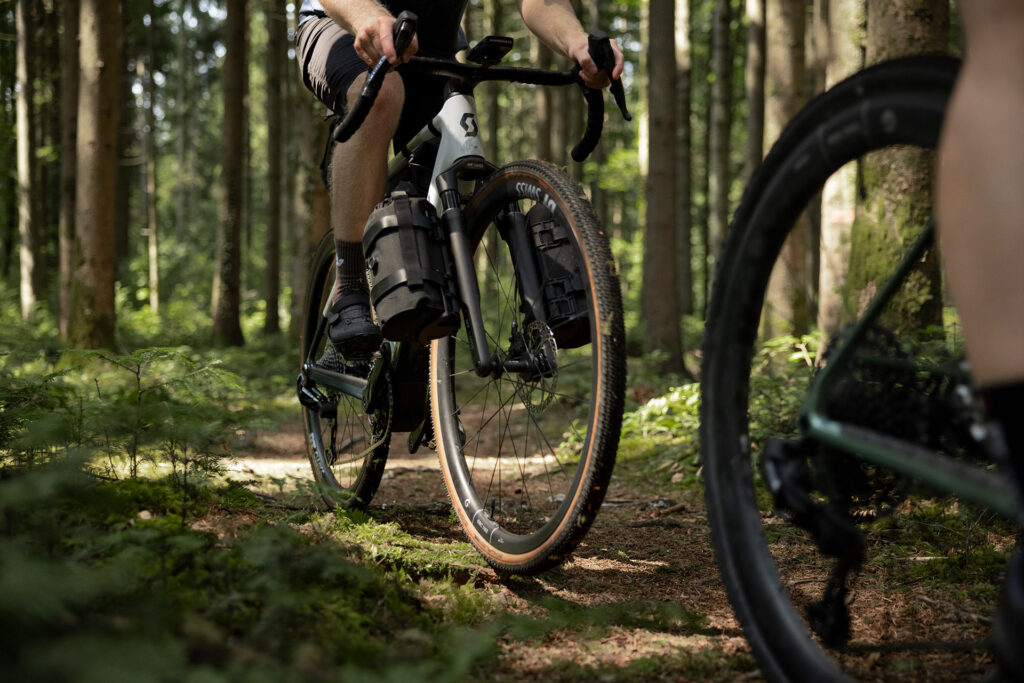
Then, with the rise of gravel bikes, this ‘hookless’ technology was also adopted, as it suited wider gravel tyres (40-50mm) and tubeless setups that are commonly found there. Being mountain bike adjacent, and using off road trails, the technology in this setting often has more pros than cons.
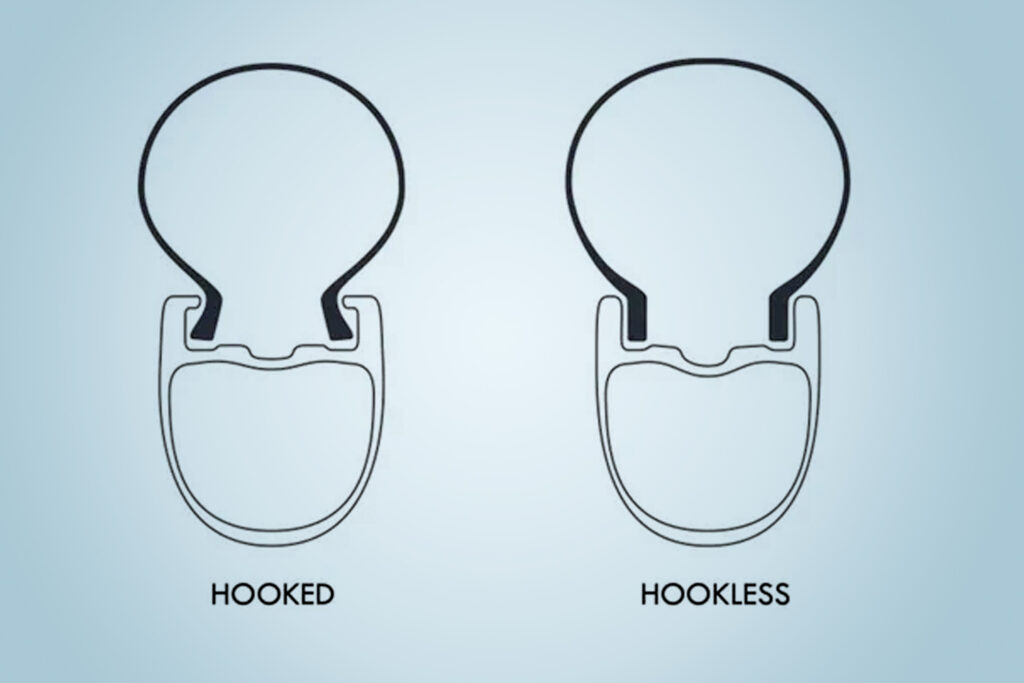
However, it is the adoption of hookless rims, also referred to as Tubeless Straight Side (TSS), by some of the road wheel manufacturers that we are looking at here. There are strong voices advocating for the use of this technology, and some equally loud ones who are against its adoption, and who still say hooked is best. In this article, we’ll aim to look at the arguments from both sides of the fence, and to provide clear guidance for you to make an informed choice over whether it suits your own requirements.

As always, it is the big news that surrounds a well publicised problem with hookless – or a problem that some have attributed to hookless – that catches most of the attention. Thomas De Gendt, Johannes Adamietz, and more recently Fabio Jakobsen all suffered well documented and dramatic crashes that illustrate this well. Photos of wheels with a tyre fully removed from the rim make for unpleasant viewing, let alone seeing the injured riders involved. It hardly inspires trust and confidence in riders to use the system. Whilst some commentators blamed hookless rim technology, Zipp and Vittoria claimed that the Jakobsen crash was directly caused by “major impact forces”, such as rocks or other objects on the road surface.
Days before we published this article, a spectacular wheel failure at the Omloop race in the Netherlands has a headline which mentions hookless as not being the cause of the incident. A flat tyre and the fact that the bike was being ridden over cobbles at the time seemed a more realistic summary of this failure – yet even though the headlines were invariably that hookless was not to blame, that it was up for discussion is arguably still going to sow a seed of doubt in many riders’ minds.
Also in the headlines with the words “Hookless is a Scam!” is Josh Poertner of Silca. To be fair, when you watch his YouTube videos, he is much more nuanced than the clickbaity headline would suggest. He certainly argues his corner from an informed position. His opinion is that there is no aerodynamic advantage to hookless having done extensive testing. He also mentions the potential for problems surrounding incorrect tyre width choice, as well as issues around tyre pressures.
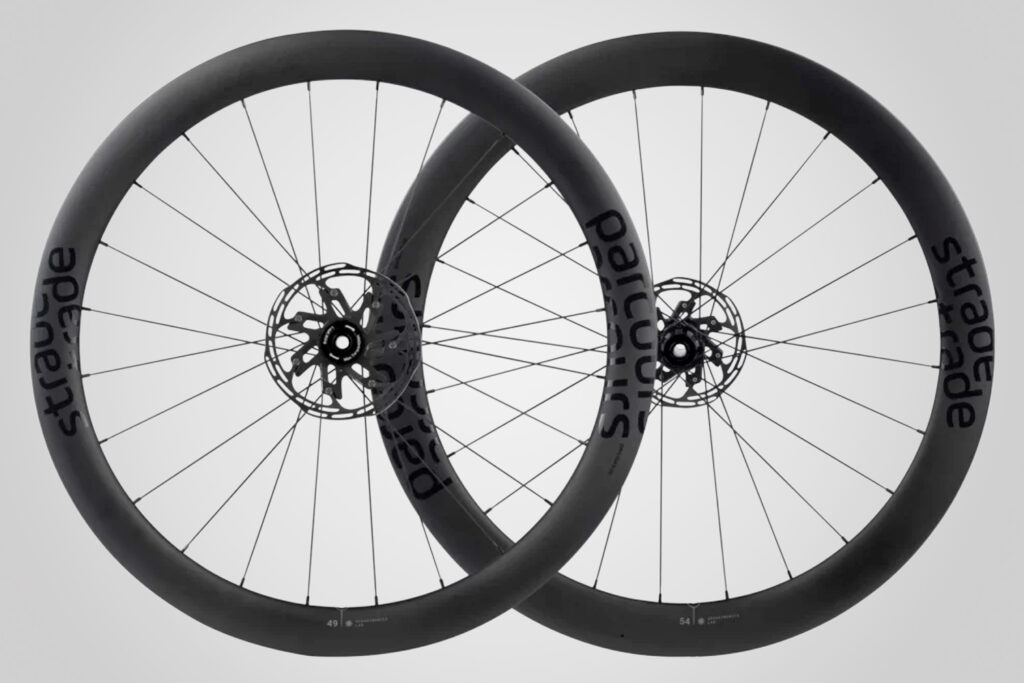
We spoke to Giant and Cadex, who have supported hookless rim architecture for many years. They say that hookless works well for MTB and gravel bikes where larger tyre volumes and lower tyre pressures are present. Both brands also say that modern road systems with 28mm-32mm (and wider) tyres can work well, as long as the tyre pressure is kept below the 72.5psi/5.0bar maximum allowed for this type of rim. They also cite using tyres manufactured with a tight bead tolerance as being important.
Another brand that is firmly behind hookless tech is Zipp (now part of the SRAM group). In an article boldly titled ‘how hookless makes you faster’ on its website, Zipp is absolutely adamant that hookless means a stronger, lighter, faster, and ever safer rim compared to hooked: “Without the hooked section of the sidewall, the transition from the rim to the tire is streamlined, helping airflow to stay attached”, says Zipp.
Both Parcours Wheels and Hunt Wheels agree with Cadex that gravel wheels are a good application for hookless rims, yet they are a little more circumspect when it comes to road usage.
Parcours says that as things stand, it can’t see enough benefit to moving away from hooked rims. It felt that any aero advantage was negligible, and this view came from the brand’s own back-to-back testing of otherwise identical rims, and that any weight saving was minimal (< 10g per rim). Parcours also felt that the drawbacks in a hookless system were significant. Its main argument is around the restrictions of choosing a compatible tyre, using sealant and tyre pressures. Firstly, only a hookless (or TSS) tyre can be used and, although not strictly required, a tubeless setup is strongly recommended. Secondly, the tyre pressures required may not be suitable for all riders, particularly those using narrower than 32mm tyres, as well as heavier riders.
Parcours also says that a good proportion of its riders still prefer a tubed setup, or to run their tyres above the 72.5psi maximum threshold, which means staying with a hooked rim, however the brand is open to future developments. Hunt feels that hooked rims “…offer riders more choice when it comes to tyre selection and pressure preference”.
Another factor to consider is the oft-cited 5mm differential between the internal rim width and tyre width. ETRTO guidelines specify minimum tyre sizes for a given rim width. So a rim measuring 23mm between the hooks or flat side walls can work with a 28mm tyre, but not a 26mm tyre, as there is 5mm difference in the first example, but only 3mm in the second. However this differential widens along with rims and tyres widening. So a 27mm internal width rim should ideally use a 35mm wide tyre as a minimum, which is a difference of 8mm.
A further variable in the mix is the ETRTO (European Tyre and Rim Technical Organisation) and the ISO standard which says that a hooked rim must be tested to 1.5 times the maximum pressure allowed for the rim, whereas a hookless rim is only set to 1.1 times. So a hooked rim with a maximum pressure rating of 120psi must withstand 180psi, however a hookless rim, with a maximum pressure of 72.5psi/5 bar must withstand 80psi, which is a much smaller variance, and potentially easy to exceed. It should be noted that this ‘1.1 times’ test is a minimum and that Cadex comfortably exceeds it, to be sure of the quality of its wheels. Cadex also advises that only approved tyres should be used.

Looking next at tyres, Continental says that its ever popular Grand Prix 5000 AS TR in a 25mm size may be run with a maximum width 21mm TSS rim at up to 73psi, while its 28-35mm width tyres have a maximum rim width rating of 25mm. These dimensions fall a little below the recommended 5mm differential mentioned above.
Both Schwalbe and Vittoria recommend that a 28mm tyre is the minimum width to be used with a hookless rim, in a compatible width. It should be noted also that the Vittoria Rubino tyre, for example, may be used with either a hooked or hookless rim, as well as being run with an inner tube or with sealant. It covers all the options available.
With hookless rims ideally being used with tubeless sealant, some of the kickback from road riders is due to the dislike of, or frustrations with, sealant. David Arthur talked about the issues here. Certainly a 35g TPU inner tube is an increasingly popular way to keep pressure in your tyres, as they save rotational weight, are easy to fit and, importantly for many people, they aren’t messy.
Another variable to consider is that when the temperature increases, so will the pressure in your tyres. Roughly speaking, a 10°C rise in temperature will result in a 2.5psi increase in pressure. Similarly, altitude can affect pressure. For every 610m of ascent, tyre pressure will increase by 1psi, according to Continental Tyres (source here). So if you were running a hookless system close to its maximum pressure of 72.5psi, then a hot day with lots of ascent could be enough to tip you over the upper pressure limit.
Maybe certain manufacturers have moved away from hookless as it offers minimal improvements over hooked, yet there are increased risks to consumers who don’t understand or implement the system correctly. This is something that the manufacturers can’t control, yet they may be held liable, be it legally or reputationally.
As we saw at the top of this piece, people were blaming hookless for those racing incidents regardless of the evidence – and who can blame them, if that is the angle being pushed? Looking at some comments under other articles about hookless on this website, and we can see plenty of resistance to the technology, as well as hearing negative anecdotes from friends and family. We’re used to a lot of interchangeability of parts within cycling, alongside the nightmare of ‘standards’ (that aren’t). Maybe part of the problem is the lack of clarity over which tyre will work with which rim.
Cadex says: “Our position is straightforward: when rim, tyre, and pressure are engineered together as a unified system, hookless delivers measurable performance advantages.”
The key word in this quote is ‘unified’. We are so used to mixing and matching components, and all have our own preferences. However, for the hookless system to work, we can’t do this – certainly not to the same degree as before.
There are a lot of variables to be considered in the road space, and it’s the marginality of these variables that can be the problem. If you are able to keep away from those extremes, you’re unlikely to have a problem. So if you’re a leisure rider with wider tyres, a greater than 5mm differential between your rim width and tyres, use the correct tyres, want to use tubeless sealant and are prepared to keep your pressures relatively low, then hookless should never be an issue.
However, if you’re a heavier rider and you’re choosing a 5mm tyre/rim differential, want a wider selection of tyres, want higher pressures and to use inner tubes, then maybe hooked is still the system for you. So, as is often the case, there is no overall definitive answer, just general rules and advice to follow. Consider carefully what you wish to gain from a hookless setup, look at your personal ‘variables’ to see whether it would work safely for you, and if necessary, seek some additional advice.
A final word from Cadex: “Hookless is not a universal solution for every scenario. But within modern performance road (28–32mm+), gravel, and MTB applications — when paired with compatible tyres and appropriate pressures — it delivers structural robustness, system efficiency, and real-world performance advantages.”
It appears Cadex and Zipp are sticking firmly with hookless technology – but whether it survives will ultimately depend on consumer confidence and sales. At the moment, the former seems pretty low.
A final roundup of the pros and cons of hookless rims:
Pros
- Stronger
- Cheaper to make, with savings passed on by manufacturers
- Lighter weight (marginally)
- Claimed aero improvements
Cons
- Restrictions with the bead-type / tyre width / maximum pressures that can be used
- Rim internal width 5mm less than tyre width minimum. Generally tyres need to be 28mm and wider
- Tyre pressure 72.5 max (with a 28mm tyre). Lower pressure maximums will be stated for wider tyres
Thanks to Cadex, Parcours and Hunt Wheels for their help and advice
Do you think hookless technology is here to stay for road cycling? Let us know your thoughts in the comments as always.







22 thoughts on “Hookless wheels keep getting bad press — after several recent controversies, can brands sticking with the technology weather the hookless storm?”
Overall, my feeling is that the benefits are small, and don’t outweigh the downsides. This is particularly true for hookless wheels that are included as stock on complete bikes. I would like to think I could safely navigate the technical requirements, but I’m the sort of person that spends far too much time reading about cycling tech. The average person buying a bike? Not so much.
I would also argue that you can try and do everything right and still end up on the wrong side of the limits – start a ride in the cool of the early morning and ride up a mountain on a hot day, and as noted above, you could easily exceed the maximum pressure.
Based on Silca’s calculator, using some fairly typical values, an 80kg system weight with 28mm (measured) tyres, the recommended pressure already exceeds 72.5psi, and 80kg system weight (i.e. including the weight of the bike) is far from heavy. So it’s pretty limiting to say it’s fine as long as you stay under 72.5psi.
Other random thoughts:
“Hunt Wheels now only offers two options for road wheels, both with hooked rims.” Not sure I follow – Hunt have many road wheel options. Maybe it means two rim-tyre interface profiles are shared across the whole range?
“Cadex says: “Our position is straightforward: when rim, tyre, and pressure are engineered together as a unified system, hookless delivers measurable performance advantages.””
Again, the problem with this approach is that the best case is it restricts the customer; the worst case is the customer doesn’t realise the restrictions exist and does something non-compatible. Giant’s information isn’t great – https://www.giant-bicycles.com/gb/hookless-technology . I think the way to interpret the page is that if a tyre isn’t mentioned whatsoever but the tyre manufacturer says it is TSS compatible, then it’s fine up to the standard 72.5psi; if the tyre is marked as having passed Giant’s test, then it’s fine to use up to the stated maximum on the tyre (even when that is above 72.5psi); if the tyre failed then it’s not safe to use at all. So definitely adds to the confusion if you ask me, not to mention the concerning finding that some claimed TSS-compatible tyres appear to have failed e.g. the Pirelli P Zero Race TLR (although that might refer to the older generation – Pirelli didn’t really help themselves when they released the new version which is effectively a whole new tyre (speedcore, made-in-Italy version) with exactly the same name.)
“Cons: Rim internal width 5mm less than tyre width minimum.”
Pedantically, I don’t think this restriction only applies to hookless, based on ETRTO and ISO guidelines. Its just more pertinent given the prevalence of road-focused TSS rims with a 25mm internal width, that are not officially compatible with 28mm (labelled) tyres. Although sticking on the pedantic theme, I think a 29mm (labelled) tyre would be officially compatible, only a 4mm differential.
On another tangent, AIUI the reference rim width increases at 29mm, so a 29mm labelled tyre could actually end up narrower than a 28mm tyre when mounted to the same rim (e.g. BRR measure the 29mm Aero 111 tyre as narrower than a 28mm GP5000 S TR). Which does beg the question if the “officially compatible” 29mm-labelled tyre is actually any safer.
That’s quite a lot of complication and way too many factors to consider for a thing as simple as a bike tire. Especially combined with a lot of bogus claims standing behind the alleged benefits.
Which only goes to show how much cheaper to make they must be. If thw hole matter is worth the trouble and the ridicule the manufacturers are ready to go through, the difference in production costs must be staggering!
The biggest benefit of hookless is for the manufacturer – cheaper production not reflected in sale price.
Also, taking Giant’s claim, when they say unified they really mean proprietary – again locked into buying their products.
Zipp were very vocal on the fact the savings were passed on to consumers.
And as much as I hate their hubs and wouldn’t touch a pair of Zipps again until they sort that out, they did reduce the price of their offerings when they went hookless. How much of that was hookless and how much was them just moving their wheels into a more affordable sector of the market is up for debate obviously.
I agree that the benefits of hookless are minimal at consumer level. There’s no perceptible performance improvement and we have to take the manufacturer’s word for it that they’re stronger/ lighter/cheaper.
Nevertheless I’m using a pair of wheels I built in 2018 with Light Bicycle hookless rims, I was an early adopter, and they’re lovely to ride. That’s with 30mm tlr tyres at 60psi.
I’m well aware of the usage envelope, so to speak, and don’t exceed that. But plenty of other riders have less interest in tech than I have and could end up with non- recommended setups. Are they really having disasters due to hookless? I doubt it but hookless has become a cycling internet bogey and will get blamed whatever.
Giant keeps talking about gravel and mountain bikes in this article yet all their road bikes are hookless too which is not mentioned here. Which means automatic no buy of any Giant road bike for me. Giant/Cadex information about which tires, other than their own, you can use with their hookless road wheels is terrible to the point of being useless. I’m not risking my safety on a bike so Giant/Cadex can save money on hookless road wheels.
Even if the initial purchaser of the bike / wheels is aware of the limitations of these rims, when they are sold to someone else after a few years, the second owner is unlikely to do the research to understand the limitations and guidelines. I’ve already had to educate a couple of people who’ve brought such wheels into my workshop who had no idea the rims were any different to all others they’ve used. Consumers shouldn’t need to be experts and there needs to be appropriate safety margins with all products sold, which is definitely not the case for hookless rims.
Does the fact that there are actually a vanishingly small number of reports of hookless issues not point to this actually being a non-issue though. Considering giant have likely sold hundreds of thousands of bikes with hookless rims at this point and I still can’t think of a single confirmed incident of “hookless rim causes accident”, its likely not an issue.
The fact there are a massive number of people who are very excited to give their opinion on hookless rims every time the discussion comes up also suggests that if there was a genuine issue here that it would be very well publicised.
As soon as anything happens with a hookless wheel everyone jumps on it despite it never (to my knowledge) actually being confirmed as a hookless rim problem. We had issues with hooked rims and we will have issues with hookless rims when it comes to tyres coming off them.
Hooked and tubed tires have been coming off the rim with punctures for years, which is why I raced tubulars for years, particularly when there were mountainous road races with 95+ kph top speeds. This is why pros were racing tubulars as well.
While I didn’t love spending my spare time gluing up tubulars, it sure did inspire a lot of confidence on the road. For pros, there are tangible performance benefits and significant mechanic staff benefits to ditching tubulars, but it also puts a puncture risk underneath them that they didn’t deal with before. Visma is trying to mitigate this with the glue-on clincher strategy. The tire sponsors are surely happy to have their teams using the exact same tires that customers can easily buy and install rather than super niche tubular tires that almost no one was buying.
I stopped using hookless rims. I do believe they are largely a scam. The benefits are minimal–if even truly measurable and repeatable —and the safe operating parameters are too narrow for road. You need the right tire at the right size at the right pressure and you still need to be mindful of your weight, ambient temps, altitude, etc. No thanks, I’ll just stick with hooked rims.
I’m currently running hookless on both the road and gravel bike, and to date its performed faultlessly.
I’m quite heavy, so on the road I need to run a minimum of 30mm tyres to keep the tyre pressure far enough away from the 72 psi limit, but I’m OK with that. The lower pressure also means the sealant is more likely to be able to do its job effectively.
I do find the technology easier to work with than hooked tubeless set ups, as in my experience, the tyre seats more readily.
Ask me again after I next get a big puncture.
One point of note, on average, air temperature drops around 1 degree for every 100m of vertical ascent. So climb a 2k high ascent, and you’ll gain nearly 4psi in your tyres from altitude, but this is more than countered by the 10psi you’ll lose from air temperature change.
I ran some Zipp 303 firecrests for a bit over a year and had zero issues and this was about 3 years ago when they had just come out. Shockingly the strongest opinions on hookless come from people who have never used them. Even people who have moved away from them seem to almost never have an actual negative story to tell, just that they have decided (or been peer pressured) into thinking they are a ticking time bomb.
I’ve been running Hookless for a while and I’ve not had a single problem.
I’m riding Zipp 404 Firecrest with Pirelli P-Zero TLR 28mm tyres and Vittoria Air-liners. I run them at around 60psi rear and 55psi front.
At the same time, I have a set of Hunt rims which I had TPU tubes in (not cheap versions – Vittoria). Ive had more failures with the tubes and none with the hookless tubeless setup.
Its easy to vilify a system when the very few failures are over analysed and sensationalised in the media. For me its a very good system. I have had good and bad experiences with all sorts of wheel/tyre setups. non of them are infallible but the press hookless gets is unwarranted.
I don’t have a problem with hookless rims, I can choose not to buy them. What annoys me is if I want a top quality tyre it will now come hookless compatible with a big chunky bead making fitting more difficult on my clincher rim.
There is plenty of non compatible tyres that are still top quality.
I honestly cannot find a good enough reason for hookless. It is not definitely faster or stronger while it clearly has many little things you have to think of, restrictions really, of which the main is non universal tire compatibility. For me this alone is enough to exclude them.
Now, if the cost was something like 30-40% lower I guess we could reconsider but as things are now, absolutely no.
Its not about having a good enough reason for hookless IMO. If I buy a new set of wheels the fact they are hookless or not won’t remotely factor into it. Its a non-issue in my book.
I would be grateful if somebody could give me some advice on hookless wheels /tyres on my Giant TCR, which I bought 18 months ago.
It has Giant SLR 40 mm hookless carbon wheels.
I fitted some 25mm Michelin Power Time Trial clincher tyres with an inner tube about a year ago and run at about 80 psi which is well below the max pressure rating on the wheels and tyres.
I found the set up ran well and have had no issues.
I have just recently read that this set up is no recommended and that only TLR tyres should be used.
The tyres are starting to wear and need replacing.
Can anyone give any advice before I buy my new tyres? My preference is to run with inner tubes because of ease of repair.
Have look on the giant website and there is a compatibility table. Honestly though, 25mm is very narrow for modern rims and certainly out of range for what manufacturers suggest for hookless. I would be looking to move to 28-32mm tyres. You will likely find them faster than the 25s and you can run them at lower pressures as well. You might feel faster on the 25s because the sensation of speed comes partially from being rattled about but modern 28s will be faster.
I think that almost any of the tubeless ready tyres from the big manufacturers will work perfectly but if you want piece of mind, check out https://www.giant-bicycles.com/gb/hookless-technology
I’m with mctrials on this, 25mm width is super retro these days. Older riders (I’m one) who’ve grown up with 90s style narrow rims and 23mm, then 25mm tyres, tend to hold on to those habits despite modern frames allowing much wider clearances. A lot of people think those narrow tyres *feel* faster. But it turns out that feeling every tiny bump and pimple on the road surface does not equate to speed. The pro peloton is almost univerally riding 28mm or 30mm tubeless these days and they’e going faster than ever, in fact the UCI is fretting about slowing them down.
Mr Blackbird, I’d encourage you to move with the times and give tubeless a go. 30mm is a lovely width for speed and comfort and as a 75kg rider I run mine at about 60psi. You do have to buy some new equipment and learn new skills to install and maintain tubeless tyres but the ride feel is excellent and minor tyre intrusions won’t stop you. Don’t believe all the negativity and enjoy the ride.
McTrials23 and Miller. Thanks for the advice. I have just ordered a pair of Continental 5000 S TRs, in a 25mm.
The reason for 25mm is so I can also check the clearance of theses tyres on my older TT and winter bikes (both still on 23mm!) – 28mm will definitely not fit on these.
I intend to give 28mm a try on my Giant in the near future.