



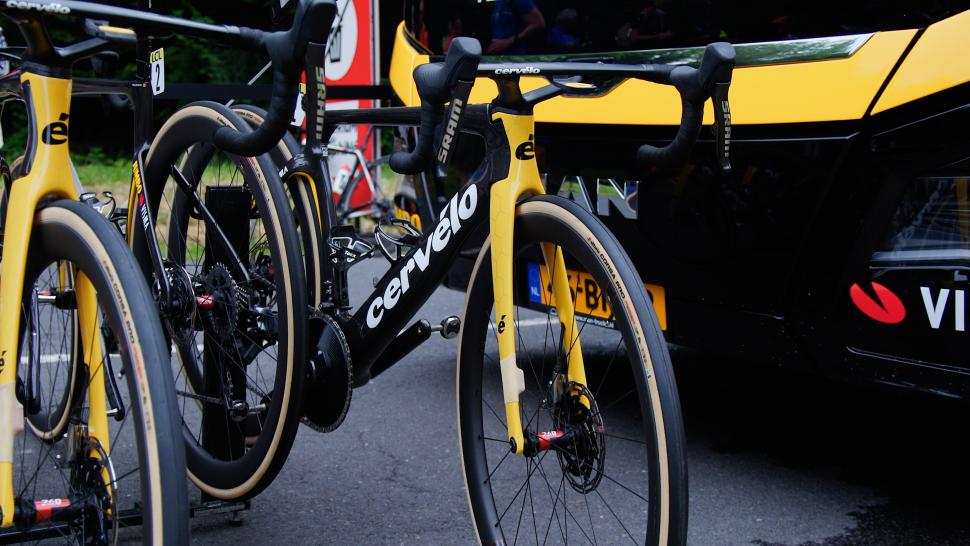
Jonas Vingegaard and his Jumbo-Visma teammate Wout van Aert have used SRAM 1x (single chainring) setups for the opening stages of this year’s Tour de France, the defending champion having used the same system during the recent Critérium du Dauphiné, a race that he won.
Jumbo-Visma switched from Shimano to SRAM groupsets at the start of the year, and SRAM says that the decision to run 1x is entirely down to the team and riders rather than commercial considerations.
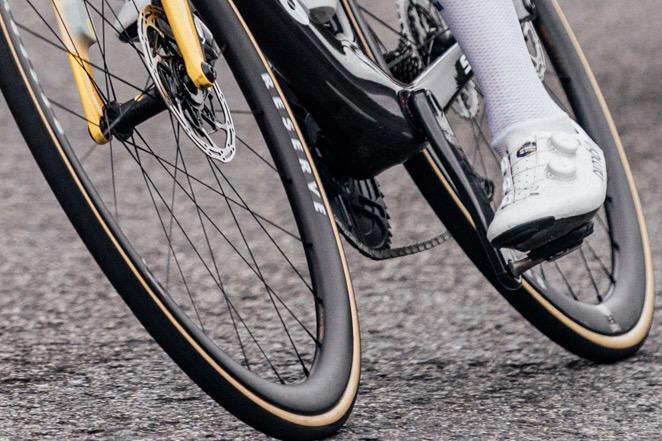
This pic and lead pic: © Zac WiLLIAMS SWpix.com (t-a Photography Hub Ltd)
“We don’t push Jumbo to use 1x gearing and there is no marketing around this, although it helps a lot, of course,” says SRAM’s Marie Didier. “The riders have the tools at their disposal, then they do what they want. They control what they do and we couldn’t impose them to use a product if we wanted to.”
🇫🇷 #TDF2023tr
Jonas back in the front of the bunch. 👊
𝙁𝙪𝙡𝙡 𝙨𝙥𝙚𝙚𝙙 towards the Jaizkibel, the final climb of the day.
⏱️ 1’15”
🏁 23 km pic.twitter.com/3uCi5qhoMy— Team Jumbo-Visma cycling (@JumboVismaRoad) July 2, 2023
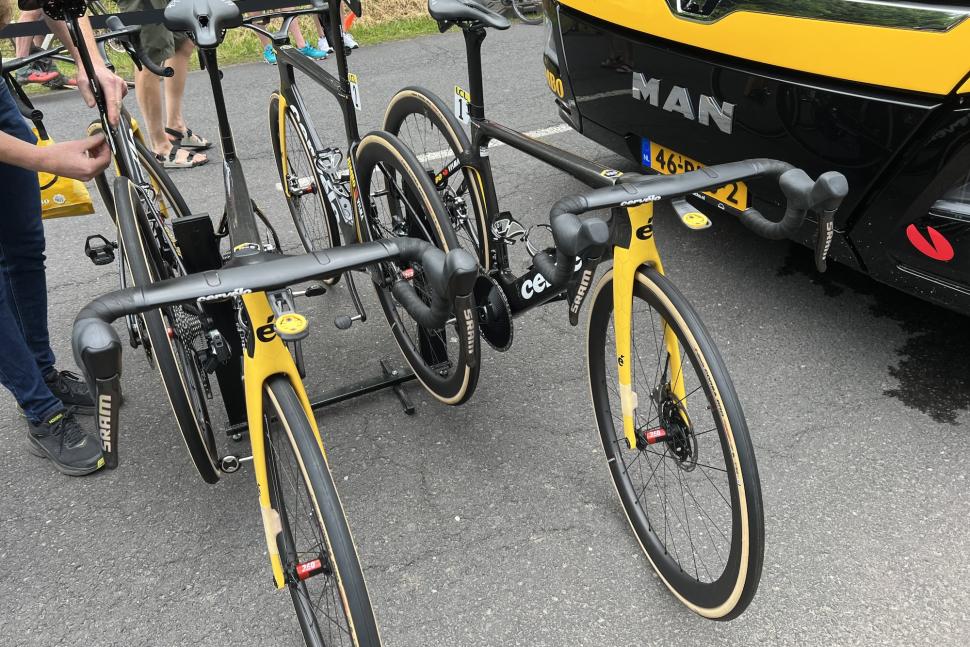
We showed you last week how Jumbo-Visma use Wolf Tooth LoneWolf Aero chainguides on their road and time trial bikes to help keep the chain in place without a front derailleur.
> Running 1x? Wolf Tooth introduces LoneWolf Aero chainguide to avoid a dropped chain
The World Tour has long threatened to turn to 1x (or single chainring) gearing set-ups… but is 2023 the year that it finally takes hold?
Earlier in the season Victor Campenaerts used a single chainring system from Classified, and a few weeks ago Primoz Roglic used a gravel groupset on the final stage of the Giro. With Jonas Vingegaard and Wout van Aert – two of cycling’s biggest names – now using 1x, has it (once again) become a choice too popular for us amateur roadies to ignore?
Is history repeating itself?
Before we take a look at Vingegaard’s bike that we spotted this week at the Critérium du Dauphiné, let’s cast our minds back to the last time that the pro teams made a concerted effort to ditch the little ring. Some of you might remember it wasn’t exactly a huge success!
> Should you run a 1x set-up on your road bike?
It was of course the Aqua Blue team five years ago that hit the limelight, often for all the wrong reasons, whilst riding their 3T Strada bikes that could only run 1x set-ups.

The Strada (which is now available with a front mech), promised aero benefits thanks to the lack of front mech mount. However, the SRAM groupsets with 3T cassettes caused an almighty Twitter storm when Rick Delaney, the team owner no less, posted: “This lab rat thing is costing us results”. This was following a shipped chain by one of his riders in the Tour de Suisse breakaway.
The here (and the now)
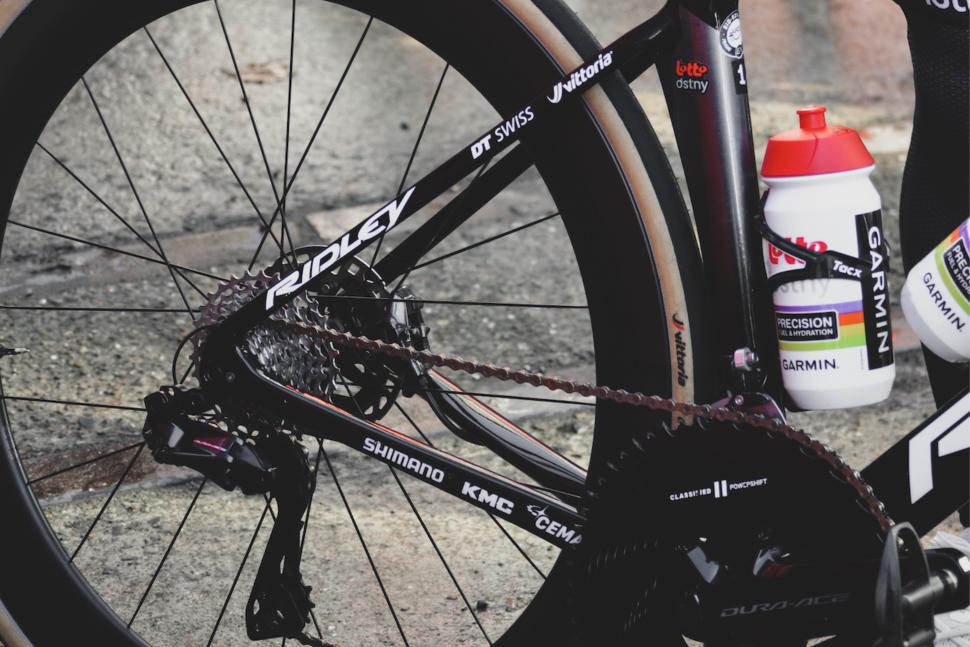
Fast forward a few years, and our next significant development in 1x setups being used for road stages was the Classified system on the bike of Victor Campenaerts at the Omloop Het Nieuwsblad classic.
As you might have heard by now, the Classified system ditches the front mech in favour of a special rear hub with a reduction gear inside. It’s tech that thoroughly impressed us, so much so that it won our “Money No Object” component of the year in 2022.
Since then loads of wheel manufacturers clearly also see a future with Classified in it, and the likes of Hunt, Parcours, Enve, DT Swiss, Mavic and Reynolds, to name just a few, are now on board.
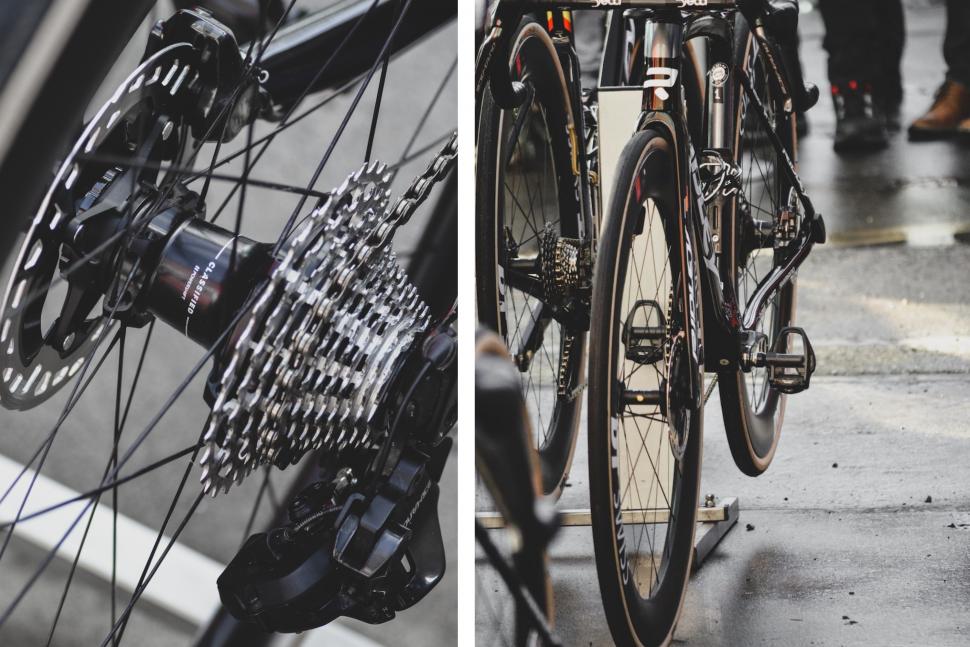
> Review: Classified Powershift Kit & Wheelset
As good as the Classified system is it does still have its cons, especially in the pro peloton. No, we’re not talking about Campenaerts having to walk up the Muur on his 62-tooth chainring setup, but rather wheel changes. Unless everyone chose to use it, which seems unlikely, then spare wheels won’t have the required tech hiding inside.
Oh, and it’s also questionable how much lighter the system actually is. This then raises the question of if it’s actually worth ditching the tried and tested front mech.
1x looking pretty in pink!
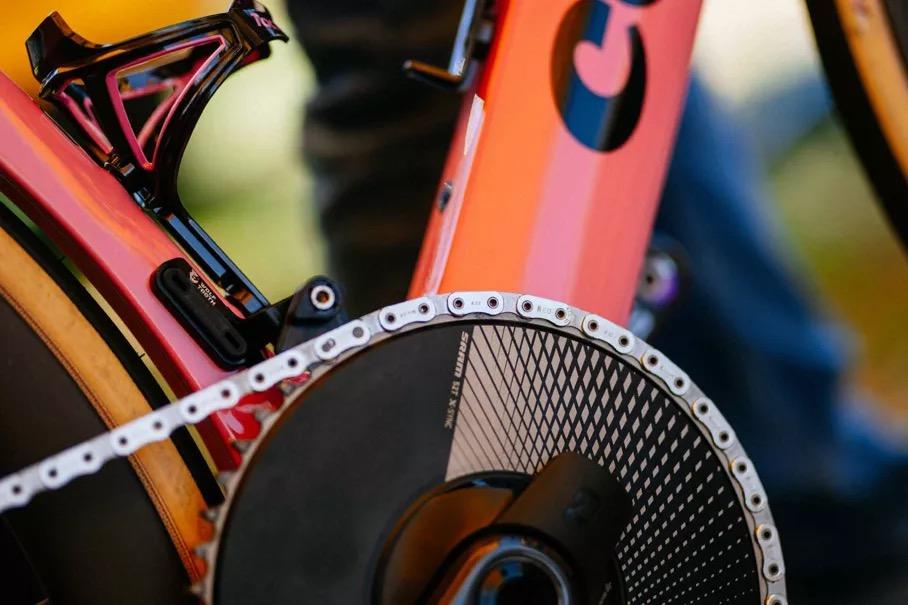
> Check out Primož Roglič’s Giro-winning Cervelo S5
Arguably 1x’s biggest success in the pro peloton was just a few weeks ago, when Roglic used his SRAM XPLR-equipped Cervelo R5 to climb his way into pink at the Giro, winning the stage by a whopping 40 seconds.
However, the supposed benefits of a 1x system, such as the weight saving, potential aero benefit and better chain line, were overshadowed somewhat by a chain drop on the steepest section of the course, resulting in a push by Roglic’s ex-ski jumping teammate.
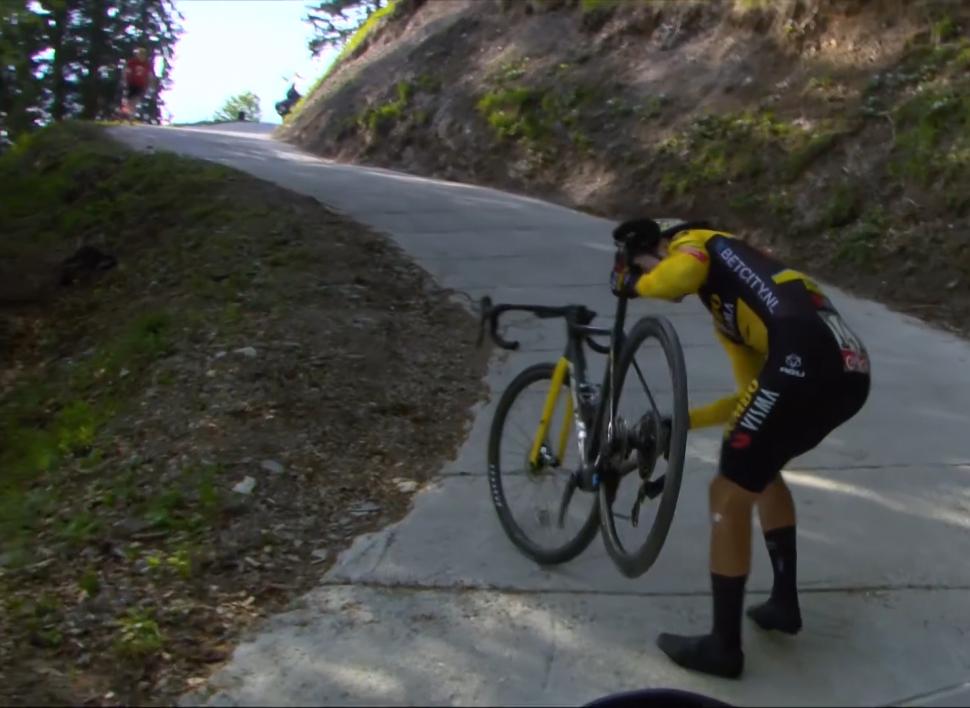
Roglic’s setup used SRAM’s gravel XPLR XG-1271 cassette paired with a Red AXS XPLR rear mech to give him some absolutely tiny gears; the 40T chainring upfront and 10-44t gearing at the back resulted in a sub 1:1 gear ratio which certainly kept the eventual Giro winner spinning even on the multiple sections over 22%.
The end of the road for 1x?
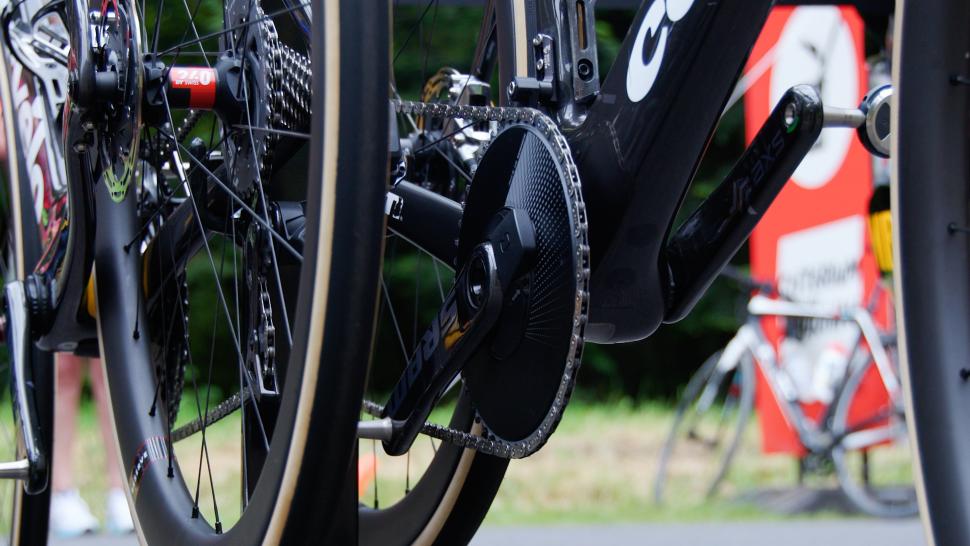
> BMC prototype aero superbike spotted at Dauphine
So after that, did Jumbo–Visma decide that enough was enough? Well, no! In fact, it would appear that the Dutch team has doubled down on single chainrings.
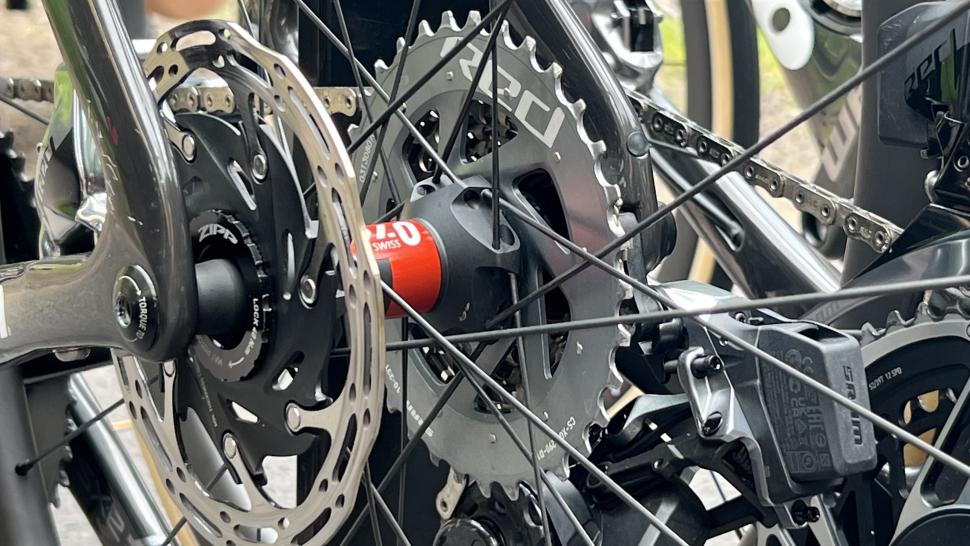
Vingegaard used a 1x setup on two stages of the Dauphiné and in both of the first two stages of this year’s Tour de France.
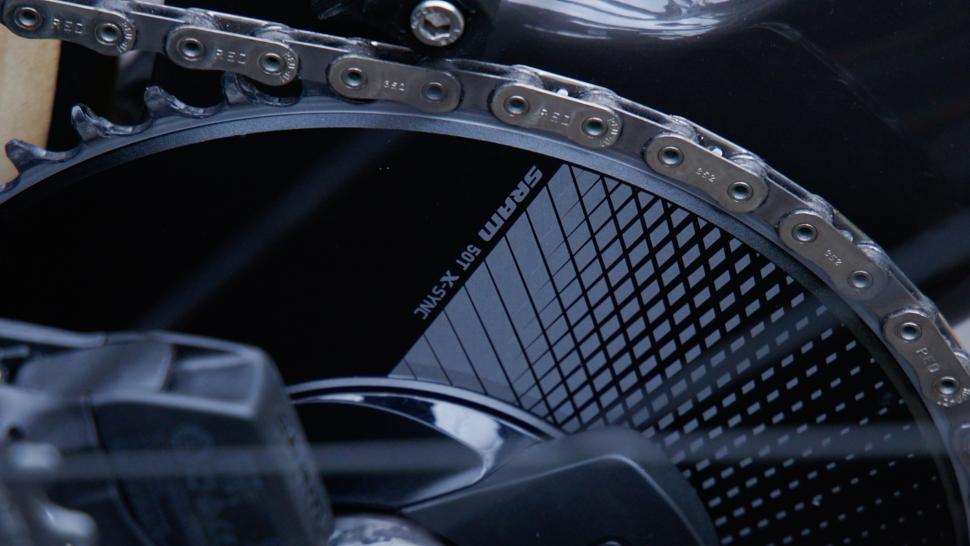
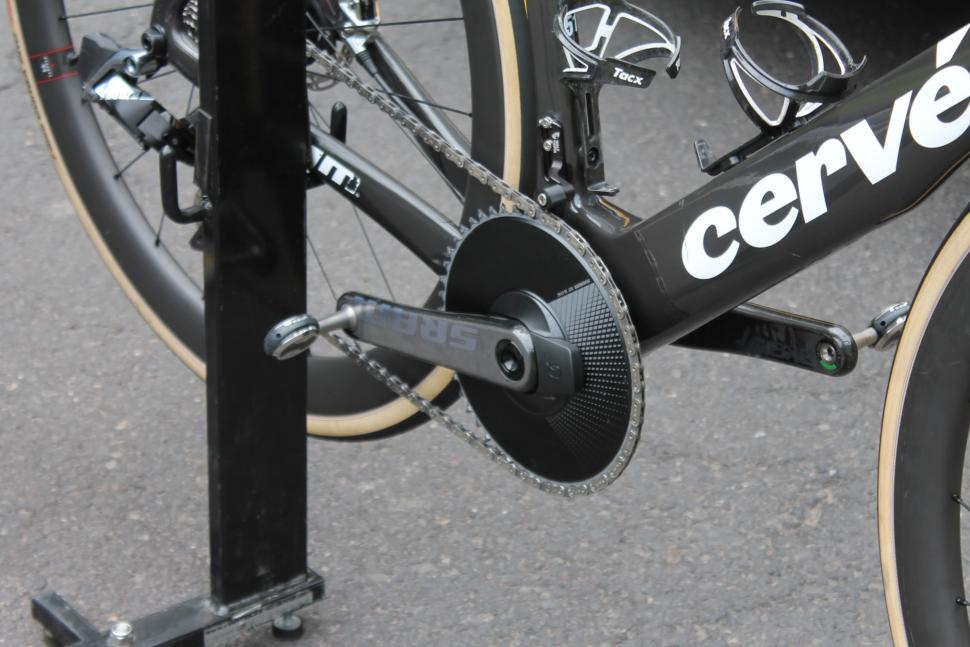
Our shots from the Dauphiné showed Vingegaard using a 50T aero SRAM front chainring paired with a 10-33T SRAM Red cassette.
The ratios
> All the gear? Check out the gearing choices of the pros
Jumbo–Visma clearly reckons the gearing is sufficient for at least some stages of the Tour de France, and the first couple of days have hardly been flat.
The biggest gear that this 50×10 gear combo gives is equivalent to using a 55×11, which seems like more than enough for a rider that rarely contests the sprints.
At the lower end, the 50×33 combo gives a gear ratio of just 1.51 although reports say that Vingegaard has also used a 10-36T cassette.
The benefits of 1x
> Lightweight v aero: which is best?
As we mentioned earlier, a 1x setup does bring plenty of benefits, especially to pro teams looking for every marginal gain. For example, there’s the potential aero benefit of removing the front mech and, in Jumbo-Visma’s case, replacing it with a Wolf Tooth Lone Wolf Aero chainguide. For me or you this would probably be negligible, but for the pros who spend most of their races averaging more than 40kph, small changes can result in small savings.
In addition SRAM says you can also achieve a better chain line, which might offer better efficiency than a more traditional 2x setup.
They say every pro has a con and that is most likely the case here as it will mean that when not climbing, more time will also be spent down in that 10T cog. The smaller the sprocket, the greater the drivetrain losses. You win some, you lose some…
> 8 cheap ways to get a lighter bike — save a kilo or more
Of course, the main reason we suspect Vingegaard has opted to use this set-up is weight.
Not only can you get rid of the front mech, which is 170g including the battery, but you also lose the inner chainring which is another 40g or so. A SRAM spokesperson told us that this means Vingegaard can race on an aero bike (Cervelo S5) that weighs similar to his climbing bike (Cervelo R5).
That ain’t right
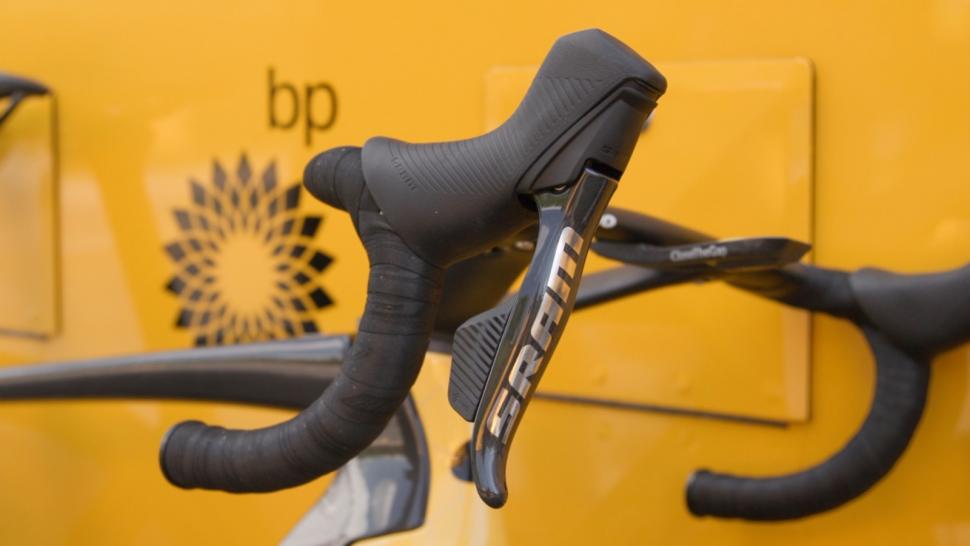
One other feature of Vingegaard’s bike caught our attention at the Dauphiné and that’s the shifters.
Whilst the rest of the team rides around on the taller current generation Red AXS hoods, Vingegaard’s bike has shifters that resemble the later Rival or Force AXS with a much lower profile.
Could these be shifters off a new generation of Red groupset? We wouldn’t mind betting that the new Red groupset will indeed follow this design language, but the larger shifter buttons lead us to believe that these are just modified Force levers with fancy graphics and perhaps a few internal weight savings.
Is 2023 the year that 1x rules the peloton?

With Vingegaard and Van Aert using it at the Tour de France, 1x’s profile has already been boosted. Like it or not, 1x has become a feature of road racing, and perhaps it’s here to stay this time. The dawn of 12-speed groupsets has meant that 1x is inevitable, as gear jumps get smaller whilst still providing pro riders with just about enough range.
🇫🇷 #TDF2023tr
Jonas back in the front of the bunch. 👊
𝙁𝙪𝙡𝙡 𝙨𝙥𝙚𝙚𝙙 towards the Jaizkibel, the final climb of the day.
⏱️ 1’15”
🏁 23 km pic.twitter.com/3uCi5qhoMy— Team Jumbo-Visma cycling (@JumboVismaRoad) July 2, 2023
That said, don’t expect every pro rider to be jumping ship from the double chainset. We expect to see 1x being used more often but certainly not on every stage. Yet…
Let us know if you’d consider a 1x road bike down in the comments section below











49 thoughts on “Jonas Vingegaard uses 1x gearing for Tour de France opening stages”
The Dauphine heads into real
The Dauphine heads into real mountains in the next few days, I can’t see Vingegaard sticking with 50 x 33 low gear for those. We will see.
I have used Ekar 1×13 a lot on road this year and for me that works very well. It does provide a decent low gear, 40 x 42.
What kind of jumps between
What kind of jumps between gears are you getting on the slow end of the cassette?
Can’t remember the exact
Can’t remember the exact ratios but I get on with them fine. The cassette is closely spaced on the fast gears, wider on the slow gears. My only quibble is I feel a slight gap around 30kph. I can live with that but obviously the real answer is 14 speed 🙂
tubasti wrote:
Why would most recreational riders care?
Define ‘recreational’.
Define ‘recreational’.
I’m a thoroughly mediocre, desk-jockey, family man who barely scrapes 4 or 5 hours riding a week.
But I ride as hard as my undertrained legs allow, and if you’re pushing hard on a rolling section of road or up your local big climb, big gaps ARE annoying. Even in the garage mid-winter, with an 11-28 cassette on a 2x system trying to do basic sweetspot workouts, I always seem to be ‘between’ sprockets.
I’d say that anyone who enjoys the endorphins and fun of pushing hard, especially on a road bike, benefits from closer ratios.
Because when you’re blowing
Because when you’re blowing out you’re arse on a club run with a group you can only just keep up with being a gear that’s slightly too high or too low could make all the difference. 😉
lio wrote:
perhaps join a slower group more appropriate to your abilities? since if you can only just hang on as you describe, then you are not capable of taking a turn on the front.
When I have looked at 1x for
When I have looked at 1x for road I have felt that Ekar is the only useable option for us mere mortals where we need one set up for everything.
Miller wrote:
whats the fast gear though 40 x 9/10/11 even if the little sprocket is 9 teeth it’s slower than a 2x system running 52×11
“Is Vingegaard going 1x for
“Is Vingegaard going 1x for the Tour de France?”
…
“for Stage 2 of the Dauphine, Vingegaard was back on a 2x setup.”
So that’s a no.
Failing to win the Dauphine if his single ring gearing is somehow inadequate (not small enough, big gaps or whatever the reason) is nothing compared to tossing away a Tour de France win.
“Like it or not, 1x is coming to the road”
It’s already here, Trek women’s team have already been running 1x since 2021 though interestingly Canyon//SRAM team appear to run 2x. This really is a bit of a weak article.
Roglic’s 1x setup for the mountain TT to clinch the Giro was a great idea (though a 2x system could get the same or even lower gearing) but Adam Blythe had some choice words to say about 1x on the 3T for WorldTour racing.
If jumbo can’t get a Cervelo
If jumbo can’t get a Cervelo S5 down to 6.8kg with a 2x setup they need to get their drills out. Welcome to disc bloat weights
On the club ride on Sunday
On the club ride on Sunday one of the riders lost her front mech changing. At the coffee stop I had a look. First I thought it had slipped down the front mech bracket, so we pulled it up and tightened up the bolt. No joy, it slipped down and behind the big ring again.
Then I noticed that the front mech mount itself was loose. It’s on a fairly new bike, carbon frame, from a major manufacturer, and so they can offer a 1x model without a front mech, it’s held on with two tiny M4 bolts with dome heads that I first thought were rivets. Tiny screws, bound to get loose.
So, pull off the front mech, tighten the two tiny bolts as best I could (marked ‘4 Nm’, so not too tight without a torque wrench handy), and reinstall the front mech and adjust. It held up for the rest of the ride.
But the tiny screws didn’t feel great, and front mechs handle some big forces, why build in a potential failure mode like this? Just rivet or weld the bracket on for 2x, or supply a 1x-only frame, don’t muck about with a bound-to-fail system like a screwed-on front mech mount. /rant
Not a problem with front
Not a problem with front mechs this incident though, is it, as they worked just fine for what 9 decades on metal frames.
P.S.: Thinking about it, is this what is actually happening, are we being saddled with all this disc brakes, electronic shifting, one-by and whatnot shit, because carbon is such a shit frame material?
marmotte27 wrote:
40,000km on my 2016 felt Z5, no issues with the front mech mount, or any other issues with the frame. Ridden on some pretty shocking roads and even occasionally on unsealed surfaces, with few concessions to the material.
Carbon done right is just fine. Well maybe press fit bottom brackets are sub optimal. electronic shifting and hydraulic brakes are certainly not a result of carbon frames.
If anything hydraulic brakes are harder for frames, as the forces are no longer central and provide a twisting moment.
Of course one of these is at the fork and almost all bikes have carbon forks whether the frame is titianium, aluminium or carbon. Even the majority of steel frames come with carbon forks.
No, we’re being saddled with
No, we’re being saddled with all this shit because they’ve run out of other things to sell.
Road bikes were probably already pretty much perfected, I’d argue that wide yet still lightweight and supple tyres are the most significant advance in recent years, and we already had the tech to accommodate these.
Discs, Di2, 1x should have remained niche, expensive kit for people that really needed or wanted it, rather than becoming as rapidly ubiquitous as they have become. It wouldn’t be so bad but each example requires a wholesale upgrade to your bike, tools and even maintenance routine etc. that previous new technology probably didn’t, have you noticed how different shop workshops look now? My old shop workshop now looks like a scene from the matrix as they try to reboot electric gears and diagnose motors etc. etc. ?
Ironically the move to wider
Ironically the move to wider tyres is the one thing that is causing me problems keeping my 2008 Colnago running. I can just about squeeze 25mm tubeless tyres in (max 70psi), but they are becoming more difficult to come by.
We’re getting pushed to 1x
We’re getting pushed to 1x not because carbon is a bad material but because engineering a good front derailleur is hard.
i don’t think SRAM have ever cracked it.
SRAM are very good at making cassettes though. If they move everyone over to 1x they can avoid poor front shifts and put all their design effort into electric rear mechs where they have an advantage.
There’s lots of restrictions
There’s lots of restrictions with 1x and I feel they’re not user friendly. I’ve messed around with 1x using a 36t, 46t, 48t, 50t 52t and 54t on various bikes and now have to pick my bike for the terrain…definitely say that 1x is for a specific ride and not a utility bike situation
We all know that the pro bike
We all know that the pro bike / race situation is very different than consumer sitautions, so odd that articles are still over-relating the two….thought we had got past that. Having a setup changed or tuned by a race mechanic everyday for a specific stage and rider takes these conversations far from the amateur consumer, even race support and changing wheels has no relevance to us. I am interested in race tech but less so for its realtionship to how we use bikes everyday – my choices are very different.
“Arguably 1x’s biggest
“Arguably 1x’s biggest success in the pro peloton was just a few weeks ago, when Roglic used his SRAM XPLR-equipped Cervelo R5 to climb his way into pink at the Giro, winning the stage by a whopping 40 seconds. “
You cannot possibly know that. It was the last day of racing in a very tough tour, Primoz and his team had sat behind (a dwindling) Ineos team for almost all the previous 3 weeks, and let Ineos do the bulk of the work. Better teams tactics won the Giro.
And as far as I remember, Primoz was the ONLY rider to lose his chain on that climb.
Daveyraveygravey wrote:
nothing in the quote suggests that the success was due to 1x, only that it was the biggest success by a riding riding 1x
Daveyraveygravey wrote:
Also, it feels like all the focus was on the fact that he was using a 1x system, when the significant factor in terms of his ride was that he went for an ultra low (lower that 1:1) bottom gear ratio, so he could get up a very steep climb at a high cadence. That would be equally deliverable with a 2x system.
The concesus of opinion is
The concesus of opinion is that he was running a 44t chainring with a 10-44 cassette, giving a 1:1 ratio in bottom gear, exactly the same as can be achieved with a modern 2x system. So I’m not sure what the benefit is. Weight possibly? But the weight of the cassette is significantly greater than a Dura-Ace 11-34 cassette, by 120g. I can’t find the weight of the SRAM chainset, but will it be more than 120g lighter than a double?
davebrads wrote:
lets say the double weighs 300g more than the single so the drivetrain savings are 200g (maybe a little more due to shiter and cables), do we think weight is an issue when we know manufacturers can make bikes lighter than the UCI minimum weight?
davebrads wrote:
I thought I’d seen the lowest gear was even lower, but regardless I think you are just agreeing with my point.
I thought the opinion was
I thought the opinion was that he was running smaller up front, either a 42 or 40. He also ran without a chain guide. So more aerodynamic. And yes, there is a weight saving. The Dura-Ace cassette is moot as it is not compatible with SRAM AXS. But for starters, he would have saved an additional 156g from removing the front mech (source – Bike Rumour – https://bikerumor.com/sram-red-etap-axs-wireless-road-bike-group-first-ride-review-actual-weights/). That pretty much offsets cassette weight difference. I am sure he used the non-power meter option so saved more weight over the standard 2x chainset. Whilst it is not much every gram counts going uphill.
Quote:
And there is everything that’s wrong with the bike industry in one sentence ?
Don’t like discs? Tough, soon you won’t be able to buy anything else, and by the way they’ll cost you more and they weigh more and aren’t compatible with any of your existing kit.
Don’t like electric gears? Tough (see above)
Don’t like 1x. Tough, it’s coming.
Speaking as a man who likes ‘nice’ kit and is trying to keep a perfectly serviceable rim brake/mechanical geared bike running as parts wear out etc. the industry is definitely ‘geared’ towards just replacing bikes wholesale with whatever latest expensive new technology manufacturers are trying to punt.
Lets be fair, if the pros
Lets be fair, if the pros started riding with a carrot stuck up their arses and claimed it was better, a certain part of the cycling community would copy them and use conformation bias to support their belief.
The groupset producers have a lot of overpriced kit to shift and the pros are travelling billboards.
Personally I left 1x behind in the 70’s, but for some it will be new and will want to copy the pros and if that’s what floats your boat then go for it, but don’t kid youself it is better.
“Lets be fair, if the pros
“Lets be fair, if the pros started riding with a carrot stuck up their arses and claimed it was better”
It needs to go in thick end first, otherwise all the aero benefits are lost.
Plus can we just acknowledge
Plus can we just acknowledge what an abomination those massive cassettes are?
From an engineering perspective I just feel it’s lazy, let’s just add MOAR cogs and BIGGER cogs until it works, make our road bikes look like MTBs with £300 derailleurs scraping the tarmac to achieve sufficient chain length for chainring sized sprockets ?
IanEdward wrote:
+1! For me, with a double chainring, you are more likely to have the right gear more of the time. My Ultegra front mech rarely ever goes wrong; sometimes when the chain drops off the front, the front mech can bring it back barely slowing down. Mechanically it is simpler to have one ring and no mech or shifter, but for the user it’s just a case of fine tuning with the cassette, bigger changes with the front mech, not complicated in the least.
IanEdward wrote:
You’ve said engineering then proceeded to talk entirely about the looks of the thing.
Form follows function – remember?
IanEdward wrote:
1x will typicall hav 10-44 so 34 teeth to compenstae for between extremes
2x will have 11-32 at the rear and 34-50 at the front, so the chain differenmce is 37 teeth to compensate for.
chain length does not impact on rear derailleur
Hmm… I agree that chain
Hmm… I agree that chain length alone perhaps does not impact rear derailleur length, but big cassettes and 1x setups certainly appear to.
I’ve set my 1x CX bike up as per Shimano compatibility charts, which required the longest GRX rear mech to accommodate the 11-42 cassette (I say CX bike, it started life as a gravel bike). However the actual chain length difference is less than that of my 2x road bike with a short cage Ultegra. So why would Shimano suggest the longer, flappier and more prone to trail-side shrubbery long cage mech specifically for off-road duties?
Making “better chain line”
Making “better chain line” an advantage of 1x over 2x is simplistic bollocks. You can claim that for 2x or 3x system as well. As well as the opposite. It all depends on the particular ring/cog combination that is being used.
Amen brother
Amen brother
Thanks!
Thanks!
I purchased an Orbea Terra
I purchased an Orbea Terra H30 1x last summer as my winter bike. I changed wheels to a reasonabley priced carbon set, and added GP5000’s in a 32. Slight change to gearing with a 42 front chain ring. It’s now my go to bike for training, riding the pot-holes of London, no real negative on gearing just weight being an alumininium frame versus my super light carbon BMC Roadmachine. Without doubt my next road bike will be 1x!
I want to ditch the front
I want to ditch the front derailleaur in theory, but reality keeps me on a 2x for the mildly hilly terain I ride daily. Using an online gear calculator tool, I’ve found the gaps between gears are just too big on the available 1×11 gearing available for the Ultegra groupset I have. Perhaps if 1×13 becomes the standard on road bikes, then I’ll reconsider a 1x setup when the gaps aren’t so big.
Bicycle Gear Calculator (gear-calculator.com)
There’s a lot of hate on 1x,
There’s a lot of hate on 1x, and the bike industry definitely wants to sell us more stuff, but to me personally, 1x on the road solves a real problem.
I live in a rather flat area, is in moderate shape and doesn’t ride competitively.
My road bike setup is SRAM Rival AXS with a 40T chainring and a 10-28T cassette, keeping the crucial 16T.
That’s sufficient range in most situations, while still having close gaps between sprockets.
On downhills I have reached 72+ km/h (albeit with high cadence) and around 57+ km/h on the flats, while being able to climb (shorter) hills of 8-10%. Essentially wanting a higher gear to go faster is pure vanity, not a real need, if I analyse my shift data.
I have ditched the SRAM front derailleur since it was quite unreliable with multiple chain drops and was overly sensitive to correct adjustment. (Shimano is probably better in this regard).
Also, I really like the simplicity of one button for harder gear, another for easier. Less cognitive overhead, not having to constantly wonder whether you should switch to the other chainring…
And there’s a little less weight and fewer parts to maintain and potentially fail. I have not yet had a single chaindrop on the 1x setup.
Furthermore, with double chainsets, we don’t get the perfect middle ground 40T chainring as I have – it’s either in the 30’s or in the higher 40’s or 50’s.
So, my point being, for some (myself included) the front derailleur is unnecessary complexity – but it’s probably not for everyone, in every situation and terrain.
Happy riding ?
agi42 wrote:
It’s not hate, people just resent being coerced into using something they don’t want.
You might live somewhere flat or you might ride the trans-Pyrenees or whatever 5 times a week. Your choice of drivetrain is perfectly fine – for you, though I’m struggling to understand the ‘problem’. Was 1x recommended by a psychiatrist? /s
FWIW i have just ridden the
FWIW i have just ridden the Raid Pyrenees on Vielo V+1 with a 1x, 42 on the front and a 10-44 on the back. Long hard days for this old man and i wish i had put the 40 on the front but that aside i never once missed the gearing or ratio’s on my old Di2 22 speed Scott addict. I would not coerce anyone to ride anything-not my style. Just get what works for you.
“As it happens, his spare
“As it happens, his spare bike is set up with a cassette with far larger sprockets, the same 10-33T cassette in fact”
This article would benefit from the attention of an editor.
Quote:
How desperate IS road.cc to punt over-priced new tech exactly? Desperate enough to ignore the fact that the Classified system is specifically designed to replicate the function and range of a 2x system, albeit in an especially expensive and over-complicated package?
Road bike tech has seriously jumped the shark in recent years, law of diminishing returns in full effect ?
IanEdward wrote:
Where have they claimed that it’s not? It may be designed to replicate a 2x system (and I agree with you that it is ridiculously pricey and probably unnecessary) but it’s still a 1x system, however complex the other end of it is.
Yeah, fair enough, I was
Yeah, fair enough, I was reading too much into the context and just felt it was a bit of a tenuous example of ‘1x’ given the significant addition of the 2x hub ?
IanEdward wrote:
deleted
The 1x “test” in racing has
The 1x “test” in racing has my interest peaked. I don’t miss the 3x of the past at all (on some of my older bikes) and am not really all that fond of 2x either. It seems I always need to do a front shift at the worst time, which is on a hill. Not only would it be nice to not have a front shifter ever, but fewer components means more reliability.
While I’m not a racer, I figure if someone can stay competitive or win a major race on a 1x, then perhaps the issue of the “jump in gears” that has kept me from gonig 1x is more of an issue in my head than a real problem.
For me, the best thing about
For me, the best thing about 1x is no front shifts, which feel awkward in comparison to rear shifts
They are especially annoying on a compact when they seem like the equivalent of ~3 rear shifts, so you have to shift up at the front, and down at the back, to get where you want to be.
Also, the only times I have dropped a chain from shifting it has been during a front shift. That might be user/maintenance related however.