



While blue-skied, sun-drenched, sunflower-packed Tour de France stages may be one of the great traditions of the sporting summer, scientists have warned that global warming and extreme heatwaves may soon make many July afternoons too hot for racing at the world’s most famous bike race.
Instead, researchers from the Barcelona Institute for Global Health have advised extra caution when planning routes, emphasis on hot-weather protocols, and even the idea of scheduling stages for the morning to avoid concerning midday and afternoon temperatures.

In a new paper, published today in Scientific Reports, the researchers looked at the future of European outdoor summer sporting events through the lens of the past half century of the Tour de France, the country-crossing bike race acting as a near-perfect case study for the impact of climate change and extreme heatwaves on summer sport.
Looking at the analysis, the study suggests the Tour has been, thus far, actually quite fortunate to avoid the historical July days featuring the highest heat. This is, of course, down to chance and ASO cannot hope to continue to be lucky enough to avoid extreme heatwaves and the most dangerous conditions.
“With record-breaking heatwaves becoming more frequent, it seems only a question of time as to when the race will encounter the extreme heat stress days that will test the existing heat safety protocols,” the research notes.
For example, while hourly heat stress values for Paris have crossed the high-risk threshold (as per the Wet Bulb Globe Temperature heat index) four times since 2014, this has not yet coincided with the Tour’s visit.
While mountain stages and locations “largely remain safe”, the study highlighted increasingly notable episodes of dangerous heat levels that are becoming most common around Toulouse, Pau, Bordeaux, Nîmes and Perpignan.
However, other locations such as Paris and Lyon are also starting to cross the 28°C WBGT threshold more frequently too.
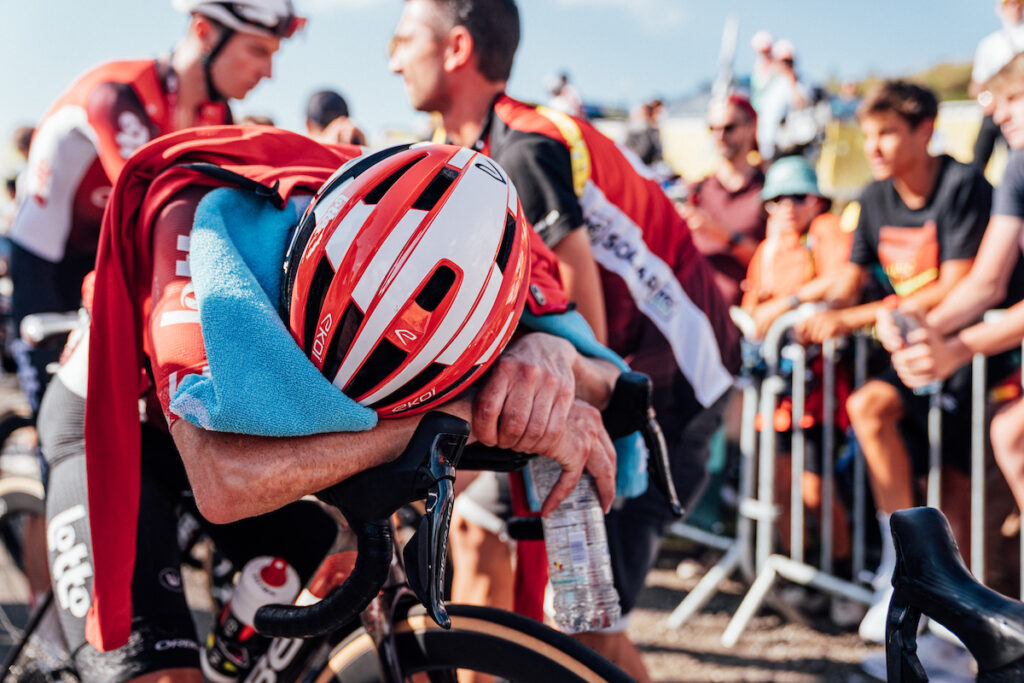
The researchers from Barcelona’s Institute for Global Health were clear that holding stages from lunchtime into the afternoon will mean future races where riders and fans are exposed to hours of dangerously high heat stress, which can persist late into the afternoon.
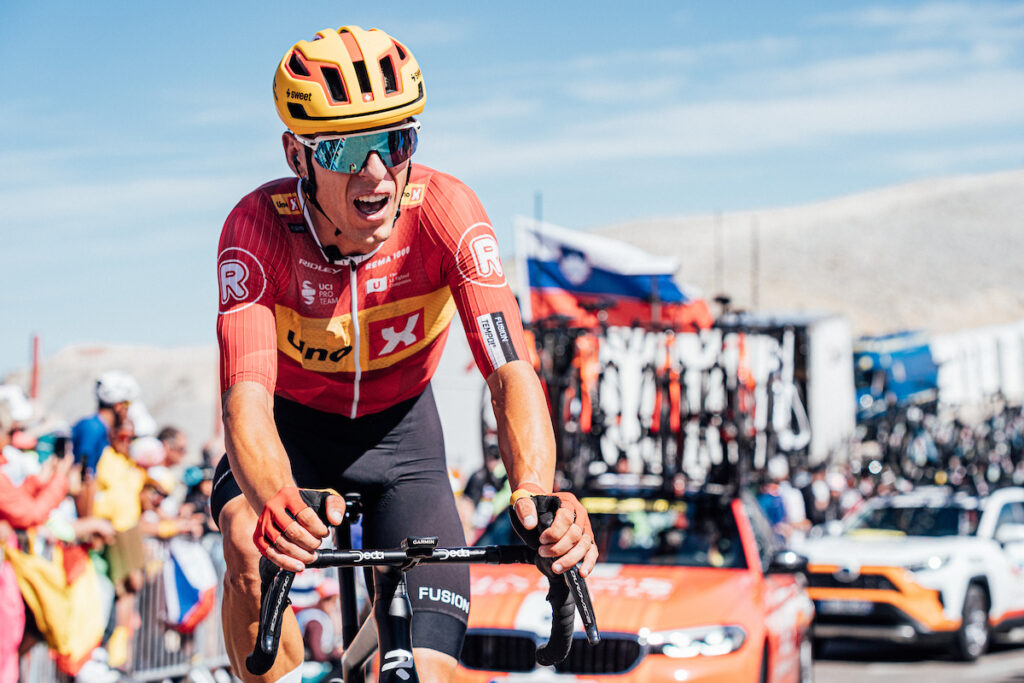
As such, they concluded that “planning the race for the morning hours and avoiding the afternoons could substantially increase rider and spectator safety”. Emphasis on continued “development and re-evaluation” of hot weather protocols was also suggested.
“It is interesting that the Tour de France race dates have thus far managed to avoid the worst of the July heat stress,” the research concluded. “However, given that the route and the race dates have to be planned months in advance, while reliable weather forecasts are available maximum 14 days beforehand, this outcome is apparently by chance.
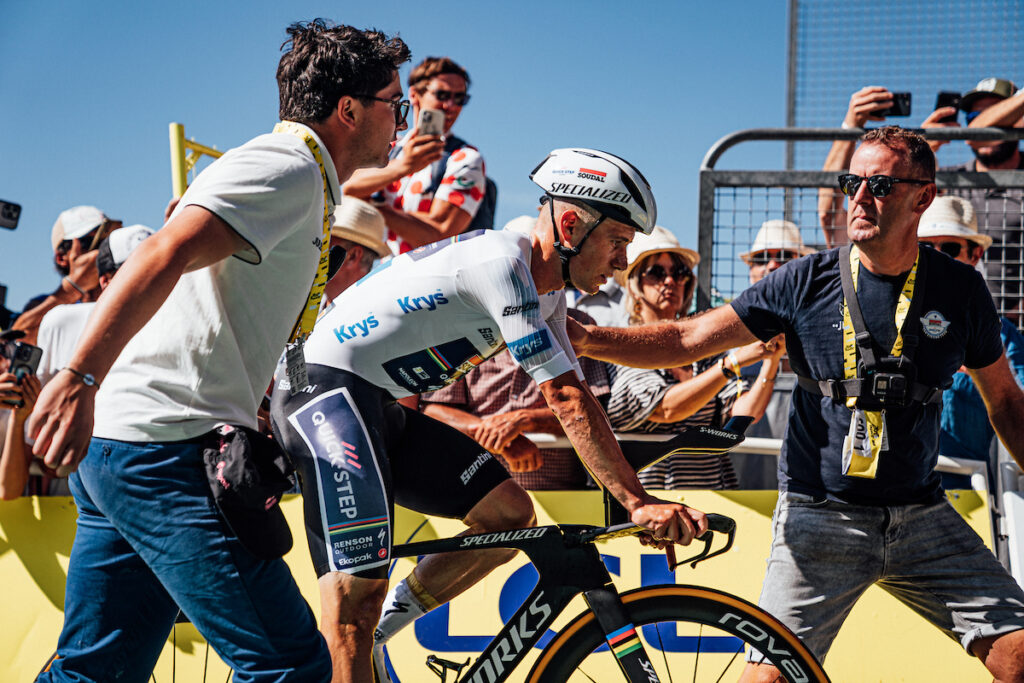
“Accordingly, it is critical that both organizers and participants (and to a lesser extent, the spectators) remain vigilant and prepared. In the absence of detailed daily weather forecasts several months before the event, awareness of the locations with a history of dangerous heat stress occurrences as well as emerging ones, is of key importance.”
It is not just the Tour de France, of course. The Vuelta a España regularly sees 40°C temperatures and when 2026’s route was announced one of the major concerns from fans and riders alike was it being almost entirely in the south of the country where the hottest temperatures of late August and early September have hit the Grand Tour previously.
Last month saw fire danger warnings and soaring temperatures shorten racing at the Tour Down Under. The shortened Willunga Hill stage, which had the famous climb removed, also started earlier at 10am.
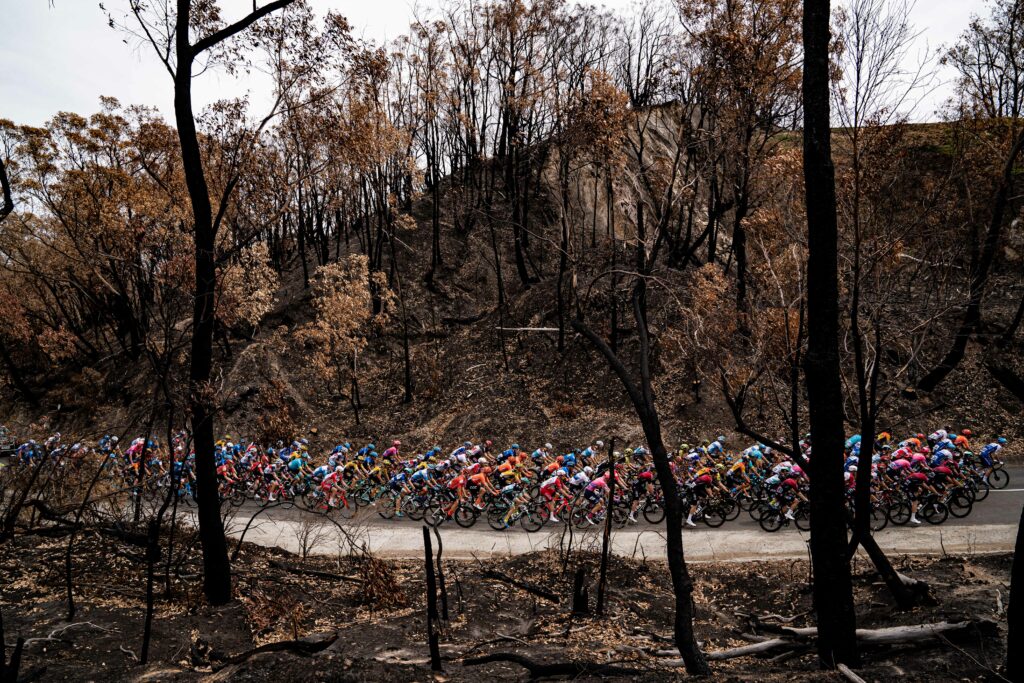
News of Willunga Hill’s climate-related excision sparked renewed calls for the Tour Down Under to cut its ties with Santos, the race’s long-term title sponsor – and one of Australia’s worst greenhouse gas emitting companies.








13 thoughts on “Could Tour de France stages soon be raced in the morning? Scientists warn climate change and extreme heatwaves could make afternoon racing too dangerous”
50 years of data on a planetary timescale of 4.5 billion years.
Ideally, cycling should become an indoor sport to limit costs and risks and maximize viewership and TV rights. Triathlon is leading the race.
We have proxy records dating back millions of years from ice cores and tree records. They show that the planet is now at its warmest point for the last 130,000 years (when sea levels were 6m higher than today). If we keep on the current trend which predicts temperatures will be three degrees above pre-industrial levels by the end of the century the planet will be hotter than at any time since the Pliocene epoch, which ended about 2.5M years ago. We’ve managed this in around two hundred years. Nothing to worry about there then.
But hey, everybody prefers summer to winter, right?!
And by the way, it was cold yesterday where I live, so global warming is obviously fake.
This is over-simplistic and false. The Guardian isn’t a source of scientific data.
The Guardian isn’t a source of scientific data
It’s a much better source than climate change denying nutters!
Ah, the scientific rigour of the climate-change-denying right, a blank assertion with no evidence offered coupled with an insult. Pathetic.
Correct. The Guardian is not a source of scientific data.
It is a newspaper that REPORTS on the findings of scientists. And scientists are almost unanimous that anthropocentric global warming is real and represents a thereat to humanity.
Anyway, this article isn’t from the Guardian, so I don’t know why you’re wanging on about it.
No chance. Television viewing figures dictate tea time/evening finishes.
Look at the scheduling of the USA football world cup, with some games kicking off mid afternoon in 90 degC plus and high RH, just to meet European evening viewing slots.
I often wonder why they don’t wear cooling arm sleeves and cooling hats under their helmets. At a guess it’s probably something to do with ‘the rules’, as this is road racing. Headsweats caps and similar make a big difference to how hot you get and you avoid getting your head sunburnt through the gaps in your helmet.
A cooling sleeve cools you down for maybe 30 minutes and then it becomes a hassle, it also prevents heat leaving the body as an “empty” sleeve now becomes an extra layer.
It does make some sense for a time, but in the long run it’s just problematic to use. It’s just much easier to just pour water over your body.
Or, in higher temperatures, use ice jackets and ice bundles which can be replenished from the support car.
This kind of journalism makes me laugh. As climate change brings ecological breakdown and migration on a biblical scale and international food security puts the price of food out of most people’s pockets then there isn’t going to be any bike racing in the morning or any other time. Get an allotment and learn how to protect it. Good luck everyone.
“planning the race for the morning hours and avoiding the afternoons could substantially increase rider and spectator safety” but it would reduce the appeal to sponsors and TV broadcasters, who pay the bills and so are far more important than the riders and spectators. It’s therefore not going to happen. Even making a last-minute switch in extreme situations probably won’t work because of the amount of logistics and people involved – the TdF is SO much bigger than the Tour Down Under.