


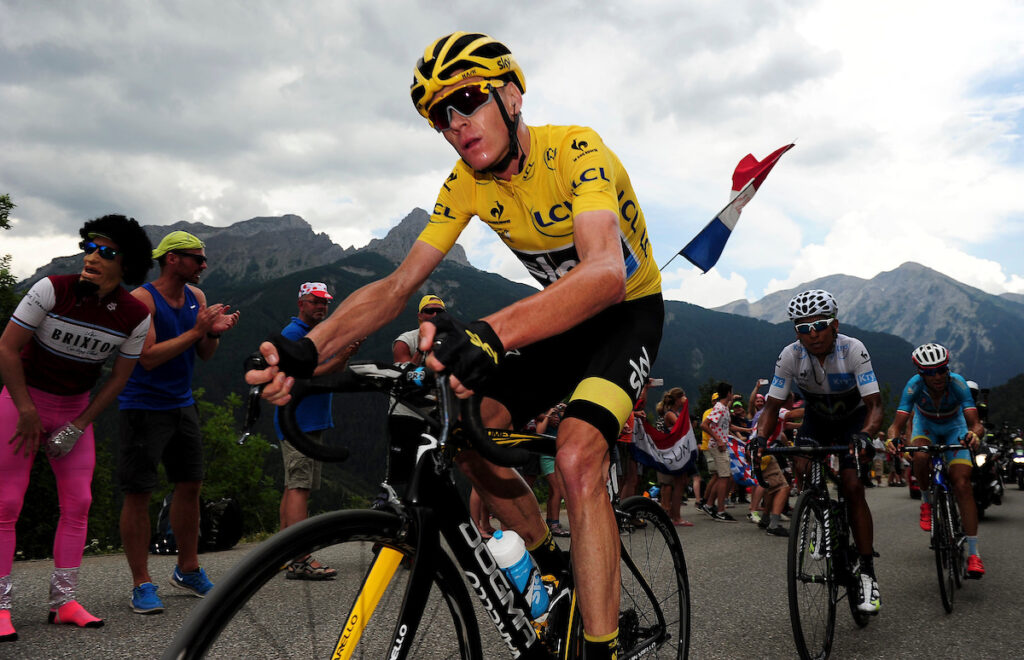

The message was short, and not particularly sweet. In an Instagram post, the team known for now as Israel-Premier Tech, wrote a two paragraph caption.
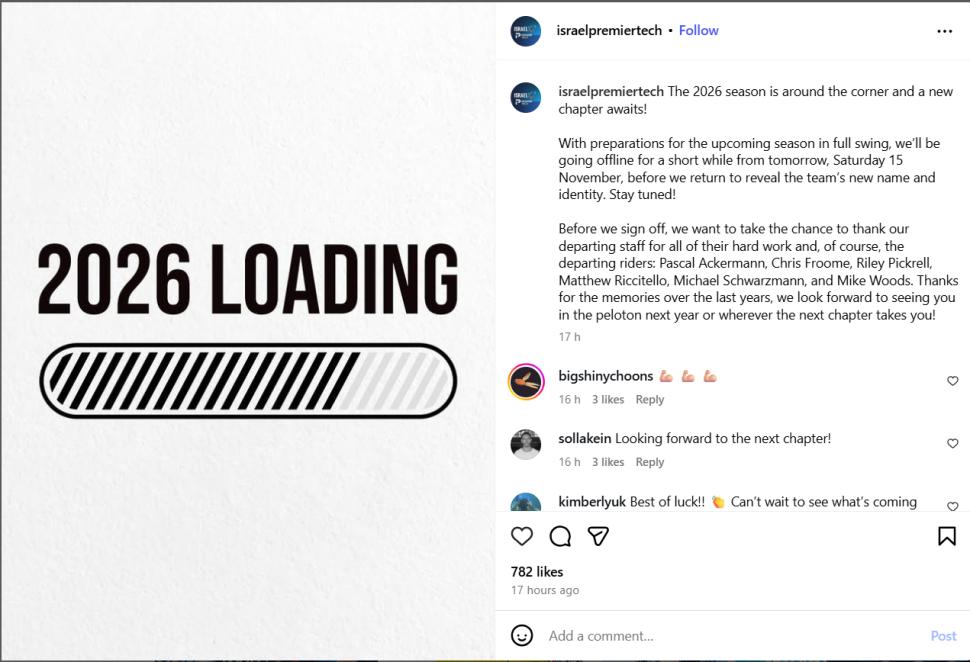
The first detailed the team’s intentions to briefly go off the grid before relaunching under a new team name next year. The second was a passing reference to the riders departing the team. Derek Gee, embroiled in a legal battle with the team, was not included. But, nestled between two second and third-tier sprinters in that list, was Chris Froome.
The 40-year-old’s departure was widely expected. He was the team’s most expensive rider on a contract reported to be around €5 million a year. It was a five-year deal, signed when Froome was still the best Grand Tour racer of his generation, albeit still recovering from a life-threatening crash. His performances subsequently were regularly criticised by both pundits and his own team manager. But, for a rider of his calibre and reputation, it’s a distinctly inauspicious end to his career.
Or so we believe. Froome has been guarded over his future plans in his final contract year, but had previously suggested in 2024 he wanted to end his career at this year’s Vuelta a Espana. Then, in February this year, he told the Never Strays Far podcast that he hadn’t “100 percent decided” on retirement. He also revealed plans to set up a cycling academy in Africa. Born in Nairobi to British parents, Froome split his upbringing between Kenya and South Africa before moving to Europe to pursue his career. But such a move would require detailed planning and, if the project were to register with the UCI in 2026, various administrative decisions would have to have been made by now.
Regardless, it’s been an ignominious year for the four-time Tour de France champion. At his first race he crashed and broke his collarbone. He didn’t return until the Tour of the Alps where he finished third from last. He then raced the Tour de Suisse and the Sibiu Cycling Tour (in Romania) where, as a domestique, he helped teammate Matthew Riccitello to overall victory. His final appearance, at the Tour of Poland, was dogged by media questions over his relationship with the suspended Ineos soigneur David Rozman, and the Slovenian’s relationship with the disgraced doctor Mark Schmidt.
> Chris Froome distances himself from former carer under investigation for link to doping doctor
But then Froome suffered another serious crash whilst training, one that even made a BBC Breaking News alert. Airlifted to hospital, he was diagnosed with a broken back, five broken ribs, and a rupture to the sac lining of his heart. After a week in hospital, he was discharged.
That the crash was not necessarily the most severe of his career is testament to his fortitude, the other contender being that crash whilst recceing the Time Trial at the 2019 Criterium du Dauphine that left him fighting for his life. There he crashed into a wall, losing four pints of blood and suffering neck, femur, sternum, elbow, and rib fractures. For him to return to the professional peloton eight months later, at the age of 35, should not be underestimated. But his ‘Crash Froome’ nickname, given to him as a young pro, could never be shaken off.

Since posting news of his hospital release, Froome has been quiet on social media, his only activity being a public appearance at a charity gala eight weeks ago where he appeared alongside Usain Bolt, Anthony Joshua and Mika Häkkinen.
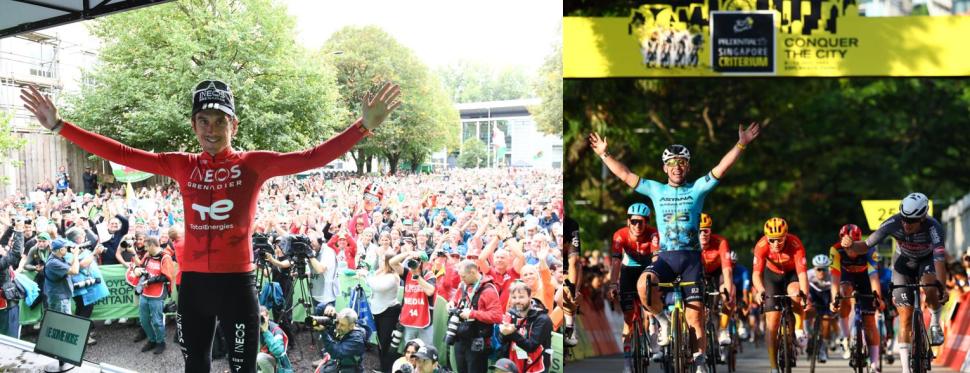
If or when a formal retirement announcement does come, it will be in the depths of an off-season and without any of the racing farewell that surrounded his compatriots. Geraint Thomas had the last stage of the Tour of Britain tailored around his life story. Mark Cavendish officially bowed out at the Tour de France before being afforded the dignity of leading over the line at the Singapore Criterium.
Assessing Froome’s career is difficult. His rise to prominence at the 2011 Vuelta he retroactively won, after years spent battling bilharzia and nearly being dropped from Team Sky, preceded a power struggle between himself and Bradley Wiggins that nearly threatened the ‘golden summer’ of British cycling in 2012. His subsequent domination of the Tour de France was emblematic of the ‘Sky era’, a period characterised by long mountain lead-out trains, relatively few attacks, and a complete demolition of his nearest rivals in the Time Trials in an era when they were still long and commonplace.

That wasn’t to say Froome couldn’t attack. In Vuelta after Vuelta he threw everything at the purer climbers of Nairo Quintana and Alberto Contador, often without success, whilst at the Tour de France he launched devastating attacks to win on Mont Ventoux and Ax-3 Domaines in 2013.
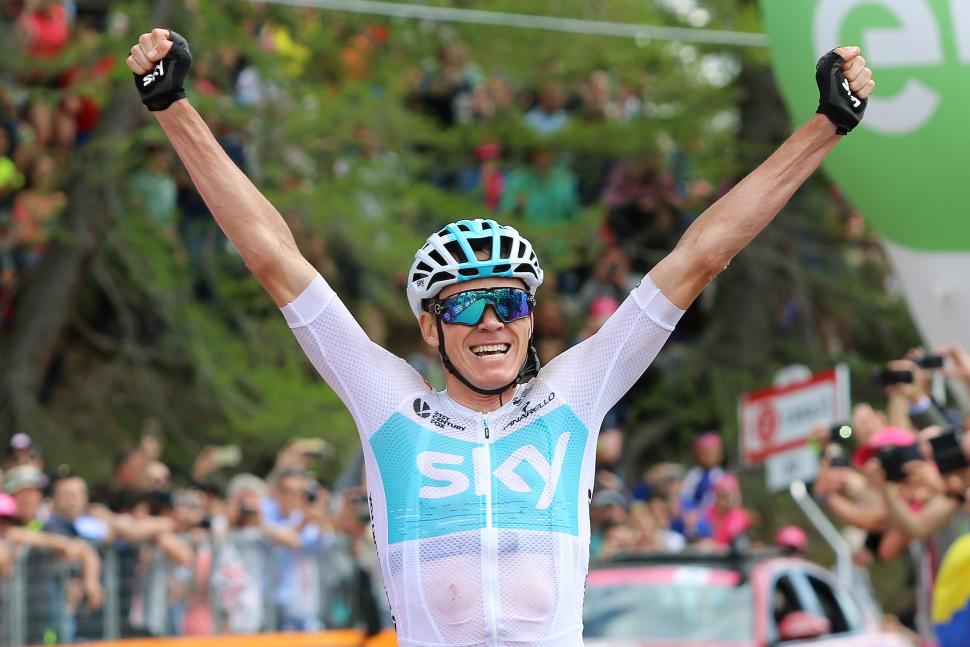
His daring 2016 attack and stage win on the descent of the Col de Peyresourdes in 2016 was so bold the UCI later banned his ‘supertuck’ position. And then there was the 2018 Giro d’Italia, and a bold 80km solo raid that hoisted Froome into the maglia rosa that he wouldn’t relinquish.
Subsequent reflections on that era are very different, focusing on Team Sky’s exploitation of cycling’s grey areas, their use of Thereapeutic Use Exemptions for banned substances, the ‘Jiffygate’ scandal of unknown medicines transported to key riders at critical moments, and the striking off of former team doctor Richard Freeman.
> Damning report from MPs slams Team Sky and Sir Bradley Wiggins
Then in Froome’s case comes Salbutamol, and the relationship with Rozman. His teammate and rival Bradley Wiggins has repeatedly alluded to sinister practices, he insists ‘the truth’ is still being buried but that one day it will all come out. But more than a decade on, if these questions are not answered now, then what would it take for someone to come forward in the future?
Besides these questions, Froome’s 2019 crash and subsequent 5-year Israel-Premier Tech contract have served to change perceptions. Uncompetitive in the peloton for as long as he was all-conquering, opinions of Froome vary between a motivated, dedicated athlete still hungry to do his best despite knowing he’s not the rider he was, and a rider going through the motions, content to pick up every last cheque from his billionaire paymaster.
One recurring tongue-in-cheek meme, popular in some quarters of the internet, posits that no one has done the pro-Palestinian cause as much good as Chris Froome, draining the financial resources of an alleged Israeli sportswashing project at a time when a star athlete’s support and success would likely be most welcome for the team and the country.
On Froome’s part, since the October 7 attacks, he has remained fairly quiet on the matter of his nation state sponsor, his involvement limited to an appearance at a ‘solidarity ride’ calling for the release of Israeli hostages captured by Hamas. The same cannot be said for his wife Michelle, who last year posted highly inflammatory, Islamophobic comments on social media, that her husband’s team distanced themself from.
To include these non-sporting details in this evaluation is debatable, but they reflect the absence of any racing narrative that the Brit has been able to string together in the final years of his career. Having worked as a road captain at the Tour de France in 2021, the following year he finished 11th in an Alpine one-day race before finishing third behind Tom Pidcock and Louis Meintjes on the Tour stage to Alpe d’Huez, having made the day’s breakaway. He was sitting 26th on GC when Covid-19 forced his withdrawal during the final week. Those two sentences are the sporting highlights of the last five years of a rider who at one point was the defending champion in all three Grand Tours. The results simply don’t match.
Froome’s sporting longevity, coupled with the inevitable recency bias, overshadow the athlete he was at his best. And in not announcing his retirement during the season, the 40-year-old has denied himself the opportunity to shape the historical memory that he has created. Maybe for an outsider to the Euro-centric world of cycling like Froome, that doesn’t bother him. But as cycling’s most successful African-born cyclist by far, it is a disservice to the professional athlete he was, and all that he represents, that we lack the clarity of the athlete that he is. The athlete that he maybe still wants to be.


13 thoughts on “Chris Froome’s retirement limbo leaves the sport of cycling to grapple with a difficult legacy”
Quote:
Pascal Ackermann has won five GT stages, the points jersey at the Giro, and points jerseys and stage wins at various other prestigious races, e.g. points jerseys at Tour of the Alps, Volta ao Algarve and Tirreno-Adriatico and stage wins at the Dauphine and Romandie, not to mention the German road race championship and podiums at European Championships. Hardly the record of a 2nd/3rd tier sprinter.
Also, the riders are clearly
Also, the riders are clearly just listed in alphabetical order, so being between those two isn’t the slight that’s implied.
Ok we have to talk about that
Ok we have to talk about that 2006 photo of young froome knocking over the race attendant with papers flying. It’s a bloody brilliant and funny photo up there with the best of cycling’s greatest!
The backstory’s pretty cool –
The backstory’s pretty cool – Froome was there on his own with no support staff as he’d only got a place in the race by emailing the UCI pretending to be the president of the Kenyan cycling federation and putting in his own entry. He had reconned the whole course except for the start, when he got to the top of the ramp “it all looked different” and, disoriented, he rode into the official. He did remount and came 36th of 62, albeit over three minutes down on the winner. He said he saw the marshall a few days later and his (the marshall’s) chest and ribs were black with bruises. Unsurprisingly, Froome recalls, “he wasn’t too impressed.”
He had actually stolen the
He had actually stolen the login credentials of the federation guy somehow, and sent the email from the federation president’s account, hadn’t he? That’s… kind of illegal. 😉
He doesn’t have a good track record with crashes, especially not with TT bike and hitting others. There’s that 06 crash. In his book he describes riding home doing some TT training, and letting his head go down, not looking and riding at speed into some old Italian guy. The old guy was in such a bad state afterwards that Froome thought he’d killed him, and he was nearly charged by police.
Then there’s the 2 crashes in training where badly injured himself, detailed above in this story.
Paul J wrote:
Bit harsh: the crash which involved “riding at speed into some old Italian guy” was when he was coming home from TT training and the pedestrian stepped out from between parked cars.and the pedestrian stepped out from between parked cars. You say he was “nearly charged by police” but he wasn’t so presumably ultimately they found him not liable. The Dauphine crash was caused by an unexpected gust of wind catching his deep TT wheels when he took his hands off the bars to blow his nose, careless certainly; his most recent serious crash was when he clipped a kerb and flew into a road sign. The thing is, lots of pro riders crash and you never hear about it because they are not famous enough and/or the results aren’t as dramatic. If anything Froome has just been unlucky that his crashes have led to such severe outcomes.
Rendel Harris wrote:
Froome was apparently tucked in, doing an effort on his TT bike, along a road with cafes/shops – where any reasonable road user ought to expect pedestrian traffic and be cautious – especially of the potential for there to be more vulnerable road users about, like children or old people (and apparently that’s a distinction Italian road traffic law makes). The old man’s skull was *fractured* – a fairly serious injury! Froome was charged, was interviewed by Italian police numerous times, and ultimately had to pay a fine. So… he was found guilty of at least a summary / “misdemenour” offence. From Froome’s autobiography:
“Five minutes later someone came back.
‘It’s not good. It’s really not good. There’s
a lot of blood coming from his head. It looks
like he’s dead. Someone felt for a pulse but
there wasn’t one. Just all this blood.’
…
In the aftermath of the accident I went to
Ventimiglia police station close to ten times,
and actually got to know the guys working
there – two in particular were keen cyclists.
They told me I had to pay a small fine for hit-
ting a pedestrian, explaining that Italian law
considers seniors in the same way it regards
children and I would be held responsible.”
As you clearly have the book
As you clearly have the book with you, funny you didn’t quote this bit, just before the bit you did quote:
‘Whoa!’ I screamed.
My brain saw him stopping when he heard the scream. He was going to stay right there. I was going to veer left. Everyone was going to walk away from this unhurt. But he kept going, quickening his step if anything. He shifted straight into my line and I smashed into him, my helmet crashing into his head.— Chris Froome
So by Froome’s account he was easing up, didn’t have his head down and so didn’t see him, he saw him and shouted a warning and attempted to take evasive action but the man stepped into his line. A bit different to the hell-for-leather head down idiot you seem to have decided he was being (and claimed he had admitted to being which, as you can see, he clearly didn’t)?
As for the fine, Italian law has presumed liability in favour of vulnerable road users with a special stress on children and seniors so Froome was issued with a small fine which he could have contested but presumably decided it wasn’t worth the bother or publicity to do so. The fact that the collision fractured the pedestrian’s skull but he faced no more serious charge than a tap on the wrist – equivalent to our FPNs – on the basis of presumed liability and (as far as I know) no civil claim for damages tells you a lot about whose fault the Italian authorities thought it was.
Mark Cavendish and Geraint
Mark Cavendish and Geraint Thomas are mentioned in the article but my sense is that very few riders get to retire on their own terms, like these two, still feeling the glow of recent success. Most riders’ careers fizzle out, like Froome’s, and we just need to look back a few years and remember how good they were.
I think its reasonable to say
I think its reasonable to say that had Chris Froome been offered an extension at Sky/Ineos with the intention of moving him into a coaching role he would of retired a few years ago. But if you wave a contract worth €5m a year under someones nose they are going to ensure they fulfill it even if its at a time when their competiveness is no longer what it was.
I’m not sure it’s that
I’m not sure it’s that difficult a legacy… he was the best stage racer of the 2010s. And for a long period – from 2011-18 he was on the podium of one or more GT every single year.
He hasn’t been the same rider since the accident, but nothing that happened since then will change that.
Personally I think part of the problem at IPT was that they paid him as a GT leader and expected that from him and after a few years it was clear that wasn’t going to happen. But I think they could have got much more out of him than they did. The Alpe D’Huez stage proved he could still ride at a certain level and still had quite a few strengths. It’s as much of a failure of IPT to not use those and reinvent him as road captain/ stage hunter / mentor / part of a mountain train as it is him.
But if anyone has any doubt about how good Chris Froome was – just watch the 2018 Colle de Finestre stage.
Froome went from terrible to
Froome went from terrible to gt winner at a team with a lot of questions about doping hanging over them. Never the same after the salbutamol bust, he went back to being a donkey
Barraob1 wrote:
That’s utter nonsense. After the salbutamol “bust” (aka after he was suspected of doping but after a thorough and intensive investigation was cleared) he came back to take one of the most memorable grand tour wins, and one of the most memorable stage wins, of the modern era in the 2018 Giro. Some donkey.