


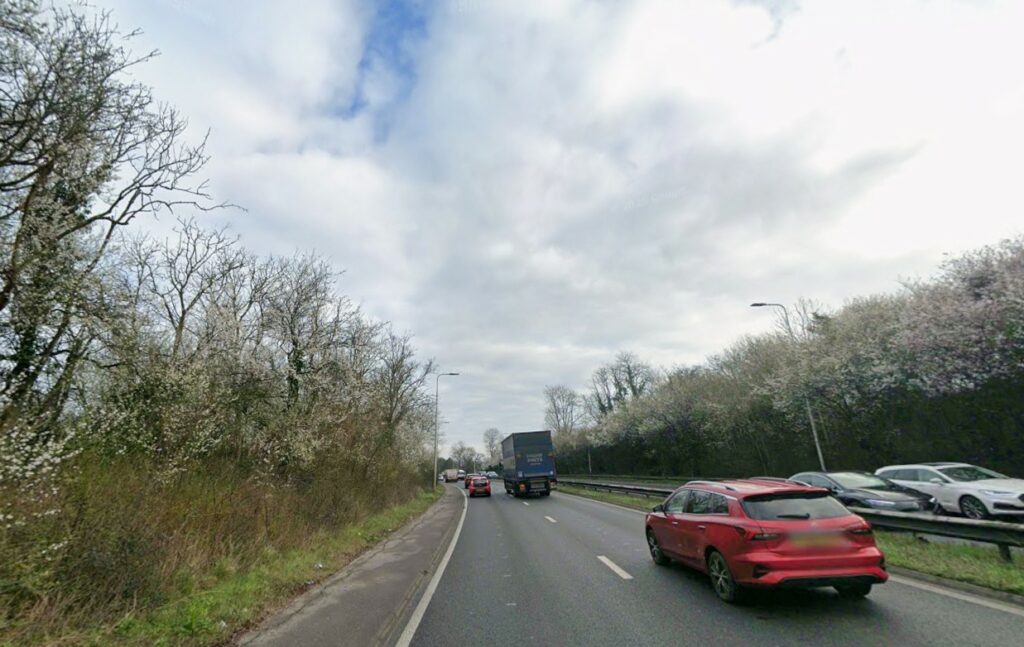

National Highways has been accused of “perversely penalising” cyclists and pedestrians after it was revealed that a number of shared-use paths have been closed due to heavy pollution on adjacent roads.
According to a report on road.cc contributor Laura Laker’s Potholes and Pavements Substack, a shared cycling and walking path beside the A3 in Guildford was closed earlier this summer, with new signs installed prohibiting people riding bikes or on foot, along with diversion signs.
“Hostile” paving, which amount to bumpy stones, was also introduced on the narrow pavement, which runs alongside a 50mph dual carriageway, with cyclists now forced to use the road or undertake a lengthy detour.
According to Laker’s report, the 1.4-mile-long path was closed by National Highways because air quality levels on the A3 exceeded legal annual thresholds, and because the path was within 15 metres of the offending dual carriageway, its users were being exposed to dangerously high levels of pollution.
By closing the path, and stopping cyclists and pedestrians from riding or walking beside the road, the A3 is now, ironically, compliant with the existing regulations. National Highways says the shared path will stay closed until the levels of pollution drop below the legal annual limit for nitrogen dioxide (40µg/m3 NO2), which they predict will happen between 2030 and 2035.
> Testing by MPs reveals worst air pollution is inside cars
Local cyclist Steve Cromwell told Laker that the entrances to the path – which he nonetheless described as “not pleasant, nor is it well used as it doesn’t really connect to much” – are now marked by plastic wands, though it appears that cyclists and pedestrians are continuing to use the path, with wheel marks visible in the sand poured over the new stones, according to a photo taken by Cromwell and published by Laker.
Cromwell pointed out that a new kerb drop was installed on a traffic-free section of the diversion put in place from the A3, which he says has made the path easier to use. However, on 17 July, a 19-year-old was killed by a hit-and-run driver while walking along the A3 at night, on a section where the path was closed.
This is not the first time National Highways has closed a cycle path in a bid to limit exposure to overly high pollution levels. In February 2025, the government-owned agency moved a ‘cycle collection point’, where cyclists are picked up by a bus to cross the Dartford tunnel at junction 31 of the M25, and shut the safe cycle path leading to it.
National Highways said at the time that the road will not comply with legal NO2 limits until 2030. Cyclist Terence Hughes told Laker that the new collection point on London Road, West Thurrock, forces people on bikes to navigate a series of busy roads “which can only be accessed by more busy roads”.
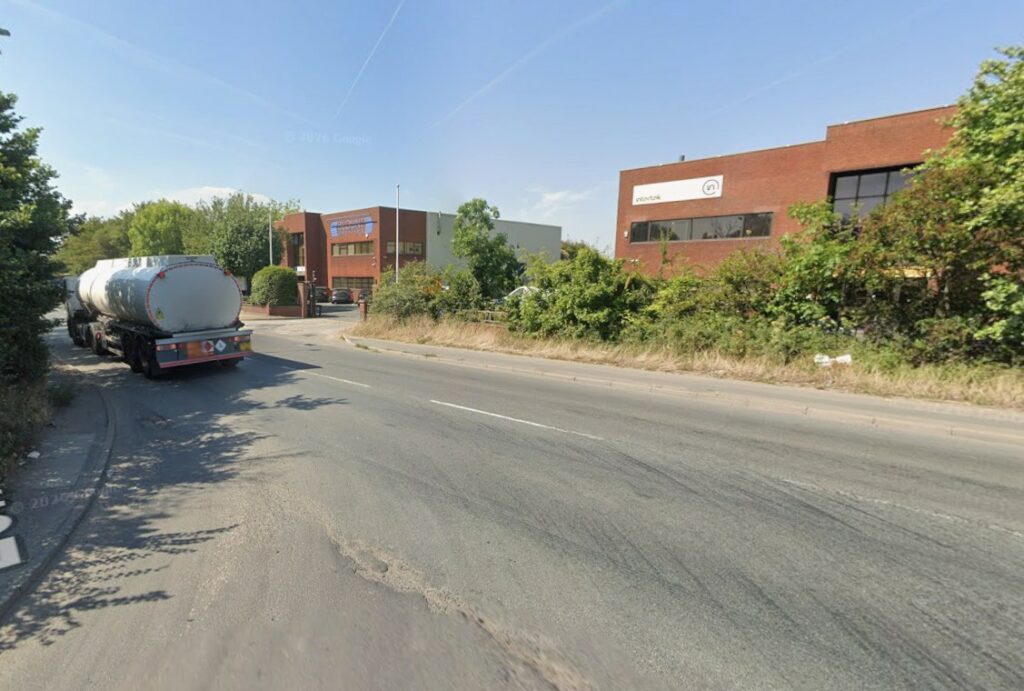
“And when I say busy, I mean loads of HGV traffic,” he said. “The path to the old crossing point connected directly with NCN13 and provided a safe, off-road route. The new crossing point and the ‘alternative routes’ that they mention are on busy roads and I cannot imagine any but the most risk-tolerant cyclist using them.
“So we’ve traded a short section beside a very polluted road for longer sections on still polluted roads but with much more road danger.”
According to emails seen by Laker, during the National Highways’ air quality audit, proposals to introduce barriers, clean air zones, and tunnels were dismissed, with the path’s closure the only option considered viable.
“An alternative, new cycle route was not considered as part of this project,” Connect Plus, the contractor that manages the M25 and the Dartford-Thurrock River Crossing, said in an email.
“As stated previously, there are a number of alternative routes available to cyclists who had previously accessed the collection point, one specific route has not been recommended for use.”
Diversion signage for cyclists, funded by National Highways, was finally installed by the local council in June 2026, around 15 months after Hughes first contacted the agency with his concerns.
> Air quality improves in UK cities as people leave cars at home
Asked about both the A3 in Guildford and the A282 in Thurrock by Laker, National Highways said in a statement: “The path beside the A282 was a permissive path owned by National Highways, this means there is no automatic right of use.”
It continued: “National Highways has a legal duty to consider measures where annual average nitrogen dioxide (NO₂) concentrations exceed the legal limit. Any changes have been limited to specific sections where pollutant concentrations exceed legal thresholds and where reducing public exposure was considered necessary.
“We recognise that changes to walking and cycling routes can affect local communities and have sought to minimise impacts wherever possible. At both the A3 in Guildford and A282 in Thurrock, a range of potential interventions were assessed before a preferred solution was identified.”
However, Transport Action Network’s director Chris Todd said: “It’s perverse that people who want to walk and cycle are penalised because the motor traffic is too polluting.
“We shouldn’t forget that these are legal limits (air pollution) that should have been met 16 years ago. That’s a failure of central government primarily but National Highways is not without blame.
“As all people using these roads are still being exposed to illegal levels of pollution, why is it that only people walking and cycling are prevented from using the road?”
National Highways recently told the Transport Select Committee it “works with partners, mayoral strategic authorities, and local authorities to ensure that our network does not act as a barrier to active travel and that it connects and integrates with other networks.
“We see active travel as a core part of how the [Strategic Road Network] SRN can serve and support communities.”
Earlier this year, a report by Breathe Cities named London among 19 global cities, across nine countries, which have slashed levels of two airway-aggravating pollutants by more than 20 per cent in the last 15 years, a “remarkable reduction” in air pollution driven by policy interventions such as cycling infrastructure, the increased use of electric vehicles, and the implementation of London’s Ultra Low Emission Zone (ULEZ), restricting the use of high-polluting cars, the group said.
According to the report, Breathe Cities’ findings demonstrated that large-scale reductions in air pllution can be achieved by promoting active travel, the group acknowledging that “most leading cities have taken major steps to reshape urban space in favour of clean mobility” by expanding cycling networks and pedestrianised zones, while “reallocating road space away from private vehicles”.

















15 thoughts on ““It’s perverse”: National Highways closing cycle paths – because the roads beside them are too heavily polluted”
HSE Risk management 101:
Risk = Level of harm x Likelihood of harm from hazard
Hierarchy of risk controls:
– Eliminate hazard (0 Level)
– Reduce hazard (reduced Level)
– Isolate; physical/ engineered barriers containing hazard (near 0 Likelihood)
– Control; “soft” separation of people away from hazard (reduction of Likelihood)
– PPE; mitigate harm of hazard to exposed people (small dent to Likelihood)
– Do nothing
Excessive vehicle traffic is producing levels of pollution harmful to health – Hazard
Given the above, National Highways have straight in with poorly implemented Control measures. “oh, no, please don’t cycle or walk here. if you have an asthma attack, don’t say we didn’t warn you”
Closing the road would eliminate the risk at that location, but isn’t a practicable solution. They could have very easily reduced the dual carriageway to single lane running in each direction. Slower vehicle movement, sure, but fewer stop-start surges in traffic, halved the number of offending vehicles in the area at any given time, and after a period of time, some people will find driving it unpleasant and seek alternative means of transport.
At least the response wasn’t to tell people to wear FFP2 masks.
Any risk assessment is a balance of risk. If closing path means cyclist takes the road, the reduction in one causes a massive increase in the other, harm on the road is much more severe so therefore needs eliminating first. We are however such a motor normative society it’s difficult for them to see that.
(Also : √-1 : I’m not sure why I’m replying to you because you’re imaginary. I might finally have popped!)
Sorry, but are we not all meant to be buying EVs now? Surely thats gonna bring down pollution.
I guess that’s what they mean by
Given your username, though, presumably you won’t be making the switch?
I wonder if these national highways air quality numbers are published anywhere. There has been this one road near me (that sees a lot of traffic) that is carved out in this little valley and it feels like it’s hard to catch a breath in there sometimes, almost like the valley is causing the noxious fumes to collect and probably shortening my lifespan cycling through there.
I’ve worked in air pollution for 30 years. The annual mean limit value for NO2 doesn’t apply along footpaths and cycle lanes. If it did, it would also apply on the road, and everyone – drivers and cyclists included – would have to stop using it.
Rightly or wrongly, the limit only applies where there is housing, hospitals etc. Either something has been lost in translation or National Highways don’t actually know what they’re doing.
I’d be very happy to wade into a JR of this nonsensical NH decision.
Since motorists are also exposed to this level of nitrogen oxides surely the only legitimate solution is to close the road to all non Euro 6 and above traffic. At high pollution risk periods. The French do it, we clearly have the technology to do it here.
Traffic control of the polluting vehicles is the only sensible solution.
Either: Close the road to all vehicles except EVs. This seems an obvious solution to me.
Or: if it’s a dual carriageway, make all traffic use one side as a bi-directional single lane carriageway, and leave the other side for cyclists and pedestrians. At least then they could ride a bit further away from the fumes (but not much).
We are talking about the Highway Agency here. You know the same ones that think it is perfectly acceptable for a cycle lane to stop just before an exit or entry spur on a carriageway. Or the same ones who thought it was better to infill disused railway bridges and so block local paths, rather than actually spend the money on fixing the issue. Motorised traffic is their only concern.
If you use the Dartford Bridge bike service you need to be very sure of your cycling skills and confident of your route to get to the pickup point, it is not for the faint of heart. The service itself is excellent, just a shame you have to risk your life to get to it.
@ceebee247 yup, they’d need both a top- down redirection and a training / culture shift, even though presumably they are required to be aware of the appropriate guidance (and in the UK it is just “guidance”).
It only works differently elsewhere (eg. NL) because of *both* accepted norms and a legal feedback route (build dangerous / inaccessible stuff or go against certain “environmental regulations” and you may have to defend your choice in court).
More info here on how this works: https://m.youtube.com/watch?v=b4ya3V-s4I0&t=603
Aren’t people inside cars at a higher risk? As they are right in the pollution not next to it, and it gets trapped inside their vehicle so they are breathing it in over and over
I’m trying to think of an n-th degree silly response to this.
Given the issue is pollution by motorists, why punish OTHER people by banning those who are walking/cycling…?
One answer might be to install clear plastic barriers along the edge of the road, which we saw in 2020 to try to prevent the spread of covid, thus keeping the offending fumes away from the path…
No motorist can complain about it as they aren’t being restricted from driving…
Well, that didn’t last long.
https://www.gov.uk/government/publications/environmental-improvement-plan-2025/environmental-improvement-plan-eip-2025