



The Roman Catholic Bishop of Lancaster, Paul Swarbrick, is recovering after sustaining a fractured skull when he was the victim of a car dooring while riding his bike – and said afterwards it was his own fault for not wearing his cycle helmet for a trip to the shops.
According to the Lancaster Guardian, the 61-year-old, who was appointed to the diocese in 2018 by Pope Francis, was left “shaken” by the incident which happened on Friday 8 May, the VE Day bank holiday.
Father Stephen Pearson from the diocese as saying: “The bishop has always been a keen cyclist and he was cycling as his form of exercise in Morecambe when he was involved in an accident.
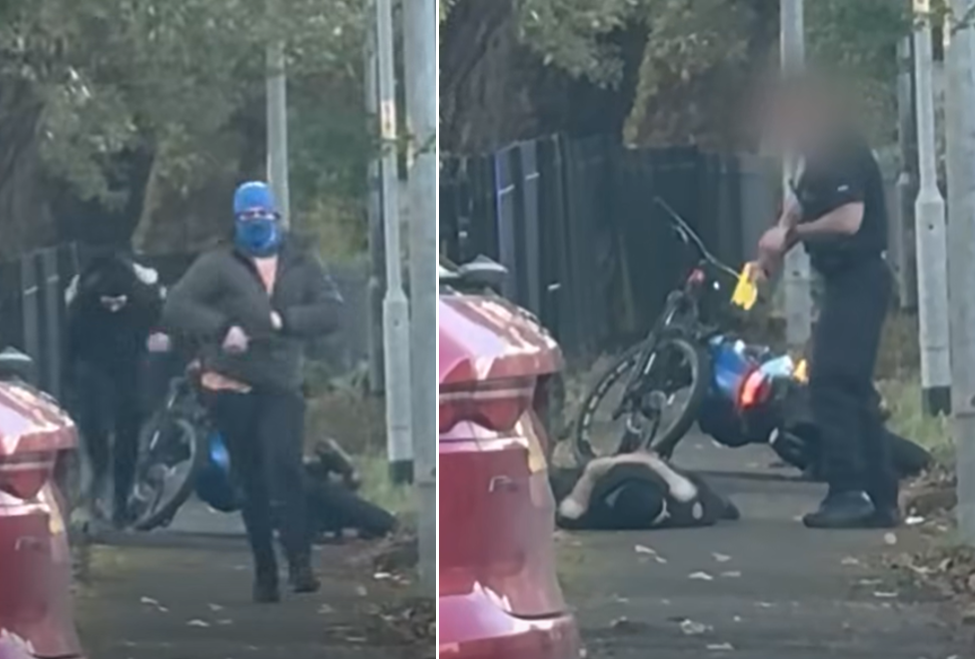
“In Bare where he lives he was cycling past a parked car and the door opened as he was passing and knocked him off his bike.
“He ended up in the Royal Lancaster Infirmary that Friday afternoon a week ago and on the Sunday he was allowed home.
“He has fractured his skull and damaged his left ear,” Father Pearson continued.
“He is a very fit man but he is sensible and is recovering at this time and will be for three or four weeks.
“A number of services were broadcast during Holy Week from the cathedral and the bishop has been doing a short 10-minute weekly invitation to prayer which was filmed at the cathedral.
“These things are not now possible but hopefully we will see him back very soon.
“His health is very good at 61-years-of-age,” Father Pearson said, but “The severity of the incident was quite a shock and when I spoke to him he sounded quite shaken.
“He will be back as soon as he can. The bishop is forbidden to go near a bike now!,” he added.
Writing on his blog, the Bishop said: “This has not been the week I thought it was going to be. The change came about because I fell off my bicycle on Friday, VE Day.
“That resulted in an ambulance trip to Lancaster Royal Infirmary, where I spent two days under observation. All the NHS staff were professional, kind and attentive. In a time when we are all thanking them for their work I have deep personal reasons for standing at my gate and applauding on a Thursday evening.”
He added: “Of course, it was largely my own silly fault. No helmet … Usually I do wear one but since I was only nipping up to the shops I thought it not necessary. I was wrong.
“As I cycled past vehicles parked outside the shops one driver opened the door and sent me flying. I’ve no idea who that was but I do hope the person finds out I am ok.”
That last comment suggests that the driver who opened the car door did not come forward.
Under current legislation, the maximum penalty for anyone convicted of “opening a vehicle’s door, or causing or permitting someone to do so, and thereby cause injury to or endanger any person” is a fine of up to £1,000.
The charity Cycling UK has called for stricter penalties, including imprisonment, in cases where a cyclist has been killed as a result of a driver or passenger opening a door, and for a new offence of causing death or serious injury through opening a vehicle’s door.






128 thoughts on “Bishop fractures skull after being doored while cycling – but says he should have worn his helmet”
He added: “Of course, it was
He added: “Of course, it was largely my own silly fault. No helmet … “
No. No. No. It was entirely the fault of the person opening the door without making sure there was nothing passing. This is the result of thirty years of helmet propaganda when cyclists blame themselves for being knocked off, and excuse the perpetrator.
All be pleased this fool
All be pleased this fool doesn’t get to write road traffic laws.
Ridiculously for the 21st
Ridiculously for the 21st century there are 26 Bishops in the House of Lords who can influence legislation.
None of them will be RC though.
Dingaling wrote:
That’s a bit harsh. Maybe he’s just a very forgiving person?
Anyway, wishing him a speedy full recovery.
I hope he recovers well too..
I hope he recovers well too…. and he is able to get back on his bike.
Still don’t want Bishops to influence legislation.
Sniffer wrote:
I am not sure they influence things quite as much as you might think, given that there are 26 bishops in the HoL out of 784 total members.
Sniffer wrote:
I am not sure they influence things quite as much as you might think, given that there are 26 bishops in the HoL out of 784 total members.
I know it doesn’t influence
I know it doesn’t influence things much, but it is unjustifiable.
That’s not being forgiving.
That’s not being forgiving. That’s blaming himself. Quite different.
He means the fractured skull
He means the fractured skull was his fault for not wearing a helmet, not the incident. Imagine you’re sitting in a car at the lights and someone drives straight into the back of you. No way on earth is the incident your fault, but if you go flying through the windscreen because you weren’t wearing a seatbelt because you think being told to wear them is propaganda and spend your life banging on about this on social media, then that is your own silly fault.
Can you apply the same
Can you apply the same argument to pedestrians, or is there something different about their situation compared with cyclists that means they would not be at fault for injuring their own head on landing after a car impact?
Sriracha wrote:
God that one’s so tired – oh yes why don’t pedestrians wear helmets, why don’t you wear a helmet going up stairs…pedestrians don’t run at 20mph plus on the same roads as cars and won’t be hurled to the ground with high impact force if someone opens a door in front of them. If they did, I’d say wearing a helmet would be a good idea.
Yet helmets are not designed
Yet helmets are not designed and tested for 20mph crashes, it is a 1.5m vertical drop. Incidentally that 1.5m drop is pretty much the same as a pedestrian would experience, those same pedestrians who suffer more KSI per mile than cyclists.
Milkfloat wrote:
Absolute rubbish. Pedestrian casualty rate per billion passenger miles GB 2018, 1657, cyclists 5272.
https://assets.publishing.service.gov.uk/government/uploads/system/uploads/attachment_data/file/834585/reported-road-casualties-annual-report-2018.pdf
Apologies, it is the fatality
Apologies, it is the fatality rate that is lower for cyclists compared to pedestrians, not the KSI. 33.7 pedestrian deaths versus 29.7 per billion miles.
Roubaixcobbles wrote:
The risks of walking, per mile travelled, are the same as cycling.
Do you have shares in a helmet company?
The risks of walking, per
The risks of walking, per mile travelled, are the same as cycling.
Rubbish. As stated above with citation, pedestrian casualty rate per billion passenger miles GB 2018, 1657, cyclists 5272.
https://assets.publishing.service.gov.uk/government/uploads/system/uploads/attachment_data/file/834585/reported-road-casualties-annual-report-2018.pdf
Do you have shares in a helmet company?
No, I have shares in my brain and it’s the only one I’ve got, so I like to look after it.
roubaixcobbles wrote:
There’s a reason why the figures changed in 2016; the police changed the way they collected data and described collisions, but according to the table on this page, the risk of death per billion miles is still similar, but higher for pedestrians. I was talking about risk of death, you are using figures for casualties which is much less reliable, so I could have been clearer; sorry. https://www.cyclinguk.org/blog/road-casualties-2018-vital-statistics-cycle-campaigning
eburtthebike wrote:
…and not because whilst the fatality figures show a negligible difference, the injury figures actually do demonstrate that cyclists suffer 300% more injuries than pedestrians – oh doesn’t suit your “why not say pedestrians should wear helmets” jibe so they’re unreliable. Shouldn’t you make a beeping noise when you back up like that? Really, you can’t just reject official figures because they don’t fit your argument.
roubaixcobbles wrote:
The reason I, and others, use the death figures is because they are more reliable. Death is pretty definite, injuries much less so and much more open to mis-reporting.
The trouble with you, EBB, on
The trouble with you, EBB, on here and on other platforms you frequent, is that although you are clearly an intelligent chap you are entirely intellectually dishonest: any research that supports your hobby horse, however flawed, non-generalizable or downright biased it may be, is presented by yourself as gospel, whilst official government figures that don’t support your contentions are classified as unreliable. It’s no way to debate, you know.
roubaixcobbles wrote:
The injury figures are known to be much less reliable than the death figures e.g. the police said the cyclist had an injured shoulder, but he actually had a fractured pelvis, fractured spine, dislocated shoulder and ruptured kidneys. https://road.cc/content/news/kent-cyclist-says-hell-never-ride-again-after-collision-273625
This isn’t quite true.
This isn’t quite true.
To be counted as killed you have to die within 30 days of the accident.
Die 29 days later, you’re in the stats, die 31 days later you’re not.
Advances in medicine mean that many people are surviving for weeks or months after accidents that would previously have killed them in hours or days.
This is especially true of head injuries.
There is also the fact that statistical noise is much harder to eliminate in smaller data sets. (99 fatalities in last year’s stats.)
For both these reasons KSI is often the more useful measure.
Oooh, looking at your
Oooh, looking at your reference, the very next chart to the one you quote kind of pisses on your argument.
So there is indeed a greater risk of injury cycling, however it appears that there is also a lower risk of fatality… so is the real risk the same or different?
Looking at the difference in casualty rates, is it because we are using per mile travelled as the base? If we changed the base to time spent doing an activity, those numbers would be straightened right out between peds and cyclists.
Is the difference between casualty / fatality due to the fact that pedestrians are unlikely to fall over and fatally hurt themselves without the input of a third party (motor vehicle), where as cyclists can fall off and hurt themselves quite badly all on their own?
Is the fatality rate lower in cyclists specifically because cyclists are generally wearing helmets?
So many questions.
So the two charts show that
So the two charts show that pedestrian deaths are 10% higher than cycling deaths (three more per billion miles travelled), whereas cycling casualties are over 300% higher than for pedestrians (over 3,500 more per billion miles travelled). Not quite sure how that “pisses on” my argument that EBB’s assertion that figures show pedestrianism is as dangerous as cycling is false?
Roubaixcobbles wrote:
The sole difference being that it is a legal requirement to wear a seat belt, so there may be some element of responsibility for injuries resulting from the collision you describe; but those injuries would still be the fault of the driver who hit you.
When I say the sole difference, I mean exactly that, as seat belts, like cycle helmets, do not reduce the overall death rate. Before the law was brought in here in the UK, a parliamentary report was produced, the Isles Report, which examined what had happened in countries with seat belt laws. It found that overall there was no reduction in deaths on the road, as some drivers were saved, but more pedestrians, cyclists and back seat passengers were killed because the drivers drove more dangerously because they felt safer; the risk compensation effect. If only the report had been published.
The roads would be much safer if all safety features, seat belt, air bag etc, were removed for drivers and a 14″ rusty bayonet was pointing at them from the middle of the steering wheel.
But if you really want to be
But if you really want to be safe…
Never understood why they’re
Never understood why they’re not simply called crash helmets. Of course that might make people realise driving a car is dangerous, and we can’t have that can we?
As this story clearly
As this story clearly demonstrates, the safest option for every cyclist isn’t related to helmets but to avoid riding in the f**king door zone!
Purely an opinion, from someone who believes in an invisible, all-powerful immortal God…
Research shows that wearing a helmet can make things worse and any ortho will tell you that impacts vary, bones vary. The bloke can’t know. The A&E consultant can’t know. Even God can’t know (well she might but she won’t say).
You’d surely have whiplash if you are hit from behind and only hit the windscreen if head-on. And using seat belts is weak.
Look, if you think helmets are good then by all means wear one – I honestly don’t mind – but name-calling because some people disagree with that view smacks of blinkered swallowing of a perspective rather than consideration of varied factors. If you think helmets are such a great idea do you also advocate wearing them while in the shower, climbing a ladder and walking downstairs?
Simon E wrote:
“but n̶a̶m̶e̶-̶c̶a̶l̶l̶i̶n̶g̶ [i]ridiculing [/i]because s̶o̶m̶e̶ ̶p̶e̶o̶p̶l̶e̶ [i]you[/i] disagree with that view smacks of…”
Fixed it for you.
As a confirmed atheist, I
As a confirmed atheist, I agree. There’s plenty of scientists with dodgy opinions and though I don’t agree with the bishop about it being his fault, it’s got nothing to do with his calling.
Sriracha wrote:
A little tricky to decipher but I think I get your gist.
And a fair point.
The resentment comes from a deeply religious upbringing, some aspects of which I value and some I find difficult reconciling with the world view I have now.
All my helmets are now at the
All my helmets are now at the bottom of the stairs. As we all know, you shouldn’t wear one if there’s no need as risk compensation will kill you instantly. So I can’t wear one going upstairs. So what should I do?
Thinking of going upstairs while climbing a ladder, would that be ok – if only to get the helmets back to the top?
I know us catholics love our
I know us catholics love our guilt and self-persecution but this was most definitely the drivers fault.
Entirely the fault of the
Entirely the fault of the person opening the door. I sincerely hope the Police were called as that is a road traffic accident with injury, and therefore legally MUST be reported withing 24 hrs.
While it may be the case that with a helmet the impact might have been lessened resulting in a lesser or no fracture, the fault lies with the person opening the door.
Suppose instead some thug had
Suppose instead some thug had shoved him for a laugh and, unable to unclip in time, he’d fallen over and bashed his head against the kerb. Would he still say it was his own silly fault that he sustained injury for not wearing a helmet?
With his Christian calling I can understand his willingness to forgive. But for that to happen the other person must realise they need his forgiveness, not be given to understand it was his fault all along. Hope he gets mended soon.
You’ll note, from the story,
You’ll note, from the story, that the person that carried out the assault didn’t stick around to find out if he was OK either.
It’s doing society no good for the bishop to blame this on himself for not wearing a helmet. The person that “doored” him needs to take responsibility _before_ they they open the door, Dutch Reach and all that.
If someone leaves the doors open on a car ferry we don’t blame the passengers for not wearing lifejackets even if it was an accident. It’s dangerous negligence that can be avoided by anyone who takes things seriously.
And here I sit thinking the
And here I sit thinking the helmet wouldn’t have been necessary had a twat not swung the door into a kind elderly man. silly me. Guess my christian parents didn’t raise somebody capable of forgiving all sins and accepting that life has to be spent wrapped in the latest security gizmo to safeguard against the failings of others too ignorant to care how their actions may influence another’s life.
There will always be twats.
There will always be twats. But if you want to sit in hospital with a fractured skull saying, “Ha! Wasn’t my fault! Twats couldn’t make me protect myself!” then go for it.
Roubaixcobbles wrote:
It’s funny, but the countries without helmet laws but lots of cyclists and infrastructure are much safer than places with helmet laws, few cyclists and no infrastructure. Whatever makes cycling safe, it isn’t helmets.
Who said helmets make cycling
Who said helmets make cycling safer? Who said they were a substitute for infrastructure? What they are is a protection if things go wrong, however many millions of comments you make about them.
Roubaixcobbles wrote:
But since all the reliable, long term, large scale, scientifically valid research shows that they don’t reduce risk, your assertion that they protect you when things go wrong, is clearly wrong.
2,000,001.
So, I’m assuming that you
So, I’m assuming that you wear a helmet whilst driving? Since most of hospital admissions for head injuries are a result of car accidents. And, if you don’t, will you blame yourself for your head injuries should such an event happen to you, especially if the accident wasn’t your fault?
if I end up in the hospital,
if I end up in the hospital, it wont be with a fractured skull I can assure you of that. I have hyper awareness to my surroundings, bailout reflexes and a tendency to endanger my limbs in the effort to protect my head.
I would be another helmetless cyclist in the hospital with broken arms/legs contributing to some bike study as “no head injury despite not wearing a helmet”.
so whats the solution? I commute wearing knee and elbow guards? I don’t even cycle in door zones of cars, but if I get doored it’s still my fault for not being anal about protection?
fix the cause, not the symptom. helmets inhibit my freedom of motion and range of vision, which is why I won’t wear them when I know there is no traffic. I only wear it when I know traffic is particularly bad, which is the middle of the day and I don’t often ride at this time. I dont even wear it for safety, the helmet has indicators so I can avoid having to take my hands off the handlebars when turning at a junction.
if I end up in the hospital,
[quote=Dao]
if I end up in the hospital, it wont be with a fractured skull I can assure you of that. I have hyper awareness to my surroundings, bailout reflexes and a tendency to endanger my limbs in the effort to protect my head.
Wow, could you please tell us what superpowers you have developed that can guarantee that in an accident you’ll definitely be able to protect your head? This would be excellent to know for we mere mortals. So basically anyone who winds up in hospital with a fractured skull from a cycling accident must basically be partly to blame for not being as “hyperaware” or having such good “bailout reflexes” as you.
helmets inhibit my freedom of motion and range of vision, which is why I won’t wear them when I know there is no traffic. I only wear it when I know traffic is particularly bad, which is the middle of the day and I don’t often ride at this time. I dont even wear it for safety, the helmet has indicators so I can avoid having to take my hands off the handlebars when turning at a junction.
What absolute nonsense, no properly fitting helmet does either. Just tried two of mine on to check, nope, can’t see any of the helmet anywhere within my field of vision. Inhibits your freedom of motion? How?
Helmets with indicators are just stupid, drivers aren’t used to looking for them and they’re not big enough or bright enough to be seen, especially in direct sunlight. If taking one hand off the bars to indicate is a problem for you in traffic, you shouldn’t be riding in traffic.
Cycling along ‘when a door
Cycling along ‘when a door opened’. Deadly dangerous, those randomly opening autonomous doors…
they HAVE to come forwards by
they HAVE to come forwards by law, its illegal to do it! if he had gone under the wheels of a following hgv that would be manslaughter. Find out who did it and prosecute them. A helmet wasnt the problem, the door was. Theres a reason you get funny looks in holland if you wear one……
david rides wrote:
Well – no, unfortunately.
https://www.bbc.co.uk/news/uk-england-london-20725496
Victim victim blaming, well
Victim victim blaming, well that’s a new one on me
Unbelievable isn’t it? I like
Unbelievable isn’t it? I like this bit “As I cycled past vehicles parked outside the shops one driver opened the door and sent me flying. I’ve no idea who that was but I do hope the person finds out I am ok.”
he worries that the person who knocked him off and did nothing may not know he is OK. I don’t think the driver / passenger gives a shit mate.
He seems to be an incredibly
He seems to be an incredibly nice man and worries about the perpetrator of incident.
Being a ex cycle courier and
Being a ex cycle courier and was riding a bike like a lunatic to earn money i never got doored once , used to speed full gas between cars stuck in traffic . Just thinking about it now terrifies me but what a rush.
It’s just one of those unfortunate things that can happen ,wrong place etc . Good to see he’s going to be fine and it’s a warning to all of us cyclists to stay alert. Even god can’t stop you get doored.
rayjay wrote:
Lucky you.
I courier too. Only ever been doored once in over 20 years and that was by a passenger getting out of the rear seats at traffic lights as I bombed down the inside of a line of cars. Luckily I didn’t hit my head, just broke my leg instead. Not nice being left crumpled in the middle of the road with Friday nights rush hour traffic blindly driving around you.
It’s funny, when I commute on
It’s funny, when I commute on the roads in London I see approximately 90% of people cycling are wearing helmets, and when I go training on popular routes (e.g. Dulwich Paragon) 99% of “serious” cyclists are wearing helmets. And yet whenever helmets are raised on cycling websites, 90% of the comments are anti-helmet. Thus we may conclude that either 90% of cyclists and 99% of serious cyclists are complete muppets doing something that has no value whatsoever, or there is a minuscule minority of strangely embittered commentators who rove the Internet desperate to find helmet discussions to leap on and prove their superiority by showing that they are part of the 1%. There is at least one passionate anti-helmeter on here who shows up on at least five other cycling websites that I know of, never commenting on anything but helmet use. It’s pretty sad really.
More likely, it’s a reaction
More likely, it’s a reaction to all the rubbish spoken about helmets. With the number of articles on the BBC and mainstream media that can hardly ever mention a bike without commenting on hi-viz and helmets, it’s a natural reaction to state that wearing helmets has very little to do with actual safety on the roads (motorists not paying attention or driving inconsiderately has to be number one).
There’s also the reactions from people declaring things like “you must be a complete idiot to ever cycle without a helmet” without considering the other effects of helmets (e.g. risk compensation). What’s worse is that the constant harping on about helmets makes it seem like cycling is a very dangerous activity and so the general public decides to get in a car and drive instead.
What we need to do is to focus on copying the examples of successful cycling cities and get ordinary people (e.g. not lycra-clad louts) to use cycles to go from A to B. There’s just so many advantages of cycling and yet the MSM and motoring proponents manage to keep pushing the “danger” agenda and even that cycling increases air pollution!
This particular example highlights just how gaslighted the general public has become.
(I do wear a helmet but I don’t believe it will be of much help. If NMOTD 414 had made contact then my helmet would have done nothing.)
Out of interest, and genuine
Out of interest, and genuine question, based on the above why do you wear a helmet?
I ask as I still refrain from wearing a helmet for much of my riding… MTB and fast group rides, race scenarios, yes, otherwise no.
Reasons being… I don’t see cycling as a dangerous activity, and certainly not one with a specific head injury issue that needs to be mitigated against. Raise that risk as in the examples I mention, then it maybe needs a fresh look… another reason is that the level of protection provided by a helmet is moderate at best… the final reason is plain stubborness; based on my first two reasons, I refuse to give in to peer pressure on this issue… I’m sure darwin may catch up with me at some point, put 30 years and god knows how many miles, and many, many crashes later, I’m still here!
Jimmy Ray Will wrote:
Mainly to appease my wife – she gets worried if I go cycling without a helmet.
I had a rare off the other week; I was cycling around Ashton Court MTB track on my MTB and not knowing the course and not having much skill, I went over a couple of drop-offs. I hit the deck and once again was grateful that I was wearing gloves. Got a few bumps and grazes on my legs and some bruises to my hands, but didn’t need my helmet (shin guards would have been good). Personally, I think it’s a good idea to wear a helmet for MTBing as there’s a greater chance of hitting a tree or similar.
To sum up my views, I think that helmets do provide some head protection but that protection is exaggerated and gets way too much focus. There are down-sides to wearing helmets too and it’s not clear whether the pros outweigh the cons despite lots of arguments and opinions. Road safety depends far more on what drivers do than whether or not people wear armour.
Roubaixcobbles wrote:
— RoubaixcobblesI’ve never seen an anti-helmet comment, so could you post a few quotes?
What I, and anyone who has examined the data are against, is the overwhelming propaganda about helmets. They may prevent bumps and bruises in low speed collisions, but the data clearly shows that they do not reduce the risk of death, despite all the propaganda and “helmet saved my life” stories.
We know what works and we know what doesn’t work, but people like you continually push what has been clearly demonstrated not to work. Why? Do you have shares in a helmet company?
eburtthebike wrote:
You fail to mention one crucial point.
You refuse to examine any data that contradicts your own beliefs.
For anyone who is actually interested in the evidence there are 2 recent studies showing a reduced rate of death and injury severity when helmets are worn.
We have discussed at least one of these studies in the past, you refused to read past the introduction.
Neither study is perfect, very few studies are, but pretending that these studies do not exist is dishonest and we all know how much you dislike liars Burt..
Link:
https://cyclingtips.com/2019/09/two-more-studies-support-the-use-of-cycling-helmets/
Rich_cb wrote:
— Rich_cb You fail to mention one crucial point. You refuse to examine any data that contradicts your own beliefs. For anyone who is actually interested in the evidence there are 2 recent studies showing a reduced rate of death and injury severity when helmets are worn. We have discussed at least one of these studies in the past, you refused to read past the introduction. Neither study is perfect, very few studies are, but pretending that these studies do not exist is dishonest and we all know how much you dislike liars Burt.. Link: https://cyclingtips.com/2019/09/two-more-studies-support-the-use-of-cycling-helmets/— eburtthebikeThanks for those studies, and as you should know, they aren’t just not perfect, they have glaring shortcomings, like both being hospital based studies of people who have already crashed; a bit like asking the opinion of the lottery based on interviewing the winners.
These kinds of studies have consistently shown helmets to be effective, but the whole population, long term data stubbornly refuses to agree. Hmm, which to believe? Tricky.
That’s just not true is it
That’s just not true is it Burt.
The very best whole population long term data (UK) on helmet wearing and cycling casualties shows a correlation between increasing helmet use and decreasing cyclist fatalities. There was also no evidence of increased accidents overall.
That supports the hospital data and is
evidence against risk compensation (an unproven and controversial theory).
correlation does not imply
correlation does not imply causation though, there are long term worldwide data trends that show the increase in sales of ice cream correlates closely with the increased rate of drowning, so much so the US did issue health warnings to the effect you shouldnt eat ice cream before swimming as it increased your risk of drowning.
it doesnt of course link that way, one doesnt directly cause the other, people eat more ice creams in summer months, and are more likely to go swimming when the weather is warmer. So there maybe increased helmet use,and decreased cyclist fatalities, but that doesnt mean the two are cause & effect, decreased fatalities in all forms of road traffic accident are more likely down to the better emergency health care provision, ability to stabilise patients conditions and get them to hospitals to be treated quickly than the ppe they are wearing.
We’ve had this discussion a
We’ve had this discussion a million times on here so I won’t bother with too much detail.
Nobody is claiming that correlation = causation.
Burt is claiming that there is no correlation or a negative correlation.
That is demonstrably untrue.
The best data available (UK) shows a positive correlation. More helmet use correlates to fewer cyclist fatalities.
Burt has posted something he knows is incorrect, he is trying to mislead people.
At the risk of rehearsing old
At the risk of rehearsing old ground, even if the effect is causal, and the fact is that more helmets = fewer head injuries, it is still not necessarily a good result.
How can I possibly say that, helmets directly causing a reduction in cyclist deaths, and yet not good?
I won’t try to make the case myself, but if you have time look at this:
https://www.ncbi.nlm.nih.gov/pmc/articles/PMC1410838/
Then also look at what is killing people in this country:
https://ourworldindata.org/grapher/annual-number-of-deaths-by-cause?country=GBR
Add up the two leading causes of death. Ask yourself what can cut them both by nearly half:
“But, during the course of the study, regular cycling cut the risk of death from any cause by 41%, the incidence of cancer by 45% and heart disease by 46%.”
https://www.bbc.co.uk/news/health-39641122
Thanks for those links. That
Thanks for those links. That’s a very useful graph with the causes of death – looks like the UK have made progress in reducing cardiovascular diseases.
Sriracha wrote:
“But, during the course of the study, regular cycling cut the risk of death from any cause by 41%, the incidence of cancer by 45% and heart disease by 46%.” https://www.bbc.co.uk/news/health-39641122— SrirachaWidespread active travel would surely have some impact almost all of the top dozen or so, before you even get to the number of road deaths.
Simon E wrote:
Well yes, and that is the point. Whereas obliging cyclists to wear helmets has been shown to reduce the numbers cycling. So even though it may reduce [i]cyclist[/i] deaths, the more so for simultaneously reducing the numbers cycling, it will result in more people dying early from the leading causes (over two orders greater than all road deaths).
That risk compensation paper
That risk compensation paper is fairly juvenile in its approach.
It’s a reasonable theory but that’s about it.
I’ve yet to see any decent evidence that risk compensation occurs with cycling helmets.
There are a lot of small scale poor quality studies but not much else.
Strangely the same people who dismiss helmets because of the ‘lack of evidence’ are often ardent believers in risk compensation despite the fact that there’s far less evidence for it.*
* In the context of bicycle helmets.
The risk-compensation was one
The risk-compensation paper was one out of 20 papers cited in the research. There were many other factors, not least of which was that, where they looked at total numbers, the compulsory wearing of helmets caused a greater decline in numbers of cyclists – that is a sure way to reduce cyclist head injuries!
The risk compensation paper
The risk compensation paper had 14 references.
10 of these were referenced in support of risk compensation.
8 of those were written the author himself…
Rich_cb wrote:
So ignore it. Like I said, it was but one out of 20 papers referenced in this:
https://www.ncbi.nlm.nih.gov/pmc/articles/PMC1410838/
And not one of the leading arguments by a long way. Perhaps it is just a good example of how one weak argument can be used by some to sink an otherwise robust case. The Boardman link given by Simon E is also very readable:
https://chrisboardman.com/blog/index_files/e67d4b8aac0c709c5801ce466bdcd90e-1.html
There is one major problem
There is one major problem with that paper, it cannot correct for the change in cycling population after the introduction of compulsion.
It is therefore impossible to calculate the significance of any change in injury rate etc.
Consider this (entirely hypothetical) situation.
There are 200 cyclists in an area.
100 belong to group A. These cyclists are extremely dedicated to cycling. Some wear helmets and some do not. They suffer 10 head injuries a year.
100 belong to group B. These are casual cyclists. They suffer 5 head injuries a year.
This gives a head injury rate overall of 7.5% per year. (These are entirely arbitrary numbers and not intended to be realistic rates)
After helmet compulsion is introduced every single group B cyclist stops cycling. Every single group A cyclist continues to cycle and now wears a helmet.
Group A now suffer 8 head injuries a year.
Overall the percentage of head injuries has risen 7.5% – 8%.
But the rate of head injury in group A has fallen 10% – 8%.
Looking at head injury rate in isolation tells us nothing.
Whenever there is a thread about helmet efficacy people will endlessly link to studies looking at the effects of compulsion. These cannot be used to assess efficacy as the population invariably changes significantly post compulsion rendering any attempted comparison invalid.
And that’s the point. If you
And that’s the point. If you only look at the effect of compulsory helmet laws on cyclist deaths, you miss the fact that half your B group (who give up cycling as a result) now die of cancer or heart disease. Whereas any reduction in cycling head injuries is lost in the noise. All deaths are deplorable.
Moreover, if you look to helmet wearing as the answer to cyclist head injuries you have already missed the underlying cause, exactly as our Bishop exemplifes, whilst doing nothing for all the other cyclist injuries. None of which is incompatible with the assertion that wearing a helmet can lower the risk of head injury.
I agree with you entirely.
I agree with you entirely.
Compulsion is entirely counterproductive because cycling has so many health benefits.
The only matter for real debate concerns the efficacy of voluntary helmet wearing.
In that particular debate there is a lot of misinformation and exaggeration on both sides.
My opinion is that voluntary helmet wearing produces a small but measurable degree of protection against serious head injury whilst producing little or no measurable increase in risk taking giving an overall positive effect.
I think this is supported by data on injury rates compared to helmet wearing rates and comparisons of the injuries sustained by helmeted and non helmeted riders.
Roubaixcobbles wrote:
No we can’t – even if they have no benefit in terms of safety, that doesn’t mean they have no value at all. They protect you from having your ear bent by relatives, friends and others who think you’re taking enormous risk by riding without one. And they may shield you from having blame shifted onto you by lawyers and judges should you be involved in a collision through no fault of your own.
I almost always wear a helmet
I almost always wear a helmet, but I’m thankful that I do so out of choice. It wrankles when a car driver inflicts injury on a cyclist and the commentary suggests that it’s ok, the cyclist wasn’t wearing a helmet. “Ok” in the sense of “you can’t really get into hot water for that, a cyclist not wearing a helmet is basically asking for it, poor motorist never stood a chance”.
There is a very real sense that as a vulnerable road user it is the cyclist’s responsibility to look out for themself. Pragmatically that will always be so, but it so readily becomes a reason for drivers not to care. That photo of the woman checking her Range Rover for damage having failed to stop after a collision with a cyclist sums up the attitude.
Good heavens, a voice of
Good heavens, a voice of reason! I entirely agree, wearing a helmet isn’t mandatory and shouldn’t be made so, and no cyclist should be blamed for an accident that wasn’t their fault if they weren’t wearing a helmet. But the rabid anti-helmeteers here and elsewhere would have people believe that wearing a helmet is no protection or even (for the real extremists) more dangerous, and they are absurd.
Roubaixcobbles wrote:
https://road.cc/content/news/268605-wearing-cycle-helmet-may-increase-risk-injury-says-new-research
I’m more interested in research into effectiveness (which seems to be largely non-conclusive when taken as a whole) rather than whether someone just declares it to be absurd which is a classic gaslighting technique.
So wear a helmet not because
So wear a helmet not because it will protect you from injury but from receiving blame? All righty then…
brooksby wrote:
Where did I say anything of the sort? I specifically said “no cyclist should be blamed for an accident that wasn’t their fault if they weren’t wearing a helmet”. Are you delibreately being obtuse or just have comprehension difficulties?
For me cyclists sans-helmet
For me cyclists sans-helmet are the canaries down the mine. If a canary drops off its perch it’s not because the cage gave insufficent protection. And if you always focus on protecting the canary then more will die, paradoxically.
Sriracha wrote:
So, apologies if I’m mis-interpreting you, but I see your analogy in these terms:
The canaries are cyclists; the cages are helmets; the mines are roads.
So, does this mean that helmets are a device to prevent the cyclists from being free and escaping the dangers of the roads (poisonous air being common to both mines and roads)? I’d have thought that canaries are probably safer when not being forced into a dangerous environment, but maybe that’s just me.
hawkinspeter wrote:
So, apologies if I’m mis-interpreting you, but I see your analogy in these terms:
The canaries are cyclists; the cages are helmets; the mines are roads.
So, does this mean that helmets are a device to prevent the cyclists from being free and escaping the dangers of the roads (poisonous air being common to both mines and roads)? I’d have thought that canaries are probably safer when not being forced into a dangerous environment, but maybe that’s just me.
— SrirachaThanks for that; I didn’t understand the analogy either. Still don’t.
hawkinspeter wrote:
So, apologies if I’m mis-interpreting you, but I see your analogy in these terms:
The canaries are cyclists; the cages are helmets; the mines are roads.
So, does this mean that helmets are a device to prevent the cyclists from being free and escaping the dangers of the roads (poisonous air being common to both mines and roads)? I’d have thought that canaries are probably safer when not being forced into a dangerous environment, but maybe that’s just me.— Sriracha
No. Neither was the cage relevant to the use of canaries in the mines, nor is it relevant to the analogy. It was just a convenient way to carry the canary down the mine. Canaries were more susceptible to mine gas than were the miners, so they felt its effects before it became lethal to the miners. If your canary died you knew the mine was dangerous and got out sharpish. [b]The state of the mine would then need to be addressed to fix the cause of the problem to make it safe[/b]. Of course it would be easier just to protect the canary a bit better (aka put a helmet on it) and carry on as normal. After all, no miner had actually died, only a canary.
In this instance it would be so much easier all round if the Bishop had been better protected. Man comes off bike, no harm done. Wouldn’t have made the news. Better for the wellbeing of the Bishop too, undoubtedly saved by his helmet. Doors and cyclists issue is no closer to being addressed.
Cyclists without helmets are more susceptible to the dangers of traffic. That is not necessarily a good reason for all cyclists to wear helmets, nor to apportion any “contributory negligence”. We need to work towards a state where helmets become redundant, not where they are encouraged or even mandatory. Then we will be spared all injuries, not just those to the head. And we will have a lot more cyclists, those who never trusted their life to a helmet.
I thought cyclists with
I thought cyclists with helmets were more likely to be close passed and hence susceptible to the dangers of traffic
hirsute wrote:
You are probably referencing Ian Walker’s research, which he discussed with Jack Thurston during a recent edition of his podcast (http://thebikeshow.net/).
The animosity shown in the MSM and on social media towards ‘lycra louts’ will surely not help in this regard; helmeted roadies will be seen as having chosen to wearing ‘armour’. The psychology of these decisions – both those of the cyclist in what to wear and the driver in how to treat them – and the subsequent interactions can be very revealing about the ideas and prejudices of each party.
In what way?
Sriracha wrote:
Thanks, that makes more sense, though I still prefer my interpretation.
Sriracha wrote:
So, apologies if I’m mis-interpreting you, but I see your analogy in these terms:
The canaries are cyclists; the cages are helmets; the mines are roads.
So, does this mean that helmets are a device to prevent the cyclists from being free and escaping the dangers of the roads (poisonous air being common to both mines and roads)? I’d have thought that canaries are probably safer when not being forced into a dangerous environment, but maybe that’s just me.
— hawkinspeter No. Neither was the cage relevant to the use of canaries in the mines, nor is it relevant to the analogy. It was just a convenient way to carry the canary down the mine. Canaries were more susceptible to mine gas than were the miners, so they felt its effects before it became lethal to the miners. If your canary died you knew the mine was dangerous and got out sharpish. [b]The state of the mine would then need to be addressed to fix the cause of the problem to make it safe[/b]. Of course it would be easier just to protect the canary a bit better (aka put a helmet on it) and carry on as normal. After all, no miner had actually died, only a canary. In this instance it would be so much easier all round if the Bishop had been better protected. Man comes off bike, no harm done. Wouldn’t have made the news. Better for the wellbeing of the Bishop too, undoubtedly saved by his helmet. Doors and cyclists issue is no closer to being addressed. Cyclists without helmets are more susceptible to the dangers of traffic. That is not necessarily a good reason for all cyclists to wear helmets, nor to apportion any “contributory negligence”. We need to work towards a state where helmets become redundant, not where they are encouraged or even mandatory. Then we will be spared all injuries, not just those to the head. And we will have a lot more cyclists, those who never trusted their life to a helmet.— SrirachaCan’t help thinking that if a brief analogy needs three paragraphs to explain it to relatively literate and intelligent people, it could have been a bit clearer.
Point taken. Next time I’ll
Point taken. Next time I’ll lose the paragraph breaks 😉
Sriracha wrote:
But why would you put a helmet on a dead canary? Is this a lost Monty Python sketch?
mdavidford wrote:
But why would you put a helmet on a dead canary? Is this a lost Monty Python sketch?
— SrirachaIt was pining for the beaches.
Roubaixcobbles wrote:
— RoubaixcobblesWhere are these “rabid anti-helmeteers”? I think you’ll find the people you’re referring to are against helmet propaganda, which paints them as “the answer” to cycling safety, when, to quote St Chris, they aren’t even in the top ten.
As to your second point, the long term, large scale, reliable data from more than twenty years of helmet laws shows clearly that mass helmet wearing does not affect the death rate, or if it does, it’s negative. It’s quite easy to demonstrate that helmets can cause injury, as they increase the radius of the head and therefore increase the risk of rotational injury, which is much more dangerous than a direct blow.
The real extremists are those who keep pushing helmets when they have been demonstrated not to be effective, and are merely a distraction from the measures that work.
To be fair, BTBS had his
To be fair, BTBS had his rabid moments.
eburtthebike wrote:
This is a lie posted by Burt the liar.
He knows it’s not true, he’s been shown the evidence that it’s not true.
(In case anyone is interested who hasn’t encountered this discussion before the statement from Burt is directly contradicted by the data from the UK.
All easily available with a few simple Google searches and linked to in multiple helmet threads on this website.)
We don’t have helmet laws in
We don’t have helmet laws in the UK?
Roubaixcobbles wrote:
You’re doing it again, labelling people with an opposing point of view as “rabid”. <sigh>
No cyclist – or any person, period – should be blamed for anything that wasn’t their fault, helmeted or otherwise. If I’m hit by an SUV at 50mph a little hat full of holes won’t make one iota of difference. The kinetic force of the 3 tonne vehicle may be too much for another, smaller car, never mind a bit of moulded polystyrene.
Evidence-based research shows that the effectiveness of a cycle helmet is very limited, even at low speed. And while you scoff, you obviously hadn’t realised that adding weight to the head means it may hit the ground or another surface with more force than a bare head, cancelling out the supposed protection it may offer.
Helmets only cover certain parts of the head. And if you look at people wearing cycle helmets it’s obvious that many are not worn optimally. Also, the recent development of MIPS and other technologies is acknowledgement of some of the weaknesses of design particularly with regard to concussion and brain trauma, which most designs (and testing standards) do not address. Interesting discussion in a recent Cycling Tips podcast:
https://cyclingtips.com/2020/04/nerd-alert-podcast-the-golden-age-of-helmets-and-chain-lube/
Unlike people with a similar point of view to yours, that wearing a helmet is “common sense”, many people are not simply arguing with whether you should wear one at all, but whether you should read and think about it. Because people who do make the effort to read often learn about their deficiencies.
And one article I keep returning to is this by Chris Boardman:
https://chrisboardman.com/blog/index_files/e67d4b8aac0c709c5801ce466bdcd90e-1.html
Instead of just firing bullets, why don’t you ask questions? Again, while we might argue forcefully, we’re not all rabid helmet deniers, we simply want facts instead of faith-based decisions and conjecture. And, more importantly, we want people to see cycling as the safe, healthy and fun means of transport and recreation that we all love. And perhaps the 90% you see wearing helmets is a symptom of the hostile environment we face on our roads. Go to Holland or Copenhagen and 90% will be bare-headed yet they are far safer places to cycle than the UK.
Roubaixcobbles wrote:
FTFY
brooksby wrote:
Don’t know what FTFY means (F*** that F*** you, maybe?) but I didn’t write that, that’s from what someone else wrote in response to me.
Err you wrote
Err you wrote
“It’s funny, when I commute on the roads in London I see approximately 90% of people cycling are wearing helmets, and when I go training on popular routes (e.g. Dulwich Paragon) 99% of “serious” cyclists are wearing helmets. And yet whenever helmets are raised on cycling websites, 90% of the comments are anti-helmet. Thus we may conclude that either 90% of cyclists and 99% of serious cyclists are complete muppets doing something that has no value whatsoever, or there is a minuscule minority of strangely embittered commentators who rove the Internet desperate to find helmet discussions to leap on and prove their superiority by showing that they are part of the 1%. There is at least one passionate anti-helmeter on here who shows up on at least five other cycling websites that I know of, never commenting on anything but helmet use. It’s pretty sad really.”
Why claim
“but I didn’t write that, that’s from what someone else wrote in response to me.” ?
FTFY
Fixed That For You
roubaixcobbles wrote:
Nothing so offensive. Fixed That For You / FTFY is a satirical amendment to someone’s actual post. I amended your quote to something which in my opinion made more sense. Are we good now? 😉
I expect any commnts I make
I expect any comments I make to fall into the anti helmet category.
I make antihelmet comments because helmets are put forward as the first line of risk control whereas PPE is the last resort.
The stories make reference to helmets as though they would have some miraculous affect if the user had been wearing one.
Nearly always the comments are made by people who have zero expertise in the area of safety and physics.
If he had been wearing a
If he had been wearing a helmet he still would have been doored, they are not magic.
The results of that helmeted dooring are just conjecture but he probably just then fell sidewards and banged his head on the asphalt at slow speed, perfect for the only protection helmets can give. He is lucky, most people that are doored wouldn’t see significant benefit from wearing a helmet. As a priest with a head injury he is probably not the best commentator on road safety. Ignore.
It was his own fault because
It was his own fault because he was riding his bike too close to a car. Anybody who rides their bike so close to a vehicle – any vehicle – even those that appear to have nobody occupying them – is going to become another statistic. You need to ride far enough out into the road that a opened door will miss you….. and if the idiots behind in their tin boxes complain, which the self entitled idiots will, then phuck them – you have a right to a life more than they have a right to be a few more inches down the road.
Whilst good roadcraft, you
Whilst good roadcraft, you need to be careful with that line of thought.
It was the cyclist’s fault because:
They should have used the cycle path.
Should have used a light in daytime
Shouldn’t have used a bright light at night.
Should have been riding in primary
Shouldn’t have been riding in primary
Should have been riding slower
Shouldn’t have held up the traffic
Should have used the asl
Shouldn’t have filtered past a queue of traffic
Shouldn’t be using a busy road
Shouldn’t be using quiet country roads
Should be riding as a compact group
Shouldn’t be riding 2 abreast.
Should have ridded more defensively
Shouldn’t have ridden as defensively
Etc
The good Bishop did nothing illegal here, certainly with regard to wearing or not wearing a helmet or with regard to where he was cycling. Maybe he was in one of those door zone cycle lanes? The fact is that a motorist did fail to observe the law in opening their door or allowing a passenger to do so, resulting in injury to another road user.
leqin wrote:
😉
“Shut up”, “No you shut up”,
“Shut up”, “No you shut up”, ahh, the Helmet debate. Can’t even mention Hs on most of CUK – has its own thread.
“Please don’t leave anything valuable in your car and don’t hide them either because you never know who is watching you. This handbag was stolen from the boot,”
https://www.salisburyjournal.co.uk/news/18469089.warning-handbag-stolen-car-new-forest-car-park/
So the traditional “don’t leave valuables on view” morphs into this. At what point does crime prevention advice become an admission of failure? At what point do people start saying the person should have known better, as the Police can be read as doing here? Or do we say “what a horrible thing to happen – hope whoever did this is caught and the person gets their stuff back”?
We’re too quick, thinking what wise owls we are, to say “that’s a bad area of town” and then say “what was she doing out on her own?” and then that becomes in a few cases “asking for it”. Cyclists wilfully endanger themselves, whereas things cars do (what with everything they do being necessary and important) somehow just happen by themselves.
So it goes with helmets and hi viz. “That’s a dangerous/busy road…”
A couple of times, I’ve encountered Facebook posts from drivers either having had an encounter with a wayward road user, or fearing a change in traffic regulation will give rise to this. I’ve stood firm with “drive to the conditions” and “bikes, kids, animals, buggies – it’s your job to keep them all safe – whatever they might do”.
An interesting side-issue I’ve noticed is the motorist fear of them getting sued, their car getting damaged – laughable with some, huh – but bullies make the world’s greatest victims. let’s hear it for the ill-used, hard done by, law-abiding motorist! (Anyone got a picture?)
The drivers who process one road related thought every 2-3 seconds don’t like/ can’t handle any sort of complexity in the environment – that’s in part where I think you get the “ban everything” / “roads are for cars outlook”/ “made to” (another fave phrase) wear helmets. Driving past a school at 3.30pm is a level 1 complexity, so that’s about 10%.
Back to helmets – I wear one. Call it habit, comfort, protection from overhanging branches – but I know fine it’s not going help me much in the event of a collision involving a car or being doored. I will resist any move to make them mandatory for cyclists, principally because this would be a win for the “make everything simple for me” argument and a distraction from the real issue that actually does the killing and maiming day after day.
Get we’ll, soon, Bish.
David9694 wrote:
Concise works best.
Sorry eburt, I thought it was
Sorry eburt, I thought it was well written and put across good points.
ktache wrote:
Perhaps, but I’ll never know. My tolerance for other people’s opinions seems to be declining, and either they make their points succinctly or I just can’t be assed to read them. Surely it’s only polite not to waste people’s time with waffle.
eburtthebike wrote:
Yes, but comments on a bike website seems a good place for waffle. Obviously you don’t have to read them if you don’t have the inclination. (I’m with ktache in that it was worth my time reading it)
hawkinspeter wrote:
Yes, but comments on a bike website seems a good place for waffle. Obviously you don’t have to read them if you don’t have the inclination. (I’m with ktache in that it was worth my time reading it)
— eburtthebikePerhaps, but good points are best made succinctly, not prolix.
digested read:
digested read:
Janet has got a new Audi. It is black and goes very fast. “Vroom, vroom,” says Janet. John has got his old mountain bike out of the garage. The bike is a bit dusty and the tyres need pumping up. “I like riding my bike” says John.
digester, digested read: bikes are good
David9694 wrote:
A trifle simplistic perhaps, but, see, you can make your points succinctly.
eburtthebike wrote:
I remember years ago reading something about how the structure of news programmes actually dictates the kind of debates that can happen (I think it might have been by Noam Chomsky, but couldn’t find it). Basically, any idea that is complex enough to require more than 2-3 minutes of explanation cannot be discussed and thus news and politics devolves into small sound-bites that rarely mean anything but get people to make agreeing noises.
e.g. Get Brexit Done – doesn’t specify what “Brexit” means or what getting it “Done” means but repeated often enough makes people think that it’s a good idea. Any discussions of what the specific targets are and how they can be measurably completed, simply don’t fit into most news items.
Or “Stay Home”
Hmmm…
Or “Stay Home”
Hmmm…
ktache wrote:
At least that is fairly specific, despite “loopholes” such as venturing out for medical reasons (though I don’t think that going for a drive to test your eyesight is a wise thing to do even if it is your wife’s 45th birthday).
Yes – we live in a 10 second
Yes – we live in a 10 second soundbite world. Cars are “normal” to most people, it feels like we’re usually the underdog.
So how to get our message across – concisely in a way that will have an impact, in the face of for example helmets, insurance, road tax, should be banned, etc.
just another thought, from the local newspaper comment sections, if you’re fond of phrases like “end of”, why go on a forum?
The best argument is get out
The best message is to get out there and be seen riding your bike (with or without a helmet).
hawkinspeter wrote:
Fair point, but do we deal with the world as it is, or how we wish it was? It’s perfectly possible to make short, extremely telling points e.g. Neil Kinnock, known as the “Welsh windbag” because of his long, incomprehensible questions at PMQs, scored his biggest hit with “How is the government’s inflation plan going?”
eburtthebike wrote:
Short arguments are definitely best for gaining popular support, but that’s not so relevant on a cycle forum.
No drifting off at the back
No drifting off at the back there!
Are we up to 100 comments yet
Are we up to 100 comments yet?
hawkinspeter wrote:
Have you seen this? Obstacle course for squirrels. Hysterical, especially the homewrecker. https://boingboing.net/2020/05/25/mark-robers-rube-goldberg-sq.html?fbclid=IwAR0ydR0Xh9KBV_GNRXEjahEaBBJDGycovg0hGz_6xtC3ki_SWyXl0CMqIYE
Yes thanks – I posted a link
Yes thanks – I posted a link to it earlier on the Beeline article: https://road.cc/content/review/beeline-velo-273627
(Which is an excellent opportunity to draw attention to my eBay sale of my Beeline currently selling at 99p)
I loved the consideration given to the squirrels safety and the uselessness of the guard dog.
hawkinspeter wrote:
Surely you’ll have your own course set up soon? Show him our British squirrels are more than a match for those damn yankees.
eburtthebike wrote:
I haven’t got a big enough garden to set up an assault course, so I’ve been concentrating on online exams instead.
Best wishes to the Bishop for
Best wishes to the Bishop for a speedy recovery, he is much more forgiving than I am. Even so I think it is possible to forgive a personal injury and hold the view that the law should take it’s course.
Unwittingly he has opened the helmet can of worms again and all the old arguments are coming out. I am aware of or have read most of the papers other bloggers have referred to and trawled through hundreds of websites, but I am neither a qualified social scientist or a statistician, so my opinions can only have limited weight.
On RISK COMPENSATION I would like to add my two pennorth.
The theory sounds quite plausible and it can be tested to a certain extent on cycling friends
Consider this scenario
You are meeting some friends outside the local bike shop in the town centre to go for a ride. While you are getting ready to go out something happens to your helmet. (may be you put it on the stove when preparing an energy drink, or the dog eats it) The solution is simple, you have to ride a couple of miles to the meeting point, pop into the shop and buy a new helmet and continue as normal.
While riding into town would you feel more vulnerable than usual, and would you take exra care on the roads?
If the answer is “Yes” then you are exhibiting risk compensation, because you would take more risks if you were wearing a helmet.
As I said it’s a plausible theory
Apparently, the Bishop needs
Apparently, the Bishop needs his head examining.