


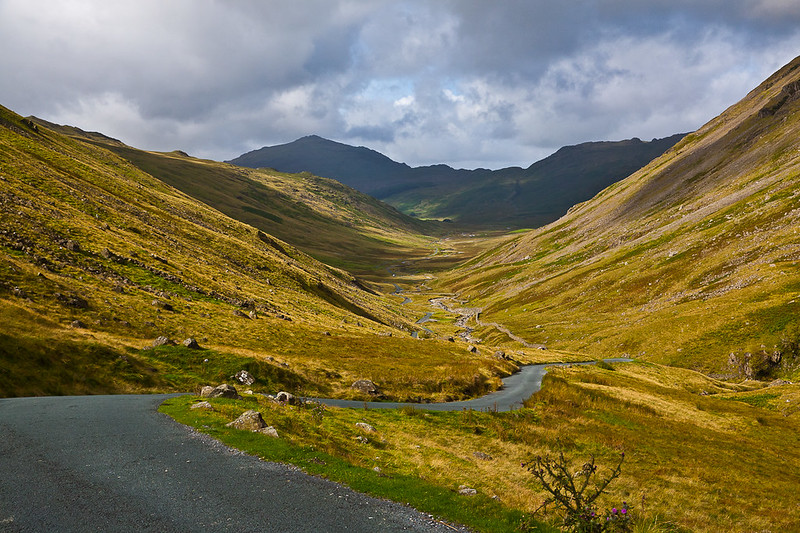

A cyclist whose brakes failed while she was descending the Hardknott Pass during the Fred Whitton Challenge in May this year will relive her ordeal this evening on the More4 TV show, Emergency Helicopter Medics (9pm).
Vivienne Sherry, from Preston, had ridden almost 100 miles of the event when she reached the Hardknott Pass – rated 10/10 for difficulty by author Simon Warren in his route guide on the Fred Whitton website, and followed by what he describes as a “terrifying descent.”
Recalling that climb, Ms Sherry said, “I remember it being so steep that I actually had to get off my bike and walk for some of it,” reports nwemail.co.uk.
But the 36-year-old realised that something was wrong as she speeded up on the descent towards Wrynose Bottom, and was shouting at people to get out of her way.
“I pressed my brakes, and nothing happened,” she explained. “I just wasn’t slowing down. I didn’t make the corner and ended up hitting a rock and coming off my bike, landing in a gulley.
“I was lying on the ground just looking up at the sky and I could hear my friend screaming. She told me not to move while she ran for help.”
A helicopter from the Great North Air Ambulance Service (GNAAS) was alerted, and Ms Sherry said: “I can remember the air ambulance coming for me – they were with me very quickly and they were great.”
She was taken to James Cook University Hospital in Middlesbrough and despite having extensive cuts and grazes did not sustain more serious injury.
“The worst thing was that I had took so much skin off all over my body,” she said. “My arms are still a bit of a mess from the accident, but you can’t have everything, and I feel really lucky.”
After being discharged from hospital, she went to stay with her mother and sister who provided support.
“I couldn’t even get dressed,” she said. “Four weeks later I managed to go back home once my bandages were off.
“When I had to get my bandages changed and cleaned it was just awful and so painful,” she added.
Ms Sherry was back on her bike three weeks after the crash, although she said that the pain was so intense she could only ride for one mile.
“I was in tears, but I tried my best to get back on,” she said. “It’s been a mental struggle as I worry that I might fall back off and wonder if it will happen again.
“It makes me nervous but hopefully it will settle down soon.”
One of the most popular sportives in the country and considered by many to be the toughest, with the route including some of the country’s most feared climbs, the Fred Whitton Challenge was first held in 1999.
It was named after Fred Whitton, racing secretary of the Lakes Road Club, who died from cancer at the age of 50 in 1998.
After the inaugural event in 1999 it has been held every year since, other than in 2001 when it was cancelled due to the foot-and-mouth epidemic.







45 thoughts on “Cyclist recalls moment her brakes failed on Hardknott Pass descent during Fred Whitton Challenge”
Scary…how the hell did her
Scary…how the hell did her brakes fail?? We need this info road.cc!!!
EddyBerckx wrote:
Just speculating but perhaps wearing out pads on earlier descents and so then running out of lever travel by this point in the ride?
How did the brakes fail?
How did the brakes fail?
I’m sure most people will emphasise with how it feels to go down a hill without brakes, but, this being a bike website, a few more technical details would be appreciated…
Two brakes on one hydraulic
Two brakes on one hydraulic system could fail at the same time, I guess, but two separately operated brakes failing at the same instant? I have trouble believing that. I’ve read about what a tough climb it is but <300m is not that big a descent. As EddyBerckx says, we need more info.
I’m not an expert on modern
I’m not an expert on modern hydraulic disc brakes, indeed I don’t know if the lady had those fitted, but on cars, when descending steep mountain passes, the brake fluid can get so hot it can boil, ruining the seals and introducing air into the fluid. Whenever I’ve driven, cycled, walked over Hardknott & Wrynose passes, the two aromas you always smell are the brakes on the descents, and clutch plates on the ascents. I’m sure the same can be said for cycle disc brakes as they are the same thing, albeit smaller. Also, when you pull discs brakes on for long periods, you can experience brake fade. Much better to apply short pulls on the lever continuously to regulate your speed.
Pure speculation here, but
Pure speculation here, but single piston mechanical discs can do this. If the fixed pad wears down (over a long hilly ride like the Fred, quite possible) so it no longer sticks out of the caliper there could be very little braking force.
I don’t think you’d need both
I don’t think you’d need both brakes to fail at once. If the front failed, for whatever reason that was (can we please get this information?), the back alone might well be unable to stop you without locking up and throwing you off.
Mechanical discs would be my
Mechanical discs would be my guess too. Happened to me in a much less scary situation, and it was still very unnerving, adjusted the pads manually and was ok for getting back home and ordering new ones.
Rim brakes in the picture
Rim brakes in the picture accompanying this story.
https://www.nwemail.co.uk/news/18085694.tv-show-explain-brake-failure-led-hardknott-crash/
Rich_cb wrote:
Info at last! Thanks.
Not so wild theory – she’d
Not so wild theory – she’d punctured earlier and fixed it, and forgot to close the quick release when she put the wheel back. I’ve done it myself.
vonhelmet wrote:
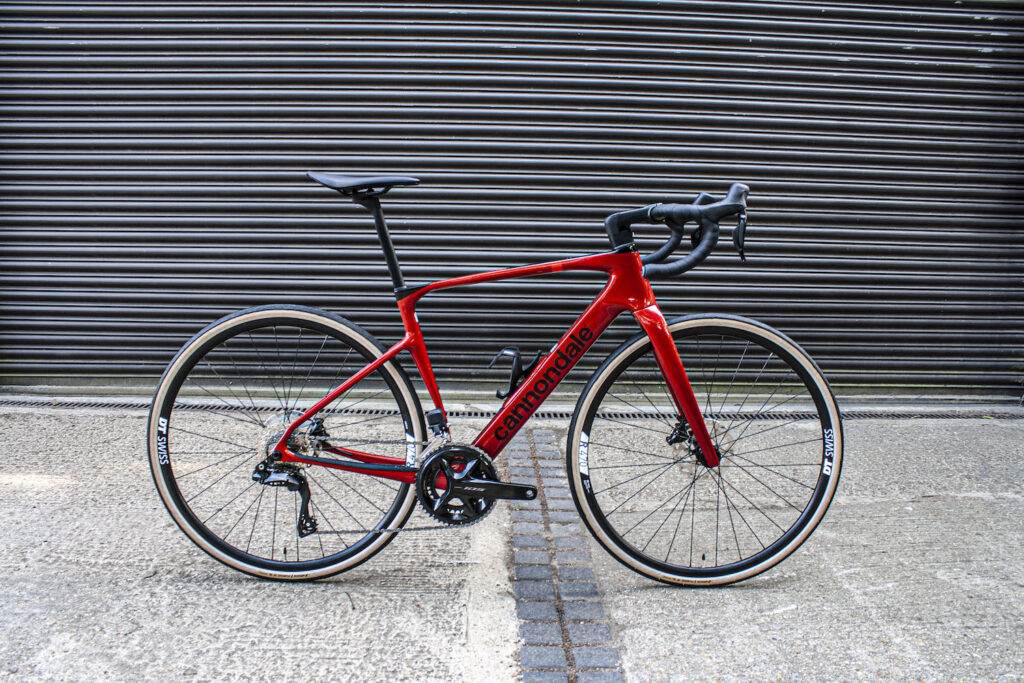
The programme showed a very brief picture of the bike (actual footage taken from the crash scene, not a reconstruction). It was a Cannondale road bike, caliper rim brakes. One side of the forks was broken mid way along it’s length but the front brake caliper was closed. Couldn’t see the rear brake in that short image of the bike, the shot was concentrating on the obviously broken front end.
Not closing the pads after
Not closing the pads after putting a wheel back is irrelevant on campag brakes. As far as I know that is a Shimano problem.
I watched the whole programme and am still none the wiser as to the alleged brake failure. Pity. At least we know it had nothing to do with discs melting, hydraulic fluid boiling, etc. If I can find the report on a braking experiment I’ll put the link on. It would give you an insight it what the cause might have been.
It’s not irrelevant on campag
It’s not irrelevant on campag brakes, it’s just that the quick release is at the lever rather than at the caliper. That was going to be my next question – whether they were campag calipers – but I’m guessing not as most cannondales I’ve seen are shimano equipped.
As an aside, my single speed has quick releases at both the levers and the calipers, so there’s a lot to remember there.
vonhelmet wrote:
When you release a Campag, all you do is increase the reach at the lever. It is a clever piece of design because there is no impact upon the ability of the caliper to grip the rim (the only exception being if you are unable to reach the lever in its released state). In other words, if you were to pull the lever to, say, 1 cm of the bar, the brake effect is the same whether the adjuster is released or not released.
Shimano road calipers are different in this regard.
I’ve only owned one Shimano-equipped (recent 105) road bike, buit I’m relatively sure that it releases via a cam near the caliper which effectively increases cable length (this is what the Campag system explicitely does not do) and so adjusts the clearance at the caliper. In other words, if you had released the brake adjuster to change a tyre and had subsequently forgotten to reset it, you have to pull the lever further to get your normal level of braking. Were your brakes to be poorly adjusted in the first place,and the lever is now allowed to come all the way to the bar, you might be in serious trouble.
Please correct me if I am wrong about the Shimano part. I know that am not wrong about the workings of recent Campag (call it 2010 Chorus onwards) caliper brakes.
Even if she’d had puncture
Even if she’d had puncture and failed to close the quick release, that’s only one brake, not both. I’m beginning to suspect that she’d braked a lot on the 100 miles approaching this hill, wearing down pads, and had not adjusted the brakes to compensate. Really soft pads will wear down quickly but decent pads last much longer.
burtthebike wrote:
Was the descent in question the first steep decent of the course?
caw35ride wrote:
No, far from it. If in fact it was Wrynose rather than Hardknott, then it’s the penultimate climb before the Blea Tarn Road. You have steep descents from Kirkstone Pass, Honister (a particularly tricky decsent that has claimed a few bones), and to a lesser extent Whinlatter, Newlands, Cold Fell that will take the toll on your pads. Having said that, on a decent day they are not something a decent pair of pads would struggle with.
The thing with Wrynose is it’s got narrow switchbacks at the top which mean you have to be on the brakes all the time, but then you get sections that are straight but very steep. I think there have been more air ambulance call outs to Wrynose and Honister than all the other passes put together.
caw35ride wrote:
No, It is one of the last. After Hardknott, which is in the region of 90 or so miles in, you descend into the valley then have to climb Wrynose pass before descending past the 3 Shires pub and getting on the Coniston road.
Ok, that’s true. You can
Ok, that’s true. You can still go all the way to the bars on campag brakes with the quick release open and it will have the same effect at the other end, while on shimano you’d bottom out on the bars before you made up for it.
Another wild guess, given the
Another wild guess, given the lack of actual information: It’s possible she had simply lost the strength in her hands after riding 100 miles – there’s even a name for this condition: Cyclist’s Palsy. It can feel like you’re squeezing the brakes hard, but you’re too weak to do so.
Cal C wrote:
I’m glad she’s ok!
the most likely explanation is that she was dragging her brakes until they overheated and no longer provided enough friction. They would still have been clamped, so not a total brake failure situation, but just increasingly ineffective as the descent progressed. An easy way to avoid this is to pump the brakes, which every cyclist should know about, or get hydraulic discs. Ive never heard of disc brakes failing in a downhill mtb race.
Blackthorne wrote:
Did you (and indeed many others here) not listen to what she said, she went to brake (long before terminal speed) and there was no braking, there was no fade, unless you’re calling her a liar of course?
And solving the problem with hydraulic discs, just lol, amazing then how millions of cyclists have gone down hills numerous times in the past on rim braked bikes and not had the unfortunate incident the lady in question did.
Either this is human error on her part, or an unfortunate unexplained mechanical as to why the brakes didn’t work, she was an experienced cyclist by all accounts, so one would presume she did a full bike check beforehand and knew that speeds on the descents would be high and likely need a lot of braking in places.
Terrifying! Glad she’s OK
Terrifying! Glad she’s OK
I’ve experienced cyclist’s palsy (called ‘arm pump’ in downhill racing circles) on my DH bike, I even raced* a season on rigid forks which was a painful experiment in just how bad arm pump can get, you’re pulling the lever but your hand is so numb you have no idea how hard you’re pulling!
I’ve had hydraulics fade pretty badly through overheating, also scary, and you need to learn how to brake on long steep downhills to prevent it.
Just adding to the wild speculation, but as a lady rider, maybe her levers had been adjusted closer to the bars to account for smaller hands, so there would have been less room for pad wear before the dreaded lever on bars feeling?
*coming last at every event by a big margin might be stretching the definition of ‘racing’…
IanEdward wrote:
Arm pump can affect riders of all two wheel vehicles..well known with motocross and Moto GP.
https://www.cycleworld.com/2014/05/13/motogp-racers-dani-pedrosa-and-stefan-bradl-surgery-for-arm-pump-injury/
I’m guessing it wasn’t total
I’m guessing it wasn’t total brake failure at all but a combination of factors very similar to the tragic death a couple of years ago of a rider on Winnats Pass.
https://www.cyclingweekly.com/news/latest-news/my-brakes-have-gone-cyclist-died-after-crashing-into-dry-stone-wall-on-steep-descent-inquest-hears-359322
Fatigue, relative inexperience, technical and demanding terrain (it’s an extremely bumpy descent and easy for the speed to run away with you), possibly arm/hand pump, maybe hot/fading brakes, maybe part-worn pads.
The programme indicated it was Wrynose Pass, not Hardknott and certainly the footage seemed to back that up. Wrynose, to my mind, is a worse descent than Hardknott, it’s got a couple of open straights where the speed just builds and very quickly gets uncontrollable.
A friend of mine got helicoptered off there a few years ago on the FW. And a guy I know locally to me had exactly the same at the bottom of Honister, just speed running away with him.
When you reach that phase on a ride it’ll feel like the brakes just aren’t working and they’ll take a couple of seconds to properly kick in during which the bike is under incredible stress from the braking forces, the impact forces from the road and usually the sheer terror of the rider on board stiffening up. Only takes a small stone or bend in the road to send you flying. Saw it once on an Etape du Tour as well, a rider hurtled past me, had no way of controlling his speed and just went flying over the edge.
Glad to see that the rider was OK and made a full recovery. Hats off to the air ambulance and mountain rescue crews as well.
Mate of mine had his brakes
Mate of mine had his brakes fail on his MTB once.
He’d just had it serviced at his LBS and they’d managed to put the brake blocks back in the wrong way – the cut out V’s in the block were pointig the wrong way. Hilarious to watch mind – he had to bail into a hedge.
Glad the woman’s back on the bike again now.
Also a possibility that a
Also a possibility that a cable snapped or came loose from the securing bolt at the caliper. The latter happened to a friend who had to bail out into a hedge.
However, part of me suspects rider error, especially if she wasn’t a great descender to begin with.
When I led rides with beginners, I often stopped the group before descents to do a quick safety briefing. First question was asking them what to do before every descent. Answer: a brake check.
I’ve been guilty before of not putting tabs back down and not realising until the first proper descent of the day. Also discovered on other bikes loose QRS, pads rubbing tyres, no pads at all…
Ran out of talent…
Ran out of talent…
alansmurphy wrote:
Nice spirit there – proud of yourself?
My rim brakes were making a
My rim brakes were making a hell of a racket down those hills. The descent comes 98 miles into the 112 mile sportive and there are loads of steep descents before. I did not walk down any of them though.
Viv is a mate of mine, I’ve
Viv is a mate of mine, I’ve ridden hundreds of miles with her in Lancashire and Mallorca. She’s a keen cyclist and triathlete of some experience. She reckoned the most likely theory was fade due to overheating the brakes… ‘just one of those things’ was her way of looking at it. The good news is she’s made a full physical recovery, steep descents might be off the plan for a while though!
I’ve only descended Hardknott and Wrynose the once during Lakeland Loop this year, and it took all my technical ability and experience to get down in a safe and controlled manner… 30yrs experience cycling. It still put the wind up me though!
Had a couple of moments with
Had a couple of moments with rim brakes but never with disc. One discs work they tend to work until the pads wear out.
Rick_Rude wrote:
Thats not strictly true. There are other issues and failures that can affect hydraulic brakes, even though on the hole they are very reliable if installed and serviced correctly.
I got brake fade on a front disc descending Winnat’s Pass. I put it down to a tiny amount of air remaining in the system after bleeding. The heat build up from hard braking (I was stuck behind a line of three cars) caused the caliper to heat up and the trapped air to expand. As soon as they cooled they felt fine again. Re-bled when I got home.
Ive also had another failure which was due to the rear disc hose routing through the frame. Where it entered near the head tube, just inside it had been rubbing every time the bars were steered left/ right. Descending the rear brake started to get spongy and then failed completely as a hole had appeared in the hose where it had rubbed and all the fluid squirted out.
Sorted with a new hose, some protection applied in the area that had rubbed and some gaffer tape to stick the hose to the inside of the frame at the same place.
Depending on pad material, these can wear down incredibly fast in certain conditions. There’s not a lot of material on them to start with so they require careful, regular inspection to ensure they are not going to let you down. I’ve had resin pads (Which came with the calipers) that have worn away on my winter bike within a month of being fitted when used in crappy winter weather.
So, hydraulic disc failures are not impossible. On the whole though, I prefer them to rim brakes, especially on downhills.
PP
I was doing a sportive in
I was doing a sportive in kent 2 years back and speeding down toys hill when I got wheel wobble, speed wobble call it what you will, 50kph when I braked it was even more violent, the knees on the top tube no effect, it was just totally frightening, I basically aimed for a load of mud on a layby on the opposite side of the road and came to a muddy stop, but if a car had been coming up who knows, my sympathies for the rider and there but the grace of god, etc, the bike was newish, the only thing I had changed before the ride was the saddle I had moved it back slightly, changed it back and thankfully never happened again, but scared the bejesus out of me.
It sounds like ‘chopper’s
It sounds like ‘chopper’s fade’ to me. On a long technical descent, the arms of the riders can suffer ‘pump fatigue’ because ( particularly the muscles in the forearms) get worked unusually hard, if the rider’s technique is sub optimal, for that sort of technical riding. When this happens, the rider really believes they are pulling the brakes with sufficient force, but what they are actually feeling, is the pumped forearm muscles increased resistance. In reality, there’s a much reduced force making it to the actual brakes. It tends to be more prevalent during ‘Sportive’ type rides, hence the term “choppers fade” It’s much more of a problem with rim brakes than discs, as disc brakes usually require less effort, for the same braking effect, so the arm pump takes longer to become an issue, and even when it does, the disc brakes tend to still operate with relatively more force.
One of the many advantages of
One of the many advantages of disc braking, 1 finger effort with the much derided (by those who have never used them) increase in modulation.
Mungecrundle wrote:
I and many others have been one finger rim braking for years, you must either have been doing it wrong or just have an inadequate set up?
Modulation, hilarious, AKA being too lazy to learn how to brake properly and/or set your brakes up properly, just want to grab a handful of lever and hope that the tyres grip doesn’t give up on you, typical newbie comments quite honestly.
Disc brakes are very likely to help lazy inexperienced riders, but that means less thinking about speed/hazards which equals same or worse number of incidents. Choose what you like but disc brakes do NOT increase cyclists safety.
Actually a lot of useful info
Actually a lot of useful info in this thread.
Personally I’ve experienced 2 of the noted issues. A ‘speed wobble’ in Spain on a hire bike(£1k, newish & well serviced). The frightening feeling is that it might get worse at any moment. My m/c experience told me to use only the rear brake; I was surprised the wobble continued down to practically walking speed. Strange thing is I had no issue on a prior descent, and nothing was loose. It’s clearly not what happened in Viv’s case, but may have been linked to another thread issue. For me it wasn’t exactly arm pump, rather my forearms had been going numb from road buzz over an extended period. I may have been gripping the bars harder than I realised; whatever later in the ride I was starting to have trouble braking and was constantly shaking out the arms and taking a few breaks.
I can see how that might end up in one of the sad cases highlighted.
I know the CTC (as I still call them) make quite a lot of disc overheating (all that luggage…) As I only have disc on MBs I can’t comment.
Utimately Sportifive organsisers need to stress awarness of the dangers, particularly as the events almost tempt people to ride beyond their training window. Watching the pros descend certainly underlines how potentially dangerous it can be if the speed is allowed to build. At least Motogp riders have protective gear and run offs…. I know at least one event has the main descent excluded from timing, and that makes total sense.
I’ve been able to 1-finger
I’ve been able to 1-finger brake with my v-brakes since the mid nineties so I wonder how young and inexperienced Mungegrundle must be.
I’ve thrashed down plenty of big mountains with rim brakes and never felt I was lacking stopping power or modulation.
Can someone explain what is
Can someone explain what is meant by “modulation” and “one finger braking”, thanks.
brooksby wrote:
One finger braking means being able to brake properly with just one finger on the lever, rather than grabbing a fistful of it.
Modulation means fine control of the amount of braking force. Usually used to disparage lesser brakes that provide all or nothing with little in between.
vonhelmet wrote:
Can someone explain what is meant by “modulation” and “one finger braking”, thanks.
— vonhelmet One finger braking means being able to brake properly with just one finger on the lever, rather than grabbing a fistful of it. Modulation means fine control of the amount of braking force. Usually used to disparage lesser brakes that provide all or nothing with little in between.— brooksby
Thank you
Vivienne. We should start a
.
Mark Mountford wrote:
Worst Tinder bio ever.