


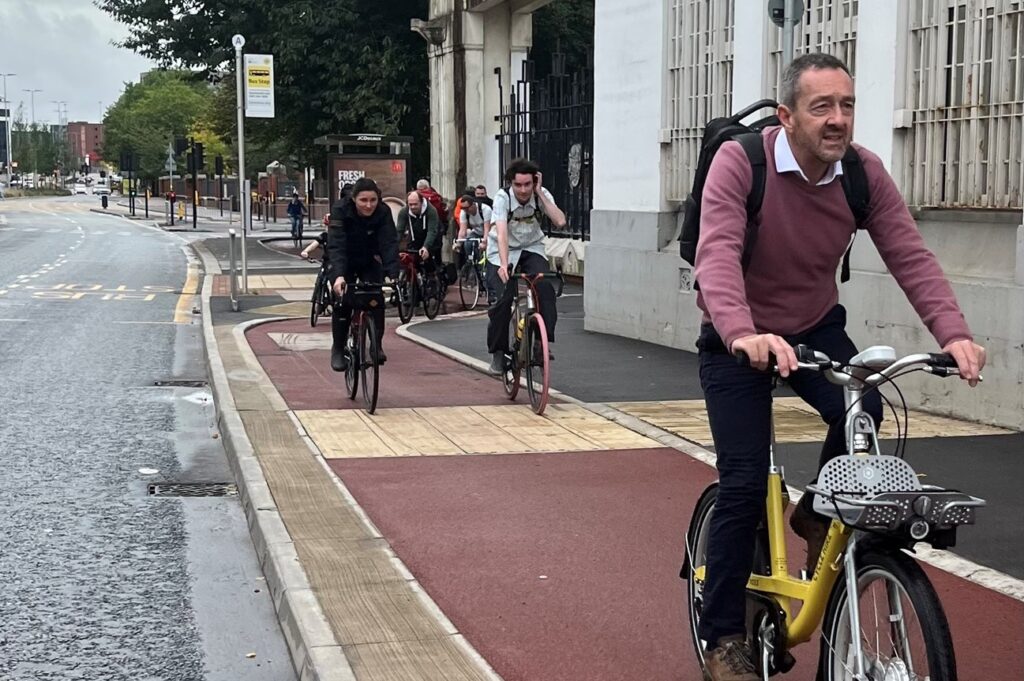

Chris Boardman wants to overcome a “very consistent, non-evidence based, negative narrative” around cycling that has been perpetuated by sections of the media, the Active Travel England chief arguing that public health gains are being stunted by cycling’s “politically noisy” status.
Speaking to The Guardian, Boardman explained once again how active travel and cycling can be integrated as part of the transport network in the UK to tackle ill-health in a very accessible way.
However, while cycling’s positive health implications are obvious to him, media coverage from some newspapers, TV and radio shows, and many opinion columns still prefer to bash cycling and the projects government and local authorities are implementing to get more people making journeys on foot or by bike. It’s all “very politically noisy”, Boardman admits.
“At the moment we have a very consistent, non-evidence-based, negative narrative to stop any change. It is stopping people wanting to put their heads up and do difficult things,” he said.
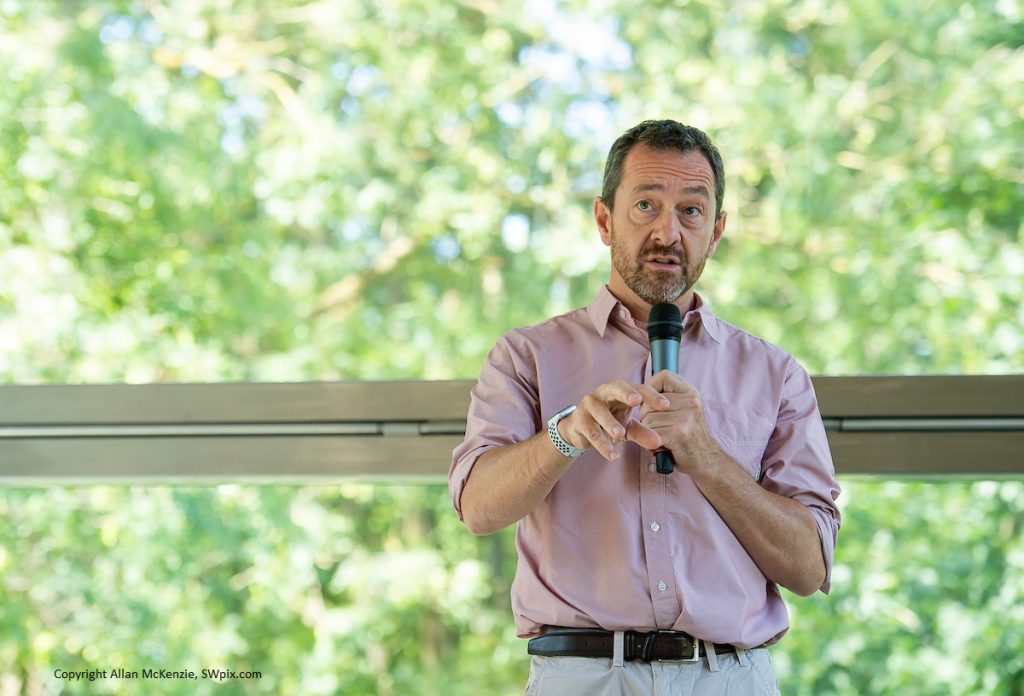
“It needs people with courage to stand up and say: ‘This is not in the public interest. I want my kids to be able to get to school under their own steam’. Just 211 miles from here [in the Netherlands], 66 per cent of kids do get around under their own steam, and our children are being denied that.”
One such factually incorrect anti-cycling piece that Boardman stood up against was the Telegraph newspaper’s infamous front page headline claiming that London cyclists are hitting “52mph in a 20mph zone” in search of Strava KOMs.
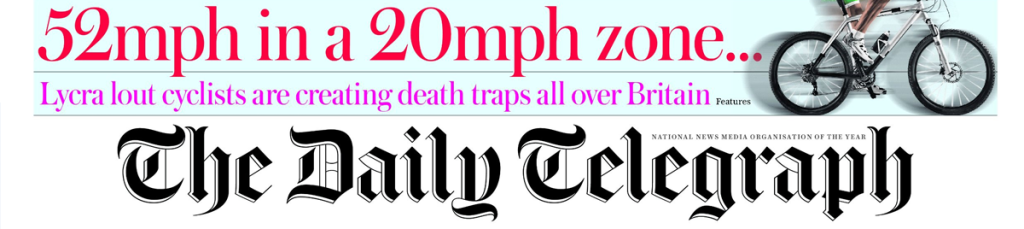
The piece, which was ironically co-authored by a former BBC fact-checker, cited erroneous GPS data from the ride-sharing app as fact and was widely ridiculed by cyclists. The Telegraph was also found to be in breach of the press regulator IPSO’s Editors’ Code, however many were frustrated the newspaper was allowed to make an acknowledgement of its errors in its “Corrections and Clarifications column” and not on the front page where the story originally appeared.
At the time, Boardman commented: “I don’t normally get involved in calling out headlines but it’s just getting bonkers. If this was directed at a gender, race or religion it would be rightly called out as the hate speech it is. Mums, dads, sons and daughters being labelled as killers. It’s just got to stop.”
> 20 of the most hysterical Daily Mail anti-cycling headlines
Despite Boardman’s obvious credentials for also championing sport as a vessel for boosting the nation’s health, it is active travel that he believes is the biggest opportunity for progress.
“From a health point of view, active travel is how you reach a nation – you change the way people move around every day. That’s the only way you’re going to really help,” he said.
“If your first step is a bit shit, it leads to the car door, and then it doesn’t matter what you do. Active travel is the foundation of a thriving public transport network, even if it’s just walking to the bus stop.”

The Active Travel Commissioner noted early signs suggest the new Labour government’s approach is moving in the right direction and the “right conversations are happening”, but “it hasn’t happened yet”.
“Yes, it needs money, but it needs consistency more than anything. After the period we’ve just had of massive change in people and policies, it’s harder than ever to get people to go, ‘OK, this is here to stay’.”
For active travel and cycling, the noises from Labour have been more positive than the previous government’s pro-motorist identity.
> Labour government to invest “unprecedented levels of funding” in cycling
In October, Cycling UK lauded Chancellor Rachel Reeves for recouping an additional £100m of funding for cycling and walking infrastructure in her first Budget. However, some questioned if the funding went far enough and noted that fuel duty had been frozen again.
The first months of Labour’s transport policy was disrupted by Louise Haigh resigning from her role as Transport Secretary over a decade-old phone fraud offence. Haigh had been outspoken in her desire to back active travel, last month hinting at long-term funding and a desire to end “perverse half cycle lanes” that don’t link to other safe routes and then “chuck” users “out onto a dual carriageway”.
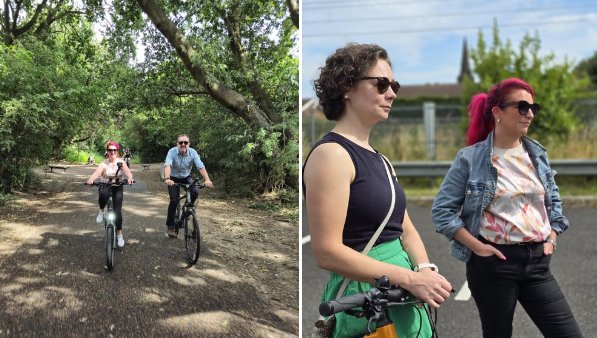
London’s former transport deputy mayor Heidi Alexander replaced Haigh as the Transport Secretary and has been backed to put cycling “front and centre”. She has been quoted in the past urging people to “please give it [cycling] a go” even if “lots of people think cycling is not for them”.


















22 thoughts on ““Very politically noisy”: Chris Boardman calls out anti-cycling media coverage, believes “very consistent, non-evidence-based, negative narrative” is slowing progress”
“….non-evidence based…”
“….non-evidence based…” Just too polite to say fake news.
eburtthebike wrote:
There’s a significant difference – the are both propogated by the same idiots, in the same manner, however their methods of creation are very different.
Fake news is created by someone who knows the truth and chooses to tell a totally different story.
“Non-evidence based narrative” is created by an idiot who is too stupid to understand that their own idiotic rantings aren’t the truth.
No. It’s not using facts and
No. It’s not using facts and instead making things up to suit your narrative.
Making people angry and
Making people angry and giving them somebody to blame sells newspapers it seems. I’m not sure you can make an appeal to their better side.
Newspapers! Fake news!
Newspapers? Fake news! “Drives clicks / online visits for the advertisers” more like?
Tactically, yes, all about
Tactically, yes, all about clicks.
Strategically the Murdoch empire looks out for Oligarchs and right wing agendas. Devaluation of the democratic process to keep 90Mn voters at home is a victory for their candidate..
The recent US elections have
The recent US elections have been an exercise in Othering and Division that enabled a convicted fraudster and proven rapist with six bankruptcies to win, such is the appeal of hatred and inhumanity in that place. Now that candidate was elected and even before inauguration he is rowing back from the extravagant lies that he told the poorly educated he would deliver. For example, the price of groceries is now said to be to complicated to reduce so corporations are free to continue gouging consumers, no issue. Suddenly he has discovered that the price of fuel is determined by big oil and world markets, not the incumbent US President, quite different to what he previously said.
None of that would have been possible without the mainstream media collusion in his lies, and their sanewashing of his stream of “consciousness”. Faux News and various ruzzian funded influencers are very much responsible for a stream of fact free delusion. Conspiracy theories and alternative facts (lies) persuade with repetition as J.Goebels demonstrated.
They have four years to enjoy the F About and Find Out (FAFO) meme…
lonpfrb wrote:
I defer to your knowledge, but not a few US analysts say “it’s the economy, stupid”. Or with more detail – despite things being good over there, *relative* to recently people may be *feeling* poorer. And be concerned over that other great motivator of more “conservative” voting, “security”.
Not to say the trollfulness and manipulation was not great – it clearly was. And people voted for lizards so the other lizards didn’t get in, but that’s not novel.
The US media is responsible
The US media is responsible for confirmation bias (telling people what they want to hear) because it suits their owners, just as the Daily Fail regularly goes for the Anti-Cycle Bingo card in the UK.
So freedom of speech is neither unqualified (defamation etc.) nor should it be when the journalistic standards are so low on factuality and bias.
Ground News is an excellent platform to assess and understand MSM.
lonpfrb wrote:
Most media has confirmation bias – they need it to keep their revenue stream open.
“Very politically noisy” is a
“Very politically noisy” is a terribly polite way of putting it…
LBC doing a phone in about
LBC doing a phone in about this at 2pm 0345 606 0973
I’ve never listened to LBC,
I’ve never listened to LBC, but isn’t it run by and for a load of right-wing anti-cyclist nutters? Presumably, those who phone in will be off-the-scale for barmyness
wtjs wrote:
Some are, but most aren’t. Shelagh Fogarty who is on at 2pm is pretty objective, and there’s James O’Brien, who is anything but right wing.
eburtthebike wrote:
How did the phone-in go?
I’ve just listened on catch
I’ve just listened on catch up – the presenter was pretty well balanced, TBH. There were several pro-cycling callers, although a few of those were still perpetuating the myth that cycling is really dangerous. One sensible caller who just wanted everybody to just calm down.
The last caller was a driver who was “also a cyclist, at times” (Spidey senses tingled at that point) who went off on a massive game of cyclist bingo, which boiled down to “cyclists shouldn’t be allowed on the road because I can’t handle driving safely in their vicinity”
Unfortunately, those few vocal folks are really blocking progress – in real terms, and not in a “bloody cyclists” way.
Okay, thanks Bob.
The media isn’t allowed to
The media isn’t allowed to attack people because of their skin colour or sex any more, so cyclists are a useful out group for them to stir up hatred and clicks. Clearly they can’t report the overwhelming benefits of cycling at a global, local and individual level, because that would be fair and objective.
Also they adore the dough
Also they adore the dough from the ads bought by oil and car companies who, being expert pushers of the drug of sedentariness, don’t like the competition from active and sustainable transport.
Both this and previous
Both this and previous government has totally failed to do joined up government:
Department of Health
Department of Transport
Department of Culture, Media and Sport
Active Travel is rationally in the national interest (Health, Transport) yet restricted by unsafe ignorant behaviour of road users (Culture, Media and Sport).
The fix is simple: Horse and Bicycle riding to be Protected Characteristics, so benefit from existing equality Media regulation and IPSO Editors Code of Conduct (highest standards of journalism) so that bad attitude and behaviour will be eroded.
However much the dinosaurs moan, this is how to deliver change.
The same goes for racists and
The same goes for racists and homophobes. They know they can’t get away with being racist or homophobic any more. So they pick on cyclists instead. Most (but not all) racists and homophobes are right wing types, so picking on left wing, Guardian reading, Tofu eating, woke cyclists is one way they can release their inner hate.
Dan, Dan, Dan: “Ironically co
Dan, Dan, Dan: “Ironically co-authored by a former BBC fact-checker” would suggest that BBC fact-checking is usually stellar. One could argue, especially when it comes to cycling coverage, BBC fact-checking falls short of that standard. Just sayin’.