


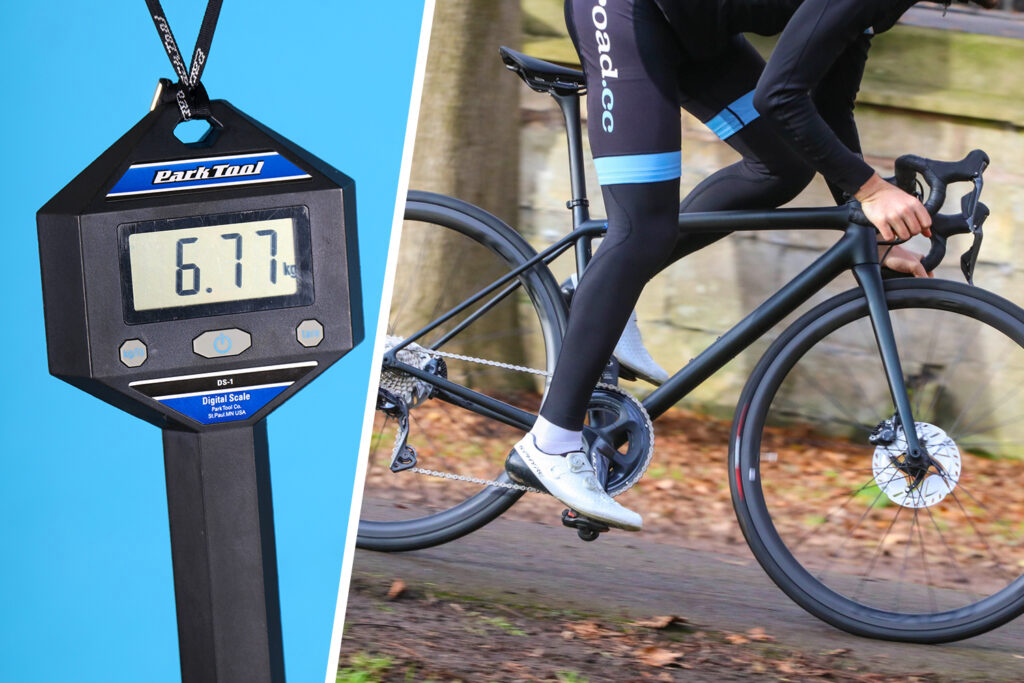

For the last 26 years, professional race bikes have been restricted to a minimum weight of 6.8kg (14.99lb), a rule implemented by the UCI largely to ensure the safety and robustness of bikes used at the top level of professional racing. Bike tech has come on a lot since then, and there are now plenty of examples of lighter bikes that are being used safely. Does this mean it’s finally time to reduce the limit, and what benefits could come from scrapping the rule altogether?
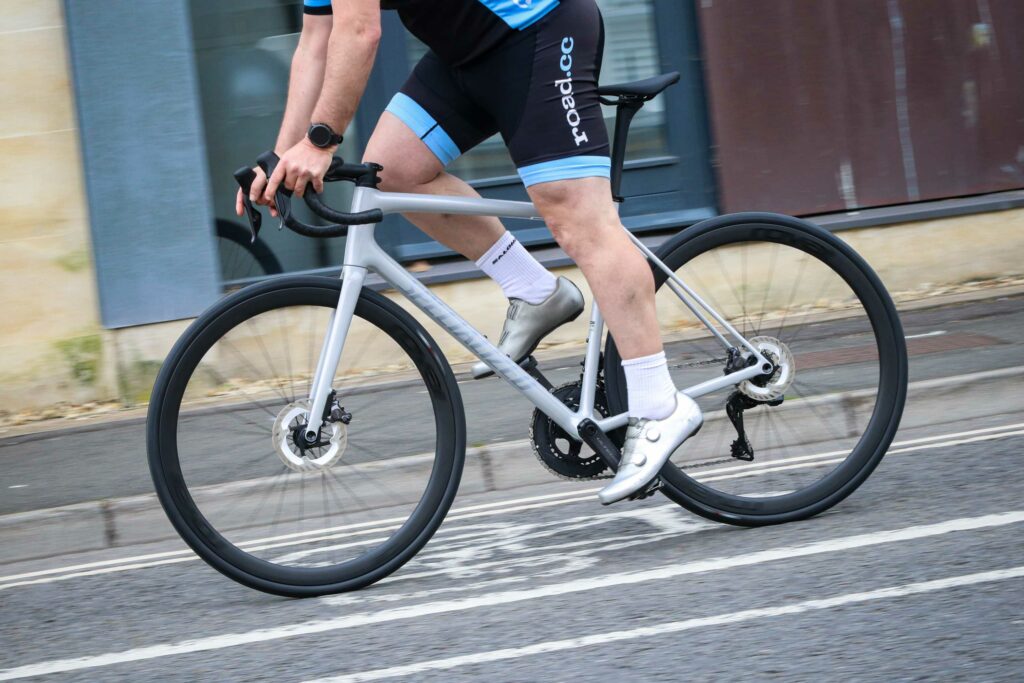
What is the UCI’s minimum bike weight limit?
The Union Cycliste Internationale (UCI), the world governing body for cycle sport, enforces a set of technical regulations covering all UCI-sanctioned events, and one of those regulations is the minimum weight for bikes. Article 1.3.019 of the UCI’s technical regulations specifies: “The weight of the bicycle cannot be less than 6.8 kilograms”.
This weight excludes any accessories that can be removed during an event, such as water bottles and bike computers. However, bottle cages and mounting systems are considered part of the bike, as they remain attached during the event.

> How to make your bike lighter
According to the UCI, “The rules governing the use of equipment aim to ensure both the safety of riders and the fairness of competition while at the same time making the most of the advantages that technological evolution can bring to cycling”.
Why does the UCI have a minimum weight limit?
This minimum weight limit was introduced by the UCI in 2000 to ensure the safety of cycling equipment during a period of rapid technological advancement in the sport. At the time, carbon fibre was a bit more of an unknown quantity when it came to bikes, and the concern was that pushing the boundaries of weight could lead to more frequent equipment failures. The UCI also wanted to keep things fair, ensuring a reasonably level playing field where no rider could have a huge advantage over another due to the bike they were riding.
A few years ago, riders in the professional peloton resorted to sticking weights on their frames to bring the bikes up to the UCI weight limit. While the adoption of disc brakes, electronic groupsets and tubeless set-ups has reduced the need for that, there are still some very light road bikes available on the market.
The lightweight road bike comeback
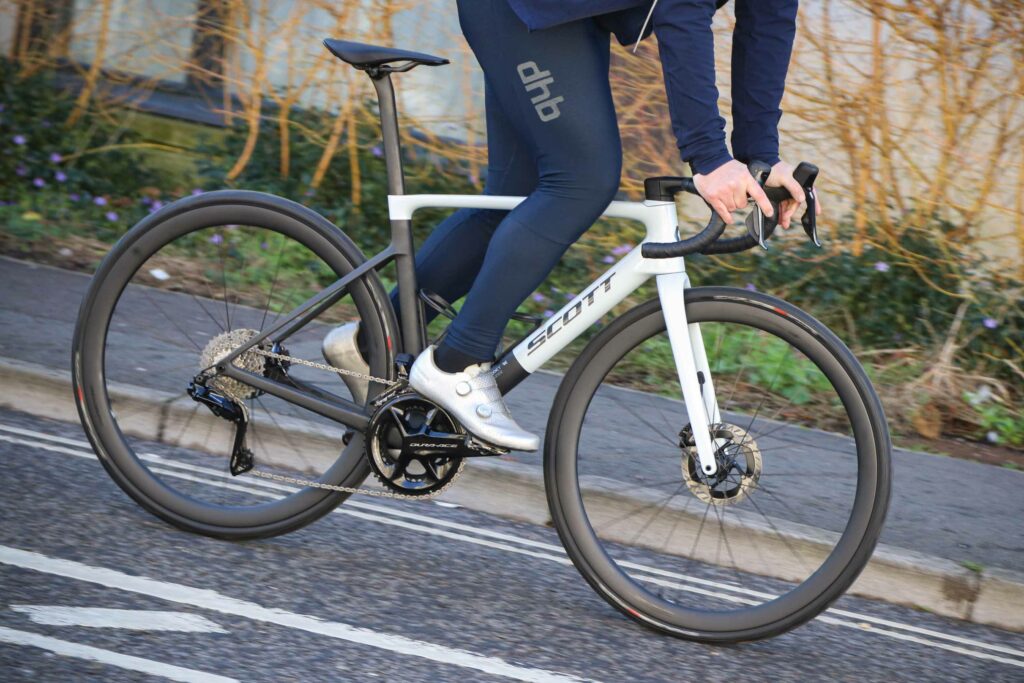
Around the start of the 2020s, many road bike manufacturers moved towards a ‘one bike to do it all’ approach (some, like Pinarello, had never moved away from this strategy in the first place). However, some brands still split their range, offering a lightweight race bike and an aero race bike.
For the 2025 product year, Scott released the latest version of its top-end lightweight road bike, the Addict RC, with complete builds weighing as little as 5.9kg. NSN Cycling Team riders use the Addict RC for mountain stages where lower weight is an important consideration, and the Foil RC for flatter, faster and sprint-oriented stages where aerodynamic performance is the priority.
Specialized has the Aethos, which was released in 2020 and updated in 2025. It is one of the lightest bikes we’ve ever reviewed at road.cc, the top-level Aethos 2 frame (using Specialized’s FACT 12r carbon) coming with a claimed frame weight of 595g. The Aethos is a bike specifically designed for riding outside of the pro ranks, as Specialized also offers the S-Works Tarmac SL9, which can be built to meet the UCI’s 6.8kg weight limit, with a claimed frame weight of 687g. The Aethos is not usually ridden in the pro peloton (although it has made a Tour de France appearance), and complete factory builds can weigh just under 6kg.
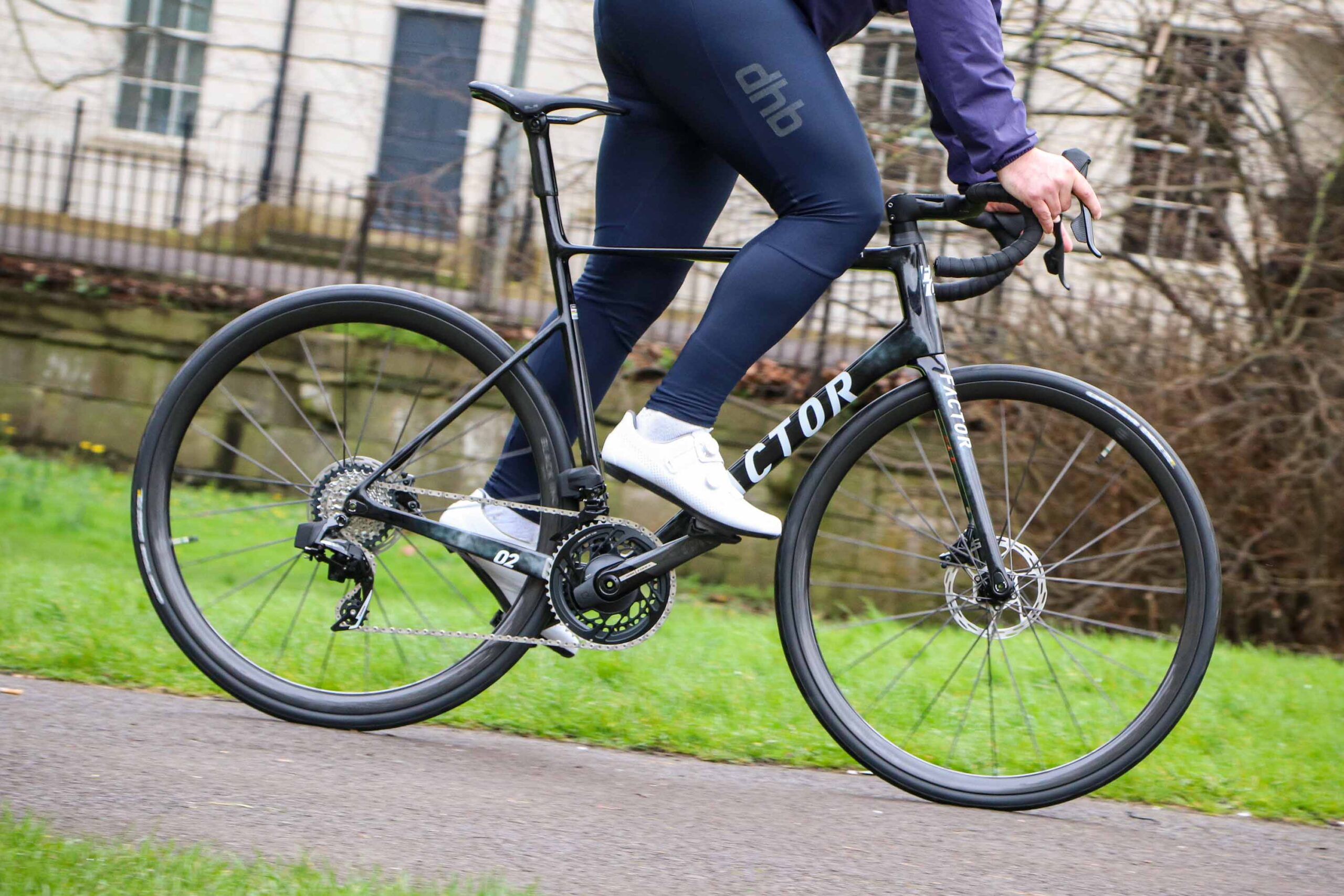
Factor has the O2 VAM road bike, which it calls “the world’s fastest climbing bike”, coming with a frame that weighs a claimed 730g including its integrated seat mast. Complete bikes weigh as little as 6.4kg. Factor is no longer represented in the men’s WorldTour, although Human Powered Health Cycling races in the Women’s WorldTour using Factor O2 VAM bikes built up to hit the UCI’s minimum weight limit.

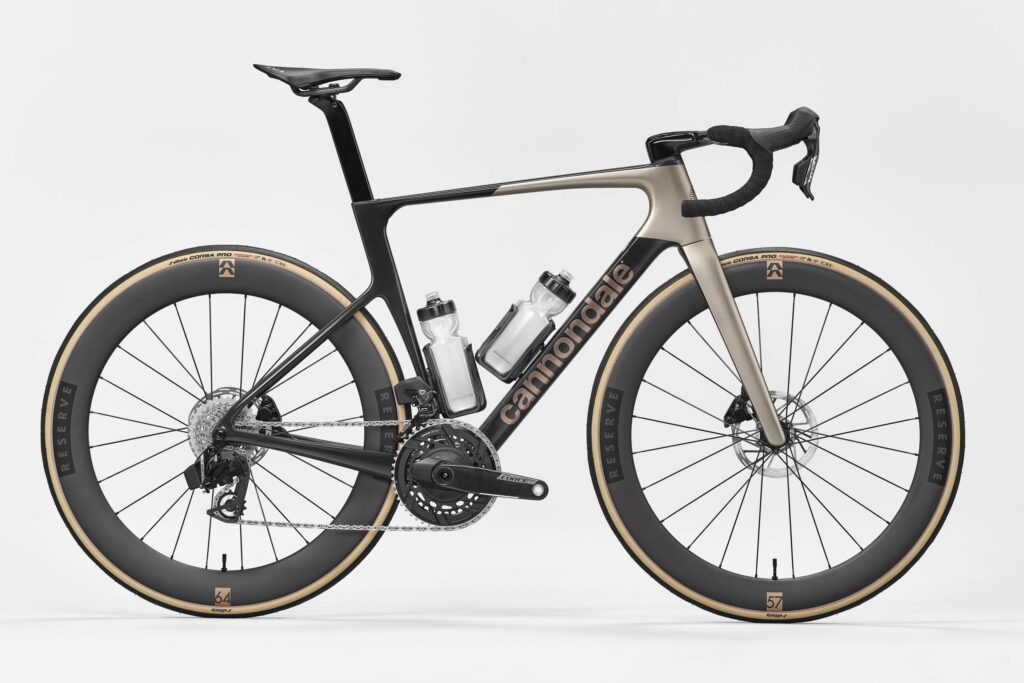
There are plenty more examples. Cervélo updated its R5 road bike last year with claims that the lightest version hit the scales at just 5.97kg, for example, and Cannondale introduced the fifth-generation SuperSix Evo earlier this year with complete bikes starting at 6.4kg.
The list goes on. The point we’re making is that it’s not especially difficult for a top manufacturer to make a sub-6.8kg complete race bike these days; it’s just that, with current race regulations, there’s little incentive to do that.
Why use a lightweight road bike?
Yes, the pros could just use full-on aero bikes for all stages of a Grand Tour since they’re now getting close to the 6.8kg limit anyway. However, slightly lighter bikes can sometimes be faster on climbs, and tend to be more compliant than aero-specific road bikes.
Teams like Soudal Quick-Step and Red Bull-BORA-hansgrohe currently use the Specialized S-Works Tarmac SL9; there’s no incentive for them to swap to the Aethos because of the 6.8kg minimum weight limit. There’s no point having a lighter bike if you then need to add weights or heavier components to tip over the threshold. However, if that 6.8kg requirement weren’t there, maybe they’d be tempted to switch to the lighter bike for mountainous stages, particularly where there’s a summit finish.
Specialized says that the S-Works Aethos 2 frameset weighs 1.24kg while the S-Works Tarmac SL9 frameset is 1.39kg. The difference might be marginal for recreational riders, but it could be a critical factor for professional cyclists. Okay, we all know that aerodynamic efficiency is more important than a low weight in most circumstances, but the Aethos is likely to be slightly faster on steep climbs – and that’s particularly important if there’s no descent afterwards where a more aero bike could make up time.
When we recently spoke to Filippo Galli, the lead engineer at Colnago, he told us that riders prefer aero these days on climbs and would go for a 6.8kg aero bike over a 6.5kg climbing bike. Racing is getting faster than ever so aerodynamics are a big consideration in the mountains. Pogačar, for example, almost exclusively uses the Colnago’s Y1Rs, the Italian brand’s flagship aero model, over the lighter V5Rs.
“Last year, he made a decision on which bike he’d ride day by day,” Boštjan Kavčnik, Pogačar’s long-time mechanic, told us. “But now, in the end, he wants the aero bike in all stages, because he tells me: ‘We go fast on the climb, so we need a fast bike on the climb’. And sometimes, other teams put pressure on the downhills, so the bike needs to go fast on the downhill.”
But would riders be tempted to switch bikes for a summit finish, say, if the difference in weight was greater? It’s perfectly possible to build bikes that are way under the 6.8kg limit. Each year, the British National Hill Climb Championship, organised by Cycling Time Trials (CTT) and operating outside the UCI’s regulations, showcases some of the lightest road bikes, many weighing 6kg or less. For instance, Harry MacFarlane, winner of last year’s men’s event, raced with a set-up that tipped the scales at under 4.8kg.
Granted, you probably wouldn’t want to ride far on that bike – MacFarlane’s winning time was just a couple of minutes – but sub-5kg is possible if that’s your number one priority.
Is the 6.8kg rule limiting the progression of lightweight bikes?
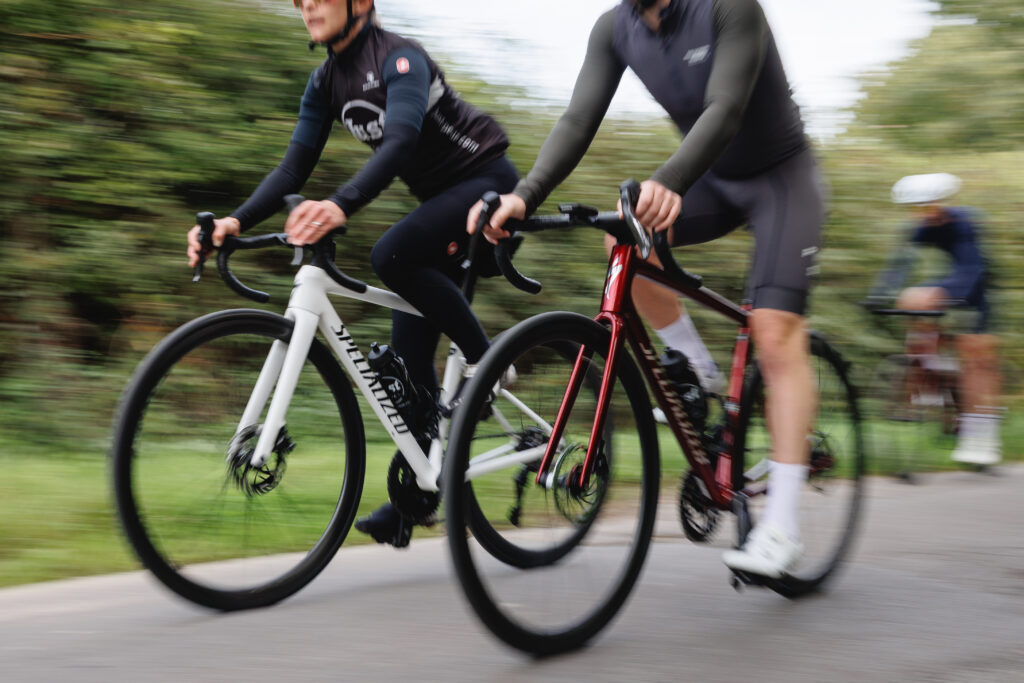
Rightly or wrongly, the development of road bikes is often heavily influenced by professional racing, and what those riders demand. Yet today you can walk into any number of reputable bike shops and buy a top-end race bike that weighs less than 6.8kg – or even build one yourself – making it non-compliant with UCI regulations. That means we have a slightly bizarre situation where cycling fans like you and me, if we’re willing to spend the money, can ride around on bikes lighter than the one Tadej Pogačar used to win the Tour de France.
In fact, many of the top aero road bikes, such as the Specialized S-Works Tarmac SL9 and Giant Propel Advanced SL, now come in at the 6.8kg mark – or slightly below it – in their top-spec race-ready builds.
View this post on Instagram
Panda Podium even managed to get a Specialized S-Works Tarmac SL9 down to 4.98kg when built up with non-standard components.
> Have ‘climbing bikes’ had their day?
With aero-specific bikes now reaching the UCI’s minimum weight limit – a rule originally imposed to ensure safety – and consumers able to buy a bike off the shelf that weighs less than those used by the pros, altering or even scrapping the 6.8kg rule altogether could bring several benefits.

It would open up opportunities for teams to use multiple different bikes of their choosing in races depending on the course profile for the day. It could also lead to a greater distinction between aero and lightweight bikes, allowing manufacturers to focus on optimising each category for its intended purpose without being restricted by a weight threshold.
The case for finally reducing the 6.8kg weight limit (and why it won’t be happening any time soon)
While the rule may have made sense in the year 2000, technology has advanced significantly since. Many manufacturers have demonstrated that they can make a structurally sound bike weighing under 6kg.
Back in 2015, we covered a piece on the UCI weight limit and its potential removal. At the time, the UCI’s technical manager, Mark Barfield, said in an interview with CyclingTips that the existing minimum weight rule was under review, potentially altering it to reflect the advances in road bike technology.
Barfield explained, “It is going to change, it won’t happen overnight and it won’t happen unless we take the industry with us.”
It certainly didn’t happen overnight, as we’re still waiting over a decade later. What those comments did suggest was that senior figures at the UCI back then recognised the rule was potentially outdated.
Barfield added: “We know at the UCI that it’s a rule that best represents the past. There’s a desire to change this. Firstly, it’s a relic of the past. Secondly, it doesn’t make any sense and doesn’t do what it was set out to achieve.”
So, could the UCI finally be ready to lower the weight limit, or even scrap it altogether?

Well, it seems that even though bike tech has moved with the times and taken a leap forward, it could be argued that the UCI has steadily retreated when it comes to the 6.8kg weight limit.
The UCI supplied this statement last year: “Under UCI Regulation Article 1.3.019, a minimum weight limit of 6.8 kg is enforced for competition bicycles, including on-board cameras and GPS trackers, to ensure rider safety by preventing the use of structurally compromised, overly lightweight bicycles. Currently, there are no plans to revise this limit.
“The UCI diligently monitors industry developments and maintains ongoing dialogue with leading bicycle manufacturers to ensure that advancements in materials and design remain in compliance with UCI Regulations. We are committed to continuously reviewing and adjusting our regulations as necessary to uphold rider safety and ensure fair competition.”
It looks like we’ll be waiting a while for the rule to change. We can only speculate as to why cycling’s governing body appears to have actually toughened its stance on bike weight in the last decade, even though its own technical manager in 2015 described the rule as a “relic of the past”; but we could surmise that since safety in the peloton has been in the spotlight in recent years, with the UCI promising to focus on rider safety after a number of high profile incidents, anything that could be considered contradictory to this commitment is unlikely to happen any time soon.
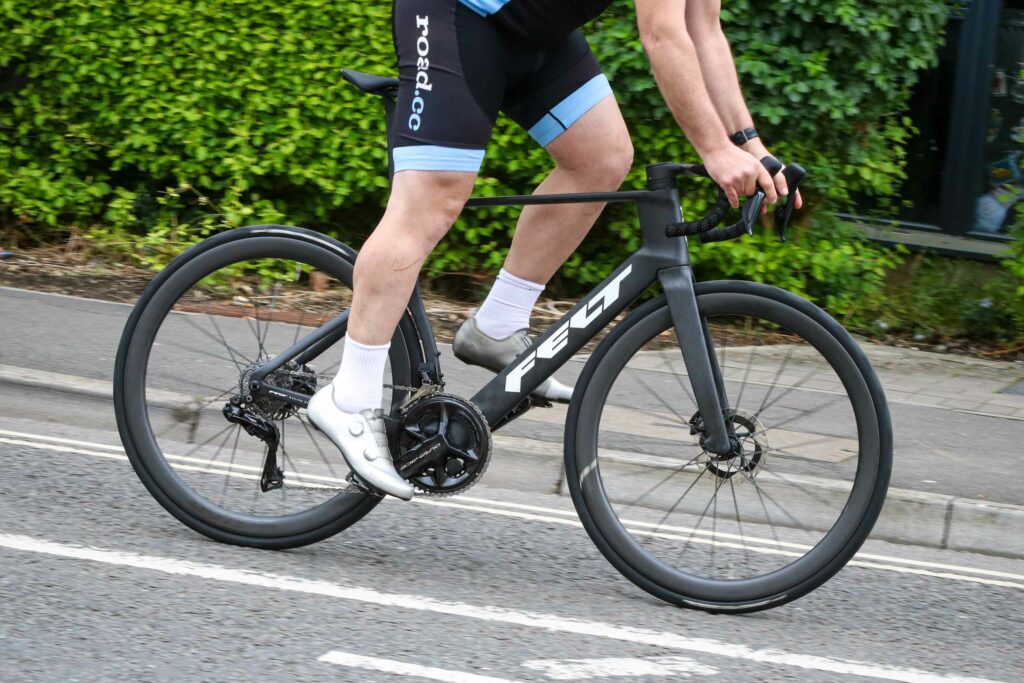
Despite the UCI’s official line, and for the numerous reasons stated above, we can only conclude that there is no longer a strong enough argument for keeping the rule in place, and it should be at least relaxed to allow for the greater development of lightweight road bikes.
Do you think the UCI should lower the weight limit of 6.8kg? Let us know in the comments section below.
















18 thoughts on “Is it time to reduce the UCI’s 6.8kg bike weight limit? We weigh up the pros and cons”
This one again? My answer hasn’t changed:
An overall weight limit is a obviously stupid way of ensuring bikes are structurally sound. Want to run super lightweight wheels//handlebars/frame/? Fine as long as the overall bike weight is >6.8kg. Hell, you can build a bike as light as you like, and it’s fine as you glue some lead weights to the bottom. The opposite is true too – just because something is heavy doesn’t mean it’s structurally sound (see Bastion’s Ti track handlebars in the Tokyo Olympics).
If what matters is structural integrity, then the test should be of structural integrity. In some ways this is already enforced by the commercialisation rule, because in order to sell a bicycle component to the public, it needs to have met certain safety standards that relate to ability to withstand loads, fatigue cycles etc (e.g. ISO 4210).
If the UCI believes compliance with the relevant standard is insufficient to ensure safety (slightly concerning for the wider public if true), then the UCI could mandate their own, higher standards along the same lines.
There might be other reasons to keep the weight limit – for example it is in keeping with the principle of the “primacy of man over machine”, and I think it is good for customers that most brands have moved towards a one-bike model for racing (rather than separate aero and climbing bikes). But just stop pretending it’s doing anything for safety.
@OnYerBike If we’re going with “Primacy of man/women over machine”, there ought to be a minimum weight *in proportion to the weight of the rider*, as well as a minimum CdA for a bike.
At that point though there’s not much point in developing bike technology though, unless those limits are set significantly lower than what is currently possible, while maintaining structural integrity.
@OnYerBike It is silly strictly from a safety perspective for reasons you mentioned but no matter what limit you set, most of your points still stand. Its not stifling innovation either. You can build a 5kg race bike using these top of the line frames pretty easily if you want to. Tech hasn’t been held back.
Its just a non-event IMO. Perhaps for the women its a bit more silly as their bikes are generally smaller and they are lighter so a heavier bike has more effect on them.
What would you say is a reasonable minimum btw?
This effects absolutely no one except professionals. Its like arguing the size of the engine on an F1 car. it only effects those who compete at that level.
If bike brands want to they can and do make sub 6.8kg bikes. And there are many bikes in the pro peloton that sit above the 6.8kg mark still. So what is the fuss about? If anything it helps keep a technological level playing field so we know its mostly down to the rider not the equipment.
But to use the F1 analogy again, F1 cars are fast but ultimately brittle and so highly tuned they are only reliable for the length of a race before they need stripping down and rebuilding for the next race. Some road bikes are already so highly engineered they are borderline brittle too. Pinarello had their Dogma F12 x-light which they even admitted was not built to last. These are not designed for consumers. they are ‘race tuned’ performance frames and are not designed to be able to take a knock or survive long periods which consumers want.
I have seen so many broken frames of bikes owned by casual cyclists who accidently dropped it or were involved in a minor crash. That’s an expensive fix if not a total write-off and it shouldn’t be that way. Bikes should be built to last. But the availability of these ultra light, ultra engineered bikes ‘are’ available to the public and sometimes you have to ask if that’s really necessary.
You can’t drive a race tuned sports car on the public roads – and even if you could , they need very frequent and expensive servicing. So why not just leave the pro level bikes for the pros and stop worrying about it?
This is an article about the professional sport, though, so pointing out that it only affects the professionals seems a little besides the point.
@mdavidford Point is, as I mention later, people want these and can buy these bikes. I was also highlighting that keeping a weight limit also stop it becoming an arms race. There has to be a technological level playing field or one or two brands will far outperform the rest and that’s not what cycling is about. There is enough innovation as it is. But if you start letting bikes become too light it feeds that arms race and there is a chance bikes become so highly tuned and so brittle they just dont last in the hands of an amateur rider.
And as im sure you know, all bikes and equipment have to be available to buy and cannot be only available to the pros. so it does affect non racers too actually.
But as you pointed out at the start of your comment, amateurs can *already* buy lighter bikes. And the UCI mandates that pro bikes have to be *available* to the public, but it doesn’t go around forcing non-pros to buy them.
Besides, I don’t think anyone advocating for reducing or removing the weight limit is suggesting that there shouldn’t be *any* standards – just that maybe there are better bases for it than weight.
And I don’t disagree that there may be a valid point there (leaving the question of whether a weight limit is the best way to achieve that to others to argue over). I was just questioning the suggestion that it’s a non-issue because it only affects pros, when the discussion is in the context of pro sport in the first place.
@mdavidford Yes there are lighter bikes and they are available, but if you were to take all restrictions off and allow brands to go even lighter – far lighter than is available now, there is a risk of 2 things.
1. bikes become so light and so brittle that they are not built to last and could become dangerous.
2. This could create a 2 tier system in the brands supplying frames. The mega brands like Specialized or Giant who are far bigger than someone like Wilier or even Colnago who are by no means as big as the some it then becomes a sport dictated more by tech than talent.
@Smoggysteve Right – as I say, though – that’s a separate debate, that I’ll leave to others.
@Smoggysteve “So why not just leave the pro level bikes for the pros and stop worrying about it?”
Are you arguing for the pros riding lighter, custom bikes here? I’m a bit confused.
I ride a Giant TCR SL. Its a very light bike and I am 85kg. Fully loaded that bike is taking 95kg ish I reckon on some of my rides. This is on the shitty UK roads and I am bunny hopping over potholes etc. I have zero fear that its going to snap on me. The current superbikes of the pro peleton are super robust. If you crash them, they will probably break. So will almost any carbon road bike. They don’t like impacts.
@mctrials23 Not all bikes are, I can show you many pics of owners whos bikes have broken quite easily and thats before you start making them lighter.
Maybe the UCI needs to change the rules of them being open to purchase by the public and they keep a weight limit that maybe lighter or they realise that if youre going to keep making bikes that the public can buy there has to be a limit to maintain their robustness. That could be seen as a duty of care in a way.
Right now, I see no reason to drop pro bike weight limits . For what? they would potentially do more harm than good in the current rules. if they are tied to consumer availability
@Smoggysteve I agree that the weight limit is fine but i’m not convinced by the rest of your argument. Carbon is an inherently fragile material when it comes to direct impacts. Unless you made it comparable in weight to aluminium then that will always be the case. Even then I doubt you would really remove the issue.
As to consumers? They are free to buy whatever they please. Steel, titanium, aluminium. Lightweight, robust. Whatever they want, they can buy. I could easily build a sub 6kg version of my current bike that would be perfectly robust for my needs. If I decided to go for super lightweight wheels and other parts though I would have to accept that there are tradeoffs in price and sometimes durability.
Removing customer choice is rarely a good thing.
@mctrials23 Yes bikes are brittle and carbon is easily broken – mostly down to accidental or misuse etc. But there are bikes that are breaking through normal use. Suddenly they just crack or delaminate. The closer to the limits you push these materials the more you will encounter this happening. As a consumer product thats not acceptable.
@Smoggysteve Replying to this comment because for some reason you can only go about 3 levels deep on comments now…
Yes, sometimes carbon cracks or delaminates. Thats been happening for years at all price points and all types of carbon bikes. I haven’t noticed that having any relationship with the weight of the frame or how high end it is though. Thats just an inherent risk in a process that has a heavy human component and perhaps not amazing QA in many places.
Another article on this that misses a big aspect of reducing the weight limit-sporting parity for lighter riders, especially on the women’s side.
By fixing the bike weight at a kg value the lighter riders are stuck riding a bike that is a greater % of their body weight compared to the bigger riders.
According to PCS gaia realini weights just 40kg but has to ride the same minimum weight bike as wout van aert at double the weight. It means that she has a 17% bodyweight bike vs wout at 8%. Extremes but shows the inherent unfairness of the fixed min weight across such diversity of body types (and men’s regs applied to women’s sport too-see also handlebar width regs).
Just get rid of all the rules on weight and shape. Why not?
Seriously though, either:
a) we want the sport to be about human performance: in which case we should rigorously standardise the equipment (far more than we do now!”)
b) or we don’t: in which case, what is the point in letting the bike makers continuously nibble away at the rules decade after decade, and have this slow drift in equipment standards? Just be done with it and get rid of all the rules in one go.
The headline states the article will “weigh up the pros and cons” but doesn’t really provide any argument for keeping the limit. Or maybe it’s to “weigh up the pros (of lowering the limit) and cons (of keeping the limit)”?
Beyond having a different limit for either/or women’s races/smaller riders, which I can see a strong argument for, I don’t really see the point of just lowering the absolute limit.
What will it achieve? We’ll end up with aero bikes at the new limit but instead of costing £10-15k, it’ll be £15-20k and we’ll still hear more complaining about everything in the bike industry being so expensive. Sure, no one’s forced to buy the TdF bike, but it does anchor the price ceiling, which will have an effect on every other model.
There’s a focus in the article on companies being able to make lightweight bikes again, or for pros to race on them. Well, they already exist for those that want them. And the pros? We might have a few years of bike choice, but we’ll still end up with everyone using the aero bike at the new weight limit but with lots of expensive R&D and new materials that need to be paid for. Especially lightweight bikes don’t have a right to exist. A 7kg bike from 20 years ago is the same weight as a 7kg bike today.
I think what’s more interesting is the suggestion of scaling the weight limit with rider weight. That feels fairer. But could it remove an advantage that a bigger sprinter might have over their colleagues, for example? We could end up with just the same style of rider across a whole race.
It also feels like it doesnt make much sense to just map the men’s limit onto the women’s field. But then if it’s an arbitrary limit, does that matter either?
It was going to weigh them up, but they were below the limit.