



Disc brakes are now standard on most new road and gravel bikes, but we’re focusing on the part that wears out fastest: the brake pads. With prices ranging from £10 to over £50, and regular replacements needed if you ride often, we set out to find which pads give you the best value for your money.
Take the Shimano Ultegra brake system, for example, one of our favourite groupsets and a common sight on mid to high-end road bikes. Like all disc brake setups, regular use means your brake pads will eventually need replacing, and that can get pricey. A standard pair of Shimano’s Organic L05A-RF brake pads come with an RRP of £24, and since you’ll likely be replacing both front and rear, you’re looking at close to £50 for a full set.
> Everything you need to know about disc brakes
Whilst searching for the best deal, you might stumble across some much cheaper alternatives and wonder if they’re worth trying out. For example, organic Aztec brake pads have an RRP of £12.99 per pair. They’re not alone either; Uberbike pads are also compatible with Shimano callipers, and they feature what they call the Race Matrix friction material which is said to offer a “whole new level of braking power and pad life”. They cost £10.99 per pair, or even less if you buy a few sets at once.
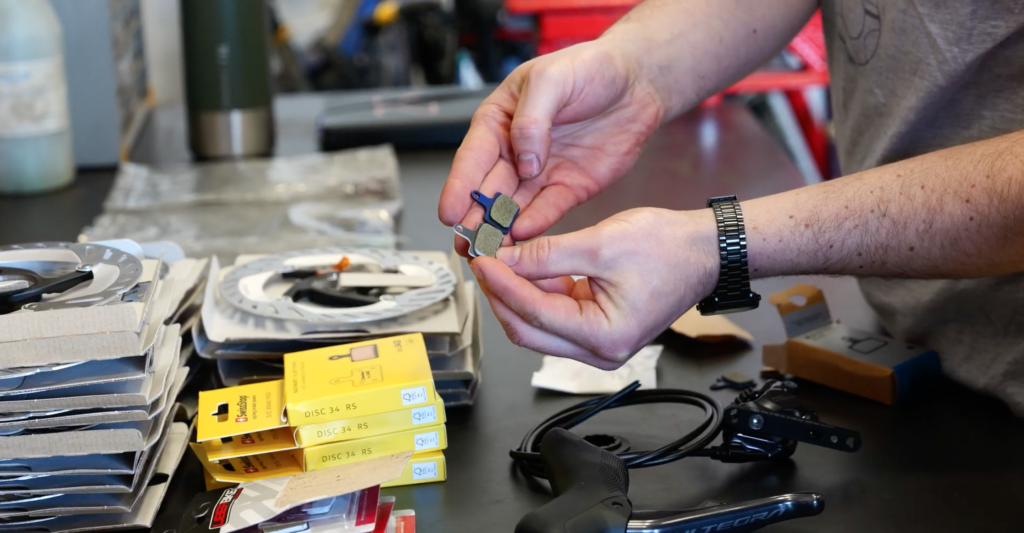
There’s also no shortage of premium brake pad options, and many of us love upgrading every other part of our bikes, so why not this one too? Take the SwissStop 34 RS pads, for example. Priced at £27 per pair, they’re more expensive than Shimano’s own pads, but they come with claims of improved braking performance, quieter operation, and extended service life.
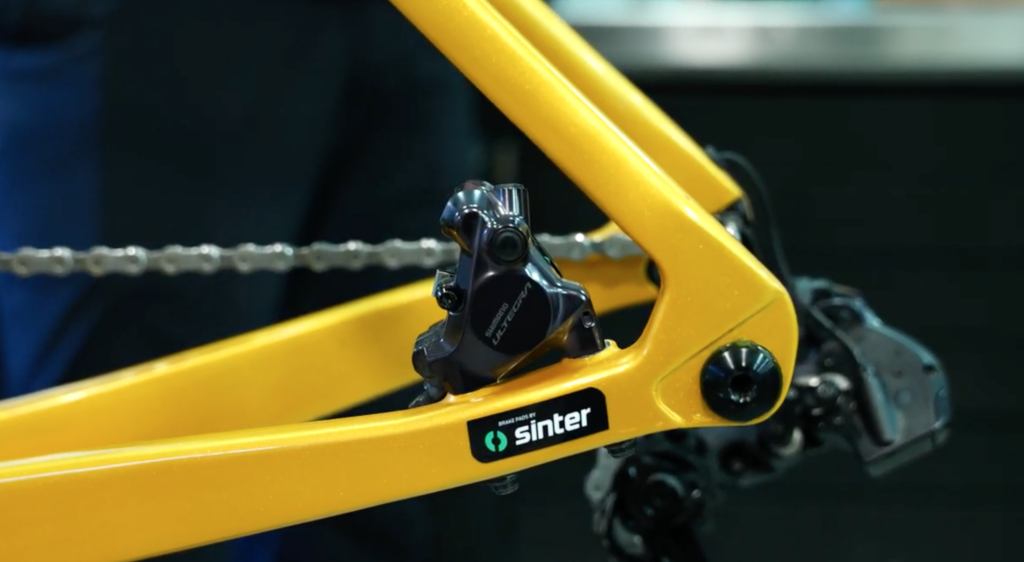
Another high-end option is the Sinter K-type pad, which Team EF Education–EasyPost have started using this year. Sinter is also targeting the premium end of the market with an RRP of £26.99.
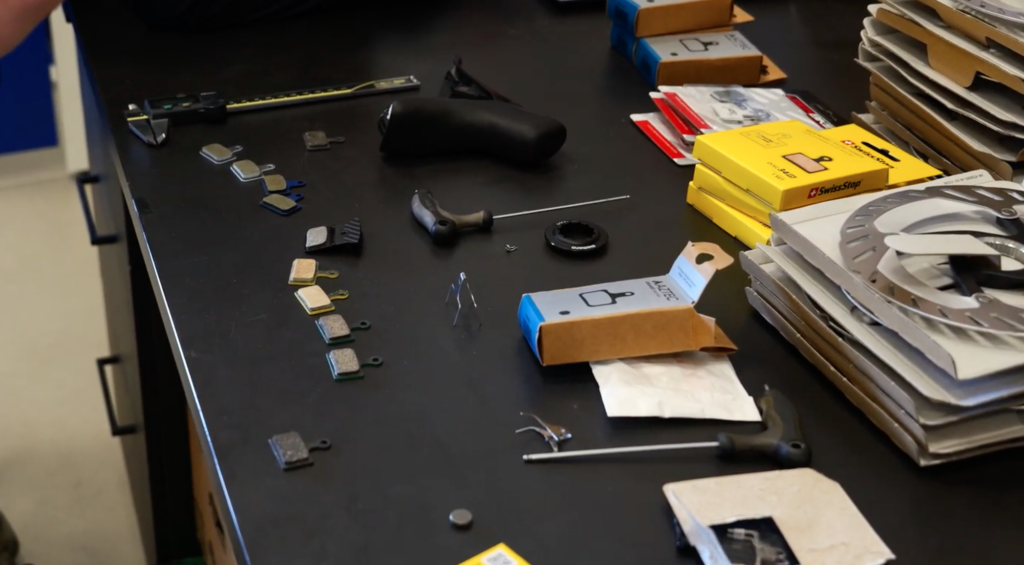
So, are half-price brake pads any good? Is it an area where we should be spending more, and should we paying more attention to this often overlooked bike component?
Well, we’ve spent countless hours trawling search engines and online bike shops trying to find answers to these questions, but we soon found that there’s not really a lot of information on the matter other than a few very rudimentary tests. That meant only one thing: it’s time to do some science!
Real-world testing proved tricky, with ever-changing conditions and too many variables to draw firm conclusions. To get more consistent results, we sought out a proper test rig. We managed to partner with Sinter, one of the few brake pad manufacturers based in Europe. They kindly let us use their advanced brake testing machine to run controlled comparisons.
A closer look at the pads
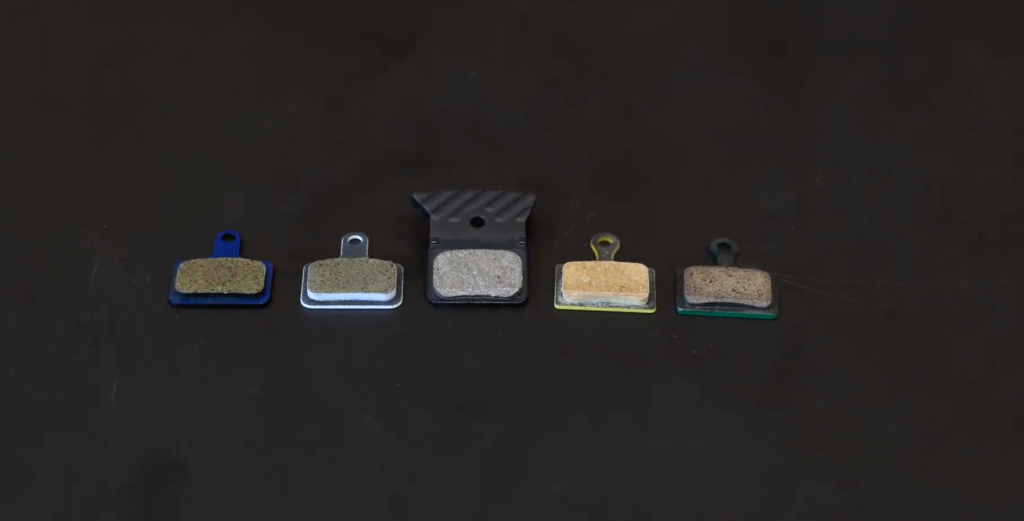
The pads featured in this test are all organic, which is the preferred choice for most riders. Although all the pads here are organic, each brand uses its own compound to fine-tune performance characteristics such as bite, modulation, heat resistance, and wear rate.
Most brake pads use a steel backing plate, but Shimano uses an aluminium backing and integrated cooling fins. These fins act as heat sinks to help manage temperature during heavy braking. However, the disc rotor itself still handles the bulk of heat dissipation, the larger and thicker the disc, the better it is at resisting fade and improving modulation.
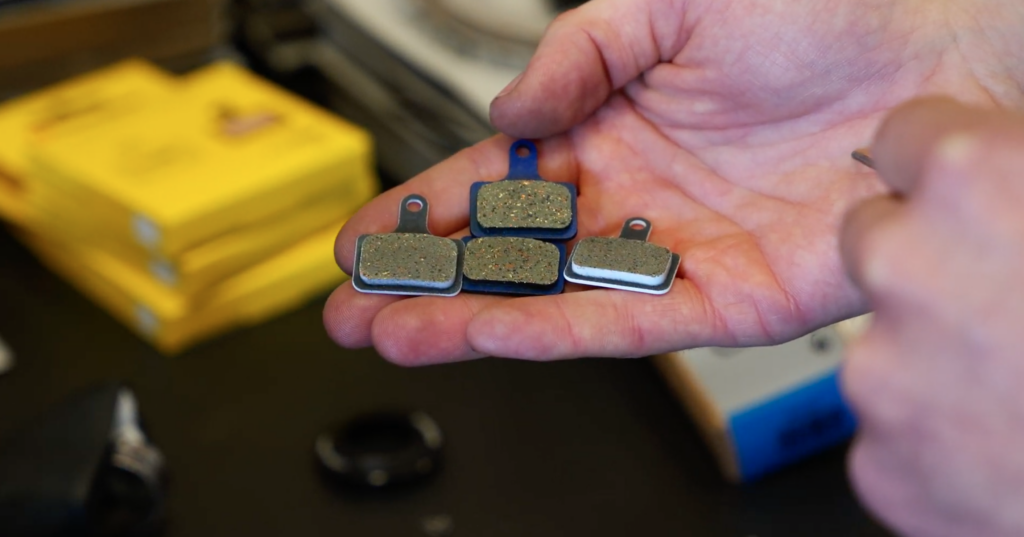
Here’s a breakdown of each pad’s construction:
Uberbike
• Backing plate: 1.0 mm
• Friction material: 3.0 mm
Aztec
• Backing plate: 1.5 mm
• Friction material: 2.4 mm
Shimano
• Backing plate: 1.7 mm (aluminium)
• Friction material: 2.4 mm
SwissStop
• Backing plate: 1.5 mm
• Friction material: 2.4 mm
Sinter
• Backing plate: 1.5 mm
• Friction material: 2.4 mm
The tests
To evaluate performance, we carried out three tests: enduro, wear, and fade tests.
1. Enduro test
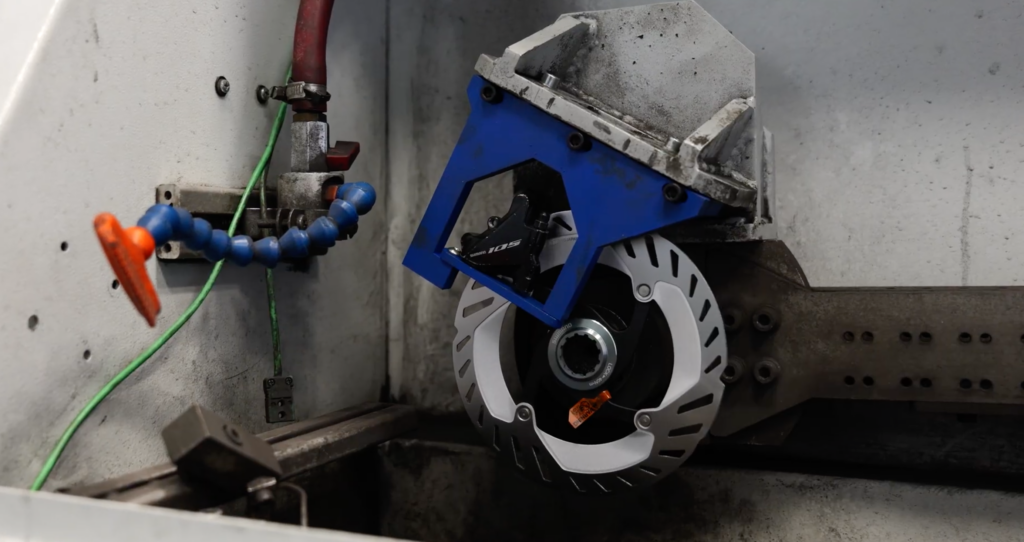
We’ll start with the enduro test, which measures both the deceleration time and coefficient of friction under controlled conditions. Specifically, each brake pad set was tested over 20 cycles from 30kph down to 15kph, followed by another 20 cycles from 30kph to a complete stop.
The aim was to replicate emergency braking scenarios, and assess how quickly each pad can bring a bike to a halt. A consistent brake lever force of 40Nm was applied across all tests, and a fresh disc was used for each run to ensure accuracy.
2. Wear test
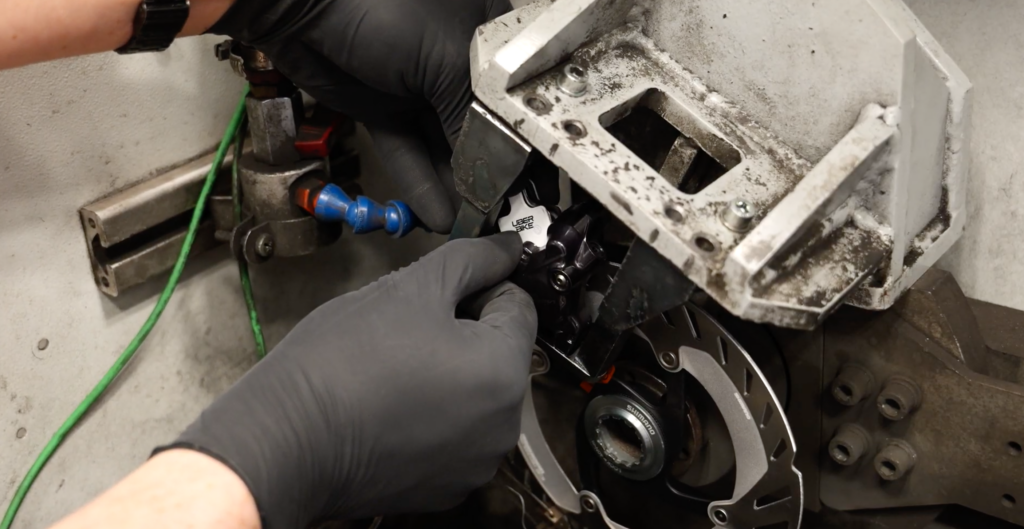
Next, we conducted a wear test, which runs for 350 brake cycles under mixed conditions, reflecting the unpredictable weather we’re used to in the UK. The protocol alternated 50 dry cycles with 50 wet cycles, repeating until all 350 cycles were complete.
Afterwards, pad thickness was measured to quantify wear rates in a controlled environment. We also used a subjective scale to evaluate noise.
3. Fade test
The third and final test was the fade test, designed to assess how each brake pad’s performance changes under sustained use. This simulates a long mountain descent where brakes are repeatedly applied. The procedure involved continuous braking from 30kph down to 5kph, repeated over a five-minute period.
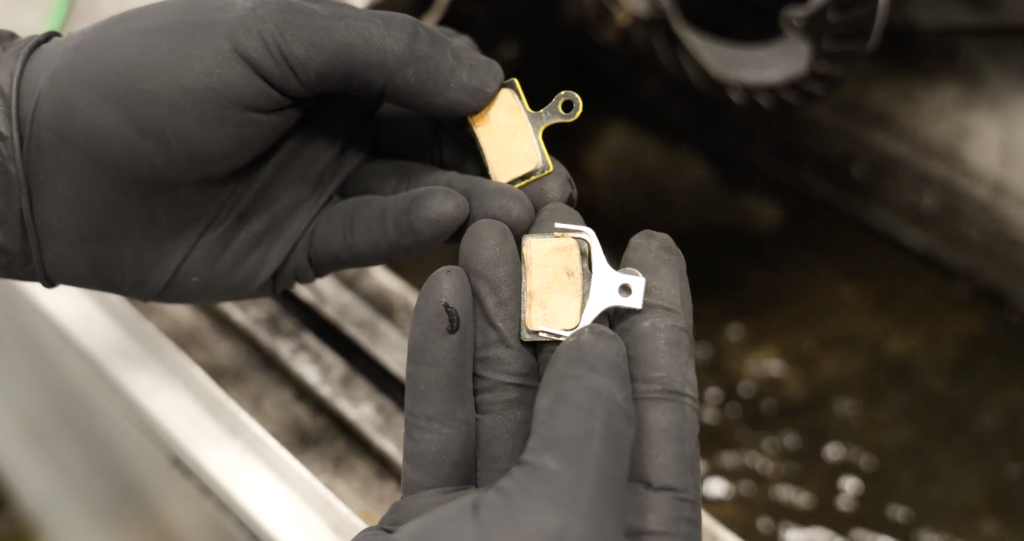
After each block, the pads were allowed to cool before undergoing two more five-minute cycles. This helped reveal how well each compound copes with heat build up, and whether braking performance deteriorates over time.
Before diving into the results, it’s worth clarifying that this was not a commercial project, i.e. Sinter didn’t pay us anything to do it. While the testing was conducted on Sinter’s brake testing machine, one of the few available in Europe, road.cc independently designed the entire test protocol, including the procedures, speeds, and performance metrics without any involvement from Sinter. We also purchased all the brake pads ourselves to ensure fairness and objectivity.
Results
1. Enduro test
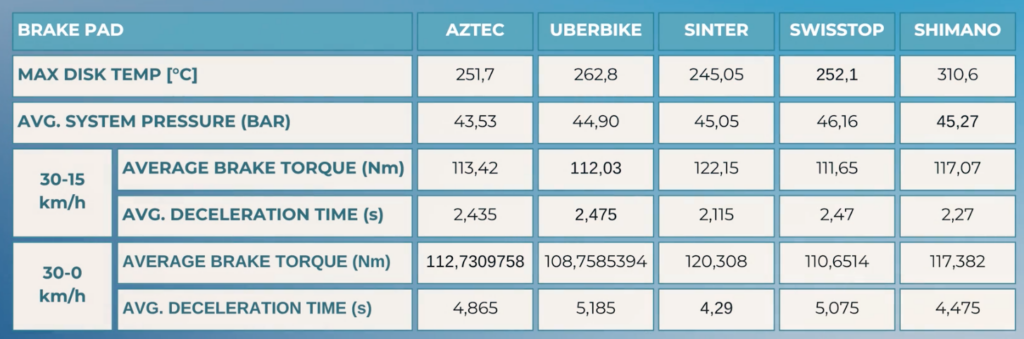
First up was the performance test, where we captured a range of key data points including system pressure, disc temperature, braking torque, and deceleration time.
As you can see, there are some significant differences between the brake pads. If we take a look at the average braking torque from 30kph to 0kph, then it’s the premium brake pads that lead the way with the higher forces. This translated directly into better stopping times.
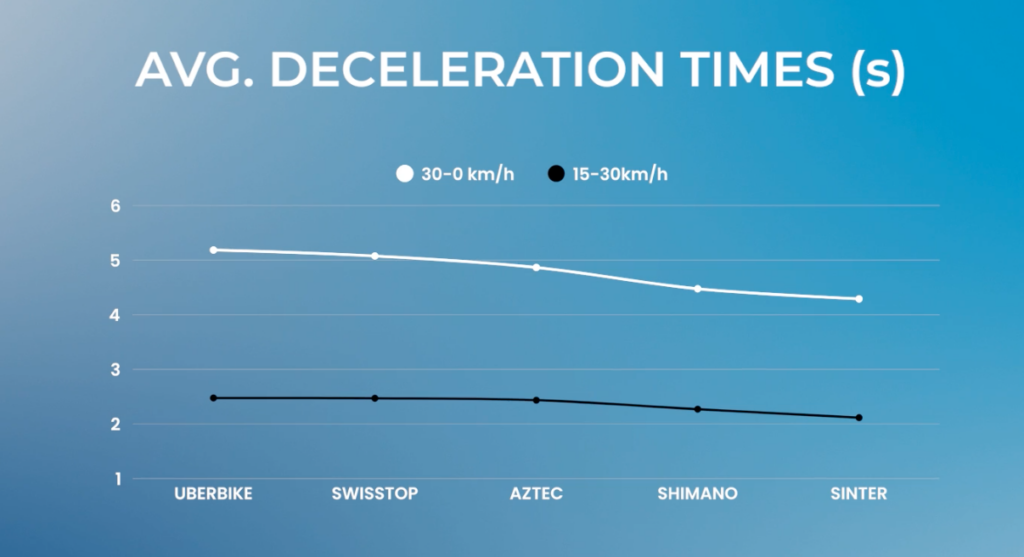
For example, the Uberbike pads took just over five seconds to come to a halt, followed by the SwissStop pads, then a strong showing from Aztec. After that, there was a noticeable gap to Shimano, and an even larger one to the Sinter Green 2032 pads, perhaps helping to explain why some pro teams are reconsidering their pad choices. To put it in percentages, the test-winning Sinter pads stopped around 17% faster than the Uberbike pads, a significant difference.
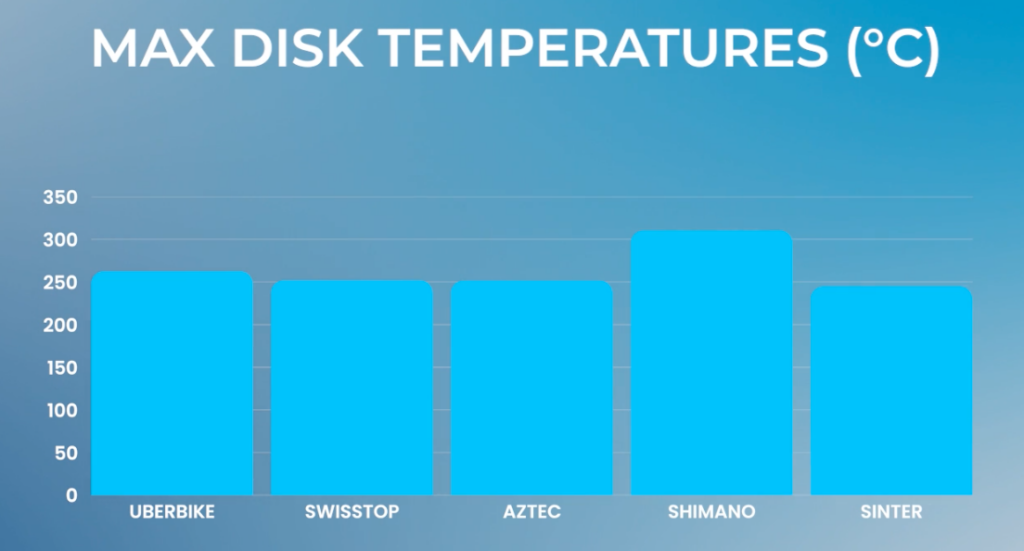
A similar pattern emerged in the 30kph to 15kph deceleration test, reinforcing the earlier results. Another noteworthy finding was the maximum disc temperatures. Surprisingly, the Shimano pads, despite featuring cooling fins, reached the highest temperatures. Both premium sets, along with Aztec, performed better at managing heat under braking.
2. Wear (and noise) test
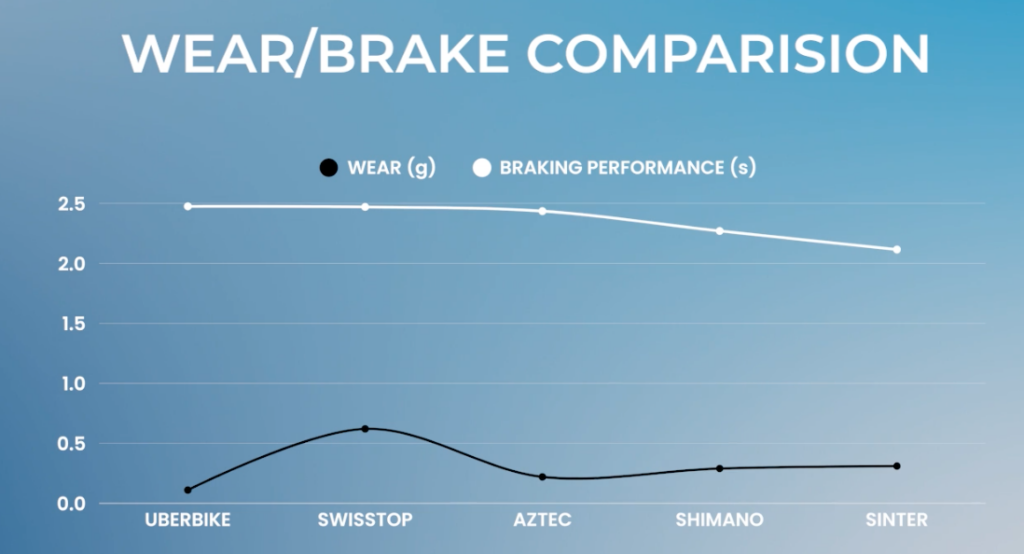
The chart below shows the volume and weight of friction material lost during the wear test. To accelerate the process, we simulated a mixed wet and dry environment, though even with this, the test took considerable time to complete.

The results reveal a clear trend: there’s a negative correlation between braking performance and wear resistance. Softer compounds tend to offer better braking power, but wear out faster.
Once again, the Shimano L05A pads landed in the middle of the pack. The Sinter pads showed greater material loss and hence wearing faster, though not as fast as the SwissStop pads, which wore down the quickest. Interestingly, the most durable pads were the budget-friendly options from Aztec and Uberbike, both showing nearly identical results. So, to answer one of our key questions, cheaper brake pads don’t necessarily wear out faster. In fact, in some cases, they may last longer.
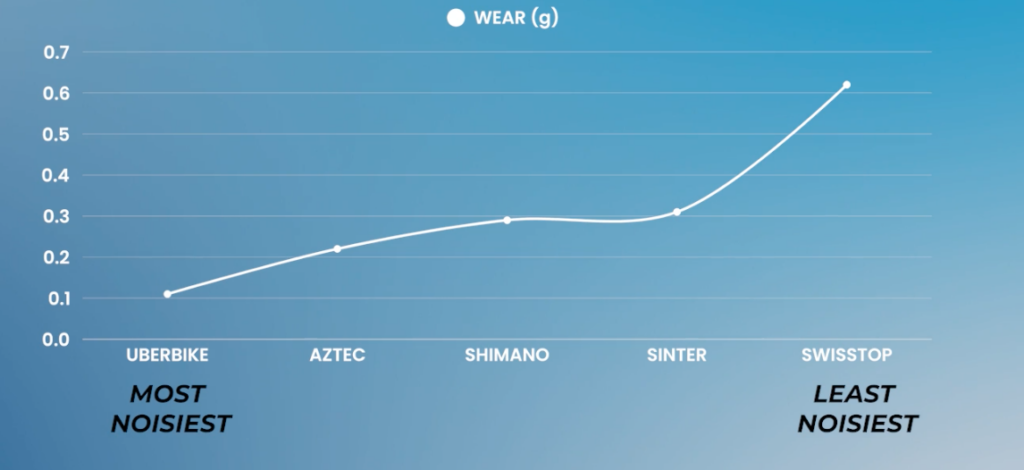
At this stage we also evaluated the noise of the brake pads but there was one limitation to this test. Due to the noise of the machine, it wasn’t possible to use a decibel meter but there were still some clear differences.
The semi-metallic compounds used in the Aztec and Uberbike pads, while more durable in wet conditions, were noticeably louder. Noise levels generally correlated with wear rates, the noisiest pads were Uberbike and Aztec, followed by Shimano, then Sinter, with SwissStop emerging as the quietest option.
3. Fade test
The final test focused on brake fade, evaluating how performance holds up under extreme heat. We simulated sustained braking temperatures exceeding 350°C to assess whether the friction coefficient would significantly decline. In this case, a higher friction coefficient indicates better performance.
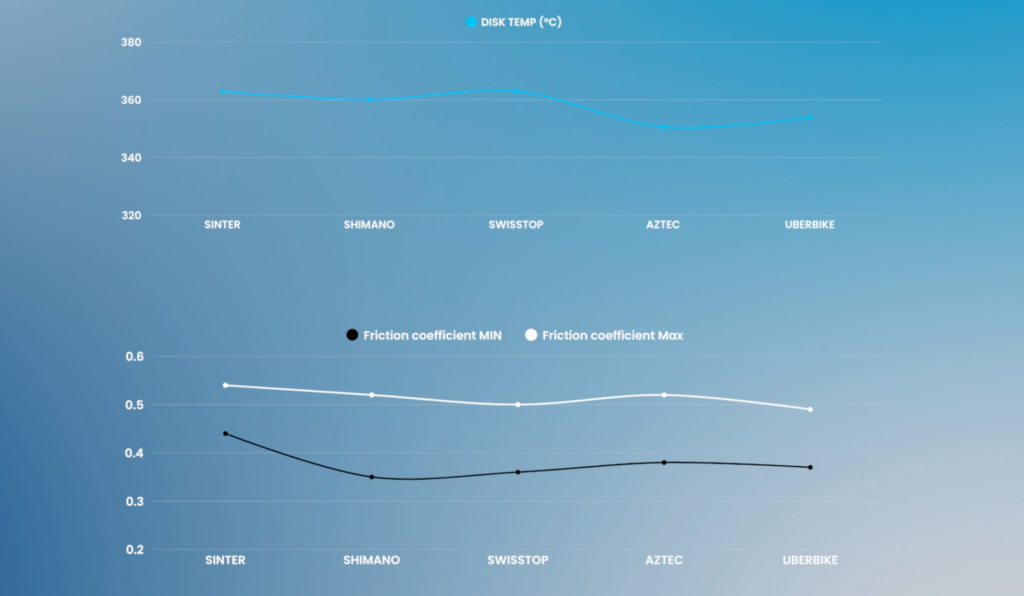
Unsurprisingly, the highest friction levels were recorded at the start of the test, when temperatures were lowest. As the system heated up, performance began to diverge amongst the pads, largely mirroring the trends seen in our initial braking tests.
The Sinter pads demonstrated the most consistent performance with the least fade, maintaining effective braking under high heat. Shimano’s pads started strong but suffered a notable drop-off as temperatures rose. SwissStop pads also experienced some decline, though less dramatically. Meanwhile, the performance gap between the Aztec and Uberbike pads narrowed under heat stress.
It’s important to note that while semi-metallic compounds, like those used in the Aztec and Uberbike pads, typically dissipate heat more effectively, they can also be more prone to fading due to oxidative degradation.
Conclusion
So, should you spend more on your brake pads? Well, as always it depends. Firstly, it’s worth sticking with a reputable brand like all those we featured in this test, as it’s an understatement to say that brakes are important. There are plenty of horror stories about the friction material coming off the backing plates on nondescript cheap brake pads, which isn’t worth it no matter how much money they saved you.
Secondly, brake pads are always a compromise. No matter how good they are, it’s impossible to achieve class-leading braking performance, long wear life, and quiet operation all at once. That said, there is a place for each of these pads. In nearly all cases, Shimano has taken the middle ground. They didn’t win any of the tests, but neither did they perform the worst.
When it comes to premium brake pads, there are some really tangible benefits. Lots of people upgrade every other component on their bike for better performance, and you can definitely add brake pads to that list too. There are some decent gains to be had, so it’s no wonder that pro teams are opting for faster-wearing – yet higher-performing – brake pads. Whether you’re prepared to spend more for faster stopping will depend on the type of riding you do, and if you truly notice the difference.
As for cheaper pads, the Aztecs in particular did better than expected. If you’re often riding in the wet and want to prioritise durability over outright braking performance and noise, then it’s an area where you can save quite a bit of cash.
There is one more thing to add, and that is that properly bedding in your brake pads will make a huge difference to their performance.
Did you expect there to be this much difference? Let us know in the comments section below.










10 thoughts on “Expensive vs cheap brake pads: is it worth spending more to maximise your bike’s braking power? We did some testing to find out”
I commend you for doing this
I commend you for doing this work and publishing these results. The only nit I would make is in the presentation of the results: the text in all the charts is difficult to read due to size and colours chosen. Also, absolutely none of these charts should be line-charts: if you can’t interpolate on the x-axis, then it shouldn’t be a line-chart. They should all be bar-charts. But, definitely nits, in the grand scheme of things.
This is the best review I’ve
This is the best review I’ve ever seen on road.cc. Well done everyone involved.
I agree. This is the sort of
I agree. This is the sort of quantitative assessment of product performance that’s largely missing in the bike journo world. Well done Road.cc.
Will you be keeping the method and write-up and expanding to include other pads, e.g. Trickstuff “Power”, or Galfer?
I guess resources for this kind of thing are in short supply, but could this test be extended to include comparison of different discs and callipers?
Nice test, thank you. One
Nice test, thank you. One more parameter is would appreciate is a comparison of disk heat and wear – i realize there are may possible combinations to try, but for this test it would have provided an extra dimension. Do cooler pad temperatures at the same deceleration and pressure result in higher disk wear or deformation? For example.
This is a great test. While
This is a great test. While they’re a bit pricey I’ve found that Shimano deliver the most reliable performance/value for the road.
Anecdotally, I’ve found that bikes coming through my workshop with Swisstop fitted suffer the most with contamination.
Just as the test shows too, cheaper pads are noisier
“There is one more thing to
“There is one more thing to add, and that is that properly bedding in your brake pads will make a huge difference to their performance.”
Translation: There is no point in spending money on premium pads if you’re clueless about bedding them in.
As a LBS mechanic I’ ve spent lots of time bedding in pads of new or serviced bikes and I’ve learnt that many other shops don’t care about this at all and that unfortunately even many mechanics know very little about this.
In our shop we’re using a bedding machine and this has led to a significant decrease in complaints about noisy brakes and brake performance. People will of course still ruin this by contaminating their discs with ridiculously overgreased chains but it’safe to say that bedding in is just as important as pad choice.
I was pretty confident about my bedding in scheme as it was extensive and delivered good results but using a bedding machine showed me that I was still not doing it perfectly.
road.cc recently published a comprehensive guide on how to do it properly
I would not recommend standard Magura pads.
If “bedding in” is so
If “bedding in” is so essential yet tricky for even an experienced mechanic to do manually, and yet there is a machine that can do it properly, why is it not done already at manufacture? Why are pads delivered “unfinished”?
Sriracha wrote:
The pads have to be “bedded in” or “keyed” to the disc rotor, so unless pads & discs are supplied together as a matched set, this wouldn’t be possible without incurring greater expense and waste (generally one can go through a few sets of pads before the discs reach their wear limit).
Also – it really isn’t a tricky process.
As others have said, great
As others have said, great article.
I run Swiss stop, anecdotally I felt they had better braking performance than Shimano but not by a huge amount.
They are definitely the quietest pads I’ve run though.
All of which is largely
All of which is largely negated in the winter, in the UK at least, by the pot luck of how much spilt diesel you had to ride through on the commute, thus buggering up your pads, no matter how expensive.