



Despite plenty of well-publicised horror stories, every year lots of us cyclists will happen across something cool on a crowdfunding platform like Kickstarter or Indiegogo, put down some cash and then expect the finished product to arrive a few months later when the successfully-funded project has gone into full production.
Not to burst anyone’s bubble, but… it doesn’t always turn out that way, which is why I find myself, years on, still waiting for a clever cafetiere with a thermometer, timer and coffee grind depository at the bottom for easier clean-up.
This particular crowdfunder was actually too successful, with the small team behind the product unable to fulfil the huge number of orders after securing over $1 million in crowdfunding, and later being named the ‘Fyre Festival of French Presses’.
Having only chucked £35 or so towards the eventual downfall of the Rite Press, I didn’t feel bitter for long when it became apparent I was never going to receive anything. I’ve never actually backed a cycling product personally, but a quick Google of ‘cycling indicator crowdfunder’ (or any other product category that appears on our round-up of where cycling products go to die) and you’ll find crowdfunding platforms are littered with unsuccessful projects for low-value cycling-related items.
You might see some fairly angry comments from disappointed backers, but usually no one gets burned too bad here. If the crowdfunding hopeful can’t bring the project to life for whatever reason and isn’t in the financial position to refund backers, they have failed to fulfil the agreement entered into; but for pretty much any backer who isn’t a particularly resentful millionaire, the cost of bringing legal action will be far too time-consuming and expensive.
As you’ll read below, the consequences can be far worse when hundreds of backers have splashed out on what they think is going to be an expensive bit of cycling tech, or even their next new bike. Crowdfunding platforms such as Kickstarter state in their terms of use that they are just providing the shop window, and don’t get involved in disputes between creators and backers, so it’s worth giving these a good read and doing some research on the creator you are backing if you’re putting down a considerable amount of money. There’s always a chance you might not get what you think you’ve paid for at all.
Having said all that, it’s not all doom and gloom, of course! Some hugely successful companies – both in the world of cycling and beyond – began life on crowdfunding platforms, such as the Swytch e-bike kit (that you’ll read more about below) as an example of the former and the Oculus virtual reality headset as an example of the latter. Each crowdfunder mentioned in this article has been given a verdict on whether we think it has been successful or not. Some of these verdicts were much more straightforward to arrive at than others…
Cyclewing
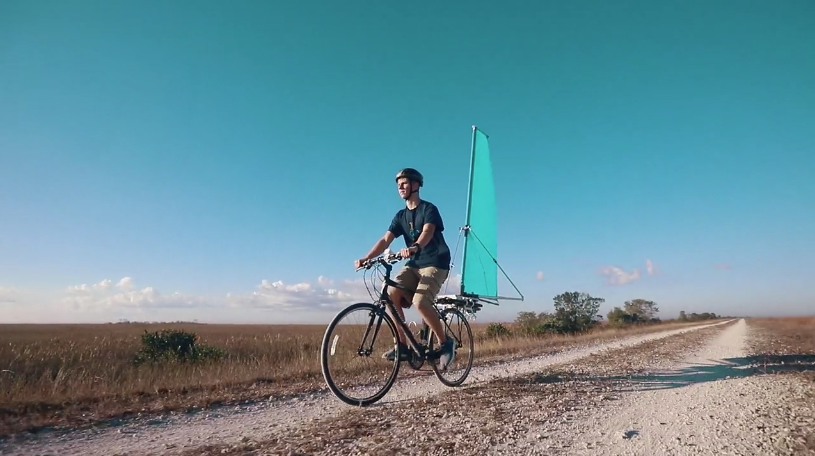
Back in 2019, the CycleWing project was launched on Kickstarter, the idea being to add sail-powered propulsion to a standard bike. You’ll never guess what happened. It failed to hit its funding target. No, really.
US creator Jorge Pando said, “CycleWing is a new bicycle-mounted green technology that can turn almost any bicycle into a wind-propelled vehicle. The patent-pending CycleWing unit is compact, lightweight, and installs easily on most bicycles. If your bicycle can accommodate a standard rear rack, you should be able to install CycleWing on it.
“Early in 2016, while on a long bike ride, I remember having a good crosswind and wishing I could somehow deploy a sail to harness it to make my ride a bit more thrilling. On another ride, I had a strong tailwind and wished I had a bigger exposure to it so I could really fly along.”
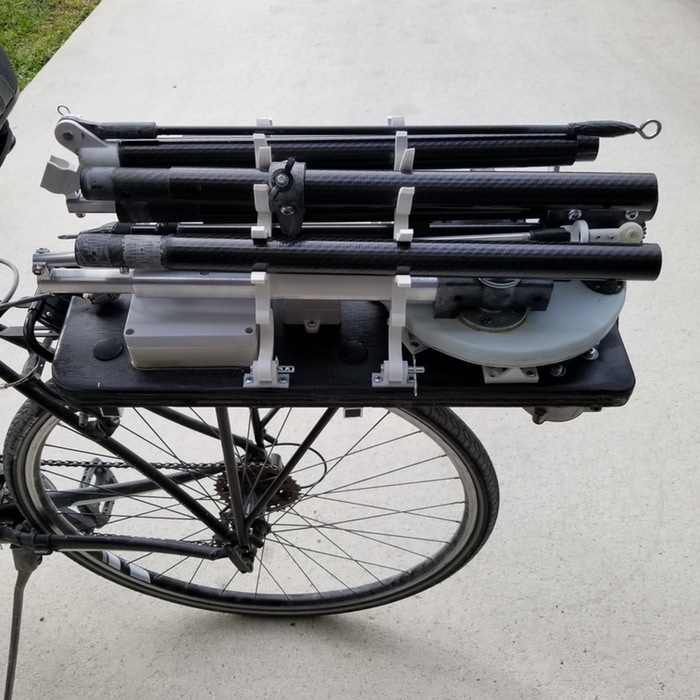
To cut a long story short, Jorge came up with a sail that attached to the rear of your bike and was controlled by two handlebar-mounted buttons. It was designed for long-distance touring along country roads rather than crowded cities, but reached only £2,489 in pledges on Kickstarter, well short of its £55,771 goal.
To be honest, we’re more surprised that 14 people were prepared to give it a shot.
Verdict: Miss
RAF 1
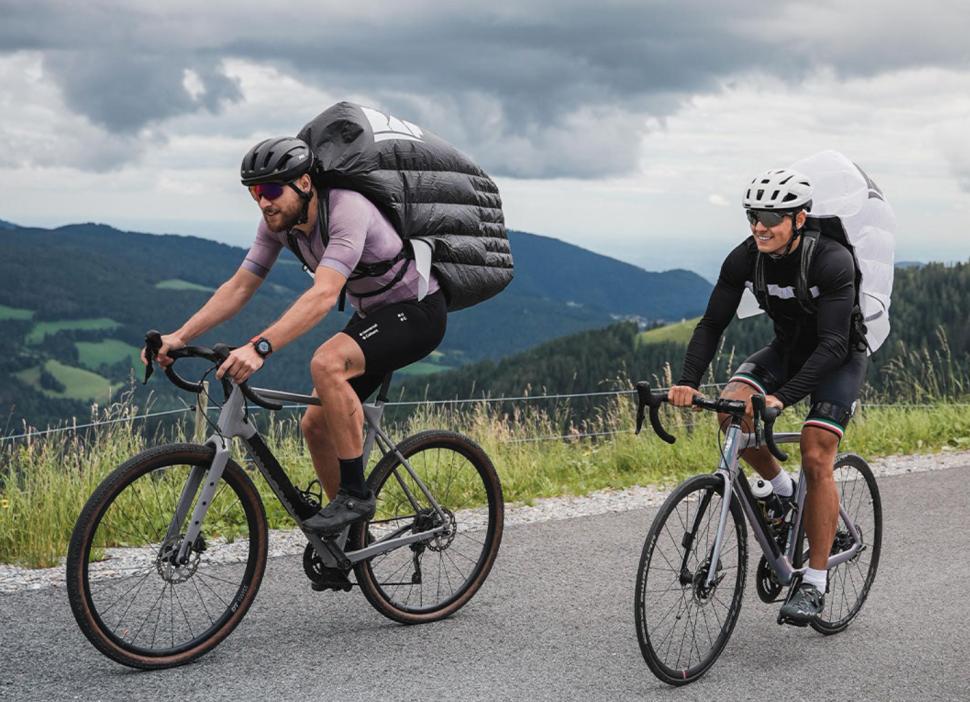 Even by Kickstarter’s standards, this one’s… odd. RAF 1 is an air-filled cycling backpack that its designers say will reduce drag and make you faster, as well as offering enhanced safety with an integrated airbag. The funding target was a modest £946, and RAF 1 reached that last year.
“Experience a new level of cycling efficiency with our cutting-edge air-filled backpack, meticulously crafted to revolutionise your riding experience,” said RAF 1’s inventors. “Weighing in at under 299g, it’s featherlight, allowing you to breeze through your rides without unnecessary bulk. But its benefits extend beyond weight.
“This innovative backpack is designed to increase speed by reducing air drag… Say goodbye to cumbersome gear and hello to effortless cycling with our lightweight solution.”
A giant fairing, essentially.
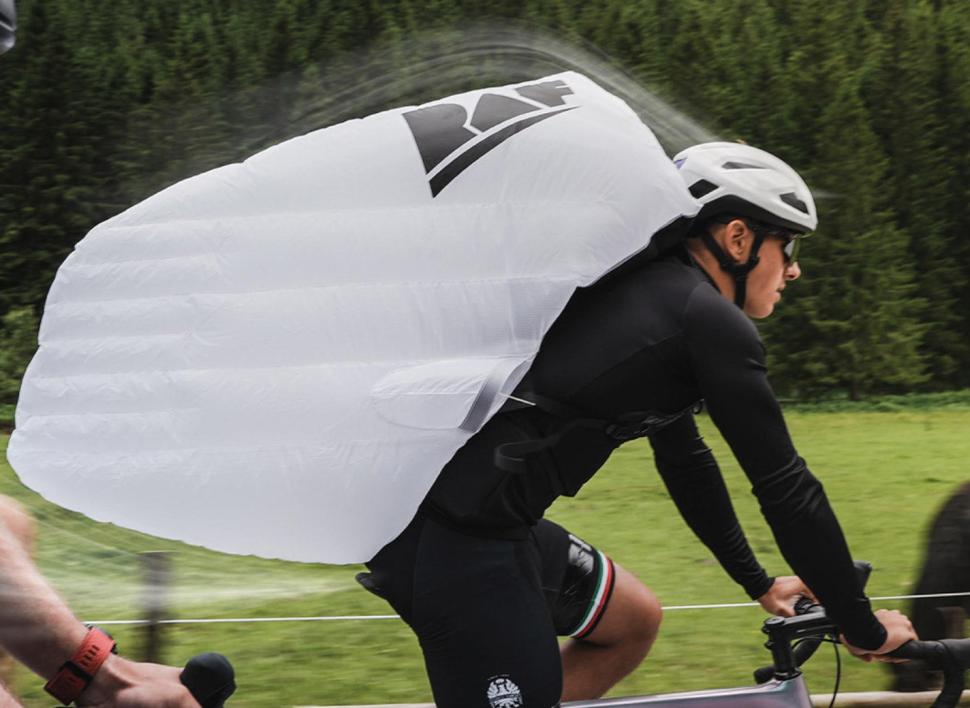 The inventors also said, “Our backpack not only excels in functionality but also makes a bold statement in fashion.”
Okay. We’re not sure what that statement is, exactly, but we’ll let that go.
The RAF 1 project was backed by 24 people, and the product was shipped at the start of this year.
Like we said: odd.
Verdict: Who are we to judge?
Cybersight Guardian HUD glasses
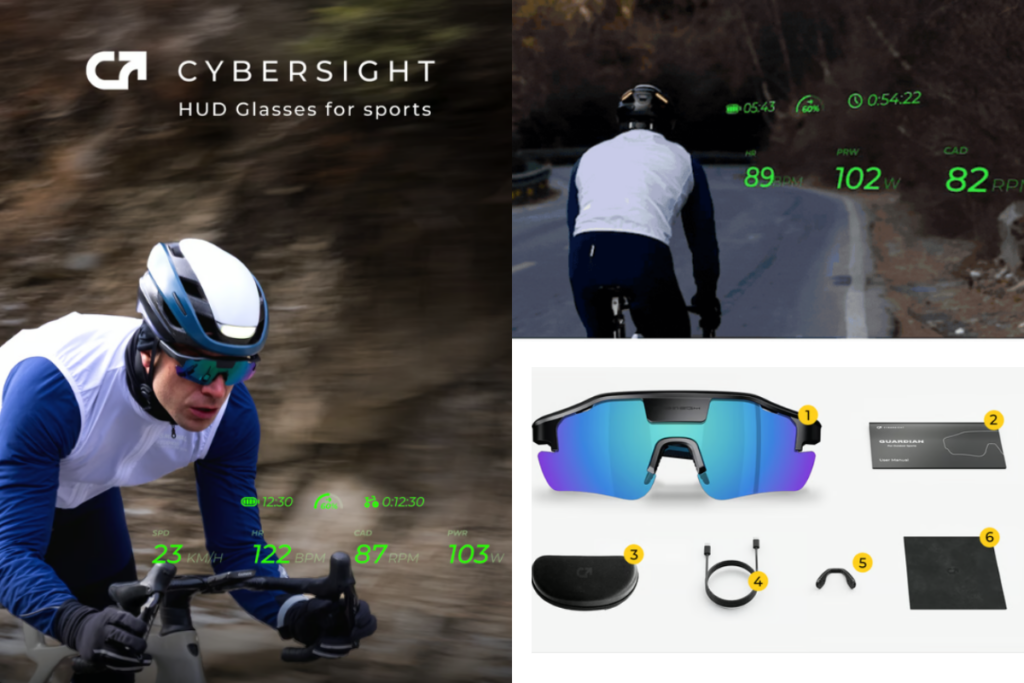
It’s fair to say that Cybersight’s head-up display (HUD) Guardian cycling glasses – which connect to your bike computer and other devices to display real-time stats, data and navigation in front of your eyes – proved a crowdfunding hit recently. Over 2,000 people pledged over £610,000 on Kickstarter.
“Inspired by fighter jets and HUDs, we designed a system seamlessly integrated into sports eyewear, providing real-time data without compromising style or performance,” says the team behind the project.
“Cybersight Guardian lets you see distance, pace, and body metrics such as average heart rate and navigation within your field of vision, without stopping or slowing down to look at your watch or bike computer.
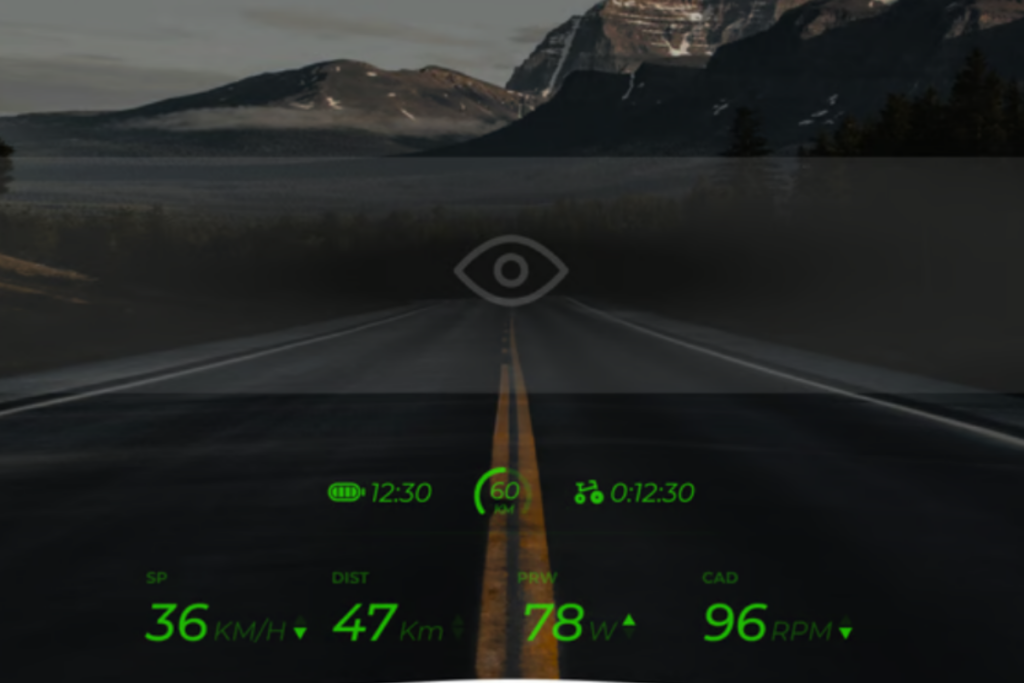
“Information is presented intuitively and concisely, ensuring your line of sight remains clear during your activities. The impact-resistant tempered glass lens provides exceptional durability and resilience against external impacts. Plus, you can customise your dashboard to suit your preferences.”
Crowdfunding has only just finished (at the time of writing) and Cybersight says that it will begin shipping almost immediately.
If you didn’t get involved in the crowdfunding, you’ll be able to buy via Cybersight’s website from July 2025.
Verdict: Hit
Body Rocket
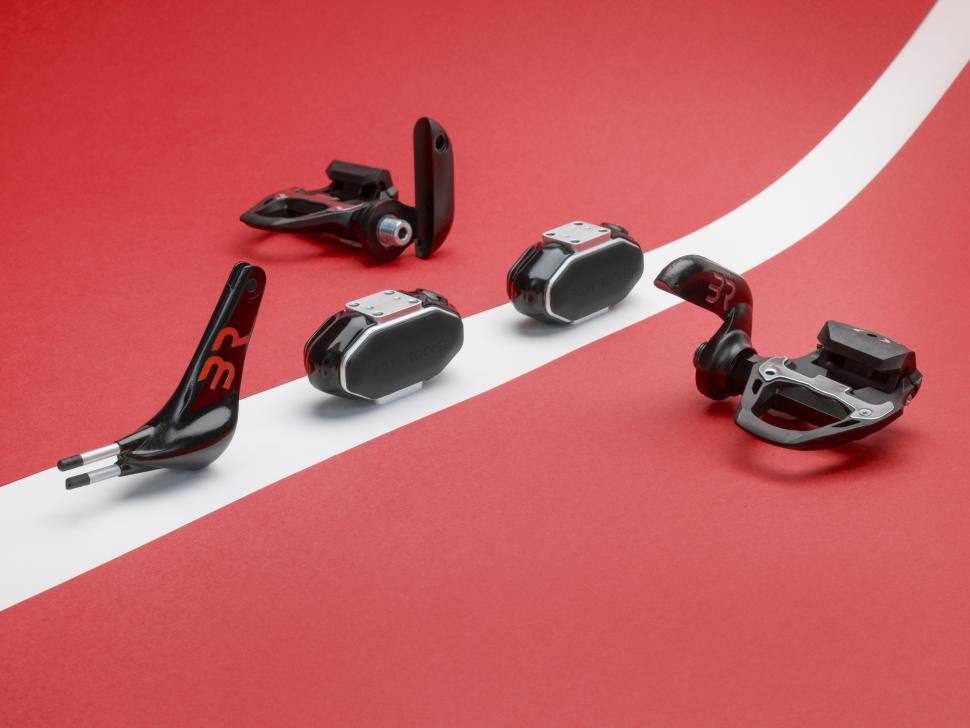 We’ve reported on the Body Rocket real-time drag measuring system on road.cc many times in articles going back to 2021.
Essentially, the idea is that the system attaches to your bike and provides “wind tunnel accurate” data so you can monitor and control your drag as you ride.
> See how Jamie got on when he used the Body Rocket ahead of its launch
“Real-time data from sensors in your pedals, handlebars, and saddle delivers precise power and aerodynamic feedback directly to your Garmin or the Body Rocket app,” says the Body Rocket team.
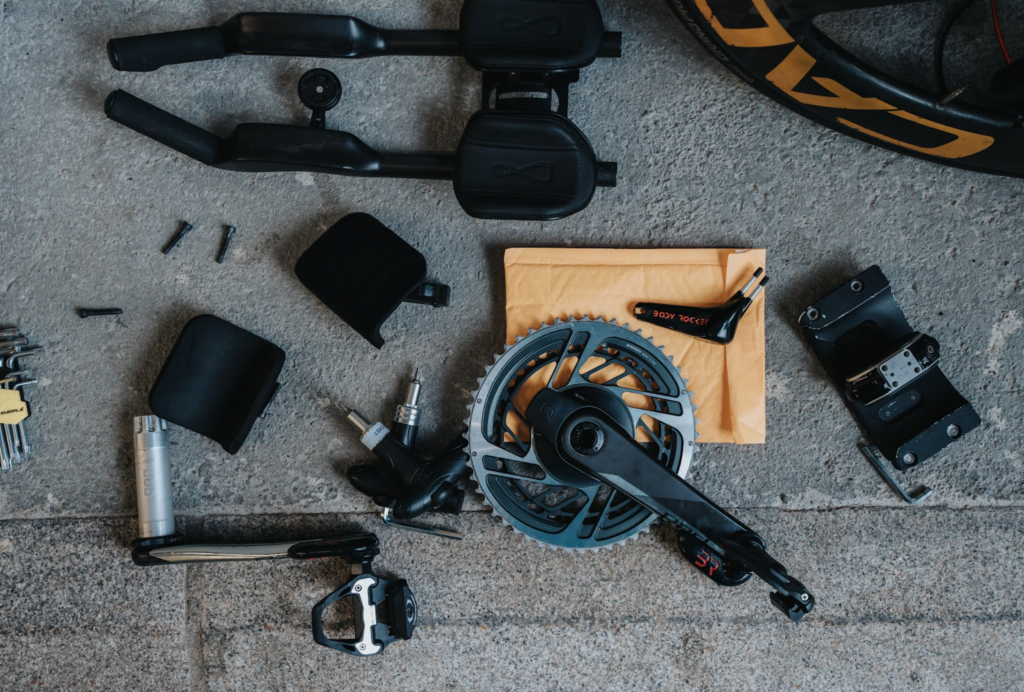
Body Rocket claims that wind tunnel testing proves its results to be accurate to within +/-2.5%.
Body Rocket took to Kickstarter in October and November 2024 and almost doubled its funding target of £22,000. Shipping is due to begin at the end of June 2025.
A Body Rocket System is priced £2,950 and you can buy one via the brand’s website.
Verdict: Hit
Tailfin
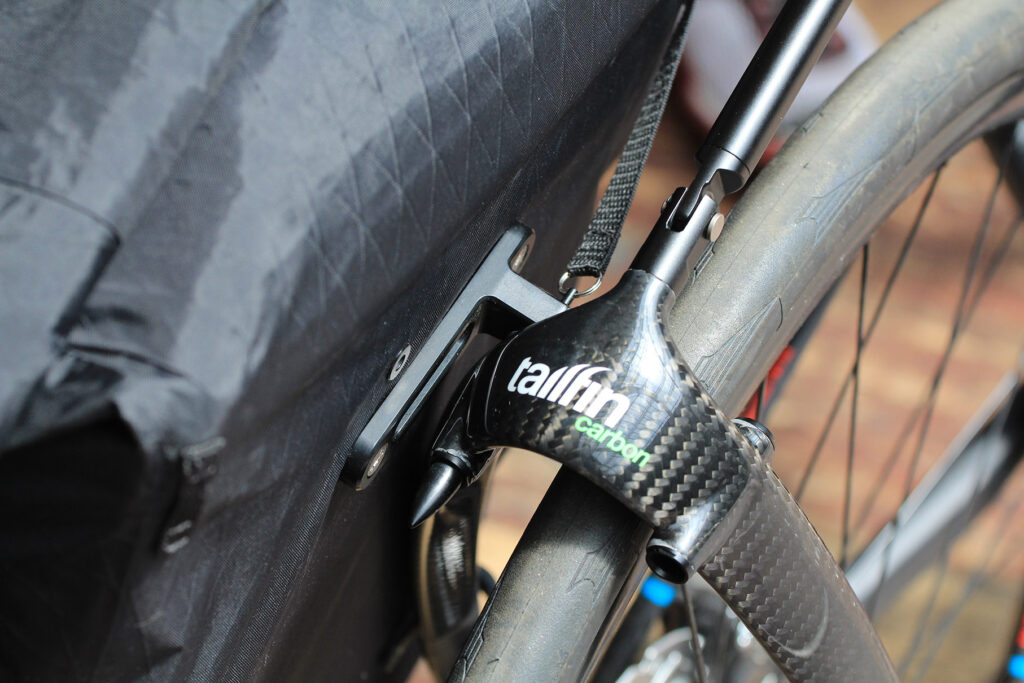
We’d never really seen pannier racks this light or luxurious before Tailfin came along, and judging by the comments under our first article on its carbon rack and pannier, some predicted the reason was that there simply wasn’t a market for such products.
The rise of ultra-distance cycling events and bikepacking put paid to the naysayers, though, as Tailfin’s first Kickstarter smashed its target in four days back in 2016. The demand for super strong and light luggage racks and packs – and what people are prepared to pay for them – has clearly gone up in recent years, with subsequent Tailfin products receiving rave reviews on road.cc and elsewhere.
As its regular product launches and popular Instagram page suggest, there are no signs of the demand for Tailfin’s products slowing down, and the brand no longer appears to need crowdfunding investment to bring new innovations to life.
Verdict: Hit
Brim Brothers
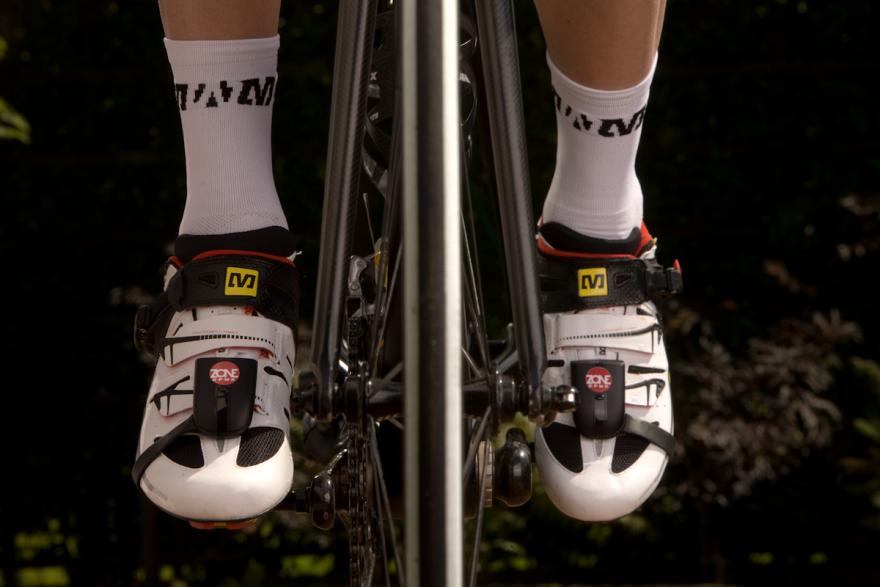
From one of the best examples of a crowdfunding success story in the bike industry, to one of its most notorious failures. Dublin-based Brim Brothers hit Kickstarter in early 2016, having tried and failed to bring its wearable Zone DPMX power meter to the market for several years. The cleverly designed gadget clipped onto your cycling shoes and measured power from the cleat, with hopeful cyclists backing the project to the tune of €175,443 collectively.
Unfortunately, the struggle to manufacture the product continued even after the cash injection, and in October 2016 Brim Brothers informed all backers in a statement that it had ceased operations, and the power meter would not be delivered.
Years later, former Brim Brothers CEO Barry Redmond, who has since founded sports and wearables consultancy company BR Sensors & Systems, told road.cc: “While our Kickstarter project was a success from a fundraising point of view, it was ultimately a disaster for everyone. There is nothing to celebrate.
“The support of all our backers meant a huge amount to us at the time, but we did not deliver our part of the bargain. When everything came crashing down at the end of 2016, we let down our families, our investors, and our Kickstarter supporters. It took me a while to learn to live with that.
“You learn most when things go wrong, so if there’s any positive at all from the experience, it’s the lessons learnt. Primarily, be very, very careful with crowdfunding a product that doesn’t quite exist yet – both as a fundraiser and as a funder. It’s in the nature of people to be optimistic about something new and exciting – that’s how new things are created – but the trick is to balance optimism and imagination with reality.”
Verdict: Miss
Knog Oi Bell
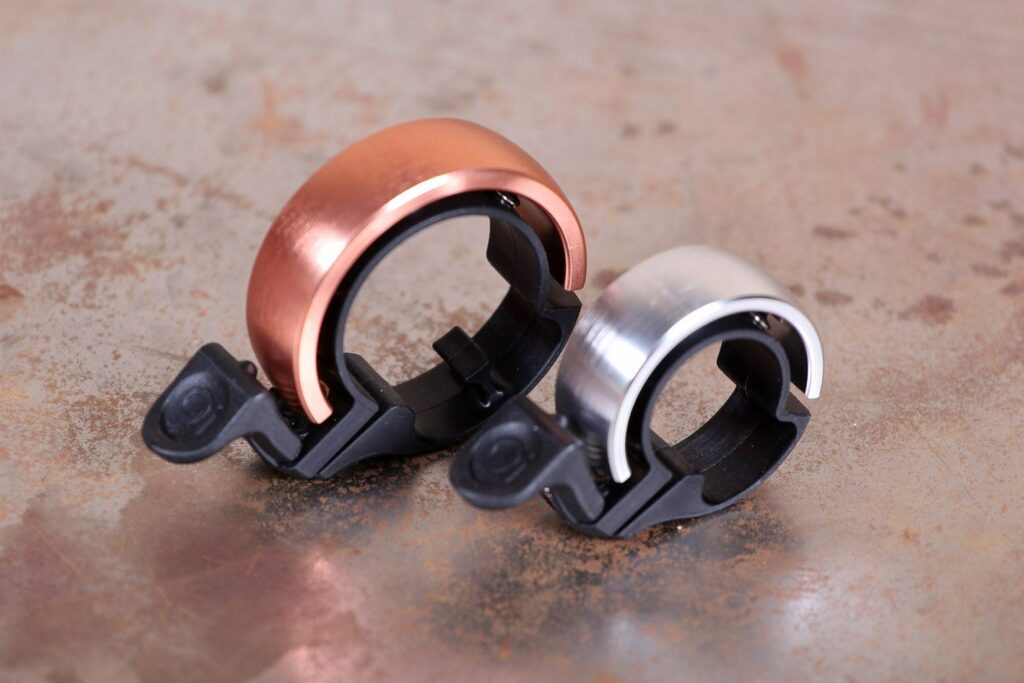
Knog’s wildly successful 2016 crowdfunding campaign for the Oi differed from most plucky start-ups, as the Australian brand founded in 2002 was already pretty well established for its lights and locks. As we said at the time, this was a reinvention of a product that hadn’t really changed since it was invented in the 1870s, with the slim design wrapping discreetly around the handlebar.
It was a neat concept, receiving a largely positive road.cc review initially… but then the complaints came in, mostly about the volume (or lack of it) and the spring mechanism breaking off, the latter of which I fell victim to myself.
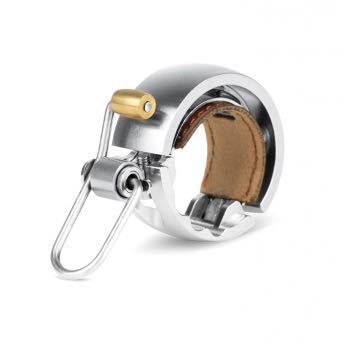
Knog went away and introduced a nicer-looking, louder and more refined version, the Knog Oi Luxe, which got better feedback overall. The Oi Classic (£16.99) and Oi Luxe (£34.99) bells continue to be sold on Knog’s website alongside its other products, most of which are instantly recognisable and successful.
Verdict: Eventually a hit
Nothirst Upright cycling water bottle
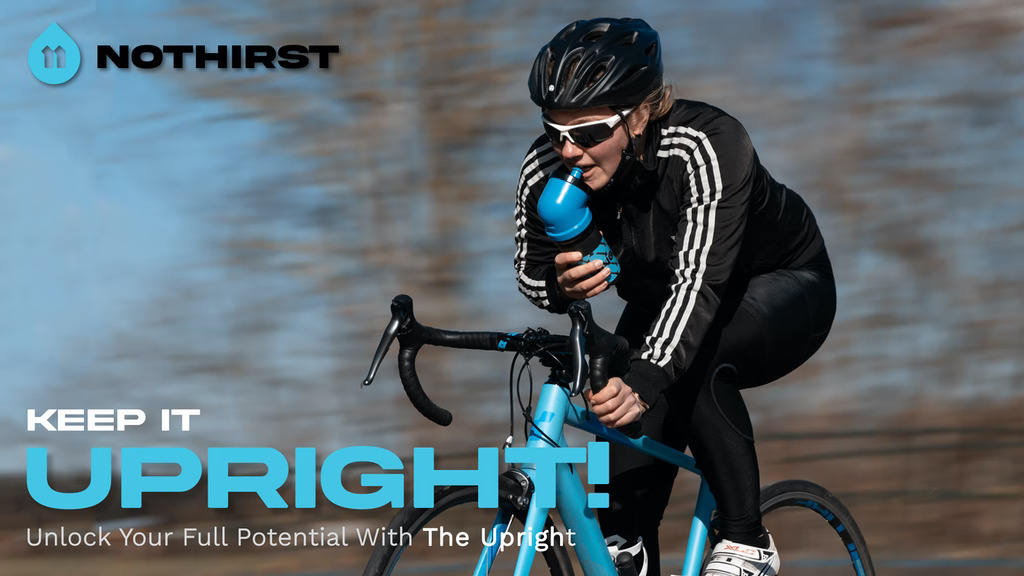
Nothirst promised to make the slight awkwardness – and claimed 35% drag penalty – when angling a standard bidon to your lips a thing of the past for around £13 with the Upright bottle. The design allowed thirsty cyclists to drink from an angled bottleneck that just needed to be squeezed from an upright position. As well as those wild purported aero benefits, Nothirst also said the Upright allowed you to keep your eyes on the road ahead more easily, was more comfortable to drink from, and would be less likely to roll away if you dropped it.
In all honesty, reaction to our news article on the Upright was rather scathing, highlighting the fact that angled bottles have been done before and there are numerous wind-cheating hydration solutions out there already, such as aero-shaped bottles and between-the-arms hydration systems with straws.
Unfortunately for the Upright’s creator, the promise of aerodynamic sipping didn’t quite chime with enough watt-seeking cyclists, and the crowdfunding closed with 163 backers and less than 30% of the financial target reached. Try to visit Nothirst’s website and you’ll see that the domain name is up for sale so we can only assume there was no thirst to bring the Nothirst into full production.
Verdict: Bottled it
STYX power meter
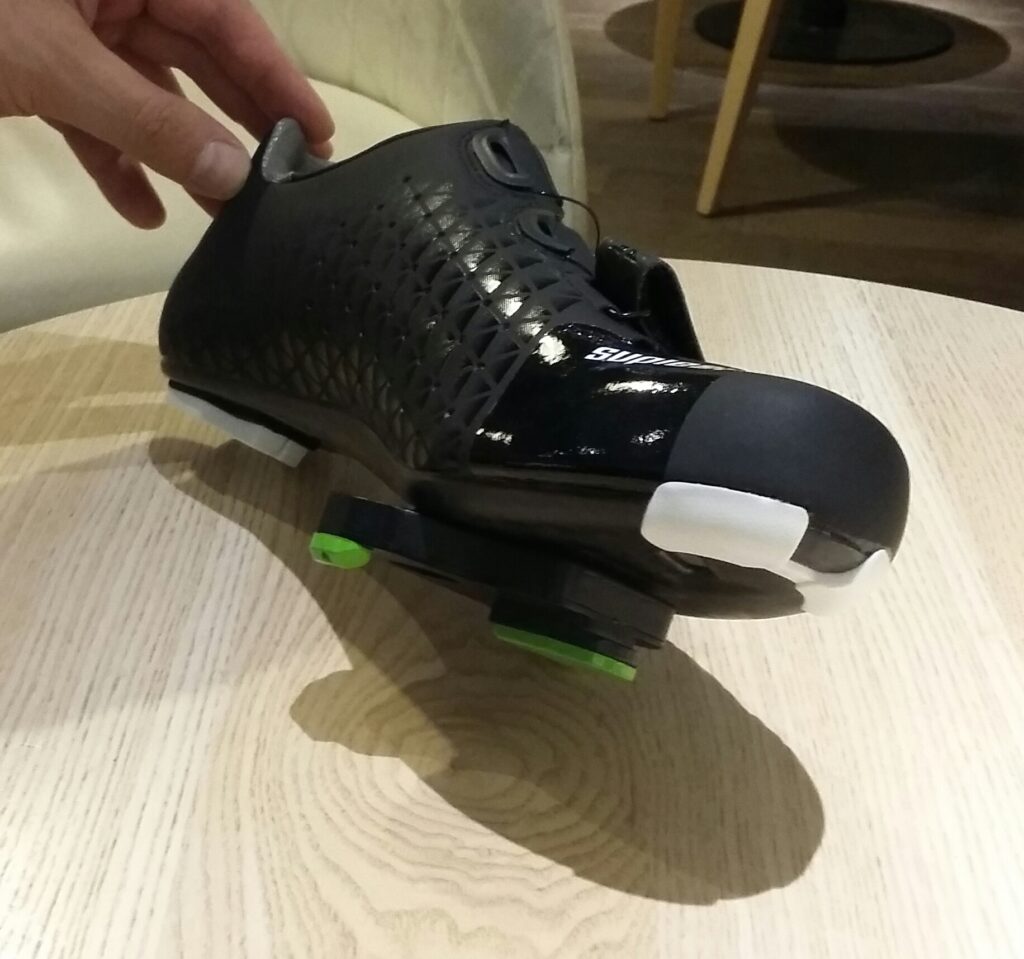
This is another innovative power meter that never saw the light of day, and this one was fully embedded into the cleat. We were so intrigued that en route to another press launch in the summer of 2017, I actually stopped off to meet the inventors and have a look at the prototype, writing the story up here. The picture above was taken in an airport cafe as we chatted over some extremely expensive coffees and pastries.
The impressive PhDs from tech start-up Magnes AG, who worked together at ETH Zurich’s Multi-Scale Robotics Lab, explained how the power meter would be incredibly accurate by measuring real force rather than using its own parameter and measuring via a strain gauge. For €610, backers could secure a unit with delivery expected for late 2019. Unfortunately, that coffee and pastry was the only thing any cyclist got out of Magnes, as the crowdfunding failed to reach the target and the product never materialised.
We did get in touch with Magnes’ co-founder, who told us the technology is now being used in hospitals for patient rehabilitation and care.
Olgac Ergeneman said: “Our crowdfunding campaign was not successful.
“In the next months, we shifted our focus to rehabilitation (eg to use our technology in pedals for ergometers). We had devices installed at clinics, and patients performed exercises with them. We used the input from pedals to gamify the training session, which was a great success in motivating patients.
“Later on we integrated our technology in shoes to analyse the gait of patients. This is our main focus today. We just got the CE marking as a medical device and our shoes are used in hospitals in Switzerland to assess geriatric and neurological patients. We plan to roll out to other European countries now.
“Overall, we could not make it for cyclists but we found another pathway for the company.”
Verdict: Miss (with a happy ending)
Lumo
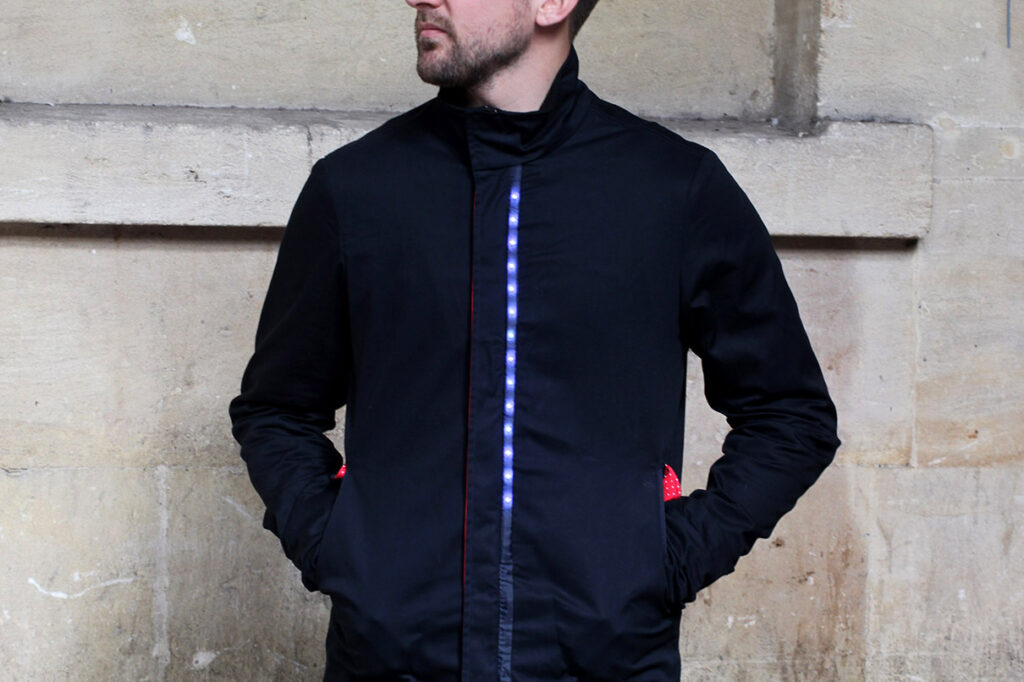
As mentioned, you’ll find plenty of cycling products with smart safety tech on Kickstarter that never saw the light of day… but the nifty LED lights on Lumo’s smart Herne Hill Harrington jacket and waxed canvas backpack changed all that, raising almost £75,000 back in late 2014 and going into production shortly afterwards.
The Herne Hill got a good review on road.cc, receiving praise for the bright LEDs and comfort of the jacket itself, but less for the £250 price tag. Lumo went to Kickstarter again in 2016 for a new range, and as far as we know, the products were delivered after a successful crowdfunder… but the Lumo website no longer exists, and a message on its Instagram page from 2019 says it was acquired by Lumos Helmet. The Lumos website doesn’t stock Harringtons or bags with LEDs on, so we can only assume the products are no longer being manufactured.
Verdict: Hit… then a miss
Swytch e-bike conversion kit
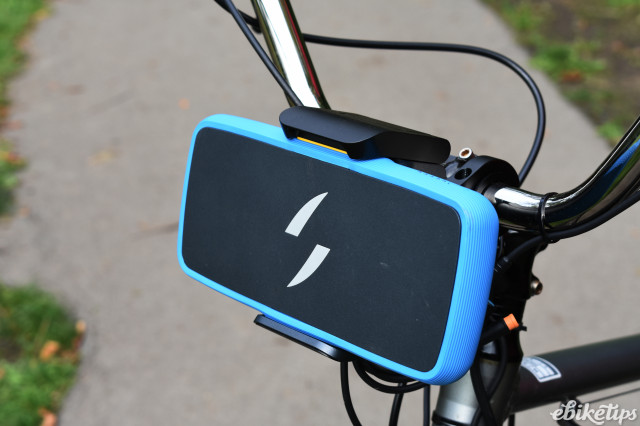
Another crowdfunding success story, the original Swytch e-bike conversion kit was successfully crowdfunded on Indiegogo and received a positive review from our sister site eBikeTips back in 2018. The simple system features a battery pack that sits on your handlebars, a cadence sensor on the crank and a motor built into a wheel to fit your bike.
Since then the tech has improved and the size reduced dramatically, with versions 2.0 and the third iteration both receiving pretty positive reviews on our sister site eBikeTips.
> Check out eBikeTips first ride using the Swytch MAX+ ebike conversion kit
Swytch says that it now has over 100,000 users worldwide, so we can safely call this one a success*.
Verdict: Hit
* Update, January 2026: there have recently been reports of financial problems and missing orders at Swytch. Well update this article fully when the situation becomes clearer, but for now you can read more on ebiketips.
Superstrata Bike

The “world’s first 3D-printed custom unibody carbon fibre composite bike and e-bike” was one of the most successful Indiegogo campaigns of all time, raising over £5 million in 2020… but as we reported back in March 2021, and as you’ll see on the photo above, the finished product that backers received wasn’t quite what was promised… and those were the lucky ones. Thousands of comments on the Superstrata Indiegogo page suggest that many who paid for a bike received nothing.
Many questioned the design, and Superstrata was forced to make numerous changes to improve the strength and rideability of the chunky, seat tube-less frame. Even with its tweaks, the bike received poor reviews, and the components that backers ended up getting on their bikes were something of a lottery.
In 2023, Superstrata claimed that 96% of Indiegogo crowdfunded bikes had been fulfilled, although plenty of people said they’d received nothing. Then we reported that Arevo, the Silicon Valley-based company behind Superstrata, had terminated all operations in its Vietnamese manufacturing base.
Verdict: Missing seat tube, missing bikes… and the ones that were delivered weren’t exactly super
Flectr
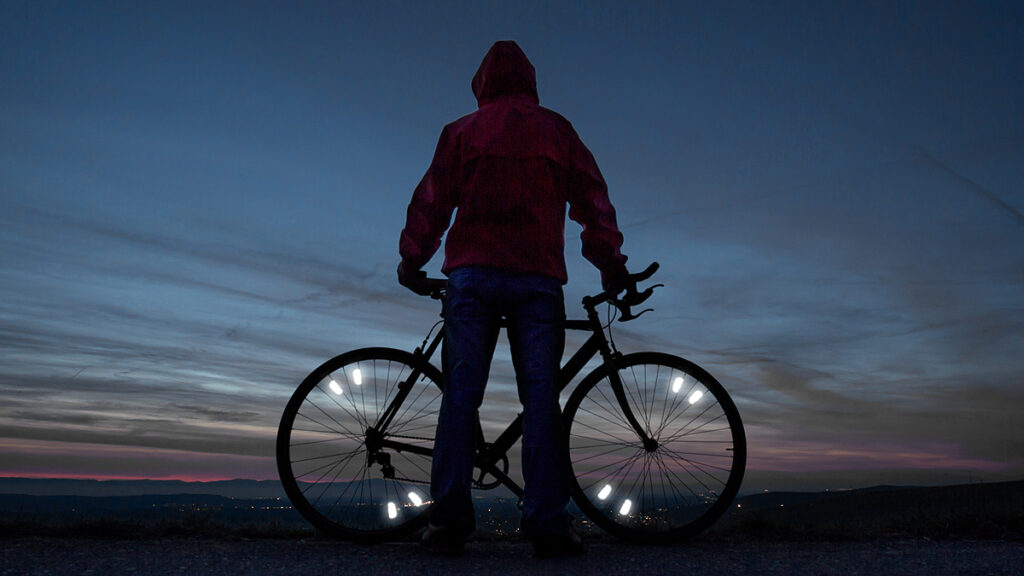
Despite many of the comments under our review of the Zero aero wheel reflectors saying you can buy far cheaper reflective stickers on eBay, Flectr products have been successful every time they’ve landed on Kickstarter, and our reviewer couldn’t deny that the product was a functional and “effective alternative to spoke reflectors and particularly useful for tagalongs/trailers.”
Flectr now sells reflectors for your rims, cranks and spokes and various other accessories via its website.
Verdict: A surprise hit
iQ2 pedal-based power meter
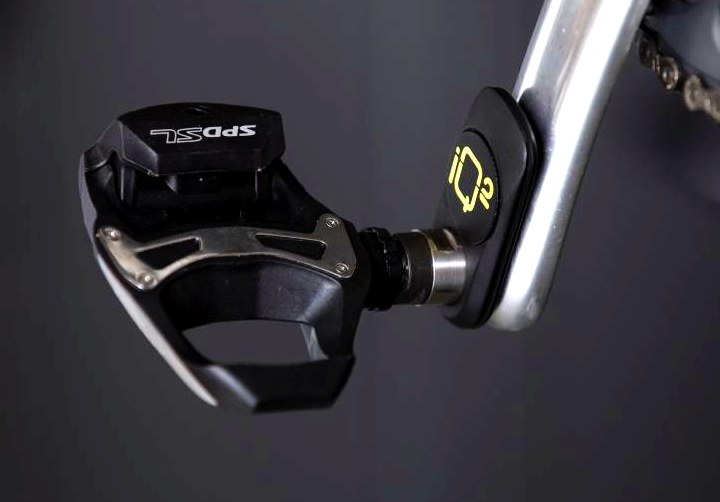
The “most crowdfunded cycling power meter campaign ever” appears to have had zero success in delivering products to backers, after offering single-sided and double-sided power meters for pledges of just £131 and £219, respectively, back in 2018.
The last updates from Keesjan Klant, the creator of the crowdfunding projects, were way back in October 2023, when he said, “If you can refer someone interested in purchasing a power meter (of the same type you’ve chosen), we will include your power meter in that order and ship both to you together.”
There are a grand total of 3,205 comments on the Kickstarter page and 1,277 on the Indiegogo page at the time of writing, many labelling the projects a scam, asking for a refund and/or threatening legal action. There are a lot of very unhappy people out there.
Verdict: Miss(ing)
iTrakit GPS bike tracker
After receiving a few emails urging us to investigate, road.cc published an article detailing backers’ frustrations after they were left waiting for the iTrakit bike security system more than two years after backing the project on Indiegogo in 2019.
A slightly messy situation emerged, which involved Condor Cycles strongly denying any involvement in the project after originally being cited as a partner on the iTrakit website. iTrakit told us that “a combination of critical technical issues with our main chip supplier from the beginning of 2020, the pandemic and a reduced team” severely affected the company’s ability to deliver the product on time.
The last update from the founders of iTrakit posted on Indiegogo said that they were speaking to an investor about providing the necessary resources to produce a new prototype, but that was in April 2024.
Of the hundreds of comments left on the Indiegogo page, most are from angry backers demanding information and/or refunds.
Verdict: iTrash*t
Loffi Glove
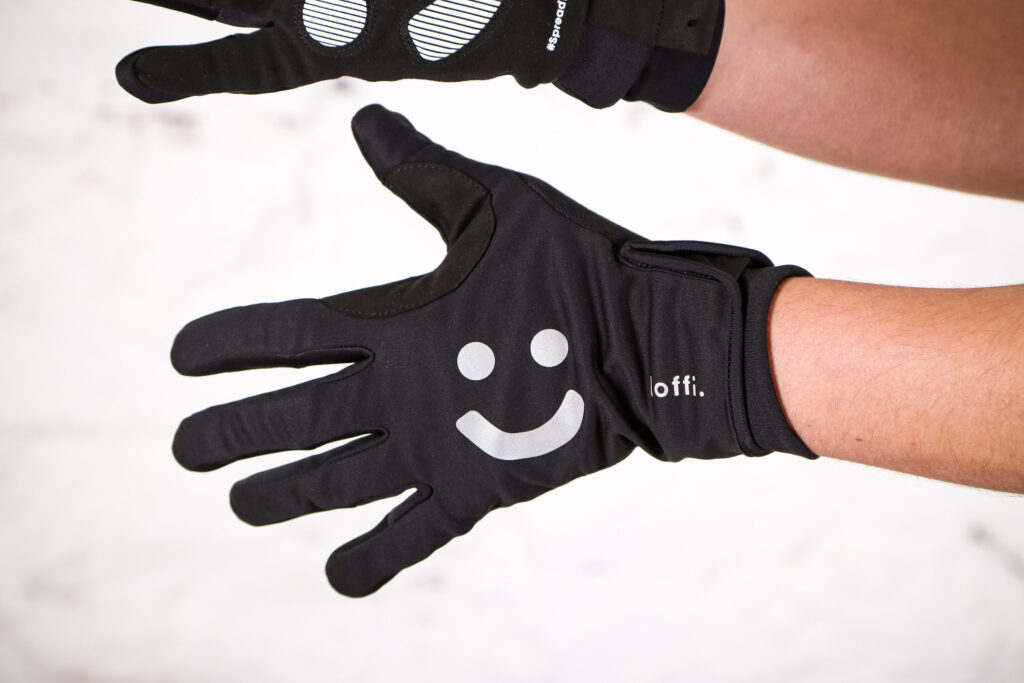
Loffi hit Kickstarter with the first version of its smiley cycling gloves in 2018, surpassing the £5k crowdfunding goal in 36 hours and eventually raising just shy of £30k. Aiming to “make journeys more enjoyable… in the hope of shifting our road culture towards positivity, rather than anger,” the first two iterations of the Glove received positive reviews on road.cc and elsewhere, with the decent technical features showing Loffi is “more than just a pretty face”, as the brand says.
These days, Loffi makes winter gloves, summer gloves, and fluffy gloves, all decorated with the smiley face, plus liner gloves, which aren’t. Stock was low on loffi.cc when we last checked, but we’re told that new Quick Mitts are on the way and the website will be updated to allow pre-orders.
Verdict: Hit
SpeedX
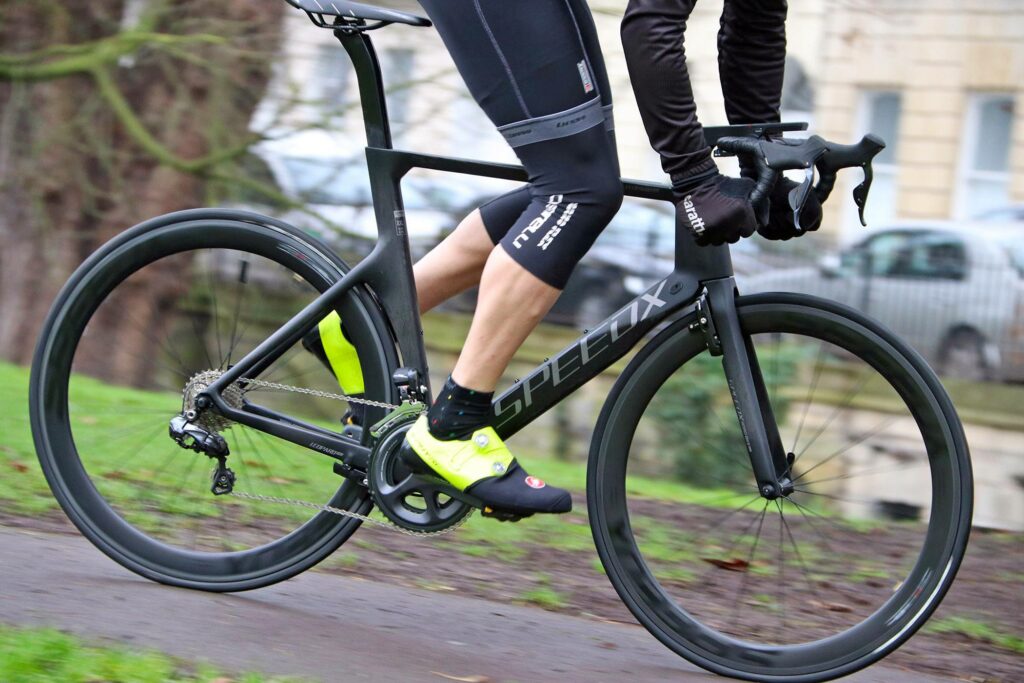
We’ll leave you with the king of all crowdfunding fails…
The Chinese startup behind SpeedX had a hugely successful crowdfunding campaign, raising almost $10 million for its original Leopard ‘smart’ road bike with an integrated computer. Once again, the overwhelming success proved to be part of SpeedX’s downfall, as the company had to figure out how to ship bikes to thousands who were promised a cutting edge product head and shoulders above the rest.
What was delivered fell way short of the mark, so SpeedX went to Kickstarter again and raised hundreds of thousands more for a new model, the Unicorn. The bike never materialised and countless people worldwide lost every single penny. As SpeedX went bust, owners of the underwhelming Leopard were left with a dud; a smart bike that was no longer smart, because the app no longer supported it.
The full story involving a wildly ambitious young entrepreneur, the Chinese secret police and hundreds of thousands of blue bikes dumped on construction sites was documented in this Herculean feature by Iain Treloar of Cycling Tips. If you were highly sceptical about purchasing your next bike through a crowdfunding platform already, SpeedX’s downfall might just put you off for good…
Verdict: Hopefully it’s already clear
What have we missed? Feel free to mention other crowdfunders that have been successful/unsuccessful/notorious below and they might make the next update.



















29 thoughts on “Where are they now? The best, worst and wackiest cycling crowdfunders and what happened to them”
I went through a period of
I went through a period of backing Kickstarter and Indiegogo projects.
So far…
See.Sense Icon2
Arrived on time. Disappointing battery life but worked well enough (except for the flaky Android App and non-functioning crash alert). Fell off with alarming regularity and then got lost as a result. See.Sense assured me that nobdy had ever complained about their lights falling off and sent me some videos of their lights not falling off. I’ve since found a dozen or more reviews on their website complaining about their lights falling off. I declined their offer of a half price replacement (half RRP is about what I paid in the first place. I notice that they’re proposing a different mount for the Icon3 that they’re currently crowdfunding. I’ll pass.
iTrakit
I knew this was a long shot when I backed it. I reckon if it does ever turn up the tech’ll be so out of date I’d be better getting a Tile (or an Airtag if you’re an Apple user).
Flectr 360 Wing
Yes, I probably should’ve just bought some cheap reflective tape. But now I have black reflectors on the black rims of my black bike. They’re cool, much cooler than spoke relfectors.
Shield Tail-Light
Yes, it’s a rear light with indicators. No, I don’t know what I was thinking.
OK, I do. I had a Cosmo Connected indicator/brake smartlight. Loved the idea but the bluetooth connection was flaky, battery life in the remote control was poor, and the rubber bands holding it in place broke. I got a refund. But I REALLY wanted it to work.
Apparently this is in the post. I suspect I’m gonna hate it and this time I won’t be able to get a refund. It doesn’t look anything like as nice as the Cosmo. Maybe they’ll launch a Cosmo2 on Kickstarter with better mounts and a longer batter life?
PSIcle Sensor
Pretty sure this is Road.cc’s fault. I read about it somewhere, probably here. I like gadgets and I’m too lazy to do maintenance on my commuter bike.
Will it ever turn up? Will it be any use if it does?
Who knows. Exciting, isn’t it?
Loop Mount Twist
I didn’t even need a phone mount – I already had 2. But then one got stolen, so I fitted the spare. That got stolen (along with my grips, bar ends and fitting for Cycliq and See.Sense lights).
You know what I should’ve invested in more of? Hexlox security fittings! At least they kept my wheels, brakes, shifter, etc. safe from the thieves who were clearly equipped with a variety of tools.
With a bit of luck it’ll turn up soon. Hopefully.
Farina Smart Bike Light
Why didn’t I just buy an SVTZO compliant light from Lexyne or someone?
I see they’re now selling these through the SmartLights store, but when you ask about delivery they go strangely silent.
As you can see – it’s an ilness. Somebody please stop me!
I’ve backed a few cycling
I’ve backed a few cycling KickStarters but mostly they’ve been not very good. I got my Cycliq 12 from KickStarter and that’s definitely been a success, but similarly I got a couple of titanium Knog Oi bells which are pretty much useless with their underwhelming ring and rusty springs.
Excited for my CoffeeJack (https://www.kickstarter.com/projects/hribarcain/coffeejacktm-the-pocket-sized-barista?term=coffeejack) that might actually materialise soon.
Amost forgot – still waiting on the See.Sense Air. The last update stated a delivery date of early 2022.
9-10 bar of pressure with the
9-10 bar of pressure with the CoffeeJack!
Will it do tyres? Surely missed a (Kickstarter) trick there 😉
zero_trooper wrote:
I bet it would takes ages to fill a tyre if it could. Apparently they based the design on car hydraulic jacks – hence the name CoffeeJack.
hawkinspeter wrote:
STILL WAITING for my See.Sense.Air – sorry, re-branded with it’s likelihood of arriving – the See.Sense Knowhere
(Surprisingly I actually received my CoffeeJack after the most incompetently run campaign that I’ve ever seen. They kept trying to get extra money from backers for priority shipping and kept delaying it. They sent out incorrect addresses after asking backers about fifteen times to fill in their details as they kept losing them. The machine itself looks okay, but isn’t great and I almost never use it).
I bought the carbon tailfin
I bought the carbon tailfin rack in 2017 for my daily commute as could easily switch to the roadie when the weather was good.
Using the alloy version now as it fits much fatter tyres. It’s a brilliant system and IMO well worth the money for the ease of installation/removal and zero rattle when pack is attached.
I backed the Kickstarter
I backed the Kickstarter project for Daysaver (https://daysaver.fun/product/original9-carrier1/), and the delivered product is extremely nicely made, as you would expect for something manufactured by PB Swiss Tools. Much more expensive than most multitools, but also much more convenient to use.
That is a nice little tool.
That is a nice little tool.
Hi, for me Swytch was a
Hi, for me Swytch was a bruising experience, and 300 euros down the toilet. i got it for my brompton ( 2005 ) model, and it was much more difficult to fit it than in the slick company videos that made it look like childs play to fit to anything , including bromptons. But anyway, i improvised and got it fitted and working. However, i ended up with a consistent recurrent problem, whereby everytime i started all would be well for 2-3 km, then glitchy ++++, with the mechanism powering off – i read of many others who had the same issue, and the fix ( Hall connector os something, which came with the pack) didnt work either. Customer support was rotten, i eventually gave up on the whole thing and wrote it off. I urge all who use this compnany to do their research, – my verdict – looks slick, is shit .
I dipped my toes into the
I dipped my toes into the world of kickstarters for the first time last year, with the Hiplok D1000 and the Jack the Bike Rack. Both are due for delivery this spring, so fingers crossed. Comms from both have been good to date.
PLP & bikepacking.com both
PLP & bikepacking.com both had the Jack Rack as an ‘accessory of the year 2021’ (their wording may differ). I don’t think that it’s shipping until June.
The Hiplock, you’re on safe ground. Already an established company crowdfunding in order to bring a product to the table.
Thanks – yes, I figured the
Thanks – yes, I figured the Hiplock was a pretty safe bet. I’ve had an email update today on the Jack Rack (which I see has a really good review on here now) saying delivery in April or May.
Ah but it doesn’t withstand
Ah but it doesn’t withstand 305 mm portable angle grinders. Not that Dave X 2 ever came back with a link or apologised to either of us about cycling in Richmond park.
Steve K wrote:
Update on both of these. Both arrived (though the Jack wasn’t until the autumn) and both very good. Though no-one has tried to break the lock, so I can’t actually say if it works.
Are you looking for
Are you looking for volunteers ?
?
Chipped in for a Knog Oi. Did
Chipped in for a Knog Oi. Did receive a bell, but was disappointed how quiet it was. Put it in a drawer. Eventually put it on a bike I use. Knog apparently didn’t realise most road handlebars are 23.8 mm diameter until very late in the day!
Later I picked up a very nice silver Luxe version from a chap who got it for Christmas, on one of the forums. That’s now on another bike, and it really does work beautifully.
Far too fussy to set up,
Far too fussy to set up, would ‘ring’ – (more like whisper) on rough tarmac and eventually the strikers broke. Was never interested in following them further as I needed a bell others could hear. Nice styling exercise but first production was junk.
Far too fussy to set up,
Far too fussy to set up, would ‘ring’ – (more like whisper) on rough tarmac and eventually the strikers broke. Was never interested in following them further as I needed a bell others could hear. Nice styling exercise but first production was junk.
I backed and eventually
I backed and eventually actually got a Helix folding bike, https://www.helix.ca/
It was promised that delivery was around three months, five+ years later, right at the start of the first lockdown it suddenly arrived, and it’s pretty blimmin’ good, apart from no mudguards on a commuter bike, they are promised to be coming, ha ha.
I dip into the backers forum now and then ( to see if there are any mudguards yet), it’s pretty much very angry pitchfork waving people, who have waited 7 years for a bike they paid for. I was number 350 something, 2.5 years later they 700 is still waiting.
The company has prioritised selling full price ones to keep afloat, but I would be fuming if I was still waiting. there is a refund option, and some have taken that and plan to buy a full priced one, I paid about 1 grand, and they are now 2+
No more kickstarter for me, I also bought an oi bell kickstarter, thats in a draw somewhere, total crap
I got a matched pair of
I got a matched pair of Liteloks in a kickstarter campaign. Pretty happy with them and still using them, though I can’t say I’ve put them to a real test of thief resistance.
By the looks of it, some of
By the looks of it, some of the unsuccessful projects stole, err, made a lot of money from would be investors. The Chinese one doesn’t surprise me in the least bit that they would steal $10 million dollars from “wealthy” Westerners so they can be rich; thank you for your donation!
Ding FL1 bike front light
Ding FL1 bike front light (the one that shines a box down on the ground) 5? Can’t Trent years later and still going strong at 100% ish of its battery capacity still. I don’t use it for the down light box but I’m just front 2 leds it’s very good for 3 hours in the pitch black
I got one of those too. Not
I got one of those too. Not used it for ages mind you. Wonder if it still works ? It was a great light.
No mention of http://balls
No mention of http://balls.bike … ?
Seem to be many power meter
Seem to be many power meter missed attempts, which doesn’t surprise me, it’s a difficult thing to get right for a decent price. I bought a Limits power meter on Kickstarter. Worked ok for about a month, then overread massively (Zwiftpower thought I was Cav for a bit), then failed. I actually got a 2nd gen replacement but eBayed it on arrival as I was too nervous about its performance. So I came out roughly evens in the end, but I see they’ve gone into administration now. Shame because, good idea, but the challenges of a startup are very easily underestimated. I know, I’ve been part of a few.
Had a little look at the
Had a little look at the Fectr site. They do helmet reflectors that they claim will not harm “paintwork”
I was a backer of the Brim
I was a backer of the Brim Brothers Zone DPMX. It was a really nice idea, and it would have been amazing if it had been possible. I backed it on that basis, and am happy it paid for Brim Brothers to do the R&D on this.
Ultimately, it wasn’t possible. Even if the motion tracking and plate had worked out, that strap from the plate to the pod was a big issue on longevity – it wasn’t going to last, and solutions were unlikely. The sensor plate was also a physical weakpoint.
It was worth a try though. All the best to Barry.
Velocomp introduced its
Velocomp introduced its PowerPod power meter on Kickstarter in 2015. Not only did PowerPod work (!), it got a great review from DC Rainmaker and it shipped on time! Since then many, many thousands of PowerPods have found their way on to bikes around the world, and the fourth-generation version PowerPod is in the market today. In 2018 PowerPod’s related cousin for CdA measurement, AeroPod, was brought to market and also is in production.
Bike light idea – please head
Bike light idea – please head over to Kickstarter to support.