


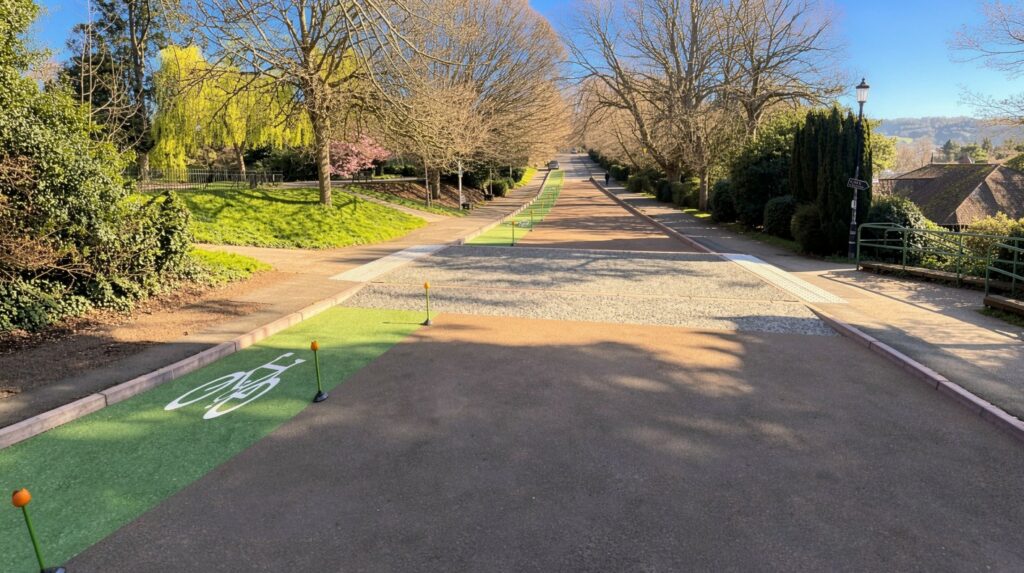

Work is set to begin this autumn on a new contraflow cycle lane around a park in Bath, despite local cyclists questioning the need for the new infrastructure due to the pre-existing shared pedestrian and bike path already in place.
Last week, Bath and North East Somerset Council announced that construction will be begin on the new cycle lane, along with resurfacing works and the installation of new crossing points, in Royal Victoria Park this autumn.
Royal Victoria Park is one of the city’s largest public green spaces and includes a clockwise-looping, one-way ring road. The £2.35m project forms part of the Bath Walking, Wheeling, and Cycling Links programme, which aims to better connect the surrounding area to the city centre’s infrastructure, with the new cycle route connecting to the Upper Weston suburbs to the city.
The cycle lane will run through Royal Victoria Park alongside the ring road on its western and southern side, with cyclists travelling in the opposite direction to motor traffic on the road. Heading out of the city, cyclists will be expected to follow the single-lane road, which features multiple traffic-calming chicanes and a 10mph speed limit.
The council’s initial proposals were criticised by residents and the local Green Party, who argued the “isolated and unlit” nature of Royal Victoria Park made it unsafe for women and children to cycle in the dark.
As we reported earlier this year, following a public consultation, the local authority submitted revised proposals, which added pedestrian crossings, pledged to resurface the footpaths on both sides of the road, and introduced tulip-shaped wand kerbs separating the contraflow cycle lane from traffic (the previous designs only featured a painted cycle lane).
The council also said “eco-sensitive heritage lighting” would be installed at regular intervals along the cycle lane.
According to the council, the scheme will address concerns about cyclists riding “dangerously” on the pre-existing shared pedestrian and cycle path, which cuts diagonally across the park, making it “safer and more welcoming for everyone”.
However, the project has been widely criticised by locals, including cyclists who regularly use the park. 84 per cent of the 864 respondents to the council’s public consultation voiced their opposition, with the most common reason being that cyclists can already ride through the park.
In their survey response, one local said: “I’m a cyclist so I’m very pro cycle lanes. I can’t really understand what problem this is solving.
“What’s the point? It’s like building another Bathampton Bypass right next to it. There’s just no point.”
Another resident said: “I use the park at all times of day and night as a pedestrian and cyclist. I use my bike to get from A to B, not just for leisure. I never experience or see anyone else experience any difficulties whatsoever with cars, pedestrians, or cyclists. The park is used amicably by everyone.”
“I’m a keen cyclist myself and support improvements such as better lighting. We want a park that is safe and accessible for everyone, but many of us feel our concerns about this particular scheme haven’t been properly addressed,” Andy Watson, who helped organise a meeting of residents opposed to the scheme earlier this month, said.
“We’re asking the council to pause implementation, meet with concerned park users and explain the evidence behind its decisions.”
That view concerning the park’s lighting was echoed in August by Green councillor Saskia Heijltjes, who said in a statement: “We want to be able to support efforts to make walking, wheeling and cycling an option for more people but we cannot support the plans for Royal Victoria Park.
“Even with additional lighting, a secluded and quiet route through a park is often experienced as socially unsafe.”
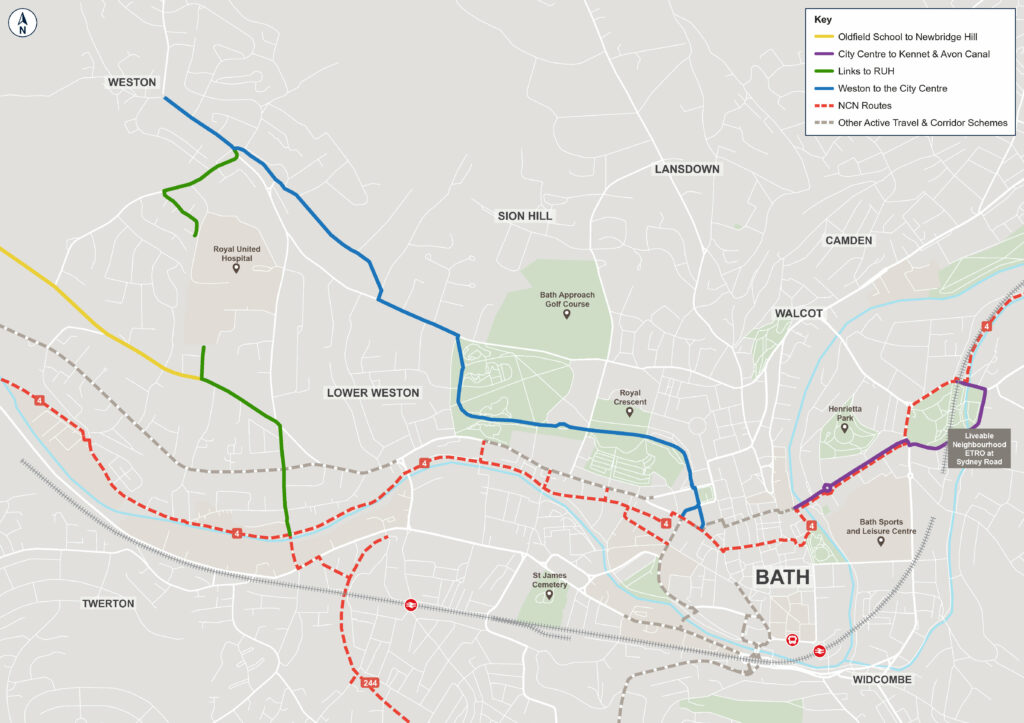
However, one Bath cyclist argued in their response that the scheme will create a safer route for people on bikes between Weston and the city centre.
“I’m the father of a kid and look forward to having a quieter route to be able to cycle to town which is protected from cars as they are learning to cycle,” Dan said.
“It also is beneficial for my elderly parents and friends who visit who are less confident than me on a bike. If there is going to be cycle infrastructure anywhere, it should be in a park.”
Meanwhile, other locals have expressed concerns about the speed of cyclists in the park, while arguing that the installation of a contraflow cycle lane will only make things more dangerous.
“Myself and many other people have almost been hit by cyclists coming down the diagonal tarmac path at speed, often from behind us,” park user Theresa said.
“Putting a cycle path running in the wrong direction downhill and directly above the playground is a real concern. While there are cyclists who do ride slowly and responsibly, there are others who ride through the park recklessly and at speed.”
Another local added: “The thought of parents needing to coral a group of children to cross a road, in effect subject to two-way traffic is a real safety issue. The area is well served by a cycle lane on Weston Road and one on the Upper Bristol Road. Why on earth cyclists cannot follow the rules of the road and cycle around the one-way system on a road with a 10mph limit is beyond me.”
The planned cycle lane has also attracted criticism due to the removal of car parking spaces on the road, though the council has noted that 87 per cent of the existing spaces will remain.
Announcing the plans to commence the work, council cabinet member Lucy Hodge said: “Cyclists currently share footpaths with pedestrians in parts of the park, which is not ideal for either. This is about creating safer, fairer access to the park, however people choose or need to travel and whatever their age or ability.
“We are encouraged that following our work in the city to provide active travel routes, the much-loved Royal Victoria Park is increasingly being used for leisure with fewer people using it as a commuter car park. Visitors will benefit from renewed footways, dedicated crossing places and new heritage style eco-lighting, making the route safer, more welcoming and more accessible to all throughout the year.
“We’re closing a gap in the cycling network by allowing people to travel through the park legally and safely in both directions for the first time. The new contraflow cycle lane provides a family-friendly route and moves cyclists away from busy pedestrian areas, improving links to the city centre. We’ve listened to residents in shaping the design, which has been subject to detailed safety assessments.
“We are retaining 177 parking spaces in Royal Victoria Park and, with new short-stay bays on Weston Road, 87 per cent of current parking provision will remain. Recent surveys show there will still be enough parking to meet demand even on the busiest days. We’re also doubling the number of accessible parking bays, close to key amenities including the play area and Botanical Gardens.”
The work is expected to be completed by mid-March.














1 thought on ““What’s the point?” Work set to begin on controversial contraflow bike lane through park as baffled cyclists say they “can’t understand what problem this is solving””
To understand any active travel scheme, you only really need to ask one question:
“How does this impact on free/cheap parking?”
In this case, it explains the majority of the ‘controversy’
It is not long since someone sat on a bench in RVP was hit by a driver and hospitalised. But do let’s worry about those “speeding cyclists”.
https://www.somersetlive.co.uk/news/somerset-news/teenager-hit-car-sat-bench-11070561.amp