
Over the weekend, many of the world’s best gravel riders descended on the small town of Nannup, deep in the forests of Western Australia, for what many had hoped would be the first ‘true’ Gravel World Championships.
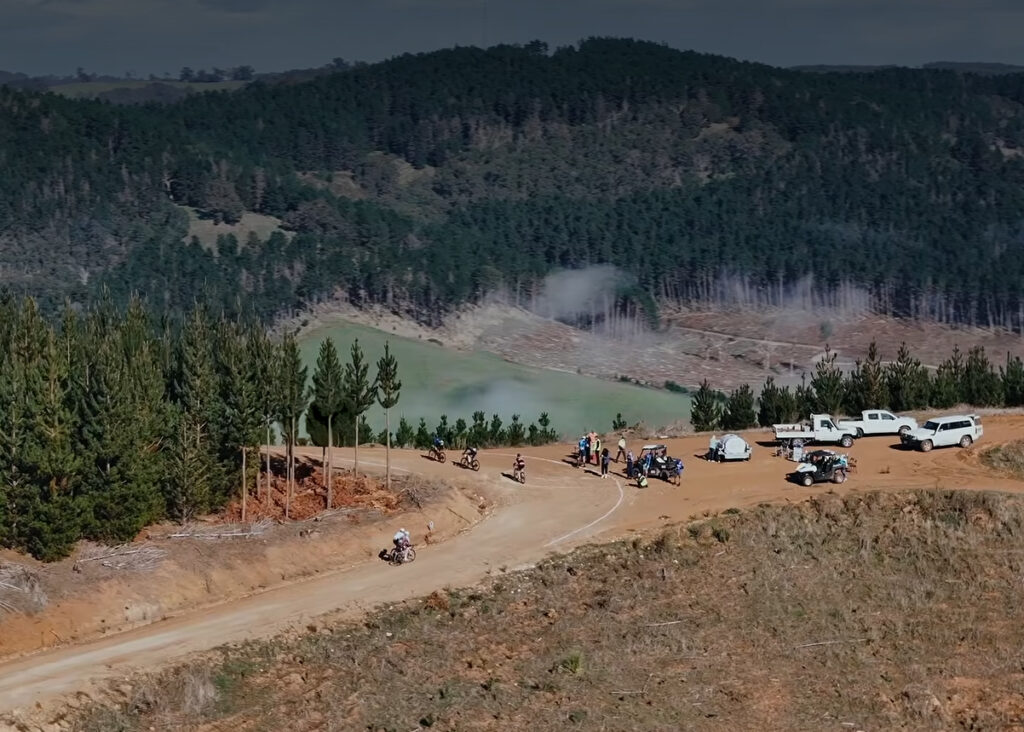
After four editions held in Europe, the move to Western Australia represented a significant change of scenery. Rather than predominantly smooth, fast gravel roads, the courses around Nannup offered a demanding combination of loose ‘pea gravel’, technical descents, relentless climbing and remote forest roads. It was a test of both fitness and bike-handling ability, and one that seemed to capture the essence of gravel racing.
The weather added another layer of difficulty, particularly for the women on Saturday, with rain before and during, while Sunday’s men’s races had drier, but still overcast and cool, conditions. Across both days, the racing delivered drama, close finishes and some impressive performances from British riders.
Vos takes the title as Klöser suffers late heartbreak
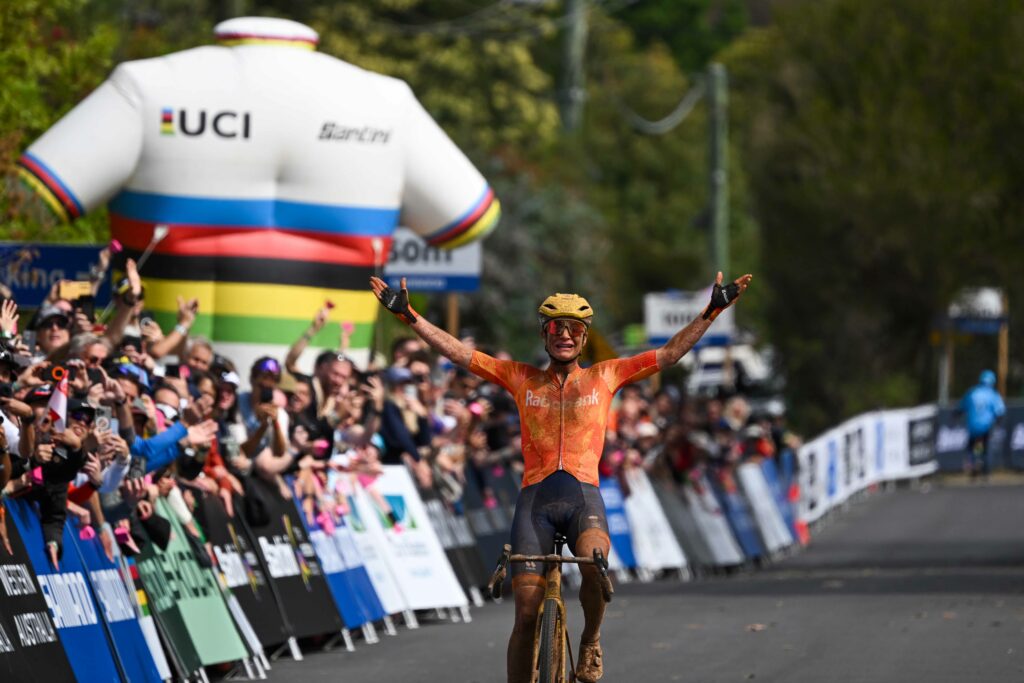
Saturday’s Elite Women’s race covered 125km, with Marianne Vos taking her second Gravel World Championship title in a time of 4:30:04.
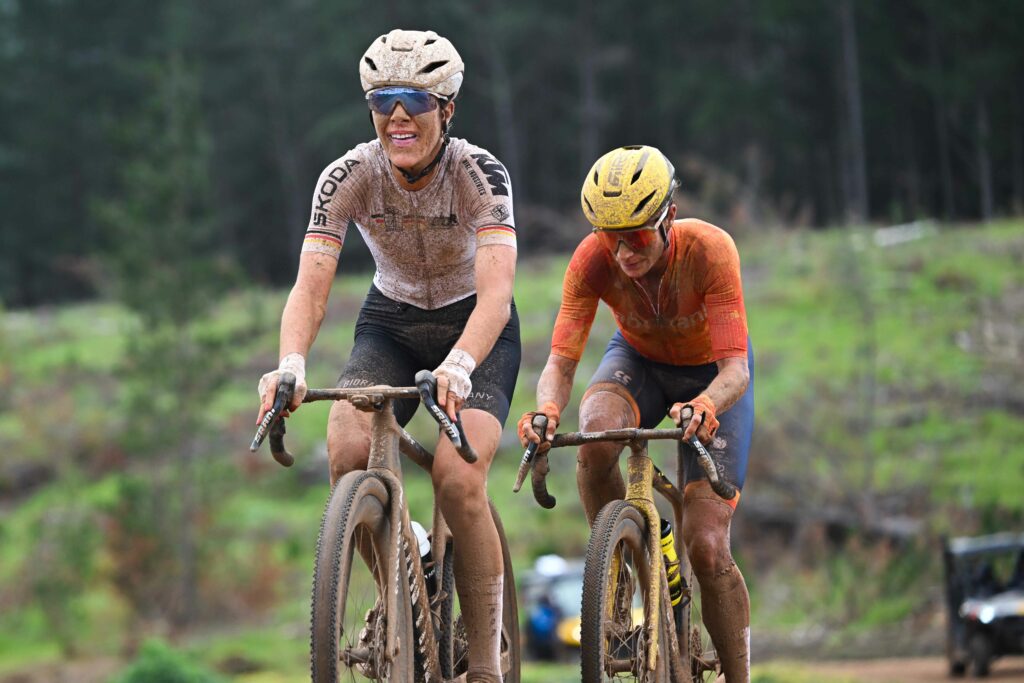
Rosa Klöser fought back after an early mechanical problem and looked to be on course for a two-way sprint finish with Vos. However, the German’s hopes of victory ended heartbreakingly when she crashed just a few kilometres from the finish, leaving Vos to take the win.
The conditions were far from what many might have expected in Western Australia. Temperatures barely climbed above 10°C, while rain before and during the race left parts of the course slippery. The damp weather turned the dusty, sand-based surfaces into mud in places, although it also appeared to take some of the drift out of the loose pea gravel.
British riders produced a series of solid performances, with four finishing within a relatively short period. Sophie Wright led the group in 17th, followed by Elizabeth Hermolle in 19th, Flora Johansson in 21st and Maddie Nut in 22nd.
A four-way sprint decides the men’s title
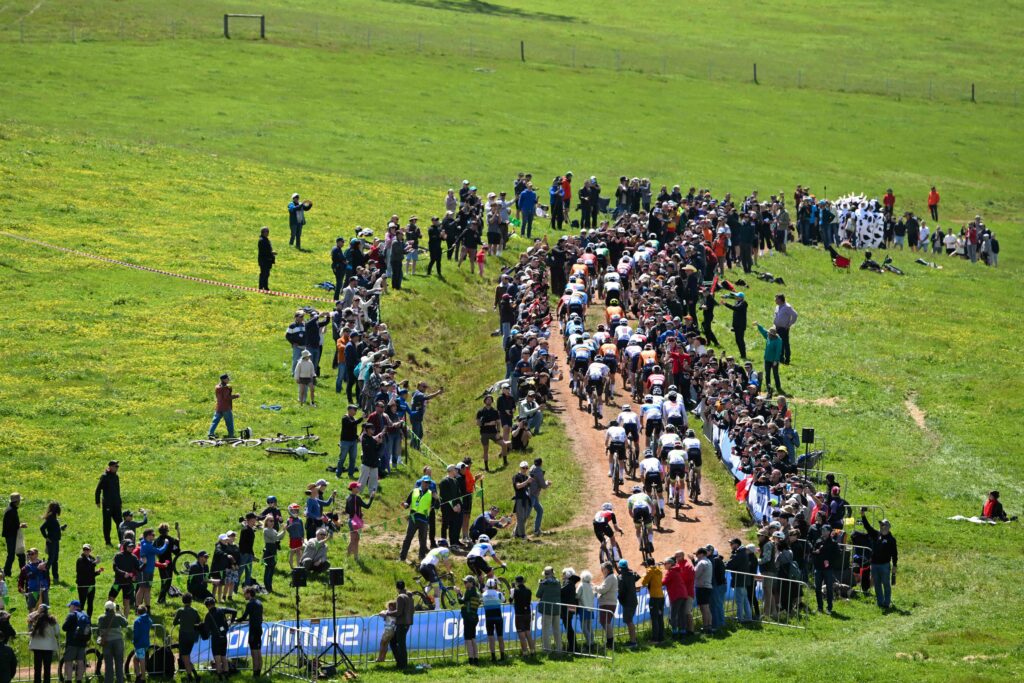
Sunday brought blue skies for the men’s races. Although cloud eventually rolled in, conditions remained largely dry for the elite men’s event, which covered 144km and more than 3,200 metres of climbing.
British rider Jenson Young immediately made his presence felt, pushing the pace early and remaining in the mix alongside some of the biggest names in gravel racing. He continued to impress throughout the race, showing that he could compete with the established stars.
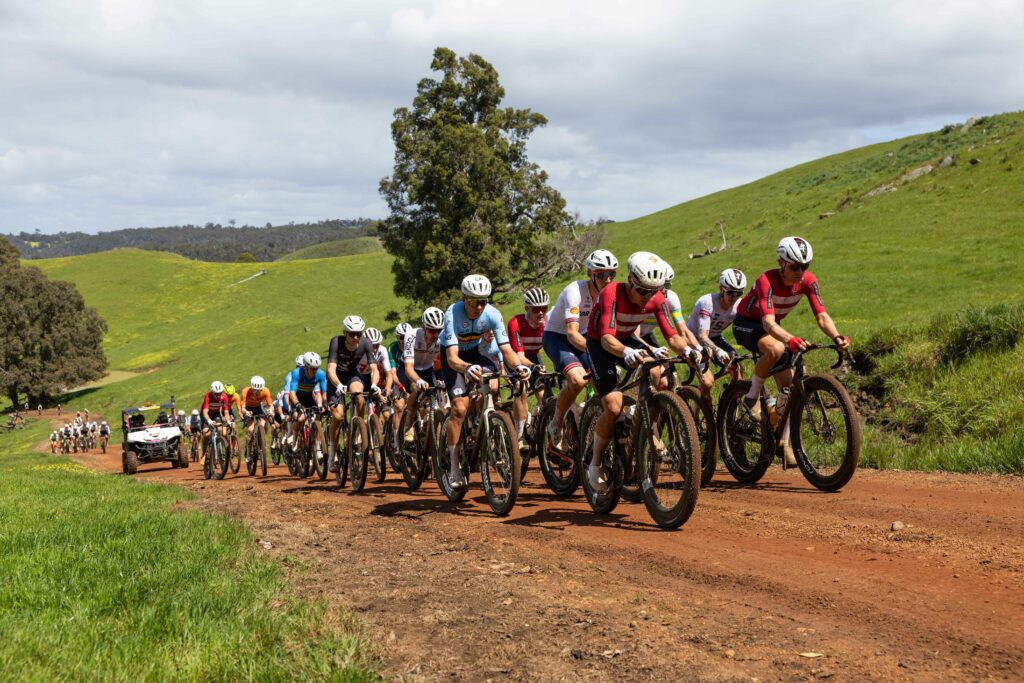
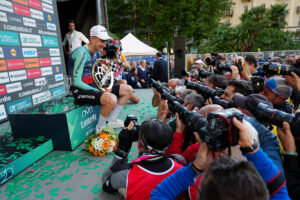
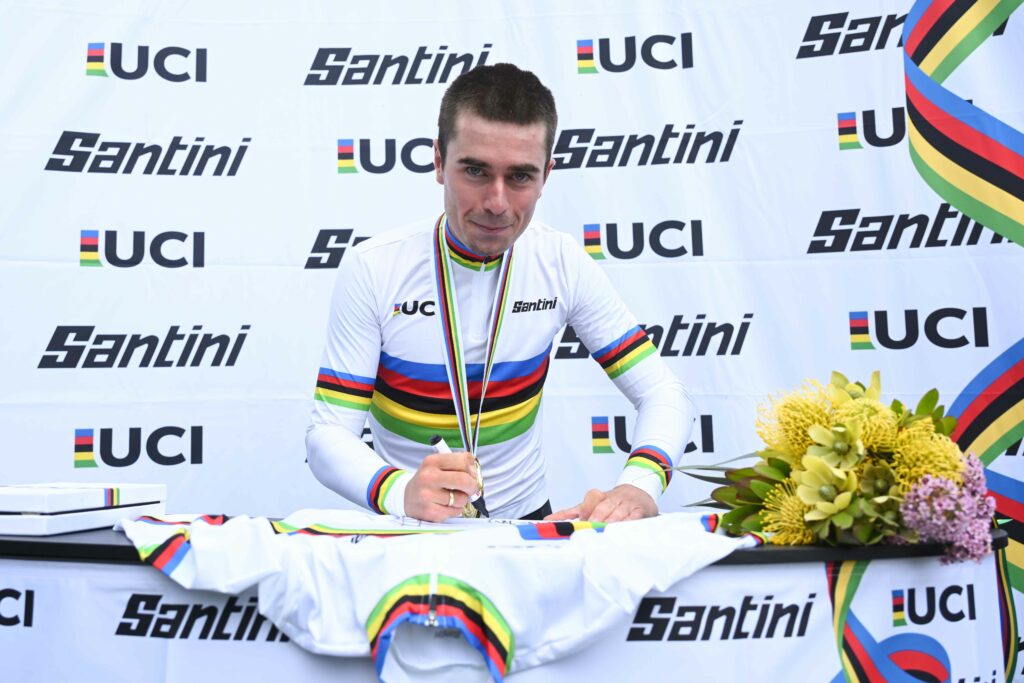
After more than four hours of racing, the world title came down to a four-way sprint. Denmark’s Magnus Bak Klaris timed his effort to perfection, edging defending champion Florian Vermeersch, Britain’s Conor Swift and fellow Dane, Mads Würtz. All four were credited with the same finishing time of 4:09:05, at an extraordinary average speed of 34.33km/h over such a demanding course.
Paul Voss finished fifth, with Keegan Swenson sixth, just seven seconds behind the leaders, while Martin Stošek was another second further back. The closeness of the results underlined just how competitive the race had been.
Jenson Young eventually crossed the line in 14th, an impressive result that further established his credentials as a world-class rider. Fellow Brit Travis Bramley finished 67th.
There was also British success in the men’s 19–34 age group, where Patrick Hughes claimed third place and was the sole British rider on an age-group podium, with compatriot Patrick Kiehlmann finishing fourth just a few seconds behind.
Setting the benchmark for future Gravel World Championship events
The organisation, the town of Nannup and the Western Australian government, the latter of which supported the event, delivered something genuinely special. This ranks among the best events I have ever raced, and I suspect many of the other competitors would say the same. I’ll outline my race experience in another feature coming soon.
The course was a huge part of that. It was a world-class route that felt true to the spirit of gravel racing, with loose surfaces, a few technical descents, sustained climbing, and long stretches through remote landscapes. It rewarded riders who could combine endurance with bike-handling skills, rather than simply those who could produce the highest power on a smooth road.
The crowds were equally important. From the inflatable cows in the forest to the kilometre of spectators near town, the support created an atmosphere that elevated the entire experience.
Nannup set a high benchmark for what the Gravel World Championships can be. The question now is whether future hosts will be able to match it.
Where next for the Gravel World Championships?
The 2027 UCI Gravel World Championships will move to Châtel in the French Alps, followed by Saudi Arabia in 2028. Switzerland is scheduled to host in 2029, Belgium in 2030, and Trentino, Italy, in 2031.
Each venue will bring its own character, and the move to the Alps could provide a very different kind of challenge. France may not have developed the same profile in gravel racing as some other countries, but that doesn’t necessarily mean the event cannot succeed there. A challenging course, good organisation and strong local support can go a long way.
Nevertheless, Nannup has raised some important questions about the direction of the discipline, and whether future editions can deliver the same experience.
The UCI’s gravel series is managed by Golazo, an experienced events management company operating in a commercial environment. While the worlds are ultimately about crowning the best riders on the planet, staging an event of this scale also must make financial sense. The UCI needs a commercially viable championship, and Golazo needs to deliver an event that generates sufficient revenue to justify the investment and remain profitable. That means host destinations must be willing and able to put money into staging the race, attracting visitors and promoting the region internationally. The quality of the course matters, but Golazo won’t accept a bid from a region simply because of the quality of the gravel terrain.
Western Australia was in a strong position to do exactly that. The state has substantial natural resources and the financial capacity to invest heavily in promoting itself to an international audience. Millions will have been invested in bringing the championships to the region, and the organisers have delivered a showcase that should help put Nannup and the wider area on the map. From that perspective, the event has been a success.
But commercial viability and sporting ambition do not always point in the same direction. The best venue for gravel racing is not necessarily the one able to offer the biggest financial package, and that creates a challenge for a discipline whose appeal is rooted in varied terrain, remote landscapes and a sense of adventure.
When I look at the calendar, I wonder when we will see another venue that offers the same combination of challenging terrain, a genuine gravel-racing identity and an atmosphere that feels distinct from conventional road racing. Others will question when the championships will finally head to the United States.
The US already has an established gravel scene, with the Life Time Grand Prix providing a high-profile series for the sport’s leading riders. Yet American gravel racing and the UCI World Championships remain separate propositions. For the championships to move across the Atlantic, there would need to be a host and an organising team willing to make the necessary financial commitment. Unless that investment stacks up commercially, it may be difficult to make the move happen, regardless of how strong the American gravel scene is.
My hope is that the European venues on the calendar deliver courses that capture more of what made Nannup so special. I would love to see the championships return to places where gravel racing feels distinctly different from road racing, with varied surfaces, technical challenges and an atmosphere rooted in the local riding community.
Nannup showed what is possible when the course, the location, the organisation and the local community come together. After this year’s event, expectations have changed. The benchmark has been set, and future organisers will have a lot to live up to.