


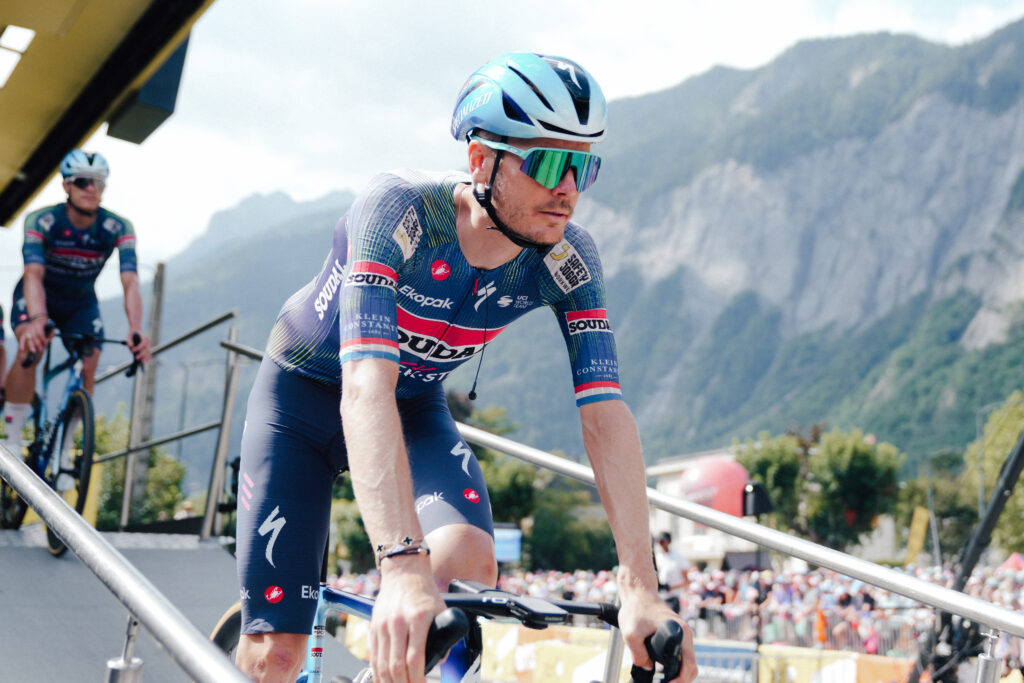

Soudal Quick-Step’s Dylan van Baarle suffered a fractured wrist and a blow to the head in a collision with a motorist in the Netherlands yesterday. According to his fiancée, 2025 Tour de France Femmes champion Pauline Ferrand-Prévot, his cycle helmet “definitely saved his life.”
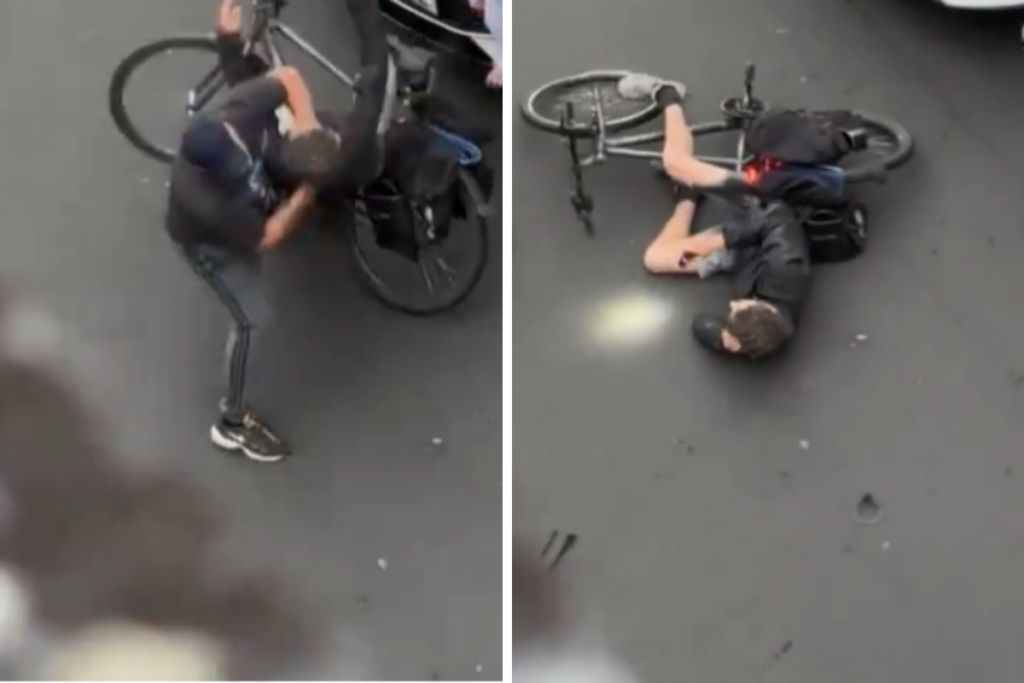
The collision occurred on Wednesday morning in the town of Tiel while Van Baarle was out on a training ride.
Het Laatste Nieuws reports that the Dutch rider, a former winner of Paris-Roubaix, was taken to hospital where a CT scan was conducted, revealing no damage to his skull or spine.
Writing on Instagram, Ferrand-Prévot went so far as to credit his helmet with saving his life.
“Dylan got involved in a car accident while he was training this morning,” she said. “He got immediately transferred to hospital.
View this post on Instagram
“He got a big impact on his head, the helmet definitely save [sic] his life. He got a broken arm as well, and the surgery will take place tomorrow (thanks Soudal Quick-Step for the quick care).
“I’m really grateful that things turned out pretty well.”
The two riders are due to marry in a matter of weeks and Ferrand-Prévot added: “I’m going to sleep alone for a few nights, but that [sic] the tradition before the big wedding day I guess.”
Public reaction
Given there are almost no details on the specifics of the collision, some may feel that highlighting the contribution of the helmet encourages a perception that this was somehow the most significant element of the incident.
This interpretation is something TV presenter Dan Walker happened upon when he was hit from behind by a motorist while cycling in 2023.
> Dan Walker “glad to be alive” after being hit by a driver while cycling
“The helmet I was wearing saved my life today so – if you’re on a bike – get one on your head,” he commented on the day of the collision.
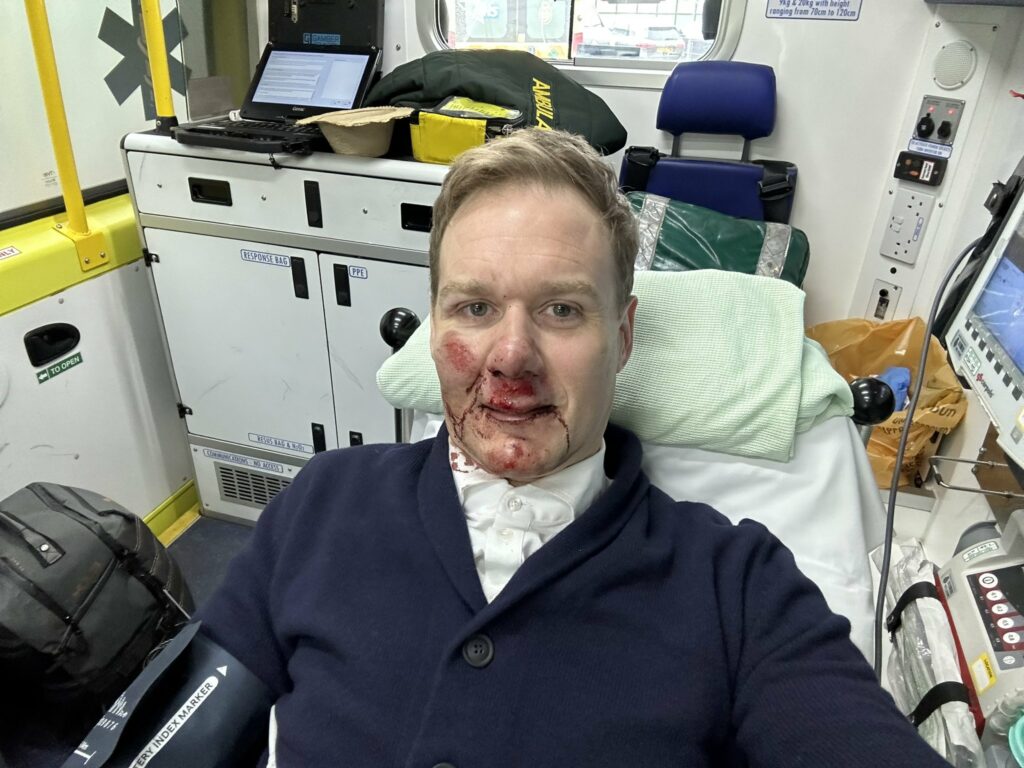
A social media storm ensued. The ins and outs of it were well covered by Ryan at the time, but the crux of the criticism was that by making a point of emphasising the contribution of his helmet, Walker was diminishing – perhaps even distracting from – more significant aspects of road safety.
In 2014, National Active Travel Commissioner, Chris Boardman – at that time British Cycling’s policy advisor – described the “helmet issue” as a “massive red herring” which was “not even in the top ten of things you need to do to keep cycling safe or, more widely, save the most lives.”
Summing up his position on the matter, he said that, “People who are wearing body armour get used to being shot at, when it’s the getting shot at that’s the problem.”
> Chris Boardman: “Helmets not even in top 10 of things that keep cycling safe”
Boardman in fact referenced the Netherlands to make his point. At the time, just 0.8 per cent of cyclists there wore helmets, yet the Dutch had the lowest rate of cycling head injuries thanks to the levels of segregated cycling infrastructure.
Writing in the Sunday Times in the wake of his crash, Walker expressed similar sentiments. “I have cycled in Amsterdam where ‘hardly anyone wears a helmet’ and it’s great, but the whole transport culture revolves around two wheels.”
There has however been a shift in emphasis in the Netherlands in recent times. Last year the ‘Put It On’ campaign was launched, urging people to voluntarily wear helmets after new road safety statistics revealed that 17 per cent of all cyclists involved in crashes in 2024 suffered brain or skull injuries.
The campaign is initially aimed at children, commuters, and elderly people with a goal of 25 per cent of all cyclists opting for a helmet within ten years – a 600 per cent jump on the situation now. Most sport and fitness riders – such as Van Baarle – already routinely wear helmets.

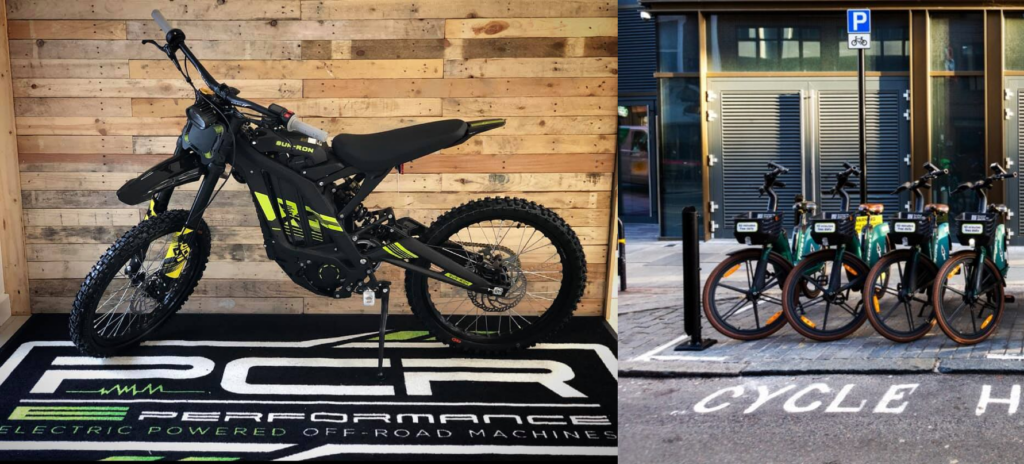
Speaking at the launch of the campaign, intensive care neurologist Marcel Aries alluded to some of the reasons why serious cycling injuries continue to rise. He said the country needed to be open to new rules and better infrastructure, “because cycling traffic is so different from 10 years ago, with speed pedelecs that go at 40kph, e-bikes, and normal bicycles all on a relatively narrow cycling path.”
Dutch emergency department data indicated that injuries involving e-bikes doubled between 2020 and 2024. E-bike riders are 1.7 times more likely to be injured in a crash than pedal cyclists and the risk doubles for riders aged 50 or older. The report attributed this to higher average speeds, heavier bike weights, and greater speed differences in traffic.





26 thoughts on “Bike helmet saved Dylan van Baarle’s life says Pauline Ferrand-Prévot after Dutchman’s collision with car driver weeks before their wedding”
Chocks away…
“Props to her for saying this – anyone who rides without a helmet is just plane stupid…”
A few strips of brittle and soft polystyrene that break easily are not going to stop serious injuries. They are very good at stopping low-speed crashes, bumps, and bruises, and that’s it.
It’s amazing how many people who crash and break their helmets tell us, “Look how my helmet is broken; it definitely saved my life”.
@kingleo And there are hundreds, if not thousands of pictures of people holding up a shattered helmet saying it saved their life, ‘the medic/policeman told me.’
But it can’t be true because the death rate of cyclists doesn’t fall as helmet wearing rates increase.
@kingleo Yep.
Somehow a helmet prevented any serious head injury, in an impact strong enough to break an arm (a bone comparable in strength to the skull…)
And people will quote this as proof, while ignoring that the person making the statement has relatively limited expertise.
For useful data on effectiveness of helmets, see skiing – similar risk, similar level of protection (to the extent that some ski helmets are certified for cycling) and better data (usage tracked by lift gate photos; milage tracked by uplift from lift passes at lift gates; injuries tracked by piste patrol rescue against lift passes; recent massive changes in rates of helmet wearing).
Oh; Huge reduction in all injuries; No impact on fatalities (and minimal impact on serious injuries);
Basically for skiing, wearing a helmet is well worth it, because it means you don’t lose half a day and pay a small fortune for the piste patrol to take you down to the clinic at the bottom to get your cuts bandaged.
But the helmet isn’t preventing death. Its preventing cuts that a decent first aider can treat.
I suspect this is similar to why you should wear one mountain biking – the minor cuts and bruises become a LOT more serious when your in the middle of nowhere with access requiring specialist equipment or long hikes.
@qwerty360 “Oh; Huge reduction in all injuries;…..”
Which reminds me of the original Thompson, Rivara and Thompson study about cycle helmets, which found that helmets prevented 85% of deaths, but when peer reviewed, it was shown that helmets prevented injuries to all other parts of the body. That study was absolutely the most awful piece of original research about cycle helmets, completely invalid, but it’s still the most quoted.
You don’t say where the figures you quote come from, but I’m sceptical of their validity.
@eburtthebike
Hmm; Lost my original reply.
I think the key point to (likely pro helmet biased research given funding sources etc) for ski helmets is that basically all research says they make no difference to fatals and minimal if any difference to serious injuries (despite claims of massive effectiveness). (Outside of some older research into racers where a reasonable look is the benefit is related to secondary impacts – the helmet doesn’t prevent injury, it prevents the distraction after racers get it wrong and clip a gate (fibreglass pole on a spring) head first that leads to subsequent dangerous crashes when they lose control at 80-100mph…))
Showing part of the problem with ‘XX% reduction in all injuries’ claims (which they now seem to use in ski helmet promotion to imply its a XX% reduction in deaths or hospitalisations rather than because 90+% of injuries are minor cuts from catching a ski edge/pole in a fall where treatment is clean and put a plaster on it…)
A 70% reduction in incidents with total harm being cuts and bruises can easily be a 60% reduction in all injuries because theres likely dozens of serious injuries for every fatality and dozens of minor injuries for every serious injury (and dozens of near misses for every injury…)
“People who are wearing body armour get used to being shot at, when it’s the getting shot at that’s the problem.”
People who are wearing body armour get used to being shot at because they survive. People not wearing it die the first time they are shot. So they don’t really have much chance to get used to being shot at, do they?
But seriously if you don’t want to wear a helmet and you’re an adult, no-one should have the right to make you wear one.
@Terry Hutt I don’t support mandatory helmets either, but I always think that’s a daft analogy (I realise you’re not quoting it approvingly): if people shooting in the streets was a regular problem, I’d campaign against it vociferously and expect the authorities to do something about it, but I’d still wear body armour unless and until the problem was sorted out. It’s perfectly reasonable for people to question the efficacy of cycle helmets, but the claim that wearing one is somehow to be accepting dangerous driving and poor infrastructure is silly.
@Rendel Harris “…..but the claim that wearing one is somehow to be accepting dangerous driving and poor infrastructure is silly.”
Not that silly. Demanding that cyclists wear a helmet is seen by many people as ‘the answer’ to cycling safety, so there’s no need to put in infrastructure.
The difference between infrastructure and helmets is that infrastructure works.
Helmets are a distraction from what really works, and the more time we spend talking about them, the less time we spend on things that do work.
Helmets should be consigned to the dustbin of history as a failed experiment, and we should cease even mentioning them.
I wasn’t saying that nor talking about people who say that. I said it was silly to claim that wearing a helmet indicates acceptance of dangerous driving and poor infrastructure. I choose to wear a helmet; I also regularly report dangerous driving to the police and correspond with councils and road authorities about ways infrastructure could be improved for cyclists. I rather doubt I’m the only helmet wearer who does so.
No idea if they still do it (the writing on my helmet is too small to read). There was a label inside stating, “Don’t expect too much from this helmet”.They were never designed to be used for racing; at the speeds that modern professionals go, they need to wear motorcycle helmets. I always wear mine when I go shopping in case I trip over and hit my head on the ground.
@kingleo I’ve still got a label from a helmet, and it says something like ‘this helmet may not protect you in all foreseeable accidents’ which just gives them an out when someone claims that it didn’t work. Not sure the professionals should wear motorcycle helmets, as they are heavy, very well insulated and only work up to about 16mph: not sure you’d win too many TdF’s at that speed, and anyway, your brain would fry.
I do try not to enter into discussion with you on this Bert, because I know you will never change your stance one iota, but I’ve crashed a motorcycle at around 35 mph and hit my head on the kerb hard enough to compress discs in my spine and tear neck ligaments but above the neck I came away with nothing worse than a mild concussion. If you’re going to tell me that I could’ve done the same thing without a helmet on and walked away with the same injuries I’m going to have to say that’s nonsense. Anyone who’s ever watched MotoGP will have seen riders coming off at high speed and smashing their heads and getting up to walk away. Just as an example, check out this crash from Marquez this season: up in the air at high speed, down straight on his head, got up and walked away. Screenshot below, I’ll post a link to the video as a reply so I don’t get stuck in link quarantine. Again, it’s clearly nonsense to say the helmet hasn’t worked when someone’s walked away from coming down headfirst on the tarmac from a height at high speed.
Video of crash mentioned above: https://www.youtube.com/shorts/NfCdbwPdK9M
@Rendel Harris “I do try not to enter into discussion with you on this Bert, because I know you will never change your stance one iota, but I’ve crashed a motorcycle at around 35 mph and hit my head on the kerb hard enough to compress discs in my spine and tear neck ligaments but above the neck I came away with nothing worse than a mild concussion.”
That’s BURT not Bert, and as for someone who will never change their stance, kettle, meet pot.
Thanks for your anecdote, but as I’m sure you’re aware, anecdotal evidence is evidence of absolutely nothing. That’s the same as all those hundreds, if not thousands, of cyclists holding up a broken helmet claiming that it saved their life, when the death rate of cyclists does not fall with increased helmet wearing.
“If you’re going to tell me that I could’ve done the same thing without a helmet on and walked away with the same injuries I’m going to have to say that’s nonsense.”
As you ought to know by now, wearing protective equipment influences behaviour. If you weren’t wearing a helmet, would you have taken such risks? The answer, as I’m sure you know, is no.
The evidence you provide does not prove that motorcycle helmets are effective in a direct impact at more than 16mph, it shows that helmets can reduce damage by being a sacrificial layer, not an impact absorber.
You might be interested in the evidence about when helmets were made obligatory for motorcyclists in the UK: the deaths of motorcyclists fell immediately. But someone did a rather more rigorous analysis, and found that the helmets became magically effective between 10pm and 2am. Clearly they weren’t magic, so something else was more likely to be the cause of reduced motorcyclist deaths, so what happened at the same time? The breathalyser. So motorcyclists and drivers weren’t driving drunk, and the reduced deaths were nothing to do with helmets.
The same effect has been observed in USA states, which were obliged to bring in motorcycle helmet laws or lose federal funding. The death rate didn’t drop. Some of those states then withdrew the helmet law, amidst predictions of dead motorcyclists piled up on every corner, but the death rate in those states didn’t rise.
PPE for victims in a road scenario is largely irrelevant, as shown by the data, because those with more protection take more risks, and drivers take more risks around those perceived to be wearing protection. What really works is reducing risk, by segregation and making those posing the danger take more care. That is what has been shown to work, not more protection.
Perhaps Rendel, we should all drive tanks?
EDIT “Again, it’s clearly nonsense to say the helmet hasn’t worked when someone’s walked away from coming down headfirst on the tarmac from a height at high speed.”
I’ve just watched the video, and the vertical drop appears to be about 1.5m, so well within the capabilities of the helmet in a direct collision. The horizontal speed is irrelevant to the impact.
It’s astonishing that without knowing anything about me beyond our interactions on here you know the exact circumstances of the incident described and, presumably psychically, my state of mind at the time as regards my willingness to take risks. I wasn’t taking risks, I was taking a long sweeping bend on an NSL road that I had taken many times before, with all due caution, but unfortunately hit a diesel spill on the apex.
So you admit that motorcycle helmets can reduce damage. Good, because it did.
For a clearly intelligent man you don’t half come out with some nonsense sometimes. Marquez was thrown forward from his bike at a speed that I would estimate as being somewhere between 80 to 100 mph and came down on his head, and you are claiming that the only force acting upon his head/helmet is the gravitational force of dropping from 1.5 m? The fact that his head was moving forward at 80mph plus at the time would have exerted no influence on the level of force experienced? That is patently absurd. Consider a cricket ball bowled at 90 mph. If you drop a cricket ball from 2.5 m it will experience a force sufficient to make it bounce about 10cm, and yet somehow, even though according to you horizontal speed is irrelevant to the force of impact, a ball bowled at 90 mph manages to bounce up to head height or higher. How does it do that if “the horizontal speed is irrelevant to the impact”? If I hold you upside down out of the window of a train going at 100 mph and drop you 1.5 m to the ground, will your head only experience the same level of impact force that it would if I had dropped you 1.5 m from the ground when the train was stationary? Seriously?
Physics would appear to disagree with you:
@Rendel Harris Without disputing the broader point that horizontal speeds matter in an impact, I’m not sure your cricket ball example really works. When a ball is bowled at 90mph it’s not released horizontally – if it was it would end up a beamer and you’d be no balled. It’s thrown down as well as along, so its vertical speed is significantly higher to start with than a ball simply dropped from the same height.
@mdavidford Fair point, I withdraw the cricket ball analogy, I’ll just stick with the being dropped out of a train one.
[Of course, in a motorbike crash, you’re probably not going to be ‘released horizontally’ either – it’s highly likely that, as you lose control of the bike, some of that horizontal energy will be converted into rotational, and then into launching you on a vector that has a vertical component, so you’re actually more like the cricket ball than it would appear at first glance – the vertical speed when you strike the ground will be higher than if you’d simply fallen from the same height.]
The horizontal component will mean that on impact there’s drag and so torque (not good) but that energy will mostly be dissipated over time (sliding) so much less peak force (ignoring torque briefly).
…but isn’t the fate of many crashing motorcyclists decided when their flight / slide is checked by encountering a horizontal surface? If they do that with their head that torque could fatally damage the neck / brain, or their head / helmet then absorbs the likely much greater energy than the vertical fall. So the horizontal part matters – albeit still subject to the limited ability of currently practical helmets to help.
Sounds like a good idea to wear one regardless of exactly how much it mitigates any of these risks. Not only keeps the law (and the in-laws?) happy but keeps debris out of your eyes, your ears from being blasted by so much wind, rain off your head etc. All of which would be very distracting and could well contribute to crashing in the first place.
Bicycle helmets – slightly different calculation for me, since a hat and glasses do much of that and I’m rarely at wind-noise-deafening speed. Although abrasion protection is (and has been) welcome.
@eburtthebike now wondering if anyone has looked at the possible benefits of promoting cycling *goggles*, since the eyes are very easily injured but also easily protected. Presumably rather rare, but eye damage can have massive impact on someone’s life…
I almost never fail to wear a helmet when cycling, and I’ve been wearing them since I saw the first Americans over here wearing the early Bell helmets. I recall being jeered at for wearing one on the Maryhill Road in Glasgow in 1976, and the Bell Biker helmet shown here:
ttps://helmets.org/bicycle-helmet-history/
is still hanging on a hook at home. My only objection to the anti-helmet propaganda involves the notion that wearing a helmet makes the wearer more likely to suffer a collision and consequent head injury. I resort to common sense to dispute this. A helmet is a good place to put a headcam, and a waterproof helmet cover, and doesn’t cause me any discomfort.
@wtjs “My only objection to the anti-helmet propaganda involves the notion that wearing a helmet makes the wearer more likely to suffer a collision and consequent head injury.”
I’ve never heard anyone claim this, perhaps you could post a few examples?
What is demonstrably true, is that cyclists who wear helmets have more collisions, but no-one claims that they always involve the head. Given the levels of pro-helmet propaganda over the last thirty years, your claims of anti-helmet propaganda are risible. And I’m being very, very polite.
“I resort to common sense to dispute this.”
No you don’t. You merely assert something without evidence, and anyone resorting to the ‘it’s common sense’ argument has already lost.
@eburtthebike Well, we’ll just have to agree to disagree.