


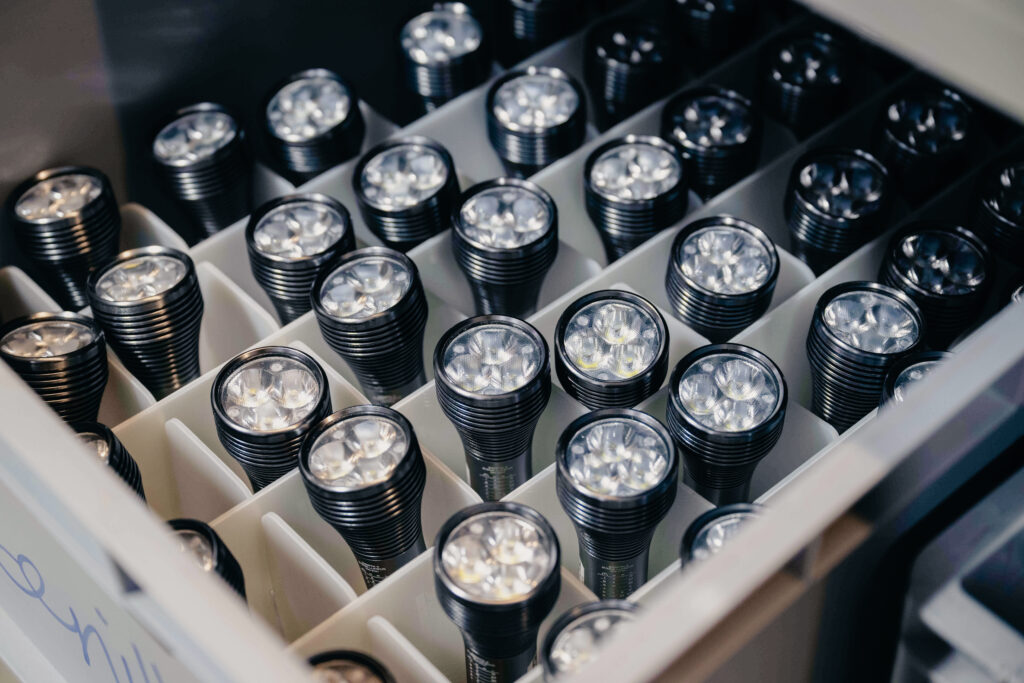


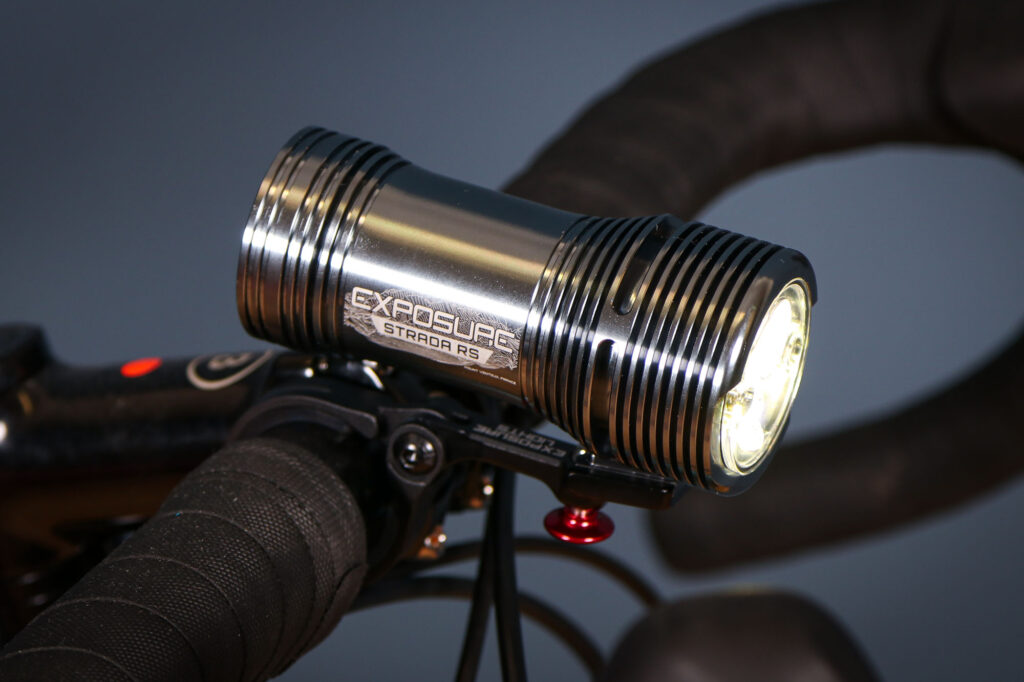
Exposure Lights’ upcoming Strada model – the brand’s flagship road cycling light, due for release in October – has just undergone a pretty thorough overhaul, updating what was already a market-leading front light.
With the addition of ANT+ compatibility, as well an upgraded 2.0 version of the previous iteration’s AKTiv+ automatic high-beam dipping, Road Specific Beam, Intelligent Thermal Management, DayBright daytime running function and a host of other ultra-clever tech (about all of which, more later), Exposure has repositioned the new Strada fairly and squarely at the front of the road bike light market.
But the Strada is only the highest-profile example of Exposure’s elevated position within the global cycle light market; the brand’s entire range, manufactured according to Exposure’s unique underlying ethos, provides road cyclists with incredible night ride performance. So we thought it would be fun to look behind the scenes and see what makes this UK brand so special.
British designed, British made
There’s a special place in many road cyclists’ hearts for British brands – whether that’s traditional names like Brooks saddles and Brompton folders, or more modern market-leaders like Muc-Off and Hunt Wheels.
As part of the Ultimate Sports Engineering group – with its headquarters in rural West Sussex – Exposure is proudly British. That means the lights it produces have been designed by UK-based riders who fully understand British road conditions and British cyclists’ needs.
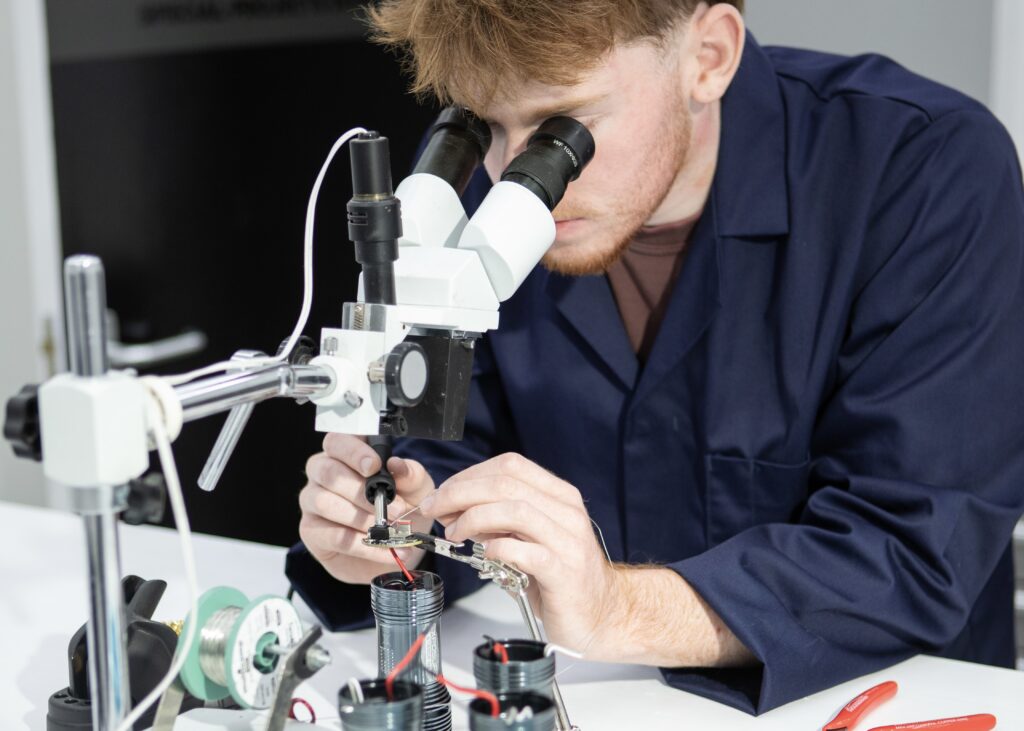
But Exposure goes a step further then just being ‘UK designed’. While the component parts are sourced from some the best manufacturers in the world – such as LEDs from brands like Cree, or lenses from LEDiL – every Exposure light is actually assembled right here in the UK.
And with the software needed to maximise the hardware’s functionality also produced by Exposure’s in-house tech boffins, it means that any problems that could arise can be dealt with quickly, here and now. Which leads us to…
Sustainability and longevity
With ecological concerns one of the most pressing global issues right now, sustainability is obviously a key ingredient when it comes to any product purchase. Exposure Lights’ approach to the subject is straightforward, practical, and benefits the user directly: buy once, and don’t replace.
Exposure Lights are designed to last a lifetime, with anodised aluminium bodies, high-level weatherproofing and quality components used throughout. They all come with a three-year warranty, and a lifetime warranty on the LEDs.
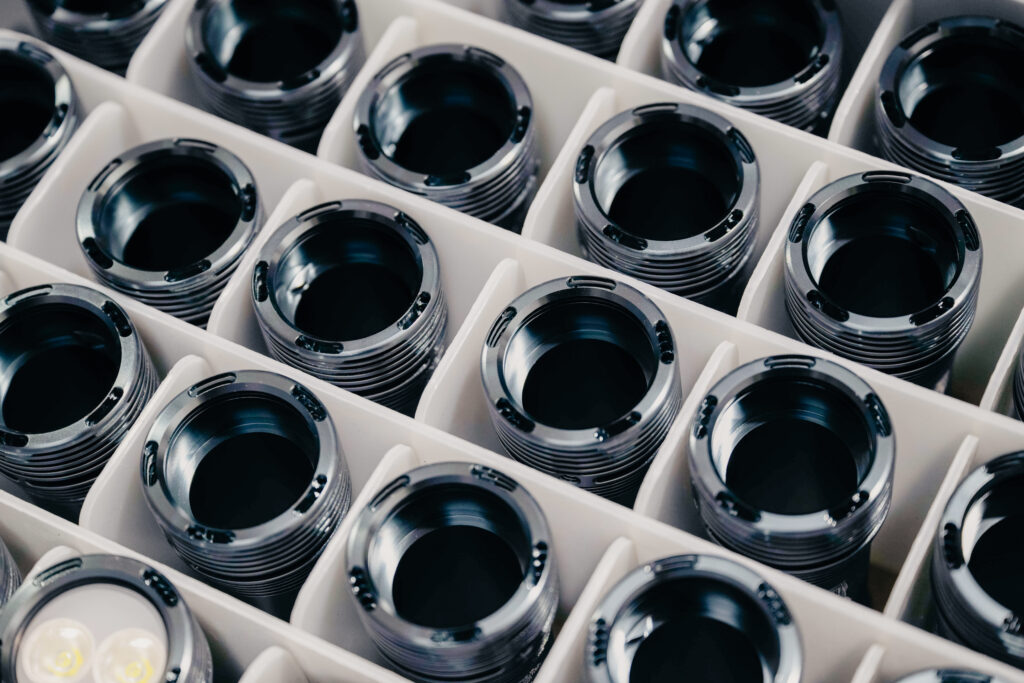
And, as we mentioned, if something does go wrong, or you feel your light could do with a service, there’s no need to discard and replace – simply get in touch with the team down at Exposure HQ, and they’ll get it sorted for you.
There’s no shortage of Exposure owners who have happily used the same light for more than 10 years, only deciding to move on to a newer model when there’s a technological benefit to do so. Which leads us to…
Cutting-edge technology
We mentioned at the start that the new Strada will feature ANT+ technology, meaning you will be able to link it with other accessories to do things like operate it remotely, or check battery power. But this is only the latest in a long line of Exposure’s technological advancements.
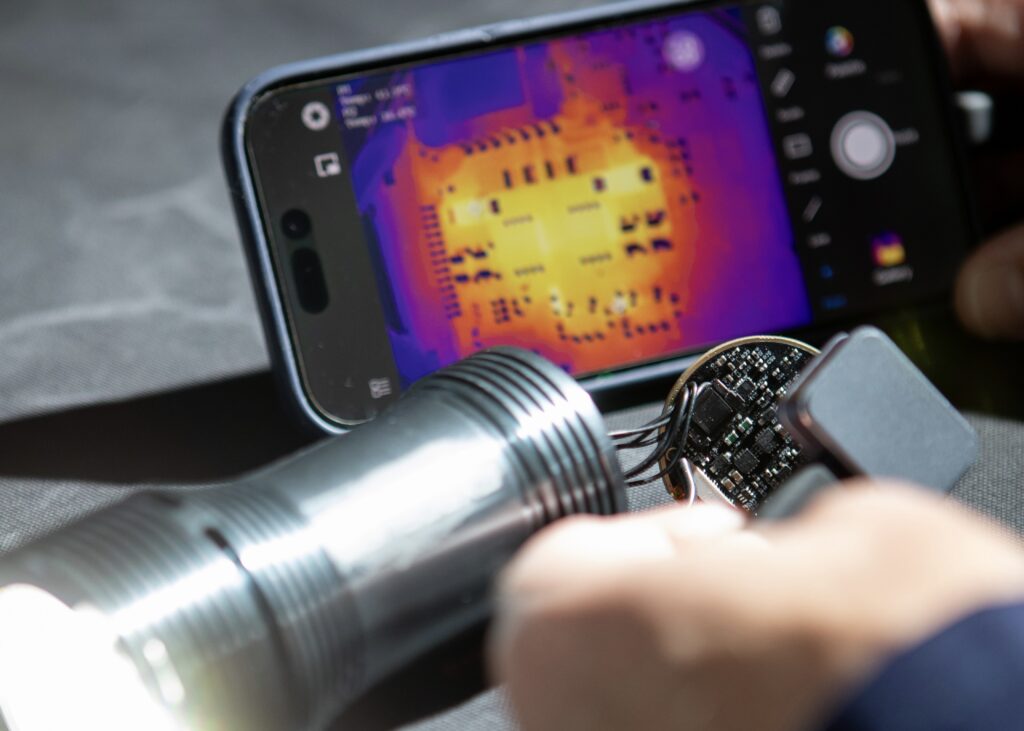
Over the years, Exposure has championed innovative technology, such as Intelligent Thermal Management (ITM), which automatically reduces LED output if the light overheats, then restores it once the light has cooled. Or Optimised Mode Selector (OMS), which is a curated set of programmes tuned for the specific type of ride you’re undertaking.
Exposure’s road bike lights have also benefitted from road-focused technology, such as AKTiv+, which automatically dips the high beam to avoid dazzling fellow roads user. AKTiv+ was actually designed before mass-market integration in the automotive industry, with Exposure first introducing it to Strada lights seven years ago. There have made some major updates since, culminating in the AKTiv 2.0 being released into the newest Strada. On the other side of the safety challenge, Exposure lights also use DayBright flash patterns that have been developed to specifically attract the attention of others.
Exposure works closely with the world’s leading battery manufacturers to bring breakthrough power technology to its products. And by working alongside the world’s leading lens manufacturers, Exposure has also developed its Road Specific Beam. This dual-lens design – modelled on car headlights – provides a flat peripheral beam as well as a focused spot beam, each controlled independently. Together, it gives riders ultimate control over their front-facing illumination. Which leads us to…
Uniquely accurate testing
When you buy a bike light, it will generally say what lighting power it produces in terms of lumens. But when it comes to bike light marketing, not all lumens are quite the same.
That’s because, to satisfy product description legislation, a manufacturer only has to say how bright its lights are in optimum conditions. These figures don’t take into account that, in real-world cycling conditions, it’s not typically -20°C (LEDs work best in the cold), and your battery isn’t constantly fully charged, and a rider might want full brightness for more than just the light’s 10-second burst at switch-on.
Exposure, however, has gone a slightly different route. The stated illuminative output of its products it calls ‘Real Lumens’ and are arrived at by using an advanced measuring system.
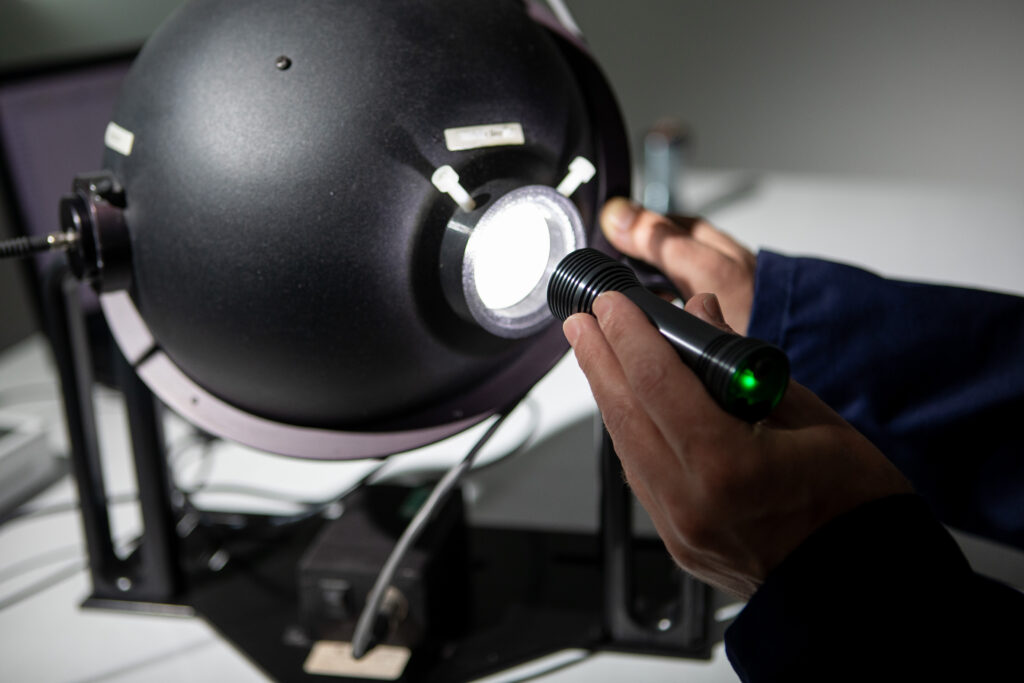
Ever since it began making lights back in 2005, Exposure has measured the output of all its products in the same way. Every single lumens figure published by Exposure is arrived at by using a specialised calibrated integrating sphere, in every programme and mode, across a full runtime.
While the theoretical output of a light might be good for marketing, it’s of no use when you’re on the limit, riding down a steep descent or taking on dark country lanes at speed. But with Exposure Lights products’ stated output, you can be sure the power you need for night riding is actually there. Which, finally, leads us to…
Go further
The four factors we’ve touched on here are some of the reasons why Exposure deserve their reputation as a premium bike light manufacturer.
But the team at Exposure Lights doesn’t go to these lengths just to secure its place in the market; it does so because that team is made up of cyclists themselves, who want to take to the road or trail knowing they have the best equipment to illuminate their own way ahead.
Thanks to their British engineering, their dedication to longevity, a focus on developing new technology, and their commitment to real-world performance, you can be confident that you too can ride further as the nights draw in this year with Exposure Lights mounted to your bike.
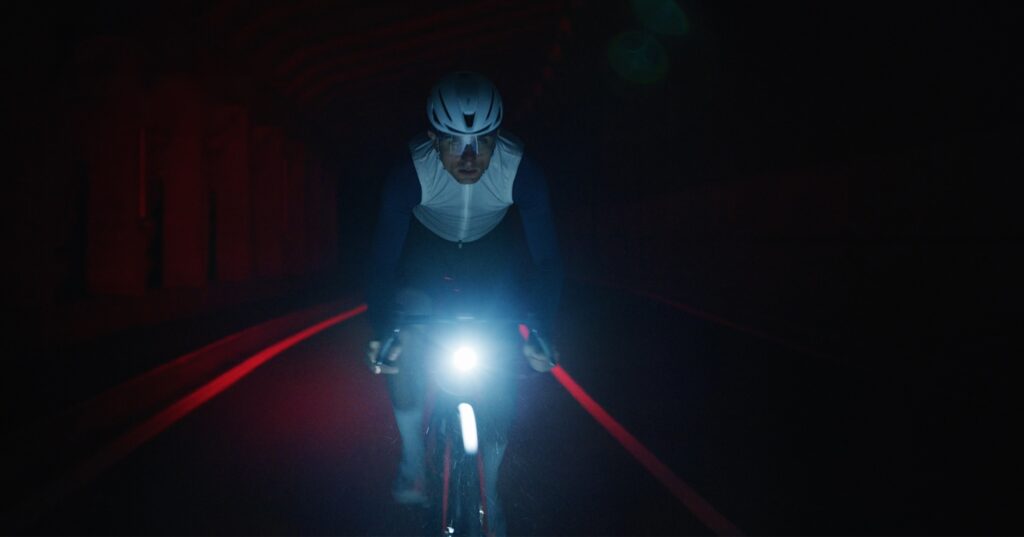
To find out more about Exposure Lights’ product range, visit exposurelights.com


12 thoughts on “Behind the scenes at Exposure Lights: How these ultra-reliable, British-made bike lights are crafted so you can ride further”
I would get one, if I wasn’t planning on an Igaro C1 for my Fairlight
I’m generally a fan of Exposure lights, but was disappointed with the changes they made to the OMS on the latest Sirius (Mk11) which IMHO was a significant step backwards.
On the old version (I think I had the Mk7), I basically never needed to change away from Programme 1, which offered three steady levels (H/M/L). These covered all my needs – the High level offered maximum brightness (used for unlit paths etc.) at the cost of a relatively short runtime; the Low level wasn’t super bright but lasted all day; and Medium in between offered a good balance of brightness and runtime (I typically used Medium for commuting on lit urban roads). Claimed runtimes were 1.5/4/10 hours in H/M/L respectively.
The new version only offers two steady levels per programme. If you want the maximum brightness to be available, you still have to be in Programme 1 and use the High level, which is fine, but the only other steady level available in that Programme is the Medium, and whilst the output has increased, the claimed runtime is only 3 hours. Which is OK for just the commute (in my case), but starts to be questionable if you add in any extra trips or training on the same day. You have to change to one of the other programmes if you want a steady light lasting more than 3 hours, but then you lose access to the maximum brightness level.
The other change they have made is that now the flashing mode is just cycled through with short presses along with the steady modes. This is annoying – if you’re on Medium and want to get to High, you have to cycle through the daybright flash, but the last thing you want when you’ve just entered an unlit section of path at night is for your light to start strobing! On the old version short presses just cycled through the steady modes, with the flash mode accessed with a longer press.
I assume they’ve made these changes because some people complained the OMS was a bit complicated and confusing. Whilst it definitely does require a bit of a learning curve, I would say it’s simple enough once you get your head around it. Furthermore, I don’t think they’ve made it any less confusing – the OMS is still there and is still accessed in the same slightly roundabout way (turn light off, hold button, count flashes); they’ve just made it far less useful and indeed far more likely that you will actually need to change Programme on a regular basis, rather than set-and-forget.
@OnYerBike Elsewhere on this post I’ve complained about the older button sequence and believe the newer implementation would suit me better. Having so many functions being controlled by a single button necessitates compromises.
I’d prefer one button for on/off, one for brightness h/m/l and one for flash on/off and the brightness and flash remembered the last setting – but acknowledge there isn’t much space on my Sirius.
@Doctor Darabuka I agree that using a single button for such an array of tasks does necessitate a bit of complexity. But I guess my points are that it wasn’t too bad once you get your head around it and practiced a few times; and also the changes made haven’t really helped to reduce the complexity, just reduced the amount of functionality that can be achieved.
On a small model like the Sirius, it would be a squeeze to try and have more than one button, and would lead to a risk of accidentally pressing the wrong one (especially with gloves on).
I love the design but it often feels like Exposure don’t seek or take customer feedback into account. I’ve also had issues where a TRACR, a Strada (original), and a Diablo have all needed to be returned for warranty repairs for different reasons.
Little surprised that with the addition of USB-C charging on the new Strada that they didn’t go one step further and allow owners to reprogram the lighting modes themselves, or exclude certain combinations, or add wireless blip support for low/full beam changes.
@Fursty Ferret Some of their other models have “Sync” which does allow the user to reprogram the lighting modes themselves. Agree it would have been nice to see it on the new Strada.
Interesting reading some of the comments here, I have a Strada 800 that has served me well for several years now and feel no reason to part with it or upgrade it (yet). It too has the H/M/L settings in program 1 and I find this perfect for my commutes during Winter months. Only been back to USE once and that was for a faulty switch which was dealt with very quickly as their after sales service is superb.
@EM69 To be clear, my comment relates specifically to the new Sirius that came out a few months ago. As far as I can tell, the new Strada retains H/M/L steady levels in program 1.
Received my Strada 13 SB on Saturday, just in time for an overnight ride.
Worked flawlessly. The Aktiv function worked well.
The only issue was the Ant+ connection to my 1050, but i’m placing that squarely at Garmins feet!
Are bike light buttons in short supply?
Must we be restricted to just one which requires the skills of a morse code operator to be able to switch between steady and flashing; high, medium and low?
Whilst many technological gadgets have evolved to become so intuative they no longer require a manual, the bloody bike light comes with a cartoon comic of disembodied hands describing a rhythm only available to the practiced percussionist.
@Doctor Darabuka It really isn’t all that hard. Once you’ve set your mode, tap twice to turn on. Tap once each to move through H/M/L etc. Hold to turn off.
@Bezzard74 Berry It may not be hard for you!
On my, now comparatively old, Exposure Sirius the instructions to set flashing are “With the light already on in any constant brightness setting, press and hold the button for roughly 1 to 2 seconds, then let go. The beam will switch into its flashing/pulsing sequence.”
So that’s a hold just longer than the hold to change brightness ,but not so long that it switches off the light completely – get it wrong and you have to cycle through the brightness modes again for another try, or everything’s just gone dark – fantastic. I shouldn’t have to practice how to confidently perform such a simple activity as setting my bike light to flash – and as my username suggest, I am a percussionist!
This isn’t a complaint that it unique to Exposure – I’ve a Moon front light which has an equally obtuse means of operation.