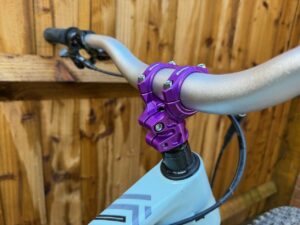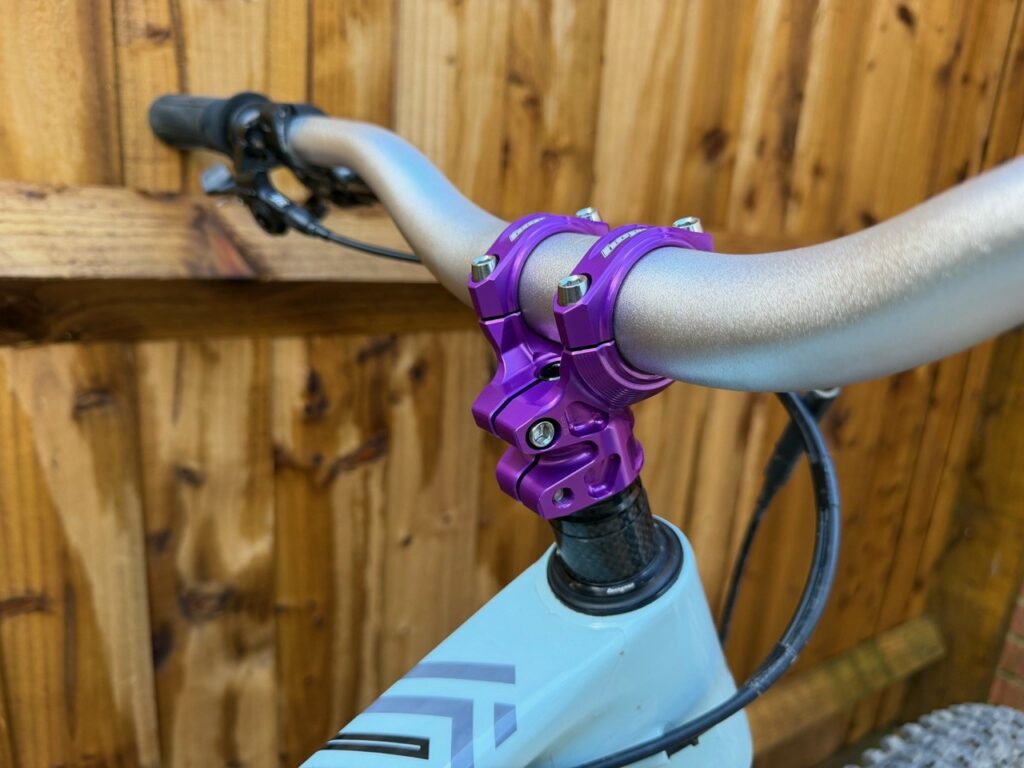

The Hope 20mm Gravity Stem combines CNC-machined aluminium with an unusually short length, offering an interesting option for riders looking to change up their riding position. The more upright position does provide a stronger feeling on rough and steep trails, however, this comes with less stability in heavy compressions, and the shorter length makes for livelier steering. For those who love to charge hard on the descents and want to experiment with set-ups, the Hope 20mm Gravity Stem is worth a look, but it won’t be for everyone.
Hope 20mm Gravity Stem – Technical details
As stems go, this one is a little different to the norm. Hope developed it following feedback from World Cup downhill and enduro riders, aiming to bring the rider’s grip position closer to the fork’s steering axis and to encourage a more upright position over the bike.
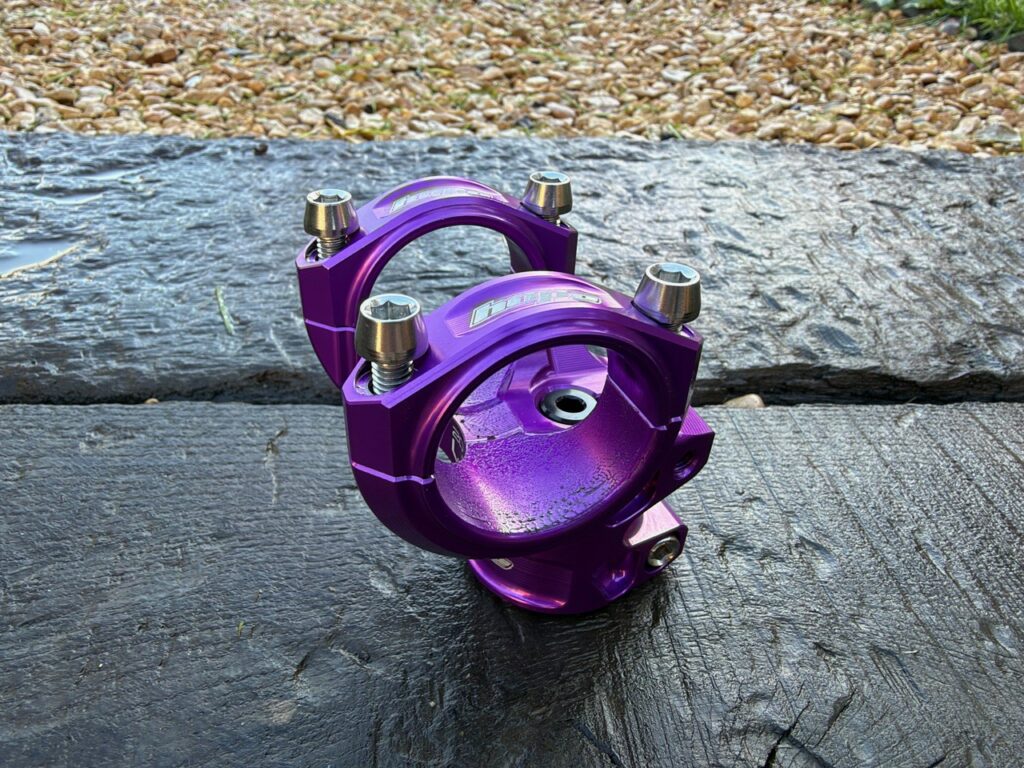
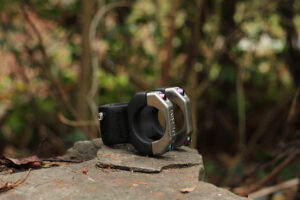
Hope is well-known for its CNC-machined components, and the 20mm Gravity Stem follows that familiar approach. Machined from a solid billet of 2014-T6 aluminium, it’s available for both 31.8mm and 35mm diameter handlebars. Other details include a 35mm stack height, whilst Hope says the bar clamping width has been increased by 5mm for additional strength and stiffness.
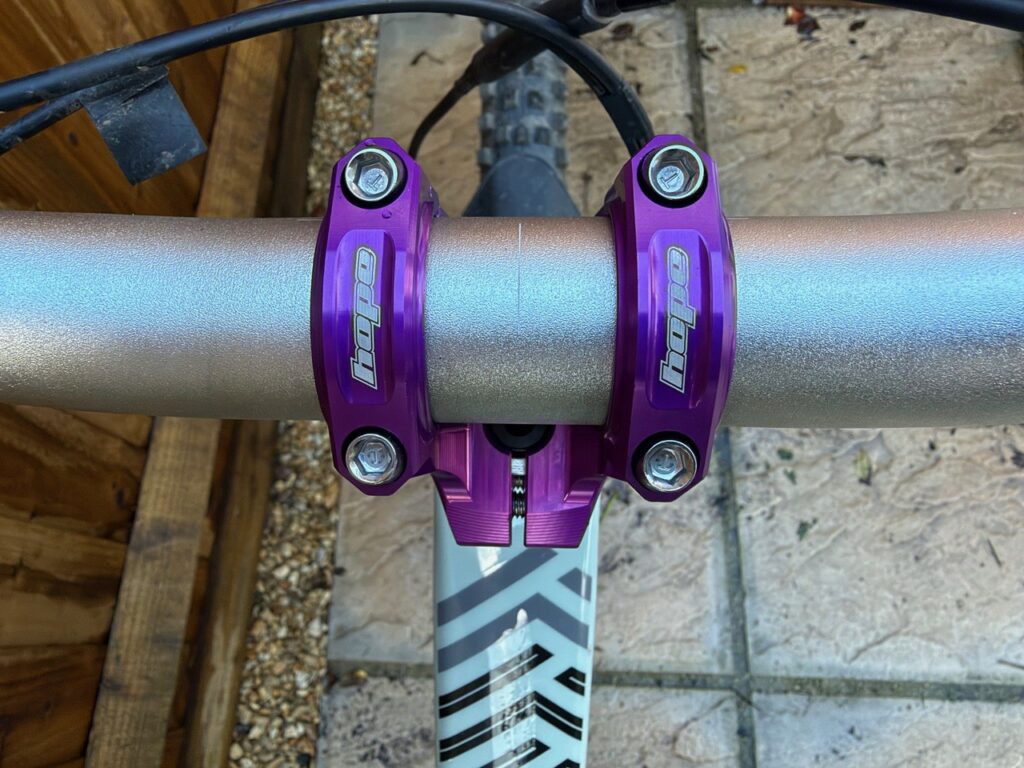
This stem fits a conventional 1⅛in steerer, however, the length of the fork’s steerer tube needs particular attention. Hope specifies between 31mm and 33.5mm of steerer protruding above the headset and spacers, to ensure sufficient insertion without the steerer bottoming out inside the stem. This is worth checking before swapping from your existing setup. An integrated headset cap with the headset bolt is included; no steerer tube tools or custom top caps allowed here.
Colour options include black, silver, smoke, blue, red, purple and orange, so there’s plenty of choice whether you prefer something understated or a little more colourful.
Hope 20mm Gravity Stem – Performance
Fitting the 20mm Gravity stem is a simple process, although you’ll need to pay closer attention to the steerer tube length than usual. The recommended tightening sequence for the handlebars has been made easier with the rear bolts being torqued first and then the front, saving the hassle of balancing the gap on either side.
Whilst all stems have a fairly basic job to carry out – keeping your handlebar connected to the bike – this 20mm long and high-rise stem offers a meaningful change to the cockpit.
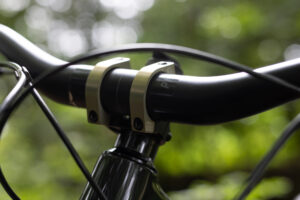
In practical terms, replacing a common 40mm stem with this one would bring your bars 20mm closer and increase your bar height by approximately 35mm (or more depending on whether or not you choose to cut your steerer before installation).
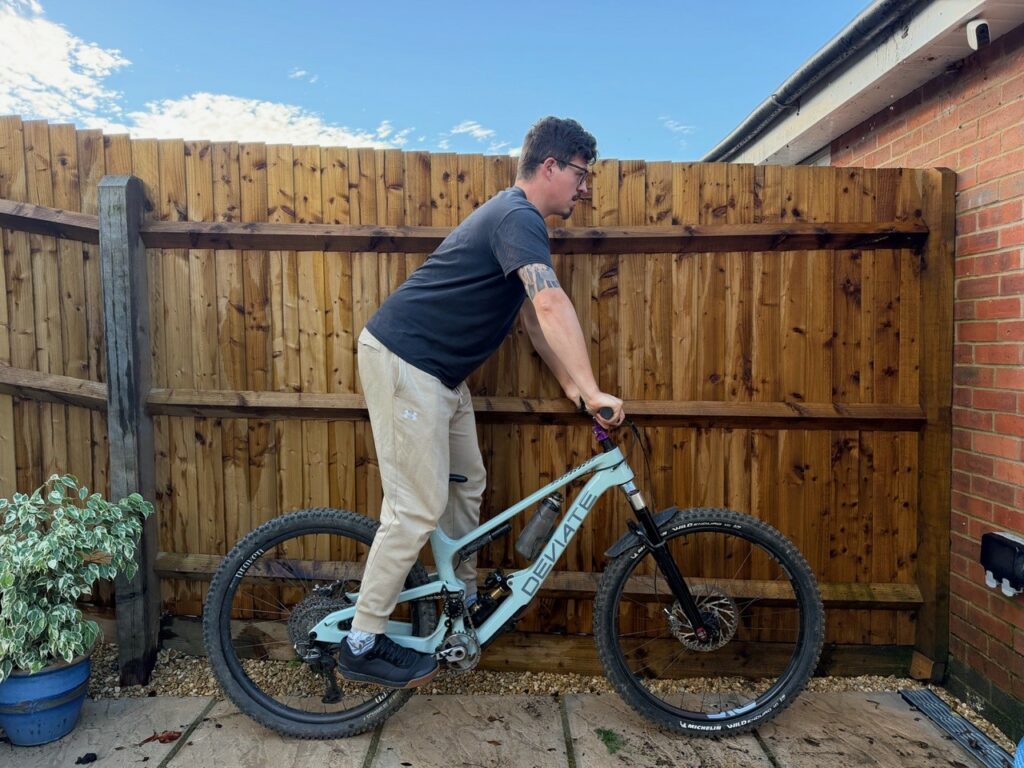
The higher and closer handlebar gives a taller and more upright riding position over a conventional set-up. It’s taken some back-to-back testing to really understand the pros and cons of this.
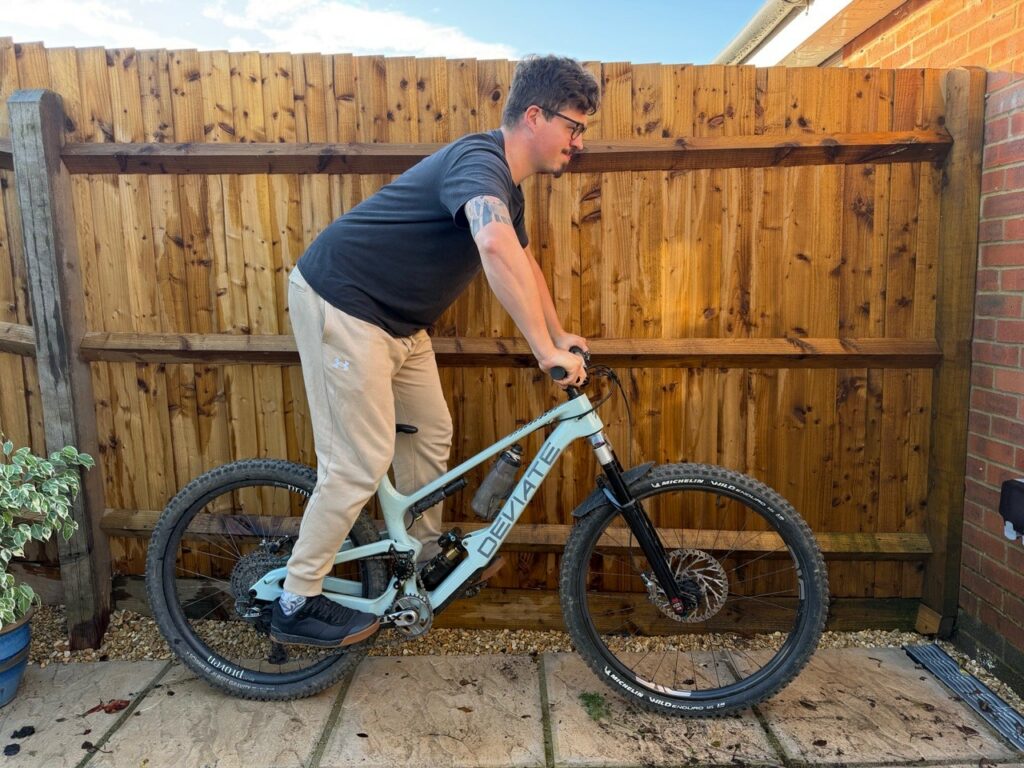
When on rougher and steeper trails, the taller position feels stronger. With the rider’s weight being more central on the bike, the heavier inputs from rough trails felt like they had less impact on the bike. I could feel the fork working a little better underneath me through the rough trails. That taller position is also more confidence-inspiring in the steeps where it is easier to keep a good central body position over the bike. Whilst I felt stronger in the upright position, it did rely more on different muscles (triceps and upper back) than normal, which I found, after 1000m of descending, became fatiguing. Though with more time, I’m sure I would strengthen for this new position.
When it comes to larger undulations in the trail such as larger rollers and heavy compressions, the taller riding position became more of a hindrance. I felt like my weight could easily pitch forward or back whilst standing tall, as opposed to a more conventional position, which is naturally more outstretched over the bike. This was quite unnerving on the first few laps, needing some careful attention to get the perfect weight distribution on the bike.
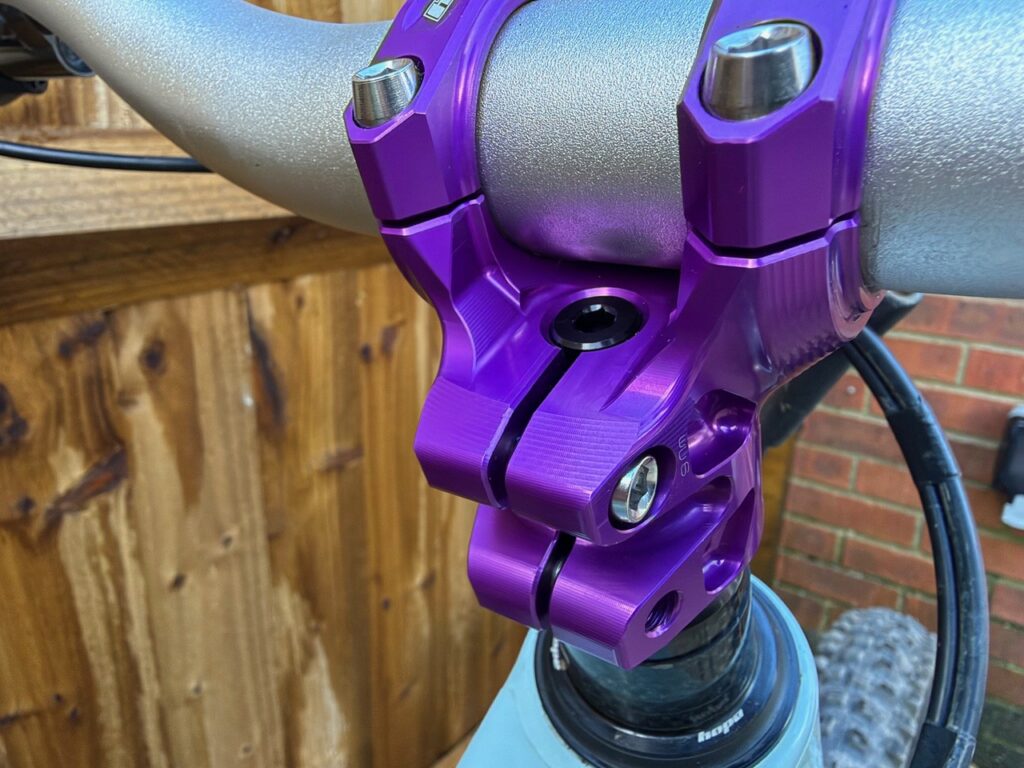
Moving on to the short 20mm length. This livens the steering up, which makes the bike feel more agile but also more erratic. I found micro-adjustments, particularly mid-corner, were harder to predict as the steering was more sensitive than I’m used to. Paired with the taller bar, I found it hard to accurately and reliably predict where the front wheel’s contact patch was, which led to many butchered corners and poor line execution. However, an adjustment period would likely aid this.
Hope 20mm Gravity Stem – Verdict
Retailing at £115, the Hope 20mm Gravity Stem sits towards the premium end of the market but does offer a unique option. Be More Bikes Gen 2 90mm RR Stem uses a similar, but more exaggerated approach, offering higher rise and a negative 15mm reach, placing the bars behind the steerer tube. Coming in at $400, it’s certainly not cheap, though!
For riders who have identified a need to bring their bars closer and higher or have an interest in the latest trends coming out of downhill racing, the Hope 20mm Gravity Stem is a compelling option. It’s a considerable change from the more conventional set-up, which offers a unique riding position along with some interesting pros and cons. A great option to explore those differences for riders who want to experiment and find what works best for them.
Test Report
What does the manufacturer say about this product?:
The 20mm Gravity Stem is a super-short gravity stem built to sharpen control and optimise rider positioning on demanding terrain. Developed with feedback from some of the fastest World Cup downhill and enduro racers, it brings your grip position more in line with the fork’s steering axis for a more upright, balanced stance that shifts weight towards the centre of the bike.
The result is a stable, neutral riding position with less weight through your arms, helping to reduce arm pump and fatigue on long, rough descents. The ultra-short 20mm length keeps your lines tight through the trail, while an integrated 35mm of additional stack lets you fine-tune bar height without stacking extra spacers. Every stem is CNC machined from a solid billet of 2014 T6 aluminium and designed for 31.8mm oversized bars.
Tell us some more about the technical aspects of this product:
Super-short 20mm length for improved control and a centered riding position
Grip position aligned with the fork’s steering axis to help reduce arm pump and fatigue
Integrated 35mm of additional stack, with headset bolt included
Increased 5mm clamping width for extra system strength and stiffness
Integrated headset cap for a clean, streamlined front end
CNC machined from a solid billet of 2014 T6 aluminium
Designed for 31.8mm handlebars
How does the price compare to that of similar products in the market, including ones recently tested?:
Its cheaper than the alterative for higher stack low reach stems but still pretty pricey for a stem
Did you enjoy using the product? yes
Would you consider buying the product? maybe
Would you recommend the product to a friend? maybe
Use this box to explain your overall score
As a product, the classic Hope quality – beautifully made and finished.
The concept behind the short reach and high stack has some pros but also some drawbacks. Its a niche product which will help some but not others.
About the tester
Age: 32Height: 183cmWeight: 95kg
I usually ride: Mostly mountain bike along with gravel for some good milesMy best bike is: Deviate Highlander 2 (mtb) Custom Titanium (gravel)
I’ve been riding for: 10-20 yearsI ride: A few times a weekI would class myself as: Expert
I regularly do the following types of riding: Fitness riding, Mountain bike XC, Mountain bike Enduro, Mountain bike downhill/freeride