


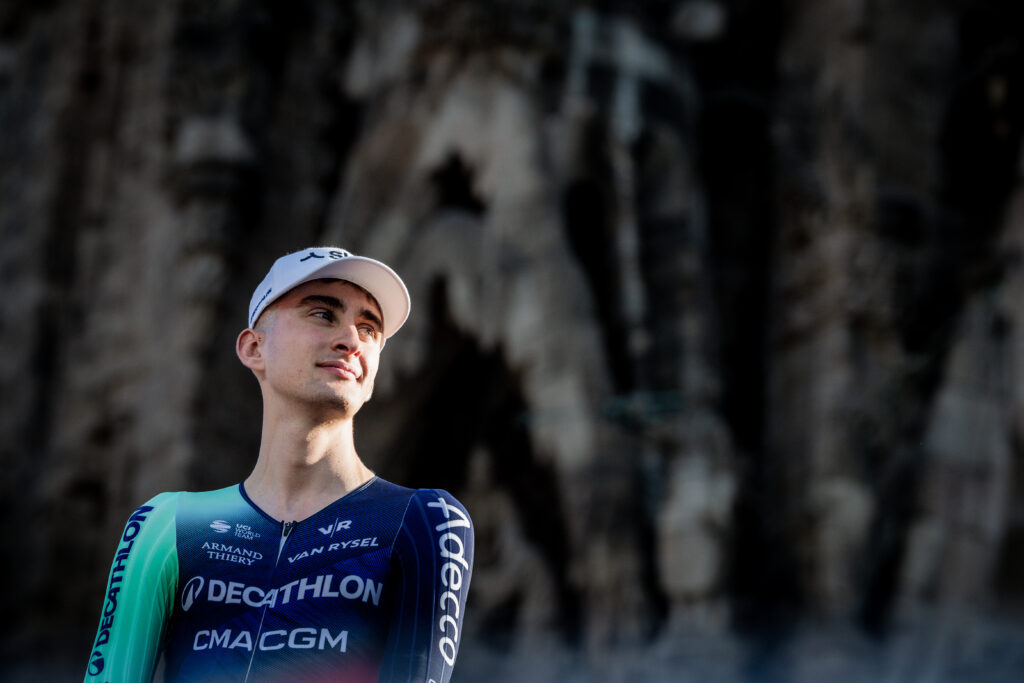

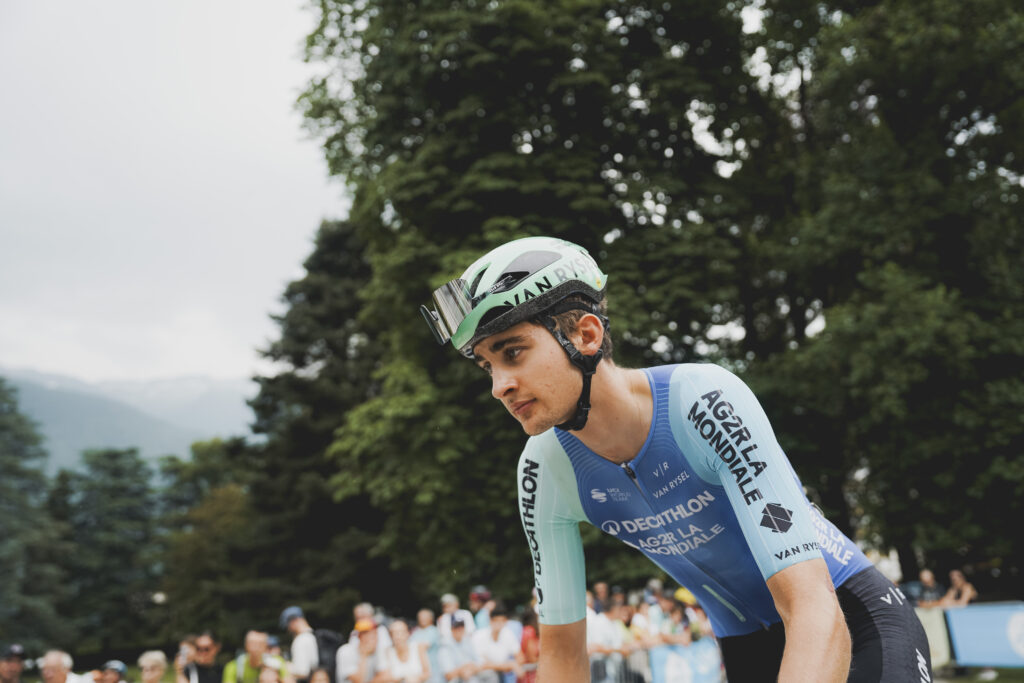
In the lobby of a plush beachfront hotel outside Barcelona, frequented throughout the day by excitable French journalists, Paul Seixas, still heavily bandaged from his crash at the Tour Auvergne-Rhône-Alpes, relaxes with his family, 24 hours out from his first date with destiny.
Two statistics sum up the enormity of Seixas riding the Tour de France at just 19 years of age. The first is that he will be the youngest starter in 89 years, since Adrian Cento way, way back in 1937.
The second is that if the current darling of French cycling was to shock all and actually win the race, he would be the youngest-ever to do so in the entire history of the Tour.
Henri Cornet currently holds that honour, being 19 years and 355 days old when he triumphed back in 1904.
For reference, Tadej Pogačar is the second youngest, having taken his first title at 21 years and 364 days old.

And Seixas? He will be a mere 19 years and 304 days old if he is wearing the Maillot Jaune in Paris on July 26.
He’s so young, in fact, that he’ll be eligible to go for the white jersey for the next six years.
That’s remarkable. But is riding the race so young actually a good idea?
He’s certainly bucking the established trend. Most riders don’t line out in the Tour de France until they have built up Grand Tour experience elsewhere. The current, common wisdom is that three-week races are so demanding and the pressure so intense that it is best to dip the proverbial toe in water by first doing the Vuelta a España or Giro d’Italia.
The Vuelta is often the preferred choice, coming later in the season when the hype has died down and when many of the big names are starting to back off.
Pogačar followed this route. So too did 2026 Tour contenders Jonas Vingegaard, Isaac del Toro, and Tom Pidcock.
As for Remco Evenepoel, he did two Giri d’Italia and two Vueltas before he ever went near the Tour.
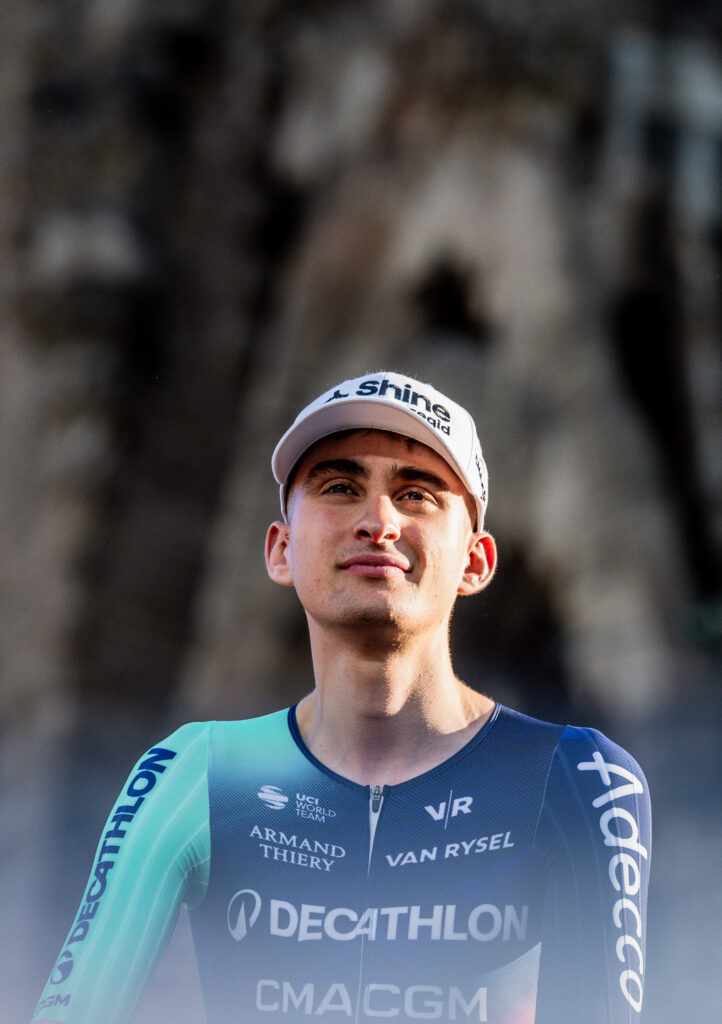
And Seixas? He’s ripped up that rule book, pushing for a Tour ride and getting a green light from his team. He will now hurl himself into the deep end in the team time trial in Barcelona on Saturday.
Is that a good thing? A bad thing? It depends on who you ask.
A leap in standard
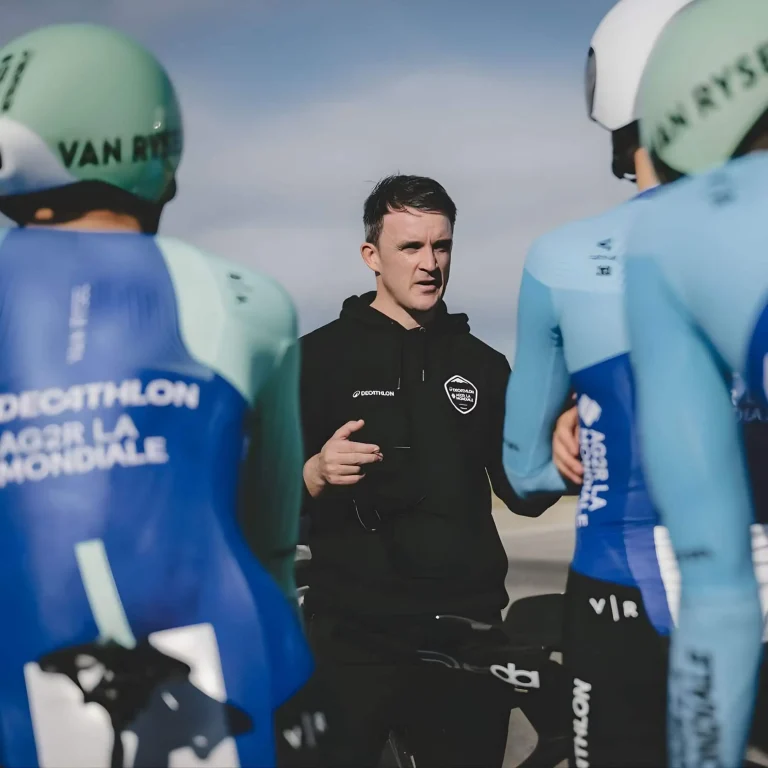
One of those who knows Seixas best is the Irishman Stephen Barrett. He is head of coaching at the Decathlon CMA CGM team and has worked closely with the young Frenchman since he stepped up to the WorldTour team at the start of the 2025 season.
Indeed Seixas has been on his radar for several years as the prodigy was previously with the Decathlon youth team.
“He’s an exceptional talent, but he’s also an exceptional bike rider, and also a really just good guy who wants to learn, who wants to progress, who asks questions,” Barrett told road.cc. “He is eager to just absorb as much as he can.
“He comes from a cyclocross background, so he doesn’t have a huge amount of training volume, and that’s now where we see he’s making big steps.
“He’s starting to train more like a WorldTour rider, he’s increasing volume, he’s increasing intensity. What he showed in Strade Bianche was impressive. What he did in Pays Basque was impressive, what he did in Liège was very, very impressive. And he still has a big margin for improvement.”
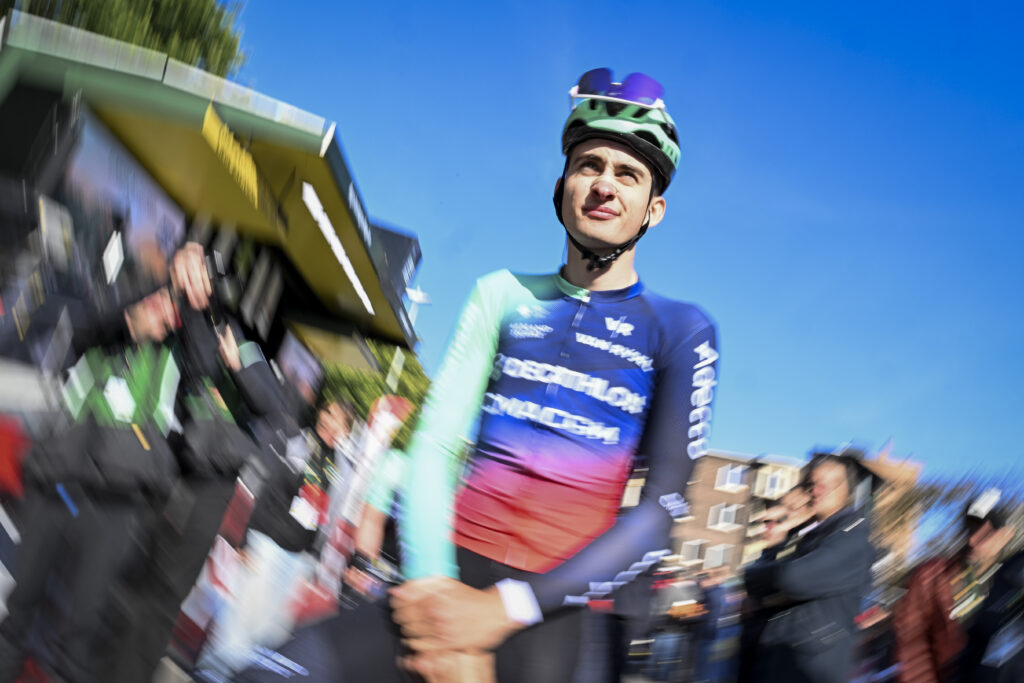
Barrett is correct: Seixas has made dramatic gains this year, collecting his first-ever pro win at the Volta ao Algarve in February, and then finishing as runner-up in Strade Bianche, just one minute behind Pogačar.
He won three stages plus the overall in Itzulia Basque Country, ending up a staggering 2:30 ahead of 2025 Tour de France podium finisher Florian Lipowitz.
Victory in Flèche Wallonne then followed, a throw-down-the gauntlet move on the Mur de Huy which burned everyone off his wheel.
Then, four days later, he was the only rider able to hold Pogačar when the Slovenian launched a ballistic attack on the climb of La Redoute.
Seixas remained with him for 21 kilometres, showing such strength that Pogačar admitted afterwards he was anticipating a sprint for the win. And while one last desperate surge on the Côte de la Roche-aux-Faucons did see him gap Seixas, the latter really impressed with his performance.
That defiant ride all but sealed his participation in the Tour. And even if he crashed hard and withdrew from the Tour Auvergne-Rhône-Alpes, he is persisting with his plans.
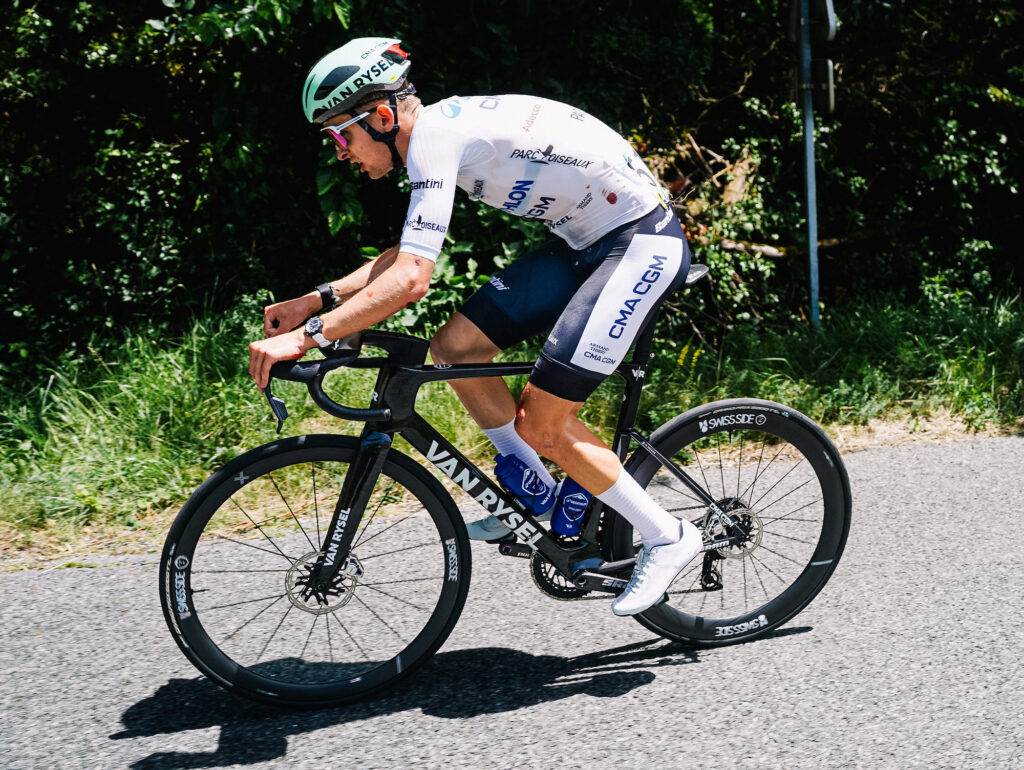
Still, while the year has been a very strong one, does Barrett understand why people such as five-time Tour de France winner Bernard Hinault have reservations and are advising caution?
“Of course. It was a big discussion point within the team, whether it was the right thing to do, or no,” he answered. “But if you’re good enough, you’re old enough.
“I think originally we thought that he might do a different Grand Tour, he might do a Vuelta, but when you see his progression, I think it would be remiss of us not expose him to this type of race.
“We know he’s physically capable of doing it, we know what he can do, it is only going to make him better. But the decision didn’t come lightly. It was discussed a lot between a lot of different people.”
The conclusion? That the benefits would outweigh any risks.
“It can only be good for him. If it goes well, we can progress,” Barrett continued. “Either way, he will learn something about himself and about what he needs to do to improve as well.”
Whether or not that ‘if you are good enough you are old enough’ argument will hold will, of course, only be determined over the next few weeks.
Recent results aside, what makes Barrett believe he really is strong enough for such a massive challenge?
“He’s genetically a gifted athlete. He’s got a big, big VO2 Max,” he said. “Already at such a young age, he’s extremely durable. He’s got a big massive resistance to fatigue, which we often see develop with the more experience you have and the older you get, but he has that already.
“We saw him in the European Championships last year, when he came third behind Pogi and Remco. Even in Liège, producing his best numbers on La Redoute, which this year was a heavy, heavy high kilojoule race.
“He’s the whole package here. He can descend, he can time trial, he can climb. So it’s exciting working with him and seeing him see him develop and improve in the team.
“It’s exciting for everybody to see where he can go.”
A word of warning: ‘at 19, you haven’t developed’
The argument that Seixas is genetically gifted and very driven is reassuring for those who want to see him in the Tour.
However, other than his age, there is another statistic which is worth bearing in mind.
The longest stage race Seixas has ever done as a pro is the Tour Auvergne-Rhône-Alpes, a race he competed in in 2025 and again this year. That’s just eight days long, a full 13 stages less than the Tour.
It’s impossible to know how he will go in weeks two and three of any race, simply because he’s never actually done that.
Stephen Roche is one of those who would prefer to see Seixas take a more conservative approach.
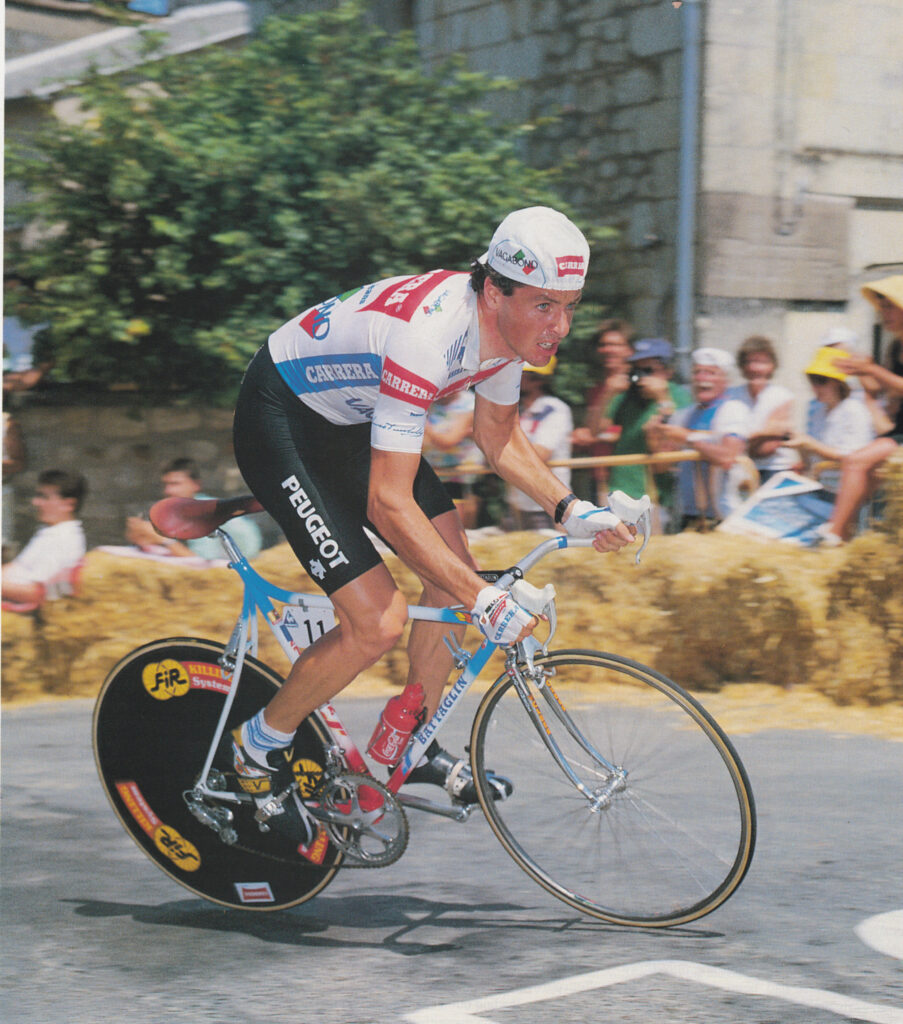
The Irishman won the Tour in 1987 at 27 years of age; until then he was building up gradually, only riding his first Tour at 23.
He believes that there is a danger in doing too much too young, particularly as a teenager.
“He’s made some incredible progress from last year’s European Championship to this year’s Liège-Bastogne-Liège,” he told road.cc. “But at 19 years of age, it doesn’t matter who you are, you haven’t developed 100 per cent.
“Let’s say, for argument’s sake, he’s developed himself to 85 per cent of his full potential. But a 19-year-old is still developing, even though the development may not be as much in the next three years as it was in the last three years. He’s still, nevertheless, developing.
“And by going into the Tour de France too young, you are maybe using up a little bit of energy that could be needed for to finalise your development. Your physical development as a man, and as a sports person.”
Roche recognises that Seixas wants to try to win every race he competes in. He estimates his chances of doing so in the Tour as less than 50/50, both due his youth and lack of experience, and also because he believes Decathlon are not strong enough to defend yellow.
He’s also concerned by the pressure he will be facing. He’s not just an ambitious young rider doing the Tour; he happens to be a French rider, coming from a country which hasn’t won the Tour since Hinault in 1985.
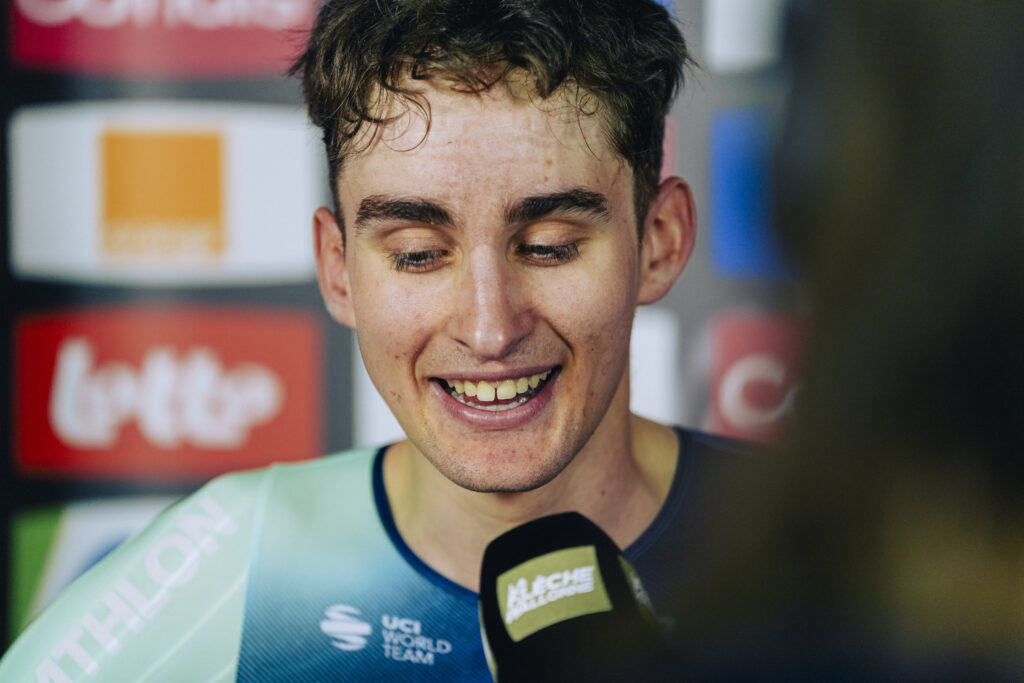
“The French media are going to be all over him,” he said. “The international media going to be all over him every day. I won’t say he’s going to the slaughterhouse, I don’t want to wish him any bad luck or anything else.
“But in my opinion, he should have waited and done the Tour de Spain this year. Ride a few other races during the Tour, go to the Tour of Spain, and try and win the Tour of Spain. The same as Evenepoel did a couple of years ago.”
That, he feels, would put him in a much better position tackling his first Tour.
“He should focus on winning the Tour of Spain and then rest up then and come back next year at 20 years of age, a year older, a lot more matured, and then go for the Tour de France.
“Pogačar will have an extra year on as well. Then Seixas can say ‘I am going to ride the Tour. And I’m going to win the Tour.’”
‘He’s a bit like Virenque’
Roche is steeped in the sport and has lived in France for a very substantial part of his life. As a result he is well placed to reflect on the pressure that riders face there. Another person in that position is the experienced French journalist Pierre Carrey, who most often writes for the Le Temps publication.
He’s very accustomed to what French media writes and, in contract to Roche, believes the hype might actually help Seixas.
“He feels pressure, and he loves it,” Carrey told road.cc. “He perfectly knows the expectations around him, the madness around him. He knows there are people stalking his social media, talking to some people from primary school, people he has never spoken to since he left, and trying to get some gossip from primary school.
“I’m very serious, it’s what some journos try to do.
“He knows something absolutely insane is raising around him. But he does cooperate well with pressure. He has not much to hide, so he’s not scared about the leaks and gossip, and everything you can read around or listen to around. He is very secretive, and his privacy is very granted. His friends, his real friends, not someone talking. These real friends don’t talk at all.
“Sometimes you can read some reportages about his former teammates from, I don’t know, under 12 teams or clubs. You get some comments and assessments, but his closest friends don’t talk at all. He’s very protected by his team, by his family, by his friends.”
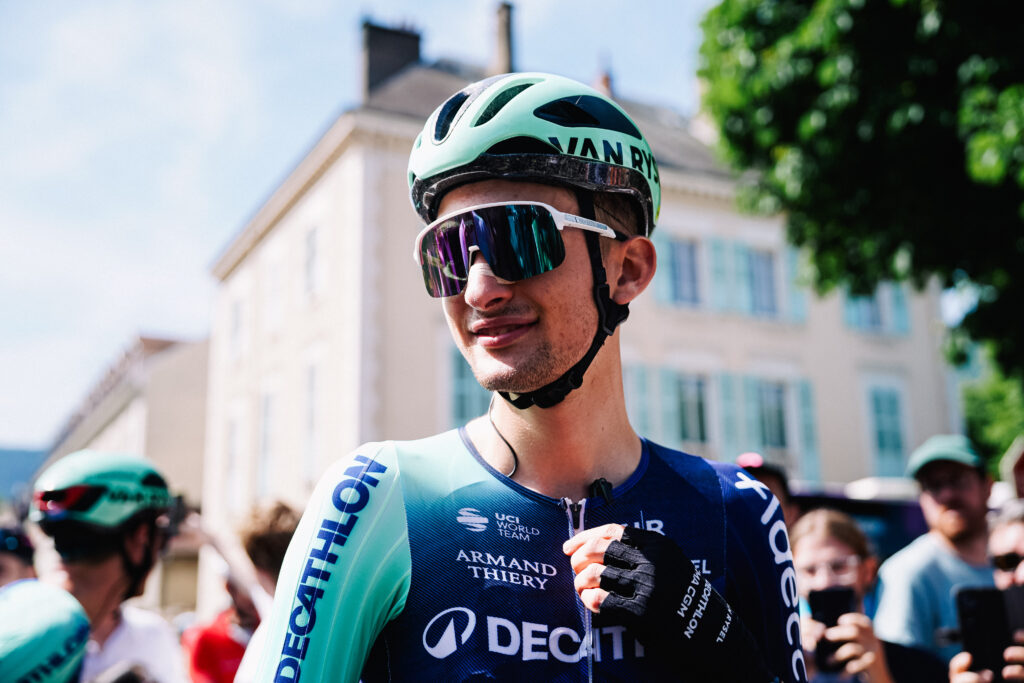
Carrey makes the point that Decathlon CMA CGM is taking measures to shield Seixas from media demands. He suggests they have put restrictions on when and where interviews can be done in order to achieve this, taking the pressure off his shoulders.
Instead, the team wants his racing to do the talking.
What’s a plus for Seixas is that he seems to draw energy from the encouragement and expectation, rather than being intimidated.
“You see more and more Seixas tags on the roads. You see more and more people waving banners of his name and shouting his name. He’s a bit like Virenque… of course it will be tricky and probably not accurate to compare both riders, but what he has in common with Virenque is that he can push further and further when he feels the crowd’s pressure.
“It’s a point where most of the riders just collapse, and it’s the point where he gains some extra watts.
“Remember last year in the final kilometres of the European championships. He was soloing for bronze medal and he waved his hands to raise the crowds in order to create something electric between them. He does the same in some other races too, using his hands. He wants also cycling to be a good show, same as Pogačar.
“He knows he’s a showman. We were stunned looking at Sagan, but now with Pogačar, with Seixas, with riders like that, you see show, pressure, exposure. And fans, lots of fans. It’s not a problem, it’s an asset to have fans.
“He loves that. He is very fluid, he comes out of his bus, he takes selfies [with fans]. But it doesn’t cost energy, he gained energy through that.”
‘Won’t we burn him out?’
The arguments will rage back and forth in the days ahead, all discussions about the pros and cons of riding the Tour at 19. They will lessen if Seixas performs strongly, but if things don’t go as planned Decathlon may find themselves facing criticism.
Hinault gave his own thoughts to Europe 1 in April.
“Personally, I’ve always said that I think it would be better to do the Giro d’Italia or the Vuelta a España once to see if he can handle the 21 days of racing,” the Tour legend said.
He does accept he is very strong, pointing to some of his performances last autumn as proof of that.
“You can’t argue with that, considering everything he’s accomplished,” he said. “The World Championship in Kigali [he was 13th – ed.], the European Championships where he finished 3rd. I think he’s a very, very good rider.”
And yet Hinault seems a little wary.
“Won’t we burn him out if we make him do too many things at once?”
It’s a very valid question. Roche has the same fears. He competed against Hinault in the 1980s and saw what happened when he retired and when French cycling was searching for a new star.
“Jean Francois Bernard is the ideal example,” he said, naming riders who were hyped but didn’t fully deliver. “And you have of course Alaphilippe. He was one we had great expectations of.
“Romain Bardet. Thibaut Pinot. These are guys that were all built up to be the future Tour de France winners, simply because they got on the podium one year when everybody fell off. When Contador had his accident and Froome crashed [in 2014], these guys were pulled straight up to the podium. Everybody thought these guys podiumed this year and next year, they’re going to win the damn thing.
“But they didn’t calculate that these big guys like Contador and Froome would be back again.”
Carrey isn’t too concerned by what happened before, believing that Seixas is indeed a very, very special talent. That, he says, is why riding the Tour now may work out well.
“He’s by far the most talented French rider I’ve ever seen. By far. By far. I’ve never seen that, and I don’t know if I will see someone like him again in my life. And all comparison just fail. I mean, Hinault doesn’t work at all. And especially when you remember the story with Guimard, who delayed Hinault’s Tour de France preparation. I mean, honestly, it looks like three centuries ago.
“At the Tour de France, he might lose, but now tell me what losing means. I mean, if he’s in the top five, this is already a success. He is almost guaranteed the white jersey. White jersey, maybe a stage or top five.
“Honestly, he is going to have a good tour.”
Roche remains unconvinced it’s a good idea, but hopes that things will work out.
“He’ll start the Tour, he’ll want to win it, but deep down he must know it’s going to be bloody hard,” he said.
“Pogačar has the best team in the world and there are domestiques on his team almost as good as Seixas. So it’s going to be a tricky one. But I do wish him all the best.
“Hopefully it’s not a mistake, that we’ll be all sitting here in two months’ time saying wasn’t that a great Tour, didn’t Seixas do well to ride the Tour.”






8 thoughts on “Inspired choice or insanity? The risks and rewards of Paul Seixas riding the Tour de France”
There is no rational reason for a rider this young not to dominate the race, other than some of us believing this is “not right” based purely on opinion.
Younger athletes recover much, much faster. They adapt more easily. They are typically more eager to take risks, which is… well, risky, but could pay off big time if the stars align.
Burnout? Yes, that is a risk. But it’s not a given. See how long Leo Messi has been absolutely top-notch.
The risks are high, but the potential is even more so.
And even if Seixas does burn out early, it may just be his choice despite the awareness of the risk. If I were a prodigy cyclist youngster with a realistic shot at winning, I might take it even if I knew it might be the end of my career. After all, it’s winning the TdF we’re talking about!
@tomlew It’s not his youth so much as his inexperience. He’s never ridden a race longer than eight days before. Pogacar won his first Tour, it’s true, but he’d already finished a Vuelta. There’s simply to much for him to learn and become accustomed to in my opinion for him to have a realistic chance of victory, particularly as he’s up against probably the greatest of all time and a double Tour winner, both of whom seem to be at the peak of their powers. It’s not entirely beyond the bounds of possibility but he’d need a hatful of luck and something fairly catastrophic to happen to both of those guys before he’d realistically be in with a shout. Don’t forget nobody has won their first Grand Tour since Hinault in 1978, forty-eight years is a hell of a lot of precedent.
@Rendel Harris I absolutely know all that. But that’s exactly what I said: he is risking a lot, but the reward might be worth it. It is only a matter of judgment.
And by the way, AFAIK nobody said he’s going to ride to win the GC. Maybe the plan is exactly to learn his lessons this year so that next year nobody can say he’s too inexperienced to really go for victory. Of course, he could ride the Vuelta, but what better place is there to learn the TdF than TdF itself?
Times have changed. No more pecking orders, 16-year-old footballers are already shaking the world (even though most of them do indeed get chewed and spat out badly, but again: that’s a risk they take). Why wouldn’t the same happen in cycling?
@tomlew
That sounds like someone who is thinking about GC to me.
I don’t think your comparison with 16-year-old footballers is particularly valid, ultimately football at every level is played on roughly the same size to pitch, the goals are the same size and there are eleven players on each team. If professional football was played on a pitch three times the size with goals half the size and for five hours instead of ninety minutes, that might be a good comparison.
I have no objection to Seixas riding this tour for experience, I think it’s a good idea, but as I’ve said, I don’t think he’s got any chance of winning unless something major happens to the big contenders (he’s already shipped 39 seconds and 27 seconds respectively to the big dogs) and if he tries too hard he could receive humiliating setbacks that could damage him psychologically throughout his career. You say “If I were a prodigy cyclist youngster with a realistic shot at winning, I might take [the risk] even if I knew it might be the end of my career”, but he doesn’t have a realistic shot at winning and in taking the risk he might be putting in jeopardy the possibility of winning multiple Tours in future. I don’t think this is a situation where a “death or glory” approach is suitable.
We shall reconvene in three weeks time and see what happened, and I’m quite happy to be proved wrong and if he does win this year it would certainly mean we had had a thrilling Tour.
@Rendel Harris “ultimately football at every level is played on roughly the same size to pitch, the goals are the same size and there are eleven players on each team.”
Except they don’t. In a senior team a 16-year-old plays against adults, under tougher competition, plays more matches and under greater mental strain.
If your argument was vaild, I could easily counter it by sayng that riding the very same bike on the same roads as in training, 150 km a day, should not be such a big deal for a pro cyclist.
@Rendel Harris Oh, and by the way. “But I will not take risks for something other than the GC.” – this could just as well be read as “I won’t take any risks unless it’s really, really worth it.” They’re not even talking about snatching the maillot jaune for a day, but about the GC.
Who wouldn’t, if they had a opportune shot at that?
Bit confused now Tom, you said that “AFAIK nobody said he’s going to ride to win the GC”, I gave you an example of Seixas himself talking about going for GC, now you’re saying there you are, there is evidence that he’s talking about the GC? I know that, it was me who shared the quote.
@Rendel Harris No contradiction here. You can start with the intention to win the GC or just take your chance when you get it.
The first one puts you under immense pressure – both mentally and physically – and could indeed cause a lot of trouble. The other gives you absolute freedom – the aim is to survive and learn the ropes, but when the stars align, you could just push and see what happens.