


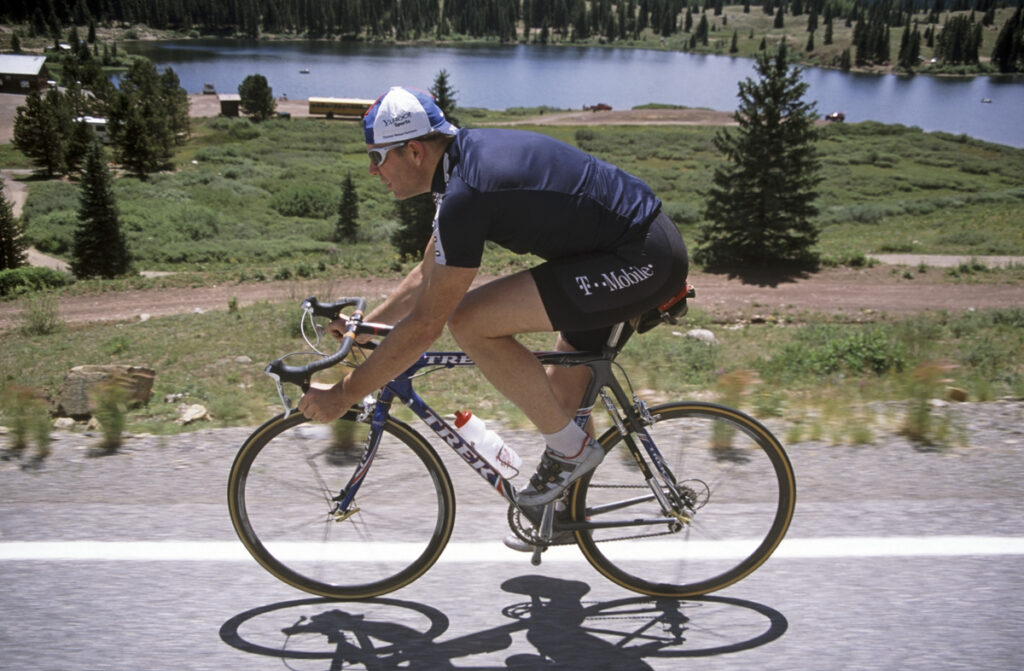

There sure will be fireworks and fiestas in Barcelona on 4th July, as that’s the day this year’s Tour de France kicks off with a 19.6km team time trial around the Catalan city. ‘Le Tour’ is the world’s biggest annual sporting event, and the absolute grandest of all bike races. It may indeed be a road race, but the Tour does have ever-increasing and embedded links to mountain biking, a sport that only came to be when the big French show was already in its late 80s.
When the race first rolled out in 1903, and for some time afterwards, much of it was ridden on dirt and gravel roads, as that’s what they mostly had back in that early motorised era. Those stages were ridden over incredible distances on ‘boneshaker’ steel single speeds, often with fixed gears – the kind of stuff that makes the Tour Divide and other ultra races look like a tailwind ride in the park with an Avinox-powered e-bike.
Early bird double MTB dippers
Although mountain biking was taking shape rapidly during the late 80s, it wasn’t until after the first-ever 1990 UCI World Championships that a small number of Tour de France pro road riders started to take an interest in the sport. This sport was seen as heretical and was even forbidden by many top road teams.
Amongst the first Tour riders to dabble seriously in the dirt was former stage winner Adri van der Poel, the father of Matthieu. He mixed World Cup racing into his road schedule in the early-mid 90s and did pretty well at it, too.
Many more Tour riders were dipping their toes in the mud too, including American TV commentator Bob Roll, who turned fully to MTB, as did former Tour stage winner Martin Earley, who raced NPS and World Cups for Raleigh, and he also raced the VTT Tour de France in the 90s.
Others followed, such as Swiss climber and Tour stage winners Beat Breu and Gilles Delion, as well as American Tour rider Andy Bishop (RIP), and British Tour rider Adrian Timmis.
During the mid-late 90s, Britain’s top Tour contender Philippa York (then Robert Millar) also raced MTB in the UK for Giant after retiring from the road, and 1978 Tour winner Stephen Roche also raced the Cape Epic a few years back, as did many more old Tour stars.
While the female Tour de Frances were sparse and somewhat short-changed until recently, there were on-and-off equivalents in the past. These included the Tour de France Féminin in the 80s, which was won three times by French star Jeannie Longo, who also took a silver medal in the 1993 MTB XC World Champs.
In the 90s-2000s, the Grand Boucle Feminine International took over, which was won twice by Britain’s Nicole Cook, a former World Junior XC Champion.
The breakthrough era
Although mixing Tour roads and mud was still taboo in elite road racing during the 2000s and 2010s, by this time, many younger racers had grown up with mountain biking, which wasn’t possible a decade earlier. In time, more top cross-country racers started to turn their hands to contesting the Tour, as 2011 Tour de France winner Cadel Evans told me a while back: “My introduction to cycling came through MTB, mostly because the area where I lived was more suitable for mountain biking. Racing and training on the road came later, thanks to the advice of my first coach, Damian Grundy, who said, “one day you might want to race on the road full time,” he said to me back in 1993.”
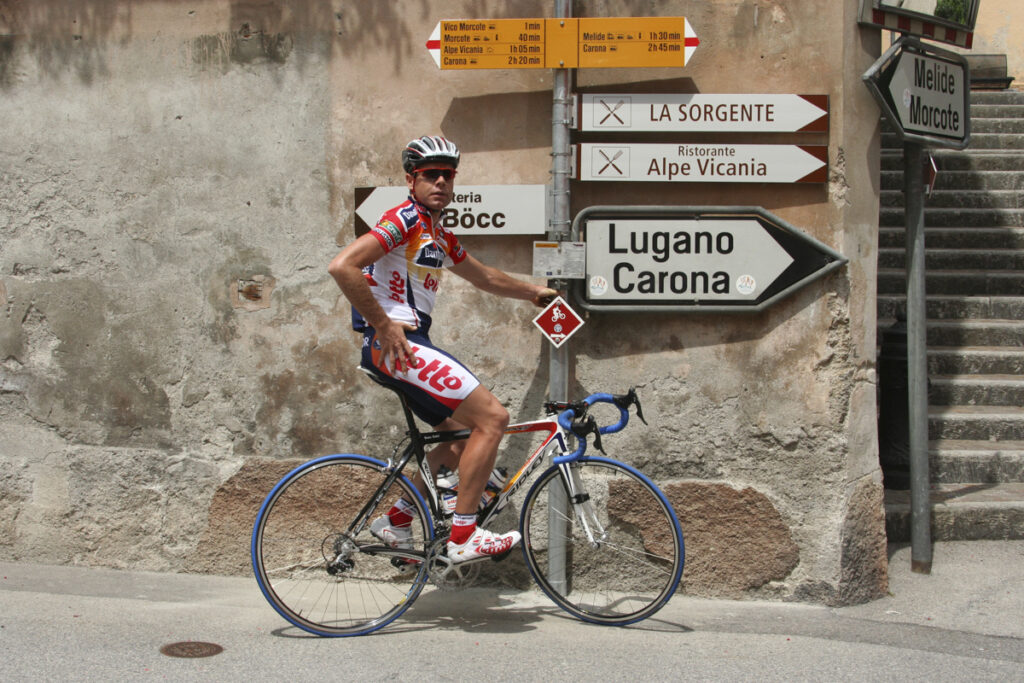
Cadel continued, “At this time, only a few had come from MTB to the road; Dario Cioni was probably the first, followed by me, Lennie Kristensen, and later Michael Rasmussen and Miguel Martinez.”
When Cadel started to mix his racing with riding MTB for Volvo Cannondale and the Saeco road team, he had quite some off-road cred behind him; “My biggest MTB successes were the world cup titles, but it was probably the results I achieved at a young age that are my personal highlights. Compared to my Tour results, these wins are relatively unknown, yet for me, they were not only goals that I worked very hard to achieve, but they also shaped me as a rider. Thanks to this experience, they put me ahead of the game on the road”.
The 2000 Olympic MTB XCO Champ, Miguel Martinez, also rode the Tour with the Mapei team in 2004, finishing 44th. His father, Mariano, was also a Tour stage winner and King of the Mountains, and Miguel’s son Lenny is now making Tour de France waves and may well score a stage win this year.
Also during this era, disgraced multiple Tour ‘winner’ Lance Armstrong also raced some MTB, and won Leadville 100 MTB, as did his teammate and top climber Levi Leipheimer. The 2006 ‘dethroned’ Tour winner Floyd Landis was also a former US Junior National XC Champ, and their teammate Tom Danielson was also a US Collegiate MTB Champ before hitting the road. Still racing pro at 50 years old is former 2000s Spanish Tour contender Paco Mancebo, who is also a four-time national MTB Marathon Champ.
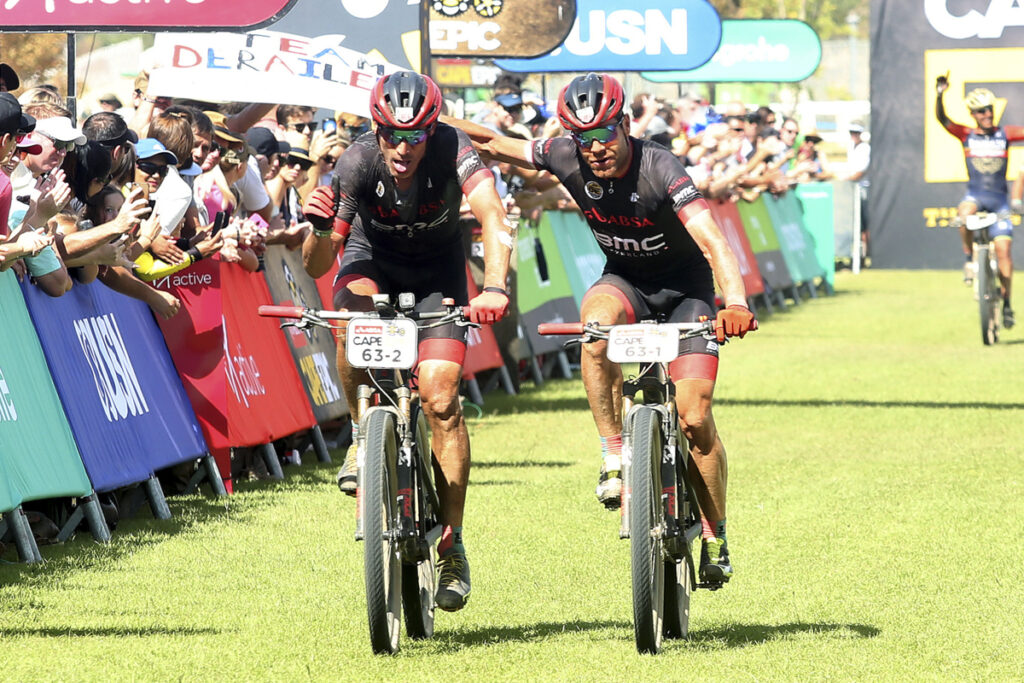
Hot on Cadel’s heels came Chris Froome, who got into competitive cycling through mountain biking and then racing flat bars in Kenya and South Africa; he also did pretty well at the Tour, winning four of them. In 2014, Froome’s Tour-winning run was broken by Sicilian legend Vincenzo Nibali, who also raced MTB early on.
There were many other successful cross-over stories during this period, including Canadian Ryder Hesjedal, a top MTB racer turned grand tour winner and Tour de France stage winner, and 2008 Cape Epic winner turned Tour and road star Jacob Fuglesang of Denmark.
Australian rider Adam Hansen finished a record 20 back-to-back consecutive grand tours (riding 29 consecutive in all), and was also a double winner of the Crocodile Trophy MTB stage race across Australia before this. And of course, the 2008 Junior XCO World Champion Peter Sagan also did pretty well at the big French ‘lap’, winning 12 stages and seven overall points titles.
Today’s crossover stars
These days, several riders in the Tour started cycling through, or also did mountain biking, although mixing MTB with grand tour road racing is still something only a select few have mastered. Even Tadej Pogacar rode MTB early on, and we also have the Olympic MTB Champion Tom Pidcock and his arch-rival Mathieu van der Poel both scoring big at the Tour.
Colombia’s 2019 Tour winner Egan Bernal was also twice on the podium at the Junior XC World Championships, and Eritrean sprint star Biniam Girmay also started out as a mountain bike racer.
Strutting the lead support roles for double Tour Champ Jonas Vingegaard’s Visma-Lease a Bike squad, and contenders in their own right, are a couple of young Americans who also started out in the dirt. Vuelta a España winner Sepp Kuss was raised in the shadow of the great Ned Overend and made the switch to road after some time racing U23 World Cup MTB, while Matteo Jorgensen was also a strong mountain biker before turning to the road in his mid-teens.
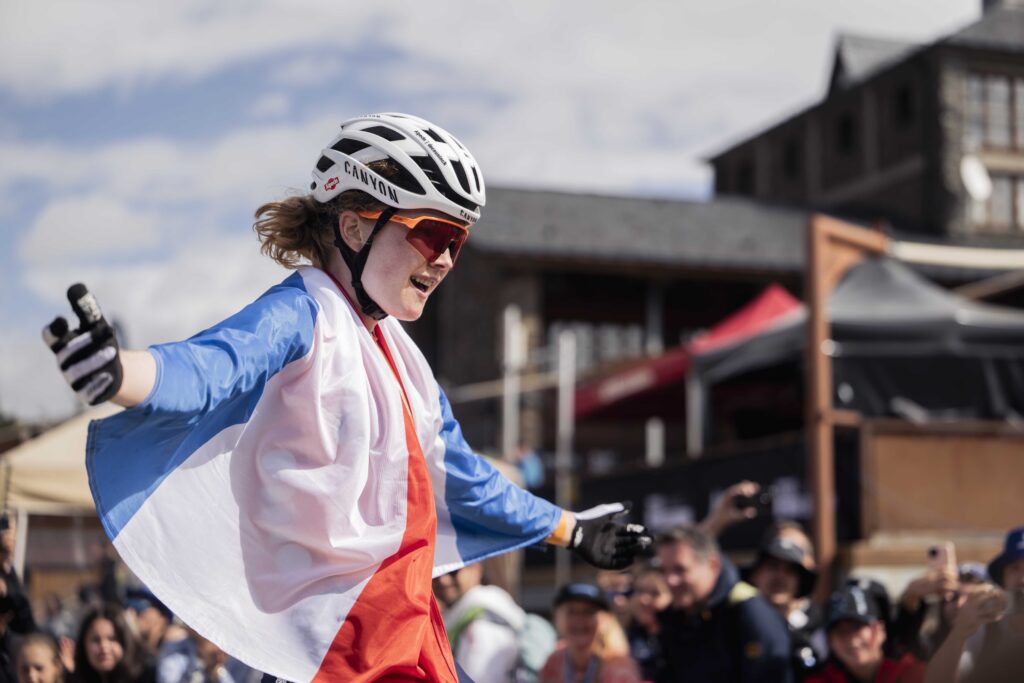
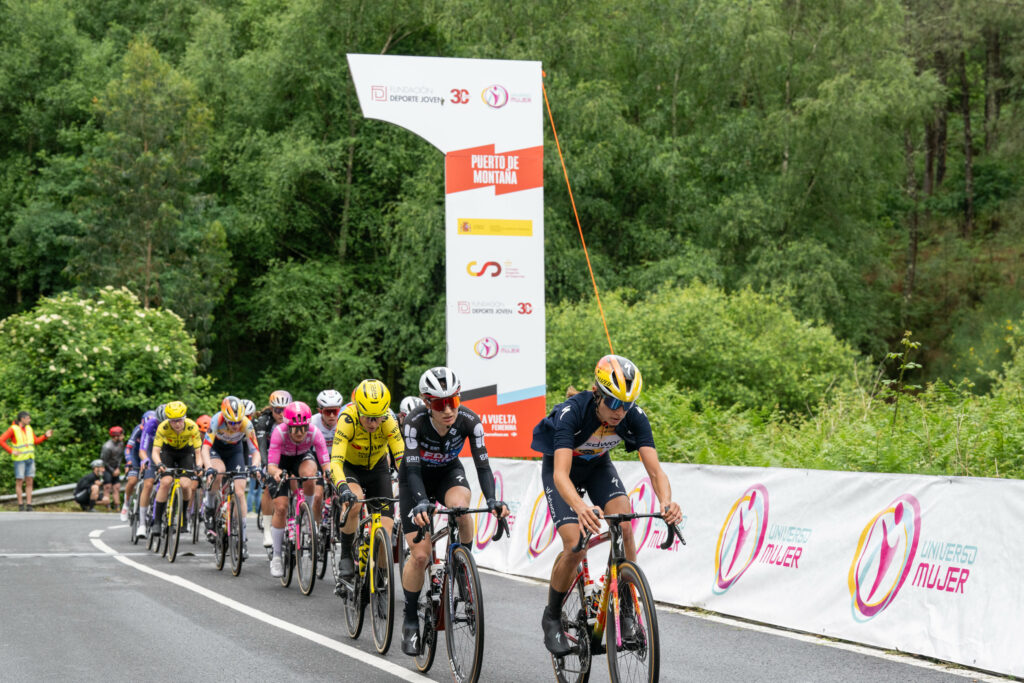
The Tour de France Femmes avec Zwift will follow on from the men’s race in early August and will also be contested by a couple of the world’s top mountain bikers – Pauline Ferrand-Prevot, the Olympic XCO Champion, and 2024 XCO World Champ Puck Pieterse. Puck made her first serious mark on the road scene in between the 2024 Olympics and World Champs, and won a stage in the Tour de France Femmes in 2024, as she recounted to me at the time; “For sure I wasn’t prepared for the Tour, but I think that if you can ride fast on the mountain bike, then you can also ride fast on the road. For the Olympics, I was really in peak shape, and so I took that with me to the Tour and took it from there.”
The mountain bike Tour de France
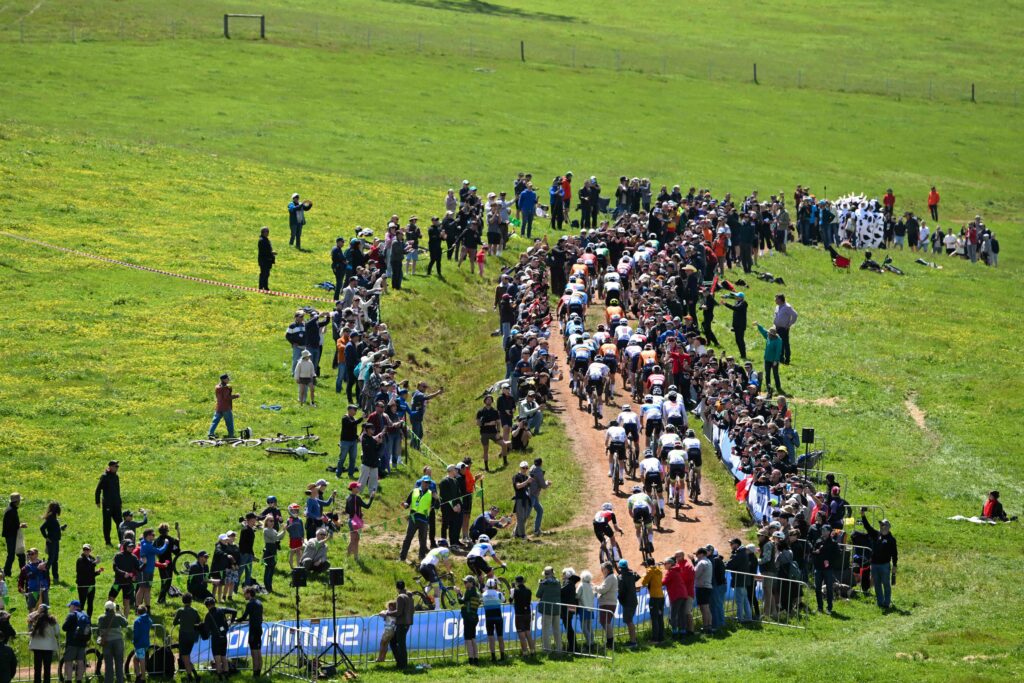
The mid-1990s were a huge time for mountain biking, and between 1995-98 there was even an ‘official’ VTT Tour de France (an off-road version), under the banner of ASO (which organises the road version). This was a super tough point-to-point stage race, which was ridden on true old-school terrain. The race featured most of the top male and female cross-country racers of the era, including Cadel Evans and Miguel Martinez himself, while Bart Brentjens was a double overall winner of the race.
There have also been several iterations of L’Hexagonal VTT (Tour de France) in the years since, but not with the same stature as the original ASO version. It would be truly great to one day bring back a fully-fledged and high-profile VTT Tour de France, fingers crossed.
* Some of the VTT Tour’s finer details are a bit hazy, as it was pre-internet and most involved can’t remember 100%.
The Tour jumpers
On a lighter note, we can’t leave this without a wink of appreciation for those crazy bikers who have actually jumped over the Tour de France peloton over the years.
In 2003, Canadian freerider Dave Watson became the first rider to jump the Tour mid-race, on the Col du Galibier stage. Some 10 years later, Frenchman Romain Marandet successfully jumped the race – and landed it, while Alexis Bosson jumped the race no-handed in 2018. Valentin Anouilh jumped the race in both 2019 and 2024, while Dan Leclercq hopped over the bunch back in 2020.
Keep your eyes peeled this year; there may well be another bird in the sky over the Tour.









10 thoughts on “The Tour de France and mountain biking have a stronger connection than you might think”
Not even a passing comment for John Tomac?
…and, of course, there was no way of recording any kind of information before the internet was invented. 😏
Never really thought about it to be honest.
You are absolutely determined to bait a certain Home Counties cyclist, aren’t you!
Surprised there’s no mention of The Texan’s crossfield detour in 2003, say what you like about him (and who doesn’t?), the man could handle a bike…
Handling a bike across a bit of grass is a bit different to descending rock gardens, and drop off in a XCO World Cup…….
The top XC guys are on another level to elite road racers…….(Pidcock is an outlier) MvdP has struggled in recent years after spending too long away from it.
What’s all this MTB palaver? The Tour de France was originally a gravel race. 🙃
And descending a twisty Alpine pass at 110 km/h is a bit different to descending rock gardens. Don’t start this again, both types of cyclists are amazing, most of the road riders would get their backsides kicked on MTB courses and most of the mountain bikers would get their backsides kicked in road races. Why do you have to insist on the superiority of one over the other, it’s like saying soccer players are better because they are better at soccer than rugby players or vice versa, it’s meaningless.
Neither Road nor MTB is superior, but both started with Gravel (which is clearly superior 😇🤣).
They all started with touring, which I reckon makes Audax the superiorest.