


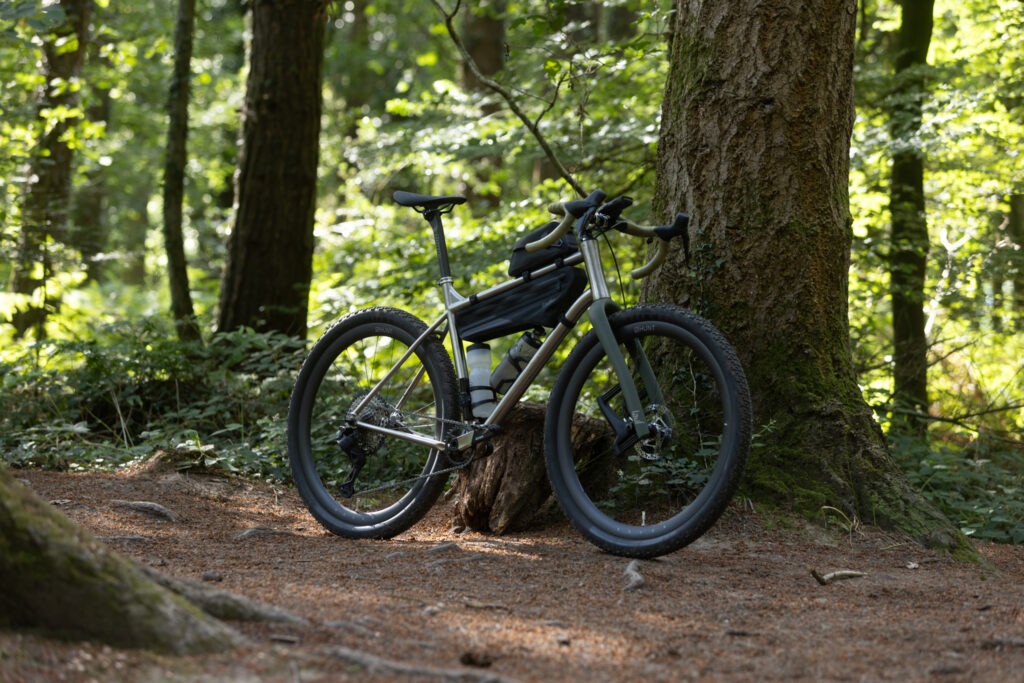

When I got the opportunity to design a completely custom gravel frame, I jumped at the chance. But all of a sudden the possibilities were well and truly endless, so here is the design I settled on and we’ll get into the what, why and how that surrounds my TiRf gravel bike.
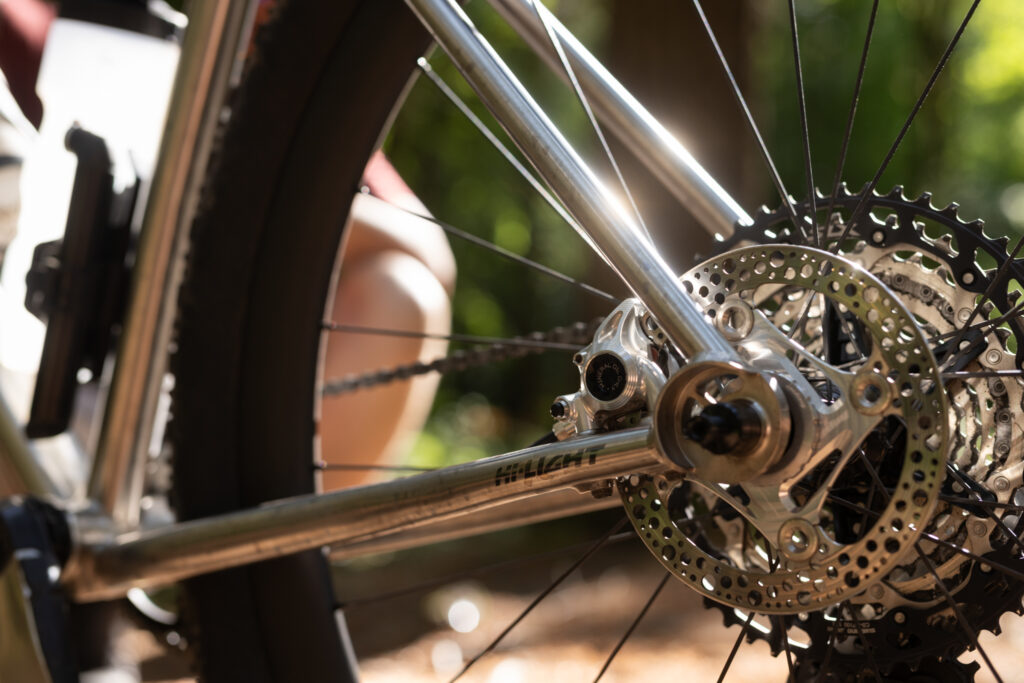
The frame is a one-off titanium piece manufactured by Hi-Light in China. Hi-Light has a vast range of capabilities when it comes to bicycle manufacturing, building titanium products for some very well-known brands, so I knew I’d be in safe hands. The design process was handled with the utmost profession and as you see from the welds, the hand-built attention to detail is second to none.
My requirements for this frame are somewhat opposing: I wanted a capable descender over technical terrain and a comfortable all-day pedaller for the large bikepacking jaunts I frequent. With this in mind, I designed the bike with a longer reach and a slacker head angle to put the front wheel further in front of me. I then added a longer chainstay with the aim of keeping the bike more stable at speed. A steeper seat angle and a short stem counteract the length I built in, so the seated position isn’t too outstretched.
If the titanium frame isn’t enough, this is where things get extra-fancy. As a rider who’s a little longer in the leg, I needed to add a brace between the top tube and seat tube, so I could achieve a low standover, but still have plenty of seat tube to play with. Thus, a 3D-printed titanium brace keeps the long seat tube supported. At the rear end, two rear-triangle braces add stiffness in the right places.
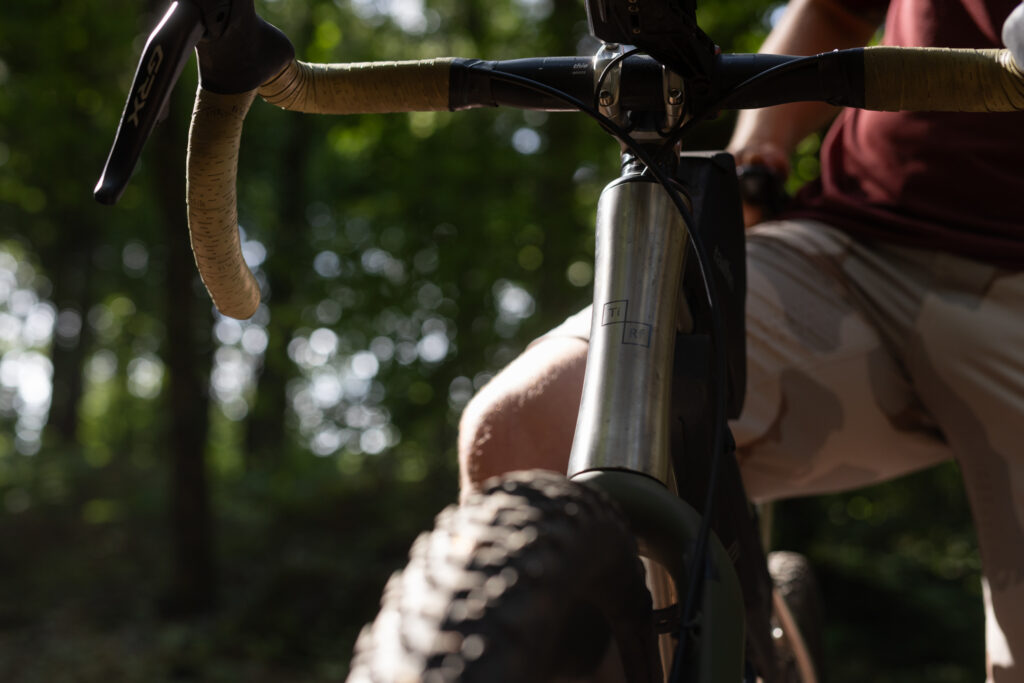
The cherry on top is a custom head-tube logo in the style of the periodic table, Ti for Titanium and Rf for Rutherfordium, that’s something I designed myself with a touch of inspiration from Breaking Bad. Why go to the lengths of building a totally custom bike and not add a personal touch?
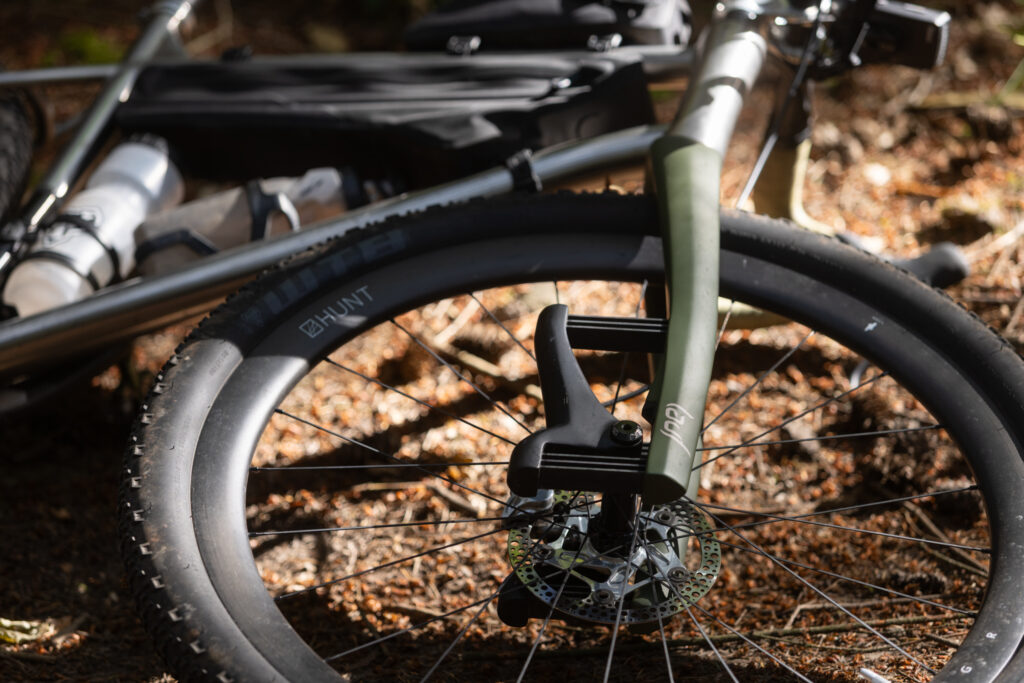
The build complements my requirements further, and as someone who’s looking for a blend of comfort, capability and efficiency, it’s definitely not your cookie-cutter specification. There’s plenty of carbon fibre on the wheels, seat post, handlebar and cranks to save weight and aid compliance. But the Lauf Grit SL fork is a stand-out feature offering 30mm of undampened travel, which really helps to filter out some of the chunkier gravel and is much appreciated on longer bikepacking trips. Some classic CNC goodness from Hope adds a touch of bling, and in silver almost feels a little retro.
A full complement of Tailfin bags gives me fuss-free and reliable storage for bikepacking trips, however, the top-tube and frame bags are a permanent fixture to carry snacks and a jacket.
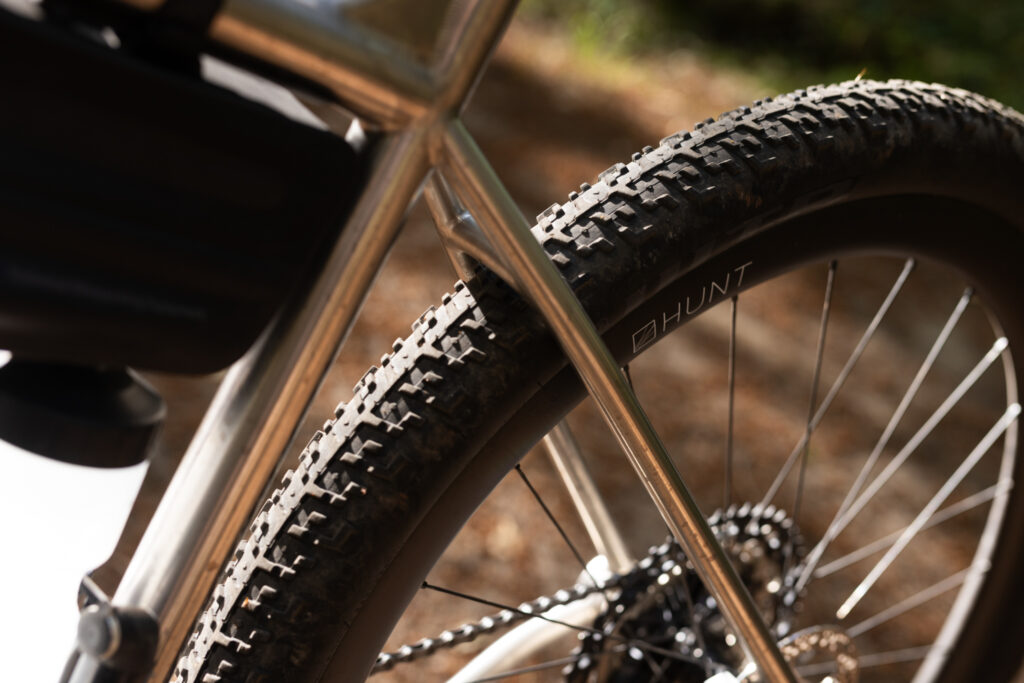
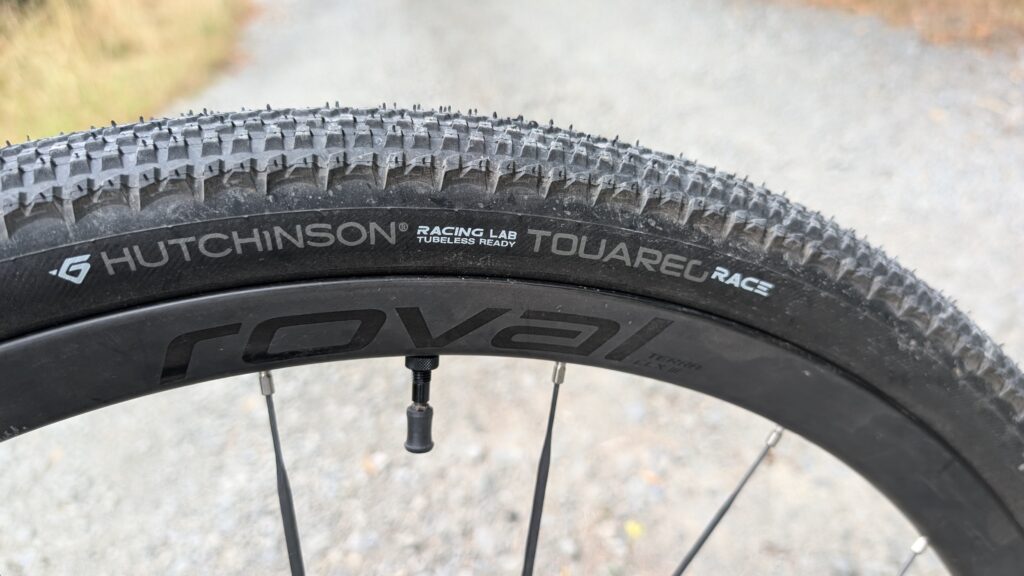
As for the ride, it’s more stable than you’d expect for a gravel bike thanks to the longer wheelbase, and yet after multi-day long-distance trips it has remained a comfortable place to be. With the frame offering some compliance, the 52C tyres (that fit, despite building the bike to accommodate 50c rubber), the Lauf fork and carbon bar, this bike does a good job of ironing out some of the harsh frequencies that you may get on stiffer, more racey steeds. That being said, it’s not the fastest or most efficient gravel bike, more of a jack-of-all-trades and master of none, and that’s fine by me.







5 thoughts on “This is what happens when a mountain biker designs their own custom titanium gravel bike”
I swear you guys are just baiting Surreyrider for shits and giggles now!
😉
Very interesting, thank you for sharing! Hope you enjoy the bike!
Have to ask though, I get the Ti as it’s a titanium frame. But why Rf, a notoriously unstable synthetic and highly radioactive element?
The writer’s name is Ty (handy synchronicity for Ti ) Rutherford, hence Rf.
I’d have to have a bike made of an alloy of silicon and tungsten, which does exist, but it’s apparently used in computer chips rather than bike frames.
Hey ho.
It’s trying to gazump everyone else in the claim to be ‘the fastest bike ever’ – what’s faster than a bike that can only exist in a particle accelerator?