



Welcome to our monthly sentencing round-up, a regular compilation of sentencing stories from local publishers and police forces from around the UK, and sometimes internationally in particularly notable cases.
All sources are credited with a link, and where a case has been picked up nationally, we’ll always credit local publishers who have attended court. Before we get started, there have been a couple of notable, or should we say notorious, cases that have been covered as standalone stories, as well as developments of stories featured in previous round-ups.
A driver who took a selfie, watched videos and sent messages at the wheel before killing a cyclist was jailed for five years, whilst a hit-and-run motorist who subsequently struck the same rider was handed a suspended sentence. James Lawley was riding his tricycle en route to a race in Lancashire where he was volunteering to marshal when he was killed.
The rider who last month was seriously injured by a fly-tipping lorry driver has revealed he had a quarter of his skull removed after crashing over “asbestos-ridden” rubbish strewn across the road. Craig Frewin was jailed for 16 months for dumping the dismantled shed across the road.
And finally, whilst not directly related to sentencing, the death of American junior cyclist Magnus White prompted the state of Colorado to mandate police to offer a breathalyser test to all drivers involved in road collisions, after the driver who killed Magnus was subsequently found to have been drinking on the morning of the incident. She was sentenced to four years in prison for a charge of vehicular homicide by reckless driving.
Drug-driver 16 times over the limit jailed for nine years for killing cyclist head-on
A man has been jailed for killing an oncoming cyclist when 16 times over the legal drug-drive limit, Avon and Somerset Police report
Daniel Booth was driving near the Severn Bridge when he drove his car into 56-year-old Neil Routley, a maths teacher-turned bike mechanic, who tragically died from the injuries he sustained on 29 June 2025. He previously pled guilty to causing death by dangerous driving.
Booth was found to have 14 micrograms of cocaine and 800 micrograms of benzoylecgonine (a cocaine metabolite) in his system. The court heard Booth had taken cocaine approximately 12 hours before the incident and the delayed impact of taking the drug had impaired his driving.
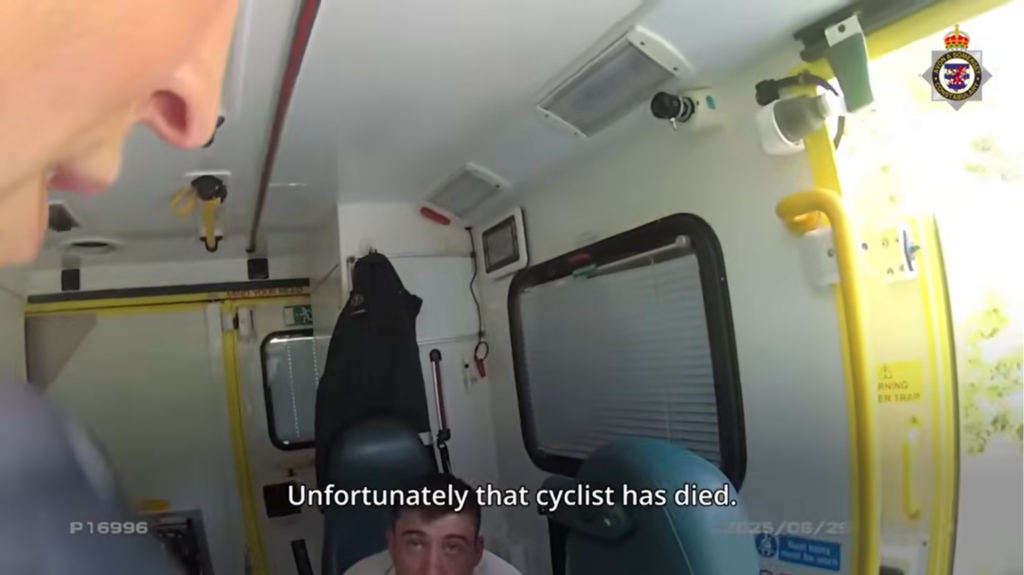
The 31-year-old was driving a car fitted with a dashcam, showing Booth hitting multiple kerbs and verges in the minutes before the hitting Routley. He also could be heard yawning and making a comment about feeling tired. The below video does not show the moment of the collision.
Routley’s wife Jo said, “Neil was a much-loved husband, brother and son. We are devastated by his loss.
“After 20 years teaching maths, Neil left to fulfil his dream of working for himself as a cycle mechanic, though he continued his love of teaching by helping his customers and instructing at archery.
“His main passions were cats, coffee and cycling. He was due to be back for lunch so we could go for a walk together in the afternoon. Tragically, he never came home.
“Neil’s untimely death was caused by a selfish and thoughtless act, which will continue to impact his family and friends every day. His family and friends will miss him greatly.”

Judge Martin Picton accepted Booth was remorseful, but explained Booth knew the risk he was taking.
He added: “The dangers of drug-driving are well known.. No-one can be ignorant of the risk. The message is out there, that drug-driving kills.”
Booth was also disqualified from driving for five years and will have to pass an extended test before being allowed to regain his licence.
Suspended sentence and 15-month driving ban for killing cyclist whilst attempting 3-point turn
A 52-year-old cyclist died after being hit by a driver attempting a three-point turn on Dartmoor. Jack Price was 22 when he hit father-of-four Blue Ramsey in August 2024. Ramsey was riding with friends and was an experienced cyclist, Devon Live reports.
Price was parked and facing the cyclists when he pulled out into the road. Mr Ramsey reacted and tried to avoid being hit by moving to the middle of the road but he was hit side-on by the car and thrown from his bike.
Those at the scene stopped to assist Mr Ramsey, who was initially conscious. Price made a 999 call and told police he looked both ways but did not see the cyclist approaching. No faults were found with the vehicle and conditions played no part in the fatal collision.
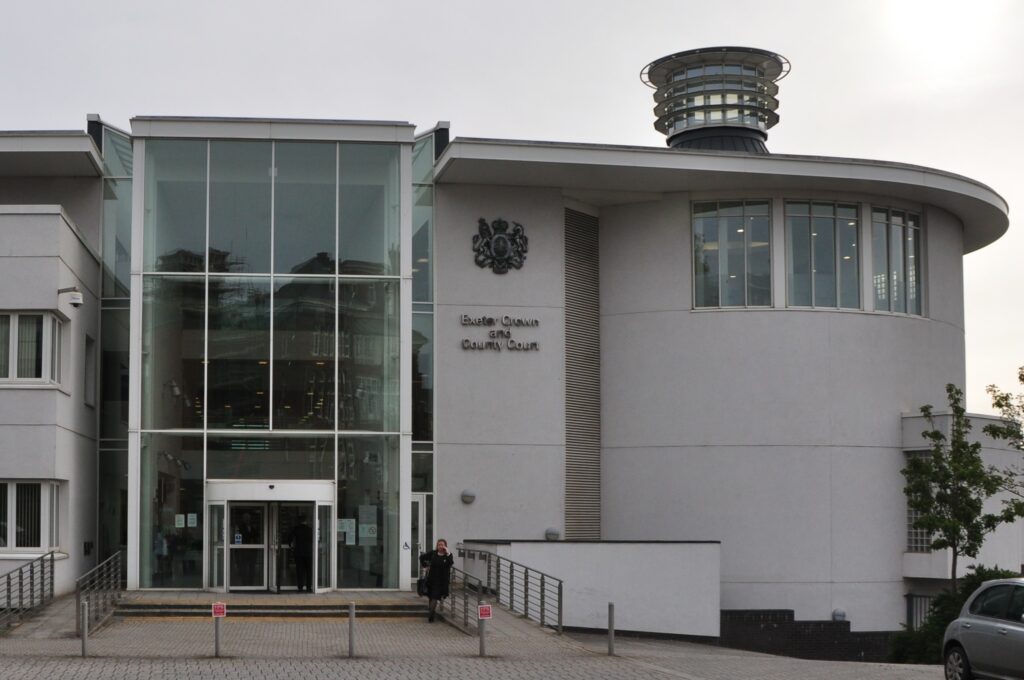
The court heard Price is devastated by what happened and has not driven since. The court was told he was not distracted at the time and had a fraction of a second to react and brake.
District Judge Stuart Smith said Price’s view of the road had been partially obscured by a vehicle parked in front of him. By the time he saw the cyclist approaching it was too late to avoid hitting Ramsey.
He said it was a ‘failure to take basic precautions required by the law of every driver’ which had resulted in the loss of a human life.
He imposed a six-month prison sentence, suspended for 12 months. Price will have to do eight rehabilitation days with probation and undertake 100 hours of unpaid work. He was also disqualified from driving for 15 months.
Driving ban for woman after cyclist ‘left for dead’ with fractured neck and spine
A woman has been banned from driving for 12 months after hitting a cyclist, initially stopping, then driving away without giving any details whilst other passing drivers stopped to provide first aid treatment, BBC Wiltshire reports.
Lucy Elango hit the 53-year-old cyclist from behind whilst trying to overtake on the B4508 in December, knocking him from his bike into the grass verge. She was subsequently identified following a police appeal.
The cyclist suffered life-changing injuries including fractures to his neck and back. He told the court he was, “left at the roadside for dead by someone that hit me with their vehicle. I do realise how lucky I am to be alive.”
Wiltshire Police’s roads policing officer Paul Davis said Elango demonstrated a “complete lack of empathy and care”.
“We must not forget the enormous consequences that a moment’s inattention or lack of care lead to. I hope Elango reflects on, and fully understands the consequences of her actions.”
12 month driving ban for 84-year-old after seriously injuring cyclist at T-junction
A pensioner has been banned from driving and fined £1,230 after failing to see and respond a cyclist whilst driving out of a junction onto a road in Norwich.
The Norwich Evening News report that Robert Nelson, 84, pleaded guilty to causing serious injury by careless driving after admitting he had not looked properly before turning out of the junction onto Blue Boar Lane last September. The cyclist is still receiving treatment for their injuries.
Nelson’s solicitor told the court, “He fully accepts responsibility and places no blame whatsoever on the cyclist.
“This is a regrettable blemish on an otherwise blameless driving record,” adding that Nelson had held a driving licence since 1966 and that this was his first driving offence.
In addition to the 12-month ban and fine, Nelson was also ordered to pay £577 in additional costs. However, he will not need to sit an extended re-test after the expiry of his ban.
“Too often, road traffic offences are treated as second-tier crimes, even when the consequences can be life-changing”
One common theme from almost all court cases we cover, whether mentioned by the prosecution, during sentencing remarks or victim impact statements is how life-changingly devastating for so many people one moment of inattention, distraction or dangerous driving can be. Campaigners and cyclists alike have regularly questioned sentencing severity for road offences, Cycling UK telling us that “too often, road traffic offences are treated as second-tier crimes”.

Sarah Whitebread, Head of Policy and Public Affairs at Cycling UK, said: “That mindset has contributed to dangerous and careless drivers reducing or even avoiding disqualification through claims of ‘exceptional hardship’. Speeding, driving while exhausted or passing dangerously close to someone aren’t harmless slip-ups, they are decisions that can leave families grieving.
“If someone drives dangerously and puts lives at risk, taking them off the road for a period is not excessive. It’s common sense. The courts’ first duty must be to protect the public and if the government is serious about meeting casualty reduction targets set out in the Road Safety Strategy, sentencing has to match the seriousness of the harm.”
Sentencing is a much-discussed topic on road.cc, particularly with regards to the punishments handed down to drivers who seriously injure or kill cyclists.
This series is a regular round-up of sentencing stories that helps us to collate information for our more in-depth coverage around sentencing, but we’re hoping it could also be of use to readers, academics, and those in the legal profession as a starting point for analysing the state of play when it comes to sentencing for driving and cycling offences.
Much like our Near Miss of the Day series, we’re not doing this for ‘clicks’ – but we make no secret of the fact that the article format is designed to get attention, and generate discussion. Though road.cc acknowledges there is a problem with inconsistent and lenient sentences for killer drivers, we’re intentionally steering clear of editorialising in our reporting here, which means we’re not just going to be selecting cases where we’ve decided in-house that the punishment didn’t fit the crime.
The aim is to provide a true picture of how people are sentenced for driving and cycling offences for further analysis. Are sentences wildly inconsistent depending on the judge? Are sentences becoming more lenient, or harsher over time? We can’t change the law, or a judge’s decision – but change starts with a discussion, and an acknowledgement the current system isn’t fit for purpose. This is why the maximum sentence for death by dangerous driving was increased to life imprisonment in 2022, and why the Highway Code was updated to include minimum passing distances for drivers around cyclists and the Hierarchy of Road users.















31 thoughts on “Nine years in jail for drug driver 16 times over limit who killed oncoming cyclist; Suspended sentence for killing cyclist whilst attempting 3-point turn; Driving ban for 84-year old for injuring cyclist but no retest required: road.cc sentencing round-up”
Judge Martin Picton accepted Booth was remorseful…
How often do we have to endure this tripe from judges? This pseudo-remorse is of no importance- the only time the matter should be mentioned is when there is obviously no remorse- likely very rare owing to coaching by the shyster defence lawyer. He’s sorry that he was caught, but that remorse didn’t stop him from repeating the offence all those times when he wasn’t.
@wtjs That’s how it works, though. The defendant expresses remorse. You can believe it or not, as can the judge. On the face of it, he is remorseful. Accepted.
The Judge goes on to clarify that his remorse is effectively nullified: the defendant knew (or ought to have known) better; he had all the information he needed to know not to do it.
So the judge has done what he needs to do: he acknowledges the remorse, takes it at face value and shows his balancing of the circumstances.
If he did not, there is a chance it could be part of a sentencing appeal – “the judge did not take into account my remorse”…
Well he did, and you’re still a See You Next Tuesday!
Now, whether 9 years and a time-limited ban are sufficient is a matter for sentencing guidelines which, without evidence to the contrary, I shall assume the judge has followed. My opinion is that the extended re-test needs to have a strong attitude test component, for a start, but that anybody who has caused death through such negligent regard for safety should not be permitted to operate a sewing machine, let alone a motor vehicle.
@wtjs That’s how it works, though. The defendant expresses remorse. You can believe it or not, as can the judge. On the face of it, he is remorseful. Accepted.
The Judge goes on to clarify that his remorse is effectively nullified: the defendant knew (or ought to have known) better; he had all the information he needed to know not to do it.
So the judge has done what he needs to do: he acknowledges the remorse, takes it at face value and shows his balancing of the circumstances.
If he did not, there is a chance it could be part of a sentencing appeal – “the judge did not take into account my remorse”…
Well he did, and you’re still a See You Next Tuesday!
Now, whether 9 years and a time-limited ban are sufficient is a matter for sentencing guidelines which, without evidence to the contrary, I shall assume the judge has followed. My opinion is that the extended re-test needs to have a strong attitude test component, for a start, but that anybody who has caused death through such negligent regard for safety should not be permitted to operate a sewing machine, let alone a motor vehicle.
@wtjs No remorse from the 84 year old driver though. ” He fully accepts responsibility and places no blame on the cyclist whatsoever”. Which seems to imply he’d like to blame the cyclist if he could.
@perce I’m not sure I agree with that. I think thats just confirming that he is take fully responsibility and recognises that the cyclist could have done nothing to mitigate it.
10 years in prison for killing a cyclist should be the minimum sentence. The objective is to raise awareness and remind motorists they must remain vigilant at all times when behind the wheel.
Drivers who harm people and/or damage properties shall be sent to retest. No excuses. No exceptions.
@MaxiMinimalist Repeating this every time these cases come up doesn’t make it any less stupid. Massive prison sentences for anyone who kills a cyclist when impaired by drink or drugs or when breaking the laws of the road, fine. Unfortunately humans make errors and, as I’ve said before, show me someone who says that they’ve never made a mistake on a bike or when driving a car that could, had circumstances been different, have killed someone and I’ll show you a liar. Deterrent sentences will, hopefully, deter people from getting behind the wheel drunk or stoned and might even make them think twice about speeding, they won’t have any effect on the person who misjudges the apex of a bend and slides out and hits a cyclist in the opposite lane, and sending such a person to prison for ten years under a “no excuses, no exceptions” law will do nothing except cost the taxpayer half a million pounds and ruin even more lives than such tragedies already do. You might wish to reflect, if capable, on the fact that the laws for causing death by dangerous/careless driving are now mirrored by the same laws for cyclists, would you say, for example, that Charlie Alliston should have gone to prison for ten years? If you come off your bike in the rain and collide with a elderly pedestrian standing kerbside waiting to cross and they die, should you go to prison for ten years? No excuses, no exceptions, don’t forget.
@Rendel Harris
May I ask where you got the half million pounds from?
Just out of curiosity.
And if a minimum sentence is enough of a deterrent then that £ amount will be worth it given the figures mentioned here which would have increased with inflation:
https://assets.publishing.service.gov.uk/media/60d057fbd3bf7f4bd842e3de/rrcgb-valuation-methodology.pdf
https://www.london.gov.uk/who-we-are/what-london-assembly-does/questions-mayor/find-an-answer/cost-life-lost-road-accidents
Of course each case would be judged on it’s own merits and the culpability of the road user at fault so in Your example, I’d say that is vanishingly rare/unlikely and not relevant for a maximum sentence if the cyclist could show they are normally carefull.
@Rendel Harris
May I ask where you got the half million pounds from? Just out of curiosity.
Of course each case would be judged on it’s own merits and the culpability of the road user at fault so in Your example, I’d say that is vanishingly rare/unlikely and not relevant for a maximum sentence if the cyclist could show they are normally carefull.
And if a minimum sentence is enough of a deterrent then that £ amount will be worth it given the figures mentioned here which would have increased with inflation:
I’ll put links in a separate reply, which may require Road CC to moderate/approve.
https://assets.publishing.service.gov.uk/media/60d057fbd3bf7f4bd842e3de/rrcgb-valuation-methodology.pdf
https://www.london.gov.uk/who-we-are/what-london-assembly-does/questions-mayor/find-an-answer/cost-life-lost-road-accidents
This parliamentary answer indicated that annual cost of imprisonment is a little over £51k (in 2024 – probably somewhat more than that now):
https://questions-statements.parliament.uk/written-questions/detail/2024-07-17/hl82
So for 10 years that would be ~£510k
Sorry – in 2023 (the answer was in 2024)
Nearly £54k in 23/24: https://assets.publishing.service.gov.uk/media/67e51acfba11d0060f606d68/costs-per-place-costs-per-prisoner-2023-2024-summary.pdf
@mitsky Imprisonment currently costs over £50k p.a. per prisoner and obviously that will rise over the course of a ten-year stretch with inflation.
Regarding culpability and mitigating sentences etc, of course I’m not against condign punishment for drivers who kill (and cyclists on the tiny, tiny handful of occasions when this happens), including prison as appropriate; I was objecting to the ridiculous and oft-repeated demand of MM that drivers who kill cyclists must get ten years, “no excuses, no exceptions”.
@mitsky Just checking the figures and apparently the 2026 average cost is £58,000 per year per prisoner; worth noting that is only the direct cost, you then have to factor in ten years of lost tax income from the prisoner, ten years that the prisoner is making no contribution to society as a worker or as a consumer, plus the fact that if they were the primary breadwinner very likely the costs will include benefits for their family as well. None of which should be a reason for keeping violent recidivists out of prison of course, nor drug/drink drivers who kill, but it is a factor worth considering for lower-level offences.
@Rendel Harris By the time someone is looking at prison time its too late. As has been proven time and time again, the severity of punishment is a poor deterrent to bad behaviour if people don’t think its going to happen to them or they don’t think they will be caught.
Now I do think that there should be far more severe and immediate punishments for bad driving when drivers are caught but this would need to be coupled with a massive push to actually act on information/proof of bad driving. As anyone that submits footage to the police knows, its a crapshoot and certain police forces are anti-cyclist.
This would try to essentially put people off misbehaving whilst driving before they cause an accident rather than getting the tired old excuse of “it was a single dangerous incident, they definitely don’t do this all the time and their luck finally ran out”.
Perhaps it should go even further and if you have a history of speeding and you hurt someone speeding, that is looked upon in a very dim light.
@mctrials23 As anyone that submits footage to the police knows, its a crapshoot and certain police forces are anti-cyclist…
I don’t know anything about ‘shooting craps’ but the implication is that it’s down to chance. Not very much it isn’t- I know how hostile Lancashire police are to cyclists, and Kent (I’m told- if this policy has changed, can a cam-equipped Kent cyclist let us know?) has even declared that videos without a collision with a cyclist will not be viewed or acted upon. I think that many police statements that action will be taken are false and that enquiries about that action will be ignored because there was either no action at all, or the joke letter was sent. They’re pretty much all ‘anti-cyclist’.
I don’t know whether this has been linked to before but it appeared on the Cycling UK forum recently and claims that sentencing for driving offences are broadly in line with manslaughter and that stiffer sentencing does not lead to a reduction in KSIs.
@Bungle_52 Thanks for that, it confirms what I’ve always suspected which is that stiffer sentencing for many offences doesn’t have a deterrent effect (not saying it’s not valid for other reasons) because nobody but a psychopath sets out thinking, “I’m going to drive in a way that might kill somebody but I don’t care I’m doing it anyway”; everyone thinks that they are a good driver and that they drive safely, even drink/drug drivers believe that they are capable of driving without causing harm. Rather than focusing on punitive sentencing which does not deter, there should be far more stringent training and testing requirements before driving licences are issued, massive crackdowns on uninsured/unlicensed drivers and more policing and heavier penalties for less serious offences, especially speeding and mobile phone use. If every car had a GPS chip so that drivers knew that any time they exceeded the speed limit or ran a red light they would automatically receive a heavy fine and points you could pretty much guarantee that KSI rates would be halved overnight.
@Rendel Harris Come to Surrey. You’ll see plenty of examples of motorists who drive with what very much looks like the attitude of ‘I don’t care if I injure or kill a cyclist’.
@Surreyrider I ride in Surrey a fair bit and absolutely many do look like that but the point is they all *think* they’re driving perfectly reasonably (as one discovers when remonstrating with someone who’s skimmed one by 30cm, “I gave you masses of room”) so deterrent penalties have little effect. That’s why we need to strike at the root cause and actually train drivers properly and test them stringently (and more than once over the course of a potential 70+ years of driving, it’s absolutely absurd that competence and knowledge in what for most people is the activity in their life that will run the biggest risk of killing people you never have to have your qualifications renewed).
@Rendel Harris Agree, I am baffled that the 84 year old who is now banned from driving for year can then start driving again without a retest. We should be re-tested regularly.
The root cause isn’t just training, it’s lack of empathy with cyclists. The solution of course is to get more people cycling so they know how it feels to be overtaken with a 30cm gap, or they remember to check for cyclists when somebody waves them out into slow moving traffic.
@Rendel Harris Absolutely. I was just making the point that Surrey has a lot of ‘couldn’t care less if I hit you’ drivers whose attitude is get out of my way and if you don’t that’s your fault.
@bennysnnock Which is why training for a driver’s licence should include cycle training, of course.
@Rendel Harris The issue with GPS chips, as everyone who has one of those black boxes will attest to, is that they are crap. They interpret heavy braking as poor driving rather than someone else forcing it. They see rapid acceleration where there is none.
All we need is a much higher chance of people being caught and punished for their everyday shit driving. I’m sure as a cyclist that every single time you go out on your bike you will have a dozen or more times when you think “that would have been a nasty accident if someone was coming the other direction”. Eventually, when bad behaviour suffers no consequences it becomes completely normalised. Then we struggle to treat it as anything but a normal, unavoidable accident when that bad behaviour does incur consequences.
@mctrials23 I wasn’t thinking of identifying poor driving, which is obviously tricky without supplementary evidence, but given the huge amount of incidents that involve excessive speed GPS for keeping people to the speed limit is perfectly valid; even if there were issues with identifying the exact speed at any point, if it can be measured (as you can) that somebody has gone from point A to point B, a mile apart, on a 20 mph road in two minutes instead of three then get the fine and points in the post. Remove excessive speed and you remove the cause of numerous injury and fatality incidents.
@Bungle_52
While it may be true that stronger punishment may not affect the thoughts/actions of the worst offenders I would guess that their actions are based on the low likelihood of being caught (driving dangerously but without incident, as apposed to being caught after a fatal/serious collision).
So if the odds of being caught when driving dangerously were significantly higher and the punishment strong enough (ie, actions that would fail a test actually lead to loss of licence, rather than just points and fine) then I would suspect that we’d all be safer.
@mitsky I agree entirely which is why I think things would improve if the police made better use of dash cam footage submitted to them. In Gloucestershire the police won’t take action unless someone is inconvenienced. For example I recently reported a driver for overtaking on the brow of a bridge. The oncoming car was forced to stop so they say they will take action. If there was no oncoming car in an identical situation there would be NFA. In my opinion an advisory letter to the driver would be very useful so they know they’ve been caught.
I’m confused:
“ A driver who took a selfie, watched videos and sent messages at the wheel before killing a cyclist was jailed for five years, whilst a hit-and-run motorist who subsequently struck the same rider….”
How does that work? Resurrection? Did the poor unfortunate cyclist recover from his/her case of death, only to be hit by a motorist again?
Please, I don’t mean to make light of either case, merely to point out the poor/lazy journalism….
If you click through and read the story you’ll see that the first motorist hit the cyclist, and the second, following, motorist then also hit them while they were lying in the road – both were convicted of causing the cyclist’s death.